Interview with Festival Director Todd Looby (BendFilm Festival)

A near-constant fixture of MovieMaker magazine’s 50 Film Festivals Worth the Entry Fee, BendFilm celebrates independent films and the risky, passionate, tough and talented people who make them. This year’s festival runs from Thursday, Oct. 6 – Sunday, Oct. 9, with most venues located in Bend’s historic downtown in Oregon and the nearby Old Mill District.

Website: http://bendfilm.org/

Interview with Festival Director Todd Looby

Matthew Toffolo: What is your Film Festival succeeding at doing for filmmakers?

Todd Looby: BendFilm is committed to considering each film that comes in our door fairly. We want to champion the work of independent filmmakers who deserve more attention – whether we premiere ‘discoveries’ or present the work of established filmmakers whose work is under-appreciated by commercial audiences. We fundraise to pay travel expenses for our feature filmmakers and provide free lodging for all of our filmmakers. Last, but definitely not least, we award up to $8,500 in cash awards including $5,000 for the “Best of Show” as well as a $60,000 camera package from Panavision.

MT: What would you expect to experience if you attend the festival this year (2016)?

TL: We received a great grant from the Roundhouse Foundation to host at least 5 female filmmakers and their films. We want to be a force to overcome the vast gender disparity in filmmaking. A huge part of that is introducing and championing accomplished work to our audience. Though our programming process is still in an early stage, we have an incredibly promising crop of films to present to our audience. We are lining up intriguing panels, one of which will hopefully be our 3rd straight Film Fatales panel. Finally, we have commitments from some of Bend’s best venues to host what we think will be our best parties yet where our filmmakers and audience will continue make lasting bonds.

MT: What are the qualifications for the selected films?

TL: Selected films for the majority of our slots will not already have screened in the region, not yet have wide distribution and must be solidly independent.

MT: Do you think that some films really don’t get a fair shake from film festivals? And if so, why?

TL: I can’t speak for other festivals, but it is something I felt as a filmmaker myself. Our Programmer Erik Jambor and our programming team make an extraordinary effort to give everyone a fair shake by watching each submitted film at least twice. Every film that we accept or have to reject will be fairly vetted and include input from our loyal and talented screening committee.

MT: What motivates you and your team to do this festival?

TL: I fell in love with the film festival experience as an aspiring filmmaker attending the Chicago International Film Festival. That love was solidified when I presented my first film festival at the Iowa Independent Film Festival. Since those early years, I’ve screened at dozens of festivals and they all reinforced the importance of the festival world in building filmmaking careers. We want to make discoveries to champion the work of filmmakers that should be doing this for a living. And, perhaps most importantly, connect those filmmakers with such a generous, critical and appreciative audience that we have here in Bend.

MT: How has the festival changed since its inception?

TL: Our festival was great since its inception in 2004. For many years it was a “best kept secret” festival to the independent filmmaking community. Now we have 3-4 times the amount of submissions than we did just 3 years ago, so it is catching on quickly. With our community’s incredible support and enthusiasm for our programs we’ve added many year-round screenings and education programs that meet our community’s demand for greater access to films while at the same time foster more filmmaking from aspiring filmmakers.

MT: Where do you see the festival by 2020?

TL: That’s hard to quantify, but what the Board, Erik and I really want to do is make BendFilm a “must-stop” on the festival circuit. By 2020, we want to parlay our commitment to discovery to gain filmmakers the distribution and larger audiences that they deserve.

MT: What film have you seen the most times in your life?

TL: It’s probably a tie between “Midnight Run”, “Dances with Wolves” and “Blues Brothers”. The first 2 stem from the late 80s when I was a teen with a lot of time discovering the magic of film at the same time we first got cable at home. Those films still resonate with me, though I haven’t seem them in years. “Blues Brothers” was one of the first films I saw in the theaters at the age of 5. Growing up in Chicago, it was a mainstay on all of our TVs and VCRs. I think each of those films holds up so well and serve as the standard-bearers in their respective genres.

MT: In one sentence, what makes a great film?

TL: To me, as someone who’s made (or attempted to make) 3 narrative films for under $10,000, I love films that overachieve their budgets and transcend what the script may look like on paper. That “litmus test” can be applied to films working on every level – from independent to Hollywood or Academy-nominated films. 3 films that come to mind in recent years are Eric Steele’s “Bob Birdnow’s Remarkable Tale of Human Survival and the Transcendence of Self”, Asghar Farhadi’s “A Separartion” and Ruben Ostlund’s “Force Majeure”.

MT: How is the film scene in your city?

TL: Almost every week I get emails from filmmakers that are new in Bend or are seeking to move here. We already have solid production companies doing great work and a lot of talented filmmakers living here, but mostly working outside of Oregon. With the support of the Oregon Film Office and the newly formed “Central Oregon Film Office”, we hope to see a better utilization of that talent and more narrative and documentary work produced right here.

bendfilm.jpg

_____
Interviewer Matthew Toffolo is currently the CEO of the WILDsound FEEDBACK Film & Writing Festival. The festival that showcases 10-20 screenplay and story readings performed by professional actors every month. And the FEEDBACK Monthly Festival held in downtown Toronto on the last Thursday of every single month. Go towww.wildsound.ca for more information and to submit your work to the festival.

FINDING DORY (USA 2016) ***1/2 – Movie Review

Deadlines to Submit your Screenplay, Novel, Story, or Poem to the festival:http://www.wildsound.ca

finding_dory.jpg FINDING DORY (USA 2016) ***1/2
Directed by Andrew Stanton

Starring: Ellen DeGeneres, Albert Brooks, Ed O’Neill, Ty Burrell, Kaitlin Olson, Eugene Levy, Dominic West, Kate McKinnon, Bill Hader

Review by Gilbert Seah

FINDING DORY is the sequel to the highly successful 2003 animated FINDING NEMO. Though director Andrew Stanton swore at that time: “no sequels”, FINDING DORY arrives more than 13 years after. Though several identical characters from the first film appear in the sequel, the story is quite different and can stand alone on itself, despite the fact that the story takes place 6 months after the first film ended.

The film opens with water flowing from the sea, demonstrating how advanced animation technology has become. Water and fire were almost impossible to animate a decade ago.

Dory (spritely voiced by Ellen DeGeneres) is a little Pacific regal blue tang who suffers from short term memory loss. She tries, comically to remember events the best she can, but she is most afraid of losing her parents (Diane Keaton and Eugene Levy). This she does. With the help of new friends Nemo (now voiced by Hayden Rolence) and his father Marlin (Albert Brooks), she sets out to find her parents. The adventures take them to the Marine Life Institute where she meets other characters like a white beluga whale called Bailey (Ty Burrell) and Hank (Ed O’Neill), the octopus.

FINDING DORA would definitely not be recommended for smaller children. For one, I do remember as a child my biggest fear being the death of my parents or even just my father. Where would I be without money or someone to look after me? The film’s story of little Dory losing her parents, fearing at one point the death of both her parents and also the loss of her two good friends would be enough to scare children into having nightmares for months.

The film is annoying, especially in the first third with lots of noise made by the aquatic characters. When a few speak, some do too fast that quite a lot of dialogue ends up too gibberish for the children to make out.

A film about sea creatures allows the screen to be filled with gorgeous colour. Stanton clearly realizes this potential as he fills the screen with countless colourful images.

The switch from a male protagonist in FINDING NEMO to a female one in Dory is also a welcome change. The balance of male and female characters add to the political correctness tied in to other issues like animal rights, which thankfully is subtly brought across in the film. The film also contains the much talked-about brief LGBT scene in which 2 women find their stroller occupied by an octopus. Full credit to Disney for being so progressive.

The film’s change of ending that caused a delay in the film’s release is well worth it. It is great to see all the fish freed from the truck back into the ocean, thus re-enforcing the fact that amusement sea-worlds like Marineland should not keep fish and sea-mammals in captivity,

As an animated feature FINDING Dory does not disappoint. But from Disney, one always expects more, but the film unfortunately provides only more of the same. Stay for the song “Unforgettable” by Australian singer Sia Furler, performed during the end credits.


Also, Free logline submissions. The Writing Festival network averages over 95,000 unique visitors a day.
Great way to get your story out: http://www.wildsound.ca/logline.html

Deadlines to Submit your Screenplay, Novel, Story, or Poem to the festival:http://www.wildsound.ca

Watch recent Writing Festival Videos. At least 15 winning videos a month:http://www.wildsoundfestival.com

GENIUS (UK/USA 2015) **** Movie Review:

Deadlines to Submit your Screenplay, Novel, Story, or Poem to the festival:http://www.wildsound.ca

genius.jpgGENIUS (UK/USA 2015) ****
Directed by Michael Grandage

Starring: Colin Firth, Jude Law, Nicole Kidman, Laura Linney, Vanessa Kirby, Dominic West, Guy Pearce

Review by Gilbert Seah

GENIUS is a British-American drama based on the 1978 National Book Award-winner “Max Perkins: Editor of Genius” by A. Scott Berg.

The film opens in New York City 1929 at the height of the American Depression, which is depicted only in a few of the film’s selected scenes. The film traces the life of the rich and talented. They leave out the poor, those who never get a chance to ever read of book or go to school. The genius in the film is Thomas Wolfe (Jude Law) who every literary enthusiast knows wrote “Look Homeward, Angel” and “Of Time and the River”. It is the mentoring of Wolfe under his editor, Maxwell Perkins (Colin Firth) that is under study in the film. Genus comes with a price. Perkins took on the new writer and taught him to trim down his overlong but talented writing. Perkins ran foul of Mrs. Bernstein (Nicole Kidman) who Wolfe was having an affair with. Mrs. Bernstein accuses Perkins of stealing Wolfe from her. This he does. The film also shows the relationship between Perkins and his other writers like Ernst Hemingway (Dominic West) and F. Scott Fitzgerald (Guy Pearce).

It is a beautifully crafted film and well acted – full of the drama of life while displaying the love of English prose. The film is shot in subdued colours by cinematographer Ben Davis, which is a constant reminder of the film being a period piece.

The script by John Logan contains lots of dramatic dialogue which leads director Grandage to indulge in theatrics. One also wonders, for example in a scene in which Wolfe first collapses from his illness on a beautiful beach whether this was made up.

The film contains different pleasures. One and foremost is the beauty of writing. Grandage spends a fair amount of time forcing the audience to listen to the poetry of Wolfe’s written works. The film also expresses Wolfe’s joie de Vive in the form of his infidelity and drunkenness.

Firth’s controlled performance contrasts brilliantly with Law’s wild card portrayal of Wolfe. Their climatic confrontation on the street where Perkins tells off a drunken Wolfe will be one to be remembered. Kidman makes a memorable comeback as Wolfe’s bitchy mistress who survives from suicidal mess to strong personality. She has the film’s most memorable line tas she confronts Wolfe: “You don’t know how much I had to go through so I can look at you and feel nothing!”

The Brits are fond of complaining of American actors portraying British characters, as evident in an article in the June issue of Sight and Sound. Now Americans can complain of the same. Brits Colin Firth, Dominic West and Jude Law play Americans while Aussies Nicole Kidman and Guy Pearce do the same. But to the actors’ credit, they do an excellent job, American accents and all.

The relationship between Wolfe and Perkins is kept totally straight with no hint of homosexuality or even an hint of male eroticism. At one point in the film, it is even hinted that Perkins is a genius of friendship. But no doubt this relationship is a powerful one. The genius also reflects Wolfe’s heat prose as expressed in the many readings of his cited works.

GENIUS, director Michael’s Grandage’s directorial debut show promise, talent and well crafted filmmaking, making him a name to be reckoned with.


Also, Free logline submissions. The Writing Festival network averages over 95,000 unique visitors a day.
Great way to get your story out: http://www.wildsound.ca/logline.html

Deadlines to Submit your Screenplay, Novel, Story, or Poem to the festival:http://www.wildsound.ca

Watch recent Writing Festival Videos. At least 15 winning videos a month:http://www.wildsoundfestival.com

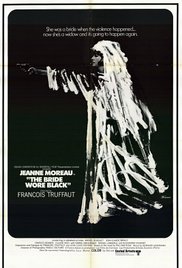
Movie Review: LA MARIEE ETAIT EN NOIR (THE BRIDE WORE BLACK) (France 1967) *****
Deadlines to Submit your Screenplay, Novel, Story, or Poem to the festival:http://www.wildsound.ca

the_bridge_wore_black.jpgLA MARIEE ETAIT EN NOIR (THE BRIDE WORE BLACK) (France 1967) *****
Directed by Francois Truffaut

Starring: Jeanne Moreau, Jean-Claude Brialy, Michel Bouquet

Review by Gilbert Seah

My personal favourite Truffaut movie and French film of all time sees sultry siren Jeanne Moreau do away with the 5 killers who accidentally shot her bridegroom on her wedding day. The Bride has 5 men to hunt, to lure and to kill. Julie Kohler (Moreau) methodically tracks them down one by one and does away with them without remorse. Truffaut gives her femme fatale more human feelings than necessary as she almost falls in love with one of them.

Five of France’s most popular actors of the time (Claude Rich, Charles Denner, Michel Bouquet, Daniel Bouloanger and Michel Lonsdale) play 4 of Julie’s victims, with Jean-Claude Brialy the common friend to two of them. It is a great delight to watch all of them on the screen again.
This film is Truffaut’s tribute to Hitchcock after he interviewed and the Master of Suspense wrote the book Hitchcock. Using Hitchcock’s frequent composer Bernard Herrmann, the film has the complete Hitchcock feel.

Truffaut includes the element of guilt, a key element in a Hitchcock film in the scene where Julie confesses her crimes to a priest in the confessional box. in the scene, she claims that she is dead after her groom, David was shot.

The most emotional scene is the one in which Julie realizes that she has fallen in love with one of her groom’s killer, Fergus (Denner). It is something she had not expected but she cooly brushes it away determined to complete her lifeline quest.

Truffaut has been described as the kindest of film directors and this film illustrates why. He does not let the innocent characters die. The cleaner who steals and drink from the bottle that holds the poisoned liquor is emptied by Julie. When the school teacher (Alexandra Stewart) Julie impersonates to do away with a victim is arrested, she calls the police to prove her innocence. The film’s best and most touching scene has the teacher enter the school gate after release only to be swarmed by all the children of the school offering their hugs and love.
The only thing missing in the story is how Julie managed to find the identity and whereabouts of the killers. Perhaps this is bet left out as it might damage the credibility of the story if too much is explained.

THE BRIDE WORE BLACK is unfortunately Truffaut’s least favourite film as he had a big argument with his cinematographer on the look of this movie, but to this critic the film is still perfection! I have not hailed more than 5 films in my lifetime as masterpieces but THE BRIDE WORE BLACK is surely a Masterpiece!

The film will open the Truffaut/Hitchcock tribute at the Bell Lightbox in July 2016.

Also, Free logline submissions. The Writing Festival network averages over 95,000 unique visitors a day.
Great way to get your story out: http://www.wildsound.ca/logline.html

Deadlines to Submit your Screenplay, Novel, Story, or Poem to the festival:http://www.wildsound.ca

Watch recent Writing Festival Videos. At least 15 winning videos a month:http://www.wildsoundfestival.com

Movie Review: KHOYA (Canada/India 2016) ***

Deadlines to Submit your Screenplay, Novel, Story, or Poem to the festival:http://www.wildsound.ca

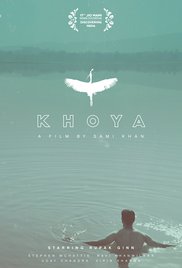
khoya.jpgKHOYA (Canada/India 2016) ***
Directed by Sami Khan

Stars: Rupak Ginn, Ravi Khanvilkar, Stephen McHattie

Read Interview with the Director

Review by Gilbert Seah

Sami Khan’s first feature is an occasionally impressive piece about a man in search of his identity.

The man is Roger Moreau (Rupak Ginn), a Canadian from a small town in Ontario, who when the film opens is on his way to the airport (as seen in the Airport Road sign on Toronto’s 401 Highway). This is how intimate Khan’s film gets, as evident in other scenes as well. Roger is travelling to India in search for his adoptive parents.

The event is initiated when Roger’s adopted mother unexpectedly dies. Roger loses his last tie to his Canadian upbringing and identity. But his arrival in India is not what he expected. The crowded and hot streets of Mumbai compared to what he is used in Canada are more than he bargained for.

Director Khan’s film works when he shows what Mumbai and Madha Pradesh in the rural heartland of India are like. Just as Roger is struck down with culture shock, the audiences is however, able to enjoy the vast differences in culture from the comfort of their theatre seats. India is poor, hot, dirty and poor. But the natural beauty is unmistakably stunning. Khan’s segment where Roger soaks his feet in the huge river (see photo inset) is extremely striking.

The film contains a few scenes set in Canada. One is in the garage where Roger works where Canadian actor Stephen McHattie has a cameo. Another is his meeting with a Chinese lady with whom Roger confides his secrets. These segments are uncomfortably told in flashbacks at awkward points in the film.

Roger Moreau is played by American actor Rupak Ginn who is in almost very frame of the film. Ginn, who has appeared in Hollywood films like FRIENDS WITH BENEFITS and Mira Nair’s THE NAMESAKE is barely able to carry the film on his own. Fortunately, Khan uses India as the main actor in KHOYA.

Khan’s film is actually two films in one. The first is the story of India and her poetic beauty. The other is the mystery of Roger’s family. Though given the run around at the start, Roger’s persistence eventually pays off. He learns the truth and he unexpectedly finds something more than he expected (what this is will not be revealed in the review).

KOHOYA is more a lyrical film than a mystery of a family identity. Though not perfect in it execution, KHOYA is still a worthy tribute of a young director who deserves more works in the future. Khan is currently working on a documentary on four Cuban baseball players.

Also, Free logline submissions. The Writing Festival network averages over 95,000 unique visitors a day.
Great way to get your story out: http://www.wildsound.ca/logline.html

Deadlines to Submit your Screenplay, Novel, Story, or Poem to the festival:http://www.wildsound.ca

Watch recent Writing Festival Videos. At least 15 winning videos a month:http://www.wildsoundfestival.com

Movie Review: #UNITED WE WIN. Directed by Henrik Friis

  MOVIE POSTER#UNITED WE WIN, UK

Played at the May 2016 FEEDBACK Film Festival


MOVIE REVIEW:

Half dangerous, hald brave and wholly compelling, #UnitedWeWin, directed by Henrik Fiirs, is a documentary turned passionate love letter about the issues surrounding war-torn Iraq. Fiirs and a handful of other early twenty-somethings’ set out to the country with limited assistance from Global Security, to make a film about the middle eastern conflict, after a traumatic video witnessed by the director propelled him to act. The forty minute partial gorilla shooting endeavor is an interesting approach to cinematic filmmaking.


#UnitedWeWin has much to be commended on. The director, Fiirs, is a natural born leader, with charisma, charm and a clear thirst to make a social and political difference in the world around him. There is daring, drive and determination in his work, and it is no small feat to arrange a film crew and create a film, halfway around the world, not accounting for age, cost and resources.


However, there is a fine line between bravery and foolishness and Fiirs’ piece is not without heavy scrutiny. The film undeniably lacks focus and direction. Bold, emotive, larger-than-life statements litter the piece, such as “what is happening here is evil” and “we all know this isn’t right”. And yet, the social, political, religious and economic issues fueling the Middle-Eastern conflicts are never discussed. As such, the filmmaker glosses over the reason the fuel the film in the first place. The film has the feeling of a director looking for the answer, when he has no idea what the question is.


As a result, the goal of the film appears far too abstract and the stakes far too outrageously dangerous to be bought by the audience as a form of consciously planned, well thought-out activism. The film has no clear vision, no clear villains, no clear answers, no focused purpose and, most terrifying to the audience, no sense that the filmmaker and the team really understand how much danger they have put themselves in while making it.


Moving towards the film’s natural style creates some other notes for discussion. The continuity of the piece is rather shady, with whole days of the trip cut out and unaccounted for, and a series of unanswered cliff hangers. There is one scene that focuses on the team touching down in the Middle East and the transportation they arranged to pick them up from the airport is not there. The next major scene shows the team three days later, with no explanation of how the previous situation rectified itself. One section of the film, shot in a refugee camp, was very stylistically shot and edited- a choice that was not consistent with the rest of the film. The team clearly had the skills and the means to produce a film, but they did not produce a film with clear meaning.


Fiirs is a young, idealistic filmmaker, producing a heartfelt piece that displays empathy to the struggles of a population he clearly cares deeply for. On that note, he must be commended. He has a strong moral code, strong ideals and passionate desire to tell a story. But his cinematic journey did not hold up a mirror to the crisis in the Middle East, as much as it did hold up a mirror to young filmmakers’ everywhere, asking them to thoroughly understand that questions they are asking, before they risk their lives in finding the answers.


by Kierston Drier
Founder of The Bathroom Stall Project
Consultant at TheKayWorks.com
Freelance Film and Television
www.thekayworks.com

Watch the Audience FEEDBACK Video:

Movie Review: 1Minute Nature. Directed by Stefanie Visjager & Katinka Baehr

  MOVIE POSTER1Minute Nature

Played at the May 2016 FEEDBACK Film Festival

MOVIE REVIEW:

In a world where words paint wonderful pictures, 1 Minute Nature follows three children as they individually recount memories from the world around them. Animated based on the story each child narrates, 1 Minute Nature is a creative reimagining of the natural world told through the eyes of a child. Both immersive and engaging, and wonderfully whimsical, each story contains cartoon animations elements moving within a real life background.

Each story narrated story recounts a child’s single isolated memory of an interaction with the world around them, but the visual spectacle is meant to shape both the children, and the viewers’ perceptions of the natural world and they way they interact with it. With the animated moving cartoon images overlaid against a stationary real-life background, there is a charming element of fantasy to the piece that is both engaging and delightful. Our three stories capture the tales of first encounters of underwater exploration, favorite animals and even school-age romance, each one weaving a wonderful portrait of childhood experiences with beautiful images.

Short, entertaining, charming and occasionally laughably honest, these three stories offer a break from the everyday world and invite us into a world of color, creativity, imagination and wonder.

by Kierston Drier
Founder of The Bathroom Stall Project
Consultant at TheKayWorks.com
Freelance Film and Television
www.thekayworks.com

Watch the Audience FEEDBACK Video:

Movie Review: LIKE A STAR. Directed by Daniele Bonarini

  MOVIE POSTERLIKE A STAR, 10min, Italy, Documentary/Comedy

Played at the May 2016 FEEDBACK Film Festival

Read interview with the director

MOVIE REVIEW:

Like A Star, directed by Daniele Bonarini, follows a special needs actor on his journey from Italy to Texas to receive an award for his recent role in a film. A classic fish-out-of-water story of a European exploring the exociticism of the deep southern United States, this tale is as heartwarming as it is humorous.


Within the span of a modest 10 minutes, Like A Star follows a our Hero on a journey that is very much one in a lifetime. From the plane take off in Italy, to landing in Texas, to the discoveries of Cowboy boots, 10-gallon hats, American steaks, Famous sites and culminating with his Award ceremony.. Our hero takes on the world with a sense of childlike wonderment blended with the bravery of an adult jumping into a pool for the first time.


Deeply moving with it’s tale, Like A Star’s beauty is that is breaks down the boundaries of otherness that often surround people of special needs from the rest of the world. It tells a story about a human being with the very human wish that bridges together people of all kinds- the wish to be recognized.


by Kierston Drier
Founder of The Bathroom Stall Project
Consultant at TheKayWorks.com
Freelance Film and Television
www.thekayworks.com

Watch the Audience FEEDBACK Video:

Movie Review: EVERYBODY FALLS DOWN. Directed by Chris Hale

festival posterEVERYBODY FALLS DOWN

Played at the May 2016 FEEDBACK Film Festival

Read Interview with the Director

MOVIE REVIEW:

Directed by Chris Hale, Everybody Falls Down steps into “ a day in the life” of Syrian Refugees living in a fenced in compound outside of Kurdistan after the mass displacement of Syrians due to social and political unrest in Syria. Shot in 2015 the piece is highly current and resonant with the issues populating north american as well as global media today. What is the fate of the displaced Syrian people? Everybody Falls Down is a deeply emotive tapestry evoking empathy, solidarity and hope for the Syrian refugees. The documentary follows the lives of families, couples and children, showing their working lives and living conditions. The film focuses on how the people manage to keep their culture, hope and joy in a facility stripped of any luxuries. At the same time film explores what many of the Syrians left have had to leave behind, their homes, livelihoods and in many cases their other family members. Heart Wrenching in some places, and joyous in others, Hale’s Work is successful at providing a glimpse into a world many of us cannot fathom, and the layers of the struggle and hope that transform displaced families into communities.

Everybody Falls Down is not omitted of scrutiny in its approach. Covering snippets of the lives of several people, and various families, Hale’s piece is highly condensed for 15 minutes. It can be argued that is is not able to provide a well rounded view of the lives of it’s subjects. Not without criticism, Hale’s piece shows only one side of the struggles of Syrian displacement. It has a clear angle for the refugee community, but does not touch on the many social, political or economic issues that displaced the population in the first place. It only briefly glosses over the politics and economic issues faced by the countries that house refugees currently. As a result, only a partial story is ever told. Everybody Falls Down is a piece worth seeing, if for no other reason than that it shows a side of life many of us have the good fortunate to never have to know. It is clear labour of love with a message that the displace people of Syria want to go home, as Hale explains, “I …try and show at least some of the people who deserve better.”

by Kierston Drier
Founder of The Bathroom Stall Project
Consultant at TheKayWorks.com
Freelance Film and Television
www.thekayworks.com

Watch the Audience FEEDBACK Video:

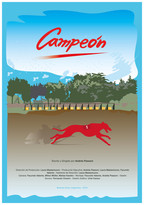
Movie Review: CHAMPION. Directed by Andrés Passoni

champion_movie_posterCHAMPION was the winner of best film at May 2016 FEEDBACK Short Documentary Film Festival.

Directed by Andrés Passoni

Genres: Documentary | Short

Read Interview with the Director

MOVIE REVIEW:

Astonishingly beautiful and stunningly shot, Champion follows the world of competitive Racing Dogs in Argentina. Shot with a focus on the animals (not their owners) the film utilizes silence, space and spectacular imagery, downplaying the natural noise and eliminating all scripted dialogue. A powerful stylistic choice that pulls the viewer’s focus to the real story of the racers. Instead of the money or bets of the people owning dogs, we focus on the dogs themselves.

One may imagine that Passoni’s film is an exercise in Voyeurism, as it emphasis lies in the spectacle of the race without any blatant insight into the mind of the racer. Conversely, it can be said that Champion does the exact opposite – showing the mind of the racing dog by focusing on the event as a dog might see it- a flurry of color, the garble of indistinguishable human noise and a pulsating energy of a run waiting to happen. Andreas Passoni defines the luminous visual aspects with respect to a lifelong appreciation for the aesthetics, “All my life I felt attracted by image and sound.”

As a filmmaker, Passoni’s Instincts for the visual spectacle of cinema are seamless and lush, both riveting and gorgeous. In regards to a short that can propel the audience into emotion via image alone- Passoni is ahead of the pack.

by Kierston Drier
Founder of The Bathroom Stall Project
Consultant at TheKayWorks.com
Freelance Film and Television
www.thekayworks.com

Watch the Audience FEEDBACK Video: