Movie Review: THE MAN WHO KNEW TOO MUCH (1956) Directed by Alfred Hitchcock

Deadlines to Submit your Screenplay, Novel, Story, or Poem to the festival:http://www.wildsound.ca

THE MAN WHO KNEW TOO MUCH MOVIE POSTER
THE MAN WHO KNEW TOO MUCH, 1956
Classic Movie Review

Directed by Alfred Hitchcock
Starring James Stewart, Doris Day
Review by Steven Painter

SYNOPSIS:

Dr. Ben McKenna, his wife Jo and their son Hank are on a touring holiday of Africa when they meet the mysterious Louis Bernard on a bus. The next day Bernard is murdered in the local marketplace, but before he dies he manages to reveal details of an assassination about to take place in London. Fearing that their plot will be revealed, the assassins kidnap Hank in order to keep the McKenna’s silent. Ben and Jo go to London and take matters into their own hands.

REVIEW:

Remakes are a part of Hollywood. So are projects that are announced, but then scrapped. A remake that has been announced, but hopefully won’t be made is The Birds (1963). From what I have read the people involved with the project totally miss the point of the movie. It isn’t about birds attacking people, but families. Anyways, The Birds is a movie that will be talked about sometime in the future. For now, I’ll go back to remakes and those trendy remakes of Alfred Hitchcock movies. Psycho (1998) is a good example of a poor Hitchcock remake. Hitchcock himself even traversed in the remake universe when he remade his own The Man Who Knew Too Much (1934) in 1956.

Being the most popular director in the world, Hitchcock movies were always in demand. Because of this demand, producers pressured him to come up with stories quickly. It wasn’t his style to rush into anything so at certain points in his career he would take on an easy project just to “recharge the batteries” as he called it. One such project was Dial M for Murder (1953), another The Man Who Knew Too Much (1956). Universal came to Hitch and asked him to remake one of his earlier British movies. After much deliberation, Hitch and his associates decided on The Man Who Knew Too Much. The original is fairly good, but could definitely be improved. The remake is in color, which makes it more acceptable to modern audiences and it does feature James Stewart and Doris Day in order to better market the picture. Other than that, though, there isn’t much that makes this remake special.

Besides asking Hitch to remake one of his films, Universal requested that a catchy song be put in so that they could sell records on top of movie tickets. Bernard Herrmann, who composed the score and played the role of the Albert Hall conductor in the movie, was not known for catchy lyrical music. So some songwriters were brought in and wrote “Whatever Will Be, Will Be (Que Sera, Sera)” for Doris Day to sing. Her singing is about the only bright spot of her time on screen. The title of the song was derived from a line in the Ava Gardner movie The Barefoot Contessa (1954). The song, of course, has become a hit and associated with Doris Day more so than with the movie.Hitch and Stewart made a good team and Stewart performs well here. His performance is superior to Leslie Banks’ in the original. This might be because Stewart’s character is better developed here. He is Dr. McKenna. Not only a doctor, but a father. The man who is supposed to have all the answers and protect his family. So when his son, Hank is kidnapped, Dr. McKenna has to find the answers. He struggles to do this. Stewart does a great job, as he did throughout his career, as the everyman looking for answers. He is a big reason why this movie is worth watching.

The biggest defect of the remake, other than Doris Day, is the absence of Peter Lorre as Abbott. In the original, Abbott is a suave bad guy who is extremely cultured. The epitome of the white-collar criminal. There is not hint of a cultured villain in this one. Mr. and Mrs. Drayton who capture Hank, are not good substitutes. This is odd, as like most of the movie, the characters are stronger. As great as Peter Lorre’s performance in the original was — his character was rather limited. Had Lorre been asked to play Mr. Drayton I can only imagine how great this movie would have been. But he was not asked to play the part and the actors who replaced him are not in his league.For the most part, the original and the remake follow the same storyline — once arrived in London that is. The beginning of the remake in Morocco is interesting, especially the scene in the restaurant where Stewart and another family from America have difficulty with the local customs. Here we see Hitchcock’s wonderful sense humor.

There is also the famous scene where the black make-up comes off of the murdered Louis Bernard, onto the hands of Dr. McKenna. This murder is shot well and is the catalyst for the rest of the story. Because Dr. McKenna has learned Bernard’s secret, his son is captured in order to silence him.

The McKennas arrive in London and begin their search for Hank, but are conveniently stopped from being able to find him. These suspense methods were employed in the first movie and have been kept for the most part intact here.

There is an interesting scene in a taxidermy store, which will echo a similar scene in the parlor of the Bates Motel four years later in Psycho (1960). Hitch had a fascination with birds and taxidermy. The scene itself is not great and probably didn’t need to be added. It was just a directorial splurge.

The Albert Hall performance is longer in the remake, probably to give Herrmann some more screen time. It is great to see the Albert Hall in color for the first time in a Hitchcock picture. The old performance hall had been a staple of Hitch’s British pictures. The famous image of the gun coming out from behind the curtain to murder the foreign dignitary during the cymbal crash during the symphony is still intact from the first movie.Doris Day screams and saves the day for the foreign dignitary. This is all nice, but it is only Hitchcock’s MacGuffin. A MacGuffin is basically a plot point in the story that doesn’t matter. There is a great joke that Hitch used to tell about the meaning of the word MacGuffin, but that will be saved for another day. Since the overt plot points are basically MacGuffins, I’ll sum up the story by saying that the McKennas work hard trying to find their son somewhere in London. They are unable to and are about to give up when Day prevents the murder of the foreign ambassador at the Albert Hall. The smitten ambassador invites the McKennas back to his embassy to say thanks.

Lo and behold Hank happens to be in the embassy. The McKennas find this out when he whistles “Whatever Will Be, Will Be.” This gives Day another chance to showcase the song. The extra screen time was also beneficial to the pocketbooks of the Universal board of directors.

I guess you could say, like all remakes, this one was done for purely commercial reasons. Perhaps that is why it does not really build as much on the original as it could have.

Also, Free logline submissions. The Writing Festival network averages over 95,000 unique visitors a day.
Great way to get your story out: http://www.wildsound.ca/logline.html

Deadlines to Submit your Screenplay, Novel, Story, or Poem to the festival:www.wildsound.ca

Watch recent Writing Festival Videos. At least 15 winning videos a month:http://www.wildsoundfestival.com

Movie Review: TORN CURTAIN (1966) Directed by Alfred Hitchcock

Deadlines to Submit your Screenplay, Novel, Story, or Poem to the festival: http://www.wildsound.ca

TORN CURTAIN MOVIE POSTER
TORN CURTAIN, 1966
Horror/Thriller Movie Review

Directed by Alfred Hitchcock
Starring Paul Newman, Julie Andrews, Lila Kedrova, Hansjörg Felmy, Tamara Toumanova, Ludwig Donath
Review by Steven Painter

SYNOPSIS:

An American scientist publicly defects to East Germany as part of a cloak and dagger mission to find the solution for a formula resin and then figuring out a plan to escape back to the West.

REVIEW:

Alfred Hitchcock never really worked with big stars, or at least he never worked with big stars he wasn’t familiar with. Ingrid Bergman and Cary Grant were making their second movies with Hitchcock when they appeared together in Notorious (1946). Grace Kelly and James Stewart had appeared in one Hitchcock movie apiece before appearing together in Rear Window (1954). Grant and Kelly had two Hitchcock movies under their belts before making To Catch a Thief (1955). So things were different when Hitchcock cast Paul Newman and Julie Andrews in Torn Curtain (1966).

Many things are different about Torn Curtain. For one, the movie has aged severely since 1990. The phrase “torn curtain” obviously refers to the Iron Curtain, which was the largest symbol of the Cold War. It no longer has any significance now that the war is over. It is also different because the two major stars, Newman and Andrews, had long, distinguished careers, but this movie is rarely mentioned as being a part of it even though they appeared in a movie directed by the world’s most popular director at this point. Perhaps the reason why this movie is not mentioned is because it is not that great. It received lukewarm reactions from audiences and critics when released and has only gotten worse since the fall of the Berlin Wall.

Our story begins on a boat filled with nuclear physicists. One of them, Michael Armstrong, played by Newman, is actually a spy for the U.S. government. His assistant and fiancée, Sarah Sherman, played by Andrews, has no idea of his real work. So she is very surprised when she finds out her husband has decided to defect to East Germany.

He does his best to lose her, she does her best to follow him and the two end up in an East German airport. Michael is celebrated by the East Germans as he is a symbol of people in the west getting fed up with democracy and coming over to their side.

Michael confesses to Sarah the real reason why he has defected. This scene is interesting, not only for the information gained, but because it occurs in a large hotel room in which the only lighting Hitchcock used seemed to come from natural places i.e. windows and lamps. Typically movies use light sources from off-screen, but act as if they are coming from on-screen. In this movie Hitch tried to keep all the light used coming from natural sources. It works to various degrees, but is most pronounced in this scene.

Adventures ensue as Michael has the task of trying to learn a secret formula from the East German scientist Dr. Lindt.

Michael is forced to murder Gromek, a taxi driver who brings Michael to a farm in which he has been instructed by the U.S. government to make contact with. Gromek gets some ideas as to why Michael is really in East Germany and Michael must kill him. Unlike other Hitchcock murders, this one is not short and pretty. It is long and hard. It was an attempt at Hitchcock to capture more realism, since killing someone is not as easy as it typically looks in the movies.

Michael meets Dr. Lindt and is able to trick him into giving him the formula. From here the suspense is ratcheted up as Michael and Sarah make a daring escape back to the west. They are the ones who create a sort of tear in the Iron Curtain by acquiring the formula.

The suspense in their escape is well done, but it should have been as each situation the coupe finds themselves in seems to have been taken from another Hitchcock movie. There is a bus ride with interesting characters that echoes similar trips in The Man Who Knew Too Much (1956) and Saboteur (1942). The couple ends up in a theatre, surrounded by bad guys. This is similar to The 39 Steps (1935), The Man Who Knew Too Much (1934) and (1956) and Stage Freight (1950). Of course Michael and Sarah get out of each situation in a different way than in previous Hitchcock movies. In the theater they shout “fire!” and everyone promptly moves towards the exits. Even the final escape for the couple, from a Scandinavian ship, seemed like a rehash from the Marx Brothers’ A Night at the Opera (1935). Michael and Sarah end up in the icy water, forced to swim ashore to the free west instead of being removed from the ship while hiding in boxes like the Marx Brothers were.

Torn Curtain probably wasn’t a bad movie when it was released. It is long and does rehash some familiar territory for Hitchcock, but the formula was effective and created suspense. It does lag in some parts, but Newman and Andrews give good performances. For today’s audience though, the movie can be hard to watch as the premise behind it has no relevance in the world of today.

Also, Free logline submissions. The Writing Festival network averages over 95,000 unique visitors a day.
Great way to get your story out: http://www.wildsound.ca/logline.html

Deadlines to Submit your Screenplay, Novel, Story, or Poem to the festival:www.wildsound.ca

Watch recent Writing Festival Videos. At least 15 winning videos a month:http://www.wildsoundfestival.com

Movie Review: BOY & THE WORLD (2015) Directed by Alê Abreu

Deadlines to Submit your Screenplay, Novel, Story, or Poem to the festival: http://www.wildsound.ca

boy_and_the_worldBOY AND THE WORLD (O Menino e o Mundo) (Brazil 2013) ***1/2
Directed by Alê Abreu

Review by Gilbert Seah

As in last year’s SHAUN THE SHEEP MOVIE, BOY AND THE WORLD is a wordless animated feature though gibberish Portuguese can be heard occasionally in the film’s soundtrack. Thus, this Brazilian import, has a more universal appeal, as it can be understood by people in countries speaking different languages.

The story is also a universal one. Being wordless, one must concentrate a bit more to put together the film’s narrative. The story concerns the boy of the film’s title, one who journeys to the big city, to see what is both fascinating and frightening. All this is captured by the film’s colourful visuals.

The film begins with the boy (animated as a stick figure with huge round Charlie Brown head with black slit eyes and no mouth) looking at a coloured rock. The patterns turn out to be inside other patterns as the camera weaves in and put different colours and patterns. All this is very mesmerizing and captivating. The boy then jumps onto a cloud and after jumps into the waters of a stream and runs into the woods.

The story involves the boy leaving for the city (that looks like Rio de Janeiro) in search of his father. He has various adventures including getting a dog, meeting mechanized workers (looking like THE WALL) and facing police oppression. The film also has abstract moments like the symbolic fight between good and evil as seen by the fight between a black bird and colourful phoenix.

The film contains beautiful moments such as the one emphasizing the importance of family, in which the boy eats bread with a melon dip with his mother and father. But the film has an overall bleak look as director Abreu lays his views on world pollution of lumber and oil, as well as the slow destruction of natural resources.

The visuals are amazing – simple and colourful being the two words best used to describe it – just like the kaleidoscope toy the boy looks and plays with. The segment of the tankers carrying colourful containers, all rectangular in shape filling the screen makes one of the more memorable moments. But just as amazing as the visuals is the film’s soundtrack that is made up of instruments like the flute, and Brazilian music like the samba and hip-hop.

The film has the feel of METROPOLIS and is at times, just as intense. To Abreu’s credit, the film is without dialogue and thus has to be more cinematic. Though the film is animated and about a boy, children might find the film difficult to understand. But the film has a total Brazilian feel about it – from the characters to the background.

BOY AND THE WORLD is welcome, very original adult animation so different from what other studios like Disney, Ghibli and Aardman provide. The film is unique and has won over 40 film festival awards so far.

Also, Free logline submissions. The Writing Festival network averages over 95,000 unique visitors a day.
Great way to get your story out: http://www.wildsound.ca/logline.html

Deadlines to Submit your Screenplay, Novel, Story, or Poem to the festival: www.wildsound.ca

Watch recent Writing Festival Videos. At least 15 winning videos a month: http://www.wildsoundfestival.com

Movie Review: VERTIGO (1958) Directed by Alfred Hitchcock

Deadlines to Submit your Screenplay, Novel, Story, or Poem to the festival: http://www.wildsound.ca

VERTIGO MOVIE POSTER
VERTIGO, 1958
Classic Movie Review

Directed by Alfred Hitchcock
Starring James Stewart, Kim Novak
Review by Steven Painter

SYNOPSIS:

A San Francisco detective suffering from acrophobia investigates the strange activities of an old friend’s wife, all the while becoming dangerously obsessed with her.

REVIEW:

Vertigo (1958) is the first of Alfred Hitchcock’s four straight masterpieces of the late-50s and early-60s (North by Northwest, Psycho and The Birds being the others). It also might be the best of the four. It is the most complex.

The story revolves around Scotty Ferguson, played by James Stewart, who is a retired detective in San Francisco. Ferguson retires after coming down with arachnophobia. The move opens with a rooftop chase. Scotty and another officer are hot on the trail of a criminal. They jump from roof to roof. The other officer makes the jumps fine, but Scotty has trouble on one. The officer stops his pursuit to help Scotty. Unfortunately for the two, Scotty has a case of vertigo and the officer loses his balance, falling from the roof.

While trying to get over his arachnophobia, Scotty spends a lot of time with Midge, a former fiancée, who is nothing more than an interesting character. In fact, she is basically forgotten in the second half of the movie for some reason. She is basically someone who is inserted for Scotty to talk to. She has some fine qualities, but they are not accented enough in her brief screen time.

Anyway, a former schoolmate of Scotty’s, Gavin, calls him up for a job. At first Scotty refuses — saying he is retired. But Gavin convinces him that the job is good. Scotty is asked to look after Gavin’s wife, Madeline, who seems to believe she is the reincarnation of an ancient relative named Carlota. Carlota had committed suicide and Scotty’s friend feels that Madeline will do the same.

Scotty sees Madeline first in a restaurant and then follows her throughout the next day. He is struck by her. In fact, the audience is captivated by her. Kim Novak, despite her tumultuous relationship with Hitchcock, does a great job in this movie. She is very photogenic and her presence captivates the audience. Hitch also devoted a lot of time to her trivial routines. Or at least what would normally be a trivial routine. Hitch makes sure we pay attention to Novak’s beauty and the beauty of the city.

This is where Vertigo stands out from a lot of Hitchcock movies. The story might be more complex than a lot of his other movies, but the photography is so simple. The city of San Francisco has never looked so good on film. The winding streets, the local shops (Ernie’s was one of Hitch’s favorite restaurants), the Redwood forest, the deep history of the Bay Area, are all brought to life. Of course there is the famous Golden Gate Bridge and the monumental scene where Scotty saves Madeline when she jumps into the bay. Typically movies shot in Technicolor tend to make colors too bright. That is not the case here as all the color saturation seems perfect.

Once Scotty saves Madeline, the two fall in love. Madeline is crazy though. Because of his love for her, Scotty is unable to notice the warning signs of Madeline’s suicide. She and he make a trek down the coast to an old mission. This is where Carlota died — it is where Madeline wants to die. Because of his arachnophobia, Scotty is unable to prevent Madeline from climbing the steps and throwing herself out the bell tower at the mission.

During an inquest, it is found that Madeline died accidentally and Scotty could do nothing to prevent her death. The scenes in the mission bell tower are most famous for Hitchcock’s “Vertigo shot.” The shot that mimics the effect of vertigo was something Hitch had been working on for over 20 years. It was finally perfected here and was done by using miniature models. The camera was moving toward the models while the lens was zooming out. The technique has been used in movies many times since Hitch first pioneered it.

Devastated by another death he feels he could have prevented, Scotty goes into rehab. This is the last time we see Midge, as she and the other doctors are unable to get Scotty back on track. After an unspecified length of time and for some unknown reason, Scotty is taken out of rehab and put back in the real world. Here he drifts along thinking about Madeline. One day, while walking along the street, Scotty notices a girl who looks a lot like Madeline. He stalks his prey to her hotel where he makes his move. The girl’s name is Judy. After some resistance she agrees to go out with Scotty. After their first date, in which Scotty talks a lot about Madeline, it is revealed to the audience that Judy is in fact Madeline. Kim Novak plays both characters and just has dyed her hair. Although there are times when it seems that she has done more than just dye her hair to change from Madeline to Judy.

This would be a good time to mention that Novak was not Hitch’s first choice for the role. He wanted to use Vera Miles. But since it took so long for a script to be written, Miles was unable to be used because she got pregnant. So Novak was used and Hitch didn’t like her. The two didn’t get along. Novak had other ideas on how the play the character. Despite the tension, the performance on the screen is great.

Scotty decides to remake Judy in the model of Madeline. Of course Judy resists this. She had been hired by Gavin to play Madeline once in order to cover up the murder of Gavin’s real wife, the real Madeline. Since Scotty had arachnophobia, something Gavin knew, Scotty would be unable to save Madeline when she “jumped” from the bell tower. In fact, Judy ran up the bell tower where Gavin threw his wife’s body off.

This is not realized by Scotty until the fully remade Judy puts on a necklace that had belonged to Madeline and Carlota before her. Obsessed with the crime, Scotty forces Judy back to the mission and up the steps of the bell tower. In triumph, Scotty makes it to the top. In tragedy, footsteps are heard coming up the stairs and Judy jumps out of the tower in one of the most frightening scenes of the Hitchcock cannon.

Vertigo is a masterpiece plain and simple. It is regarded highly by critics, scholars and audiences. The main reason for this can not be found, at least to me. It has some sort of quality that just makes it enjoyable to watch. Maybe it is the complex story. Maybe it is the luscious scenery. Maybe it is the performance of Jimmy Stewart. Maybe it is the chemistry between Stewart and Kim Novak. Whatever it is, this movie is a must see for anyone who likes movies.


Also, Free logline submissions. The Writing Festival network averages over 95,000 unique visitors a day.
Great way to get your story out: http://www.wildsound.ca/logline.html

Deadlines to Submit your Screenplay, Novel, Story, or Poem to the festival:www.wildsound.ca

Watch recent Writing Festival Videos. At least 15 winning videos a month:http://www.wildsoundfestival.com

Movie Review: THE FOREST (2016) Horror

Deadlines to Submit your Screenplay, Novel, Story, or Poem to the festival: http://www.wildsound.ca

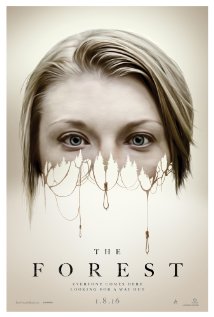
the_forest_posterTHE FOREST (USA 2015) ***
Directed by Jason Zada

Review by Gilbert Seah

The beginning of January usually sees new low budget films make number one at the box-office. Universal’s little horror flick , THE FOREST aims to do just that, and hopefully keep their fantastic 2015 year of box-office hits carried over to 2016.

Twins have always been a favourite pick in the horror genre. Films like Brian De Palma’s SISTERS, David Cronenberg’s DEAD RINGERS and others like THE OTHER and last year’s German GOODNIGHT MOMMY are prime examples. THE FOREST combines the twins story to a haunted forest plot in a relatively scary film about a young woman Sara (Natalie Dormer) who travels to Japan’s forest below Mount Fuji to search for her missing twin, Jesse (also played by Dormer but with black hair).

For a ghost story, there is little gore except a stabbing and a few imagined maggots. Director Zada is fond of false alarms to scare the audience out of the seats. These include a homeless man suddenly banging Sara’s taxi window in Japan, her dream of little Jesse in the tent screeching at her and scares from a Japanese teenager in school uniform among others.

At its best, the film has genuine cinematic scares. The dark of a forest is already creepy in itself. THE BLAIR WITCH PRJECT was scary enough with its camping segment shot mainly in the dark. Zada utilizes the segment in which Sara sits in the tent in the forest to stay the night waiting for her sister to return, to maximum effect. The use of light and shadows from the burning fire adds to the creepiness. Sara’s fall into a huge hole and exploring an underground cave also adds to the film’s best moments.

Story-wise, the plot is simple enough. It is a sister’s search for her twin in a Japanese forest known as a place where people go to die. A few loose ends could be easily explained. One immediate point that is questionable is character Rob (Eoin Macken), who meets Sara. He is supposed to be an Australian journalist in Japan. But he speaks with an American accent. But from the dialogue that specifies Rob as a traveller, it could be assumed that Rob is American with an Australian posting. One scene has the Japanese guide tell Sara that in the forest bad things can happen, but they are not real and are all in the head. This is an excuse for other non-explanations in the plot such as Jesse’s photos on Rob’s cellphone or Rob’s answer to Sara that Jesse has been dead for 5 days. These could be dismissed as imaginations in Sara’s head.
Still, this relatively slow moving horror movie is well scripted by no less than 3 writers. Zada’s direction is apt enough and there are sufficient scares – false alarms or real ones.

Do not expect scenic shots of Mt. Fuji or its forests below. The film was actually shot in a National Park in Serbia with an entire crew of Serbians, as can be seen in the end credits. But the cinematography is excellent for a horror flick and the Serbian National Park looks like quite the place to visit.

THE FOREST will definitely make one think twice when camping at night.

Also, Free logline submissions. The Writing Festival network averages over 95,000 unique visitors a day.
Great way to get your story out: http://www.wildsound.ca/logline.html

Deadlines to Submit your Screenplay, Novel, Story, or Poem to the festival:www.wildsound.ca

Watch recent Writing Festival Videos. At least 15 winning videos a month:http://www.wildsoundfestival.com

Movie Review: THE WRONG MAN (1956) Directed by Alfred Hitchcock

Deadlines to Submit your Screenplay, Novel, Story, or Poem to the festival: http://www.wildsound.ca

THE WRONG MAN MOVIE POSTER
THE WRONG MAN, 1956
Classic Movie Review

Directed by Alfred Hitchock
Starring Henry Fonda, Vera Miles
Review by Steven Painter

7.5/10 fan rating on IMDB

Read more professional reviews

SYNOPSIS:

The police were convinced… The witnesses were positive …Yet he was… THE WRONG MAN

REVIEW:

“The Wrong Man” could have been the title for many movies directed by Alfred Hitchcock. It was bestowed on a movie he directed in 1956. The tone of the movie is different from other Hitchcock ones. It is also out-of-date, a rarity among the works of Hitch before the late-60s. Despite these drawbacks it is wonderfully acted.

The Wrong Man is based on a true story. This is probably one of the reasons why there is a lack of humor in it. Hitch always used humor in his movies to counteract the suspense. He felt the audience needed to be let off the hook at times. There is no humor present here. It is a straightforward, grim look at the breakdown of a family.

The story involves Christopher Emmanuel Balestrero, played by Henry Fonda, known as Manny to his family. He is a musician at New York’s Stork Club, trying to make ends meet like a lot of other people. He has a wife, Rose, played by Vera Miles, and two young sons. Rose has recently gotten some dental work done, so the family is in financial difficulties. Despite these difficulties, Rose and Manny try their best to hide it from their kids.

Manny decides to borrow a little money against Rose’s life insurance policy. When he goes to the insurance office, some workers there claim that Manny is the person who recently committed armed robbery in the office. The man had not been caught yet. So the next evening, Manny is picked up outside his house by the police.

One of the reasons why Hitchcock wanted to make this movie was because it involved a scene where Manny is being driven through his own neighborhood in the back of a police car. He sees the normal, trivial routines of everyone, but is unable to take part in any of it. Instead, he is caged in. This fear of being picked-up by the police for something that he didn’t do, is something present in all of Hitchcock’s works and a great fear the man himself had. Manny is brought into the police station. In this pre-Miranda rights era, he is held with no reason. Of course arguments could be made today that the Miranda rights are being ignored by police officers, but at least at this point in time, there were no such rights. This is one of the biggest drawbacks of the movie. It is outdated in this instance and because a lot of audience sympathy is built up because Manny is held with no rights, it just doesn’t seem believable today.

Anyways, Manny is held and some local business owners are brought in to identify him. They can’t say for certain if Manny is the robber, but he seems close enough to the real criminal in looks and handwriting. This satisfies the police and they continue with their prosecution.

Strapped for money and with a husband facing a trial, Rose begins to lose it. She drifts farther and farther from Manny, the kids, and the world itself. Eventually she has to be put in an asylum. This secondary vein of the movie distracts from the main story of Manny being falsely accused of the crime, but in Hitchcock’s defense, the real wife of Manny did in fact end up in an asylum.

As with all things of this time period in Hollywood, the movie has a happy ending. In a great dissolve shot, we see Henry Fonda’s face become that of the real robber. The real robber is caught while trying to rob another store in the neighborhood. When this robber is brought in to be identified, the storeowners come in and say the same things they did when Manny came in. Of course Hitch put this in to cause some doubt in the audience. He asks “do we really ever know who the right man is?”

The movie ends with a blurb across the screen stating that the Balestrero family lived happily ever after. In real life, Rose was committed to the asylum and never regained her sanity. The ordeal crippled the family, instead of making them stronger – as the movie implies.

The Wrong Man is not a bad movie. It is outdated and it is grimier than most Hitchcock movies. But it is well acted. Vera Miles and Henry Fonda give tremendous performances. For this reason alone the movie should be watched. But if you need another reason, the fear of being a falsely accused person with no rights is something that is inherent in a lot of people. That fear is played out in this story.


Also, Free logline submissions. The Writing Festival network averages over 95,000 unique visitors a day.
Great way to get your story out: http://www.wildsound.ca/logline.html

Deadlines to Submit your Screenplay, Novel, Story, or Poem to the festival:www.wildsound.ca

Watch recent Writing Festival Videos. At least 15 winning videos a month:http://www.wildsoundfestival.com

Movie Review: MARNIE (1964) Directed by Alfred Hitchcock

Deadlines to Submit your Screenplay, Novel, Story, or Poem to the festival: http://www.wildsound.ca

MARNIE, 1964
Horror/Thriller Movie Review
Directed by Alfred Hitchcock
Starring Tippi Hedren, Sean Connery
Review by Steven Painter

7.2/10 IMDB fan rating

Read more professional reviews of Marnie.

SYNOPSIS:

Mark marries Marnie although she is a habitual thief and has serious psychological problems, and tries to help her confront and resolve them

REVIEW:

There are many gems Alfred Hitchcock made that do not get the fanfare other movies of his have gotten. From the 1940s, Foreign Correspondent is underappreciated. In the 1950s it is Strangers on a Train. In the 1960s that movie is Marnie (1964).

Marnie is Hitchcock at his psychological best and probably the last great movie of his career. It is certainly the final movie of an era. It would be the last time Hitch worked with cinematographer Robert Burks, who would die soon after finishing the picture from a heart attack, and legendary composer Bernard Herrmann. The two had artistic differences.

The bad thing about this is that when Hitchcock had a difference of opinion with someone – they left the Hitchcock production company. It happened to Ingrid Bergman and it happened during this movie to Ian Hunter. The screenwriter had worked on several Hitchcock pictures, but disapproved of the rape scene in the novel version of Marnie. He voiced his displeasure over the scene to Hitch and Hitch severed relations with the screenwriter. It was only later that Hunter learned the only reason why Hitch wanted to make the movie was because of the rape scene.

Marnie can be looked at as the last great Alfred Hitchcock movie. It is a fitting tribute to a career that spanned more than four decades up to this point.

Tippi Hedren returns to the screen as Margaret Edgar, also known as Marnie. The original choice for the role was Grace Kelly, but at this time she was Princess of Monaco and it would have looked bad if a princess was playing a kleptomaniac. So Hedren got the role of the psychologically confused kleptomaniac.

Using different names and appearances, Marnie moves from job to job, stealing money from her employers before moving on to another town. One job she takes is with publisher Mark Rutland, played wonderfully by Sean Connery. Mark happens to recognize Marnie’s features from a previous business encounter. He becomes fascinated by her and tries to move in on her romantically. She ignores him as the only love she has ever felt in her life has come from stealing money.

She steals money from Mark’s company and makes a dash for it. Mark discovers the loss and balances it. He then takes off to find out who this wild girl really is. He tracks Marnie down at some stables she frequents, as horseback riding is one of her escapes. He then uses blackmail as a technique to get her to marry him.

The wonderful idea of marriage backfires on Mark as Marnie is cold to any sort of sexual advances. When Mark forces himself on her during their honeymoon, in Hitchcock’s favorite scene, she attempts suicide.

Unable to understand Marnie and still fascinated by her, Mark investigates her past. He ends up bringing Marnie to her mother, Bernice. The mother and daughter have always had a frigid relationship. In one of the best climaxes in all of Hitchcock, it is revealed in stunning detail why Marnie is so cold sexually, why she and her mother express little love for each other and why she despises the color red. The atmosphere around this movie is what makes it great. Credit must be given to Robert Burks for creating the camera angles and photographing exactly what Hitchcock had in his mind when reading the novel written by Winston Graham. Credit has also got to be paid to Bernard Herrmann for his magnificent score. It was the last time the two would work together, but it is probably the best overall score Herrmann gave to Hitchcock. The Vertigo and Psycho ones stand out, but Marnie has a score that perfectly expresses through music the atmosphere on screen.

Marnie is a complex movie. I could go on for paragraphs and paragraphs about all the little interesting things contained in it, but I’ll leave you to discover that for yourself. Robin Wood, the film theorist, proclaimed that if you don’t like Marnie then you aren’t a fan of Hitchcock. Then he went a step further and said if you don’t like Marnie then you aren’t a fan of movies. I fully agree with his statements.


Also, Free logline submissions. The Writing Festival network averages over 95,000 unique visitors a day.
Great way to get your story out: http://www.wildsound.ca/logline.html

Deadlines to Submit your Screenplay, Novel, Story, or Poem to the festival:www.wildsound.ca

Watch recent Writing Festival Videos. At least 15 winning videos a month:http://www.wildsoundfestival.com

Movie Review: SVENGALI (UK 2015)

Deadlines to Submit your Screenplay, Novel, Story, or Poem to the festival: http://www.wildsound.ca

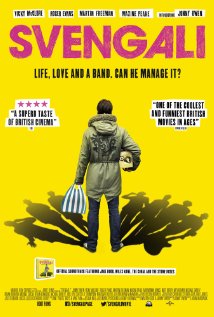
svengali_posterSVENGALI (UK 2013) **1/2
Directed by John Hardwick

Review by Gilbert Seah

The story of this straight to Video on demand British film is as simple the mind of the lead character who nicknames himself Dixie (Jonny Owen). Dixie leaves his small Welsh mining town for the big city of London. He intends to become the manager of what he thinks is the best band in the world. This he thinks after watching them on Youtube. He brings along to London his long-suffering girlfriend, Shell (Vicky McClure). Things are not that straightforward in the big city but Dixie and Shell manage somehow.

As the ads ask, can Dixie manage a relationship, a band and his life? That is what director Hardwick (mostly British TV stuff) intends his audience to find out.

Hardwick’s film has several charms. For one, the lead character, though annoying that he may be at times, wearing the same old disgusting vintage parka and carrying around a Tesco plastic bag, is a loveable lug who always means well. His favourite words are: “I am sorry” uttered with his Welsh accent. It is hard not to feel for a small town boy (big though he may be) moving to London in search of his big dream.

Newcomer Jonny Owen isn’t half bad as Dixie. He basically plays himself, a music enthusiast, star and producer of his own internet-based sketches of the same title in real life, which he has expanded for the big screen. But running at 90 minutes, the task becomes massive and different from the execution of short skits on the net. The little jokes and humour fail to sustain, and the one idea film soon runs out of steam. The story is also too predictable but there are a few prize characters such as the fat pop drinking Russian landlady. The camera is fond of showing her ass.

It would be an additional bonus if the band did put out some good songs on film. As it is, the band members are all shown as a lot of arguing misfits.

The word Svengali, the film title, refers to a person who manipulates or exerts excessive force over another. It also refers to a character in the George Du Maurier’s 1895 novel made into a film several times called Svengali who hypnotizes and brings to fame a young singer. It is not clear which of the three director Hardwick or writer Owen has fashioned his title from. Dixie manipulates his girlfriend and the band to stardom, though not with excessive force.

The film contains cameos from several TV personalities that North Americans will not be familiar with. Martin Freeman from the three Lord of the Rings HOBBIT films is perhaps the only one recognizable.

It is difficult to envisage huge North American audiences getting too excited about this small British export. Unless one is ex-British staying in North America, in the music business industry, in a struggling band or have Welsh roots, SVENGALI will have little appeal. This film therefore goes straight to VOD (video on demand) skipping the theatres on January the 10th. Myself, I visited Wales 2 years back, which is the main reason this little film attracted me to review.

Also, Free logline submissions. The Writing Festival network averages over 95,000 unique visitors a day.
Great way to get your story out: http://www.wildsound.ca/logline.html

Deadlines to Submit your Screenplay, Novel, Story, or Poem to the festival:http://www.wildsound.ca

Watch recent Writing Festival Videos. At least 15 winning videos a month:http://www.wildsoundfestival.com

Movie Review: HOUSEBOUND (New Zealand 2014) ***** Top 10
Deadlines to Submit your Screenplay, Novel, Story, or Poem to the festival: http://www.wildsound.ca

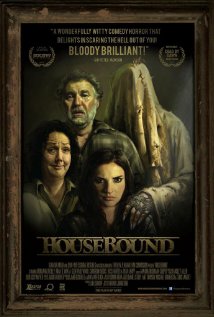
housebound_posterHOUSEBOUND (New Zealand 2014) ***** Top 10
Directed by Gerard Johnstone

Review by Gilbert Seah

It is not often that a film comes out of nowhere that turns out to be the biggest surprise of the year. HOUSEBOUND might be that film for 2015.

This is the story of story of Kylie Bucknell (Morgana O’Reilly), an ill-tempered delinquent forced to return to the house she grew up in when the court places her on home detention. Her punishment is made all the more unbearable by the fact she has to live there with her crazed mother Miriam (Rima Te Wiata) – a well- intentioned blabbermouth who’s convinced that the house is haunted. They do not get along. Kylie dismisses Miriam’s superstitions as nothing more than a distraction from a life occupied by boiled vegetables and small-town gossip. However, when she too becomes privy to unsettling whispers and strange bumps in the night, she begins to wonder whether she’s inherited her mother’s overactive imagination, or if the house is in fact possessed by a hostile spirit who’s not particularly thrilled about her return. Nothing more should be said about the story as surprises are around every corner.

The film contains priceless stereotyped characters everyone would love to laugh at. These include stupid follow-the-book police officers, a therapist that offers the most obvious observations and a parole officer that asks the silliest questions. But the supporting characters are also priceless. The best is the gossiping, superstitious mother who can believe that the ouse is haunted but not what her daughter tells her.

The horror comedic set-us are equally brilliantly staged from the climatic fight on the roof to the exploding head scene. As far as predictability goes, Johnstone parodies the familiar in horror films but the joked and set-ups are genuinely fresh.

HOUSEBOUND is the best horror comedy surprise coming from New Zealand since Peter Jackson stunned the world with BRAINDEAD (banned in Canada and released straight to video under the title DEAD ALIVE). Hollywood rewarded Jackson with THE FRIGHTENERS and the rest is Tolkien history. Who knows? The same may follow suit for Gerard Johnstone.

But what the film overlooks in explanation is the possessed stuffed bear. If all the noise and moving objects were due to the stranger living behind the walls, how did the bear come alive?

The film may be considered violent depending how one looks at it. Harmless fun perhaps? But funny, nevertheless. Scenes such as the one in which Kylie uses a grater to her attacker’s face could go wither way. But there are also nice touches such as Kylie finally protecting and bonding with her annoying mother.

O’Reilly is winning as the attention deficit Kylie. But Te Wiata ias the mother is completely unforgettable.

The film has had a super successful international festival run that included premieres at SXSW, Toronto After Dark, Vancouver International Film Festival, and Neuchâtel International Fantasy Film Festival 2014 where Housebound won the HR Giger ‘Narcisse’ Award for Best Feature Film, and the Dead by Dawn Horror Film Festival in Scotland where it landed an Audience Award.

Peter Jackson has seen HOUSEBOUND and calls the film: “Bloody Brilliant!” It certainly is!

Also, Free logline submissions. The Writing Festival network averages over 95,000 unique visitors a day.
Great way to get your story out: http://www.wildsound.ca/logline.html

Deadlines to Submit your Screenplay, Novel, Story, or Poem to the festival:http://www.wildsound.ca

Watch recent Writing Festival Videos. At least 15 winning videos a month:http://www.wildsoundfestival.com

Movie Review: LEGEND (UK 2015)

Deadlines to Submit your Screenplay, Novel, Story, or Poem to the festival: http://www.wildsound.ca

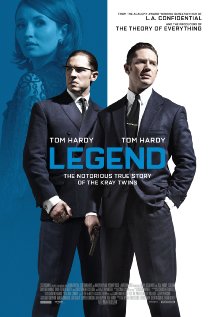
legend_posterLEGEND (UK 2015) ****
Directed by Brian Helgeland

Review by Gilbert Seah

The second film about the notorious Krays, (the first was called THE KRAYS in the 80’s directed by Peter Medak) the gangster twins that terrorized London the 50’s and 60’s is given a glossier more modern approach.  But just as violent.  The Kray twins in LEGEND are both played by Tom Hardy.

Written and directed by Brian Helgeland (L.A. CONFIDENTIAL his best film) and based on the book The Profession of Violence: The Rise and Fall of the Kray Twins by John Pearson, the film is told from the point of view as well as narrated by Frances Shea (Emily Browning) the wife of Reggie Kray.   She met Kray at 16 and married him aged 22 in 1965 . She committed suicide in 1967, and narrates the film from beyond the grave.  “It took a lot of love to hate him the way I did,” were her famous words.

When the film begins, the Krays are already established gangster princes.  The script does not detail how they got to be such prominent gangsters except by having them usurp the turf from Charlie (Paul Bettany) and his brother Eddie, childhood friends of the Krays and the leaders of notorious south London gang (also known as the Torture Gang).  That was when Reggie met Frances.  The film that goes on to deal with the further rise and fall of the Kray twins; the relationship that bound them together, and charts their gruesome career to their downfall and imprisonment for life in 1969.  And all from Frances’ angle.  

LEGEND is necessarily violent.  The best segment is the well executed fight between the two brothers (made trickier to shoot as both brothers are portrayed by the same actor) which is guaranteed to make you cringe in your seat.

The script is set up to have the audience take the side of Reggie, the sane brother.  The other, who is ultra violent and homosexual and certified insane not once but twice is the script’s set up for the downfall of the Kray’s empire.

Hardy does an exceptional job playing the Krays, definitely proving to be Oscar material here.  He creates two very different characters in the Krays, one sane and the other insane.  Though the film uses the tactic of Ronnie’s glasses to distinguish the twins apart, Hardy creates different nuanced behaviour for each.  Of the other performances, David Thewlis stands out as the Krays business and lawyer connection who wants to make the business more legitimate, thus running foul with Ronnie.

Ronnie’s homosexuality is treated in the film with campy seriousness.  He justifies his gay sexual acts by claiming to be the giver and not the taker.  One difference between the two KRAY films is that Medak’s dwelt on the Kray’s doting mother’s influence, the mother played by Billie Whitelaw in THE KRAYS.

The 50’s and 60’s London atmosphere is effectively created, complete with the period posh suits, vehicles and Burt Bacharach songs like ‘The Look of Love’.

Hard to fault, LEGEND belongs to the genre of excellent British crime thrillers of the 70’s that used to be popular.


Also, Free logline submissions. The Writing Festival network averages over 95,000 unique visitors a day.
Great way to get your story out: http://www.wildsound.ca/logline.html

Deadlines to Submit your Screenplay, Novel, Story, or Poem to the festival:http://www.wildsound.ca

Watch recent Writing Festival Videos. At least 15 winning videos a month:http://www.wildsoundfestival.com