Film Review: 3 FACES (Iran 2018) ***

3 Faces Poster
Trailer

Three actresses at different stages of their career. One from before the 1979 Islamic Revolution, one popular star of today known throughout the country and a young girl longing to attend a drama conservatory.

Director:

Jafar Panahi

Iranian director Jafar Panahi has shot to fame after being imprisoned by the Iranian Government followed by 8 years of house arrest.  Worst and not least, Panahi has been banned from making films.  As Tanya Harding proclaimed after she was banned from ever entering any skiing competition for crimes she allegedly committed (“If you have taken skating away from me, what else is there in life?”), what else is Panahi to do if he does not make films.  Thankfully, he has continued to make films, as evident in his latest entry set in repressed Iran which won him the Best Scenario Prize at Cannes this year.

Iranian director Jafar Panahi’s 3 FACES looks at current issues dominating not only Iran but the world today – female inequality, oppression leading to abuse and unwavering tradition.

The film begins with a lengthy and troubling video shot on a cellphone of Marziyeh (Marziyeh Rezaei), describing how her ambition to become an actor has been thwarted by her family, and pleading for support from Iranian actor Behnaz Jafari. The footage ends abruptly, with the defeated Marziyeh appearing to commit suicide.   The footage illustrates how effective a simple device like a cell phone can be  used to make a film.  It also shows that clarity of the image is not mandatory in order to get a  point across,  Still, this sequence is overdone and overlong.  

Shaken by the recording, Jafari (playing a fictionalized version of herself) abandons a film shoot and sets off to Marziyeh’s village in the company of her friend Panahi (playing himself).  Upon their arrival, they meet with Marziyeh’s friends and apprehensive family, who remain unmoved in ostracizing their daughter for her choice of profession — a reaction rooted in the village’s traditional mindset, and one that’s forced an old silver-screen legend, Shahrazade, to live on the edge of town. The more Jafari and Panahi discover about Marziyeh, the more they learn about the community around her and the inescapable bond between tradition and destiny.

Th film contains a few clever plot twists that keep the story moving.  The film has the feel of an Abbas Kiarostami movie, particularly THE WIND WILL CARRY US, especially the scenes with the winding roads up the hill, with similar such scenes in Panahi’s film.  At times, Panahi tries to be too cute, such as the dialogue involving the honking of the car while driving to the village.  Still the simplicity of the film shows the mastery in Panahi’s work.

Despite good ideas in small budget filmmaking, most of which transpires onscreen have been seen before, especially in Iranian films who appear to have cornered the niche in this type of filmmaking.  Even at 90 minutes, 3 FACES feels long and stretched out.  It could have been compressed to 70 minutes resulting in a  less boring film.  The beginning sequence of Marziyeh committing suicide says it all.  That 8 minute sequence could have been trimmed to half the time to better effect.

Trailer: https://vimeo.com/284212080

Film Review: GLORIA BELL (USA/Chile 2018) ***

Gloria Bell Poster
Trailer

A free-spirited woman in her 50s seeks out love at L.A. dance clubs.

Director:

Sebastián Lelio

Writers:

Alice Johnson Boher (adapted screenplay), Sebastián Lelio | 1 more credit »

GLORIA BELL begins and ends with Julianne Moore dancing at a club in an 80’s setting.  The era is never mentioned but can be deduced from the 80’s song playlist and from the wardrobe and hair style of the characters.  Chilean director Leila has been known to effectively use and bring to life his films with the use of a singular song, the most notable and remembered being Richard Burton’s rendering of the song CAMELOT from the stage musical in Leilo’s film JACKIE about Jackie Kennedy.  In GLORIA BELL, Gloria Gayor’s ‘”Never Can Say Goodbye” begins the film while the popular 80’s song “Gloria” closes it.

GLORIA BELL is described in the press notes as a film on mature dating.   The film opens with Gloria on the dance floor.  Gloria Bell (Julianna Moore) introduces herself to a stranger (and to the audience) as Gloria Bell, a divorcee of 12 odd years.  She meets in the same night, Arnold (John Torturro) who she eventually begins a relationship with, after some hot sex, in which nothing much can be seen much but much can be heard, which means the audience will get the point.

Gloria has been on the dating scene for a while – probably for 12 years or so, judging from her behaviour.  She is not eager to begin a relationship right away but is not opposed to the idea either.

For a film about mature dating, the film covers all the points about its problems.  These include:

– the baggage that each member brings to the relationship with each having their own children and each with their own set of problems

  • the discomfort of still dating at such a late age; Arnold \ has qualms about telling his children about Gloria, obviously embarrassed at the situation
  • jealousies that flare up; Arnold is uncomfortable when Gloria shows affection for her ex (Sean Astin) at her son’s (Michael Cera) birthday party
  • each member is set in their own stubborn ways and behaviour; Arnold in leaving Gloria when trouble arise 
  • disapproval and constant questioning of the children; as it happens at Gloria’s son’s birthday party

The song, Gilbert O’Sullivan’s “Alone Again, Naturally”  that is heard right in the middle of the film again is effectively used by Leilo to put his story in perspective.

Leilo’s film benefits from the performances of its actors, which are key for a dating drama of this sort.  Moore and Torturro are both excellent, especially Torturro who obviously has toned down his usual manic performances.  It is good too to see Michael Sera in the role of Gloria’s son, Cera being absent from the screen for some time.

The script is also smart enough not to take sides.  Both Arnold  and Gloria have their valid reasons for each fight and one could side with either, despite being male or female.  The film’s subplots, like Gloria’s expecting daughter taking off to Sweden to marry her beau also enhances rather than distracts the main story.

GLORIA BELL is not full of surprises (in fact, if the film seems strangely familiar, you could have seen Leilo’s original Spanish 2013 version called GLORIA which was set in Santiago) but it serves a realistic slice of life mature dating, with all its pitfalls and bright spots.  It is an entertaining watch to see ourselves in similar situations.

Trailer: https://www.youtube.com/watch?v=fPq4zW9QZSg

TIFF Cinematheque Presents – MEXICAN Cinema (Capsule Reviews)

TIFF Cinematheque presents  Mexican cinema that includes many rare Mexican films never or seldom screened before.  The program of films is co-selected by Mexican director Guillermo del Toro, now living in Toronto whose favourite film, Luis Bunuel’s LOS OLVIDADOS changed his life, as so he claims.

Capsule Reviews follow below and are listed in the order of their screenings at the Lightbox.  The screening links are provided y kid courtesy of TIFF Cinematheque.

This program is a rare treat and in my opinion, one of the best programs delivered at TIFF for a long time.

CAPSULE REVIEWS (in order of Screening)

CRONOS (Mexico) ****
Directed by Guillermo del Toro

Del Toro’s (THE SHAPE OF WATER, PAN’S LABYRINTH) feature debut is an impressive classic horror take re-set in Mexico.  An antique dealer (Ferderico Luppi) comes across a strange device  that is revealed to grant its owner the eternity of life.  But it comes with a price.  The owner would have to undergo severe pain for the device to take effect and the owner would have an insatiable taste for blood.  American actor Ron Perlman plays the role of the violent nephew of an old wealthy uncle (Claudio Brook) who knows about this CRONOS device.  CRONOS bears del Toro’s trademark for blood and gore that would guaranteed to have audiences turn their faces away.  Still CRONOS is a very scary and horrifying tale of the extent some people will go through to live forever.  Del Toro also creates an impressive gothic atmosphere.

Screening: Feb 28th

LOS OLVIDADOS (Mexico 1950) ***** Top 10
Directed by Luis Bunuel

Compelling and uncompromising look at Mexican street youth that won the director the Best Director prize at Cannes.  Shot in black and white around the dirty city streets around the countryside, the drama follows several youth including the perpetually bad Jaibo, recently released from jail, the generally good but impressionable Pedro among others.  The action begins when Jaibo accidentally kills a fellow street kid while he complicates Pedro.  Jaibo has no qualms against robbing or beating up cripples or blonde beggars.  Pedro is guilty as hell incurring nightmares in one of Bunuel’s another unforgettable surreal dream sequence involving a chicken and his floating mother.  Pedro alos longs for his mother’s missing love, so much so that he takes on a job as an apprentice to help support the family.  “Why did you not give me meat to eat that day?” is the important question Pedro asks his mum to which he gets no reply.  Compelling drama of poverty and one that the audience can feel for.  This one of Bunuel’s best – a story with a powerful message, worthy of Victor Hugo’s LES MISERABLES.

Screening: March 1st

THE EXTERMINATING ANGEL (Mexico 1962) ****

Directed by Luis Bunuel

What might seem like an episode of THE TWILIGHT ZONE where guests at a lush dinner party are unable to leave for reasons totally unknown, THE EXTERMINATING ANGEL turns out to be Bunuel’s quiet surrealistic classic.  Thought things are weird, everything looks normal from the outside.  Though there are no barriers to leave, whenever the guest leave, they are prevented by one reason after another- like “we should have a coffee before we go..” and then they never leave, staying for days leading to weeks to longer when each guest gets on each others’  nerves.  Animals like sheep and goats show up for no reason.  The servants mysteriously leave the premises the night before again, for no reason and the chief valet refuses to take orders.  How will all this end?  It really does not matter, as the events that take pale are what makes tis unrealistic movie.

Screening March 16

THE SKELETON OF MRS. MORALES (Mexico 1960) ****
Directed by Rogelio A. Gonzales

A noir comedy that very couple should see.  The Morales are a couple from hell.  She, Gloria (Amparo Rivelles) is a bitching, nagging wife who would not let her husband, a taxidermist enjoy his meal while denying him her marital duties.  He, in theentime has taken to drink while looking at dirty magazines.  To make matters worse, she is a religious woman who has her priest taking her side.  Things reach boiling point when Gloria breaks the expensive camera her husband has saved the money for years to get.  This is the last straw.  What happens next has to be seen so ask not to have the delicious plot spoilt.  The film is little seen Mexican gem that should not be missed.

Screening March 16

Other Films (not reviewed)

The Realm of Fortune dir. Arturo Ripstein | Mexico 1985 | 135 min.

Sunday, March 3

This adaptation of a short story by Mexican author Juan Rulfo marked the first collaboration between director Arturo Ripstein and talented screenwriter Paz Alicia Garciadiego. Town crier Dionisio Pinzón (Ernesto Gomez Cruz) rescues an injured fighting cock and nurses it back to health, and is rewarded when the bird returns to the ring and scores a series of victories, making its formerly impoverished owner into a wealthy man. Dionisio’s love life improves along with his fortunes, and he soon marries the lovely singer La Caponera (Blanca Guerra) — but his newfound prosperity does not necessarily connote a happier future. Incorporating elements of magical realism into their unsparing look at everyday poverty, Ripstein and Garciadiego forged a signature style that they would continue to develop in over a dozen subsequent features.

Sólo con tu pareja dir. Alfonso Cuarón | Mexico 1991 | 98 min. 

Friday, March 29

Premiering at TIFF in 1991, the first feature by Oscar-winning filmmaker Alfonso Cuarón is a dark screwball comedy about love and sex at the height of the AIDS crisis. Playing sick from work one day, unlikely Casanova Tomás Tomás (Daniel Giménez Cacho) has to juggle two rendezvous when his flirty boss and a nurse he has been romancing show up at his pad at the same time. Armed with the keys to his out-of-town neighbour’s apartment, Tomás ushers the unknowing women into the adjoining rooms and flits back and forth between them via the balconies. From up on high, he spies the lovely neighbour who has moved into the flat below his, but the first pangs of this new love are rudely interrupted by the wrathful nurse, who plays a nasty trick on him by changing the results of his recent HIV test. Financed through a state film-funding system, Cuarón’s debut was originally denied a release by the government, but went on to great worldwide festival success and became a hit at home when it was finally granted a domestic release.

El Compadre Mendoza dir. Fernando de Fuentes | Mexico 1933 | 81 min.

Sunday, March 31

Poet turned exhibitor turned filmmaker Fernando de Fuentes was a pioneer in the Mexican film industry of the 1930s, working across many genres and masterfully adapting his cinematic language to the advent of sound. The second film in the director’s famous trilogy about the Mexican Revolution, El Compadre Mendoza centres on a wealthy landowner who plays both sides of the conflict in an effort to maintain his status. When the Zapatistas come to town, he hangs a portrait of the rebel leader in his dining room and drinks to his health; when the government forces arrive, a portrait of General Huerta goes up instead. The landowner’s duplicity finally catches up to him, and it is a Zapata general who ends up coming to his aid. Acidly commenting on the mores of the upper class, El Compadre Mendoza offers a cutting social critique even as it captures a crucial moment in Mexico’s modern history.

Film Review: TRIPLE FRONTIER (USA 2019) ***

Triple Frontier Poster
Trailer

Five former Special Forces operatives reunite to plan a heist in a sparsely populated multi-border zone of South America. For the first time in their prestigious careers these unsung heroes… See full summary »

Director:

J.C. Chandor

Writers:

Mark Boal (screenplay), J.C. Chandor (screenplay) | 1 more credit »

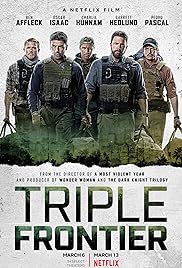
Written by director J.C. Chandor (A MOST VIOLENT YEAR, MARGIN CALL) and Mark Boal, TRIPLE FRONTIER is an American action thriller filmed in Hawaii but set in Colombia where drugs and drug lords rule.  Mark Boal also wrote the Oscar winning THE HURT LOCKER which explains Kathryn Bigelow serving as executive producer for this film.  The film involves a drug money heist from unseen drug lords.  The film is not so much a robbery caper but an escape caper and more than half of the film involves the gang trying to escape from Colombia with the money.  TRIPLE FRONTIER is a Netflix original movie.  Netflix movies have the reputation of having scenarios that Hollywood studios are afraid to touch.  There are reasons that can be imagined studios would not touch this none.  It is not the conventional action film but the less said is better so that no spoilers may be revealed.

Five former Special Forces operatives reunite to plan a heist in a sparsely populated multi-border zone of South America.  For the first time in their prestigious careers these unsung heroes undertake this dangerous mission for self instead of country.   But when events take an unexpected turn and threaten to spiral out of control, their skills, their loyalties and their morals are pushed to a breaking point in an epic battle for survival.

The film looks at both greed and sacrifice, the former coming across more convincing than the latter.  In fact it is greed for money that accounts for the major part of the group’s problems.  As expected, loyalties are tested with  big fights resulting from the clash of personalities.  As stated at the start of the film when one of the Special Forces claim, as he lectures a new class of recruits on what it means to be a warrior; “We are trained to achieve an aim at the expense of any human being.”   The script ensures that this is reasoning behind how the five robbers behave and act during their escape.

The script, story-wise is nothing spectacular and leaves many holes in terms of credibility.  But the script leads to a few excellent action setups, most of these leaving the audience at the end of their seats.  The cinematography by Roman Vasyanov is stunning, especially the shots from the helicopter of the jungles and mountains.  The big crash of the chopper in the middle of the Colombian countryside in the midst of panicking horses is truly well executed.  The other action segment where the mules passing along a narrow mountainside path carrying large bags of money is cliff-hanging suspense.

Music is by Disasterpeace and contains few neat songs that suit the action of the film.

The five stars playing the Special Forces include Ben Affleck, Oscar Isaac, Charlie Hunnam, Garrett Hedlund and Pedro Pascal do a fair job and could be replaced by any other.  Oscar Isaac fares the best paying the lead character that keeps everything in check, while Affleck plays the wild card asshole in the group effectively.

The film scores strong points on the authenticity of the setting especially in the scenes set in Colombia even though the film was shot in Hawaii.  But why would these Colombian villagers go chasing after the 5, risking their lives in the process?

Trailer: https://www.youtube.com/watch?v=Fo3yRLLrXQA

Film Review: TYLER PERRY’S A MADEA FAMILY FUNERAL (USA 2019) ***

A Madea Family Funeral Poster
Trailer

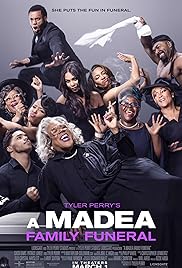
A joyous family reunion becomes a hilarious nightmare as Madea and the crew travel to backwoods Georgia, where they find themselves unexpectedly planning a funeral that might unveil unsavory family secrets.

Director:

Tyler Perry

Writer:

Tyler Perry

The trouble with the Tyler Perry films is that they could be quite awful, from a critic’s point of view.   But critics do not pay for tickets at the box office.  Perry’s films are often all over the place, preachy, rude, cheap and politically incorrect.  But they do bring on good laughs despite the complaint that the jokes are the same.  The latest and 11th of the MADEA film series  proves more of the same.  And the last one featuring Madea, though I hardly doubt that.  It has garnered generally negative reviews from critics but went on to be one of his most successful films to date.  Lionsgate Company is still enjoying the cash cow, though the company has not got a string of hits for some time.

This is arguable the laziest of Perry’s films.  Tyler Perry has opened his Tyler Perry studios and this film was shot there in a week.  Most of the acts consist of people sitting around in a room complaining and bitching.  Most of the time two or more of the characters are played by Perry himself.

One of the few scenes that take place outside the house involves Madea and the family being stopped by a white cop for no reason.  Madea tells the Tyler Perry character he wheel to drive and speed off but he insists on doing what is right.  The white cop, of course turns unnecessarily rude and gets everyone in the car worked up and someone might get shot accidentally.   The rest of the film takes place in the house, which means the film is extremely low budget.

There is hardly any plot or story in the film.  The two loose stories are one involving Madea’s dead relative. the unseen Anthony who is caught dead in the act while having S & M sex with a whore.  The reason of death is attempted to be kept secret from the other members of the family.  The other subplot evolves A.J. (Courtney Burrell) cheating on his fiancé for her sister during the wedding.  Of course, Madea has a say in all these 2 events – that is the reason Madea exists, to offer her loud opinion.

Tyler Perry introduces a new character into the movie, a crippled war veteran called Heathrow.  As expected, this character is loud, obnoxious sexist and plain nasty.  Not only is Heathrow (played by Very of course) in a wheelchair but he has to use a vibrator to speak because he has a hole in his throat due to cancer.  And Madea has to remark that she get an orgasm from the speaking vibrator.  Heathow is one of Perry’s funniest and rudest characters.

Madea also organizes the funeral to great hilarity.  Eulogies are kept to a minimum time like the Academy Award acceptance speeches,  No jokes will be revealed in order not to spoil your entertainment.

Nothing much else need be said about this Tyler Perry movie.  Those who know the Tyler Perry movies get what they expected.  No surprises but yes, plenty of laughs.

Trailer: https://www.youtube.com/watch?v=id61hcbdMZA

Film Review: CAPTAIN MARVEL (USA 2019) ***

Captain Marvel Poster
Carol Danvers becomes one of the universe’s most powerful heroes when Earth is caught in the middle of a galactic war between two alien races.

Directors:

Anna BodenRyan Fleck

Writers:

Anna Boden (screenplay by), Ryan Fleck (screenplay by)| 6 more credits »

CAPTAIN MARVEL turns out to be more a franchise moneymaker in the Marvel Comics Universe than a film.  At the end, the audience reads that CAPTAIN MARVEL will next be seen in the AVENGERS: ENDGAME film while a sequel is likely already in the process (the film ends with the Kree promising: we will return for the woman).  Exiting the theatre and immediate in sight are a row of empty ready to use buckets of popcorn with the Captain Marvel imprinted around its sides that tells it all.

The film opens with Carol Danvars, an ex-U.S. Air Force fighter pilot and member of an elite Kree military unit called Starforce.   Her DNA was fused with that of a Kree during an accident, imbuing her with superhuman strength, energy projection.   Danvers is a believer in truth and justice and a “bridge between Earth and space, who must balance her “unemotional” Kree side that is an “amazing fighter” with her “flawed” human half that is the thing that she ends up leading by.  This is tested by her mentor played by Judd Law, all buffed up and looking good for this role.

Danvars cannot remember her past but it is revealed later on in the film that everything she had believed in is a lie.  Even those she thought were the villains were not.  As such, the film suffers the lack of a true evil villain.

Though the film has a very weak storyline, the film puts emphasis on the relationship between Danvars and other characters – like her and her mentor and her and her best friend, Maria Ramveau  (Lashana Lynch) in the airforce.  Unfortunately, the result is still quite un-engaging.  

The film benefits from it its leading stars – Brie Lawson (from ROOM) and Samuel L. Jackson.  Larson took judo and wrestling classes before taking on the role.  Jackson lifts the spirit of the film with his comic and somewhat over-the-top portrayal of Nick Fury, the future leader of S.H.I.E.L.D.  He is seen here without his eye patch before he lost his eye.  Watch out for that part, which makes the film’s most hilarious moment.   This is where Jackson gets to utter his signature ‘motherf*****’ phrase.  (Jackson utters this phrase in almost every movie he is in.)
The big question then is whether the film is any good.  CAPTAIN MARVEL has a very thin plot and a story that really does not mean anything despite saving the earth and Universe in some form or other.  The special effects and CGI take over, and the film establishes the woman CAPTAIN MARVEL as yet another action super hero – and a strong one at that.  So, the film achieves its aim of establishing CAPTAIN MARVEL in the Marvel Universe while making lots of money, but the answer to whether it is really any good is debatable.  But the film should bring 2019’s box-office, currently in the doldrums up several notches after the film debuts the first two weeks.  And audiences will flock to see these action hero films, even when they are plain awful like BATMAN V. SUPERMAN or AQUAMAN.
Trailer: https://www.youtube.com/watch?v=Z1BCujX3pw8

Film Review: WHAT WALAA WANTS (Canada 2018)

What Walaa Wants Poster
Raised in a refugee camp in the West Bank, while her mother was in prison, Walaa is determined to survive basic training to become one of the few women on the Palestinian Security Forces – …See full summary »

Director:

Christy Garland

Waala is the pre-teen daughter of an imprisoned woman, jailed for 8 solid years for terrorist activities.  When the film opens, the mother’s house was entered during her arrest, one of the soldiers yelling at her: “You are not a mother, you are no one, you are shit!”

The mother is released 8 years later and reunited with her family, namely her 2 daughters  and the younger son.  The mother seems to have tamed down, but one daughter, Waala  appears full of sprite.  What does Waala want?  Waala is rebellious at school, creating mischief that could result in delinquency detention, but she now wants to become a police woman in the Palestinian Security Forces.  Toronto filmmaker Christy Garland follows Waala from the ages of 15 to 21.

WHAT WAALA WANTS has garnished rave reviews including being selected as Canada’s Top 10 films of the year.  This an example of a case where a film is praised for its subject rather than its merit, though it is clear that there is still considerable merit in the film despite glaring flaws.  This is also a woman’s film with a woman director and producer and subject with the aim of showing how a young female can defy formidable odds to get what she wants.

For one the film’s continuity comes into question right at the beginning.  When arrested, the woman answers ‘no’ to the question posed by the solder if she is a mother.  Why then is there a son and 2 daughters present at her release.  No details are given as to what the mother was arrested for, except that she intended to drive a suicide bomber to his target  but got caught before.  Not much of the political climate is explained as well.  The film assumes the audience familiar with the current situation.  The film also uncomfortably shifts its subject from the mother to the daughter.  

The conflict scene between mother and Walaa looks weird as the two are never shown in the same frame.  The segment loses its effectiveness.  Question is why the two were unable to be filmed together.

The film contains lengthy middle section showing the details of the rigours undergone by Walaa during boot camp Palestinian training.  This is the most watchable segment where director  shows that What Walaa wants is not so easily obtained.

The film’s seemingly misguided narrative amplifies the fact that director Garland is indecisive as to what the film’s real goal is.  At one point, it is a story of a family undergoing hardship.  Then it becomes one about a girl’s coming of age.  Or is it one about the rigours of boot camp training?  The film never questions the gravity of the mother’s crime.  For Garland, being imprisoned is the crime against her and her family.  Should the mother serve life sentence for being part of a terrorist act that could have killed dozens of innocent people?

Tough WHAT WAALA WANTS falls into the documentary category, it hardly feels like one.  It feels more like a fiction film based on true incidents.

So does Waala get what she wants in the end?  It does not take a genius to determine the answer.  Despite illustrating life of a Palestinian teen in hardship, director Garland has more sympathy for her heroine than she deserves in a film that could do with clearer direction.

Trailer: https://www.youtube.com/watch?v=psmv9pe6RmM

Film Review: RUBEN BRANDT, Collector (Hungary 2018) ***1/2

Ruben Brandt, Collector Poster
Trailer

A psychotherapist suffers violent nightmares inspired by legendary works of art. Four of his patients, expert thieves, offer to steal the works, since he believes that once he owns them, …See full summary »

Director:

Milorad Krstic

Writers:

Milorad Krstic (screenplay), Milorad Krstic | 1 more credit »

RUBEN BRANDT, COLLECTOR the film is so called as it is named after the two famed painters.  RUBEN BRANDT is one of the recent sprout of films on artists.

The film begins with a priceless fan stolen from the Louvre in Paris.  The backward somersaulting Mimi is the thief and an elaborate car chase takes place along the streets of Paris with Inspector Kowalski in pursuit.  The story is eventually revealed that Mimi is one of the patients of a psychotherapist who suffers from nightmares where famous paintings come to life (Velázquez’s Infanta Margarita or Boticelli’s Venus) to kill him.  His therapy theory is to own the problem and thus cure it.  He recruits his patients to steal the rare paintings that haunt him taking the audience  around the animated worlds of the famous museums of the Guggenheim to the Louvre to the Tate Modern.

The film’s animation is no Pixar or Disney but is of a different style that celebrates painters, particularly Picasso.  Many characters in the film have cuboid faces, with many containing three eyes or two mouths.  Director also loves to play with swaying shadows, giving his film a distinct artistic look.  The film contains a few scenes of graphic violence, acceptable as the target audience for the animated feature is adults and not children.

The spectacular car chase at the start of the film demands mention.  The chase is animated as if the camera was placed on the dashboard of a real car during the chase giving the sequence a realistic while stylistic look.  The background of the chase encompasses shops and lots of steps looking very much like typical Paris in a painting,

As with the T-shirt worn by one inconsequential person proclaiming “I Love Nothing”, the film contains a lot of ‘nothing’ humour.  These include the numerous innocent bystanders caught in the crossfire of the car chase.  But the most notable of these nothings is a three-minute inconsequential sequence dedicated to a mosquito.  The camera shows the animated mosquito. looking very much like a real one,  drawing blood from the arm of Inspector Kowalski.  The mosquito is subsequently smashed and killed with his saying: “He was the first to draw blood.”  Not really a funny or meaningful segment by the director but by no means a less entertaining one.  Such are the film’s pleasures.

But the single and most hilarious scene is when the therapist conducts a session involving role playing around a fire.  Each patient is required to play the role with one complaining about having to play Little Red Riding Hood.  The therapist insists he plays her for his problem is being too timid and unable to relate in an office work situation.

The film has an amazing soundtrack that includes music and songs from American country and western to contemporary to classical.  There are lots of classic film references from Hitchcock to the director’s own short he directed.  Stay for the end credits as all the references are lists as well as all the paintings and painters where are the inspirations or lookalikes in the film are taken from.

For a 66-year old director whose first film is this stunning, one can only eagerly await for his next project.  This might surely be a Best Animated Best Feature Oscar nominee for next year.

Trailer: https://www.youtube.com/watch?v=OWI9KvPaOEE

Full Review: GRETA (Ireland/USA 2018) ***

Greta Poster
Trailer

Director:

Neil Jordan

Writers:

Ray Wright (screenplay by), Neil Jordan (screenplay by) | 1 more credit »

Some films are best if seen without any prior knowledge of the plot.  Neil Jordan’s GRETA is one of them.  As in Jordan’s THE CRYING GAME, the shock occurs when the girl the protagonist is having sex with suddenly is shown with a penis.  The big surprise secret comes literally out of the closet at the 30-minus mark of Jordan’s latest psychological thriller GRETA.  

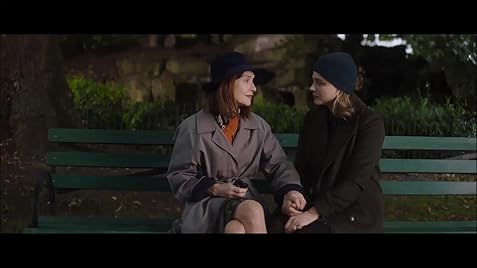
Set in NYC, Isabelle Huppert plays a widow (the film’s original title was THE WIDOW) developing a friendship with a naïve young woman, Frances (Chloë Grace Moretz).  Frances returns the handbag she finds on the subway to its rightful owner, Greta (Huppert).  The scene in the subway station in Manhattan was shot at Bay Station, Toronto.  It is ironical that the Transit’s Lost and Found in Toronto is located at this Bay Station.  Frances recently lost her mother and feels alienated by her father (Colm Meaney); Greta has lost her husband, and her daughter lives far away.   The two become fast friends much to the consternation of her best friend Erika (Maika Monroe).  Erika turns out to be a bigger part in the story than envisioned.

Unfortunately, the film ends with a totally unlikely twist in the plot that could only happen in a one in a million chance.  This spoils an otherwise excellent thriller.

Still all things given, having seen the film twice, there are many pleasures derived from GRETA.  One are the excellent performances by the two leads, Huppert and Moretz.  Huppert is sufficiently creepy and nasty, a character the audience would love to hate, contrasting the innocent character of Frances who is so naive as to return a handbag with the cash intact.

Another pleasure is the campy dialogue, obviously written to bring the audience up to the type of talk of the present.  When Frances tells Erika of returning the wad of money found in the handbag, Erika remarks on use of the money  “Spa or colonic?”  Erika continues that a friend who had colonic can now recite the alphabet backwards.  When Frances later declines an outing invite from Erika, Erika’s retort is: “Am I snorting meth or you are telling me you are going dog shopping with the old lady?.”   And another instance, Erika warns Frances: “The crazier they are, the more clinging they are.”  The use of the chewing gum metaphor is also funny, “sticking around”.

As expected in a Jordan film, the film contains some very nasty (though camp) sequences.  One is when Frances uses the cookie cutter to slice off Greta’s finger.  Huppert is so good in her role as the menacing predator, that any audience member would also gladly slice off her finger.  The camera quickly focuses on the blood spurting vertically out from the severed finger – a deliciously camp moment.

The film is largely shot in Toronto around the Bay Subway Station area.  Those who live downtown  will immediately recognize the familiar streets and buildings.

Though one can tell was will happen in this predictable horror fare, GRETA is still guilty pleasure due largely to Jordan’s flare for the weird.

Trailer: https://www.youtube.com/watch?v=l7SUePnsxWo

Film Review: HOW TO TRAIN YOUR DRAGON: THE HIDDEN WORLD (USA 2019) ***

How to Train Your Dragon: The Hidden World Poster
Trailer

When Hiccup discovers Toothless isn’t the only Night Fury, he must seek “The Hidden World”, a secret Dragon Utopia before a hired tyrant named Grimmel finds it first.

Director:

Dean DeBlois

Writers:

Dean DeBloisCressida Cowell (based upon the “How to Train Your Dragon” book series by)

Two years after the first sequel, Toothless the dragon and Hiccup the dragon trainer , along with their fellow dragon riders and friends, continue to rescue captured dragons in order to bring them back to Berk and create a bustling dragon and human utopia.  Unfortunately, their efforts have also resulted in the island becoming severely overpopulated with dragons. In a response to the overcrowding, Hiccup desires to find the “Hidden World”, a safe haven for dragons that his late father Stoick told him about.  Meanwhile, a white Fury dragon, held captive by warlords, is given to infamous dragon hunter Grimmel the Grisly as bait for him to capture Toothless for the warlords’ use as an alpha.

Toothless discovers the white Fury (dubbed a “Light Fury” by Astrid) in the woods and the two quickly become enchanted with each other until the Light Fury, sensing Hiccup’s nearby presence, flees. Hiccup and Tuffnut later discover Grimmel’s dragon traps in the area. Grimmel visits Hiccup that night, but Hiccup has prepared an ambush to capture him; Grimmel escapes, burning down Hiccup’s house and part of Berk in the process. In response, Hiccup rallies the citizens and dragons to leave Berk on a quest to find the Hidden World and safety from dragon hunters.

The rest of the plot is silliness and uninspired writing from director DuBlois.  There is the climatic fight between Grimmel and Hiccup while Fury and Toothless fall in love.  The Hidden World is now the place the dragons reside without their masters, now humans and dragons in their own worlds till the next sequel.

What is lacking in plot an story is more than made up by special effects and solid animation.  Often there is too much going on-screen than meets the eye.  The film is best seen in 3-D IMAX but the screening I saw was in normal 2-D.  Still the film looks stupendous.  The humour is only slight and could do with a lot more funnier.  The dialogue comes off as ‘cute and amusing’ at best.

Jay Baruchel does a good voice characterization as Hiccup as does F. Murray Abraham as the villain Grimmel.  But the best of all voices come from comedienne Kristen Wiig as the annoying Tuffnut.  The dragons do not speak so no voices from Toothless or Fury.  The filmmakers seem to oddly love the Vikings speaking with a Scots accent.

The film turns too romantic and sappy, especially with two twin romantic couples – Hiccup and Astrid and the dragons Toothless and Fury.  The dragon  matingis overextended and silly.  Worse still, the film goes on several years into the future when each couple show up complete with overcute offspring.

The film will likely take over the box-office #1 spot this weekend.  The film has already broken even making $175 million internationally at the time of writing, more than its $129 million budget and it has not even opened in North America.

Trailer: https://www.youtube.com/watch?v=CYe7oMmCFr0