Film Review: OCTAVIO IS DEAD! (Canada 2018

Submit your Screenplay to the Festival TODAY

Octavio Is Dead Poster
Tyler tries to discover the father she never got the chance to meet in this stirring psycho-sexual ghost story, exploring themes of gender and sexual identity.

Director:

Sook-Yin Lee

Writer:

Sook-Yin Lee

Sook-Yin Lee, best known as the actress in the hit HEDWIG AND THE ANGRY INCH directs this odd film produced and starring Sarah Gadon who broke into fame with David Cronenberg’s COSMOPOLIS.  Gadon plays,

Tyler the daughter of an obsessive over-spirited mother (Rosanna Arquette).  She decides to leave her mother for Stelton City (Ontario’s Hamilton standing in for the city) to learn about the father she never met.  She discovers his ghost, trapped and unable to escape his apartment. They forge an uneasy bond, but by communicating with him, and learning about his tumultuous and secret past, Tyler discovers new ways to engage with the world, to seek love in unexpected places, and to explore life in new and unfamiliar territories. 

 Love is discovered in death!  She falls for the cute blonde student that had an affair with his father, who she learns left both her mother and her because he was gay.  The supernatural angle fails to blend with the coming-of-age drama.  Nicely shot, but the film fails in that it leads nowhere and turns terribly annoying with Lee’s attempt to create a moody atmosphere.  


Submit your Screenplay to the Festival TODAY

Full Review: LES GARDIENNES (France/Switzerland 2017) ****

Submit your Screenplay to the Festival TODAY

The Guardians Poster
Trailer

Women are left behind to work a family farm during the Great War.

Director:

Xavier Beauvois

Writers:

Xavier Beauvois (screenplay), Marie-Julie Maille (screenplay) | 2 more credits »


(Spoiler Alert: Last paragraph in bold italics.  Skip this last paragraph though reading it will not spoil the film’s impact.)

Director Xavier Beauvois (director of DES HOMMES ET DES DIEUX, 2010 last seen as an actor playing Vincent in Clare Denis’ LET THE SUNSHINE IN) returns with a World War 1 historical drama about women looking after the farms when the men are send out to fight during the great war.  It stars Nathalie Baye in a dramatic but controlled performance as Hortense, a strong willed woman and matriarch of the Pardier family who manages the family farm.   The film is based on the novel by Ernest Pérochon and written by Xavier Beauvois, Marie-Julie Maille and Frédérique Moreau.                     

Beauvois’ film like his previous film moves at a leisurely pace with an authentic period atmosphere of rural France.  The film plays out like the waiting of the war to end.  The farm chores like ploughing the land, harvesting the crops, milking and driving the cows help in the creation of rural farm life.

The story is told from the points of view of both Hortense and Francine (Iris Bry), the new female farmhand (known eventually as the best farmhand in the region) that Hortense hires to help in the harvest who she eventually keeps on. 

The film is a handsomely mounted period piece of World War I told during the period from 1916 the war’s start to 1919 the year after it ended.   It is a story that needs ti be told – of

the devastation of war as examined from many angles

the absence of men

– the change of characters of the fighting men when they return from war (I do not recognize him: says one of the women of hr husband)

the hardship of those fighting and also of those not fighting in the war

shortage of the essentials like food  (as the camera pans a field of corpses in the film’s first image)   

as well as modernization had on a typical farm family in France. 

The women of the Pardier farm, under the deft hand of the family’s matriarch, Hortense must grapple with the workload while the men, including two sons, are off at the front.  Her husband, daughter and grand-daughter remain with her.  Romance and trouble brews when Francine and the grand-daughter fall in love with the same man, Georges (Cyril Descours).  Director Beauvois also shows the erotic sex scene is necessary to show the passion between the two lovers.

Beauvois use of close ups and editing especially the switching of the camera shots of the different faces (Hortense, Georges, the Americans, Francine) is masterfully demonstrated in the film’s best segment after harvesting.

The film is also quick to point out that there are equal casualties on both sides.  Clovis (Olivier Rabourdin) returning from furlough to the farm points out that Germans are like the French at war – ordinary men.  One nightmare segment has Georges screaming in the middle of the night when he dreams of killing an enemy with a knife, only to pull of the dead man’s h]gas mask to find himself looking at his own image.

The film also benefits from Michel Legrand’s grand musical score. 

LES GARDIENNES proves (like CASABLANCA and LES PARAPLUIES DE CHERBOURG) that not living happily ever after with ones true love can also make an unforgettable love story.

Trailer: https://www.youtube.com/watch?v=HsdDm-mcczQ

Submit your Screenplay to the Festival TODAY

Film Review: THE LOCKPICKER (Canada 2016) ***

Submit your Screenplay to the Festival TODAY

The Lockpicker Poster
A teenage thief tries to leave town to escape the violence that threatens him and he people he loves.

Director:

Randall Okita

Writer:

Randall Okita


THE LOCKPICKER is the low budget multi-award winning feature debut of director Randall Okita, arriving at big screens in Toronto, Vancouver and Calgary for special screenings this week.  

THE LOCKPICKER was shot in actual Toronto classrooms over a span of two school years with a cast of non-professional teenagers in key roles.   This intimate coming-of-age drama follows high school student Hashi (unknown and newcomer Keigian Umi Tang) as he struggles to maintain a state of calm in the wake of the sudden suicide of his friend.  When people close to him are victimized by violence, he is forced to choose between fighting back and becoming what he fears, or leaving behind everyone and everything he knows.

Tang inhabits his role as the restless student with relative ease.  This is not an actor’s but director’s film.  There are no extensive monologues or other acting demands required of Tang.  Much of the character’s personality is established by the director.  For example when Hashi steals money from the jackets hug outside the classrooms, he only takes the small notes and not the larger twenties.  The director intends to show Hashi as a thief but with some conscience.  He takes only what he needs for the moment.  Hashi is displayed as the normal teenager at school, easily distracted with hardly a thought of his future.  Hashi  smokes weed, crashes parties and badgers adults to buy him liquor.  He is distracted enough not to complete the assignments necessary for him to quality for a sailing outing,  He goes around constantly distracted with a head set on.  Hashi is a fairly good-looking and fit kid who works occasionally at a shoe store.  Director Okita does not have Hashi commit acts that determine his character to be a likeable or unlikeable one.

As a first feature, THE LOCKPICKER looks sufficiently fresh.  It appears that Okita experiments quite a it with lighting, cinematography and camera placement.  The film is also variedly shot with steady cam and hand-held camera.  His eye for natural landscape and surrounding architecture is alas apparent when Hashi travels around the icy winter by transit or waiting at a bus stop  with the transit map in the background.  The Toronto winter is revealed to be a cold one with dirty snow and litter blowing across the snow and ice.  The film contains a comfortable mix of staged and free flowing improvised parts.

In Toronto, THE LOCKPICKER will be screened with a special Question and Answer a with Okita discussing the film’s powerful themes and its deeply personal connection on June 22 at 6:45 PM at TIFF Bell Lightbox.The film won the Canadian Screen Award for Best Picture in the Discovery Section.

It should be noted that Okita was the recipient of the Toronto Film Critics Association’s (of which the writer is a member and involved) Technicolor Clyde Gilmour Award with a cash prize of $50,000, which made the production of The Lockpicker possible.

Trailer: https://vimeo.com/181642231

Submit your Screenplay to the Festival TODAY

Film Review: THE GUERNSEY LITERARY AND POTATO PEEL PIE SOCIETY (UK 2018) ***

Submit your Screenplay to the Festival TODAY

The Guernsey Literary and Potato Peel Pie Society Poster
Trailer

The Guernsey Literary and Potato Peel Pie Society is a movie starring Lily James, Glen Powell, and Matthew Goode. A writer forms an unexpected bond with the residents of Guernsey Island in the aftermath of World War II, when she decides to write a book about their experiences during the war.

Director:

Mike Newell

Writers:

Kevin Hood (screenplay by), Thomas Bezucha (screenplay) |3 more credits »

The film’s trailer and film’s beginning establish the origin of the name of a book club in the Island of Guernsey.  It all began in 1941 during the World War II when a group of four English people, two men and two women, are walking at night-time in German occupied Guernsey.  They are stopped by Germans for breaching curfew.  When asked for their reason, one of the women notices a book in the pocket of one of the Germans and says that they were at a book group. Collectively they improvise the book group’s name: the Guernsey Literary and Potato Peel Pie Society and avoid arrest when one of the men throws up on the soldiers’ boots.

This film is the second film (the other being BEAST set on Jersey Island) to open this month that has a setting on a United Kingdom associated island in the sea between Britain and France.  It is beneficial to know a bit that Guernsey like Jersey Island in order to better appreciate the film.  Guernsey is is not part of the United Kingdom though the populace share a lot in common with the British including the currency of pound sterling  The island is self governing though protected by Britain’s Military.   The island’s landscape is stunning, especially the beaches and rocky cliffs, much like Wales, west of Britain.   The film is shot in England and at Ealing Studios and not on Guernsey though the film would definitely aid the Guernsey Tourism Board in efforts to promote visits to the island.

The film has a strong female slant, understandably being based on the 2008 novel of the same name by two female writers Mary Ann Shaffer and Annie Barrows, with a female protagonist at the heart of the story.  All the males have secondary importance in the story, serving the purpose of the females.  One could suitably classify this WWII historical drama as a chick flick.

The story, set in 1946 on Guernsey Island, concerns an author Juliet Ashton (Lily James) invited to the island to address the local book club.  She learns of the story of  Elizabeth McKenna (Jessica Brown Finlay) who has a daughter with a German soldier during the German Occupation of the island.  The message of the film is show how books can affect human lives.

Lily James (Kate Winslet was originally slotted) delivers a sufficiently fine performance while her co-star Dutch Game of Thrones actor, Michiel Huisman was chosen for her main love interest likely for his resemblance to Alan Bates who has a similar scruffy look in FAR FROM THE MADDING CROWD.  Matthew Goode has another gay role as Juliet’s publisher while British TV actress Penelope Wilton steals the show as Amelia Maugery.

One would naturally expect a whimsical female fantasy from the FOUR WEDDINGS AND A FUNERAL director director Mike Newell.  The film succeeds with regards to this respect.  Commercial filmgoers would be more likely entertained by this film than the serious film critic who would be quick to shrug at the beleaguered dialogue and identify the plentiful clichés.

Trailer: https://www.youtube.com/watch?v=HTDNGv61-Dk

Submit your Screenplay to the Festival TODAY

Film Review: PAPER YEAR (Canada 2017)

Submit your Screenplay to the Festival TODAY

Paper Year Poster
Young newlyweds encounter a series of challenges during the first year of their marriage.

Director:

Rebecca Addelman


Two newly married young lovers with no money face life’s challenges.

The film’s premise sounds like many a newlywed’s demise. Which means that either the story might tend to be very relevant or too boring to many.

PAPER YEAR opens with an old romantic tune (“Young Love” by Sonny James) played on the soundtrack as the lovers run around kissing.  It is revealed that there are just married.  Dan (Avan Jogia) and Franny (Eve Hewson) are happy but poor.

However, the marriage is a paper one – one that has taken place in court but without a full wedding reception.  Franny does not truly believe that a real wedding (if there is no big ceremony) has taken place though the couple is legally married.  Hence, the title of the film – PAPER YEAR.

As it goes, Franny gets a job on some production company of some silly sports reality show called “Goosed” where she meets the boss Gavin (Brooks Gray) and Noah (Hamish Linklater), the head writer, who both try to make the moves on her.  Franny has the sexual hots for Noah.  When Franny’s friend advises Franny to remember that Noah is ‘not special’, the audience immediately knows that Franny is gong to be unfaithful to her husband with Noah.  Dan is no angel either.  When alone. he watches porn or goes on on-line chatting sites.

The cast is made up of unknowns with only Andie MacDowell as the only recognizable name playing Franny’s mother Joanne.  The unfamiliar cast give the film a fresh look, at least, where the audience do not have any preconceived notions of past characters.  The supporting cast like Gray and Linklater have got some minor roles on TV and little films.

The question that obviously comes to mind is the purpose of the film?  The fact that despite all the problems the couple could face (in-laws, kids, money, friends), it is infidelity that is chosen as the couple’s main life challenge after marriage.  Franny finally gives in to her temptations to her attraction for her co-worker Noah after a dinner party gone awry.  This occurs around two-thirds into the film, so that the film just meanders initially.  Then now wonders where the film will be leading after the problem arises.

PAPER YEAR is one of those Canadian films that pretends to be American with references to cities like Nye York and Arcadia, even though it does not come across very convincing.  It would have worked better if the film remain fully Canadian despite having a smaller target audience.  

Written and directed by a female, Rebecca Adelson. the film takes the female point of view though making the female also the one at fault or the one causing the rift in the couple’s relationship.  It is Franny that gets into Dan’s diary and she that cheats on Dan.  The female is the main breadwinner, with the steady job while the man is just a dog walker.  The film also takes a pessimistic view of life.

PAPER YEAR moves at a leisurely pace with not much but little happenings, making the film light entertaining drama with a few light touches of comedy.  The twist ending (not to be revealed in this review) is what is supposed to make this film special.

Trailer: https://www.youtube.com/watch?v=p6hZxo4jXhs

Submit your Screenplay to the Festival TODAY

Film Review: THE CLEANERS (Germany 2018) ***

Submit your Screenplay to the Festival TODAY

The Cleaners Poster
A look at the shadowy underworld of the Internet where questionable content is removed.


THE CLEANERS, the new doc that premiered to sold-out performances at this year;s Hot Docs brings the audience into the hidden third world shadow industry of digital cleaning, where the internet rids itself of what it doesn’t like.

The new documentary THE CLEANERS unashamedly touts the all importance of ‘cleaners’ at the very start of the film.  Words (titles) on screen emphasize the millions of tweets, posts on youtube and the millions of people connected on social media going to say how much the internet would be a mess without THE CLEANERS. The Cleaners delete images, videos and texts that violate the rules of social media. his is none from, (surprise! surprise!) none other than Manila in the Philippines.  It is revealed that there are other smaller centres too, given this dauntless task, but Manila is the main one.   “Delete, ignore,” these are the words often spoken by the workers (in a Filipino accent) as they work their jobs.

Yes, the film has got the audience’s attention.  The question then would be whether the doc would be able to keep it a compelling watch from start to end.

The film introduces five “digital scavengers” among thousands of people outsourced from Silicon Valley whose job it is to delete “inappropriate” content off the net. In a parallel struggle, we meet people around the globe whose lives are dramatically affected by online censorship. A typical “cleaner” must observe and rate thousands of often deeply disturbing images and videos every day, leading to lasting psychological impacts. Yet underneath their work lies profound questions around what makes an image, art, or propaganda, and what defines journalism. Where exactly is the point of balance for social media to be neither an unlegislated space nor a forum rife with censorship. The Cleaners struggles to come to terms with this new and disconcerting paradigm.

The high executives of the high-tech companies like Facebook appear sincere in doing what is right – to seem out inappropriate content that will promote hatred and ignorance  But it is an impossible task.  The film goes deep in the last third to demonstrate how hatred is promoted through Facebook against the most prosecuted minorities  (The Rohinghas in Burma)  in the world.

The film is even more shocking when it shows glimpses of a few of these deleted images.  The directors cannot resist sensationalization from their film.  There is a disturbing segment which shows an image of a beheading done with a dull knife (like  kitchen knife) resulting in a crooked cut with lots of blood.

The film lacks a proper conclusion for the reason that problems presented in the film have no clear resolution.  Promises by the high tech giant executives are difficult to keep despite good intentions.  One thing the film clearly shows is the evil that reside inside human beings.  The question still remains that social media like Twitter, Facebook, Youtube will continue to exist despite uncontrollability.  But accountability has at least reared its ugly head.

Trailer: https://www.youtube.com/watch?v=JA1DxRdT2hA


Submit your Screenplay to the Festival TODAY

Film Review: PRESSING ON: THE LETTERPRESS FILM (USA 2016) ***

Submit your Screenplay to the Festival TODAY
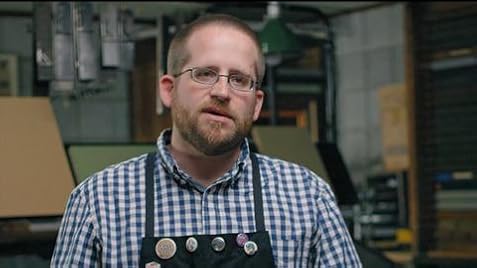
Pressing On: The Letterpress Film Poster
Trailer

Why has letterpress printing survived? Irreplaceable knowledge of the historic craft is in danger of being lost as its caretakers age. Fascinating personalities intermix with wood, metal, …See full summary »


What is a letter press?  As explained in Andrew P. Quinn and Erin Beckloff’s documentary PRESSING ON:  THE LETTERPRESS FILM, it is a machine that presses letters on to paper using ink so as to make print.

The modern world was born on a printing press. Once essential to communication, the 500-year-old process is now in danger of being lost as its caretaker’s age. From self-proclaimed basement hoarders to the famed Hatch Show Print, PRESSING ON: THE LETTERPRESS FILM explores the question: why have 500 year old letterpresses survived in a digital age?

People are fascinated by the past.  As the old adage goes: the past helps humans understand the present and who they are.  With those thoughts come a film that provides insight on what the voiceover informs is an old art form.

Why has letterpress printing survived?  Irreplaceable knowledge of the historic craft is in danger of being lost as its caretakers age.  Fascinating personalities intermix with wood, metal, and type as young printers save a traditional process in PRESSING ON, a 4K feature length documentary exploring the remarkable community keeping letterpress alive.  The film begins with shots of presses at work.

It is hard to get people interested in letterpress machines or letter pressing – a thing of the past.  This remains therefore a dauntless task for directors Andrew P. Quinn and Erin Beckloff to get the audience interested less making a compelling documentary.  But maybe they can teach us a bit about history or about the technology of the invention.

The film introduces the audience to one letterpress maker who claims his lifelong task as the restorer of these machines, saying that he could only preserve 50 or so in the rest of his life time, adding that only a minuscule few new ones will be made.  “It is a fun machine to watch – to see all the parts moving around,” says he.  The film goes on with an enthusiastic graphics designer, Stephanie Carpenter who informs (as well as providing insight) of the 3 stages of letter pressing and how she learnt graphic design through this process.

Worlds of each character are portrayed as unusual narratives – in various states of human emotions of joyful, mournful, reflective and visionary stats, each punctuated with on-screen visual poetry, every shot meticulously composed.  Captivating personalities blend with wood, metal and type as young printers strive to save this historic process in a film created for the designer, type nerd, historian and collector in us all.

PRESSING ON ends up not too bad a documentary (yes, quite nostalgic, romantic and as oddly entertaining as its subjects) subject nor too bad a documentary either.  What can be more romantic than a married couple letter pressing in the garage together?  There are little messages imbued in the doc together with some light humour making it light entertainment and a good quiet watch on the smaller screen.

The doc is available On iTunes, DVD/Blu-ray and On Demand Tuesday, June 19 worldwide.

Trailer: https://vimeo.com/269373025


Submit your Screenplay to the Festival TODAY

Italian Contemporary Film Festival: ROAD TO THE LEMON GROVE (Italy/Canada 2018)

Submit your Screenplay to the Festival TODAY
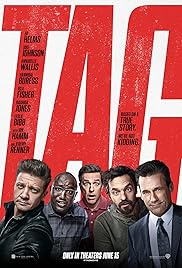
Road to the Lemon Grove Poster
A deceased Sicilian father, has one last outrageous mission in store for his son – spread his ashes in the lemon groves of Sicily, reunite two feuding families, discovering the heart and soul of who he really is.

Director:

Dale Hildebrand


The ad for the film goes “When life dishes you lemons…”  The film’s lead character is sure dished out a whole lot of lemons.  Guido (Nick Mancuso), a lecturer at the University in Hamilton, Ontario, Canada is given one mission by his recent deceased father, who keeps appearing as a ghost speaking in broken English with an Italian accent. 

Guido is to spread his ashes in the lemon groves of Sicily, while reunite two feuding families.  Hopefully while doing the mission, he will also discover the heart and soul of who he really is and maybe win the heart of a beautiful Sicilian (Rosella Brescia).  If all this sounds like quite serious stuff, it isn’t as director Hildebrand is more interested in cheap clownish Italian humour.  Mancuso portrays Guido as quite the clown and even the ghost of the father is quite the goof.  

Lots of manic situations and Italian gestures.  A message here is to preserve old languages which is what the professor teaches to his sleepy and uninterested room of students.  Hildebrand does manage to get some good solid laughs from his comedic set-ups.  Any messages on preservation of language or doing good are lost in Hildebrand’s fondness for clownish humour.

Trailer: https://www.youtube.com/watch?v=wHIp_1mZNJw

Submit your Screenplay to the Festival TODAY
Film Review: TAG (USA 2018)

Submit your Screenplay to the Festival TODAY
Tag Poster
Trailer

A small group of former classmates organize an elaborate, annual game of tag that requires some to travel all over the country.

Director:

 Jeff Tomsic

Writers:

Rob McKittrick (screenplay by), Mark Steilen (screenplay by) | 2 more credits »

Writers:

Rob McKittrick (screenplay by), Mark Steilen (screenplay by) | 2 more credits »

TAG the film is based on the kids playground game “Tag”.  The comedy centres on a group of kids, now fully grown up with jobs who have been playing this game every year during  the month of May for 30 years.

Sounds unbelievable?  The ads and the film itself make sure that the audience is reminded of this fact.  Based on a True Story.  But this phrase can mean a lot of things and it seems that only the main fact that the men are still playing the game is true.  All else could have been made up for what Warner Bros. hopes to be a successful box-office male comedy to the likes of THE HANGOVER or HOT TUB TIME MACHINE.

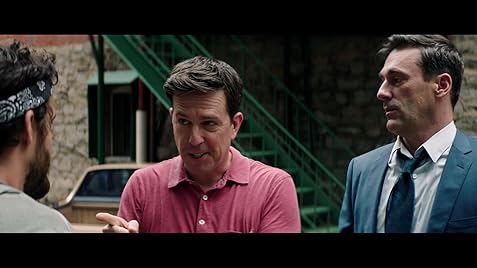
The film is based on real-life friends from Spokane featured in a 2013 Wall Street Journal article, “It Takes Planning, Caution to Avoid Being It” by Russell Adams.  When the film opens, one of the friends, a CEO, Bob Callahan (Jon Hamm) is being interviewed by a Washington Post reporter (Annabelle Wallis) when he suddenly tagged by Hoagie (Ed Helms) who has sneaked into his office after gaining employment as a janitor.  The reporter decides to follow the men on the game to write her article on the friends playing tag.

The film goes downhill from this point and very fast.  The aim of the men is to tag Jerry (Jeremy Renner in Jason Bourne mode) who has never been it during all the many years.  Jerry is about to be wed to a high maintenance bride (Leslie Bibb) and this is the perfect opportunity to tag him as he has not much chance of getting away.

There is only so much one can do with this premise.  The chases get monotonous and one can only fall down in a limited number of ways when running away or banging into things.  Expensive ornaments get wrecked, windows broken, walls bashed in are what the audience is n for.  Director Tomsik (in his directorial debut, too and he is given this sorry script and story) even resorts to some inventive filming (example: the chases in a building are brought outside with the camera showing the chase as the men run past the windows) cannot lift the film from its mediocrity.  

The script by Rob McKittrick and Mark Steilen brings in the female element to expand the target audience with the characters of the bride and also Hoagie’s wife, Anna (Isla Fisher).  Anna is very eager to get into the game (gender equality?), helping her husband aggressively.  Unfortunately none of their antics evoke many laughs.  The script calls for Anna to scream lots of vulgarities that only serve to emphasize how desperate the film is in need of laughter.  Worse still, the script inserts a message (and a very  obvious and unbelievable one at that) towards the end when Hoagie is hospitalized.  There is one coloured character, Sable (Hannibal Buress) who is not given much to do.

The film runs an hour and 45 minutes.   This is one game that has run too long.  But the film’s budget comes under $30 millions which means that it should make a bit of cash for this male adult comedy.

TAG the film is really not it!

Trailer: https://www.youtube.com/watch?v=9rQu77pgnpg


Submit your Screenplay to the Festival TODAY
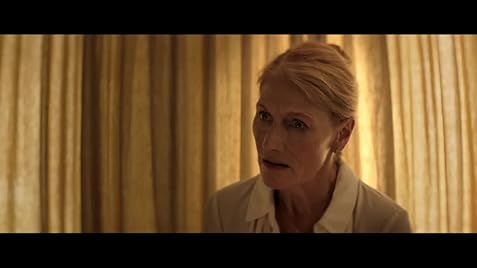
Film Review: BEAST (UK 2017) ***

Submit your Screenplay to the Festival TODAY

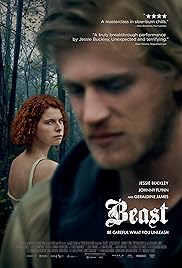
Beast Poster
Trailer

A troubled woman living in an isolated community finds herself pulled between the control of her oppressive family and the allure of a secretive outsider suspected of a series of brutal murders.

Director:

Michael Pearce


BEAST is a British psychological thriver set in the small community of Jersey Island where the population are stuck and have nowhere to go unless they leave the island.

It is beneficial to know a bit about Jersey Island in order to appreciate writer/director Michael Pearce’s film.  The island is not part of the United Kingdom though the populace share a lot in common with the British including the currency of pound sterling  The island is self governing though protected by Britain’s Military.  The island lies between Britain and France close to Normandy.  The island’s landscape is stunning, especially the beaches and rocky cliffs, much like Wales, west of Britain.  Pearce’s plays his setting as a western, but a non-typical one.   There is a scene where the local folks line dance.

The film’s main actress is Irish and the actor South African.

The story revives around Moll (Jessie Buckley), who is 27 and still living at home, stifled by the small island community around her and too beholden to her family to break away.  Her over-bearing mother (Geraldine James) does not help Moll’s situation either.  When she meets Pascal (Johnny Flynn), a free-spirited stranger, a whole new world opens up to her and she begins to feel alive for the first time, falling madly in love.  Finally breaking free from her family, Moll moves in with Pascal to start a new life.  But when he is arrested as the key suspect in a series of brutal murders, she is left isolated and afraid.  Choosing to stand with him against the suspicions of the community, Moll finds herself forced to make choices that will impact her life forever.

So far so good and the film works extremely well up to this point.  It is the last third that Pearce’s film starts to fall apart, starting from the plot becoming too convoluted with a need for a plot twist, which does not take a genus to predict.  If the last 10 minutes were removed and the film ended there, BEAST would have resulted in a much better film.

The film benefits mainly from both the performances and chemistry between the two leads,  Buckley and Flynn.  Director Pearce makes good use of the film’s island setting with many of the key scenes shot on the beaches and cliffs.  Geraldine James is also excellent as the overbearing mother.  “Maybe I have been too soft on you.”  She says.  Or “Let’s be friends again,” after she gives Moll a good scolding.

It is clear that Pearce intends to show that a beast exists in every one of us, as in each of his characters.   Moll has a secret past involving her stabbing a classmate with a pair of scissors.  Pascal has quite the temper.  When he shouts at the top of his voice to Moll: “I love you.”, one can tell that is a sure sign of an abusive relationship leading to domestic violence.  Mother is beasty over-bearing and the cop who has a thing for Moll turns out quite nasty as well.  The woman cop interrogator in the film’s best scene shows her true colours suddenly coming down on Moll during a questioning: “Are you protecting the innocent or taking revenge on the world?”

Besides its flaws, BEAST is a gripping film from start to end aided by the fact that it is true that everyone (in the film and in the real world) has a hidden beast on their inside.

Trailer: https://mail.google.com/mail/u/0/#search/beast/1634ad8adeacebc4?projector=1

Submit your Screenplay to the Festival TODAY