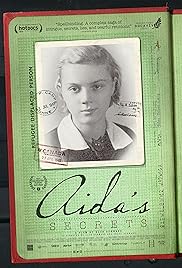
Film Review: AIDA’S SECRETS (Israel/Germany/Canada/USA 2016) ***

Submit your Screenplay to the Festival TODAY
Aida's Secrets Poster
Trailer

Family secrets, lies, high drama and generations of contemporary history unspool in this international story that begins with World War II and concludes with an emotional 21st-century … See full summary »

Directors:

Alon SchwarzShaul Schwarz (as Saul Schwarz)


AIDA’S SECRETS is a heartfelt documentary about secrets that could very well have been a fiction suspensor.  

Though the film has Aida in the title, the woman Aida does not appear until half way into the picture.  She is first seen in a senior’s home in Quebec visited by her two sons.

AIDA’S SECRETS begins with the character of Izak.  Izak is clearly Jewish, getting up there in age and is first shown in a torn T-shirt sitting in a yard living in Israel.  Izak, as a child was brought up by a loving family in Israel who never told him the truth of his origin.  As a boy, his friends teased him that his parents were not his real parents.  He finally finds out that he was an adopted child and that his birth mother is living in Canada.  To his greeter surprise or rather shock, Izak finds that he has a brother, who is blind also living in Canada all through a family tree agency, the agent who seems as talented as a Sherlock Holmes.

Director Schwarz builds up his first third of his documentary with great finesse, piquing the audience curiosity as much as he can.  The audience is as curious as Izak as to why his foster parents never told Izak the truth and why his mother kept he secret of his brother from him, after the two of them have met.  As he title implies, there are more secrets to come – not to be revealed in this review to prevent spoilers.

Schwarz’s film takes a noticeable turn after the firs third when he finally meets his blind brother Shep for the first time in Canada.  Suspense is unfortunately, turned into melodrama.  Izak quips and hugs his brother Shep too many times: “You are my little brother.  I love you.  My little brother!  My family!”  

Aida has passed away since the film was completed leaving many questions the two sons unanswered.  But some answers were provided by DNA tests as suggested by the agent of the family tree company.  To his credit, many discoveries were made.

It is also fortunate that Izak’s father was a photographic specialist.  There were lots and lots of old photographs that were studied with many conclusions drawn.

One touching scene is the first meeting of Izak and Shep at a Canadian airport.  It is doubtful that the cameraman followed Izak on the plane or waited at the airport to capture the prized moment.  It is more likely the reconciliation was an re-enactment.  But the scene is still a powerful one.

The film also educates on what happened to the Jews after they were freed from the Nazi concentration camps.  They were placed in displacement camps, like Izak’s father.

Ultimately AIDA’S SECRETS is about survival during the war.  And the consequences, some uncontrollable that affect the lives of ordinary people. That is the reason the film is able to hold interest from start to end.

Trailer: https://vimeo.com/183442600
 

Submit your Screenplay to the Festival TODAY

Film Review: LADY BIRD (USA 2017) ****

Submit your Screenplay to the Festival TODAY

Lady Bird Poster
Trailer

In the early 2000s, an artistically-inclined seventeen year-old comes of age in Sacramento, California.

Director:

Greta Gerwig

Writer:

Greta Gerwig

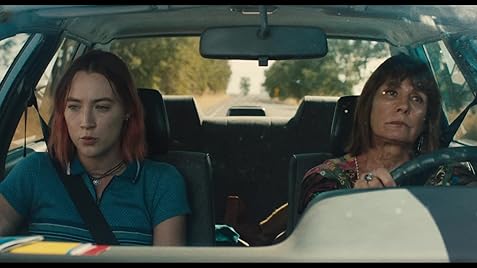
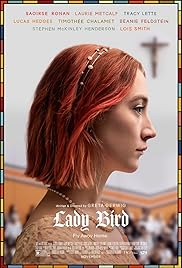
Greta Gerwig does an impressive job for LADY BIRD – her first solo directorial debut. Gerwig choses the coming-of-age story of an 18-year old senior student called Lady Bird (Saoirse Ronan) as the subject.  Lady Bird (her real name is Christine McPherson) is as annoying, spirited and independent as any teenager would be.  But Greewig’s script and Ronan’s portrayal allows the audience not to dislike her.

Lady Bird attends a catholic high school in Sacramento.  She lives with her mother (Laurie Metcalf), father (Tracy Letts) and step-brother, Miguel (Jordan Rodriguez).  She has a stormy relationship with her mother, things getting worse when she gets suspended telling off a teacher.  Her mother works extra shifts to support her, claiming that no amount of money can repay this debt.  Lady Bird has a failed relationship with Danny (Lucas Hedges) who ends up coming out gay.  She then loses her virginity to Kyle (Timothée Chalamet) who turns out to have been sleeping around.  But the key issue is that she wants to study in New York but her mother refuses as the family cannot afford it.  When her mother finds out she had applied in secret, she becomes really upset.

The film covers thoroughly a lot of the female teen issues quite well.  Lady Bird undergoes the learning process and develops her character for the better.  But it is a rough road.  She ditches her best friend, Jenny (Beanie Feldstein) and has major fights with her mother.  She makes up with Jenny going to the prom with her after ditching her prom date, Kyle.  The film’s climax has her in New York after her mother drives her to the airport, still visibly upset.

Gerwig stages well constructed and written confrontational scenes. Two of these involve  Lady Bird and her mother.  One has her asking for a number, what her mother has spent supporting her. When her mother replies no number can be put down for what she has done, Lady Bird storms out of the room.  The other has her begging her mother for forgiveness while her mother is doing the dishes, giving her the silent treatment.   Greta could have made the film funnier, but she restrains, keeping her story focuses and serious.  Gerwig shows both sides of the picture, the mother’s and the daughter’s.  They have their points of view and are strong women.

The script however, noticeably does not contain strong male characters. Kyle is an idiot, Danny is weak willed unable to accept his homosexuality.  The father suffers from depression and Miguel is not that strong a person either.

Metcalf delivers a terrific performance as the mother.  She manages to win the audience to her side and makes her point without having to resort to cheap theatrics like screaming or crying.  Ronan is equally good while Letts does well in his little written role.

Gerwig draws her audience effectively into Lady Bird’s world, opening out an exciting adventure of a family, not dysfunctional, but one that still have problems to solve.

LADY BIRD succeeds.  One would now hope to see a film made but with the male and female roles reversed – with a story of a n angry male teen learning his lessons in life.

Trailer: https://www.youtube.com/watch?v=cNi_HC839Wo


Submit your Screenplay to the Festival TODAY

Film Review: MOUNTAIN (Australia 2017) *** (Opens Jan 12)

Submit your Screenplay to the Festival TODAY

Mountain Poster
Trailer

An experience about the highest peaks around the world.

Director:

Jennifer Peedom


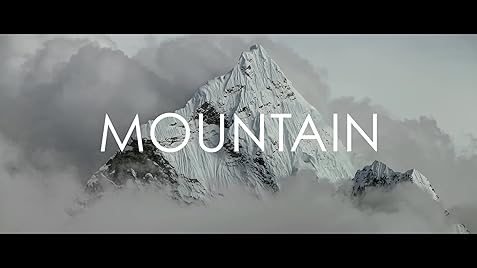
We’re feared them, revered them, and even had the hubris to say we’ve “conquered” them.  So goes the narration of the stunning documentary on the giants of the world entitled MOUNTAIN.

If the voice sounds familiar, it belongs to actor Willem Defoe who is no stranger to providing the sarcastic, ironic, poetic and informative dialogue in a documentary.  For example, he narrates the message: you are never so alive as when you are close to death.  Defoe also narrated the excellent DO DONKEYS ACT?, his voice playing a big part to the success of that and also this movie.  The existential commentary is written by best-selling author Robert Macfarlane and director Jennifer Peedom  (SHERPA).  Robert wrote the book “Mountains of the Mind”.

The film begins with grand shots of mountains, often covered in ice and snow.  Humans then come into the picture, followed by the relationship between man and mountain.  The film has a loose narrative – the film best enjoyed by sitting back and relaxing, to enjoy the stunning cinematography and beauty of the mountains.

 The film demonstrates what mountains have meant to humans from past to present. The have been the ethereal homes of gods and demons, and places no sane person would have thought of ascending until a few hundred years ago.  Today, they represent a pilgrimage of a sort for millions of people worldwide. Peedom shows scenes of travellers (including amateurs) ascending Everest by the hundreds, ski down from vertiginous mountain tops, para-ski, fly from peaks using wing suits, rock-climb and ice-climb.  What ticks Peedom off is shown in two shots.  One is a helicopter with a huge banner of “Red Bull” followed by narration saying that mountains have been commercialized.  The other one, has a long queue perhaps of a hundred or so climbers, each attached to each other by rope with the narration saying that mountain climbing has turned to crowd control.

.There are excellent shots of solo mountain climbers hanging on to peaks, some falling and getting injured, skiing and mountain animals.  Besides showing the awe and beauty of the mountains, Peedon does it shy way from including scene that show blood from climbers that have fallen or skiers that have tumbled down their mountain runs.  

If one wonders how the footage was shot, much of them were accomplished using drones and using everything from GoPros to the best cameras.  No stranger to elevation, director Peedom began her career as a climbing camera operator on Mount Everest.  Adding music to the visuals, the soundtrack is backed by a majestic score of old-and-new classical works by Richard Tognetti. 

Though there are countless stunning shots of high mountains, one wishes these sights would be identified as to where they were filmed.  The only time a mountain is identified is Everest.  One has to wait till the closing credits to learn that he incredible footage was shot in 20 countries plus Antarctica, shows us high-elevation defiance of death in scenes of both incredible grace and beauty, and tragedy, injury and death.

Trailer: https://www.youtube.com/watch?time_continue=1&v=rOBB_VOFQHI

Submit your Screenplay to the Festival TODAY

Film Review: WE DID NOT FALL FROM THE SKY, UK, Experimental/Relationship

WE DID NOT FALL FROM THE SKY follows a handful of transgender individuals living within the Hijra communities of India. Although India has passed a law acknowledging a third gender within their population, and Hijras, as a community have been recognized within social and religious communities with India for centuries, Hijras still face incredible discrimination in India and struggle to gain the basic rights offered to other Indian Citizens. A Hijra may identify themselves as a transgendered person, may be eunuch or an intersex person. Many Indians identifying as Transgendered may face discrimination of isolation from their community, and may seen refuge in the Hijra community. WE DID NOT FALL FROM THE SKY chronicles the life of several such women. Denied access to many jobs, our protagonists are often left with little options for work except for sex work or begging- often exposing themselves to terrible dangers in the process.


But the lives of our heroes, while often difficult, are far from hopeless. Each of them possess incredible talents, such as classical dancing, or  provided important roles during religious ceremonies, or have admirable aspirations, such as working for the their government. There is never a doubt of the boundless human potential that exists within them, despite the often difficult circumstances of their lives.


WE DID NOT FALL FROM THE SKY is a telling tale of it’s time. It acknowledges that crucial aspect of the hijra community not being one that has “suddenly appeared”, but one that has long since been a part of Indian history and culture. But it also showcases the changing tides of a future on the cusp of changing. WE DID NOT FALL FROM THE SKY showcases the life for the Hijra community now, but also points to the hope of what the future holds for the community as well. A future where this community has rights to land ownership, child-adoption, working freely without discrimination. WE DID NOT FALL FROM THE SKY is a story of hope, through the eyes of the women on the front-lines of movement to provide a better life for all people. A moving and important film. Many credits of acknowledgement to the amazing bravery of the cast, and the director Tabs Breeze and Georgia Oakley.

by Kierston Drier

WATCH the Audience FEEDBACK Video: 

WE DID NOT FALL FROM THE SKY, 26min., UK, Experimental/Relationship
Directed by Tabs Breese & Georgia OakleyPurushi, Pratiksha and Shalu are three best friends and trans women struggling to find their place in contemporary Indian society, often via the only means of making a living available to them: sex work and begging. Our film is a highly stylised art piece – the live action is intercut with animation and dreamlike dance sequences.

CLICK HERE – and see full info and more pics of the film!

FILM REVIEW: ALL THE MONEY IN THE WORLD (US 2017) ****

Submit your Screenplay to the Festival TODAY

All the Money in the World Poster
Trailer

The story of the kidnapping of 16-year-old John Paul Getty III and the desperate attempt by his devoted mother to convince his billionaire grandfather Jean Paul Getty to pay the ransom.

Director:

Ridley Scott

Writers:

David ScarpaJohn Pearson (based on the book by)


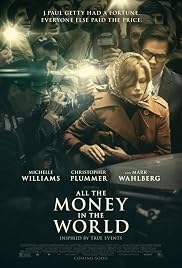
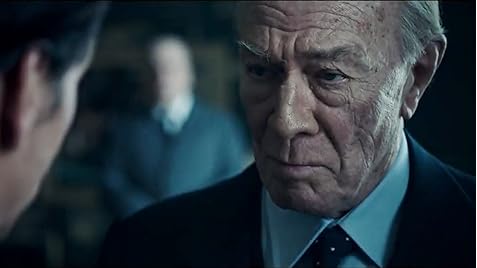
The big question everyone will be asking about ALL THE MONEY IN THE WORLD is how effective the replacement of Christopher Plummer in the titular role of Paul Getty.  After the sexual harassment allegations surfaced on Kevin Spacey, director Ridley Scott (BLADE RUNNER) quickly replaced him with Plummer, doing the required re-shoots.  After viewing ALL THE MONEY IN THE WORLD, all traces of Spacey have been removed and it is nothing short of remarkable that Ridley has done such a great job.  And Oscar Winner Plummer is great.  Spacey would ave added a sly, comedic sarcastic element to his portrayal – his trait, but Plummer plays him straight, funny or serious depending on the situation.  The world needs not need to see a more sarcastic Getty.

The film is narrated from the grandson, Paulo (Charlie Plummer, no relation to Christopher Plummer), giving the film his perspective on his grandfather.  “He is not only the richest man in the world, but the richest man who ever lived!”  Plummer as Getty shows the stingy side of a millionaire, how he trusts artifacts and objects instead of people, as these show themselves as they are, with nothing hidden. But just as his colleagues and friend betray him, he does the same with his grandson’s artifact.

The film contains a few ineffective segments.  One odd one that stands out is a short segment set in 1838 in Saudi Arabia where Getty (in younger mode and Plummer decked in make up and dyed black hair to look younger) discusses oil.  That scene is total unnecessary and could have been done away with to save money and Plummer looking a bit ridiculous.  One cliched segment has the grandson walking the streets of Rome in the middle of the night accosting the prostitutes.  When he remarks to one of them: “I can take care of myself,” one can guess that he is just about to be kidnapped.  The next scene has him pushed into a car by the kidnappers.

But there are a few impressive scenes like the beginning black and white shot of a city with vintage cars.  The scene evolves into colour and the famous Trini fountain is revealed while Italian dialogue heard in the background.  It could be a scene right out of Fellini’s LA DOLCE VITA.

All the performances are outstanding from Michelle Williams as the angry mother slowly developing more tolerance towards the hired Chase to Plummer to Wahlberg.  The best  performance, however belongs to French actor Roman Duris (THE BEAT MY HEART SKIPPED, THE NEW GIRLDFRIEND) as the Getty’s grandson’s kidnapper.

Scott’s film is strong on emotions.    Getty’s daughter-in-law played by Williams undergoes the entire spectrum of emotions and character including, anger, strength, vulnerability, love, sensitivity, tolerance and annoyance.  All kidnapping films have the element of the Stockholm Syndrome.  As the kidnapper and kidnapped are both male, the bonding is one of trust and respect, which makes for the film greatest surprises.

The film plays more of a suspense thriller than a biopic on the millionaire Getty.  Still, there are enough screen time given to Getty to  show him the man he could be.  The words on the screen at the closing credits makes it clear that though the film is based on true events, dialogue and some events have been fictionalized.  It would be interesting to know which parts of the film are fictionalized.  The whole story, at the very end, seems like the perfect kidnapping caper, perfect for a good suspense film.

The film also contains a message. Watching Christopher Plummer as Getty teaches me,  wealthy Scrooge, a few things while opening my eyes.

Trailer: https://www.youtube.com/watch?v=KXHrCBkIxQQ

Submit your Screenplay to the Festival TODAY

I, TONYA (USA 2017) ***1/2

Submit your Screenplay to the Festival TODAY

I, Tonya Poster
Trailer

2:24 |Trailer
Competitive ice skater Tonya Harding rises amongst the ranks at the U.S. Figure Skating Championships, but her future in the activity is thrown into doubt when her ex-husband intervenes.

Director:

Craig Gillespie

Writer:

Steven Rogers (screenplay)

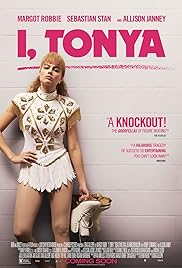
In 1994, the figure-skating world was shocked by the brutal attack on US medal hopeful Nancy Kerrigan.  The more shocking news was that the attack was allegedly conceived and executed by those close to — and perhaps including — rival figure skater Tonya Harding.  The film tells Tonya’s story and thus the title I, TONYA.

The story is revealed in tongue in cheek events with humour and irony while keeping to the main dramatic details.

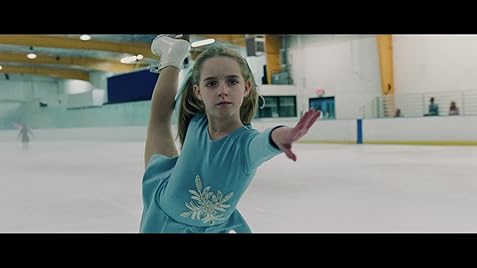
Sad, funny but real this biopic of the infamous American figure Tonya Harding (Margot Robbie) plays like a mockumentary as the film is bookended by interviews of the main characters 20 years after ‘the incident’.  The film then unfolds in chronological order with Tonya as a child brought to the skating rink as a skating prodigy by her mother who would often slap her around for not doing her best.  

‘The incident’ as described in those exact words in the film itself refers to the breaking of rival skater Nancy Kerrigan’s knee by Tonya’s ex-husband.  The question was whether she knew of the plot.  As the film explains she likely did not at the start, as it was all Jeff Gillooly’s (Sebastian Stan) idea but when she did get nailed for it, she was then banned from figure skating in any organization for life, a sentence in her own words, that was worst than prison.

Films have been often made of heroes and survivors, but it is seldom that one is made of white redneck trailer trash.  That is Tonya Harding.  But director Gillespie and writer Steven Rogers portray the skater as someone America loved to hate, but also paints her, despite her volatile and fierce personality someone vulnerable to her surroundings and acquaintances.  She is treated brutally (physically and emotionally) by both her two closest relatives, hers husband and mother (Allison Janney).

Director Gillespie remembers that I, TONYA is after all a film about the sport of figure skating.  The segments of skating have to be good and they are.  Compare the recent tennis film BATTLE OF THE SEXES which made the mistake of including no exciting matches in it.  Her triple axel at the 1991 championships is shown beautifully in slow motion.

Gillespie elicits some mighty fine performances from his cast most notably Robbie in the title role as well as Janney as her stern mother, LaVona.

The dialogue though in everyday words are at times so predictable, one can say the words just before the characters utter them.  In one scene, after LaVona after throwing a knife that sticks into her daughter’s arms utter the words: “Every family has its ups and downs.”   A comical line though the words are stolen from the play and film THE LION IN WINTER.  But there are some good lines in the script as when LaVona says (and really believes) that she sacrificed being a loving mother so that Tonya can grow up to become a fierce skater.

Though the film deals partly with the daughter/mother relationship, it shows for once that the relationship is a sour irreconcilable one.  Still the film finally gains the sympathy of the skater, that in her own words describes herself as the one America grew to hate.

Trailer: https://www.youtube.com/watch?v=OXZQ5DfSAAc


Submit your Screenplay to the Festival TODAY

Film Review: DOWNSIZING (USA 2017) Top 10 *****

Submit your Screenplay to the Festival TODAY

Downsizing Poster
Trailer

A social satire in which a guy realizes he would have a better life if he were to shrink himself.

Director:

Alexander Payne


DOWNSIZING marks filmmaker Alexander Payne’s departure from real life and real life drama as witnessed in films like NEBRASKA, THE DESCENDANTS and ELECTION.  DOWNSIZING is Payne at his most playful, a sci-fi adult fairy tale of sorts, but one in which real life drama still exists.  The film stars Matt Damon who like the role in his last film George Clooney/Coen Brothers’ SURBUBICON is about a man who strives for a better life but things end getting more f***ed up.  What a man will do to correct the situation is what SUBIRBICON and DOWNSIZING are about.  It is interesting to see how two different filmmakers deal with a similar premise.

DOWNSIZING, a film combining several genres offers the solution to the world’s problem of overpopulation.  If people can be reduced in size to a thousandth of their original, many of the world problems could be solved.  People will only eat, use and dispose much, much less product.  When science finally achieved the success of downsizing, many colonies were begun.  So, Matt Damon and wife opt to be reduced and live in their new reduced size colony for monetary benefit.  Things never go as expected.

The film centres on Paul Safranek (Matt Damon) who is married to Audrey (Kristen Wiig) and who has spent most of his life working  hard but still raying int he same old house.  He figures that downsizing will allow him and his wife to afford the luxuries they would otherwise never achieve.  But unknown to Paul, the problems he faces do not shrink like their bodies.  After his is shrunk, Paul finds to his horror that Audrey has chickened out the procedure.  Paul is left divorced in miniature Leisureland.

Paul finds truth though the Vietnamese cleaning lady Ngoc (Hong Chau) after partying at his neighbour, Dusan’s (Christoph Waltz).  He slowly but surely redeems his life in a story unfolded in Payne and Jim Taylor’s script that is both dramatic and hilarious.  There is a very funny segment where Paul gets high at Dusan’s glitzy party.  He walks around with a ridiculous wide smile on his face, remarking at one point: “I am going to take off my shoes.”

There are many good examples why this script should win the Oscar for Best Original Screenplay.  This might be Payne’s second after winning Best Adapted Screenplay for THE DESCENDANTS.  One are the words Ngoc replies to Paul after giving him a farewell gift of a Bible in Vietnamese:”Words don’t matter.  Just remember me!”  Or the dialogue when Paul asks her “Who am I?”  She replies, pronouncing his name correctly the first time Paul has heard it pronounced correctly.  “You are Paul Safrenek!”   Or the classification of fucks into 8 categories, with Ngoc asking Paul: “What kind of fuck did you give me?”

DOWNSIZING’s script is brilliant with lots of attention to details.  The film does not go into thriller territory but attempts more ambitious aims.  Payne’s social satire is the most ambitious of all his films but it largely works thanks to the script.  Damon’s performance is fantastic (even the glimmer fem his eyes) with help from a host of impressive stars (Kristen Wiig, Christoph Waltz, Hong Chau, Laura Dern, Jason Sudeikis and Neil Patrick Harris).   The prize performance comes from Hong Chau, as observable in the scene where she convinces with happy tears,  Paul and company the reason she has to visit Norway.

Shot in Toronto and around the fiords of Norway.

Trailer: https://www.youtube.com/watch?v=QKEPCcPVrx0

Submit your Screenplay to the Festival TODAY

Film Review: JUMANJI: WELCOME TO THE JUNGLE

Submit your Screenplay to the Festival TODAY

Jumanji: Welcome to the Jungle Poster
Four teenagers discover an old video game console and are literally drawn into the game’s jungle setting becoming the adult avatars they chose.

Director:

Jake Kasdan

Writers:

Chris McKenna (screenplay by), Erik Sommers(screenplay by) | 4 more credits »


Jake Kasdan (son of Lawrence Kasdan) takes over the director reins from Joe Johnston who made the original JUMANJI movie where back when with the late Robin Williams.  JUMANJI WELCOME TOTHE JUNGLE is a stand-alone sequel paying tribute to Williams.

Kasdan’s lazy script is cliche ridden with the typical fairy tale adventure aimed at pre-teens.  The story is nothing remarkable.  It all begins when a father discovers a hidden boardgame covered in the sand while jogging on the beach.  He gives it to his son, Alex who is more interested in video games (the year is 1996).  Overnight, the game changes so that the box’s contents are now a video game cartridge, but when Alex puts it in his console and turns it on, he vanishes.

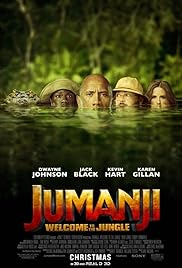
20 years later, a high school detention group finds the video game in the detention room .  They decide to play the game, each player taking on a game character.  They get sucked into the game each transforming into the game character they picked,  The premise is that they have to  win the game in order to get back out of the game to their normal lives.  

The four game players are Spencer Gilpin (transformed into Dwayne Johnson), his former best friend, Anthony “Fridge” Johnson (Kevin Hart), who he helped with his homework by writing Fridge’s essays for him.  The other two are Bethany Walker (yes, Jack Black), a beautiful girl who was caught talking on her phone during a quiz and Martha Kaply (Karen Gillian), a socially awkward girl who objected to being made to participate in gym class. 

They find themselves in a jungle, all four are shaken to realize that they have become the avatars they chose for the game, with the result that Fridge is now a short zoologist, Bethany is now an overweight middle-aged man, Martha is a beautiful athletic woman, and Spencer is a muscular, tough man.  The group encounter Nigel, who lays claim to the legendary gem, the “Jaguar’s Eye”.  The removal of the gem from the large jaguar statue will grant the villain Van Pelt (Bobby Cannavale) control over the animals of Jumanji.  In order to complete the game, the players must return the gem to the jaguar statue and call out “Jumanji”.

As a game movie, the under-exciting Jumanji game is overlooked for the villain Van Pelt and his motorcycle gang.  The game contains several levels that the players must complete, a missing piece in the form of Alex (Nick Jonas) and a few other uninteresting bits.  But the motorcycle chases are not much more exciting either.

The cliched story involves each high school charter learning to be better people while transformed into their avatars.  Fridge and Spencer learn the meaning of true friendship, Bethany learns that there is a world outside herself and her cell phone while Martha develops social skills.

The film takes a while to secure a footing.  What makes the film work is the great ensemble acting from all the main stars.  Black turns out to be the funniest as the transformed Bethany still possessing her girly mannerisms.  The funniest segment is Black teaching Gillian how to be sexy and seduce the transport guards and her after performing what she had learnt.

The film is more suited to a younger crowd, who appear to be cheering and laughing thigh the promo screening.  For adults, the film should also be enjoyable enough.

Trailer: https://www.youtube.com/watch?v=2QKg5SZ_35I

Submit your Screenplay to the Festival TODAY

Film Review: WEXFORD PLAZA (Canada 2017) ***

Submit your Screenplay to the Festival TODAY

Wexford Plaza Poster
A misunderstood sexual encounter unravels the life of a lonely female security guard and her deadbeat paramour.

Director:

Joyce Wong

Writer:

Joyce Wong

The strip mall setting matches director Joyce Wong’s sad and sympathetic comedy of two low paid workers.  There seems to be little hope for both the shops and Wong’s characters.  Betty is the newly hired security guard and Danny serves in the pub.  The pub there is closing.  The strip mall is described by the security patrolling the premises as a shit hole. Losers hide there with their girlfriends for blow jobs.  The place is filthy and the only big outstanding thing there is the huge garbage dumpster.

The story is told in two chapters, Chapter One called Betty and Two called Danny.  Instead of intercutting the stories, Wong unfolds them sequentially, Betty’s story first. As the two stories concern the two characters in the same period of time, there are intersecting identical segments that are repeated.  (I thought the film had rewound to the start when one of these were repeated.). The repeated segments include both  Betty and Danny going for a smoke and a make-up sales session.

Both stories are equally Interesting. The decision to keep the two stories separate allows each story to flow smoothly without distraction.

Betty is depicted as a lonely girl.  She is a little on the heavy side but is pretty with a good size of breasts as she is proud to both admit and reveal to Danny.  She is desperate for a boyfriend as well as company.  Her other two male security guard colleagues join her for the occasional drink but they are assholes, as she slowly discovers.  She has an encounter with Danny a night when he is drunk.  She has hopes for maybe him as a boyfriend.

The story switches to Danny . It is revealed that he is living with a girl, a steady but Wong never reveals whether they are married.  They very well could be as she complains of wanting a bigger apartment.  It is clear that Danny loves her.  When Danny is laid off from his job, he keeps the fact from her.  He becomes the Avon Lady but has not much luck in direct sales mainly because he knows nothing about cosmetics.  A sad story.  When his girl finds out three weeks later about his job loss, she is furious.

Wong’ s characters are likeable.  She even shows a few redeeming qualities of Betty’s security colleagues.  But her film is too scarce in characters.  There are 5 people in total. Nothing is known of Betty’s family.  Her character is not that unlikable that she has no friends. The same can be said for Danny.  His boss is only shown for a fleeting moment.

WEXFORD PLAZA is produced by a friend of mine, Harry Cherniak.  This is his first full length feature, after producing a string of excellent shorts.  Congratulations to him on his interesting and well made first movie.  The film has been nominated by the Toronto Film Critics Association for the Best Canadian Film.

Trailer: https://www.youtube.com/watch?v=hE9FVohQBkQ


Submit your Screenplay to the Festival TODAY

Film Review: THE GREATEST SHOWMAN (USA 2017) ****

Submit your Screenplay to the Festival TODAY

The Greatest Showman Poster
Trailer

Inspired by the imagination of P.T. Barnum, The Greatest Showman is an original musical that celebrates the birth of show business and tells of a visionary who rose from nothing to create a spectacle that became a worldwide sensation.

Director:

Michael Gracey

Writers:

Jenny Bicks (screenplay by), Bill Condon (screenplay by) | 1 more credit »


Films about circuses have been popular having taken many different genres form blockbuster (Cecil. B. Demille’s THE GREATEST SHOW ON EARTH) to cheap 1966 horror (CIRCUS OF FEAR).  THE GREATEST SHOWMAN aims at being both a biopic and a musical.

Hugh Jackman is a shoo-in for the role of singing P.T. Barnum, obtaining a Golden Globe nomination for Best Actor in a musical or comedy in the process.  Heart-throb Zac Ephron also eases into musical mode as smooth as in three HIGH SCHOOL MUSICAL films.  He plays Barnum’s friend and business partner..

THE GREATEST SHOWMAN is a true musical at heart.  Within the first 10 minutes, there are two songs performed already.  The film also boasts to be an original musical, not to be confused with “BARNUM” that played on Broadway decades back.  The songs are catchy with “This is Me”, largely performed by the bearded lady nominated for the Best Song Golden Globe.  But the other songs (by the guys who wrote LALA LAND) are just as catchy (there have been few musicals these days with all good songs) with others just as good, if not better than “This is Me”.  The choreography is also quite spectacular, and one cannot complain that there is not a full all out musical.  It is a feel-good movie, so those wanting hard drama and musical-haters, be advised to stay away.

The story contains two romances, between P.T. Barnum and Charity (Michelle Williams) and the other between Phillip Carlyle (Ephron) and Anne Wheeler (Zendaya), the acrobat and trapeze artist.  The romantic chemistry is not all there, though Barnum’s and Charity’s is more believable.

Though the film traces how American showman P. T. Barnum became the founder of the circus that became the famous traveling Ringling Bros. and Barnum & Bailey Circus, there are also subplots like the romance as well as the diversion of the employment of famous Swedish singer Jenny Lind (Rebecca Ferguson) who almost destroys both his business and his marriage.  Her singing performance is astonishing though Loren Alfred provides Lind’s singing voice.  Ferguson lip syncs and fakes it quite well.

The film side steps certain points, like how Barnum suddenly obtained all the circus animals.  The business aspect of the circus is only briefly mentioned in passing.  It is quite hard to believe that the circus made it this big with so few acts and with no clowns at all in the film.

Director Gracey seems fond of emphasizing the fact of equality among performers.  The protests in each visiting town of the residents against the circus ‘freaks’ finally conclude with a huge fire that destroys the circus building.  In Demille’s THE GREATEST SHOW ON EARTH, it was a train crash that almost destroyed the circus, here compared to the big fire. 

The film should have more circus acts on screen time, so the audience can really feel the atmosphere of a circus.  What is clearly missing in this circus film is the excitement and danger of a circus.  Still, THE GREATEST SHOWMAN, though is not the greatest show in 2017 still makes appropriate Christmas entertainment.

Trailer: https://www.youtube.com/watch?v=AXCTMGYUg9A

Submit your Screenplay to the Festival TODAY