CHAVELA (USA/Mexico/Spain 2017) ***

Submit your Screenplay to the Festival TODAY

Chavela Poster
Trailer

Through its lyrical structure, Chavela will take viewers on an evocative, thought-provoking journey through the iconoclastic life of game-changing artist Chavela Vargas. Centered around … See full summary »

Directors:

Catherine Gund (co-director), Daresha Kyi (co-director)

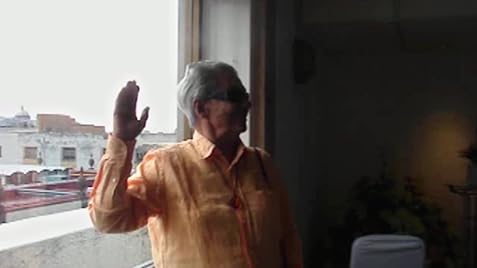
The film opens with the film’s subject Chavela Vargas saying on camera to her interviewer that it is not the past that counts but what goes on from then.  That was before the time of her death in 2012, so the doc has to take audiences back to where CHAVELA came from.      There is also the point that not many know who she is, so back to the past.

The question then is what is so special about this Mexican artist/singer and why is it necessary to dedicate an entire documentary to her?  This doc provides the possible answers, but whatever they are,  it should be noted that Chavela Vargas was the Mexican icon who scandalized and captivated the world around her.

  A few reasons:  Chavela was notorious and that demands some respect.  She had an affair with and broke the heart of artist, the then older Frida Kahlo.  She attended Elizabeth Taylor’s Acapulco wedding, and woke up in bed with the movie star Ava Gardner.  These are shown with just photographs of Liz Taylor and Gardner separately and voiceover, as no footage is assumed to be available.   She wielded a gun and indulged in tequila with legendary enthusiasm.  She has been known to collapse after drinking, and this happened often so that she had quite the reputation.  Her singing made Spanish director Pedro Almodovar – and millions of others – cry.  Her death in 2012 saw mourning akin to a Mexican state funeral.  She was open gay, though no one ever brought it up directly.  She became noticed as a singer when she refused to wear the traditional Mexican dresses but wore trousers and shirts (male attire) instead.  She adopted the performance persona of the “charro” (a singing-cowboy genre plied by her legendary and tragic friend and collaborator Jose Alfredo Jimenez). 

As Chavela died in 2012, the doc has to rely on already taken footage.  Fortunately co-director Catherine Gund was the interviewer, availing herself of a rare opportunity during a time she spent living south of Mexico City.  “My girlfriends played me Chavela’s songs and told me tales of her womanizing, her irresistible allure, her deep voice, her audacity. I had to meet her” She says.

The film is divided into two halves.  The second shows her comeback, mainly in Spain and finally back to Mexico.  This is the part where Spanish director Pedro Almodovar appears to aid her in her career.  He uses her music in his films like KIKA and THE FLOWER OF MY SECRET.

The film’s best parts are understandably her performances, where the audience can see for themselves the reason for her popularity.  She has the talent to move audiences to tears with her performances.  The last part of the film see her in a wheelchair before her death in 2012.

Catherine Gund and Daresha Kyi’s documentary shows Chavela the way she is, and her lifestyle – warts and all.  At least their doc would make this artist (who every lesbian in Mexico respects, according to the film) more recognized in the world.
Trailer: https://www.youtube.com/watch?v=XKyj5Tzrumo


Submit your Screenplay to the Festival TODAY

DIM THE FLUORESCENTS (Canada 2017)

Submit your Screenplay to the Festival TODAY

Dim the Fluorescents Poster
A struggling actress and an aspiring playwright pour all of their creative energy into the only paying work they can find: role-playing demonstrations for corporate training seminars. When …See full summary »

Director:

Daniel Warth

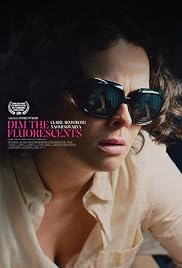
DIM THE FLUORESCENTS is a film that centres on two similar aged females who perform role-playing at corporate training seminars.  It would be best if they were performing in theatre or film, but this is the next best thing.  DIM THE FLUORESCENTS is their story.

If the plot sounds like a feminist movie – it is.  But being directed and co-written by a male Daniel Wart and co-written by another male, Miles Barstead, the feminist themed film has a male point of view which makes the feminist angle all look funnier and thus become more appealing.

The film’s party scene is priceless.  Both get themselves self-invited to a pretentious arty party by a friend who has good intentions of helping them get connected.  Everything goes wrong once they gate crash the party.  Foremost, they are overdressed.  Audrey meets a guy she has not seen in years who keeps asking her what she is doing, while she tries her best to avoid him.  Lillian’s friend tries pushing to hook her up when she is not ready.  All the while, they deal with the other party people who all seem to have made it well in the real world, the exception being the two of them.

The film contains one quietly hilarious moment when Lillian is talking about her dead cat to the agency girl who initially brought the ‘disturbed’ cat for adoption.  “She jumped,” is what Lillian is told.  “Did you give it space?” was her next question.  Then it becomes apparent that the cat is a metaphor for Audrey who has just got really upset and left the place and quit the job.

The film’s main asset are thee two leads Claire Armstrong and Naomi Skwarna.  They are perfect to watch especially for those who are taking acting lessons.  They bring distinction to each of their two characters, standing them out in different ways.  I could watch them forever.  They can change from teary to funny in a moment, and can draw one into their characters.

For a film about two women being so close, the subject of the relationship being sexual is clearly avoided.  Audrey is pursued by a male after Lilian and her have a major argument, so nothing comes of it.  Then the sexual relationship issue again is conveniently avoided.

The film is a bit lengthy at 2 hours for a light comedy about two women.  At the end, it becomes apparent that this friendship, its survival despite all troubles is the film’s key issue.

So why is this film just a poor?  The film is unfortunately marred by an overdone ending where it is obvious the office skit is a reflection of the two women’s lives rather than the outcome reflective on what proper action leaders should take in the time of crisis and change.  The two overact, scream, cry and break glass in the most disappointing overdone ending in a film this year.

Trailer: https://vimeo.com/181892085


Submit your Screenplay to the Festival TODAY

THE SHAPE OF WATER (USA 2017) ***** Top 10 of the Year

Submit your Screenplay to the Festival TODAY

The Shape of Water Poster
Trailer

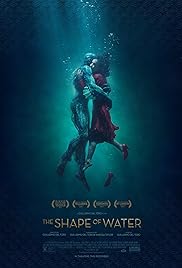
An other-worldly fairy tale, set against the backdrop of Cold War era America circa 1962. In the hidden high-security government laboratory where she works, lonely Elisa (Sally Hawkins) is trapped in a life of isolation. Elisa’s life is changed forever when she and co-worker Zelda (Octavia Spencer) discover a secret classified experiment.

Writers:

Guillermo del Toro (screenplay by), Vanessa Taylor (screenplay by) |1 more credit »

The film opens with voiceover by Giles (Richard Jenkins) who tells his story that turns into a beautiful poem at the end of the film.  It braces the audience for sappiness, but as the film unfolds, Del Toro shows how sappiness can be done in movies in a  good way – with the repeated use of the famous Alice Faye song, “You’ll Never Know”.

The film’s subject is Elisa Esposito (Sally Hawkins), a mousy, curious woman rendered mute by an injury she sustained as an infant.  She works the night shift as a janitor at the Occam Aerospace Research Centre in early 1960s Baltimore.   One day, the facility receives a new “asset” discovered by the cruel and abusive Colonel Richard Strickland (Michael Shannon) in the rivers of South America.   Elisa has a brief encounter with The Asset (Doug Jones), which she discovers is an amphibious humanoid.  She feels sorry for it and helps it escape by stealing it from the facility.  Helping her are her best friend Giles, one of the centre’s scientists, Robert Hoffstetler (Michael Stuhlbarg), who is actually a Soviet spy named Dmitri and her co-worker (Octavia Spencer).

The film’s best and most amusing is the TV (one of many) clip of MR. ED (the talking horse) in which after a newspaper article seen in the background of a monkey sent to space.  Mr Ed Says, “I guess I have to enlist.”  It is a very funny and appropriate segment as the setting is of the time when Russia and the U.S. were engaged in the space race, just as it is mentioned that the U.S. wanted to send the water creature into space because of its breathing capabilities.

Any perfect story has to be brought to the screen by a perfect performance.  This performance belongs to Oscar nominee Sally Hawkins, who broke into the film scene with the remarkable portrayal of Mike Leigh’s heroine in HAPPY-GO-LUCKY.  She brings heart to the role as a deaf mute who finally finds not only love but a purpose for living.

A superb film with a message included –  THE SHAPE OF WATER shows a non-tolerance policy towards bullying, and discrimination towards coloured people, homosexuals and lower paid employees like the cleaners.  Most of this is realized in the diner that Elisa and Giles frequent, mainly because closeted Giles fancies the male server.  It is a marvel that a mute can communicate the film’s prime message: “If we do nothing, then we are nothing!”

There is a lot of good similarity between THE SHAPE OF WATER and Del Toro’s other best movie PAN’S LABYRINTH.   Del Toro’s dislike for anything military is shown in the unsavoury character of Colonel Strickland (Michael Shannon).  He is given Del Toro’s punishment of bodily injury of his two fingers chopped off (as the colonel in PAN’S LABYRINTH had his face hacked.)

Del Toro is smart enough to prime the audience for what is to come, thus invoking what was Hitchcock’s best tool – audience anticipation.  The audience first sees blood on the sink after Elisa touches the creature.

The film contains lots of the back humour one expects of Del Toro.  The poster “Loose lips might sink ships” is shown on the wall of  Elisa’s (who is mute) locker.  “No negativity”  Strickland utters, just as he realizes he is about to lose everything he has worked for.

The musical fantasy sequence towards the end in back and white where the mute Elisa is then allowed to sing is nothing short of inspired filmmaking.

THE SHAPE OF WATER is filmmaking at its best with Del Toro still in top form, with top talent on display.  He does not compromise on the violence (a few torture scenes involve the metal prod) but amidst the violence and occasional foul language, his latest film is one of the most credible and beautiful romantic stories in cinemas this year.

Trailer: https://www.youtube.com/watch?v=XFYWazblaUA


Submit your Screenplay to the Festival TODAY

WONDER WHEEL (USA 2017) ***

Submit your Screenplay to the Festival TODAY

Wonder Wheel Poster
Trailer

On Coney Island in the 1950s, a lifeguard tells the story of a middle-aged carousel operator and his beleaguered wife.

Director:

Woody Allen

Writer:

Woody Allen


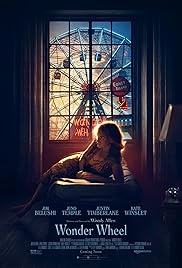
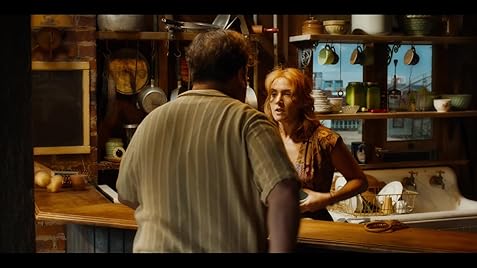
There is a slight hint that the film ’s central character is Woody Allen when the voiceover narrative claims to be a budding playwright, Mickey (Justin Timberlake), who later has an affair with a married woman, Ginny (Kate Winslet) but after falls in love with her step daughter (Juno Temple).

WONDER WHEEL is set in the Coney Island of the 50’s.  The film opens impressively with a panoramic shot of the beach filled with swimmers and sunbathers, all in the 50’s swimming garb.  The film then moves on to the main characters.

The two main characters in the Woody Allen story are the writer Mickey and Ginny caught in a loveless marriage with Humpty (Jim Belushi).

If the characters feel close to home, Mickey is Woody Allen the writer and Ginny the actress Mia Farrow.  Allen and Farrow were married and in love before Farrow brought him and adopted Soon-Yi, the Carolina character.  (Allen is now married to Soon-Yi with two children.)  Just as Mickey ditches Ginny and falls for Carolina, Allen did the same thing.  There is an odd feeling that Allen is trying to gain acceptance in the Mickey character for all his past deed.  Art copies life instead of imitating it.

In an interview with Woody Allen, Allen claims all his movies are based on the same identical premise, a cheating male who looks for better and younger sexual fulfillment.  At first glance, one would think that the character is now female, with Ginny intent of leaving her husband for the younger, attractive lifeguard, Mickey.  Upon closer examination, one finds that it is still the male, Mickey who is dissatisfied with the older Ginny and leaves her for Carolina.  

Allen’s films are getting more serious lately and WONDER WHEEL is one of his most serious of his recent works.  The humour is less prevalent and at times more subtile.  Carolina’s father describes the daughter’s gangster husband at one point after she declared that she and loved him: “He was not even good-looking.”  That is the film’s funniest joke.

WONDER WHEEL contains the traits of the Allen films, first and foremost being the stunning choreography by an Award Winning cinematographer, this film done by three-time Oscar winner Vittorio Storaro (THE LAST EMPEROR, REDS and APOCALYPSE NOW) who uses shifting blues and golds, often reflected on the characters’ faces from the revolving 

Wonder Wheel ride outside the apartment window.  Falling in love while being drenched in the rain (ANNIE HALL and many other Allen films) is also typically found in many of Allen’s films as in this one.

Allen often elicits superior performances from his all-star cast, many winning Oscars in his previous films (Michael Caine, Jim Broadbent, Diane Keaton to name a few).  Kate Winslet and Belushi deliver standout performances here while Timberlake shows too, that he can carry a movie on his own.

The subplot of Ginny’s troubled pre-teen son (Jack Gore) from her first marriage is an odd one.  He is obsessed with setting up fires for no apparent reason.  The jokes on the uselessness of psychiatrists appear the only reason that subplot is in the film.

WONDER WHEEL can be considered a disturbing film, being one that reflects too closely on Allen’s life – unless one wishes to dismiss the coincidences.  It is nevertheless, a well-made film well acted and executed that Allen needed to make to exorcise his demons.

Trailer: https://www.youtube.com/watch?v=VFM0UqX9MJ8

Submit your Screenplay to the Festival TODAY

Film Review: FIRM WITH PURPOSE, USA, Comedy 

This raucous five minute comedy is a sharp, witty romp through a devoted mother and an emotional human-resources specialists on a job interview. FIRM WITH PURPOSE is bright, sparkling with humor and dazzling with situational comedy that very well may have you thinking “I think I know someone just like this.” When a supportive mother goes to an interview in place of her daughter to interview in her stead, she locks into an emotional climb up a comical staircase with the employer, leading to some surprising twists and turns.


Directors Tia Ayers and Shannon Ayers Swanson have done an excellent job with this work. A simple story that packs a powerfully effective comic punch, FIRM WITH PURPOSE is sure to please baby-boomers and millennials alike.

Review by Kierston Drier

Film Review: THE BENEFACTION, USA, Drama

THE BENEFACTION is a strong dramatic tale of an Indian Taxi driver, doing everything he can to eek out a living for himself, his wife and their young and ill daughter. While he treats his daughter to presents and promises of her bright future in dance, his relationship with his wife suffers- for his doting on their daughter is an expensive habit they can ill-afford while they fall behind on payments for his taxi cab. He thinks he may have found a turn of fortune when a patron leaves thousands of rupees in his cab- but his initial idea to gamble the money to try to raise more funds for his daughter’s’ health care needs backfires when his cab is repossessed before he can use the money. Soon after, his daughter collapses and is rushed to the hospital with a prognosis they can not afford. But our hero’s fate turns one more time.


Life is all about choices. THE BENEFACTION is a powerful and moving film that demonstrates this concept with excellence. Excellent performances and strong and engaging story elements keep this film gripping and meaningful. A multilayered story that ties in duty, fate, faith and karma, THE BENEFACTION leaves a powerful message that we all make choices, but in the end our choices make us.

Review by Kierston Drier

THE BENEFACTION, 27min, USA, Drama
Directed by Nikhat Powell

Protagonist Rishi, a young Indian taxi driver struggles to make his payments on his sole means of livelihood, his taxi. While under the threat of repossession, he finds his daughter falling prey to an unknown illness that could take her life. When his taxi is repossessed and his wife is ready to leave him, he must make choices that will affect his future, and the life of his daughter.

CLICK HERE – and see full info and more pics of the film!

TODD & THE BOOK OF PURE EVIL: THE END OF THE END: THE ANIMATED FEATURE FILM (USA 2017)

Submit your Screenplay to the Festival TODAY

Todd and the Book of Pure Evil: The End of the End Poster
The animated conclusion to the live action Todd and The Book Of Pure Evil Show. Todd tries to mend his friendship with Curtis after killing his girlfriend. The book has returned along with Hannah and there is talk of a new Pure Evil one.


The long title of this movie matches the long introduction of the film which brings the audience up to date with where the movie starts.  The introduction is fast and furiously delivered, but if one misses a pout or to, there is nothing to be worried about, as the incidents have have occurred are mentioned once again during the film.

Continuing where the critically acclaimed cult TV series (live action) left off, Todd & The Book of Pure Evil: The End of The End returns to Crowley Heights high school to find Todd, Jenny and Curtis grieving the loss of their dear friend Hannah, whose death may or may not have been caused by Todd’s banishing of the Book.  The three must reunite to fight evil when the Book of Pure Evil returns to Crowley High, bringing with it some familiar faces (Guidance Counsellor Atticus Murphy Jr., Jimmy the Janitor, and The Metalhead Dudes) as well as some new foes, such as the Sweater Vest Beast and an Acidic Acne-Faced Teen.  But these enemies are merely warm-ups to the final battle with their greatest nemesis yet: The New Pure Evil One, whose intimate knowledge of our heroes may ultimately lead to their destruction!

The film is written by Charles Picco and Craig David Wallace with voices by Alex House, Maggie Castle, Bill Turnbull, Melanie Leishman, Chris Leavins and Jason Mewes (known from the Kevin Smith’s films).  The film done as animation instead of live action of the TV series allows more graphic violence.

The film as suited to teenaged contains typical teen issues.  Todd at one point, cannot get it up.  desperately, he goes to see the school councillor who gives advice fem his guidance councillor’s handbook.  Todd smokes dope, jerks off and does the typical things teens do.  He has a gang of friends who all have their own silly problems.  Adults like Atticus and Jimmy are portrayed as idiots.  No mention of parents in the film.

The animation is ok – the look that comes out from the typical comic book.  If anything, the film also contains a few forgettable songs and unforgettable gross out scenes like the toxic pus tom the zit-faced kid.

The narrative of saving the world or the teen world at that, if not hokum does to seem pressing eoguh in the film.  It does not help that one distraction after another occurs.

TODD & THE BOOK OF PURE EVIL caters to the typical angst teen.  Adults, even those that have gone through the identical problems in their younger days will likely find the whole enterprise boring.

The film opens  across Canada in November but oddly opens in Toronto (at the Royal Cinema) only in the start of December.  Craig David Wallace, Richard Duhaney, Alex House, Bill Turnbull and Melanie Leishman will be in attendance at the Royal on the opening day.

Trailer: https://www.youtube.com/watch?v=68JXEyLPUOY

Submit your Screenplay to the Festival TODAY

BIG TIME (Denmark 2017)

Submit your Screenplay to the Festival TODAY

Big Time Poster
Trailer


BIG TIME follows Bjarke Ingels during the course of 7 years (2009-2016), while he struggles to finish his biggest project so far. We are let into Bjarke’s creative processes as well as the endless compromises that his work entails.


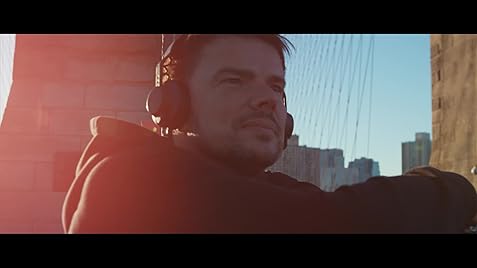
BIG TIME is look at Danish “starchitect” Bjarke Ingels, (following him for 7 years from 2009 to 2016) named “one of architecture’s biggest innovators” by The Wall Street Journal.  In 2016, Time Magazine named him one of “The 100 Most influential People” on the planet.

The film opens with Bjarke in a cab in NYC.  He is there to take on two high-profile projects that will change the Manhattan skyline, the VIA 57 West, a pyramid apartment complex with a courtyard inspired by Central Park.  The other is Two World Trade Centre.

At one point in the documentary, a character, Mr. Sullivan praises the man to be one where creative juices are flowing and how people working with him are on a high exhilarating level.  That feeling of exhilaration occasionally rubs off the film onto the audience as the audience witnesses the man’s work.

Often, Bjarke (as he is more affectionally called) stands in front of a table, white paper in front of him, holding a felt pen. He outlines his designs while speaking aloud articulating both the design and the philosophy behind it.  These few segments are the best in the doc that show how the creative genius thinks and how the ideas flow.  Bjarke is at the age of 40 with a lot of his successful work done between the age of 31 (when he started) and 40.  Bjarke also says in the film that one should not wait but continually create and build, with the example given of past architects that have suddenly died.  Louis Kahn died of a heart attack in a restroom at Manhattan’s Penn Station.  Le Corbusier drowned while taking a swim in the Mediterranean Sea.  

Antoni Gaudi was hit by a tram on his way to church in Barcelona.

It is within reason that Bjarke speaks this way.  The film begins too with music accompanying weird patterns on the screen.  It becomes apparent only later in the film what these patterns are.  They are the patterns obtained from the MRA and MRI scans of Bjarke’s brain.  Bjarke has what could be a small tumour which is discovered at the mid-point of the film.  It gives him incredibly bad headaches preventing him from working any further.

Bjarke’s triumphs include Copenhagen’s Amager Bakke waste-to-energy plant with a 

ski slope on its roof and a chimney that emits “smoke” rings that are actually steam.  Ingels is also the brain behind Vancouver House, set to open in 2018.  He also talks about Sydney’s Opera House as the world’s greatest architecture design.

Director Schröder (RENT A FAMILY) also reveals Bjarke’s personal life thus making the doc more personal.  Bjarke at 40 is finally finding his partner in life in the form of a Spanish lady who he intends to marry, by buying her a unique engagement ring.

The film ends with Bjarke and fiancee walking through the completed VIA 57 West complex, ending the doc on an appropriate high.

Trailer: https://www.youtube.com/watch?v=VK0mGdMKMW4

Submit your Screenplay to the Festival TODAY

PYEWACKET (Canada 2017)

Submit your Screenplay to the Festival TODAY

Pyewacket Poster
A frustrated, angst-ridden teenage girl awakens something in the woods when she naively performs an occult ritual to evoke a witch to kill her mother.

Director:

Adam MacDonald


Writer/director Adam MacDonald’s (the little seen 2014 horror BACKCOUNTRY) new feature is another horror but seen from the point of view of teenager, Leah (Nicole Monoz).

Leah is the typical teenager in high school, as the film reveals at the start.  She is happy, nuanced and has issues with her parents, in this case her mother after her father’s death.  The mother (Laurie Holden) is falling apart, in depression and boozing, as in the words of Leah: “I don’t know what I am coming home to any more,” as the mother literally begs for Leah to offer her support in dealing high her inner demons.  When she decides to uproot the family to a cabin out in the country, Leah gets visibly upset, though as she tries her best to hide it.  But when the mother says she cannot stand seeing her father in her, Leah loses it.  She conjures the demon PYEWACKET to do away with her mother.  Leah tells her school friends who dabble in the occult, but they are shocked that Leah would want to kill her mother.

Things take an awkward turn when mother becomes more tolerable and asks Leah for her forgiveness for things said and done.  Leah want to undo the black magic.  In a slight turn of events, she invites her friend, Janice to stay the night.  Janice ends up freaking out that night, though no reason is given why.

This is a case of paranoia versus actual demonic horror.  Are there really footsteps in the night and monsters or are they all part of Leah’s imagination?  This is where MacDonald’s film works best.  There is nothing supernatural that occurs in the first half of the film.  When a monster is shown in the second half, the audience is still unsure whether the creature is real or Leah’s imagination.

The film contains a few loose ends – the main one being the convenient forgetting of providing the reason Janice got scared away from the house that night of the visit.

Though the film is a full Canadian feature, the film is clear not to include any Canadian town names.  The town and school that Leah attend are not named and neither is the county.  The town whee Leah and the mother escapes from could be any American or Canadian state.  This would mean that the film stands a better chance  at American distribution.  But Leah attends a book signing event and consults with the occult book’s author from the U.S.  So, all things assumed equal, one would assume the film be set the U.S.

The film makes good use of sound (example the crescendo of traffic noise) for scare effects.  The cinematography (the woods with no leaves) by Christian Bielz also adds an eerie creepiness.

The trouble with this film is that is is so believable – that the audience would almost wish that there would be more weird shit in the film, credible or not.  The film also questions whether a curse can be undone, a question never dealt with in other horror films.

PYEWACKET ends up a solid scare flick but it could do with more gore and violence.

Trailer: http://www.tiff.net/tiff/pyewacket/?v=pyewacket

Submit your Screenplay to the Festival TODAY

THE BREADWINNER (USA 2017) ***1/2

Submit your Screenplay to the Festival TODAY

The Breadwinner Poster
Trailer

A headstrong young girl in Afghanistan disguises herself as a boy in order to provide for her family.

Director:

Nora Twomey


As cute as the animation of THE BREADWINNER is, the film’s charm lies more in the delicious tale set in a foreign county where surprises can occur around every corner.  Surprises can be good or bad, but the good ones are elating.

THE BREADWINNER is animated feature created from an innovative mix of 2-D animation with acrylic and digitally painted environments, as well as digital paper cut–out segments.  It is Nora Twomey’s first solo directorial debut after making two other animated features SONG OF THE SEA (2014) and THE STORY OF KELLS (2009).  The story is a current one centred on woman’s rights in a male dominated country.  Angelina Jolie, known for her humanitarian efforts executively produced this film.

Based on Deborah Ellis’ award-winning novel, the story centres on an 11-year-old Afghan girl Parvana, born into an ever-changing world of conflict and oppression in Kabul, who finds strength in the love of her family and the power of storytelling.  Kabul is Taliban controlled and Parvana sees her father suddenly whisked to prison for no reason.  Her family – mother, older sister and baby brother are unable to fend for themselves.  Parvana dresses up as a boy in order to go around town to buy food and to work as the family breadwinner.

It’s just the way it is.  That is the reason things are the way they are in Afghanistan.  Those are the words uttered to her when she is told that she is unable to visit her father in prison.

Still, if there is a will there is a way, especially if money involved.

“Don’t do anything that stupid.” “I will find him.  Nothing you can do will stop me.”  That is her determination to see her imprisoned father. Her spirit is enough to inspire as the film does occasionally. 

As in most animation, magic plays a big part in the film’s enchantment.  In THE BREADWINNER, the magic comes from the story she tells her little brother.  The story is so original and magical that it almost eclipses the main one at hand.  The story involves a village that had the village’s seeds for the next year stolen by the jaguars of the evil Elephant King.  The boy’s quest is to get the seeds back and thus save the worried villagers from starvation.  To overcome the elephant king, the boy has to find things, that shine and ensnare.  It is a good story which intercuts to the main one at the climax of Twomey’s film.  One wonders though as this is a strong female movie, the reason the hero in the story of the Elephant King was not a female in the first place.  The score by Jeff Danna and Mychael Danna features traditional musicians and young voices partly recorded in Kabul.

THE BREADWINNER is a story of oppression that stresses the message that one can accomplish wonders from pure determination.  It is also one that best be told animated as the story might have turned out too harsh as a full live action film.  The animation is beautifully done as the film’s story is one that matters that needs be told.

Trailer: https://www.youtube.com/watch?v=yQBQw-Bh1pg

Submit your Screenplay to the Festival TODAY