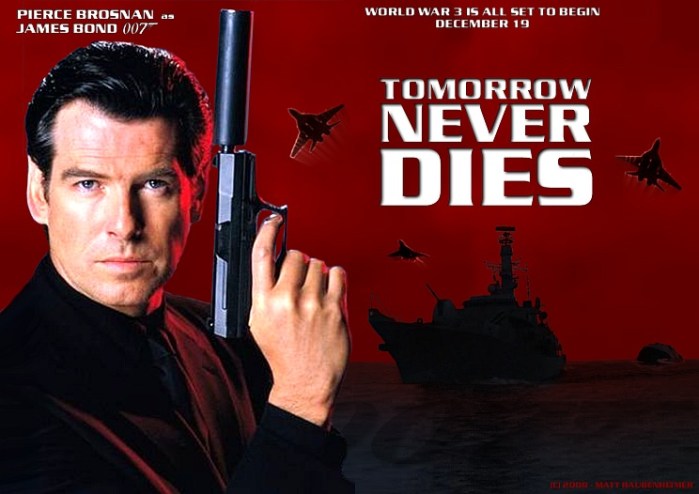
1997 Movie Review: TOMORROW NEVER DIES, 1997

Submit your Screenplay to the Festival TODAY

TOMORROW NEVER DIES MOVIEGOLDENEYE, 1997
Movie Reviews

Directed by Roger Spottiswoode

Starring Pierce Brosnan, Jonathan Pryce, Michelle Yeoh, Teri Hatcher,Joe Don Baker and Judi Dench.
Review by Jesse Ryder Hughes

SYNOPSIS:

Elliot Carver is a corrupt media baron out to start a war between the United Kingdom and China. China will not let Carver have exclusive media rights in their country. He uses a GPS system to send a British naval ship off course into the South China Sea where his stealth ship sinks the vessel and steals the missiles. He then blows up a Chinese fighter plane sent to investigate making it seem like the plane and the ship attacked each other. Bond is sent in to investigate Carver after Carver leaked the information before anyone else knew about it. The Chinese send in their own spy Wai Lin (Michelle Yeoh) to investigate as well. Bond and Lin team up to stop Carver from firing the British missiles at Beijing and starting a war between their countries, which is already starting to begin.

CLICK HERE and watch TV SHOWS FOR FREE!

Take a look at what’s new today!

REVIEW:

Tomorrow never dies is the most action packed Bond film in the series. It sets up the plot quickly and then it is one action set piece after the other. It is well done for the most part. The plot isn’t as complex as Goldeneye with a forced relationship between Elliot Carver’s wife Paris and Bond. The emotion feels forced within the writing as compared to Goldeneye. Other than that it is a fun ride. Michelle Yeoh is great as a Chinese agent with great martial arts, as always from her. The focus on the power of media is interesting and relevant. Carver uses it to his advantage dreaming of a world by his standards. He proves himself to be a powerful dictator and using the media to deliver his message and shape his world. It is interesting to think of the media and how it could be used for the ultimate good in mankind and the ultimate evil.

There are some great stunts involving Bond driving his car from the backseat using a remote control and being chased by a helicopter handcuffed to Wai Lin on a motorcycle. It is good to see a good evil henchman as well. (Stamper, who is scary and is obsessed with taking Bond down). Its good to know that henchmen are still fun and useful in the future.

Tomorrow Never dies may not be as sophisticated as Goldeneye in terms of an all round great Bond film, but it still does the trick and ups the ante with intricate action scenes. It is also in no way cheesy and I didn’t find myself feeling like anything was that far fetched for what it was. I always pop in Tomorrow Never Dies because it is just a fun action movie. By no means great, but a lot of fun. Michelle Yeoh has my vote for toughest Bond girl, doing all her own stunts and helping the action scenes seem more realistic.


TOMORROW NEVER DIES, 1997

Submit your Screenplay to the Festival TODAY

1997 Movie Review: TITANIC, 1997

Submit your Screenplay to the Festival TODAY

TITANIC, 1997
Movie Review

Directed by James Cameron
Starring: Kate Winslet, Leonardo DiCaprio, Billy Zane, Kathy Bates
Review by Andrew Rowe

SYNOPSIS:

Fictional romantic tale of a rich girl and poor boy who meet on the ill-fated voyage of the ‘unsinkable’ ship.

REVIEW:

He spends twenty minutes setting up the story before we are even introduced to the main characters. Atop of that he spends another hour and twenty minutes before introducing us to that big white block of ice that changed Hollywood forever. This is James Cameron’s film. He wrote it, co-edited it, and directed it. He made the film exactly the way he wanted to, and I would not have it any other way.

Cameron uses every single one of the film’s 194 minutes to tell his story. Every shot is there for a reason, and as long as its running time is, there is no point that boredom creeps in. Cameron uses a great storytelling device, which consists of the film opening and closing in a modern setting. Brock Lovett is a treasure hunter looking for the “Heart of the Ocean” in the wreck of the RMS Titanic. Rose DeWitt Bukater, a survivor of the Titanic sees Lovett on television. She contacts him and is sent with her daughter to his boat. There is a drawing of Rose that was found in a safe on the wreck, it’s a nude portrait of Rose wearing the “Heart of the Ocean”. Rose then begins telling her story of her time on the Titanic.

We’re then transported to 1912; Cameron puts his massive budget to good use with beautiful crane shots that mix dazzling special effects with brilliant art design. One shot in particular is when young Rose, played by Kate Winslet exits her car. The camera cranes down over her large brimmed purple hat to reveal the beautiful actress. It’s just one of the many moments Cameron uses filmmaking magic to bring his story to vivid visual life. He makes it well known that this is a film of epic proportions, and we are in for a treat.

Leonardo DiCaprio’s Jack Dawson is introduced as a penniless artist who travels the globe with the clothes on his back. As compared to Rose who is a first-class socialite, Jack won his ticket on the Titanic through a poker game. The two find themselves meeting at the stern of the boat, where Rose is about to commit suicide. Jack talks her down, and their romance begins.

Jack tries to show Rose how to hawk a “loogie” like boys do, and although this scene may seem unnecessary; it’s just a pit stop on the road to their destination of love. Over the course of an hour and twenty minutes we’ve seen Jack and Rose fall in love, and it feels real. Cameron took his time, but because of his patience and gentle pacing, we’ve fallen just as in love with them as they are with eacthother. Teenagers and adult filmgoers alike cannot deny the chemistry between these two; their love is one for the ages.

When the boat does strike the iceberg it’s not an immediate threat, it’s a casual impending doom. Water slowly fills the lower class section of the boat. The women and children in first class begin loading onto lifeboats, knowing they’re leaving behind people that will never see land again. The sense of panic and intensity builds and builds. Cameron has a great ensemble cast he’s been developing the whole film and has a purposeful fate for each of them. When the boat breaks in half and begins sinking it is the greatest car crash you can’t look away from that has ever been caught on film. With little music, Cameron lets the screams of the passengers falling to their death haunt you. Bodies bounce off propellers and other pieces of the boat, women and children wait in their beds as water surrounds them, thousands of lives are ending before our eyes. The images are horrific, and you’ve never been so happy cuddled up on your warm couch.

You could nit pick at some of the script and its dialogue, just as you can the lyrics in best pop songs of our time. That is essentially what Titanic is, an amazingly crafted film that appeals to everyone, because it has something for everyone. It’s bubblegum pop in film form, a romantic tragedy, a disaster film, and the fact that the event is a part of history allows it to resonate even more. It’s such an experience that even after its initial impact, still delivers what it did a decade ago, popcorn chomping bliss on the greatest scale.


titanic

1997 Movie Review: SUICIDE KINGS, 1997

Submit your Screenplay to the Festival TODAY


SUICIDE KINGS, 1997
Movie Reviews

Directed by Peter O’Fallon
Starring: Christopher Walken, Denis Leary, Jay Mohr, Henry Thomas, Sean Patrick Flanery
Review by Melissa Mendelson 

SYNOPSIS:

A group of youngsters kidnap a respected Mafia figure.


REVIEW:The cards are dealt. Aces are high, and Jokers are wild. Play your hand. Check your opponents. The game continues, and you’re on a roll. But moments later, you’re about to take a fall, and you have to make it through the game with only the cards that you hold. And the wheel of fate spins, and where it stops nobody knows. And you play, hoping your bluff isn’t called, but the game has reached its end.

You think you know life, but never doubt its poker face. The best of friends may have the worst intentions, and your worst enemy may turn into your savior. And if you fold all the time, you may become a puppet on a string, but if you bluff too many times, well, a spade will be called a spade. And Life continues to deal out the cards that you now hold in your hand, and nothing is what it seems. So, do you fold once more, or do you bluff, hoping nobody will see through your façade? And will you be ready for the next turn of events?

What are Suicide Kings? Are they men united, tin soldiers ready to fight for what they believe in? Are they pawns in the hands of another, paper dolls walking a thin wire? Do they know the company that they keep, and do they play their game? And if they must sacrifice to save a life, does that make them a Suicide King?

The game begins, and the enemy captured sets the plan into action. The stakes are high, and the dice is rolled. And a web of lies and betrayal hangs overhead, and the tension is digging in deep. And the life to save is the fuel marching those forward into a deadly, intricate plot, and life deals out another hand. And fate waits its turn to play.

In the movie, Suicide Kings, a close knit of friends risks all in a high stakes game to save a life. Drifting across a razor’s edge, they focus on their plan and the players, and their plot begins to unfold. And everything seems to go smoothly, but despite the cards that they hold in their hand, their captive may have a few aces up his own sleeve. And he is ready to raise the bar and push them to their limits, and their bluffs will be called. And when the dust settles, all bets are off.

The story of love is never-ending, and a love like Romeo and Juliet’s echoes deep within this dark tale. Would you risk all to be with the one you love? Would you lay your life on the line to save theirs? Loyalties are put to the test, confrontations fierce, and the bonds of friendship will be played against the games of the heart. But in the end, does love win, or will it destroy?

Suicide Kings is a rich cinematic treasure reflecting movies such as The Game, Usual Suspects, Unknown, and L.A. Confidential. Suspense and drama intensify the storyline, and the intensity continues to rise straight toward an ending that you will never see coming. A blend of talent and charisma from dedicated actors ignites the characters to life. The bonds of friendship are put to the ultimate test, and the act of betrayal is delivered as sharp as razor’s edge. And from the beginning to the end, we are held captive, taking a walk “on the dark side of the moon,” and watching as the cards fall. And Aces are high, Jokers dance, and Suicide Kings are wild.This film won Best Director and Best Cinematography, and was nominated for five other categories. The screenwriter was nominated, and rightly so. Taken from a short story that first appeared in the Saturday Evening Post in 1933 by Maurice Walsh, Green Rushes, Frank Nugent was able to weave a story rich in subtext and conflict.

The collector’s edition of the DVD includes an interview with Maureen O’Hara where she reminisces about filming The Quiet Man, and is well worth watching.


Film Review: LOVING VINCENT (Poland /UK 2017) ***

Submit your Screenplay to the Festival TODAY

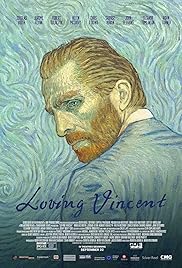
Loving Vincent Poster
Trailer

The world’s first fully oil painted feature film, brings the artwork of Vincent van Gogh to life in an exploration of the complicated life and controversial death of one of history’s most celebrated artists.

A Polish English co-production, the film features Polish animators with voices from actors largely from the United Kingdom.  LOVING VINCENT boasts to be the first hand painted animated feature.  It examines the mysterious facts surrounding the death of the famous Dutch painter Vincent Van Gogh.

It took more than 100 animators and them to be re-trained in animation for the film.  It shows.  The film is beautifully ‘painted’ in the style of the Master himself.  Each frame could very much be something Van Gogh himself might have painted.  The segments in the farm fields and the colours used are reminiscent of Van Gogh’s most famous paintings.

Audiences should be familiar with the particularities of Van Gogh’s life.  Among these facts are his suicide, his stay at a mental asylum, his cutting off of his ear in Arles and his relationship with his brother Theo.  LOVING VINCENT reveals more of the facts and details with some doubt given on the reasons behind Van Gogh’s death.  But many will not know that he wrapped the severed ear as a present to given to a whore or that Theo paid for most of Vincent’s art materials and lived poorly as a result.

All the incidents surrounding Van Gogh’s death are revealed through the excuse of the delivery of one last letter Vincent apparently wrote to his brother Theo.  This letter was undelivered by the postman Joseph Roulin (Chis O’Dowd), so he commission his son Armand (Douglas Booth), a hard drinker and scrapper to do the job  He reluctantly does.  When he discovers that Theo is also dead, he finds the good doctor who was Van Gogh’s good friend and mentor to give the letter to.  He then finds out the truth behind Van Gogh’s death.

Directors Dorota Kobiela and Hugh Welchman play their film like an investigational whodunit.  One segment has Armand explained that Van Gogh could not have shot himself in the stomach due to the impossibility of the gun’s angle.  Why too would Vincent ask for art supplies the next day from his brother if he was to commit suicide?  Doubts are also put about on Van Gogh’s flirting with whores and also at one point possible homosexuality at a possible gay encounter with the teen village idiot.

The film could do with a bit of humour even though the subject matter is serious.  I cannot recall a single bout of humour in the film.  The film also does not justify Armand’s motivation into wanting to know the truth of Vn Gogh’s death.  He does say at one point in he film: “I want to do more for the artist,” but why he feels that way is never dealt with.

But not all of the artist’s bad points are highlighted in a film that is affectionally called LOVING VINCENT, though moments that highlight the artists work are rare.  Van Gogh’s dream of showing the world that a nobody like him could have the world remember him forever is inspirational.  The film’s romanticizing of his death as a short cut to heaven instead of the slower route of a  normal death is cute. 

The coloured hand painted animation is well worth the price of the admission ticket of LOVING VINCENT, despite the events of its intriguing premise unfolding stoically. 

Trailer: https://www.youtube.com/watch?v=47h6pQ6StCk

LUCKY (USA 2017)  ***1/2

Directed John Carroll Lynch

Harry Dean Stanton plays the character of LUCKY of the film title in a film that audiences recognize could be the real Harry Dean Stanton.  LUCKY is the nickname the ex-navy man earned after being designated the cook in the Navy while others were sent to fight and die during the War.  Lucky is 90, bitter, alone (but not lonely as he has a routine of chores to do each day), cynical, sickness free, and smokes a lot.

The audience sees Lucky doing the same things daily – visiting the grocery store with the Mexican cashier to get his cigarettes; having some drinks at the bar; having coffee at his dual diner; and watching his favourite quiz show – but with different reactions.  The soundtrack replays the tune of “Old River Valley’ on a harmonica.

The film contains a lot of musings like what realism (as explained by Lucky as real for one person but not necessarily in another occurs to another) is or even the friendship between man an animal as the latter discussion (it is apparently essential to the soul) starts.  Lucky’s friend, Howard (David Lynch) at the bar walk in to sadly announce the loss of President Roosevelt, his pet tortoise. (Lucky does not believe this….. not the statement but the existence of a soul.)  Though the latter statement seems inconsequential dialogue in the script, it is important in the way Lucky looks at life if he does not believe in the existence of a soul.

The film is directed by actor John Carroll base on the script by Logan Sparks and Drago Sumonja.  The film pays more attention to the character than to plotting.  The film is also wonderfully acted by Stanton.  Director David Lynch delivers a surprisingly moving speech defending his case of leaving his inheritance to his tortoise that has apparently escaped as does James Darren how a nothing person like him transformed to one who now has everything.

LUCKY the film can be best described as a cynical coming-of age movie of a 90-year old man who has almost given up on life.  It is quite an idea for a film which is likely the story got made.  It is a film about an old fart that is not the typical Hollywood old fart film like the fantasies of old people reminiscing on their youth or having sex one more time.  Lucky confesses in one scene that he can hardly get it up any more.  Here, Lucky says in the film’s most intimate scene where he reveals his deep secret to his friend, Loretta (Yvonne Huff): “I’m scared.”  It all happens when he falls down out of feeling faint, though doctor (Ed Begley Jr.) tells him that nothing major is wrong with him.

Harry Dean Stanton passed away this year (2017).  LUCKY is a worthy swan song of an actor that has surprised audiences many a time with his wide range of performances.

Trailer: https://www.youtube.com/watch?v=YurR6xZeBCk

Film Review: PROFESSOR MARSTEN AND THE WONDER WOMEN (USA 2017) ***

Submit your Screenplay to the Festival TODAY

Professor Marston and the Wonder Women Poster
Trailer

The story of psychologist William Moulton Marston, the polyamorous relationship between his wife and his mistress, the creation of his beloved comic book character Wonder Woman, and the controversy the comic generated.

Director:

Angela Robinson

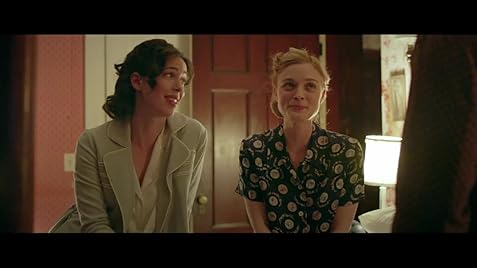
PROFESSOR MARSTEN AND THE WONDER WOMEN examines the relationship of Dr. William Moulton Marston (Luke Evans), the creator of WONDER WOMAN with his wife, Elizabeth (Rebecca Hall) and the second girl, Olive Byrne (Bella Heathcote) in their menage a trios.  A man with two women living together with S&M sex including bondage and spanking, set in the 40’s does not an easy film make.  Credit therefore goes to Robinson for incorporating an uncomfortable subject into a movie for general audiences.  In fact, the film goes to accredit bigamy.  Those that do not agree are said in the film to be simple.  The film will definitely infuriate many. The film does not always work, as do awkward projects.  

The film begins with the rejection of the violence and sex depicted in the Wonder Woman comics.  While appearing at the Board on Enquiry, Dr, Marsten explains his case, while the film flashes back to his marriage and sexual arrangements with Olive under the guise of psychology apprenticeship.   Complications arise when Olive’s two boys come into the picture and when a neighbour enters the house unexpectedly and catches the three in a  sexual bondage act.

For a film promoting the acceptance of S&M and bondage, it is surprising that there are no graphic sex scenes nor even nudity.  Yet the film comes across as disturbing one.  It shows that no graphic scenes are needed to take the sexual content to an different psychological frontier.  By means of intercutting of scenes with the Wonder Woman comic book showing tied up prisoners, whipping and spanking, director Robinson cleverly makes her point.

But if one examines the situation on another level, there is nothing really objectionable.  Many men have mistresses.  The only difference in this case is that the wife is also in love with the mistress.  It also makes the sex affair more congenial for everyone if the three decide to stay together.  Everything works well till society objects.  The same thing happened in the past for gay couples.  They were rejected and ostracized from society with their acts deemed evil.  Now that society has condoned same sex marriages, gays living together are cool.  Robinson recognizes the fact and emphasizes it in one key scene where Marsten screams that it is only society that has to accept them.   As to sexual fetishes, everybody has them, in one form or another.

Robinson is also quick to point out that the film is set in 1928 (though Wonder Woman was created in 1941), at the start and that there is a new psychology that is in the making.  At one point, Professor Marsten says to Olive: “How do you expect to learn about life if you refuse to live it?”   Some psychology is also thrown into the film for good measure, like Marsten’s explanation of the 4 categories of dominance, compliance, inducement and submission.  This enhances the credibility of the characters and the plot of the film.

After viewing PROFESSOR MARSTEN AND THE WONDER WOMEN, one will never look at the WONDER WOMAN comics again in the same light.
Trailer: https://www.youtube.com/watch?v=r991pr4Fohk

Film Review: SCHOOL LIFE (Ireland/Spain 2016) *** 1/2

Submit your Screenplay to the Festival TODAY

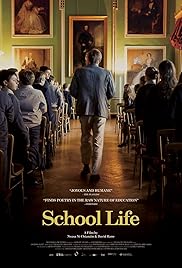
School Life Poster
Trailer

2:24 | Trailer
Long careers are drawing to a close for John and Amanda, who teach Latin, English, and guitar at a stately home-turned-school, where they are legends with a mantra: “Reading. ‘Rithmetic. Rock ‘n’ roll!” But leaving is the hardest lesson.

Writers:

Etienne Essery (script and story consultant), Neasa Ní Chianáin


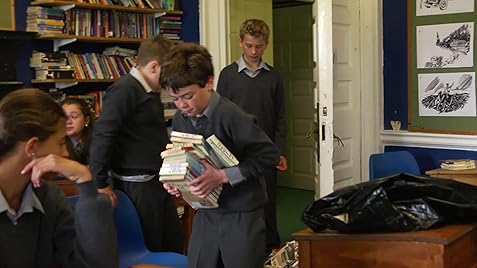
Premiering at Sundance and Hot Docs in Toronto, SCHOOL LIFE begins its theatrical run and is one film sure to captivate audiences for its charm and magic.  Almost everyone has fond memories of their primary school and their teachers who are very impressionable.  The film takes the audience around the classes to reveal the studies, the hobbies as well as they extra-curricular activities.  Watching the children read End Blyton’s Famous Five novels will certainly make one wish for to re-live these wonderful times.

SCHOOL LIFE begins with an excellent introduction of two old teachers, a husband and wife as they talk and prepare for their new term.  They teach in the only primary-age boarding school in Kells, Ireland.  Headfort, a school not unlike Hogwarts with its 18th century buildings, secret doors and magical woodlands, has been home to John and Amanda Leyden for 46 years and a backdrop to their extraordinary careers.  For John, rock music is just another subject alongside Maths, English, Scripture and Latin, all of which are taught in a collaborative and often hilarious fashion.  For Amanda the key to connecting with children is the book, and she uses all means to engage the minds of her young charges with literature.

The film charmingly demonstrates what it means to educate.  It is not merely the dissemination of information but the care and concern given to the kids.  This is especially true for a boarding school whee the children are left behind for the first time not to see their parents for a few weeks.  For nearly half a century John and Amanda have shaped thousands of minds but as the film opens, it is finally time for them to start making preparations for their retirement.  “What are we gong to do when we have nowhere to go?” questions the husband.  The two are still healthy though they smoke quite a bit.

The film’s best segment has a teacher discussing with the class the controversial issue of same sex marriage.  The reactions from the primary school students are innocent, revealing and sometimes surprising.  “It is not right,” says one. “God made a man and a woman not two men, to which the teacher replies, “How do you know God exists?”   Other keen observations from the film include the teachers’ speed at rebuttal and the delicate concern each one has over their pupils.

The film ends with the pupils finishing the school year and leaving the school with their parents.  It is a touching moment when goodbyes are said.  The audience also feels sad to have to depart with the film’s characters who have been made so endearing by the filmmakers.

The film flows so smoothly it feels as if the doc is scripted.  Well conceived from start to finish, moving, sad, funny and inspirational, SCHOOL LIFE turns out to be marvellous entertainment.

Trailer: http://www.imdb.com/title/tt5475022/videoplayer/vi974108953?ref_=vi_nxt_ap

1997 Movie Review: SCREAM 2, 1997 (dir. Wes Craven)


AWAY WE GO MOVIE POSTER
SCREAM 2, 1997
Movie Reviews

Directed by Wes Craven
Starring: Neve Campbell, David Arquette, Courteney Cox, Jada Pinkett Smith, Omar Epps, Liev Schreiber, Sarah Michelle Gellar, Jamie Kennedy, Jerry O’Connell, Laurie Metcalf
Review by Matthew Toffolo

SYNOPSIS:

It has been two years since the tragic events at Woodsboro. Sidney Prescott and Randy Meeks are trying to get on with their lives, and are currently both students at Windsor College. Cotton Weary is out of prison, and is trying to cash in on his unfortunate incarceration. Gale Weathers has written a bestseller, “The Woodsboro Murders,” which has been turned into the film, “Stab,” starring Tori Spelling as Sidney. As the film’s play date approaches, the cycle of death begins anew. Dewey Riley immediately flies out of Woodsboro to try to protect Sidney, his “surrogate sister.” But in this sequel to the 1996 horror film, the number of suspects only goes down as the body count slowly goes up!


REVIEW:

TRIVIA: Scream 2 actually beat Titanic at the weekend box office when it opened in December 1997. Titanic then went on to go #1 at the box office everyday for straight 5 months and eventually became the biggest grossing film of all-time. But, Scream 2 can say that it topped it when it went head to head.

Going back and watching this Scream sequel really got me very nostalgic. I remember sitting in the theater with my friends and really giving live play by play commentary of the film while it was happening. This is just one of those films. Of course now I hate it when others do this at it happened to me during a screening of My Bloody Valentine as people were talking so much, I couldn’t pay attention to the movie. But when you’re in your early 20s, you tend to be a little selfish. So I apologize to all the people who were sitting around us during the screening. We were jerks.

Scream 2 is one of those films that is probably more suited for a home viewing than watching it in the theater. It’s a campy film and you really can’t take it all that seriously. That said, the storytelling and characters are done well so you are definitely into the ‘what’s going to happen next’ feeling. You are definitely emotionally involved while you also get many of the wink-wink jokes during the climatic moments. The original Superman films are like this too. One moment of action leads to another moment campy comedy. Someone getting killed leads to people sitting around and chatting about horror films and their cliches. This is a film that is many things to many people. It’s a horror, a thriller, a crime movie, a mystery and most definitely a comedy. A hard thing to pull off but director Wes Craven really found the original tone that was in the script and put it on screen. Him and writer Kevin Williamson created a new movie recipe and they succeeded all the way to the bank.

When watching this film I was also surprised of all the actors who are household names or actors I respect that I completely forgot was in the film. Jada Pinkett Smith and Omar Epps play the two characters that ‘open’ the film like Drew Barrymore did in the first film. They play up how Horror films are a white man’s genre and you never see black people in the movie. As soon as you see then on screen, you know they are doomed. Craven and Williamson were pointing out to the world that they are not prejustice and even blacks can get killed in the movies. And they aren’t the killers.

Heather Graham, Luke Wilson and Tori Spelling play the ‘movie’ versions of the characters in Scream. A great campy plot as we jump into a film within a film. Luke Wilson especially was hilarious to see as at the time he was just an actor starting out and had only one credit on his resume.

Sarah Michelle Gellar, who was just getting going in her Buffy TV show, appears as well in a great ‘stab’ scene. So does pre-Dawson Creek’s Joshua Jackson who was also just starting out in the biz. Portia de Rossi and Rebecca Gayheart play the sexy sorority sisters. Jerry O’Connell plays Sidney’s boyfriend (who has an extremely awkward Top Gunish music scene in the school cafeteria) who could be the killer. And Liev Schreiber, who really only had a cameo role in the first Scream film, plays the obnoxious but charming Cotton Weary. You can tell in this role that Schreiber had something unique as he could change from sexy to scary in one emotional beat. And was an actor who definitely had a big future ahead of him.

And then there’s Timothy Olyphant. An actor I had no idea was in the film. I loved Olyphant in his role in the HBO series Deadwood. When he’s not donning a mustache, he’s a very creepy looking character. And because of that he sort of tips the hat of the film’s conclusion. Or perhaps not because he seems to be the obvious killer.

Of course this again is Sidney’s (Neve Campbell), Dewey’s (David Arquette) and Gale’s (Courteney Cox) film. Sidney is you classic main character. Strong, determined, vulnerable and haunted by past events. Arquette and Cox have fantastic on-screen chemistry (and off-screen too as they are married) and seeing that in the first film, the creators I’m sure made sure they had a lot of screen time together in the 2nd film. They are almost like a comedy team with a little romance mixed in. The geek and the princess.

Courteney Cox’s roles in these films should be pointed out as she is remarkable. If her performance doesn’t work, then the film doesn’t. We have to view Gale as a bitch with an agenda but also like her a great deal too. Her character too in Scream 2 also has the biggest emotional arcs happening. She’s the one who’s changing the most from the beginning to end.

Campbell’s role could be categorized as almost boring as it’s hard to find a storyline for her that wasn’t done in the first film. She delivers an almost thankless performance because she has after all the only ‘non sexy’ role in the film. She’s sexy but the role she plays is the role of the straightman. She must act in a thriller genre to keep the overall tone of the movie intact while all the other roles get to play it up and be campy. Sidney is the straw the stirs the drink of the movie and these type of roles can get forgotten. But if you don’t have it played well, then you don’t have a film.

Scream 2 also plays up on the sequel film. It asks the question of what sequel was better than the original in movie history. And ‘wink-wink’, is Scream 2 better than the original? Not really but it’s not bad.

SCREAM 2, 1997

1997 Movie Review: RETROACTIVE, 1997 (James Belushi)

  MOVIERETROACTIVE 
Movie Reviews

Director: Louis Morneau

Starring: James Belushi, Kylie Travis, Shannon Whirry, Frank Whaley, M. Emmet Walsh, Shermon Howard
SYNOPSIS:

A hostage negotiator makes several jumps back in time to save a woman from her brutal husband.

REVIEW:

‘Retroactive’ is one of those big studio films that went straight to video, but you wouldn’t understand why if I just gave you the plot, because it’s a damn good plot, unfortunately almost everything else lets this one down.

Karen (Kylie Travis) is stranded in the middle of the desert, her car has broken down and she ends up catching a lift with a strange weirdo guy (James Belushi) and his obviously suffering girlfriend. Even though fate gives her several opportunities to get away from this couple, who are obviously involved in some kind of illegal dodgy activities, she sticks with them until the jerk guy, Frank, shoots up a gas station.

Karen escapes and finds herself in a secret lab in the middle of the desert where experiments in time travel are being conducted. She is thrown back in time to when she was stranded. She tries to prevent the murders however each time she travels back she seems to make things worse.

It’s kind of like an action movie style version of ‘Groundhog Day’, just without the humour or good acting. Having said that though there are some good things about this film; as I said above the plot sounds interesting and probably would have been if it wasn’t for the acting. It would be interesting to see someone remake this film to see if they could make it work.

Another plus is that the time travel is pretty well thought out, considering the continuity errors which seem to occur throughout the film, it’s clear that the script writers were more vigilant than the director or continuity person, if there was one. It’s such a simple idea for a plot but it is the kind of plot that can end up being very complex to write, film and edit. So I give the film makers an ‘A’ for effort.

I have nothing against James Belushi or Kylie Travis, but I’m not really fans of either one of them. But both have acted in film and television before and after this film and quite obviously with a bit of success. But in this film it was as if they were just going through the motions.

With minimal effects and not a lot of different scene locations there isn’t that much a part from the plot to keep your attention. Which isn’t a bad thing but there are also too many points where you feel like the plot is being lost by the actors and so we as the audience get lost.

Someone should really remake this film, it needs it more than any other film. Although as I stated above it is such a simple plot and not that original so I look forward to the day when someone remakes this film accidentally. Then I will be able to say; ‘for once, this is better than the original.’

RETROACTIVE, 1997

1997 Movie Review: PRIVATE PARTS, 1997 (Howard Stern)

PRIVATE PARTS,  MOVIE POSTERPRIVATE PARTS, 1997
Movie Reviews

Directed by Betty Thomas

Cast: Howard Stern, Robin Quivers, Mary McCormack, Fred Norris, Paul Giamatti, Jackie Martling, Carol Alt, Allison Janney
Review by Jarred Thomas

SYNOPSIS:

The film tells the story of Howard Stern, the popular radio personality whose candor and crude humor revolutionized radio.

 REVIEW: 

One of the most controversial disc jockeys of all time, Howard Stern revolutionized radio for the masses and created a radio show that all other personalities try to emulate but fail in their attempts. The film is based on the popular book of the same name and chronicles the career of Howard from his childhood to high school and college to his early days in radio eventually leading to his radical career in broadcasting.

Love him or hate, Howard Stern is truly an entertainer and Private Parts shows not only his eccentric persona but also the struggles and challenges he faced from all angles. Whether it was local bullies or vindictive program directors, every obstacle was essential in developing the personality that would later become an iconic radio star.

Howard Stern plays, who else, but Howard Stern and while that may seem like an easy task considering he’s only playing himself, it’s not. He has to be able to convey his emotions and dramatic moment convincingly, no matter if he’s retelling an experience he went through. It still requires that he present a believable moment and this requires good acting, which he does.

Betty Thomas does an excellent job balancing the crude humor with the more heavy scenes. The supporting cast does a fine job as well. Paul Giamatti is great as spiteful program director, Lenny, or “pig vomit” as Howard refers to him. Together their scenes are absolute gold as both Howard and Paul play off each other perfectly.

There’s a memorable scene in which Paul addresses Howard and his gang (Robin and Fred) about the seven dirty words they are not allowed to say. This of course only entices Howard, who later develops a segment in which he says those exact words but in the context of a game show so as to make it seem innocent and appropriate for radio listeners.

Those who are familiar with the Howard Stern show can expect the typical naked sexy women and certain bits that are popular on his radio program. But there is also a heart to the film that provides warm moments between Howard and his wife Alison, played by the talented Mary McCormack. There’s one intense scene in particular that felt completely real as the two argue about a bit Howard did on the radio about a recent miscarriage the two suffered.

Howard has always made it clear that nothing in his life is private and he can at anytime use parts of his life to entertain his audience. The issue of the miscarriage is one of them. It’s interesting to see behind the scenes and the method to his madness.

With a strong supporting cast topped off with standout performances from both Howard Stern and Paul Giamatti, Private Parts is one of the funniest films filled with an abundance of pure entertainment. Even if you’re not a fan of the popular radio personality, I can assure you that this move will have you laughing and sympathizing with the famous disc jockey. By the end, you’ll have a better understanding of who Howard Stern is as a personality, but more importantly as a person.


MCDPRPA EC013
PRIVATE PARTS, Fred Norris, Howard Stern, 1997, (c) Paramount

1997 Movie Review: PRINCESS MONONOKE, 1997 (Directed by Hayao Miyazaki)

PRINCESS MONONOKE MOVIE POSTER
PRINCESS MONONOKE, 1997
Movie Reviews

Directed by Hayao Miyazaki
Voices by: Yôji Matsuda, Yuriko Ishida
Review by Amish Mulmi

SYNOPSIS:

On a journey to find the cure for a Tatarigami’s curse, Ashitaka finds himself in the middle of a war between the forest and Tataraba, a mining colony. In this quest he also meets San, the Mononoke Hime.


REVIEW:

Princess Mononoke (1997) is indeed a very deceptive film. It may be an animation, but that does not mean it’s a children’s film. Its complexities and multiple themes layered within mean that it is very different from the Disney-esque animations that children are rather fonder of. It begins in an idyllic rural setting, but soon jumps into a battle between forest-gods and humans. A decapitation—probably a first for a Hayao Miyazaki film—later, it engulfs the audience into a debate between development and sustainability, greed and satisfaction, and war versus pacifism.

Japan’s highest grossing film until Titanic overtook it, Mononoke, a Studio Ghibli production, is a testament to the power of animated films and their visual capabilities that allow them to capture elements which are impossible to otherwise capture in a live-action film. It seeks to answer the eternal questions pertaining to human greed and relationships, society’s evolution and civilization’s progress. It seeks to leave the audience enraptured in its visual detail, yet lets them question the themes of the film by themselves.

The film begins in a rustic village, where Ashitaka battles a demon that threatens his village. But, it turns out—the demon is actually a forest god, Nago, corrupted into hatred by human intervention. Ashitaka is cursed by the god’s ailment, and he leaves his village to seek a cure before the hatred engulfs him completely. He meets a monk, Jigo, who informs him of a forest deep into the west, where gods and spirits are still alive.

This particular forest borders an upcoming mining town called Irontown, and is ruled by a very ambiguous Lady Iboshi. The town’s economy is based around the extraction of iron ore from the surrounding mountains, and the human’s devastation of the forests causes the direct intervention of the forest gods, and a human girl called San, who has been raised by the Wolf-Goddess Nara.

Ashitaka is drawn into the battle between San and Iboshi—he realizes he is attracted towards San, and is repulsed by Irontown’s wanton destruction of virgin forests. But, the lepers and the prostitutes that Iboshi has taken under her wing assure him the lady isn’t an evil person, and only has the good of the town in her mind.

However, Ashitaka is gravely injured while saving San, who takes him to the Forest Spirit. The spirit, a deer-shaped creature that has the power to give or take life, heals Ashitaka, but does not lift the curse. San cares for her human benefactor, viewing him with both fascination and revulsion, as he represents a race she has come to hate, despite her being a part of it.

Soon after, as Irontown’s exploitation continues, the boar-god Ikkoto arrives with his warrior boars, who have decided to attack Irontown and take back the forest. However, the humans are aware of their plan—made aware by Jigo who seeks the Forest Spirit’s head for the Emperor, as it is believed to bring immortality. Irontown lays a trap for the boars, blasting them with their newly made rifles and grenades, and the boar army is annihilated. However, behind their backs, the Emperor has laid siege to Irontown, where their women defend the town against marauding samurais. Ashitaka is asked to take a message to Iboshi.

Ikkoto, however, survives and is led towards the Forest Spirit’s pool by San. But he has been poisoned by the same hatred that engulfed Nago—and his hatred begins to overcome San, who is saved by Nara. The Forest Spirit grants both Nara and Ikkoto a peaceful death for all their tribulations, and as he is transforming into the Night-Walker, a sort of a mythical kirin beast, Iboshi shoots his head off.

The Forest Spirit now becomes an all-encompassing blackness that brings death and barrenness to anything it touches, and destroys Irontown completely, including the foundry that was the key to its wealth. San and Ashitaka seek out the Spirit’s head, and upon reuniting it with the headless void, all the land which had turned barren burst out in a kaleidoscope of life and beings. Iboshi realizes her mistakes, and though she loses a hand, vows to rebuild Irontown in a much better way. Ashitaka, cured of his curse, pledges that he will never be very far away from San, as he will help in rebuilding the town.

At first glance, Mononoke seems to be a fantasy love story between San and Ashitaka; however, at its core, it includes diverse themes within itself—an anti-war sentiment, development at the cost of environment, sociological statements such as feminism, gender bias and discrimination and the idea of living at peace with nature. Miyazaki is famous for his environmentalism—this movie is a continuation of the themes explored in My Neighbour Totoro and Nausicaa of the Valley of the Winds in this respect, and explored further in his Academy Award-winning Spirited Away. Only, he brings it to the forefront over here, explaining the cause behind the displeasure of the forest spirits—being the reckless and wanton destruction of nature for the pursuit of human development. The eternal debate, prevalent even today among political and social commentators, of development versus sustainability is brought to the pedestal, and Miyazaki, in this film, provides a very different solution that should please conservationists around the world—stop the unjustifiable destruction of virgin forests, probably alluding to the vast deforestations that have been going on across the planet.

Mononoke is also a very anti-war film, in that it tries to seek reason in war through the character of Ashitaka, who questions the motives behind both the boars’ and Iboshi’s decisions to fight. He is indeed a pacifist if there ever was one, and seeks to explain the futility of the fighting, though unsuccessfully. He is not a coward—but wants to impress upon both parties the outcome of all the hatred: a continuous cycle of further hate and war-mongering.

These two major themes aside, Mononoke is also an exploration into sociological relationships, especially into the ideas of gender bias, discrimination and social structures. Irontown’s wealth has been made possible by its women, who were prostitutes earlier until rescued by Lady Iboshi, who herself comes across as a supremely ambiguous character. As the lepers tell Ashitaka, “she’s the only one who saw us as human beings. The world fears us…but she is the only one who took us in and washed our rotting flesh and bandaged us…” Yet, she is a ruthless expansionist, willing to go to any lengths to ensure the survival of Irontown.

Lady Iboshi’s proclaimed nemesis, San, is herself an individual driven by a singular sense of direction—to kill Iboshi and halt the destruction of the forest. And while the other forest gods are all driven by their hatred towards the humans in varying degrees, it is remarkable that the most powerful god, the Forest Spirit himself does not bear any such acrimony and even forgives the humans despite them shooting his head off.

Mononoke, thus, is a tale that speaks of volumes about reconciliation and the power of pacifism. Ashitaka is singled out as a champion, but the Forest Spirit, along with the tree-spirits Kodamas are themselves unmindful of the hatred that fosters around them, and perceive their lives to be an intricate part of the surrounding environment.

Miyazaki once again blurs the line between fantasy and reality in this film, which, despite having overt fantasy elements, never really ventures into becoming a fairy tale. Its protagonists are very real, and the presence of paranormal elements in the chain of events does not amaze the viewer at all; rather the spirits and gods contrast with the human ways, and allow the audience to juxtapose the two races and judge them accordingly.

The English translation does the filmmaker a disfavor by toning down the language and Japanese terms, so as to make the film more accessible to global audiences. However, it could be argued that without the translation, millions of viewers would not have been able to watch this fantastic film. Atleast, the English version has not been mutilated, like Miyazaki’s earlier films. Maybe it was the katana that he sent with the message ‘No cuts’ when Disney, Studio Ghibli’s American partners, suggested a few edits to make the film more child-friendly which did the trick. Or it could be the fact that acclaimed writer Neil Gaiman adapted the story for English audiences. Whatever the reason, Mononoke is truly what landmark cinema stands for—and long after the audience exits the movie theater, they will ponder over the questions that the film raises.


PRINCESS MONONOKE, 1997