Sign up for the free 7 day trial at http://www.wildsound.ca to watch this festival and a new film festival every single day. Generally there are two festivals a day.
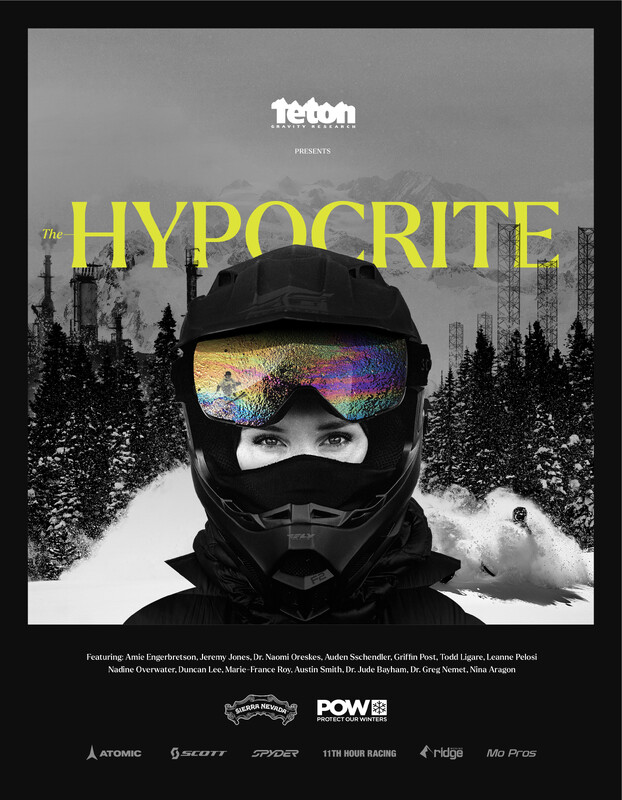
THE HYPOCRITE, 27min., USA Directed by Amie Noel Engerbretson “The Hypocrite” delves into a critical discourse that is resonating with individuals across various spheres. In the context of climate advocacy, the film examines the inherent contradiction between personal actions and systemic efforts. The story is masterfully woven through the perspective of a professional skier, confronting the complex interplay between advocating for change and relying on fossil fuels for athletic pursuits. The film aspires to foster unity and collaboration within the outdoor community, transcending perceived hypocrisy and feelings of not fitting in. It aims to dismantle the culture of individual blame and guilt, focusing instead on the systemic shifts required to pave the way for a sustainable future. By erasing the boundaries that label individuals as hypocrites, the narrative invites viewers to recognize the urgent need for collective action and change. amieenoel@me.com
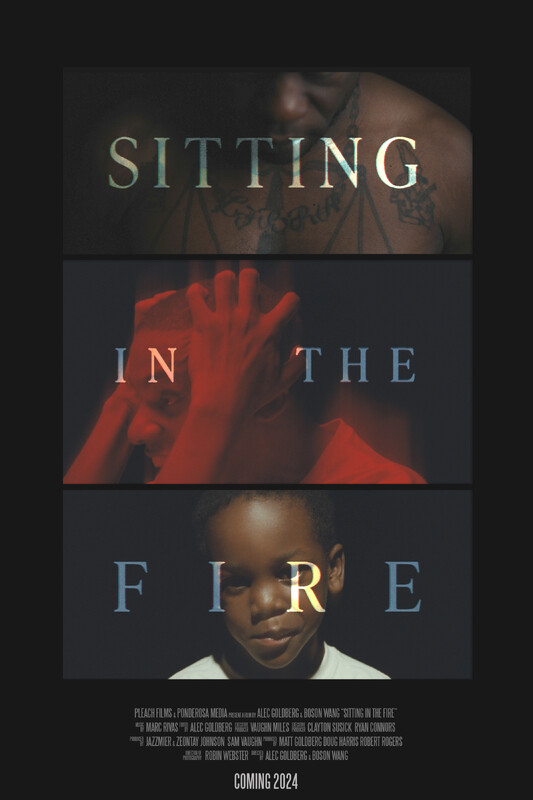
SITTING IN THE FIRE, 78min., USA Directed by Alec Goldberg, Boston Wang ‘Sitting in the Fire’ examines the spillover effect of rehabilitation programs in prison, on gun violence prevention in communities. Born and raised in Richmond, California to a single mother, Vaughn Miles fell into the dangers of his environment at an early age. After being sentenced to life in prison for murder at twenty years old, it took Vaughn Miles years before his transformation. alec@decadelosangeles.com
Sign up for the free 7 day trial at http://www.wildsound.ca to watch this festival and a new film festival every single day. Generally there are two festivals a day.
FAMILY Festival – Drama Shorts Showcase – March 24/25 event
METAVERSE, 10min., Spain Directed by Rodrigo Canet Criado Year 2033. Adam is boxing through his virtual reality headset until he leaves the coverage area in an over-digitized and controlled world. Then, his senses connects him to a different and perhaps lasting reality.
L´IRA TUA, 17min., Germany Directed by Claudio D´Attis During the 2nd World War in South Italy, the farmer Celestino escapes with the americans, leaving alone his lover Grazia against an invisible enemy…
SECOND NOZZE IN DRESDEN, 18min., Italy Directed by Claudio D´Attis Dresden XVIII century. Masks were a social decoration in the ancient times, masks actually are a social distance obligation. After her big love Emilio Guarini (an important duke from Apulia, South of Italy), Miss Maria Paladini wants to stay at home… Her two sisters with the help of father Luis will find for her a new husband: the good looking prince of Spain…
SPIRIT OF SWEETNESS, 18min., Poland Directed by Malgorzata Szyszka, Ma?gorzata Arszennik My dear children, this is the sweetest, most colorful and at the same time the truest of all fairy tales ever created and which you will hear in a moment. Do not believe adults when they say that fairy tales lie also do not believe that grandfather and grandmother get bored on autumn-winter evenings and come up with uncreated stories that they later tell their children.
THE FOREST OF THE HONEY BEES, 20min., France Directed by Erwan Le Gal Isabelle is a violinist-beekeeper in the Ouessant island. She protect her bees and she inspire her daughter with stories and legend about honey bees….
showcase of the best of black and white movies and screenplays in the modern era!
Festival will occur every single month.
BLACK & WHITE Film Festival VIRTUAL Events occurs once a month on the WILDsound Streaming Service.
All film submissions are FREE. Opportunity to have your film showcased on the popular streaming service for 48 hours.
(Other opportunities to garner a distribution deal with the company and have your film showcased always on the streaming service.)
This festival was created to celebrate the black and white aesthetics as a specific, peculiar and unique kind of artistic expression on film and video.
It also intends to showcase screenplays that the author visions is in B & W.
The image capture in the digital technology is born with colors but the artist’s intuition often urges for the black and white production. This proves the newness and interest in an aesthetic that can only be communicated through black and white.
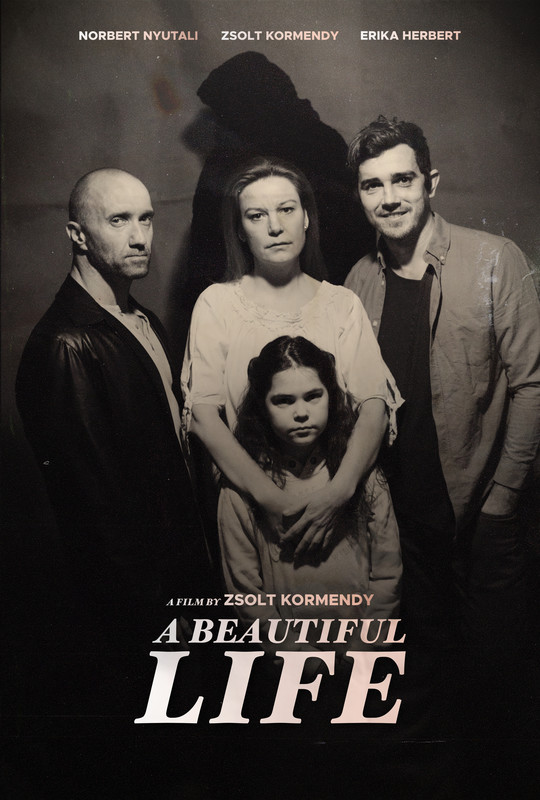
A BEAUTIFUL LIFE, 15min,. USA Directed by Zsolt Kormendy Two detectives investigate a mysterious kidnapping in Vác, Hungary. One of them is relentlessly being pursued by a malevolent dark figure that will stop at nothing to undermine the case and his life.
My friend Norbert, who played Tomi in the film, and I wanted to film an action scene over the holidays. After riffing ideas off one another, we started talking about why these two characters were fighting. This steam rolled and before we knew it we had 20 pages of script, a cinematographer, team, and supporting cast along for the ride!
2. From the idea to the finished product, how long did it take for you to make this film?
Well, actually, I was living in NYC, and I the concept of the story began in early December 2022, while brainstorming with Norbert via video chats. I went to visit my family in Hungary for the holidays, and we had very limited time, so we shot and filmed it within 3 days. I had started writing the script 5 days before the shoot on a train ride (that’s like my secret place to write… long train rides in the countryside of Eastern Europe), and finalized the script only the night before shooting. We had to get it done by the 9th of January, because I was flying back to NYC on the 11th.
3. How would you describe your film in two words!?
Mental Demons
4. What was the biggest obstacle you faced in completing this film?
As this was my first production, the biggest obstacle was battling my own self doubts that the cast and crew would be willing to put up with me and my ideas, especially as a first time director. There were language barrier issues and personality differences, too. But amazingly, everyone got to include their own ideas, and this turned out to be the most rewarding aspect of the shoot: that no one wanted to leave on the last day, because we all had so much fun making the film! I kinda got choked up seeing everyone so happy and proud, it was really special for me.
5. What were your initial reactions when watching the audience talking about your film in the feedback video?
I felt seen, because this story is very personal and comes from my own internal struggles with mental health, self doubts, and inner critic battles. Hearing the reviews from people I don’t know, is incredibly heart warming.
6. When did you realize that you wanted to make films?
I actually never thought I’d make a film. I knew I wanted to act and be a part of films, but you know as an actor, there seems to be a lot of waiting around to hear back from productions if we got a role or not. And the constant searching for roles that I would like to play. Eventually, I realized there was a piece of me who was yearning to tell a story that I knew about and thought would be important to share that only I could tell.
So though, I have played on ideas as a kid, writing stories for school assignments, journaling, and whatever. I’d say clear day that I decided I wanted to make my own film was when I finished my Meisner Technique training at Maggie Flanigan Studio. I suddenly felt like I had all the skills to do just that, and that would be the next logical step. So I did! And with the help of Norbert and Mark, the cinematographer/editor, and the rest of the team we did!!
7. What film have you seen the most in your life?
I got sick for a week, where I couldn’t really get out of bed. So, I watched the only film I had on my hard drive, because I was in a place without internet. I watched Wes Anderson’s Grand Budapest Hotel maybe 7-10 times. I paused the movie in almost every scene to read the fine print on every document and absorbed every detail. It’s amazing how specific his films are. Everything on the screen is serving a purpose, nothing is extra or superfluous. I like that.
8. What other elements of the festival experience can we and other festivals implement to satisfy you and help you further your filmmaking career?
I think you’re doing a great job offering what you are offering! Maybe cash awards or like sponsored gift cards to support our future projects.
9. You submitted to the festival via FilmFreeway. How has your experiences been working on the festival platform site?
Great.
10. What is your favorite meal?
It’s a classic Hungarian dish, Marha Pörkölt nokedlivel, or in English its kind of like Beef Stew with dumplings, but it’s made with paprika… a lot of it’
11. What is next for you? A new film?
I have three ideas competing in my mind. I’m working on adapting a fantasy book I grew up reading. That’s a looooonnngg term project. The next one I’d like to make, as a working title its called Unconditional Love, and will build off the themes of A Beautiful Life. I’ll be utilizing Norbert in the Lead role again, and making it into a full feature film. The third is a dystopian episodic 7 min series of action and mystery.
IGUANA LIKE THE SUN, 100min., USA (March Festival) Directed by Julian Robles In a humble coastal compound of southern Mexico, amidst a total eclipse of the sun, an unexpected guest arouses the broken dreams of a family that has lost its guardian figure, overshadowed by the cosmic loneliness where they were left to their faith.
When I was very young, I worked with Mexican playwright Carlos Olmos. Although I was unable to see the original play “The eclipse”, nor have I ever seen it staged, I was dazzled by it from the moment I read it and thought it may be a great movie. The idea of becoming a film director hadn’t even crossed my mind yet.
2. From the idea to the finished product, how long did it take for you to make this film?
Olmos wrote a previous script that was optioned a couple of times but never came to fruition. Years after his death, I took up the idea once again, made my own version, and decided that I would direct it myself. Almost a decade passed between the first draft and the moment I stepped on set.
3. How would you describe your film in two words!?
Cosmic loneliness
4. What was the biggest obstacle you faced in completing this film?
Recreating the light of a total solar eclipse was perhaps the most complex challenge. Beyond the solar corona, which can be recreated in VFX, the entire celestial vault is altered from the previous moments, a very peculiar light impossible to generate by CGI. For this reason, we filmed all the magic hours, in a hurry because they only last 20 minutes, and thus have enough shots for this long sequence.
5. What were your initial reactions when watching the audience talking about your film in the feedback video?
I was surprised by the way they had connected with the story and also understood what lies behind the plot, even though these characters seem quite far from them.
6. When did you realize that you wanted to make films?
I am the grandson of a projectionist who learned the trade when cinema was silent and projectors were hand-cranked. I was destiny to do films.
7. What film have you seen the most in your life?
Gone with the Wind. And if you don’t like it, frankly…
8. What other elements of the festival experience can we and other festivals implement to satisfy you and help you further your filmmaking career?
I did not attend the fest. I cannot say nothing about it.
9. You submitted to the festival via FilmFreeway. How has your experiences been working on the festival platform site?
Food is like movies, books, or love: our tastes are always changing.
10. What is your favorite meal?
Fruta verde (Unripe Fruit), an adaptation of the famous novel by Enrique Serna.
PEGASUS HIGHWAY, 15min., Australia Directed by Ethan Grahek Two Bronies (Adult male fans of small, collectable Pony toys) are out to buy weed for their first time. Unbeknown to them, it is also their dealers first deal. What should have been a simple transaction quickly devolves, forcing one of the Bronies to chauffeur the eccentric drug dealer on a psychotic road trip. But there is more to these Bronies than the dealer could ever fathom.
Get to know the filmmaker:
1. What motivated you to make this film? This film was my Honours film I completed at Deakin University, Melbourne. For the very first assessment presentation I attended at uni, a young woman did a presentation on bronies, they really piqued my interest, i’d never heard of them before because I grew up in a small, rural town. I went down a bit of a rabbit hole and discovered the uh… interesting… world of the Bronie fandom. Whilst searching I wondered how a Bronie would be perceived at my small town high school, that seed of an idea developed into the final film. I thought the idea was pretty unique so that really motivated me to see it through to completion over the years it took!
2. From the idea to the finished product, how long did it take for you to make this film? I conceived the idea in 2017 and began research and development of it for my Honours year in 2020. But we all know what happened that year. There were going to be heavy COVID restrictions imposed on our film sets so I decided to flee back to my hometown until the lockdowns subsided. I returned to Melbourne to finally complete the production in Oct 2022 – Feb 2023. So realistically, even though the process took all those years to finally complete, the actual time spent on it was approximately 7-8 months.
3. How would you describe your film in two words!? Unexpected, Whack
4. What was the biggest obstacle you faced in completing this film? The Covid pandemic for sure, plus the constant rain during production, as well as the long hours spent completing all the VFX solo.
5. What were your initial reactions when watching the audience talking about your film in the feedback video? I honestly thought it was pretty incredible, almost surreal hearing people from another country comment on and more excitingly, seem to enjoy my whacky little film! It was really great and insightful listening to people say they dug the details that you put so much time, research and effort into!
6. When did you realize that you wanted to make films? When I was in year 9. I originally thought I wanted to be an actor, growing up in a small town, there were very few opportunities to act so I started making youtube videos to practice, through this process I discovered that I found it much more endearing being behind the camera than in front of it.
7. What film have you seen the most in your life? If we’re talking about my entire lifetime, I’d say Star Wars II: Attack of the Clones. If referring to my adult life, I’d say Two Hands.
8. What other elements of the festival experience can we and other festivals implement to satisfy you and help you further your filmmaking career? Honestly, the fact that you guys provide these feedback videos is awesome, and is certainly what drew me to screen my film with you! Especially as someone that is fresh out of uni and can’t necessarily afford travelling to film festivals.
9. You submitted to the festival via FilmFreeway. How has your experiences been working on the festival platform site? I love FilmFreeway! It’s so good having everything available in one place! Saves on a lot of the research time!
10. What is your favorite meal? Burritos
11. What is next for you? A new film? For sure. I’ve made up a bit of a roadmap of what I’d like to achieve over the next few years and next up is either an action short or a horror short about a drag queen. I’m thinking more likely the latter because action is very expensive.
MARION GRUBER: PREPAREDNESS IS PREVENTION, 30min. USA Directed by Donald Rayne Mitchell Dr. Marion Gruber is a world-renowned expert in vaccine development, regulation, and licensure. She worked at the U.S. Food and Drug Administration (FDA) for many years, serving as the director of the Office of Vaccines Research & Review (OVRR) from 2012-2021. In this short film, Dr. Gruber and several of her colleagues describe their efforts to ensure that life-saving vaccines were available during some of the most recent and well-known public health emergencies and why preparing for the next infectious disease threat is critical.
In collaboration with the Vaccine Education Center at Children’s Hospital of Philadelphia, I helped to create the educational initiative we call the Vaccine Makers Project (VMP). The VMP is made up of K-12 curricula which are supported by a variety of films and animations, the feature documentary, HILLEMAN among them. From the beginning, one of our goals with the project has been to put a human face to the science of vaccines. There’s a lot of noise out there around vaccine science but at the heart of the conversation are people that, in many cases, have dedicated their lives to protecting their fellow human beings through the prevention of disease. Marion Gruber is one of those people and her inspiring career is what motivated us to make this film.
2. From the idea to the finished product, how long did it take for you to make this film?
In the summer of 2022 we were exploring the idea of making a film about Operation Warp Speed, the government program that made the rapid development of the COVID-19 vaccines possible. But it didn’t take long to realize that we just didn’t have the budget or the people power to do justice to that subject. During the course of that research, however, we were fortunate enough to interview Dr. Gruber and the more we learned about her involvement in not just the COVID-19 pandemic, but the 2009 flu pandemic and the Ebola outbreaks in the mid-teens, the more we felt that her story was one the world should know about. My first interview with Dr. Gruber happened in mid-September, 2022 and we finished the film by mid-April, 2023.
3. How would you describe your film in two words!? “Tempered urgency.” Think about what’s at stake when an infectious disease strikes. Lives are being lost with every passing minute. To stop those lives being lost we must act with urgency, but not with haste, because if we’re not careful our actions could cause more harm. Dr. Gruber and her colleagues understood both the urgency of shielding the public from the COVID-19 pandemic and simultaneously protecting the public from unproven products. They met that massive responsibility by tempering their desire to act fast with their need to rigorously evaluate the science. And they did that admirably!
4. What was the biggest obstacle you faced in completing this film? Imagine what happens on a daily basis at the FDA; maybe a meeting with your staff in the morning, a catch-up over lunch with a colleague, lots of phone calls and Zoom calls and then probably another meeting or two in the afternoon. Ebola is wreaking havoc in West Africa and you’re saving the world by having one meeting after the next. That’s not a very visually exciting story to tell. (And by the way, the FDA doesn’t video record all their meetings anyway so good luck finding archival footage of your subjects doing their jobs.) So as a filmmaker telling this story, the biggest obstacle was finding the visual language to convey the drama and the stakes that were at play in the work of Dr. Gruber and her team. We found that visual language primarily through news footage. And even though our protagonist wasn’t the subject of that news footage, our antagonists were, and that’s what drove our story forward.
5. What were your initial reactions when watching the audience talking about your film in the feedback video? Honestly, the audience reactions to the film were exactly what I would hope for; that realization that scientists working in public health are people just like us, and that they have families and they’re in this boat with us. If there’s one thing we need right now it’s more faith in each other. I think a film like this reminds you that institutions are made up of people, and that most people strive to be the best they can be and want to help where and when they can.
6. When did you realize that you wanted to make films? Like every filmmaker that grew up in the 1970s, I knew I wanted to make films when I saw Star Wars for the first time.
7. What film have you seen the most in your life? In high school I worked as an usher, then a projectionist at the local movie theater. The cinema had two screens so I spent a lot of time managing the various movies that were running. But in between shows I would stand in the back of the theaters and watch the films. Raiders of the Lost Ark was one of the movies we hosted during that time and so I’ve probably seen that movie more than any other during my lifetime.
8. What other elements of the festival experience can we and other festivals implement to satisfy you and help you further your filmmaking career? The New York SCIENCE & NATURE FEEDBACK Film Festival is doing it right by bringing the festival experience into the virtual theater. It’s great to be able to experience a film with others in the same room but so often in today’s world creating that experience is really hard or even impossible. And that’s when this kind of experience is invaluable, not only to support filmmakers but to also create community around important subjects. Anything you can do to bridge that gap between the theater and our living rooms is so appreciated.
9. You submitted to the festival via FilmFreeway. How has your experiences been working on the festival platform site? Nothing but good things to say about both FilmFreeway and the New York Science & Nature Feedback Film Festival!
10. What is your favorite meal? Chicken Korma w/ rice, Chana Masala and Naan 🙂
11. What is next for you? A new film? I’m just finishing a short illustrated animation about the History of Vaccine Science in Pennsylvania and continuing to develop a feature film project based on Bill Foege’s book, House on Fire: The Fight to Eradicate Smallpox.
APHASIC DREAM, 24min,. Bolivia Directed by Leo Rojas Fernando, a guy with a messy life, starts having strange dreams of a kid in an abandoned warehouse.
– My main motivation is to make Bolivian films to be recognized worldwide, I want to show the quality of stories we can tell.
2. From the idea to the finished product, how long did it take for you to make this film?
– Approximately 4 months.
3. How would you describe your film in two words!?
– Opportunity and proud.
4. What was the biggest obstacle you faced in completing this film?
– The money, we had no much money and that limited us to many things that we wanted to do. But I think we managed to deliver a very good job with the little budget we had.
5. What were your initial reactions when watching the audience talking about your film in the feedback video?
– I was very proud and happy to see that other people enjoyed my short film, I think that’s the most beautiful thing about filmmaking.
6. When did you realize that you wanted to make films?
– Since I was 11 years old, I knew I wanted to dedicate my whole life to make films.
7. What film have you seen the most in your life?
– The Lord of the Rings trilogy
8. What other elements of the festival experience can we and other festivals implement to satisfy you and help you further your filmmaking career?
– Maybe record the reaction of the audience while they are watching the short films.
9. You submitted to the festival via FilmFreeway. How has your experiences been working on the festival platform site?
– It is a very comfortable and easy to understand platform, quite intuitive.
10. What is your favorite meal?
– Lasagna
11. What is next for you? A new film?
– I will continue to make a few more short films, until I get the opportunity to make my first feature film, after that, I will not stop.
It was my first ever animated film that I developed during my first year of university. For some reason I had this feeling that I had to make something so emotional and deep. At the time I had just been through a pretty rough breakup with someone who I had been friends with for much longer. So I wanted to write and make something that would reflect the complicated emotions I had surrounding this person and our relationship.
2. From the idea to the finished product, how long did it take for you to make this film?
The idea initially formed itself in March 2023 and finally had a developed script by around June. After that I created storyboards and a production schedule for when I started the animation in September and completed everything in November 2023.
3. How would you describe your film in two words!?
Love and heartbreak.
4. What was the biggest obstacle you faced in completing this film?
Initially this film was supposed to be a minute long, however I found that the story really required to be longer in order to be as impactful
5. What were your initial reactions when watching the audience talking about your film in the feedback video?
I thought that a lot of it was quite on track and I’m glad that despite being quite short the message of the film came across. I noticed that despite the implications of the girls having shared a romantic relationship however I understand that might not have come off as strongly as I would have hoped. Either way, however people interpret their relationship, the story still fits.
6. When did you realize that you wanted to make films?
When I was twelve I realised how much love I had for telling stories and exploring all these different ideas and emotions. I especially had a love for drawing and making comics, so then I decided that I wanted to go into film making and animation.
7. What film have you seen the most in your life?
This would probably be a tie between so many films, but I would say that either Back to the Future or Coraline. I have studied these movies endlessly.
8. What other elements of the festival experience can we and other festivals implement to satisfy you and help you further your filmmaking career?
Honestly this has been such a great experience as one of the first festivals I have ever submitted to and been accepted. I don’t have much experience with festivals so I’m not sure how to improve them.
9. You submitted to the festival via FilmFreeway. How has your experiences been working on the festival platform site?
I really love using FilmFreeway, it’s such a great tool for exploring all sorts of festivals at the touch of a button.
10. What is your favorite meal?
Gnocchi al ragù d’anatra (gnocchi with duck ragu).
11. What is next for you? A new film?
I have already started developing a new film for my second year of animation at university.


 Festival Reviews