Hot Docs 2018 – Commander Arian – A Story of Women, War and Freedom (Germany/Spain/Syria 2018) ***

Submit your Screenplay to the Festival TODAY

Directed by Alba Sotorra


The Commander Arian of the film title is a 30-year-old female fighter of the Kurdish Resistance (YPJ ).  The aim of this group of women is to free villages captured by ISIS who treat women, in Arian’s own words, less than the worth of a piece of fabric.  Her aim is also to promote the woman’s cause – beyond marriage and making love.  Director Sotorra’s film is in two parts.  The first shows Arian in convalescence, after wounded by 5 bullets.  She speaks candidly of her goals, aspirations and her work. The film flashes back earlier to show her commanding her troops in the unending battle against the ISIS.  The film hails the conquering hero and Arian demands the respect she works for.  She is also shown in her weakness when her body is hurting and at her strengths when she is inspiring her soldiers.  To Arian, death must be worth the fight.  The film shows many candid battle scenes.  A solid documentary that is both eye-opening and disturbing.

Short Clip: https://www.youtube.com/watch?v=agx7hzHVsN4


Submit your Screenplay to the Festival TODAY

Film Review: KINGS (France/Belgium 2017)

Submit your Screenplay to the Festival TODAY

Kings Poster
Trailer

The life of a foster family in South Central Los Angeles, a few weeks before the city erupts in violence following the verdict of the Rodney King trial.


The first thing striking this film is that it is a French-Belgium co-production with a setting of racial tension following the 1992 riots in Los Angeles of the United States.  The riots are the result of the acquittal of the 4 policeman accused of the beating of black youth Rodney King.   Director Deniz Gamze Ergüven is a Turkish born French.  A foreigner tackling a sensitive American issue spells trouble.  True enough!  The film has, at the time of writing, a 0% rating on Rotten Tomatoes, based on 8 reviews.  The film contains too many instances of sensationalization and desperation with the overall feel that director Ergüven seems insecure and has too much to prove with her story.

But she is already an accomplished director with her debut film, MUSTANG nominated for the Best Foreign Film Academy Award.  This is quite the achievement, that allowed her the financial backing to make this film.  Not ono that, bit she is able to cast two stars Halle Berry and Daniel Craig in the title roles.  It is also her original script which is made even more current with a romance between a mixed couple.

The film’s opening scene is already troublesome.  A young black woman puts a jug of orange juice at an Asian Convenience Store into her coat only to be suspected for theft by the store owner who ends up shooting the black woman after being punched in the face by her.   Though this is a true incident that occurred, it downplays the Rodney King incident.  Another troublesome part involves black kids shoplifting and then celebrating their spoils, which basically translates to a film that condones stealing.  There is one good segment in which a cop has to handle one suspect in a car and two youths who has entered his cop car.  “God, I hate this job!” the cop screams.  This is a good view from the side of the cops, for a change, illustrating that they too, have problems when dealing with crime in a black neighbourhood. 

The film is largely spoiled by Halle Berry in what must be the worst casting of an actress in a role not to mention her bad acting.  She overdoes her angelic Mother Teresa role of taking troubled kids into her home.  Her perfect ‘model’ look and perfect hair do not help the credibility of her role either.  The next worst thing is the casting of James Bond Daniel Craig as the reclusive neighbour next time. And horror or horrors!  The two have a romantic interlude.

The females in the film often scream and shout, appearing like spoilt children getting into a fit for not being bale to get what they want.  They also resort to foul language that is so unbecoming of a lady.  All this seems ok and fine since the director has a thing about women issues.  Yet, the audience is supposed to respect such behaviour.

The result is an overdone, over preachy film that gets tedious and terribly annoying.

Trailer: https://www.youtube.com/watch?v=fSjkrVUnLuA

Submit your Screenplay to the Festival TODAY

Film Review: LEANING INTO THE WIND (UK/Germany 2016) ***

Submit your Screenplay to the Festival TODAY

Leaning Into the Wind: Andy Goldsworthy Poster
Trailer

Leaning into the Wind follows artist Andy Goldsworthy on his exploration of the world and himself through ephemeral and permanent workings on the landscape, cities and with his own body.


Note: The Film Review reveals the film’s last scene, which could be considered a spoiler even though the film is a documentary.  Skip the last paragraph (in bold italics) of the review if you do not wish to read it.

Leaning into the Wind follows artist Andy Goldsworthy on his exploration of the layers of his world and the impact of the years on himself and his art.  This is director Riedelsheimer’s second film on Goldsworthy, his first called RIVERS AND TDES, made 16 years prior.  As Goldsworthy introduces his own body into the work it, becomes at the same time even more fragile and personal and also sterner and tougher, incorporating massive machinery and crews on his bigger projects. 

Before watching this doc or reading the review, a few things need be known about the artist Andy Goldsworthy.  Information following in this paragraph is taken from Wikipedia.  Goldsworthy is a British sculptor, photographer and environmentalist producing site-specific sculpture and land art situated in natural and urban settings.  He lives and works in Scotland.  

Goldsworthy produced a commissioned work for the entry courtyard of San Francisco’s De Young Museum called “Drawn Stone”, which echoes San Francisco’s frequent earthquakes and their effects.  His installation included a giant crack in the pavement that broke off into smaller cracks, and broken limestone, which could be used for benches. The smaller cracks were made with a hammer adding unpredictability to the work as he created it.  Goldsworthy is represented by Galerie Lelong, New York and Paris.  The materials used in Andy Goldsworthy’s art often include brightly coloured flowers, icicles, leaves, mud, pinecones, snow, stone, twigs, and thorns. Goldsworthy is generally considered the founder of modern rock balancing.  For his ephemeral works, Goldsworthy often uses only his bare hands, teeth, and found tools to prepare and arrange the materials; however, for his permanent sculptures he has also employed the use of machine tools. 

One assumes Riedelsheimer has introduced his subject in his first doc and that audiences might be familiar with as there is not much in this doc that goes into the background and history of Godsworthy the man.  His influences on being a farmer is never mentioned, neither on how his art is financed or how his art came to be famous.  But his fascination with working in the fields and rocks are acknowledged in the sculptor’s own words. The film also takes the audience through different countries like the U.S, Scotland and Franc to show him his work.  It is fortunate that a doc is made when the artist is still alive as in this film, as much more insight can be obtained from the artist himself interviewed, that Riedelsheimner utilities a great deal than from words from the relatives and friends.

The doc also shows Goldsworthy as an eccentric.  Any artist that fills his mouth with coloured petals only to spew them out and photograph it art would be described as a little different.

The film shows in some detail the creation of one of his works entitled “Roof”, working.with his assistant and five British dry-stone wallers, who were used to make sure the structure could withstand time and nature.

The film ends appropriately in the climax where Goldsworthy lets himself lean into the wind as he lets the wind support him on a mountain slope.  It is a comical image with him trying not to fall. To him, that is the perfect emotion – LEANING INTO THE WIND and suspended in a beautiful moment.

Trailer: https://vimeo.com/194334804

Submit your Screenplay to the Festival TODAY
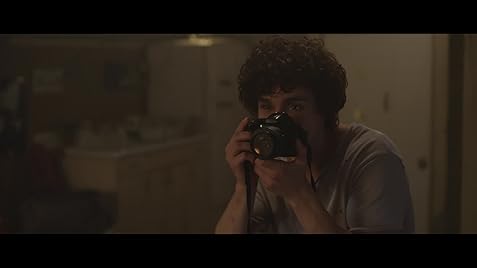
Film Review: BAD SAMARITAN (USA 2017) ***

Submit your Screenplay to the Festival TODAY

Bad Samaritan Poster
Trailer

A pair of burglars stumble upon a woman being held captive in a home they intended to rob.

Director:

Dean Devlin

Writer:

Brandon Boyce (screenplay)


The film BAD SAMARITAN centres on young Sean Falco (Robert Sheedan), the bad Samaritan of the title who leaves a kidnapped woman in the house he is robbing only to feel guilty after and deciding to help her.  The problem is the kidnapper.  The kidnapper is a filthy rich psycho who has made it his goal to destroy Sean’s life.  And so the story goes in this occasionally scary horror thriller.

The film opens with Sean Falco and his best friend Derek Sandoval (Carlito Olivero) working as parking valets for a high end Italian restaurant.  They have the tech ability of finding the information from the cars they park and to use the information to rob the houses of these clients.  This is not the first film based on this premise.  The recent Canadian drama BOOST turned the scenario into the young robber’s coming-of-rites passage turing BOOST to become one of the Best Canadian debut features of the year.  BAD SAMARITAN takes a different route as a horror thriller with the victim becoming the predator in what essentially is a slasher horror flick.  But as a slasher flick, Devlin’s film succeeds and delivers quite a few jump out of your seat genuine scares.  The film also plays to like a abduction thriller similar to HOUSE and SPLIT.  Robert Sheehan is sufficiently apt in the title role of the young lead, though the film never explains the character’s strong Irish accent.

The success of a thriller or action film often depends largely on the effectiveness of the villain.  As in the recent AVENGERS INFINITY WAR that had an excellent villain in the form of Josh Brolin’s Thanos, BAD SAMARITAN’s bad guy is so evil that the entire audience will be at the point of cheering aloud when he gets his comeuppance at the end.  Full credit to David Tennant as the evil beyond comparison Cale Erendreich, who bears an uncanny resemblance to Anthony Perkins.  This is especially apparent in the shower scene (director Deviln’s clever nod to Hitchcock’s PSYCHO) when Cale shows up in Sean’s residence while he is taking a shower.  Audiences should be pleased too at spotting a few other Hitchcock references.

The film contains a brief episode showing Sean with his parents.  Both his father followed by his mother have lost their jobs, from Cale’s orchestration to punish Sean.  The parents move to a hotel but nothing more is seen of them.

Devlin devices a few brilliant suspenseful set-ups, the best of these is the one that has Sean lying low in his car parked outside the villain’s house while the villain sees his vehicle and walks towards it.  A few false alarms allow the audience to jump out of their seats proving that it is fun to be scared in a movie.  The film’s climax is well executed with the suspense and thrills escalating to a high point.

The film suffers from a weird ending (not revealed in the review) desperate to contain a twist in the story.  Other than that, BAD SAMARITAN is a solid scary horror thriller that comes recommended.

Trailer: https://www.youtube.com/watch?v=yyuRdsik_P0

Submit your Screenplay to the Festival TODAY

Film Review: THE SEAGULL (USA 2018) ***1/2

Submit your Screenplay to the Festival TODAY

The Seagull Poster
Trailer

An aging actress named Irina Arkadina pays summer visits to her brother Pjotr Nikolayevich Sorin and her son Konstantin on a country estate. On one occasion, she brings Trigorin, a …See full summary »

Director:

Michael Mayer

Writers:

Anton Chekhov (play), Stephen Karam (screenplay)


THE SEAGULL, Russian dramatist Anton Chekhov’s first of 4 plays became one of the greatest plays in the history of Russian Theatre when Konstantin Stanislavsky directed it in 1898 for his Moscow Art Theatre.  I have never read or seen Chekhov’s THE SEAGULL even though there are previous film adaptations of the play including one directed by Sidney Lumet.  So, watching the film unfold, flaws and all, is still an unforgettable experience given the strength of its source material.

The story features four main characters, Irina, her son Konstantin, her lover, Boris and the son’s love, Nina – all torn between love and art.   

An aging actress named Irina Arkadina (Annette Bening) pays summer visits to her brother Pjotr Nikolayevich Sorin (Brian Dennehy) and her son Konstantin (Billy Howle) on a country estate.  On one occasion, she brings Boris Trigorin (Corely Stoll) a successful novelist and her lover. Nina (Saoirse Ronan), a free and innocent girl from a neighbouring estate who is in a relationship with Konstantin, falls in love with Boris.

The film begins with the climax of the play and returns to it after the main story folds in flashback, a tactic used by director Mayer for the film.  This is a common tactic in films to grab the audience’s attention at the start while bringing them back to the same state at a later part of the film.  The tactic often works and works in this film as well.   The brother Sorin is ill and dying while Irina visits and engages the guests in a game of ‘lotto’ a kind of bingo while something drastic takes place with her son in a back room that climaxes the story and ends the film.  But quite the drama has occurred prior to this set of affairs with lives and loves being interchanged as well as unrequited love torn away from a poor woman’s heart.  This is the stuff Chekov’s play is born of.  Included in the story is the scene where Konstantine shoot and kills an innocent seagull (the story’s metaphor) which is placed at the feet of his true love, Nina.

There are lots of unrequited love in the story, that of Irina, her son and mostly Marsha’s (Elisabeth Moss).  Irina brings to the estate the successful playwright, Boris Trigorin who falls for actress wannabe, Nina who falls for him.  It is a question of he not able to get what he wants and she not able to get what she wants while each having the quality the oner desires.  There is more irony in the artistic play that Konstantin writes that his mother makes fun of.  Besides all this fantastic Chekov writing that is incredibly brilliant the way he brings it all together, director Mayer occasionally eclipses the brilliance with his touches.  This includes, for example the scene where Konstantin makes silly ‘tweetie-bird’ faces in the mirror while his mother is desperately claiming possession in the next room, or when Kosntatntin plays the piano, the music complementing the activities going on again, in the next room.

The film, which looks fantastic (cinematography by Matthew J. Lloyd) was shot on 

location at a New York State manor, using almost all natural light.  In the nighttime scenes, 95 % of what you see is actually from candle light. 

THE SEAGULL benefits greatly again from its actors, particularly its 3 main actresses Benign, Moss and Ronan.  Relative newcomer British Billy Howle proves his acting chops as well in quite the major role.  There are many reasons to see THE SEAGULL – the performances, the currently relevant tale of art and romance but especially if you are unfamiliar with this Chekhov play.

Director Mayer, who is a Tony Award Winning theatre director (SPRING AWAKENING) should do Chekhov proud with this film adaptation of THE SEAGULL.

Trailer: https://www.youtube.com/watch?v=4Gc6Orz5XtI

Submit your Screenplay to the Festival TODAY

Hot Doc 2018: THE SILENCE OF OTHERS (Spain/USA 2018) ***1/2

Submit your Screenplay to the Festival TODAY

The Silence of Others Poster
The Silence of Others reveals the epic struggle of victims of Spain’s 40-year dictatorship under General Franco, who continue to seek justice to this day. Filmed over six years, the film …See full summary »


One of the biggest docs to premiere at Toronto’s HOT DOS 2018 this year is Pedro Almodovar’s presentation of THE SILENCE OF OTHERS, a film about the evil of the Franco regime of 40 years.  The film gets personal at the film’s start when a 90-ish old women places flowers at the side of the road.  

She is still mourning the death of her mother, who was taken away by the townsfolk way back in the 30’s and left by the side of the road.  Her body was not allowed to be taken to the cemetery.  Footage taken in 1936 the shows Franco next to Hitler followed by massacre of rows of people and other injustices such as brutal beatings by Franco troops. All the above occurs within the first 5 minutes of the film so the audience is primed for a solid riveting historical documentary.  This elderly woman is just one person seeking just for inhumanities done during the Franco regime.  She and many others want their relatives’ graves exhumed for their remains.  Others were tortured by officials in the regime.  They,understandably want justice.

  The film follows a select few of those who suffered under the Franco regime.  Many want the torturers punished and go to jail while others want the bodies of their dead ones back for proper burial.  The film centres on their emotions especially showing their joy and relief after the courts have passed sentence.

Trailer: http://www.critic.de/film/the-silence-of-others-11676/trailer/

Carlos Slepoy


Submit your Screenplay to the Festival TODAY

Film Review: TULLY (USA 2018) ***

Submit your Screenplay to the Festival TODAY

Tully Poster
Trailer

The film is about Marlo, a mother of three including a newborn, who is gifted a night nanny by her brother. Hesitant to the extravagance at first, Marlo comes to form a unique bond with the… See full summary »

Director:

Jason Reitman

Writer:

Diablo Cody


TULLY (is the name of the night nanny) a couple hires to help them through the difficult time of nursing a new born baby.  The story follows a loving couple, Marlo (Charlize Theron) and her livable but often clueless husband (Ron Livingston).  They are a middle-aged couple with a son who is attention challenged and has to be given special attention in a special school.  When the film opens, Marlo is having a candid talk with the school councillor when she is ‘politely ’told her son should switch schools.  In the meantime, Marlo is pregnant with third child.  During a party, Marlo’s extremely wealthy brother (Mark Duplass, who appears to be just relishing his role) gives her a paid night nanny as a gift so the couple would not have to deal with the additional stress of having a third child.  This is the story – how everyone, including the nanny herself, learns and gains insight from the introduction of a stranger to the family.

This is a female film, fascinating from a man’s point of view for there is so much to be learnt and noticed in the story of a woman going through motherhood again and through a mid-life daily crisis.  Her husband likely needs to take major lessons as well.  The mommy-milk making machine took me by surprise.

Diablo’s script is noticeably manipulative.  The “I love us” dialogue is too coy.  Tully does not appear in the film till the 30-minute mark.  Reitman is setting the audience up for Tully to show up and do miraculous wonders.  Before this time, Marlo is undergoing all the stresses of motherhood including sore nipples, spilled milk, dirty diapers and baby crying at the worse times. Tully always has the right thing to say and knows the right thing to do at the best moment.  Marlo, on the otter hand, is flustered constantly but always saved by her.  Marlo is given an unbelievably nice husband who the audience is led to believe, will let his wife watch him have sex with another woman.

Charlize Theron proves she has the guts to bear all in this emotionally devastating role.  She is unafraid to show her frumpy side, when her teats have gone to bits and looking especially unattractive as in the shot where she is shown jogging next to a fit, slimmer and fitter jogger.  (Her recent appearances vela her back to her gorgeous self.)

TULLY should be more of a crowd-pleaser with perhaps some insightful message the audience can take home to make the world a better place, but this does not happen.  The film lacks the magic.  One reason could be that all the trouble faced by Marlo and her husband are personal and self induced.  It also shows that the nanny is just as faulty a human being as her employer, if fact worse, in terms of the romancing element.

As a film (the third collaboration between Reitman,scriptwriter Dianlo Cody and Theron, TULLY falls below standard of Reitman’s best films JUNO and UP IN THE AIR.  TULLY just proves that Reitman knows how to make a female movie.

Trailer: https://www.youtube.com/watch?v=e5D3O4yCmCg

Submit your Screenplay to the Festival TODAY

Film Review: A SWINGER’S WEEKEND (Canada 2017)

Submit your Screenplay to the Festival TODAY

A Swingers Weekend Poster
Seemingly perfect couple Lisa and Dan plan a steamy swingers weekend. However things go wrong when a third couple drops in unexpectedly.

Director:

Jon E. Cohen

The relationships of three couples come under examination in the debut feature of writer/director Jon E. Cohen with co-writer Nicola Sammeroff.

The audience is first introduced to what seems to be the perfect couple, Dan (Randal Edwards) and Lisa (Erin Karpluk).  Dan is exceptionally pleased in the car on the way to a gorgeous property by a lake when Lisa closes a house sale.  “I am the happiest man in the world,” Dan quips.  This means that this couple is going to have problems.  At the house, they are met by the second couple, their younger friends, Teejay (Michael Xavier) and Skai (Erin Agostino) who reveal their recent engagement.  Teejay and Skai are a mixed couple, so that the film can be current with the times.  Skai and Dan had an attraction in the past, so one can expect more trouble.  The third couple is Geoffrey (Jonas Chernick) and Fiona (Mia Kirshner), one with marital problems.  Lisa is unaware of the couple’s invitation by her husband and Fiona is unaware of the purpose of the weekend.

The purpose of the weekend is revealed to the audience 10 minutes into the film.  Lisa and Dan want to swap sexual partners.  It is Lisa’s idea as she wants to try something different, and one can see Dan has the hots for Skai.  Each individual has his or her own reasons for participating in the partner sharing in what is termed A SWINGER’S WEEKEND.  A list of rules are laid out, like no true affection, just sex and confidentiality.  It turns out that the couples are not really swingers but ordinary folk with jealousies and weaknesses trying to be hip.  The girls draw like a lottery to see who sleeps with whom.

It is interesting to see how each person reacts to the assigned sex partner.  But the film is no BOB & CAROL & TED & ALICE, Paul Mazursky’s film with a similar theme that was a hit way back when.  One problem is the story’s predictability.  It does not take a genius to guess which couple will benefit from the weekend.  (Cohen has his key to the success of a couple’s relationship.)  Cohen’s film cannot decide whether it should be a drama or a comedy.  As a drama, the story is too predictable and for a comedy, there are insufficient comedic set-ups.  Cohen appears too confident with the humour.  In one scene, Skai suggest yoga and Lisa retorts: “Can we drink wine with the session?”  The camera fades way as if allowing the audience to have time to take a good laugh.  The house, furniture and food served are more interesting than the couples.  The film contain a musical interlude that somehow fails to uplift the proceedings.

It is surprising though that the sex scenes turn out quite erotic.  The segments of Skai putting her arms around Dan while water-boarding and Geoffrey sneaking into the bed naked with Lisa get the blood flowing.

If Cohen meant the film to be a character study, it hardly works with couples the audience does not really care about.  Every person turns out too selfish (except for maybe Geoffrey) at the end.

Trailer: https://www.youtube.com/watch?v=-R771KctpE8


Submit your Screenplay to the Festival TODAY

Hot Docs 2018: DIE NACHT DER NACHTE (THE NIGHT OF ALL NIGHTS) (Germany 2018) ***

Submit your Screenplay to the Festival TODAY

Die Nacht der Nächte Poster
Together. For a lifetime. Who can manage this? And who still wants this? What seems to be an oddity for us nowadays was the norm for the generation of our grandparents. This generation still experienced it – a traditional wedding night.


Likely the most charming documentary at Hot Docs 2018.   Together for a lifetime?  Who can manage this?  And who still wants this? What seems to be an oddity for people these days was the norm for the generation of our grandparents.  The doc follows four separate lifelong couples from different countries as they experience and talk about their traditional wedding night.  The couples are elderly couples from Japan, Germany and India including a gay couple from Pennsylvania in the United States.  The film is shot in Japanese, Hindi and German with English subtitles  and in English.   This is a simple documentary not requiring much research. What it lacks in terms of content and history is compensated by the amusing observations on human behaviour.  Of all the couples on display, the Indian one is the most endearing.  The segment where the husband and wife describe their first ‘touching’ encounter in a cinema is unforgettable and in itself is worth the price of admission.

Trailer: https://www.youtube.com/watch?v=N_Dg-py6X_U

Submit your Screenplay to the Festival TODAY

Film Review: LA TERRE VUE DU COEUR (EARTH: SEEN FROM THE HEART) (Canada 2018) ***

Submit your Screenplay to the Festival TODAY

La terre vue du coeur Poster


This new documentary that celebrates our Planet Earth opens in Toronto with competition from the Hot Docs Film Festival currently on at the same time.  If one wants to take a break from the Hot Docs crowd, this fascinating documentary serves to celebrate, educate and warn human beings of the delicate nature of the planet.  LA TERRE VUE DU COEUR (EARTH: SEEN FROM THE HEART) is a French documentary from Quebec subtitled in English with narration by well-respected scientists.

Having lived for 40 years on an old farm in northern Burgundy, Quebec astrophysicist Dr. Hubert Reeves has observed the deterioration of nature around his property.  Faced with this threat to the Earth’s ecosystem, the scientist shares his concern in regards to the imminent possibility of a sixth extinction of animal and plant species on the planet.  Reeves and French sociologist Dr. Frédéric Lenoir team up with a variety of experts in various fields to propose possible solutions to stop the overexploitation of natural resources and the erosion of biodiversity.

The doc begins like a science lesson.  Water is the source of life, the audience is reminded, and it comes from depleted stars.  How water came to Planet Earth is a subject of scientific debate  Nevertheless, there is life.  The theme of water is kept throughout the film, coming back to the importance of water regardless of the current topic.

The biggest enemy to EARTH is oil, which director Cadrin-Rossignol attacks fiercely.  The unethical drilling of oil without any permission by TransCan in the St. Lawrence estuary is enough to infuriate anyone.  The drilling is eventually halted after the company is brought to court by the locals protesting the Harper Government and the company.

The film in its attempt to be exhaustive covers too many issues on the health of the earth.  Issues covered include global warming, the melting of he icebergs and opening of the NorthWest Passage, death of corals in the oceans (coral bleaching), permaculture, deepwater illumination,  overfishing, just to name a few.  One needs to learn more on each of the subjects put forward.  For example, Jeff Orlowski’s documentary CHASING CORAL would be a good film to learn more about coral bleaching.

As far as educational values go, the film excels.  There are many issues examined here that audiences will likely be unaware of.  The most important thing is that there is hope for the planet, hope in the form of the tireless activists that volunteer their time and money for an urgent course.  The film ends on a high note that cities are beginning to do their part.  Rosemont in Quebec are widening pavements for planting trees and shrubs while roofs in the neighbourhood will all eventually be changed to white to reflect heat to keep the neighbourhood cooler.  When one turns on the tap in NYC, the water that come out is filtered by natural means.

Ergüven’s doc also talks about the importance of animals.  Donkeys are monkeys are mentioned with some esteem.  Hunting is also brought into perspective.  It is explained hat animals eat others in order to survive and it is part of the cycle of life.  When wolves were eliminated from the American National Parks, the elk population expanded too fast which resulted in vegetation eaten too quickly.  Nature was rebalanced when wolves were brought back into the equation.

Director Ergüven has recruited a wide range of talents from many disciples to narrate his feature and to give it clout.  Among them are a cinematographer, a botanist, a conservationist, an entomologist, a biologist, an astrologist, an environmentalist and even a philosopher.

In the film, a narrator mentions that a person could be remembered as a party person or someone who makes a difference to the planet.  Oddly enough, this also points the finger at people going to see films like A SWINGER’S WEEKEND which also opens this week or this one about the planet.  The film opens coinciding with the celebration of EARTH Month.  

Trailer: https://www.youtube.com/watch?v=sOpOaxZBeww&feature=youtu.be

Submit your Screenplay to the Festival TODAY