Film Review: THE FINAL YEAR (USA 2017) ***

Submit your Screenplay to the Festival TODAY
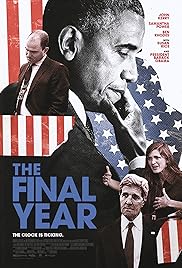
The Final Year Poster
Trailer

THE FINAL YEAR is a unique insiders’ account of President Barack Obama’s foreign policy team during their last year in office. Featuring unprecedented access inside the White House and …See full summary »

Director:

Greg Barker


As the film title implies, Greg Barker’s documentary is an eye-opening unprecedented look during the final year (actually 30 days of the final year) of US foreign policy by following key members of outgoing US President Barack Obama’s administration.

If all this sounds too political, the film is.  The question then is whether it is necessary to watch a film on American policy.  American policy as a stand-alone entity might not have any interest to non-Americans or even Americans.  But the U.S. being the most influential country in the world therefore would have a policy that would have ramifications all over the world.  So, unless one wants to live like a man in a cave and not wish to know what is going outside, this film will not affect you.  It is also good to see the real goings-on in the Obama Administration besides just hearing the points of view of the news.

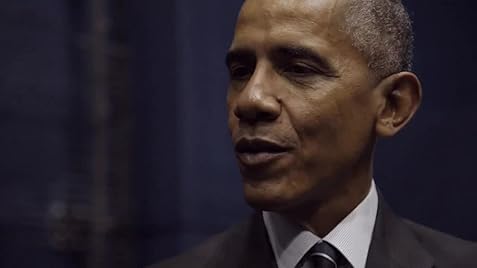
It is one year before Trump came into the U.S. Presidency.  During 2016, filmmaker Greg Barker (SERGIO, MANHUNT: THE STORY OF THE HUNT FOR BIN LADEN) gained access to key members of outgoing US President Barack Obama’s administration — Secretary of State John Kerry, Ambassador to the United Nations Samantha Power, confidant and speech writer Ben Rhodes, and others — for an unprecedented look at the shaping of US foreign policy.  While TV shows from The West Wing to Madam Secretary have invented dramas from this milieu, this documentary captures the real players so much in the moment.

The film begins inside the home of Power.  The audience sees that these high profile state politicians are also ordinary people with kids and a family life.

The globe-spanning journey involves stops on multiple continents.  Rhodes, who is described as sharing a “mind meld” with Obama, joins the President on historic visits to Ho Chi Minh City, Hiroshima, and Havana.  Power seeks to put ordinary people at the heart of foreign policy in Nigeria and Cameroon.  Kerry negotiates at the UN for a Syrian ceasefire and bears witness to global warming in Greenland.  Every move they make stirs reactions from media, Congress, and the public.

Inevitable comparisons will made with the current Trump Administration.  (The film ends with the unexpected Trump win as the new U.S. President.) Clearly, there are noticeable differences.  One can likely see that there is more planning and cooperation with Obama.  Also Obama is one to give good speeches.  One in the film where he speaks to foreign young audience, Obama talks of stories that need be told and in this case, for America the importance of the Declaration of Independence in which all peoples are treated equal.  This is to contrast to President Trump, who never gives a proper speech and talks in short phrases like: “No!”; “Wrong!” etc.

There are many best segments captured live on camera like President Obama’s Hiroshima and Power’s immigration speeches.  But most important of all, the film reveals the true nature of the Presidential Aides, many of whom are inspirational in their duties.

I would like to see the equivalent of this film with the Trump Administration.  That would be an eye-opener.  But it would be highly unlikely seeing already that Trump already dislikes the media.  Trump has already opted out of the climate change accord and the Iran Treaty, two policies Obama and his Administration have worked so hard to achieve.

Trailer: https://www.youtube.com/watch?v=l5tKa22hZGc
 

Submit your Screenplay to the Festival TODAY

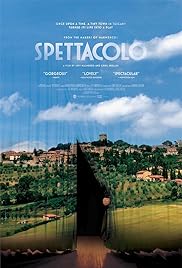
Film Review: SPETTACOLO (USA 2017)

Spettacolo Poster
Trailer

Once upon a time there was a tiny hill town in Tuscany that found a remarkable way to confront their issues – they turned their lives into a play. “Spettacolo” is a portrait of this 50-…See full summary »

The title of the film SPETTACOLO is the Italian for the word spectacle which refers to a performance or a play.

The documentary is about a small town by the hills called Monticchiello in Tuscany, Italy with inhabitants of 130, according to the film.  The inhabitants practice a unique form of theatre called “autodrama”.  By turning their lives into a play, they confront their issues of their past 50 years of existence.  Their piazza becomes their stage and villagers from 6 to 90 play a part – the role of themselves.  Every issue the town has faced in its history – their near annihilation by Nazis, the disappearance of their farming heritage, the commercialization of their land – every major event has been dramatized and debated by the villagers in the centre of town. The film tells the story of Teatro Povero (“Poor Theatre”), interweaving episodes from its past with footage from the present as the villagers turn a series of devastating blows – financial ruin, rising fascism, a dwindling future generation – into a play about the end of their world.  The audience sees the townsfolk planning their play, debating issues as well as what to present at the performance.  News of the play has also spread over the years so that Italians from all over is it Monticchiello to experience the play.

It all got started with the most crucial event in history of the town.  It was when the Nazis wanted to kill all the inhabitants for supporting the rebels also known as partisans.  But one woman pleaded to the German officer in charge that they were all innocent and never participated or collaborated with the partisans – which was a lie.  And the townsfolk were spared.  

One can hardly tell, to the filmmakers’ credit that SPETTACOLO is an American and not an Italian production.  The film is shot largely in Italian, set in Tuscany and filmed between 2012 and 2016, using a Sony EX-1 camera and a portable Zoom audio recorder.  The film crew also lived in Monticchiello, the small town in Tuscany for six months in 2012 to make the film.  Not only that but they involved the town in their editorial process, showing several rough cuts of the film to the townspeople for feedback.  The result is a very authentic and believable film in which the audience is completely immersed in the 130 population number of the town.

The film also tackles the universal problem of old versus the new, small versus big and tradition (50 years of it) versus the modern.  Here, there is the compromise that benefits everyone.

The filmmakers sacrifices the town’s charm in place of problems and key issues resulting in a film more relevant than just entertaining.

The film’s climax hinges on whether the play will be staged despite all the problems.  The actors are ill-disciplined, there are arguments and financial backers have opted out.  Still, despite the doc’s good intentions and the filmmakers’ diligence, it is really difficult to get drawn into SPETTACOLO.

Trailer: https://www.youtube.com/watch?v=l7oITFo7rHg

Film Review: HAPPY END (France/Germany/Austria 2017) ****

Submit your Screenplay to the Festival TODAY

Happy End Poster
Trailer
A drama about a family set in Calais with the European refugee crisis as the backdrop.

Director:

Michael Haneke


Austrian director Michael Haneke, whose last film in 2012 AMOUR won both the Best Foreign Film Oscar and Cannes Palme d’Or returns with a sequel that continues the exploits of the Laurent family.  Though critics at Cannes were generally unimpressed with HAPPY END, the film is still not without its artistic pleasures.  For one, Haneke still shocks with this film, though on a lighter scale.

HAPPY END can be seen as a film that infuses many of the traits of Haneke’s previous films.  When the film opens, the audience sees what is happening though the recording on a cell phone, the routine of a 12-year old (Fantine Harduin) similar to the video surveillance in Haneke’s film CACHE (HIDDEN).  This 12-year old is not one to be tampered with.  She has a mean streak, spying on her father’s (Matthieu Kassovitz) computer and discovering his affair and poisoning a girl she dislikes at camp and her pet hamster.  This is reminiscent of the power of children in Haneke’s THE WHITE RIBBON.  The bourgeois French family is held together by Anne Laurent (Isabelle Huppert), the father’s sister.  But suicide is in the mind of Anne’s father, Georges (Jean-Louis Trintignant).  In Hanake’s first film, THE SEVENTH CONTINENT, the whole family committed mass suicide after a banquet meal.  The dysfunctional family is all reminiscent of FUNNY GAMES in which a family is disrupted by a home invasion.

HAPPY END follows AMOUR where Anne has taken over the family business from Georges.  The business has also just suffered a mishap in which several employees were killed.  The CEO of the company is Anne’s deadbeat son (Franz Rogowski) who is hot-tempered and mentally unstable.  At the same time, Anne is being engaged to be married to her tolerant fiancé (Toby Jones).   All the events are seen from the point of view of the 12-year old, which brings the film to a good focus.

HAPPY END is a film that looks at the entire Laurent family rather than one or two characters as in Haneke’s other films.  It is also lighter and funnier with death often just brushed off.  In the scene when the servants’ daughter is bitten by a dog, Anne arrives with a box of chocolates.

But HAPPY END is serious in its consideration of suicide.  Georges, in a comical scene, asks his tailor of 20 years to help him with getting him a gun or poison to end his life.  Georges has already made one attempt on his own life by driving his car into a tree, but the family and cops have suspicions as the car left no tire brake marks.

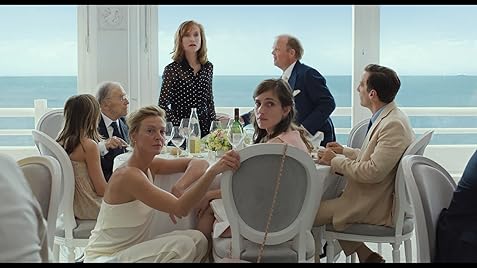
The film ends with the wedding celebration of Anne rudely interrupted by her unstable son, Pierre with refugees from a nearby camp in Calais..  Hanake cleverly  places the European migrant crisis into the the film’s plot in the film’s climatic wedding scene .  But Anne is able to deal with him, in a comical, unexpected way.  (She breaks his finger.)  The ending is just as funny and shows that life goes on, happy or not.  What constitutes a HAPPY END, is the question Haneke poses.

HAPPY END flows so smoothly that it demands a second viewing to examine what one might have missed.  The film is shot in French.

Trailer (en Francais): https://www.youtube.com/watch?v=W0hv8I9YbDk

Submit your Screenplay to the Festival TODAY

Film Review: FREE LUNCH SOCIETY (Austria/Germany 2017) ***1/2

Free Lunch Society: Komm Komm Grundeinkommen Poster
What would you do if your income were taken care of?

Director:

Christian Tod

Writer:

Christian Tod

“Money is better than poverty, at least for financial reasons!”  quote unquote Woody Allen.

Innovation is the challenge of an established order, and so says a billionaire in the documentary.  FREE LUNCH SOCIETY is one such innovation, which this eye-opening film examines.

FREE LUNCH SOCIETY shot in German and English, is a documentary that studies  ‘unconditional basic guaranteed income”.   This means that the residents of a society receive a fixed guaranteed income regardless of how much they make at work.  This income allows them not to worry about existence, the basic need to pay for food and essentials.  It also gives the residents a newer found freedom.  In case one wonders at the impossibility of this concept, it has already been applied in two cases, so says this film, both as a result of the oil industry.  As a result of kickbacks rom the oil industry, residents of Alaskans get a fixed amount of money provided they prove that have lived in the state for a minimum amount of months per year.  In Canada, the experiment was carried out in Manitoba from 19754 to 1978, but no conclusions were made.  Files were archived to be studied later.  In the U.S., the study was never conclusive either.  The film documents Nixon’s proposal of the Guaranteed Income Program which was opposed by Reagan in California.  However, in one diamond rich state in Africa, a village was also chosen for the experiment.  It was shown that everyone benefited.  Incomes rose and productivity increased.  The theory that people become lazy when given a fixed income was disproven.

The concept of the basic guaranteed income is a tremendously intriguing concept for someone like myself, who has an MBA degree, always interested in finance, economics or just plain making money.  So FREE LUNCH SOCIETY kept me watching, breathless from start to finish.  I do not get paid for writing film reviews, as I have sufficient money but that does not make me lazy and contribute less to film reviewing.  What company unions think (obviously they are against it, as the concept challenges their very existence) for example, what effects there will be for the rich and poor and the effects on the economy will be interesting questions to consider.  Warren Buffett, the then third richest man in the world also has his say in the movie.  His talk about the gap between the richest and the poor and especially the working middle class makes the most sense and arguably makes the most interesting and relevant part of the documentary.  It is the rich people who control and everyone else working for the rich people.  To make the film more relevant, director Tod also has a NYC cab driver have his say. 

The film also examines the ethical question of what people would do then with their time if they need not have to work to earn a living.

For those uninterested in economics and money, FREE LUNCH SOCIETY might be quite the bore.  On the other hand, those interested in the politics of income are in for a treat.  

Trailer: https://www.youtube.com/watch?v=nw22w3P3gTg

TOP 10 Movies of 2017: See the list

2017 has been an excellent year for films.  There was little problem selecting the Best 10.  What was noticeable is the fact that these 10 film are so different from each other.

Here they are in order:

1. THE SQUARE (Sweden Ruben Östlund)

Running at 2 hours and 20 minutes, director Östlund had to fight to keep the film’s length,  And it is worth it.  A brilliant satire on modern business and life, the film is not an easy watch though hilariously funny at times.  Museum director has good intentions of keeping art alive and relevant but things keep going wrong for him after he loses his cell phone, no matter how hard he trues to correct the situation.  Power in sex, a current topic with the Weinstein outrage is covered in the film before the events even occurred.  A minor masterpiece! Voted Best Foreign Film for the Toronto Film Critics Association.

2. DUNKIRK (UK Christopher Nolan)

DUNKIRK returns filmmaking to its most cinematic – pure cinema with pure emotions.  Depicting the evacuation of troops from Dunkirk during WWII, writer/director Christopher Nolan has finally proven his mettle as one of the world’s greets directors.  The film brings tears from start to finish to see what freedom and life were worth fighting for.  Completely compelling!

3. VISAGES, VILLAGES (France Agnes Varda et J.R)

Why do you do this, someone asks Varda in her utterly charming documentary about people and places.  Her answer?  To show the power of the imagination.  What appears to be a simply made film does wonders in terms of emotion and charm.  Varda and J.R. travel around France (avoding the big cities) to put murals of the locals up in the most unlikely of places.

4. THE OTHER SIDE OF HOPE (Finland Aki Kaurismaki)

Kaurismaki adds in deadpan suspense to his usual famous deadpan humour in his tale of two men trying to make themselves a better life.  One is a Syrian refugee and the other a man who leaves his wife to open a restaurant.  The two meet and things turn out, actually for the better.  Kaursimaki keeps it both smart and funny in his message on the world refugee crisis.

5. LOVELESS (Russia/France/Germany/Belgium Andrey Zvyagintsev) 

Russian director Andrey Zvyagintsev’s (THE RETURN, LEVIATHAN) latest film of a boy gone missing, is a tragedy that emerges from the result of lovelessness.  A divorcing couple’s son goes missing after all their shit.  LOVELESS is an analysis of the couple’s shit intercut with the detailed process with the police and volunteer group involved with the exhaustive search process.  LOVELESS is a powerful film that instead of showing the power of love, shows the opposite, how life cannot survive with love.  A terrific movie that won the Jury Prize at Cannes!

6. GET OUT (USA Jordan Peele)

Besides making a massive 5544% rate of return (Gross of $254 Million of a production cost of $5.4 million), this film is both scary and funny and first time effort from director writer/director Jordan Peele.  Also a clever message on racial prejudice, GET OUT has also been voted the #1 film for the critics poll at Sight and Sound Magazine. 

7. THE SHAPE OF WATER (USA Guillermo del Toro)

Del Toro has made a love story between the creature from the black lagoon and a mute cleaning lady played wonderfully by Sally Hawkins.  Don’t dismiss the story as fantasy nonsense as del Toro has created a scary, violent and effective adult fairy tale with his excellent imprint on it.  Brilliant on all levels.

8. DOWNSIZING (USA Alexander Payne)

The Norwegians have learnt to shrink people to a thousandth of their size to solve the over-population problem.  But mankind has still not been able to solve the pains from old age sicknesses, complains Matt Damon’s character’s mother in the film  Alexander Payne at his most playful yet serious look at the problems of mankind.  Payne goes into intricate detail of the shrinking process to make his film more credible.  Many twists in the occasionally brilliant script co-written by him and Jim Taylor.  Surprisingly, newcomer Hong Chau steals the show as the cleaning lady who teaches Damon and the rest of the world a thing  about two about life.

9. THREE BILLBOARDS OUTSIDE EBBING, MISSOURI (USA Martin Lee McDonagh)

A brilliant script with twists and terms, excellent performances and rude comedy make this film the delight at the Toronto International Film Festival winning it the People’s Choice Award.  Frustrated mother McDormand that nothing has been done by the sheriff’s office to investigate the murder and rep of her daughter, she rents three billboards condemning the sheriff’s office.  This leads to dire consequences changing he life, the sheriff’s and others while ironically does nothing to further the solving of the case.

10. PHANTOM THREAD (USA Paul Thomas Anderson)

50’s London and the subject is master dressmaker Woodcock, brilliantly played by Daniel Day-Lewis.  Anderson’s arguably best film unfolds meticulously in every scene, planned and executed, reflecting the careful care the subject Woodcock puts into the design of his dresses.  He meets his match in the form of strong-willed young woman, Alma (Vicky Krieps), who soon becomes a fixture in his life as his muse and lover.

(RUNNER UP) THE KILLING OF A SACRED DEER (UK/Ireland Yorgos Lanthimos)

A supernatural psychological thriller that is the most difficult to watch (not for everyone) despite its bouts of black humour.   The film follows Dr. Steven Murphy (Farrell), a cardiac surgeon who is first seen at a diner meeting with a 16-year-old named Martin (Barry Keoghan).  Steven introduces Martin to his wife (Nicole Kidman) and two children.  Strange things begin to happen with the children developing paralysis right out of the blue.  The film has a lot of anger and the anger is slowly but surely unleashed by every one in the party concerned. 

Film Review: LADY BIRD (USA 2017) ****

Submit your Screenplay to the Festival TODAY

Lady Bird Poster
Trailer

In the early 2000s, an artistically-inclined seventeen year-old comes of age in Sacramento, California.

Director:

Greta Gerwig

Writer:

Greta Gerwig

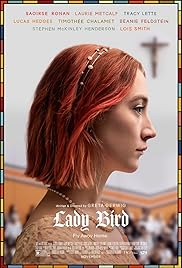
Greta Gerwig does an impressive job for LADY BIRD – her first solo directorial debut. Gerwig choses the coming-of-age story of an 18-year old senior student called Lady Bird (Saoirse Ronan) as the subject.  Lady Bird (her real name is Christine McPherson) is as annoying, spirited and independent as any teenager would be.  But Greewig’s script and Ronan’s portrayal allows the audience not to dislike her.

Lady Bird attends a catholic high school in Sacramento.  She lives with her mother (Laurie Metcalf), father (Tracy Letts) and step-brother, Miguel (Jordan Rodriguez).  She has a stormy relationship with her mother, things getting worse when she gets suspended telling off a teacher.  Her mother works extra shifts to support her, claiming that no amount of money can repay this debt.  Lady Bird has a failed relationship with Danny (Lucas Hedges) who ends up coming out gay.  She then loses her virginity to Kyle (Timothée Chalamet) who turns out to have been sleeping around.  But the key issue is that she wants to study in New York but her mother refuses as the family cannot afford it.  When her mother finds out she had applied in secret, she becomes really upset.

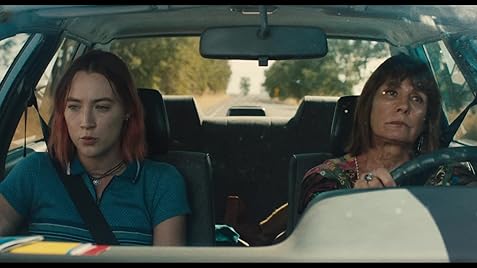
The film covers thoroughly a lot of the female teen issues quite well.  Lady Bird undergoes the learning process and develops her character for the better.  But it is a rough road.  She ditches her best friend, Jenny (Beanie Feldstein) and has major fights with her mother.  She makes up with Jenny going to the prom with her after ditching her prom date, Kyle.  The film’s climax has her in New York after her mother drives her to the airport, still visibly upset.

Gerwig stages well constructed and written confrontational scenes. Two of these involve  Lady Bird and her mother.  One has her asking for a number, what her mother has spent supporting her. When her mother replies no number can be put down for what she has done, Lady Bird storms out of the room.  The other has her begging her mother for forgiveness while her mother is doing the dishes, giving her the silent treatment.   Greta could have made the film funnier, but she restrains, keeping her story focuses and serious.  Gerwig shows both sides of the picture, the mother’s and the daughter’s.  They have their points of view and are strong women.

The script however, noticeably does not contain strong male characters. Kyle is an idiot, Danny is weak willed unable to accept his homosexuality.  The father suffers from depression and Miguel is not that strong a person either.

Metcalf delivers a terrific performance as the mother.  She manages to win the audience to her side and makes her point without having to resort to cheap theatrics like screaming or crying.  Ronan is equally good while Letts does well in his little written role.

Gerwig draws her audience effectively into Lady Bird’s world, opening out an exciting adventure of a family, not dysfunctional, but one that still have problems to solve.

LADY BIRD succeeds.  One would now hope to see a film made but with the male and female roles reversed – with a story of a n angry male teen learning his lessons in life.

Trailer: https://www.youtube.com/watch?v=cNi_HC839Wo


Submit your Screenplay to the Festival TODAY

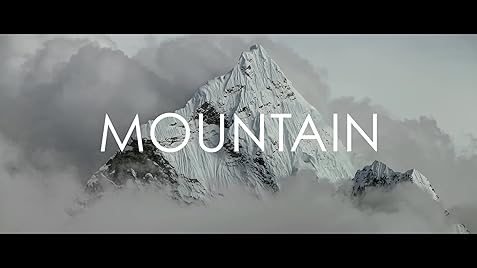
Film Review: MOUNTAIN (Australia 2017) *** (Opens Jan 12)

Submit your Screenplay to the Festival TODAY

Mountain Poster
Trailer

An experience about the highest peaks around the world.

Director:

Jennifer Peedom


We’re feared them, revered them, and even had the hubris to say we’ve “conquered” them.  So goes the narration of the stunning documentary on the giants of the world entitled MOUNTAIN.

If the voice sounds familiar, it belongs to actor Willem Defoe who is no stranger to providing the sarcastic, ironic, poetic and informative dialogue in a documentary.  For example, he narrates the message: you are never so alive as when you are close to death.  Defoe also narrated the excellent DO DONKEYS ACT?, his voice playing a big part to the success of that and also this movie.  The existential commentary is written by best-selling author Robert Macfarlane and director Jennifer Peedom  (SHERPA).  Robert wrote the book “Mountains of the Mind”.

The film begins with grand shots of mountains, often covered in ice and snow.  Humans then come into the picture, followed by the relationship between man and mountain.  The film has a loose narrative – the film best enjoyed by sitting back and relaxing, to enjoy the stunning cinematography and beauty of the mountains.

 The film demonstrates what mountains have meant to humans from past to present. The have been the ethereal homes of gods and demons, and places no sane person would have thought of ascending until a few hundred years ago.  Today, they represent a pilgrimage of a sort for millions of people worldwide. Peedom shows scenes of travellers (including amateurs) ascending Everest by the hundreds, ski down from vertiginous mountain tops, para-ski, fly from peaks using wing suits, rock-climb and ice-climb.  What ticks Peedom off is shown in two shots.  One is a helicopter with a huge banner of “Red Bull” followed by narration saying that mountains have been commercialized.  The other one, has a long queue perhaps of a hundred or so climbers, each attached to each other by rope with the narration saying that mountain climbing has turned to crowd control.

.There are excellent shots of solo mountain climbers hanging on to peaks, some falling and getting injured, skiing and mountain animals.  Besides showing the awe and beauty of the mountains, Peedon does it shy way from including scene that show blood from climbers that have fallen or skiers that have tumbled down their mountain runs.  

If one wonders how the footage was shot, much of them were accomplished using drones and using everything from GoPros to the best cameras.  No stranger to elevation, director Peedom began her career as a climbing camera operator on Mount Everest.  Adding music to the visuals, the soundtrack is backed by a majestic score of old-and-new classical works by Richard Tognetti. 

Though there are countless stunning shots of high mountains, one wishes these sights would be identified as to where they were filmed.  The only time a mountain is identified is Everest.  One has to wait till the closing credits to learn that he incredible footage was shot in 20 countries plus Antarctica, shows us high-elevation defiance of death in scenes of both incredible grace and beauty, and tragedy, injury and death.

Trailer: https://www.youtube.com/watch?time_continue=1&v=rOBB_VOFQHI

Submit your Screenplay to the Festival TODAY

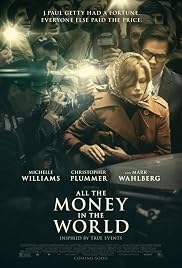
FILM REVIEW: ALL THE MONEY IN THE WORLD (US 2017) ****

Submit your Screenplay to the Festival TODAY

All the Money in the World Poster
Trailer

The story of the kidnapping of 16-year-old John Paul Getty III and the desperate attempt by his devoted mother to convince his billionaire grandfather Jean Paul Getty to pay the ransom.

Director:

Ridley Scott

Writers:

David ScarpaJohn Pearson (based on the book by)


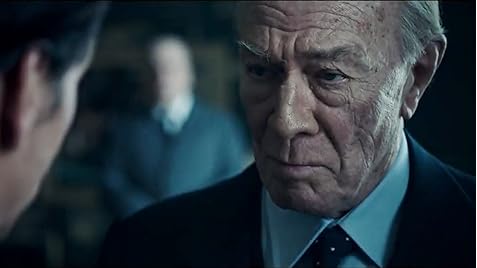
The big question everyone will be asking about ALL THE MONEY IN THE WORLD is how effective the replacement of Christopher Plummer in the titular role of Paul Getty.  After the sexual harassment allegations surfaced on Kevin Spacey, director Ridley Scott (BLADE RUNNER) quickly replaced him with Plummer, doing the required re-shoots.  After viewing ALL THE MONEY IN THE WORLD, all traces of Spacey have been removed and it is nothing short of remarkable that Ridley has done such a great job.  And Oscar Winner Plummer is great.  Spacey would ave added a sly, comedic sarcastic element to his portrayal – his trait, but Plummer plays him straight, funny or serious depending on the situation.  The world needs not need to see a more sarcastic Getty.

The film is narrated from the grandson, Paulo (Charlie Plummer, no relation to Christopher Plummer), giving the film his perspective on his grandfather.  “He is not only the richest man in the world, but the richest man who ever lived!”  Plummer as Getty shows the stingy side of a millionaire, how he trusts artifacts and objects instead of people, as these show themselves as they are, with nothing hidden. But just as his colleagues and friend betray him, he does the same with his grandson’s artifact.

The film contains a few ineffective segments.  One odd one that stands out is a short segment set in 1838 in Saudi Arabia where Getty (in younger mode and Plummer decked in make up and dyed black hair to look younger) discusses oil.  That scene is total unnecessary and could have been done away with to save money and Plummer looking a bit ridiculous.  One cliched segment has the grandson walking the streets of Rome in the middle of the night accosting the prostitutes.  When he remarks to one of them: “I can take care of myself,” one can guess that he is just about to be kidnapped.  The next scene has him pushed into a car by the kidnappers.

But there are a few impressive scenes like the beginning black and white shot of a city with vintage cars.  The scene evolves into colour and the famous Trini fountain is revealed while Italian dialogue heard in the background.  It could be a scene right out of Fellini’s LA DOLCE VITA.

All the performances are outstanding from Michelle Williams as the angry mother slowly developing more tolerance towards the hired Chase to Plummer to Wahlberg.  The best  performance, however belongs to French actor Roman Duris (THE BEAT MY HEART SKIPPED, THE NEW GIRLDFRIEND) as the Getty’s grandson’s kidnapper.

Scott’s film is strong on emotions.    Getty’s daughter-in-law played by Williams undergoes the entire spectrum of emotions and character including, anger, strength, vulnerability, love, sensitivity, tolerance and annoyance.  All kidnapping films have the element of the Stockholm Syndrome.  As the kidnapper and kidnapped are both male, the bonding is one of trust and respect, which makes for the film greatest surprises.

The film plays more of a suspense thriller than a biopic on the millionaire Getty.  Still, there are enough screen time given to Getty to  show him the man he could be.  The words on the screen at the closing credits makes it clear that though the film is based on true events, dialogue and some events have been fictionalized.  It would be interesting to know which parts of the film are fictionalized.  The whole story, at the very end, seems like the perfect kidnapping caper, perfect for a good suspense film.

The film also contains a message. Watching Christopher Plummer as Getty teaches me,  wealthy Scrooge, a few things while opening my eyes.

Trailer: https://www.youtube.com/watch?v=KXHrCBkIxQQ

Submit your Screenplay to the Festival TODAY

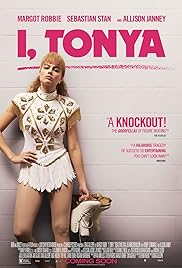
I, TONYA (USA 2017) ***1/2

Submit your Screenplay to the Festival TODAY

I, Tonya Poster
Trailer

2:24 |Trailer
Competitive ice skater Tonya Harding rises amongst the ranks at the U.S. Figure Skating Championships, but her future in the activity is thrown into doubt when her ex-husband intervenes.

Director:

Craig Gillespie

Writer:

Steven Rogers (screenplay)

In 1994, the figure-skating world was shocked by the brutal attack on US medal hopeful Nancy Kerrigan.  The more shocking news was that the attack was allegedly conceived and executed by those close to — and perhaps including — rival figure skater Tonya Harding.  The film tells Tonya’s story and thus the title I, TONYA.

The story is revealed in tongue in cheek events with humour and irony while keeping to the main dramatic details.

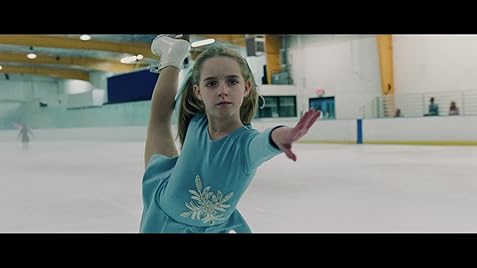
Sad, funny but real this biopic of the infamous American figure Tonya Harding (Margot Robbie) plays like a mockumentary as the film is bookended by interviews of the main characters 20 years after ‘the incident’.  The film then unfolds in chronological order with Tonya as a child brought to the skating rink as a skating prodigy by her mother who would often slap her around for not doing her best.  

‘The incident’ as described in those exact words in the film itself refers to the breaking of rival skater Nancy Kerrigan’s knee by Tonya’s ex-husband.  The question was whether she knew of the plot.  As the film explains she likely did not at the start, as it was all Jeff Gillooly’s (Sebastian Stan) idea but when she did get nailed for it, she was then banned from figure skating in any organization for life, a sentence in her own words, that was worst than prison.

Films have been often made of heroes and survivors, but it is seldom that one is made of white redneck trailer trash.  That is Tonya Harding.  But director Gillespie and writer Steven Rogers portray the skater as someone America loved to hate, but also paints her, despite her volatile and fierce personality someone vulnerable to her surroundings and acquaintances.  She is treated brutally (physically and emotionally) by both her two closest relatives, hers husband and mother (Allison Janney).

Director Gillespie remembers that I, TONYA is after all a film about the sport of figure skating.  The segments of skating have to be good and they are.  Compare the recent tennis film BATTLE OF THE SEXES which made the mistake of including no exciting matches in it.  Her triple axel at the 1991 championships is shown beautifully in slow motion.

Gillespie elicits some mighty fine performances from his cast most notably Robbie in the title role as well as Janney as her stern mother, LaVona.

The dialogue though in everyday words are at times so predictable, one can say the words just before the characters utter them.  In one scene, after LaVona after throwing a knife that sticks into her daughter’s arms utter the words: “Every family has its ups and downs.”   A comical line though the words are stolen from the play and film THE LION IN WINTER.  But there are some good lines in the script as when LaVona says (and really believes) that she sacrificed being a loving mother so that Tonya can grow up to become a fierce skater.

Though the film deals partly with the daughter/mother relationship, it shows for once that the relationship is a sour irreconcilable one.  Still the film finally gains the sympathy of the skater, that in her own words describes herself as the one America grew to hate.

Trailer: https://www.youtube.com/watch?v=OXZQ5DfSAAc


Submit your Screenplay to the Festival TODAY

Film Review: DOWNSIZING (USA 2017) Top 10 *****

Submit your Screenplay to the Festival TODAY

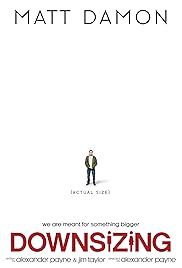
Downsizing Poster
Trailer

A social satire in which a guy realizes he would have a better life if he were to shrink himself.

Director:

Alexander Payne


DOWNSIZING marks filmmaker Alexander Payne’s departure from real life and real life drama as witnessed in films like NEBRASKA, THE DESCENDANTS and ELECTION.  DOWNSIZING is Payne at his most playful, a sci-fi adult fairy tale of sorts, but one in which real life drama still exists.  The film stars Matt Damon who like the role in his last film George Clooney/Coen Brothers’ SURBUBICON is about a man who strives for a better life but things end getting more f***ed up.  What a man will do to correct the situation is what SUBIRBICON and DOWNSIZING are about.  It is interesting to see how two different filmmakers deal with a similar premise.

DOWNSIZING, a film combining several genres offers the solution to the world’s problem of overpopulation.  If people can be reduced in size to a thousandth of their original, many of the world problems could be solved.  People will only eat, use and dispose much, much less product.  When science finally achieved the success of downsizing, many colonies were begun.  So, Matt Damon and wife opt to be reduced and live in their new reduced size colony for monetary benefit.  Things never go as expected.

The film centres on Paul Safranek (Matt Damon) who is married to Audrey (Kristen Wiig) and who has spent most of his life working  hard but still raying int he same old house.  He figures that downsizing will allow him and his wife to afford the luxuries they would otherwise never achieve.  But unknown to Paul, the problems he faces do not shrink like their bodies.  After his is shrunk, Paul finds to his horror that Audrey has chickened out the procedure.  Paul is left divorced in miniature Leisureland.

Paul finds truth though the Vietnamese cleaning lady Ngoc (Hong Chau) after partying at his neighbour, Dusan’s (Christoph Waltz).  He slowly but surely redeems his life in a story unfolded in Payne and Jim Taylor’s script that is both dramatic and hilarious.  There is a very funny segment where Paul gets high at Dusan’s glitzy party.  He walks around with a ridiculous wide smile on his face, remarking at one point: “I am going to take off my shoes.”

There are many good examples why this script should win the Oscar for Best Original Screenplay.  This might be Payne’s second after winning Best Adapted Screenplay for THE DESCENDANTS.  One are the words Ngoc replies to Paul after giving him a farewell gift of a Bible in Vietnamese:”Words don’t matter.  Just remember me!”  Or the dialogue when Paul asks her “Who am I?”  She replies, pronouncing his name correctly the first time Paul has heard it pronounced correctly.  “You are Paul Safrenek!”   Or the classification of fucks into 8 categories, with Ngoc asking Paul: “What kind of fuck did you give me?”

DOWNSIZING’s script is brilliant with lots of attention to details.  The film does not go into thriller territory but attempts more ambitious aims.  Payne’s social satire is the most ambitious of all his films but it largely works thanks to the script.  Damon’s performance is fantastic (even the glimmer fem his eyes) with help from a host of impressive stars (Kristen Wiig, Christoph Waltz, Hong Chau, Laura Dern, Jason Sudeikis and Neil Patrick Harris).   The prize performance comes from Hong Chau, as observable in the scene where she convinces with happy tears,  Paul and company the reason she has to visit Norway.

Shot in Toronto and around the fiords of Norway.

Trailer: https://www.youtube.com/watch?v=QKEPCcPVrx0

Submit your Screenplay to the Festival TODAY