Conversation with multiple award-winning screenwriter Ryan Armstrong. His recent screenplay, SADDLED WITH, is a western/thriller. Ryan is a huge fan of Westerns and there is an unique analogy with today’s world. So yes, Westerns are currently making a comeback and we’ll be seeing more of them.
A gunslinger is hired to rescue and return a young person to their family despite all outlaws, odds, and attire.
What genres does your screenplay fall under?
Western, Action, Drama
Why should this screenplay be made into a movie?
I believe, especially now, that understanding, listening, and accepting are something we need to get back to doing. Whatever form/medium necessary to push that, might be helpful.
A costume designer is a person who designs costumes for a film. The role of the costume designer is to create the characters and balance the scenes with texture and colour, etc.
Matthew Toffolo: You have worked on over 60 films as a Costume Designer, plus over 24 films as a Makeup Artist in just the last 9 years! You’ve been busy. Is there a film or two that stand out for you that you’re most proud of?
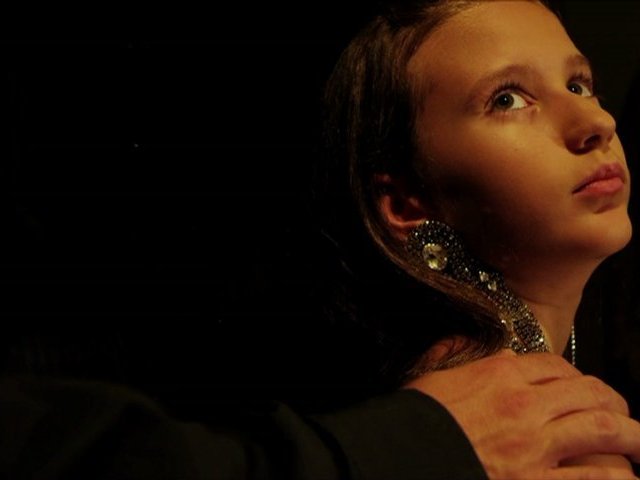
Ginger Martini: I’m proud of the majority of them. I’ve been quite lucky, every script that has come my way, I’ve quite enjoyed working on. I’d say Fall, Portrait of a Serial Monogamist, At Home by Myself… with You, BackCountry and Air Balloon Circus are some of the most visually exciting projects. I love working on the CityLife projects as well, with the Remix project, those films always hold a special place in my heart.
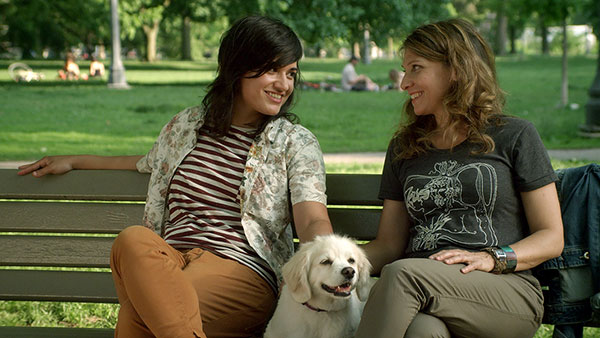
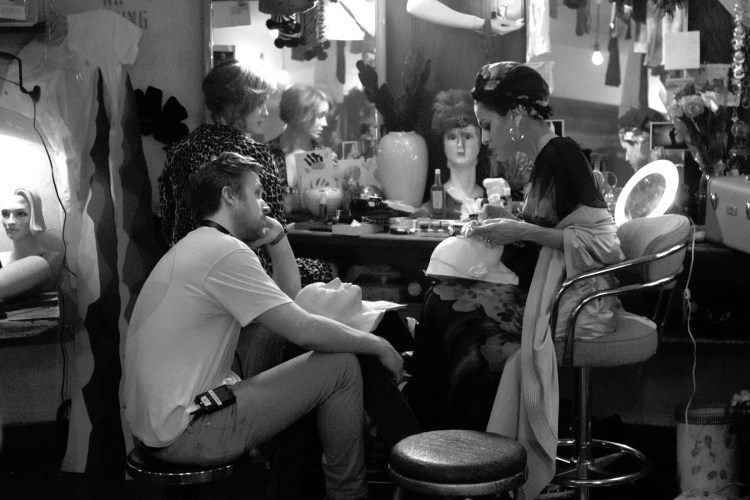
PHOTO for Portrait of a Serial Monogamist:
Matthew: You seem to be the go-to person when dealing with tight budgets. Your task is sometimes impossible. What’s your secret to do costumes for an entire cast with little money?
Ginger: Some of them were tight budgets in the beginning years, but for the most part, I get what I need to make it look proper. Realistic goals is key. I draw up a reasonable budget and submit it to my producers and pm at the start. They usually find a way to make it work.
Matthew: You started out doing short films and you continue to do them. What do you enjoy about the short film experience?
Ginger: All about the script, I’m a sucker for an interesting story whether it’s short or long format.
Matthew: What type of film would you love to do costumes for that you haven’t done yet?
Ginger: In sept/oct I designed some costumes for the band XO-IQ on Nickelodeon’s Make It Pop, that was probably my favourite version of designing, anything along those lines would be where I’d like to head from now on, lots of color and fun fabrics. They let me be as creative as I wanted and the results are really cool : )
Matthew: What film have you seen the most times in your life?
Ginger: Oddly enough, The Perfect Storm with George Clooney and Mark Walberg. It’s on tv alllll the time and any time I come across it, I’ll stop what I’m doing and watch the entire thing.
Matthew: What makes a great makeup artist?
Ginger: Talent and personality
Matthew: What are you looking for in a director when you start a production?
Ginger: We need to be on the same page creatively and they need to be someone I can easily communicate with.
Matthew: Does working on big budget Hollywood productions that have a large costume department appeal to you?
Ginger: Of Course : )
Matthew: What advice to you have for high school or university students who are looking to work in costumes or makeup in the movie industry?
Ginger: It’s not as easy as it looks on tv. The hours are beyond gruelling and at first the money is non existent. But keep at it. Be nice to everyone, cuz you never know where your next job is coming from and who that Production Assisant will be later (maybe your next Production Manager) and only work for free for a little bit. Then bill what you’re worth and if you are good at it, the money will come. Make sure you like your scripts and it’s easier to live with them 24/7 for months on end. Take advice from people who are successful in the department you want to be in, and learn to take criticisms well and not personally.
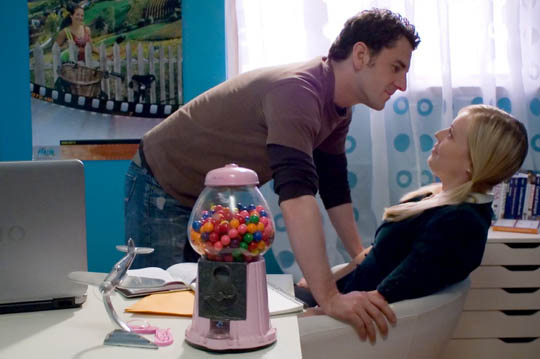
PHOTO from At Home by Myself… with You:
Screenshot
____
Interviewer Matthew Toffolo is currently the CEO of the WILDsound FEEDBACK Film & Writing Festival. The festival that showcases 10-20 screenplay and story readings performed by professional actors every month. And the FEEDBACK Daily Festival held online and in downtown Toronto on the last Thursday of every single month. Go to www.wildsound.ca for more information and to submit your work to the festival.
In his brief career, Adam Stone has already established himself as one of the top DPs in the industry today. It was an honor to sit down with him to talk about his craft.
Matthew Toffolo: You have worked with director Jeff Nichols on many films. Where did you first meet? Why does your working relationship work so well?
Adam Stone: Jeff and I worked on a total of 5 films (Shotgun Stories, Take Shelter, Mud, Midnight Special, and Loving). We met in film school at the UNC School of the Arts in the late nineties. I shot 2nd unit for a few of David Green’s early films (George Washington and All The Real Girls) and I guess Jeff liked what he saw. He asked me to come out to Arkansas to shoot Shotgun Stories in the summer of 2005. The project had absolutely no money but we convinced a core group of friends and family to crew-up and Joe Dunton Camera essentially gave us a Moviecam and some anamorphic lenses for free. We were fortunate to have talented people that believed in us. Without them the film would have never seen the light of day.
PHOTO: Cinematography for the film “Midnight Special”
While working on Shotgun Stories, Jeff and I found we had quite a bit in common. Aesthetically we liked to shoot in the South against a backdrop of kudzu, rusted out cars and interesting characters. We also shared a love of widescreen cinema with simple, yet stately, camera work. We combined those ingredients into a form of southern cinema people seem to enjoy. We have definitely come along way since the days of Shotgun Stories. It has been a great evolution with a true friend and mentor.
MT: Tell us about working on the landmark film Midnight Special?
AS: Midnight Special is a unique movie that’s kind of hard to categorize. It’s a genre bending mash-up of a road movie and sci-fi flick that pays homage to Perfect World, Starman, and Close Encounters. The movie starts without much explanation or backstory, all we know a man is on the run with his son. As the movie progresses we learn the boy has special powers and is dying. His father must keep him alive while the government and a religious sect are in pursuit. Despite all of the characters, themes, VFX events, and unanswered plot points the film is very simple. At the core, it’s a story about a father’s love for his son and how he will do anything to save his boy.
MT: Another film with Jeff, “Loving”, hit theaters in 2016. It’s set in the 1950s. When DPing period pieces, what type of research do you do? Was there another film(s) that was the inspiration to the cinematic design of the film?
AS: To be honest, Loving is the first period piece I’ve had the pleasure to shoot. Jeff’s script was based on a true story about a Supreme Court case so there was plenty of material to unearth. One of the greatest treasure troves was the work of Grey Villet. He was a super talented photographer that documented the story of Richard and Mildred Loving for Time Magazine in 1965. The pictures he took influenced the script, production design, costumes, and the cinematography.
I really fell in love with the objectiveness of Villet’s work. He always employed a wide lens so he really had to campout and wait for candid shots. Jeff and I adopted this technique and let a number of scenes play out in wide observational shots. We also recreated several of Villet’s photos in the movie. It was really cool to see his black and white work come to life in vibrant moving color. To be honest, Jeff and I had to get acclimated to dailies since we had been referencing Villet’s work for so long.
PHOTO: On set for film “Loving”:
MT: Do you have a favorite experience in your work as a Director of Photography? What film are you most proud of?
AS: Most of the projects I shoot, whether features or commercials, don’t ‘really’ contribute to the greater good of society. They might be artful or compelling but they do not teach or enlighten. That’s why I’m proud to have worked on Loving. Loving sheds light on an important part of history while telling a meaningful story.
I’m also proud how Loving looks. The camerawork is very simple and the lighting is very organic. My main goal was to let the cinematography be an afterthought. I wanted the audience to pay full attention to the story, characters, and locations – not the camera.
MT: You have Dp’d a few documentary films. What is the general difference between the working on a documentary in comparison to regular narrative film?
AS: I have always had a deep fascination and love of documentary films. The cinematography of Ron Fricke and the still photography of Dan Eldon compelled me to get behind a camera in film school. At that point in life, I wanted nothing more than to travel the world and shoot amazing people and locations at golden hour (to be honest I still have that desire and wanderlust).
Production-wise documentary work and features are not too different. Both utilize similar equipment, call sheets, tons of planning, long hours, and figuring out a creative way to shoot the story. The biggest difference between the two is the time it takes to complete a documentary. Many docs enlist several shooters because of the length and sporadic nature of the schedule.
Advertisement
MT: What type of film would you love to work on that you haven’t worked on yet?
AS: That’s a great question. I’d love to work on a film where the camera is constantly on the move and has the ability to effortlessly traverse every spatial plane. That approach totally goes against how I usually shoot a film where the camera is moored, grounded, and is always someone’s point of view. Seldom do I move a camera for the sake of moving a camera – I guess that’s why I have a fascination with moving it.
I believe my lust for camera movement is directly attributable to the amount of the Red Bull Channel I consume. I really love to veg-out and watch how they fly the camera. Fortunately, I might shoot a film this summer that begs for some fun full-throttle camera movement and I’d love to incorporate more techno crane and steadicam into the equation.
MT: What does a DP look for in a director?
AS: Before I take on a project I have to be intrigued by the script and most importantly believe in the director. The director is the captain of the ship and must have a clear vision and game plan to lead the film from its inception to the very end. Besides being a strong leader the director should be compassionate, open-minded, and have a sense of humor. If all these qualities align, I’m more than enthusiastic about taking on the project and working with the director.
MT: Do you have a Director of Photography mentor?
AS: I had a dear friend that was my cinematography teacher and mentor in film school. His name was Robert Collins and he really taught me to be a compassionate filmmaker. One of the biggest lessons I learned from him was to surround myself with good people on set. He always said the friends you make in film are more important than anything you shoot. I totally agree with his sage advice. Unfortunately, Robert passed away several years ago and he is deeply missed.
MT: What do you look for when hiring your main team? Gaffer. Key Grip. Camera Operator. Etc…
AS: I’ve been very fortunate in my career to work over and over with same core group of individuals. The crew I work with are my best friends and co-creators. On occasion, when I hire a new member he/she must share the same attributes as the rest of the crew. He/she should be kind, artistic, hard working, honest, and most importantly soulful. It can also be noted, I rather hire someone that is green and enthusiastic over someone more experienced and jaded.
PHOTO: Adam and the camera department from the film “Midnight Special”
MT: Where do you see the future of camera/lighting technology in film?
AS: Though I’m a proponent of celluloid I love where digital filmmaking is headed. Digital filmmaking has come a long way over the past decade. Camera sensors have gotten better and the lenses look more filmmatic and less clinical. I really admire films such as Revenant that use digital cinema in a smart way. Lubezki made a beautiful movie harnessing the best attributes of digital. He used great equipment (Alexa 65 and Panavision Master Primes), shot in amazing light that accentuates a digital sensor, and flew lightweight digital cameras. That coupled with jaw dropping landscapes, a simple story, and seamless VFX work made for a movie that really resonated with me. I truly love when movies use technology to advance a story instead of letting technology overtake the story.
Lighting has also come a long way in the past 10 years. LED, plasma lights, and iPad enabled dimmer boards have evolved and become onset staples. The ability to control all of the lights on set, whether on a stage or location, from a tablet is amazing. With just a few finger swipes you can audition lights (even dim and recalibrate the color temperature). This is a great timesaver when lighting a big exterior night scene.
MT: What film, besides the ones you’ve worked on, have you seen the most times in your life?
AS: I really don’t watch the films I shoot once they are released – since I see them so many times in post. I guess the two films I’ve seen the most is Some Like It Hot and Baraka. I have a weird ‘thing’ for old screwball comedies and I have always been obsessed with Baraka. I guess if I was stuck on a deserted island those would be my go to films.
PHOTO: Adam Stone at work:
_____
Interviewer Matthew Toffolo is currently the CEO of the WILDsound FEEDBACK Film & Writing Festival. The festival that showcases 10-20 screenplay and story readings performed by professional actors every month. And the FEEDBACK DAILY Film Fesival held online and in downtown Toronto on the last Thursday of every single month. Go to www.wildsound.ca for more information and to submit your work to the festival.
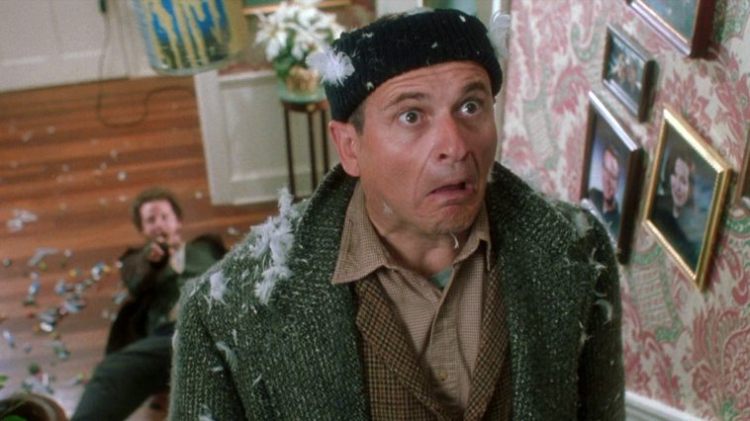
What an honor it was to sit down with Director of Photography Julio Macat. Julio has DP’d most of the top comedy films in the last 25+ years. His list of credits include: Home Alone 1, 2 & 3, Ace Ventura: Pet Detective, The Nutty Professor, The Wedding Planner, Wedding Crashers, Winnie the Pooh, Pitch Perfect, and the upcoming comedy The Boss, starring Melissa McCarthy.
Matthew Toffolo: You have worked in the Hollywood Film Industry scene for the last 36 years. What has been the biggest change in the filmmaking process from 1980 to present?
Julio Macat: The biggest change in our industry has been the choice of material that studios and most independent financing companies green light, as what films are made. It used to be that a film like ORDINARY PEOPLE would have no problem going forward, especially with a good director attached. Now, great films like that rarely get made anymore. I miss that.
MT: Of all the productions you’ve worked on, what film are you most proud of?
JM: Without hesitation it’s HOME ALONE, it was a rare combination of all the elements of film making coming together harmoniously with a result better than expected.
PHOTO: Cinematography in the film Home Alone:
MT: Home Alone is one of the most successful films in movie history, and it’s a film that really stands the test of time. During filming, did you ever imagine that this film would be as iconic as it was?
Advertisement
JM: No I didn’t. My hope was that it would be liked as much as I liked A CHRISTMAS STORY and that kids could relate to and be empowered by it. But It’s unusual to sense that you are doing something that special because you are in a vacuum, trying to do the best you can in your department (the visuals) and just hope that everyone else had their act together as well…Fortunately our young director Chris Columbus, had a great vision of what “it could be” and he guided us all in a great direction. The film was that unique circumstance where every layer that was added made the film even better…and John Williams’ score was truly icing on the cake.
MT: You’ve definitely been a part of some of the most successful films in the last 25 years (Home Alone, Wedding Crashers, Pitch Perfect to name a few). Is there a film that you worked on that didn’t do well at the box office that you consider a terrific film that people should see?
JM: Yes In comedy, I loved MY FELLOW AMERICANS which came out at an odd time and no one saw and the drama CRAZY IN ALABAMA which was a bit too long and did not connect with American audiences.
PHOTO: Crazy in Alabama. Starring Melanie Griffith:
MT: You just wrapped “The Boss” starring Melissa McCarthy, Peter Dinklage, and Kristen Bell. Can you give us a sneak peak as to what to expect?
JM: I have not been this excited about a comedy coming out since I photographed WEDDING CRASHERS!
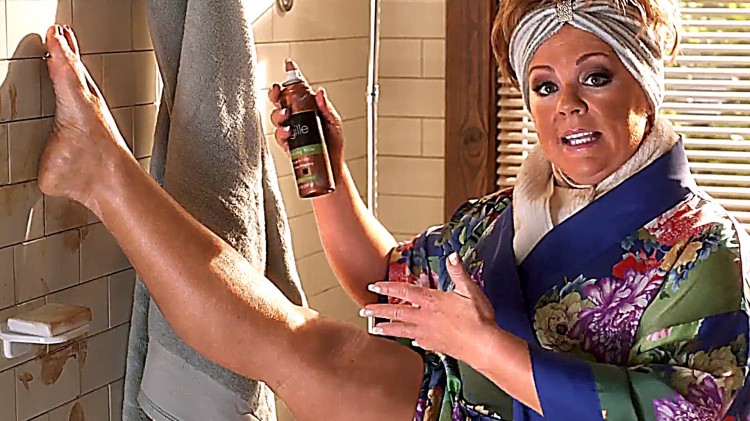
JM: THE BOSS is the perfect vehicle to show Melissa McCarthy’s incredible talent. I think she is the present day Lucille Ball, someone who can and will do ANYTHING for a laugh and unlike other comedians, it’s ALWAYS really funny. She has the uncanny ability to step outside herself and correct situations to make them hilarious without being self conscious! There is a scene in which she puts on a teeth whitener to have Kristen Bell clean her teeth and holds a conversation while they are being cleaned. I assure you that this will have the people in theatres roaring with laughter! We had to start the scene again repeatedly, because the other actors and the crew could not stop laughing during the takes.
PHOTO: Melissa McCarthy in THE BOSS:
MT: Some of the comedies you work on the director demands the actors stick to the script, whereas other films, like Wedding Crashers, there is a lot of improvising occuring. Do you have a preference when shooting? How does the scene lighting setup change when you know the actors are going to go off script?
JM: It’s been my experience that comedy is an imperfect and individual science. The best results come when you leave an opening for great accidents to happen. So I try to not lock in actors with blocking that is too precise, and for example, if the scene develops into being filmed in an area that we had not anticipated, well, that then turns into a fun challenge!. Hopefully this adds to the piece. Ben Falcone and Melissa were eager to want overlaps in dialogue and action in some of our scenes, to be a part of the looseness of the jokes, so they asked that I cover these scenes with three angles simultaneously. It was challenging photographically, but the results were worth the effort and we got many “improvised “ moments with the proper intercut coverage.
Advertisement
MT: Since you started in the camera department, do you prefer operating the camera yourself? Or does this all depend on what type of film (budget/Union guidelines) you’re working on?
JM: I love operating the camera myself, and on some productions I prefer it.
But since I’ve now done 17 films with first time directors, lately, I find that all can go faster when I spend more time by the director’s side and away from the camera. I do love stunts, however, and I love operating on the tough shot …so that we get it in one.
MT: What’s the main thing you look for from your main crew members? Gaffer, Key Grip, Camera Operators etc…
JM: My most important criteria in choosing crew is PERSONALITY. After this many years in the film industry, I found that many people are qualified for the job description, not as many have the agreeable, kind and respectful personality that I require to be in my crew.
I like to be the example of being respectful to actors, directors, producers and other crew members. I expect my crew to do the same.
It’s amazing how much you can achieve with a hand picked crew that has a positive attitude and general kindness toward each other, I am always amazed at this, especially when we work under such tough circumstances that we often encounter. With this approach, when the pressure mounts with things like weather challenges, not enough time, locations changing, etc. etc. which by the way, are actually the daily obstacles of filming, one can rely on the crew to process it, deal with it professionally and find a solution with kindness achieving much better results.
MT: What do you look for in your working relationship with your director?
JM: A collaboration, Hopefully I look for this person to be someone who will do their homework, roll their sleeves up along with me and work as hard as I do.
I look for the director to be considerate of my craft and the elements I may need in order to help them realize their vision for the film And finally, maybe most importantly, a sense of humor.
MT: What movie, besides the ones you worked on, have you seen the most in your life?
JM: It’s a three way tie: In this order though…
IT’S A WONDERFUL LIFE LOST IN AMERICA JERRY MAGUIRE
Cheers JULIO MACAT, ASC
_____
Interviewer Matthew Toffolo is currently the CEO of the WILDsound FEEDBACK Film & Writing Festival. The festival that showcases 10-20 screenplay and story readings performed by professional actors every month. And the FEEDBACK DAILY Festival held online and in downtown Toronto every Thursday. Go to www.wildsound.ca for more information and to submit your work to the festival.
I was fortunate to get an interview with the very talented and very busy Production Designer Beth Mickle. She is currently in the middle of production on the highly anticipated film “Collateral Beauty”. We talked about that film and much more in our chat together:
Matthew Toffolo: You have been the Production Designer on over 30 films in the last 15 years. Is there a film or two that you’re most proud of?
Beth Mickle: I’m incredibly proud of so many films that I’ve been involved with—fortunate to have had so many great opportunities! One that I’m especially proud of is “Lost River”, Ryan Gosling’s directorial debut. It was such a special project from the very beginning—Ryan wrote such a beautiful script with so much imagination, so many fantastical backdrops to play with. It was a smaller movie, and we all lived and worked together in downtown Detroit, collaborated closely to really shape that film as a team. I remember many adventurous weekends with Ryan and our cinematographer Benoit Debis, exploring the many awesome hidden areas of that great city. With limited resources, everyone jumped and got their hands dirty, and we built so many elements out of cardboard, tape, late-night pizza, and music…so proud of how every one of those sets came together, and the tone we found in that film. It’s one of my favorite films of all time!!!
PHOTO: Ryan Gosling, Eva Mendes & Christina Hendricks on set in “Lost River”:
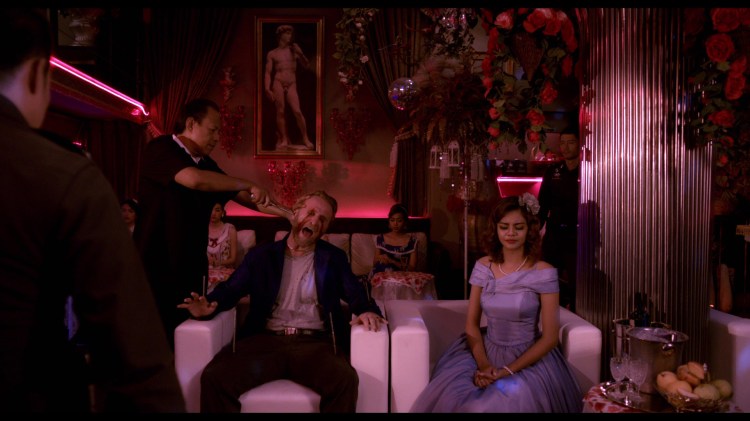
The other film I’m wildly proud of is “Only God Forgives”, which Nic Refn directed and Ryan starred in. This was another lower-budget film, this one in Bangkok, where we all lived and worked together very closely once again. Exploring every neighborhood in Bangkok was a complete joy for a gal who loves to travel as much as I do, and Nic gave me so much creative freedom with that film. My fiance Russell Barnes (an incredibly talented Production Designer) joined me on the project as the art director, and we had the most memorable 7 months together in Thailand. the lower-budget nature of the production meant that we did a lot of the heavy lifting along with our amazing Thai crew—building, painting, and decorating sets with our own hands. And the markets were phenomenal!! We ran around to tons of different vintage markets and flea markets every week, loading the trucks with so many beautiful and unique pieces. Bringing together these rich, vividly stylized sets in this unbelievable country where we were living was such an unforgettable time in our lives.
PHOTO: Set Design on “Only God Forgives”
MT: You started your career working on lower budget/Indy films as a Production Designer. Would you suggest other people who are striving to become Production Designers in this industry take this route? What are the pros/cons of taking this route in comparison to starting on the low rung and working on Union productions?
BM: I would absolutely recommend this route for aspiring production designers. The lower budget world is where you learn to be resourceful, where you can somewhat safely make mistakes which can be recovered, where you learn the complete fundamentals of how a film is made. I try to approach every production—large or small–with a calm nature, and I think that comes from being in the trenches for so many years and learning how to adapt to in all situations. The biggest con to this route is that formal “union” filmmaking can be a bit jarring when you do finally make the leap to the larger arena—but once you learn those nuances, the process really smooths out. That is definitely one pro if you do start in the larger union world—you learn those protocols right away, so you enter the film world knowing how union positions are categorized and how the different departmental responsibilities are broken down.
In terms of career growth—I also think designers can make that mental shift of thinking on a smaller scale early in their careers on smaller films, to thinking on a larger scale as projects grow in size. But I think it’s much more difficult for designers to start with thinking on a larger scale, then downsizing their approach and expectations on a smaller project. And as we’ve seen so much lately—some of the highest quality films being made right now are the smaller, independent projects (“Ex Machina”, “12 Years a Slave” to name a few), and if a designer catapults you to doing an $80 million film as his or her first film, downshifting to this smaller budget range can prove to be a difficult maneuver.
MT: What is the biggest difference when working on an Independent film in comparison to a Hollywood Union Production?
BM: Union rules and guidelines!!! On an independent film, everyone is moving and touching and painting everything…on a union film, none of that flies. this took me forever to learn!!!! I’m always eager to grab the other side of a couch, to rehang picture frames on my own, always telling the set dressers “this is how i keep my muscles!!”…some laugh and some are not amused at all:)…At first I resisted the union delineations, preferring the all-hands-on-deck team approach, but after doing over 20 union films, and seeing that crews are treated so fairly and safety is so championed, I do see the benefits of having a regulated system. Film productions are such incredible, finely-tuned organisms that function so efficiently….though I’d still paint walls if they’d ask me!..:)
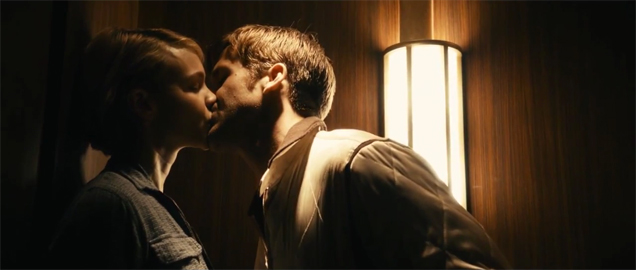
MT: Some will argue that DRIVE is one of the best films in the last 10 years. Do you remember the initial conversations with the director and your team about the overall look, feel, and tone of the film?
BM: “Drive” is a film is very near and dear to me. It made my career the incredible adventure that it is right now. I remember my initial meetings with Nic Refn well. I think he’s one of the most brilliant directors working today, and seeing how he approaches filmmaking is nothing less than inspiring. He’s constantly striving to shoot scenes in ways they’ve never been shot before, to make every frame as great as it can be. And his mandate is always “more is more.” So for a designer, taking this approach is a dream…every set can be as elevated and amplified as you want it to be. Every color can be as rich as possible, the idea of “extreme” is always embraced. so making “Drive”—as well as Nic’s following movie “Only God Forgives”—were a career highlight for me.
PHOTO: Ryan Gosling and Carey Mulligan in “Drive”:
MT: Whiskey Tango Foxtrot is out in theaters. What can people expect to see? How were your experiences working on that film? A lot of exterior scenes.
BM: “WTF” was another fascinating project to do. All but 4 minutes of the film takes place in Afghanistan, and we shot the entire film in New Mexico!!! It was by far the most challenging film I’ve ever done, but I was lucky enough to be working alongside the best art department I’ve ever had. We built 2 Kabul city street sets—both nearly a football field in size, and both almost built from scratch. Building so much scenery was such a great challenge on a relatively small studio film—we reused so many facades, repurposed so much architecture, repainted so many pieces….at first it seemed nearly impossible to pull off the tall order, but once we started improvising and playing around, the possibilities really became endless. Anthony Syracuse was our construction coordinator on that film, and I’m certain that he’s one of the best construction coordinators this industry has ever seen.
What Is A Film Director? How do you run an independent film casting call? How do you get the best out of the actors you’ve chosen to bring your film to life?
Whether you’re running your first independent film casting call or into your millionth day of shooting, you may find some useful ideas here. Below, we investigate some of the techniques you can use and pitfalls you may face in casting and directing actors. A good resource for actors as well as directors!
We’ll be posting more articles all the time, so make sure you come back and check every now and then.
What is a film director? More than anything, the person responsible for bringing together the technical aspects of capturing performances with the actors who will bring a story to life. One of the most important aspects of a director’s job is to have a rapport with the actors, and it’s not any easy thing.
INSECURITY is the evil heart of a bad performance.
You need the actor to feel SAFE and COMFORTABLE in the creative process. They need to be relaxed.
Ask the actors to do something, not be something.
The presence of a camera should never change people, it only changes the aspect or degree of a person’s response.
The main job is to prepare the ground for inspiration. You can’t decide to be inspired. If you try it, it only creates tension, taking you farther and farther away.
The DIRECTOR is the viewer and the ACTOR is the viewed.
Let the actors help out with blocking. It solves all kinds of problems.
Actor and Director must respect each others creative territory.
Adjusts your beliefs about a character if the actor sees something different.
WHAT DO ACTORS WANT FROM DIRECTORS? – Not to give up until you get the performance – To make sure it’s the best take before moving on – Must have confidence that you understand the script – Need clear, brief, playable direction – They want to be pushed to grow and learn DON’T TELL ACTORS TWO DIRECTIONS THEY CAN’T PLAY TWO THINGS AT ONCE.
LISTEN to the actors and hear what they have to say.
Actors need insight, in language that is experiential, not descriptive. Adjectives are generalizations. USE VERBS Actions speak louder than words.
Verbs describe what someone is doing. They describe experiences rather a conclusion about experience.
USE THESE PHRASES To believe To fear To accuse To confront To convince To beg To complain To punish To tease To soothe
VERBS are also important to the basic understanding of a character
Acting should be a performance of the simple physical actions that tell the story.
Movies are made out of very simple ideas – A good actor will perform each small piece as completely and as efficiently as possible.
All good work requires self-revelation. The talent of acting is one in which the actors thoughts and feelings are instantly communicated to the audience. The instrument the actor is using is himself.
DON’T REPRODUCE LIFE CREATE IT
CONFIDENCE is an important element in an actor’s performance
LEARN FROM ACTORS SEE: -What stimulates them? -What triggers their emotion? -What annoys them? -How’s their concentration? -Do they have a technique? -What method of acting do they use?
An actor’s personality always comes out in their performance.
Tell them to go as far as they feel. Never be negative.
MOVMENT OF THE ACTOR You can always tell if an actor is truly in character by looking at his or her feet.
Actors need to have a GOOD EAR
Sometimes they need to just speak and try not to hit the furniture.
They need to trust the script, and you have to guide them if they want to stray from it. Unless they have an absolutely brilliant idea that serves the story BETTER than the original script, they should stick with the words as written. It’s tempting for actors to add or subtract words. That’s seldom a good idea.
Most actors need to know the technology that is around them. -Where is the camera? How are they being framed – close up, mid-shot, long shot?
NEVER JUDGE A CHARACTER
Acting is not pretending, is not faking something. It’s honesty. A director’s job is to recognize that and facillitate it.
For an artist there are two worlds the social realm, where we live and work day to day and the creative realm.
To enter the creative realm one must be free of the social realm, uncensored in the moment, away from concerns with result, following impulses, obeying only the deepest and most private truths.
An actor can’t lose trust in the process. As an actor, you need to: 1) Stay in the moment 2) Feel your feelings 3) Don’t move or speak unless you feel like it 4) Forgive yourself for your mistakes 5) Connect to the deepest and freshest meaning of the script 6) Turning themselves on and capturing their imagination 7) Connect with emotional honesty and get to the places they need to go
The best moments usually come from mistakes!
The scene is the event the words are the clues
Eye contact is very helpful to listening
ACTOR CHOICES Choices create behavior. The behavior dictates the way the lines are said
THE SPINE IS WHO THE CHARACTER IS Discover what is person’s great need in life. Michael Corlene To please his father Andrew Dufrane To get out of prison Every choice actors make about their character relates to their spine
AN ACTOR HAS TO THINK How does my character see the world?
WHAT DOES A DIRECTOR WANT IN AN ACTOR?
MEMORY (Personal Experience) – Each individual is essentially unknown to all others – Actors allowing their memory to occur physically 5 senses rather than intellectually
OBSERVATION
RESEARCH – Know the character – Know their history and back story – Know their habits and mannerisms, physical and spoken
IMAGINATION
IMMEDIATE EXPERIENCE – Energy and confidence to pull off a performance and scene
SENSORY LIFE – What they observe through their senses
CONCENTRATION – Performances are usually more successful when actors play against whatever feeling they have
PROFESSIONALISM – Camera technique – hitting marks – not blinking – ability to repeat successful performances and built on successes – able to alter what’s not working SCRIPT ANALYSIS – Finding the subworld of behavior and feeling in the script – Understanding the whole arc of the story to know how to play the scene
As a DIRECTOR you must stop JUDGING and begin to engage
Actors should remember that characters are real people. They don’t always tell the truth. They don’t always know the truth.
Certain questions an actor should ask about every character? 1) What is this person smart about? 2) What does this character find funny? 3) Where is his pain? 4) How does he play? 5) In what way is he an artist? 6) What does he most fear? 7) What profession has he chosen or does he aspire to? 8) What does he look up to? 9) Whom does he look up to? 10) What is the biggest thing that has ever happened to him? 11) How does this character differ at the end of the story from the beginning?
WHAT IS THE CHARACTER NOT SAYING?
FOUR AREAS OF IMPORTANCE IN CASTING 1) Actor’s ability 2) Whether he/she is right for the part 3) Whether you can work well together 4) Casting the relationship as well as the roles
AREAS OF A REHEARSAL PLAN 1) Ideas of what the film is about, what it means to you personally 2) Spines and transformations of all the characters 3) For each particular scene, its facts, its images, the question is raises 4) What the scene is about, its emotional event and how the scene fits in the arc of the script 5) Candidates for each character’s objective 6) The beats of the scenes, how you might work each beat 7) The scene’s physical life and its domestic event 8) Research you have done and research you have left to do 9) Your plan of attack 10) Blocking diagram
No matter how small the role is, the actor should read the entire script several times. They need to be aware of the function the author intends for the character in terms of overall storyline.
REMEMBER: The actor is playing someone with a HISTORY, not a FUTURE
FILM ACTING IS BROKEN DOWN INTO FOUR CATEGORIES 1) Extras 2) Non-professional performers 3) Trained Professionals 4) Stars
Know the skills and potentials of the actors you’re working with, and frame your suggestions according to their level of experience. What is a film director? Someone with the ability to help all actors grow. A good film director is someone who knows the power they have on set and uses it to guide a film to the best possible completion.
THINGS THAT MATTHEW TOFFOLO LOVES AN ACTOR TO DO
Matthew Toffolo loves actors to: 1) Arrive on set with their business planned and rehearsed and knowing their lines 2) Add extra ideas and business to the shoot, understanding what is possible and not 3) Do the same business on the same syllable of a speech in every take 4) Automatically ease themselves into the right position so that they fill the screen. Their two-shot is maintained or they come to a perfect three-shot 5) Understand the craft of screen acting and make additions and suggestions within the framework or what is possibly both technically and in the time available
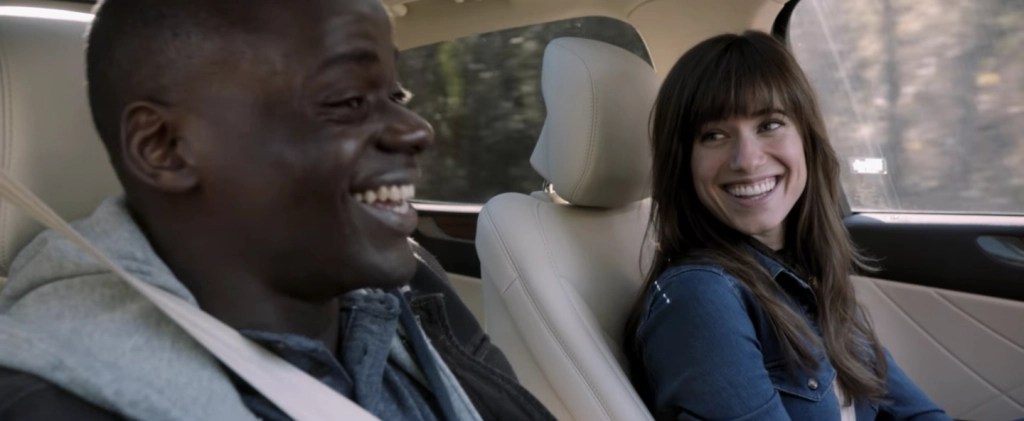
Michael Abels is an African-American composer known for his orchestra works Global Warming, Delights & Dances, and Urban Legend, and choral pieces such as Be The Change and Limitless. “GET OUT” was his first foray as a composer in the film industry, and it definitely won’t be his last. It was great interviewing this extremely talented musician.
Matthew Toffolo: Where were you born and raised? Was music something you always wanted to do as your career?
Michael Abels: I was born in Phoenix AZ, although I lived on a farm outside Aberdeen, SD with my grandparents from infancy through age 6. My earliest memories are of music — seriously, I can remember my grandmother’s recording of Edvard Grieg’s In The Hall Of The Mountain King terrifying me in the crib. Ironically, that’s now my job.
MT: How did you get the job composing the film “Get Out”?
MA: Writer/director Jordan Peele heard an orchestral piece of mine, Urban Legends, on YouTube. It’s a very dynamic piece in which all hell breaks loose, even though it’s also quite tonal. Jordan said this piece convinced him I could bring a fresh voice to film music. He wanted someone who could use the film harmonic language with an African-American perspective.
MT: How was your working relationship with with director Jordan Peele?
MA: Jordan is whip-smart, unbelievable talented, and refreshingly modest. He knows what he wants, and is extremely capable of communicating what he’s hearing and feeling. At the same time, he respects his team as artists, and enjoys the collaborative process. Did I mention how funny he is? A dream to work for.
MT: What are you generally looking for in a director in terms of guidance and tone for your music?
MA: It’s helpful when a director can communicate the feelings a piece of music brings up for them, or the feelings that a character is feeling, or that they want the audience to feel. Most people who are drawn to directing are great at this, since they are storytellers.
MT: What do you think a producer/director is looking for when they bring on their composer to score the film?
MA: The director is looking for someone who can bring the music they are hearing in their imagination to life. The producer is looking for someone who can bring the director’s musical imagination to life on time and under budget. It’s great when these priorities align!
MT: What is your passion in life besides music?
MA: I appreciate home design, I’ve seen my share of home improvement shows. I also love riding my bike, and try to bike at least once a week no matter how stressful the rest of my life is.
MT: What’s next for you? Will you be composing more films?
MA: I have a wind orchestra commission that I’m working on. Yes more film is in the works.
MT: What move have you watched the most times in your life?
MA: The Sound of Music. Do Re Mi changed my life forever. “One word for every note, by mixing it up, like this…” Rogers & Hammerstein taught me that writing music is simple and fun! Been striving to make that lesson true ever since.
MT: What advice do you have for young musicians who would eventually like to compose movies for a living?
MA: Write the music that inspires you, because writing music purely for money will make you hate your creative life. Try to remove your ego from every piece you write. It’s so difficult to be inspired-yet-unattached, but it’s required to remain in a highly creative state. And you are a composer, regardless of whether you have a high profile project to your credit or not. Be the person you want others to see.
GET OUT Movie:
____
Interviewer Matthew Toffolo is currently the CEO of the WILDsound FEEDBACK Film & Writing Festival.
FLY AWAY, FROGGY BOY, 8min., Canada Directed by Mia Lobo Fly Detective Francis McFly loses his partner to the infamous ‘Croaks’, a frog gang at the centre of his most recent investigation. Stricken by grief, he decides to get revenge, and go head to head with their ravenous leader, The Frogfather.
Fly Away, Froggy Boy was my final year thesis film. Everyone in their final year at my animation program was required to pitch a film idea, present it to our final year classmates, and the film ideas were chosen based on popular vote. The idea came from a joke between me and my partner (the co-creator, foley artist and voice of McFly), quite literally “Imagine if you pitched a film about a fly getting revenge on frogs”. I decided to pitch it to my class to see if anyone would be drawn to the idea as much as we were. We ended up one of the four films chosen to be made that year! People really love the idea.
What were your initial reactions when watching the audience talking about your film in the feedback video?
It was a great feedback video!I found it really interesting to see what aspects of the film jump out at people. The whole project is a lot less surprising and fresh for me because I worked on it for so long. Being able to hear people talk about the specific elements of the film that they found really unique, fresh and fun, reminds me of how great the project is, and how I felt the exact same way during the process.
DARK ROOM, 11min., USA Directed by Rogelio Robles After losing everything, a man slowly and painfully loses his mind right before your eyes. Becoming the serial killer he was destined to be.
It was something that I felt I needed to make. Everyone deals with loss and depression differently. I wanted to get this out there and show my perspective on what it would look like for someone to slowly lose their mind.
What were your initial reactions when watching the audience talking about your film in the feedback video?
It’s awesome to get multiple viewpoints and interpretations of the film. Sometimes I hear something I didn’t quite think about before and I’m like wow that was actually awesome!
PEGASUS HIGHWAY, 15min., Australia Directed by Ethan Grahek Two Bronies (Adult male fans of small, collectable Pony toys) are out to buy weed for their first time. Unbeknown to them, it is also their dealers first deal. What should have been a simple transaction quickly devolves, forcing one of the Bronies to chauffeur the eccentric drug dealer on a psychotic road trip. But there is more to these Bronies than the dealer could ever fathom.
Get to know the filmmaker:
1. What motivated you to make this film? This film was my Honours film I completed at Deakin University, Melbourne. For the very first assessment presentation I attended at uni, a young woman did a presentation on bronies, they really piqued my interest, i’d never heard of them before because I grew up in a small, rural town. I went down a bit of a rabbit hole and discovered the uh… interesting… world of the Bronie fandom. Whilst searching I wondered how a Bronie would be perceived at my small town high school, that seed of an idea developed into the final film. I thought the idea was pretty unique so that really motivated me to see it through to completion over the years it took!
2. From the idea to the finished product, how long did it take for you to make this film? I conceived the idea in 2017 and began research and development of it for my Honours year in 2020. But we all know what happened that year. There were going to be heavy COVID restrictions imposed on our film sets so I decided to flee back to my hometown until the lockdowns subsided. I returned to Melbourne to finally complete the production in Oct 2022 – Feb 2023. So realistically, even though the process took all those years to finally complete, the actual time spent on it was approximately 7-8 months.
3. How would you describe your film in two words!? Unexpected, Whack
4. What was the biggest obstacle you faced in completing this film? The Covid pandemic for sure, plus the constant rain during production, as well as the long hours spent completing all the VFX solo.
5. What were your initial reactions when watching the audience talking about your film in the feedback video? I honestly thought it was pretty incredible, almost surreal hearing people from another country comment on and more excitingly, seem to enjoy my whacky little film! It was really great and insightful listening to people say they dug the details that you put so much time, research and effort into!
6. When did you realize that you wanted to make films? When I was in year 9. I originally thought I wanted to be an actor, growing up in a small town, there were very few opportunities to act so I started making youtube videos to practice, through this process I discovered that I found it much more endearing being behind the camera than in front of it.
7. What film have you seen the most in your life? If we’re talking about my entire lifetime, I’d say Star Wars II: Attack of the Clones. If referring to my adult life, I’d say Two Hands.
8. What other elements of the festival experience can we and other festivals implement to satisfy you and help you further your filmmaking career? Honestly, the fact that you guys provide these feedback videos is awesome, and is certainly what drew me to screen my film with you! Especially as someone that is fresh out of uni and can’t necessarily afford travelling to film festivals.
9. You submitted to the festival via FilmFreeway. How has your experiences been working on the festival platform site? I love FilmFreeway! It’s so good having everything available in one place! Saves on a lot of the research time!
10. What is your favorite meal? Burritos
11. What is next for you? A new film? For sure. I’ve made up a bit of a roadmap of what I’d like to achieve over the next few years and next up is either an action short or a horror short about a drag queen. I’m thinking more likely the latter because action is very expensive.





 Michael Abels is an African-American composer known for his orchestra works Global Warming, Delights & Dances, and Urban Legend, and choral pieces such as Be The Change and Limitless. “GET OUT” was his first foray as a composer in the film industry, and it definitely won’t be his last. It was great interviewing this extremely talented musician.
 Festival Reviews