Film Review: ROUGH NIGHT (USA 2017) ***

Deadlines to Submit your Screenplay, Novel, Story, or Poem to the festival: http://www.wildsound.ca

rough_nightThings go terribly wrong for a group of girlfriends who hire a male stripper for a bachelorette party in Miami.

Director: Lucia Aniello
Writers: Lucia Aniello, Paul W. Downs
Stars: Scarlett Johansson, Kate McKinnon, Zoë Kravitz

 ROUGH NIGHT is that rare chick flick that has sufficient material to satisfy both female and male audiences. Besides the bride-to-be and friends, the film also devotes a fair amount of time to the groom-to-be and his friends. The ending has everyone celebrating the wedding. This is expected in a Hollywood happy ending, so no spoiler is intended.

There are a few things that promises a satisfying comedy. One is the script that was one of the 2015 blacklisted scripts, which usually means a script that matters. The other is that the film is a first effort from female director Aniello, which means she will try her very best to prove herself, never mind a few mistakes mentioned below in this review. It is also about time a film emerged that looked at a female point of view of the HANGOVER films.

The film opens with the college days where five best friends (Scarlett Johansson, Kate McKinnon, Jillian Bell, Ilana Glazer, and Zoë Kravitz) connect at a fraternity drink party. It is 10 years later when they reunite for a wild bachelorette weekend in Miami. During their hard partying, they accidentally kill a male stripper. Amidst the craziness of trying to conceal their deed, they are ultimately brought closer together where it matters most.

The film has quite a few genuinely hilarious comedic set-ups, but there are quite a few misses as well. For comedy, director Aniello commits three mistakes, which could be considered forgivable considering that this is her debut feature and also that the funny parts make up for these mistakes. One big mistake in comedy is the explaining of a joke. During the airport scene where Alice cracks open a champagne bottle to the sound of a loud pop, everyone dives to the ground thinking it to be a gunshot. Alice remarks after, “Popping the bottle sounds like a shot and we are at the airport.”

The tampon joke is also one that is understood by both male and female. The rule is to never explain a joke. Another is the repeating of a joke. This happens when Alice toasts Jess at a dance club when Pippa pops up a piece of toast as she does not have a drink. This is done three times. The third mistake is trying too hard on a joke that is essentially a failure. This occurs in the scene where the group says solemn words and saying ok , “Dump the body”, before disposing the body of the dancer. The film also falls into the trap of stereotyping – example the activist is a lesbian.

To the film’s credit, the comedic set-ups are related and move smoothly towards the climax of the film, which is the wedding, For the few thrilling parts where the five friends have to tackle the diamond robbers, director Aniello proves her competence at thrills in keeping her audience at the edge of their seats.

Of the five actresses, SNL’s Kate McKinnon succeeds as the funniest of the lot, believable as an Australian with her accent. Jillian Bell comes a close second as the chief troublemaker Scarlett Johansson proves herself apt here in comedy as in other genres like action flicks (LUCY and GHOST IN THE SHELL), art horror (UNDER THE SKIN) and Woody Allen romantic drama comedies (VICKY CRISTINA BARCELONA and MATCH POINT).

Despite the film’s flaws, ROUGH NIGHT thankfully succeeds as a satisfying comedy for both sexes. There are enough off-coloured jokes, foul language, tasteful sexual innuendo (the vibrating dildo) and a few messages about the importance of friendships (cliched though they may be) that result in a satisfying hilarious night out.

Trailer: https://www.youtube.com/watch?v=5jRNDOZnGKU

Also, Free logline submissions. The Writing Festival network averages over 95,000 unique visitors a day.
Great way to get your story out: http://www.wildsound.ca/logline.html

Deadlines to Submit your Screenplay, Novel, Story, or Poem to the festival:http://www.wildsound.ca

Watch recent Writing Festival Videos. At least 15 winning videos a month:http://www.wildsoundfestival.com
Film Review: THE HERO (USA 2017) **

Deadlines to Submit your Screenplay, Novel, Story, or Poem to the festival: http://www.wildsound.ca

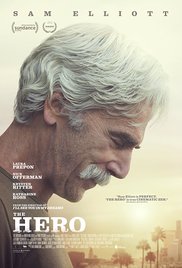
the_heroAn ailing movie star comes to terms with his past and mortality.
Director: Brett Haley
Writers: Brett Haley, Marc Basch
Stars: Sam Elliott, Laura Prepon, Krysten Ritter

 THE HERO is directed by Brett Haley who also directed I’LL SEE YOU IN MY DREAMS another romantic drama with a senior protagonist. THE HERO is a more serious venture as its main character an ageing star called Lee Hayden (Sam Elliot) has just diagnosed with pancreatic cancer, and he has to comes to terms with his life and legacy.

When THE HERO begins, Lee Hayden stands on the beach watching the waves of the ocean roll on shore. It is a familiar scene to those familiar with the films of Sam Elliot. That scene is reminiscent of one of Elliot’s most successful films – THE LIFEGUARD in which he plays the title role of a lifeguard. He sports the same bushy moustache in that film as in THE HERO, a facial feature that made his Lee Hayden character famous.

THE HERO begins on a very pessimistic note. Besides just being diagnosed with cancer, Lee is a listless character, always smoking weed or getting high on mushrooms. He is trying to come to grip with his relationship with his daughter Lucy (Krysten Ritter). He does the odd commercial (like the BBQ sauce radio commercial that bookends the story). The rest of the time is spent hanging out with his drug dealer buddy.

When things get this bad, nothing can get worse. So when Lee finds a girl half his age responding to his request of a date, he slowly gets his spirits uplifted. The two eventually end up in bed. At this point in the film, the film’s pessimism disappears. And one can see why. It is an ageing man’s fantasy to have a young girl fall in love (and having sex) with him. But when he visits her at a club doing stand-up comedy, her jokes on making love with an older man turns him off understandably, and he storms off.

At one point in the film the two attend his life achievement award presentation. His speech goes viral giving him instant fame for a short period of time. He gets a film audition which he goes to read a script. The script concerns a father being rejected by his daughter, obviously a reflection of what is happening to Lee in real life. As expected, he cannot go through reading the script emotionally, breaking down and losing the part.

It is unclear where Haley’s film is leading only till the very last third of the film. It is frustrating to watch the film go from pessimism to optimism back to pessimism and then hope again. Lee’s speech at his achievement awards ceremony is preachy, him talking about life and people being grains of sand – enough of the metaphors.

The biggest metaphor of all is the film reflecting the real life of actor Sam Elliot. Elliot is himself a character just like Lee Hayden, fairly but no too famous whose life body of films could have gotten him a lifetime achievement award in some small film community.

THE HERO ends up as another sad feature about an old fart who should but cannot get a hold of his own life. It is difficult to feel sympathetic for someone who smokes weed half the time and fails to meet up with expectations when given a second chance.

Trailer: https://www.youtube.com/watch?v=RiKtUnI0u4U

Also, Free logline submissions. The Writing Festival network averages over 95,000 unique visitors a day.
Great way to get your story out: http://www.wildsound.ca/logline.html

Deadlines to Submit your Screenplay, Novel, Story, or Poem to the festival:http://www.wildsound.ca

Watch recent Writing Festival Videos. At least 15 winning videos a month:http://www.wildsoundfestival.com

Film Review: THE SKYJACKER’S TALE (Canada 2016) ***

Deadlines to Submit your Screenplay, Novel, Story, or Poem to the festival: http://www.wildsound.ca

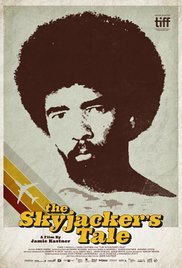
THE SKYJACKER_S TALEAfter five citizens of the Virgin Islands are convicted in the 1970s of a massacre at one of the island’s fancy country clubs, their ostensible leader stages a skyjacking and escapes to Cuba.

Director: Jamie Kastner
Writer: Jamie Kastner
Stars: Ishmael Muslim Ali, Isabella Carr, Bradley Gordon

Review by Gilbert Seah
 
These two years have seen a presence of excellent African American films including the Best Film Oscar winner, MOONLIGHT. The documentary THE SKYJACKER’S TALE is one of them, telling the little known story of Ishmael Muslim Ali (aka LaBeet). The film’s timing is perfect as Kastner captures Ali’s first interview since his hijacking.

Kastner cautiously plays both sides. Kastner makes it clear that Ali had been sentenced to 8 years lifetime imprisonment to be served consecutively – whatever that means. Ali was brutally tortured in jail too. So when he was transported on an American Airlines plane, it would only seem natural for him to try an escape. After all what has he to lose, but lots to gain?

The two reenactments of the massacre of the 8 people at the St. Crois’ Fountain Valley golf course (which Ali was convicted of) in he Virgin Islands and the plane hijacking make this documentary are exciting as any action fiction feature. And this is the real thing.

There are many reasons and much to enjoy in Kastner’s documentary. For one, it is short at 76 minutes and to the point. It is exciting and based on true events. The subject has his say in the interview, from start to the end of the film. Kastner shifts the audience’s point of view of the man. In the start, he is described by others as a terrorist, a truly evil person and a killer. By the end of the film, the audience sees a different person – one that is totally mistreated by society. Ali has a dream of escaping and it is difficult not to side with someone who lives up to his dream.

Kastner has also assembled an impressive list of interviewees to aid the film’s credibility. Among them are the police officials (who admit to torturing Ali), the St Crois prison guards, the prosecutor and defendant lawyers. For the hijacking, Kastner also got the pilot, flight attendant and a passenger to talk on camera.

The film is not without humour. The film ends on a funny note where Ali reveals how he smuggled the gun from prison on to the plane through the metal detectors.

As stated by one of the talking heads in the film, the issue at hand is not whether Ali was guilty of the crime. The issue was the wrong-doing done by the justice system and the prison authorities and guards – especially the torture of hanging the men from the trees, using electric cattle prods and water torture.

By the end of the film, the audience is totally on the side of Ali, hoping he is successful in his escape to Cuba. This he was. When imprisoned in Cuba for the hijacking, he claims on interview that he was glad to be imprisoned in Cuba, away from the f***ing Americans.

After the opening of this disturbing document of injustice done on the black people, the coming week will see the equally arousing bio-pic of the true story of rap singer Tupac (ALL EYEZ ON ME) who was shot dead at the age of 25. He too was imprisoned and tortured in prison.

Trailer: https://www.youtube.com/watch?v=2ydbAhwJ4MI&feature=youtu.be

Also, Free logline submissions. The Writing Festival network averages over 95,000 unique visitors a day.
Great way to get your story out: http://www.wildsound.ca/logline.html

Deadlines to Submit your Screenplay, Novel, Story, or Poem to the festival:http://www.wildsound.ca

Watch recent Writing Festival Videos. At least 15 winning videos a month:http://www.wildsoundfestival.com

Film Review: CARS 3 (USA 2017)

Deadlines to Submit your Screenplay, Novel, Story, or Poem to the festival: http://www.wildsound.ca

cars 3Lightning McQueen sets out to prove to a new generation of racers that he’s still the best race car in the world.

Director: Brian Fee

Stars: Owen Wilson, Cristela Alonzo, Chris Cooper, Nathan Fillion, Armie Hammer

Review by Gilbert Seah

CARS 3 is the debut animated feature by Brian Fee, the storyboard artist of the other two CARS films and a few other Disney features. As this is a film that Fee has something to prove, the animation is as expected top-notch, as in all the Disney/Pixar films.

The trailer of CARS 3 which shows racing car Lightning McQueen (Owen Wilson) wiping out on a banked racetrack with a fade to black and voiceover promising that things will be different, many will be expecting a blacker sequel and one that would prove more interesting than the other two trivial CARS films. Not so. The terrible crash is just the catalyst for McQueen to want to race again to prove himself. So, there is the usual predictable stuff such as: “You have it in you.” You can prove yourself.” etc. etc. So, all hopes for a blacker CARS film are torn to bits.

The film features a next generation of race cars that includes Jackson Storm (Armie Hammer). The cars in the film begin questioning if the famous Lightning McQueen will throw in the towel after he endured a terrible crash. McQueen’s sponsor, Rust-eze, is bought by Sterling (Nathan Fillion), a car who thinks McQueen cannot maintain his image by racing. Lightning asks for a chance to race in the Florida 500 and begins to train with race technician Cruz Ramirez (Cristela Alonzo), who’s always had her own racing dreams. That pretty sums up a plot that not many can get excited with.

The same problem of animation of cars till exists in all the CARS franchise. Cars are inanimate objects with no limbs nor faces. So it is more difficult to animate cars – to give them expressions and make them distinguishable one from another. A tactic is of course, as used by the animators, is to make the colours bright and different or have different car types on display such as tow trucks.

It is also difficult to get excited over one cartoon car wining a race against another cartoon car. Or for one cartoon car to fall in love with another or feel anything towards a jealous car.

CARS undoubtedly has good animation. The audience can feel the thunder of the race as the audience is given a drivers-look of a race. But the film lacks the humour (goofy or otherwise) and inventiveness that help films like the recent CAPTAIN UNDERPANTS and BOSS BABY become memorable.
THE CARS films have not made the Studios that much money compared to the other animated features. But more than a fair income comes from the share of the toy franchise. So, do not expect much from CARS 3. For it is he same old stuff. Unless one is interested in the animation process, CARS 3 is nothing more than one dull drag of a race.

But wait! There is a short animated feature called LOU preceding CARS. It involves a schoolyard bully who learns that being nice conquers all. The largely silent LOU is smart, well animated, inventive and funny. It subtly teaches kids that bullying is just not cool. Rating for LOU: ****

****
Trailer: https://www.youtube.com/watch?v=E4K7JgPJ8-s


Also, Free logline submissions. The Writing Festival network averages over 95,000 unique visitors a day.
Great way to get your story out: http://www.wildsound.ca/logline.html

Deadlines to Submit your Screenplay, Novel, Story, or Poem to the festival:http://www.wildsound.ca

Watch recent Writing Festival Videos. At least 15 winning videos a month:http://www.wildsoundfestival.com

Film Review: THE B-SIDE: ELSA DORFMAN’S PORTRAIT PHOTOGRAPHY (USA 2017) ***

Deadlines to Submit your Screenplay, Novel, Story, or Poem to the festival: http://www.wildsound.ca

the b sideA look at the life and work of photographer Elsa Dorfman.

Director: Errol Morris
Star: Elsa Dorfman

Review by Gilbert Seah
 
The B-SIDE displays documentarian Errol Morris, known for his darker subjects like MR. DEATH and THE FOG OF WAR in lighter mode with Polaroid Artist, an always cheery Elsa Dorfman.

Elsa Dorfman, the subject of Errol Morris’s new documentary appears at the film’s start, in light mode, at her Cambridge, Massachusetts studio talking to the camera. The telephone rings at the midst of her talking and she asks whether she should answer the phone. She is given the ok and ends up speaking to both the person on the telephone and to the audience. The B-SIDE is a documentary about photographer portraitist Elsa Dorfman. Dorfman who used the large-size Polaroid 20”x24” camera for over 30 years to take thousands of portraits, including those of old friends like poet Allen Ginsberg and singer Jonathan Richman. Other famous people photographed include Bob Dylan, Joni Mitchell, Robert Lowell, W.H. Auden. Now 80 (late 70s when the film was shot), she opens up her archives and memories.

The film takes its title from the music industry term “b-side.” When using the Polaroid camera, Dorman would take two photos, keeping the rejected one for herself. Sometimes the b-side can surprise.
Most of the screen time is devoted to her talking about her life and work as well as answering questions asked on camera by Morris. The film has a causal easy-going look, but the material is in no way compromised. Morris gets as much material into his documentary this way.

Unlike many documentaries, Morris does not include many talking heads. The only person doing the talking is Elsa Dorman herself.

Elsa is a person who giggles a lot on screen, like a schoolgirl. Though irritating at the beginning, her mannerisms slowly grows on you. Elsa eventually comes across as a pleasant and clever person who deserves to have her say, even of herself rather than having others talk about her.
Elsa is shown to be quite opinionated. She openly displays her disgust at the buyers of the Polaroid Company when it went bankrupt due to technology. She always considers herself as a nice Jewish girl.

Much can be told about her character and about her relationships from her sayings. She mentioned that her husband would pose for her regardless of how busy he is, even though he might only wish her a Happy Birthday at the end of the day. But this shows a lot – that Harvey and Elsa are truly in love as he would go out of the way to pose for her whew asked. She also mentioned a really bad day, the one on the telephone when her father died and mother said goodbye to him.

Music includes a song Broken Blue Bones, written and performed by Allan Ginsberg. Ginsberg, a close friend of Elsa, is featured in many of her photographs. Ginsberg, given more screen time comported to others, definitely had an impact on her, as a friend and fellow artist.

As Elsa Dorfman is not that famous outside her circle – Morris’ film will give her some well deserved exposure, pardon the pun!

Trailer: https://www.youtube.com/watch?v=PSOazX_RiOI


Also, Free logline submissions. The Writing Festival network averages over 95,000 unique visitors a day.
Great way to get your story out: http://www.wildsound.ca/logline.html

Deadlines to Submit your Screenplay, Novel, Story, or Poem to the festival:http://www.wildsound.ca

Watch recent Writing Festival Videos. At least 15 winning videos a month:http://www.wildsoundfestival.com

Film Review: CHURCHILL (UK 2017) ***

Deadlines to Submit your Screenplay, Novel, Story, or Poem to the festival: http://www.wildsound.ca

churchill.jpgA ticking-clock thriller following Winston Churchill in the 96 hours before D-Day.
Director: Jonathan Teplitzky
Writer: Alex von Tunzelmann
Stars: Brian Cox, Miranda Richardson, John Slattery

Review by Gilbert Seah
 
CHURCHILL begins with the scene of an image of World War I and II Prime Minister Winston Churchill standing on an isolated beach. He imagines blood washed by the sea on its shores while his black bowler hat eventually floats out into the vast horizon. The scene is rich in metaphors while being solemn, setting the mood for a 2-hour film on a Winston Churchill most of the world do not know. It is a Churchill depicted as a bully, drunk and opinionated self-pitying cad.

It is the week before the planned D-Day landing on the beaches of Normandy which everyone knows led to the defeat of Germany in World War II. No one is aware of the victory of D-Day in the film, and the planning is set with uncertainty. Churchill, after his failure of the Gallipoli war which resulted in the loss of thousands of young British men, was intent not to let the mistake of leading thousands to their death happen again. So, he would stop the D-Day landing at all costs. But planning was already under way,. Everyone including Dwight D. Eisenhower (John Slattery) and Bernard Montgomery (Julian Wadham) believed that the landing would be instrumental in winning the War against the Nazis.

The trouble with this film is hat there is not much story but much repetition of the same storyline. Churchill is against the landing. He is shown the truth and he will only budge at the very end after learning that he had no choice. Still, the film still hails Churchill as a great man, as the title ‘the greatest Briton that ever lived’ is flashed on screen.

There are scenes that show Churchill at his worst. These include those where he is constantly pouring himself whisky and more so, when he takes it out on his secretary, screaming at her for little reason. The script, written by Alex von Tunzelmann is full of great oratorical speeches, which is expected as this is a story of a man who gave the great speeches.

British actor Brian Cox is nothing short of stunning in the title role of the Prime Minister. Cox is currently of the same age as Churchill during the time of the story. The supporting performances of Slattery and Wadham are also impressive. But arguably, the best performance comes surprisingly from Miranda Richardson as Clementine Churchill, his long suffering wife. She does not have the freedom of the luxury of leaving her husband no matter how tortured the marriage had become. The film emphasizes the importance of duty during the War.

CHURCHILL is a war drama without any battle scenes. It would serve as an effective prelude to the upcoming summer blockbuster DUNKIRK, directed by Christopher Nolan which reported is supposed to depict the horrific realities of the landing of the Allied forces on the Normandy beaches. CHURCHILL only hints of the horrors of the landing.

Trailer: https://www.youtube.com/watch?v=sVOzMZ4IrMA

Also, Free logline submissions. The Writing Festival network averages over 95,000 unique visitors a day.
Great way to get your story out: http://www.wildsound.ca/logline.html

Deadlines to Submit your Screenplay, Novel, Story, or Poem to the festival:http://www.wildsound.ca

Watch recent Writing Festival Videos. At least 15 winning videos a month:http://www.wildsoundfestival.com

Film Review: BEATRIZ AT DINNER (USA 2017) ***

Deadlines to Submit your Screenplay, Novel, Story, or Poem to the festival: http://www.wildsound.ca

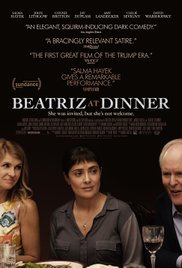
beatriz at dinnerA holistic medicine practitioner attends a wealthy client’s dinner party after her car breaks down.
Director: Miguel Arteta
Writer: Mike White
Stars: Salma Hayek, John Lithgow, Connie Britton

Review by Gilbert Seah

 
Director Miguel Arteta and scriptwriter Mike White have worked together many times and are famous for their quirky little gems, the most notable being their debut feature, CHUCK AND BUCK. Their latest film BEATRIZ AT DINNER, which opened Sundance continues the trend.

The film opens with shots of Breatriz (Salma Hayek) at her home. She owns a goat and dog, works at a Cancer Centre and is at home with nature and healing. Just as one would dismiss this woman, who believes in reincarnation and giving back to the planet as a new age floozy, director Arteta and scriptwriter White slowly and effectively wins her over to the audience’s side. This is partly due to pitting her against a real nasty opposite human being, one that delights in the sport of hunting, disposing of wild life and displacing innocent people form their homes, a filthy rich land developer called Doug Struut (John Lithgow).

It all starts, innocently enough when Beatriz gives wealthy client Cathy (Connie Britton) a massage at her home. When Beatriz’s car is unable to start, she is invited to stay for the husband Grant’s (David Warshofsky) company dinner party – a celebration of some big deal the company has succeeded in winning.

The dinner guests arrive one couple at a time. It is clear that Beatriz and the dinner guests are not of the same ‘human’ wavelength. Except for Cathy who has more respect and tolerance for Beatriz, because she has helped her family with their child’s recuperation from cancer, each of the other dinner guests, including her husband treats Breatriz with a certain disdain that she is beneath them in class.

Arteta builds his film effectively to an escalating climax. Things reach a boiling point when Beatriz discovers how evil Strutt is and that a lot of evil in the world including her personal family loss are a direct result of his actions. It is emphasized that fate occurs for a reason. Soon she realizes that she could have been present for the dinner for a reason as fate dictates. She could root out evil at its source by murdering Strutt.

Salma Hayek delivers an excellent performance as the holistic nurse driven almost to righteous insanity. John Lithgow is equally excellent as the menacing villain, the one the audience would gladly stab in the back. All the supporting actors are equally good, credit given to the excellent casting.

A lot of films have used music or a song to break the monotony of a film or to create a highlight. Director Marlene Ape did it with her character rendering a full version of the Whitney Houston song “The Greatest Love of All” in TONY ERDMANN that earned the very rare standing ovation midway in the film at Cannes. Arteta attempts the same feat, with Hayek singing a Spanish song, to the accompaniment of her guitar playing. Though the words are in Spanish, the effect is no less powerful.

BEATRIZ AT DINNER ends with a non-typical happy ending that might not satisfy everyone. But one must remember that this is not ones typical standard film, but a quirky Arteta/White collaboration.

Trailer: https://www.youtube.com/watch?v=bCLNTmNj5bI


Also, Free logline submissions. The Writing Festival network averages over 95,000 unique visitors a day.
Great way to get your story out: http://www.wildsound.ca/logline.html

Deadlines to Submit your Screenplay, Novel, Story, or Poem to the festival:http://www.wildsound.ca

Watch recent Writing Festival Videos. At least 15 winning videos a month:http://www.wildsoundfestival.com

Film Review: MEGAN LEAVEY (USA 2017) ***

Deadlines to Submit your Screenplay, Novel, Story, or Poem to the festival: http://www.wildsound.ca

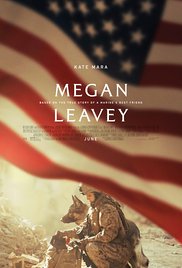
megan_leavey.jpgBased on the true life story of a young Marine corporal whose unique discipline and bond with her military combat dog saved many lives during their deployment in Iraq.
Director: Gabriela Cowperthwaite
Writers: Pamela Gray, Annie Mumolo
Stars: Kate Mara, Ramon Rodriguez, Tom Felton

Review by Gilbert Seah
 

 MEGAN LEAVEY is a film about a girl and her dog. Based on a true story written by Pamela Gray with the help of Annie Mumolo (BRIDESMAIDS), Tim Lovestedt, and Jordan Roberts, the story’s setting often shifts to an Afghanistan combat war zone where female Marine Megan Leavey and a combat dog named Rex have the task of exposing explosives that would lead to the saving of many lives. The film stresses the unique bond between man (or in this case woman) and man’s best friend.

The many times told similar tale of man’s best friend comes complete with owner and dog running together from a distance re-united to scenes where the canine saves the life of its owner or in this case, dog handler. The title of the film MEGAN LEAVEY, the name of the combatant, implies that the owner is given more importance that the canine. In fact, the dog does not appear till about 30 minutes through the film.

The film works on many accounts. The most important fact is the script and director Cowperthwaite’s effort in connecting the audience with the main character, Leavey. A well-written voiceover informs the audience at the film’s start of Leavey’s problem of a lack of motivation in her home town. When she is fired because she is unable to connect with other people, she joins the marines. The film takes time to show her relationship with an unsympathetic mother who fails to understand. By including scenes of Leavey suffering through boot camp, the audience sees that Leavey has accepted the punishment unfairly dished out to her.

The film gets a bit too sappy at parts. The cliche of the dog teaching Leavey human lessons is carried out a bit too far. The dog and Leavey’s separation and reunion are milked for sentimentality.

For the few battle scenes that are present, Peter McNulty’s clever editing captures the suspense and terror of the soldiers securing a few buildings that are littered with hidden explosives and unseen gunmen. Leavey and the dog, called Sergeant Rex are deployed twice in Iraq, first in Fallujy in 2005 and again in Ramadi in 2206. During the latter, both were injured by an improvised explosive device.

While Leavey was awarded the Purple Heart and the Navy and Marine Corps Achievement Medal with a “V” device denoting heroism in combat with retirement, Rex was pulled back into service with another handle till Rex suffered from facial palsy, which ended his bomb-sniffing duties. This fact was surprisingly omitted in the film.

The film contains one over-preachy part when Megan’s father tells her to keep on trying and never give up despite constant failure, which is supposed to spur her to overturn a decision from preventing her adopting Rex.
The film omits the last few retirement years of Rex with Leavey though clips of the real Rex are shown during the closing credits emphasizing that the film is based on true events. Bring lots of Kleenex to this one.

Trailer: https://www.youtube.com/watch?v=IGGcFbW__XI

Also, Free logline submissions. The Writing Festival network averages over 95,000 unique visitors a day.
Great way to get your story out: http://www.wildsound.ca/logline.html

Deadlines to Submit your Screenplay, Novel, Story, or Poem to the festival:http://www.wildsound.ca

Watch recent Writing Festival Videos. At least 15 winning videos a month:http://www.wildsoundfestival.com

Film Review: IT COMES AT NIGHT (USA 2017)

Deadlines to Submit your Screenplay, Novel, Story, or Poem to the festival: http://www.wildsound.ca

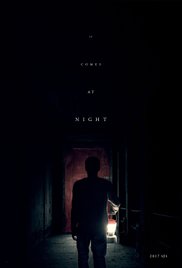
it comes at night.jpgSecure within a desolate home as an unnatural threat terrorizes the world, a man has established a tenuous domestic order with his wife and son, but this will soon be put to test when a desperate young family arrives seeking refuge.
Director: Trey Edward Shults
Writer: Trey Edward Shults (screenplay)
Stars: Joel Edgerton, Christopher Abbott, Carmen Ejogo

Review by Gilbert Seah
 
IT COMES AT NIGHT begins with a taut medical examination of an older man later revealed to be Bud (David Pendleton) lying on a made-shift stretcher infested with lesions and boils. “Can you hear me?” is the question asked. After the examination, the patient is carted off, to the woods outside a boarded up shack where he is crudely wrapped up and burnt with gasoline.

It has all been done before. Despite writer/director Shults’s genuine effort of differentiating his film from the end of the world plaque infested survival horror flick, one cannot help but feel a certain similarity of events from start to end. Never mind the carefully planned shocks, the effective use of enclosed space (cinematography by Drew Daniels) and darkness and never mind the effective use of sound to scare the audience. It does not help that the script has no plot twists or has the addition of more human interaction.

The story first appears to be told from the point of view of the first family’s 17-year old teen son, Travis (Kevin Harrison Jr.) But the view shifts later on the film as Travis has less screen presence. The only survives on display appear to be his family. Order is kept in the home by his father, Paul (Joel Edgerton who also co-produced the film). His mother, Sarah (Carmen Ejogo) is present and also an assortment of farm animals and dog, who are allowed in the house, apparently to prevent them from catching some deadly virus. When they venture outside, they wear gas masks. It is a test of survival. When they hear a noise from outside, Tom carefully opens the door to find another man, (Christopher Abbott) looking to find his family, in this case his wife, Kim (Riley Keough) and baby some food.

Shults does not make any effort or even need to explain his film. After the first scene (described above), the audience can correctly deduce that the apocalyptic film is in the near future. A plaque has deserted most of civilization. The family on display is surviving at all costs. As expected there are intruders from the outside. The two families ave something to share or trade. But mistrust exists and survival takes place with sacrifice of their human souls.

It is easier to make a faultless minimalist horror film like this one that a complex film with flaws. IT COMES BY NIGHT falls into the first category.
It does not help that the film does not have a happy Hollywood ending or a closed one at that. Despite all the film’s plusses, IT COMES AT NIGHT does not succeed at all as an original or absorbing drama or horror film.

Schultz, whose first feature KRISHA secured Shults some fame, which resulted in a two-picture deal with A24 films, IT COMES AT NIGHT being the first one. The film had its premiere in April this year at the The Overlook Film Festival. The film has so far, garnered favourable reviews.

Trailer: https://www.youtube.com/watch?v=6YOYHCBQn9g

Also, Free logline submissions. The Writing Festival network averages over 95,000 unique visitors a day.
Great way to get your story out: http://www.wildsound.ca/logline.html

Deadlines to Submit your Screenplay, Novel, Story, or Poem to the festival:http://www.wildsound.ca

Watch recent Writing Festival Videos. At least 15 winning videos a month:http://www.wildsoundfestival.com

Film Review: ABACUS: SMALL ENOUGH TO JAIL (USA 2017) ***

Deadlines to Submit your Screenplay, Novel, Story, or Poem to the festival: http://www.wildsound.ca

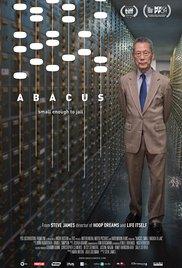
abacus.jpgA small financial institution called Abacus becomes the only company criminally indicted in the wake of the United States’ 2008 mortgage crisis.

Director: Steve James
Stars: Neil Barofsky, Ti-Hua Chang, Margaret Colin

Review by Gilbert Seah

 ABACUS is an old Chinese adding machine that was commonly used by Chinese shopkeepers who needed to do some accounting or simple addition. It is also a Chinese treasure now made obsolete with the introduction of the calculator. Abacus is thus chosen as the appropriate name for the bank founded by a well-intentioned Chinese lawyer turned banker, who we are introduced to at the start of the film as a good man, who thinks of himself as George Bailey, the James Stewart banker character in Frank Capra’s IT’S A WONDERFUL LIFE. In fact when there is a run on Abacus, Mr. Thomas Sung is likened to Bailey giving a sincere speech to the queue of customers assuring them that the bank is ernest and hat their money is safe.

Why a documentary of this bank and on the man Mr. Sung? The reason, according to the director is that this small Chinese bank has been unfairly singled out by the NYC District Attorney’s Office as a fraudulent bank who with its owners had committed a crime in misappropriating funds for personal and illegal gain.

But the D.A. Office picked the wrong man to pick a fight with. Mr. Sung is a fighter. The documentary is an account of the fight between the small guy and the bully, a David vs. Goliath story where the slingshot weapon used was the team of Mr. Sung’s lawyers and family.

Director gets the audience on Mr. Sung’s side by using a variety of means. The first is to connect the audience with Mr. Sung’s immediate family. Besides the analogy of George Bailey, the honest and best example of a banker, one cannot help but root for the Sung family, especially watching scenes where the family sit together to argue the facts and to fight back against the D.A. Office. Interviews are also conducted with reporters who take the side of the bank. The bank is also shown to have done good to help the Chinese community to obtain loans, which no normal bank would normally grant.

The film also documents how the bank got into trouble – in fact twice with regard to fraudulence. But according to the film, the bank had fired the dishonest and despicable loan officer, Mr. Ken Lu who the D.A. Office used to testify against the bank.

The film is a sad story of the Sung family. But the film makes a hero of Mr. Sung and his family. One of the daughters who worked at that time for the D.A. Office had to reign due to, obviously conflict of interest but she did so to help her father. Not surprisingly, the wife, Mrs. Sung says on camera that she never wanted her husband or daughters to go into the banking business.

ABACUS achieves the feat of making the subject even more intriguing by hitting all the right buttons. Everyone loves to see the underdog win, especially when fighting an evil giant. ABACUS is such a tale with a smashing finish.

Trailer: https://mail.google.com/mail/u/0/#search/abacus/15c410ca34696ff5?projector=1

Also, Free logline submissions. The Writing Festival network averages over 95,000 unique visitors a day.
Great way to get your story out: http://www.wildsound.ca/logline.html

Deadlines to Submit your Screenplay, Novel, Story, or Poem to the festival:http://www.wildsound.ca

Watch recent Writing Festival Videos. At least 15 winning videos a month:http://www.wildsoundfestival.com