Movie Review: DARKNESS FALLS (2016)

  MOVIE POSTERDARKNESS FALLS, 15min, Sweden, Sci-Fi/Thriller
Directed by Jarno Vinsencius

Melissa suffers from amnesia. When she slowly regains her memory, the world isn’t what it supposed to be. Darkness Falls is the winner of best Sci-Fi Picture award at OutlantaCon Short Film Festival 2016 and nominated for best Sci-Fi picture at SCI-ON! Film Festival 2016. Darkness Falls is also the winner of Best Cinematography at Roswell Film Festival 2016.

Shown at the September 2016 Sci-Fi/Fantasy FEEDBACK Film Festival

Movie Review by Kierston Drier

 
Darkness Fall, a Swedish film directed by Jarno Vinsencius is the compelling tale of Melissa, a woman with amnesia who wakes up in a forest with no idea who she is. She regains her memory with the help of an in-the-know male counterpart who sends her an anonymous letter offering aid. Our heroic duo is seemingly always on the run from some ominous enemy, as they frequently seem to be narrowly escaping capture or confinement by one or another figure.

There is some excellent camera work in Darkness Falls, some strong cinematography and clear visuals. The tone of the piece feels a little loose, however, with the film never reaching a nail-biting level of fear or tension. Some viewers may feel the film’s twist coming, however, the performances are strong and the films steady pace keeps interest, even if all the questions are never fully answered.

There is an eerie element to Darkness Falls. And that element plus its ultimate reveal nestle the piece firmly in the category of science fiction. A film any sci-fi lover would like to sink their teeth into Darkness Falls.


Watch the Audience FEEDBACK Video of the short film:

Movie Review: THE LAST JOURNEY OF THE ENIGMATIC PAUL WR (2016)

  MOVIE POSTERTHE LAST JOURNEY OF THE ENIGMATIC PAUL WR, 17min, France, Sci-Fi/Fantasy
Directed by Romain Quirot

The red moon threatens our existence on earth. Our only hope is the enigmatic Paul WR, the most talented astronaut of its generation. But few hours before the start of the great mission, Paul disappears.

Shown at the September 2016 Sci-Fi/Fantasy FEEDBACK Film Festival

Movie Review by Kierston Drier

 There is a big red moon that hangs in the sky at all times now, and it will kill us all if Paul WR, an astronaut with the power to read thoughts, does not fly into it and save human kind. That is the pretence of Romain Quirot’s The Last Journey of the Enigmatic Paul WR. This French film must be praised on several levels, one of which being its attention to iconographic detail.

The film is set in the future, with hover cars and hyper-real technology. And yet everything the film touches has a strong retro 1960’s iconography. The film has beautiful color and brightness, and visual splendor that gives a nod to Frances’ famous Amelie.

The story leaves much to be questioned, but still satisfies the viewer. In the end we are left to wonder what makes Paul WR choose the path he does. Curiously, a film about reading thoughts, begs the audience to compose their own about the ending.

It can be argued that The Last Journey of the Enigmatic Paul WR is an alternate dimension housing a different version of earth, because the world the characters live in is both resembling our own and yet exists completely outside of us and our timeline.

We do not have an ominously huge red moon threatening our destruction, nor retro 1960’s car that hover and fly. But this is the joy of classic science-fiction- that we can throw out our disbelief and settle into a world that is a fun-house mirror to our own. We long to fall into a story set in a universe close enough to out own to be relatable, yet far enough way that we do not have to be made uncomfortable by the threats being too plausible.

Enjoy this film, it’s a beautiful view, an introspective story of a flawed hero who is at odds with a world he never made.

Watch the Audience FEEDBACK Video of the short film:

Movie Review: UNCANNY VALLEY (2016)

  MOVIE POSTERUNCANNY VALLEY, 9min, Argentina, Sci-Fi/Experimental
Directed by Federico Heller

In the slums of the future, VR junkies satisfy their violent impulses in online entertainment. An expert player discovers that the line between games and reality is starting to fade away.

Shown at the September 2016 Sci-Fi/Fantasy FEEDBACK Film Festival

Movie Review by Kierston Drier

 Uncanny Valley an Argentinian film directed by Federico Heller is utterly exceptional. Very few films hit so many themes, keep such intensive pace, tell such compelling story, create such engaging characters, all while spinning a well balanced allegory.

Uncanny Valley has beautiful and stunning production quality, rivalling any feature film.

The story, a documentary-style account of aggressive virtual-reality addicts, living in the slum-like conditions. The film follows the details the daily life of a VR addict while under the influence of hyper-realistic gaming.

Put into a hypnotic state and kept alive by government funded assistance, these gamers waste their lives away shooting and destroying enemies in a virtual war. The enemy, like the tip of any science-fiction iceberg, is always bigger than at thought at first sight.

Grippingly real from the very first frame and air-tight in regards to plot and story, what makes this cinematic piece so overwhelming is its chilling plausibility. The audience reels from the idea that this seemingly fantastical world may only exist five minutes into the future of the present day.

There are themes in this piece of human consumerism, government conspiracy, the value of human life and a very real Orson Wells “Big Brother” vibe. The jaw-drawing twist at the end of the film will leave the audiences’ spine tingling, even those who do not claim to adore the science-fiction genre.

Bravo, Federico Heller. You have ensnared us.

Watch the Audience FEEDBACK Video of the short film:

Movie Review: RED ROVER (2016)

  MOVIE POSTERRED ROVER, 15min, Australia/USA, Fantasy/Action
Directed by Brooke Goldfinch

Two teenagers from a remote religious community travel to town in search of shelter after being told by their Evangelical parents that an asteroid will soon destroy the earth.

Shown at the September 2016 Sci-Fi/Fantasy FEEDBACK Film Festival

Movie Review by Kierston Drier

 A refreshingly different approach to an encroaching apocalypse film, Red Rover, an American film directed by Brooke Goldfinch, straddles the genres of science fiction, romance and drama. As the end of the world approaches, two teenagers escape their religious community to seek shelter and potential survival. The piece is founded in tragedy when the teens realize that they have nothing left to loose except each other.

Unlike many apocalypse films, this piece does not rely on heavy pandemonium- huge riots, teeming masses of terrified people, big explosions- instead it focuses on the last death throws of a society that has already accepted its’ end. The streets are vacant. The shops deserted. The last remains of society exist in debauchery inhabited abandoned hotel rooms. Red Rover’s focus on realism in this way may be disturbing to some, a refreshingly honest to others.

The theme of this film, however, will pull the heart strings of any romantic. As the world approaches its violent end our heroes must re-evaluate what it means to have lived and been alive. Is a life that is short, yet full of love, wonder and joy, any less lived? Red Rover seeks to ponder that question. To find the answer, you’ll have to watch it and see.


Watch the Audience FEEDBACK Video of the short film:

Film Review: THE GIRL ON THE TRAIN (USA 2016) ***

the_girl_on_the_train_poster.jpgTHE GIRL ON THE TRAIN (USA 2016) ***
Directed by Tate Taylor

Starring: Emily Blunt, Haley Bennett, Rebecca Ferguson, Luke Evans, Justin Theroux, Edgar Martinez

Review by Gilbert Seah

THE GIRL ON THE TRAIN is based on the best selling novel of the same name by British author Paula Hawkins. The suspense mystery revolves around Rachel’s daily trip on the train to work in London. The film is adapted to a setting in the U.S. with the train now travelling along the Hudson.

The film and book is divided three chapters – Rachel, Meghan and Anna in that order. It makes sense in the novel as the story is told from the three points of view of the three women. In the film, however, it is not and while unfolding totally from Rachel’s (Emily Blunt) point of view, it is told in non-chronological order, flipping back and forth from the present to 6 months ago, to 4 months ago to 2 months ago again back to the present. The titles appear, which is really redundant and confusing. One title of 6 months ago should suffice, with all the events now occurring in chronological order. The film’s mystery is heightened artificially by these antics coupled with blurry images of Rachel’s memory.

The film opens with Rachel Watson travelling on the train. It is revealed that Rachel is an alcoholic (reason not given except perhaps to make her a sad and pitiful protagonist) who divorced her husband Tom (Justin Theroux) after she caught him cheating on her. During her daily journey, she sees through the train window and fantasizes about the relationship of her neighbours, Scott (Luke Evans) and Megan Hipwell (last seen in THE MAGNIFICENT SEVEN). That all changes when she witnesses something from the train window and Megan goes missing and is presumed dead.

One can see the attraction of the story. It is also one of redemption – the redemption of the sad, alcoholic Rachel. She goes to the detective (Allison Janney) with her story of what she had seen, hoping to do some good. This of course backfires. The story, full credit to the book, is very intriguing where truths and secrets are hidden and images are lies. For those who like a good yarn, THE GIRL ON THE TRAIN will not disappoint. But director Taylor is unable to prevent unintentional laughs (as observed in the promo screening) during a few of the film’s key scenes.

The film is aided by excellent performances, the best of which is provided by Blunt in the lead role. Janney is also outstanding as the disbelieving detective.
But the film is totally geared towards a female target audience (i.e. film is a chick flick to put it crudely). All the female characters are strong like the detective and those who are not, finally get it together at the end as in the characters of Rachel and Anna. The men are all male idiots who cannot keep their dicks (the doctor, Tom and Scott) in their pants. The actors playing them all have great bodies. No female should complain about the eye candy. The only male who has a good character is a fellow passenger on the train who ends up saving Rachel from two thugs when she passes out. Even then, he is also told to “fuck off” when Rachel comes to. Enough said about a film with main female characters in a female novel written by a female with a script adapted by a female. (The director of one of my outlets has already told me I have female issues).

The film does have a few good sinister moments. The best is the one where a victim (not to be revealed in the review) is about to be murdered. She is half-conscious and being pushed under the vegetation in the woods. It is an excellent scene as she looks at her killer, knowing that she is about to die and unable to do anything.
Apart from a few over melodramatic segments, THE GIRL ONTHE TRAIN is a satisfying mystery with a credible solution with the bonus of the sad heroine’s redemption.

Trailer: https://www.youtube.com/watch?v=KkoEE1i0CX8


SUBMIT your TV PILOT or TV SPEC Script
Voted #1 TV Contest in North America.
FILM CONTESTSUBMIT your SHORT Film
Get it showcased at the FEEDBACK Festival
writing CONTEST1st CHAPTER or FULL NOVEL CONTEST
Get full feedback! Winners get their novel made into a video!
SCREENPLAY CONTESTSUBMIT your FEATURE Script
FULL FEEDBACK on all entries. Get your script performed


Film Review: DENIAL (UK/USA 2016) ***

denial_poster.jpgDENIAL (UK/USA 2016) ***
Directed by Mick Jackson

Starring: Rachel Weisz, Tom Wilkinson, Timothy Spall

Review by Gilbert Seah

DENIAL refers to the denial of the existence of the holocaust. The film is a courtroom drama that contests the case.

After historian Deborah Lipstadt (Oscar Winner Rachel Weisz, THE DEEP BLUE SEA) publishes her book on the Holocaust, she is challenged by David Irving (Timothy Spall), a once well-regarded historian. Irving began citing the pseudoscientific Leuchter report as proof that the Holocaust was a hoax. Lipstadt explicitly labelled him a denier in her 1993 book Denying the Holocaust, and he sued her for libel. But since the burden of proof in English libel law lies with the accused (a point very clearly stated in the film as a difference between American and British law), it bizarrely fell to Lipstadt and her legal team to demonstrate that one of the defining events of the century did indeed transpire.

There are a few reasons to see this film. Besides extraordinary performances from the top three in the cast (See photo inset), the script is written by director and famous British playwright David Hare (THE READER and THE HOURS) which he adapted from the book by Deborah E. Lipstadt “History on Trial: My Day in Court with a Holocaust Denier”.

The villain of the piece is Irving played with evil relish by Spall epitomizing the banality of evil while gloating in all the publicity he receives. The film also shows the amount of preparation that goes into a case, and even more for an important a case as this one. An important fact too is the fact that a client’s trust in her solicitor is key to the winning of the case. DENIAL is one of the rare courtroom film that shows more of the goings-on behind the scenes.

DENIAL besides being a film about the truth triumphing over lies, is also one that reveals a lot about the individuals involved in a fight. DENIAL is all an entertaining well-shot period drama.

Trailer: https://www.youtube.com/watch?v=yH7ktvUWaYo


TV CONTESTSUBMIT your TV PILOT or TV SPEC Script
Voted #1 TV Contest in North America.
FILM CONTESTSUBMIT your SHORT Film
Get it showcased at the FEEDBACK Festival
writing CONTEST1st CHAPTER or FULL NOVEL CONTEST
Get full feedback! Winners get their novel made into a video!
SCREENPLAY CONTESTSUBMIT your FEATURE Script
FULL FEEDBACK on all entries. Get your script performed


Film Review: LONG WAY NORTH (Tout en haut du monde)(France/Denmark 2015) ****

long_way_north_posterLONG WAY NORTH (Tout en haut du monde)(France/Denmark 2015) ****
Directed by Remi Chaye

Starring: Christa Théret, Féodor Atkine, Antony Hickling

Review by Gilbert Seah

LONG WAY NORTH is a French (screened in Toronto in the English dubbed version) 2D animated feature from screenwriters Patricia Valeix and Claire Paoletti and director Rémi Chayé (THE SECRET OF KELLS).

For what LONG WAY NORTH lacks in modern animation – it cannot be compared to the lush expensive modern animation of Pixar and Disney Studios – it more than compensates in story and charm. The proof is in its win of the Audience Award at the 2015 International Annecy Animation Festival where it premiered.

The film’s setting is 1892 in St. Petersburg, Russia centring on an aristocratic family. Sasha, a young Russian aristocrat, has always been fascinated by her grandfather’s life as an adventurer. A renowned explorer, he designed a magnificent Arctic ship, but he hasn’t returned from his last expedition to the North Pole. To save her family’s honour, Sasha runs away. Headed towards the Great North, she follows her grandfather’s trail in search of his famous ship.

The young female protagonist Sacha is as winning and charming as the story. She loves her grandfather who has told her wonderful stories of the cold Arctic. So, when his ship the Davia disappears, Sacha uncovers a route map which leads her to believe that the search expedition has looked in the wrong location. Armed only with her determination, she takes a ship to the North Pole in search for her beloved grandfather. Who will not root for such a lovely lass?

Being a fully animated film, the film avoids all the problems of having to film a voyage under extreme Arctic conditions. Imagine having to shoot ice avalanches, a polar bear attack, the ship breaking ice and finally coming down under an avalanche. Chaye’s animation captures both the danger and beauty of unchartered territory. Even animated, the sight of a drawn ship tracking through the ice and water of the Arctic is stunning.

LONG WAY NORTH reminds me of the little seen excellent Dutch 1993 mockumentary THE FORBIDDEN QUEST written and directed by Peter Delpeut. The film interviews a fictional J.C. Sullivan, the carpenter on that ill-fated voyage and is the last known surviving crew member of the Hollandia. Though THE FORBIDDEN QUEST was an amazing film, LONG WAY NORTH is able to show more hardship because it is animated.

Chaye never forgets the importance of the human elements in a story. From the old woman at the sailor’s bar who takes Sacha in thus saving her to the young boy who forms a bond with Sacha, LONG WAY NORTH is full of heart.

Though the story is quite an improbable one demanding the audience’s belief that a little girl can achieve so much, the treatment of the story like a Russian fairy tale allows one to forgive the implausibility of many events.

The film will be released either in French with a voice cast including Christa Theret as Sasha, Féodor Atkine as Oloukine and others or in English with an English voice cast led by Chloé Dunn as Sasha with Vivienne Vermes.

(French) Trailer: https://www.youtube.com/watch?v=pW7JDw2Qimo


TV CONTESTSUBMIT your TV PILOT or TV SPEC Script
Voted #1 TV Contest in North America.
FILM CONTESTSUBMIT your SHORT Film
Get it showcased at the FEEDBACK Festival
writing CONTEST1st CHAPTER or FULL NOVEL CONTEST
Get full feedback! Winners get their novel made into a video!
SCREENPLAY CONTESTSUBMIT your FEATURE Script
FULL FEEDBACK on all entries. Get your script performed

Movie Review: 101 CUPCAKES (2016)

  MOVIE POSTER101 CUPCAKES, 13min, Australia, Family/Drama
Directed by Jane Eakin

Healing comes in many flavours. An uplifting story about love, death and the healing power of cooking.

Seen at the August 2016 FAMILY FEEDBACK Film Festival in Toronto.

Movie Review by Kierston Drier

Grief is by far one the most complex and compelling emotions of the human experience. 101 Cupcakes, written and directed by Jane Eakin, dissects the emotion with an expertly spun tale combining the raw sorrow and comforting simplicity. Grieving daughter Amy, while cleaning out her late mother’s’ home, discovers evidence that her mother knew long before her death that she was ill and did not seek treatment. Amy spins quickly through several stages of grief (such as disbelief and anger) before stumbling across her mother’s cupcake recipe.

One of the wonderful things about this film is how efficiently it distills the themes of grief, loss, love and memory. Beyond the themes of the show, it is wonderfully edited and a special nod must be given to the Director of Photography. The memories, based flash backs, have a unique brightness and subtly that establishes the compassion and human connection Amy shares with her deceased mother.

This piece has a tear-worthy ending, and it comes from a place of honesty and compassion, not cliché. It has strong, human, layered characters and a wonderful sense of community. It is story that is simple, and yet rich. It is about the memories we keep, the lives we build, and the sweetness in even the most bitter moments of life.

Watch the Audience FEEDBACK Video of the short film:

Movie Review: Westworld (1973)

Westworld (1973)
Classic Film Review
Directed by Michael Crichton
Starring: Yul Brynner and Richard Benjamin

by Mike Peters

Synopsis:

In the future, there will be extravagant amusement parks for adults that will cater to every whim and fantasy imagined. John (James Brolin) and Peter (Richard Benjamin) are two of the guests visiting one of the three parks offered. For a thousand dollars a day, John and Peter decide to visit Westworld where they can kill, fight and fornicate with machines disguised as humans. However, things do not go as planned and the machines begin to act irrationally which, as a result, threatens the very existence of every human being at the resort.

Review:

Many people have pointed out numerous flaws with this film and I will be the first to agree with them. This film is not perfect. There are many plot holes and the acting is amateurish (even campy) in certain instances. However, the film attempts to convey an eerie message that is even more prevalent in this day and age. Man’s fascination and obsession with technology and the consequences as a result.

As was the case with Stanley Kubrick’s “2001: A Space Odyssey”, Westworld attempts to showcase man’s fascination with attempting to create a simpler and better world through the means of technology. As the film exemplifies, this is not always a sensible step. Technology can be used to improve life and make it simpler but there are far too many consequences that can result if man is not careful. Technology can rear its ugly head and turn on the human being who believes he is in control.

When Peter and John arrive at Westworld, they are allowed to do what ever they want to whom ever (as long as they are a robot). In one instance, John and Peter are at a bar when the gunslinger (Yul Brynner-his wardrobe referencing his character of Chris in “The Magnificent Seven”) bumps into Peter. The gunslinger is an antagonist machine and belittles Peter. Peter does not step down and enters into a draw with the gunslinger. Peter kills the gunslinger and, in this instance, he is allowed to feel the rush of killing another man/machine.

These incidents are closely monitored by a group of scientists who play God in a sense by creating scenes that are fixed and staged. They have everything under control. When the robot is killed, he is taken back for repairs and then placed back onto the stage for another scene. In fact, the gunslinger continues to return but is repeatedly murdered by Peter. However, things begin to get a little suspicious as the robots systematically begin to rebel against their creators. They begin to refuse the advances of the guests and even begin to harm them. The scientists are concerned but decide not to shut down the park because it would cost them financially in the end. Is there ever another reason?

This film plays like an updated version of the Frankenstein story. A being is created who cannot be controlled, begins to think for himself and commences to run amok causing terror and tragedy. However, Westworld does not merely have one Frankenstein monster but rather hundreds. The three worlds created for this park, Westworld, Medieval World and Roman World, begin to self destruct as a result. Rules are ignored and chaos and violence mount. Ironically, these worlds sink into the type of behavior that helped to define them in the first place. For instance, the West was known for being uncivilized and a violent era of time. It is only when rules and creeds were instilled that the West became civilized in a sense. The scientists are not prepared for this sort of reality. One cannot instill rules into an era that never had them in the first place. The robots are forced to act in a land that is unaccustomed to them. The West embodies individuality and violence as a way of solving problems and the machines seem to take this to heart.

The film is a cautionary tale for society dependant on every innovative gadget that is created. In this day and age, people rely on the means of technology to help them get through their day. It makes life easier and simpler. It is only when people begin to worship the gadgets in their possession that problems can arise. Technology can still cause many problems and drive people bonkers. WE NEVER OWN TECHNOLOGY. In fact, it can control us through society’s dependence on it.

Westworld is a film that attempts to tell a cautionary tale but as well strives to entertain. In the last twenty minutes of the film, there is a chase scene that occurs that is both exhilarating and suspenseful. Peter has witnessed first hand that the machines are out of control and takes off on a horse with the gunslinger (who has targeted Peter and John personally) close behind him in full pursuit. The machines have taken control and we, the audience, fear for the human’s lives. The characters no longer take anything for granted. They are now the hunted.

Michael Crichton wrote and directed this film. He is a world renowned author who has penned such stories as “Congo”, “Sphere” and, of course, “Jurassic Park” which incorporates sort of the same story as Westworld except with a much larger budget. Crichton does an adequate job of directing but he must be commended for his incorporation of digitalized effects into the film. In fact, Westworld is the first feature film to ever include the use of computer digitalized effects (not used for monitor graphics) which is reflected in the gunslinger’s P.O.V.

All in all, this film is not perfect and does have many glaring holes. However, the story is taut (and relatively short at a mere 88 minutes), the performance are good in instances (especially by Yul Brynner who conveys so much in the film but yet says so little. He was truly a tremendous talent).

This film arrived during an era that was undergoing great change. Films were attempting to convey meaning and messages about society throughout their stories and characters. Although, not widely known, this film is one of the more important one’s of the 70’s. It conveyed a message that was before its’ time and is still a message to be thought of dearly in the present day.

TV CONTESTSUBMIT your TV PILOT or TV SPEC Script
Voted #1 TV Contest in North America.
FILM CONTESTSUBMIT your SHORT Film
Get it showcased at the FEEDBACK Festival
writing CONTEST1st CHAPTER or FULL NOVEL CONTEST
Get full feedback! Winners get their novel made into a video!
SCREENPLAY CONTESTSUBMIT your FEATURE Script
FULL FEEDBACK on all entries. Get your script performed

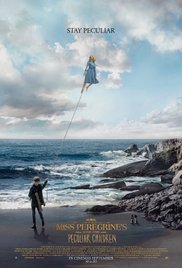
Film Review: MISS PEREGRINE’S HOME FOR PECULIAR CHILDREN

miss_peregrine_posterMISS PEREGRINE’S HOME FOR PECULIAR CHILDREN (UK/USA 2016) **
Directed by Tim Burton

Starring: Eva Green, Asa Butterfield, Samuel L. Jackson, Judi Dench, Rupert Everett, Allison Janney, Terence Stamp, Chris O’Dowd

Review by Gilbert Seah

Based on the 2011 novel of the same name by Ransom Riggs, the film has a few similarities with the HARRY POTTER films which is likely the reason the rights of the book were quickly picked up for a film adaptation. Like Harry Potter, the boy with hidden powers, the hero of the story is a young 16-year old, Jake Portman (Asa Butterfield) who might or might not possess hidden powers. The orphanage home is a sorry replacement of Harry Potter’s Hogwarts. But Jake also stumbles across a home with magic as well as evil forces.in the background. The story here is so-so and can nowhere be compared to the depth and imagination of J.K. Rowlings. The film, however has the benefit of being directed by Tim Burton and it is no surprise then that the film has a NIGHTMARE BEFORE CHRISTMAS dark look.

If one is a Tim Burton fan, there is a lot of Tim Burton to enjoy in the film, a part of it even feeling like ALICE IN WONDERLAND but do no expect anything new. Burton trudges along his storytelling in this film, with special effects, just going through the motions with his past methods. The film is also overly long at over 2 hours.

The film begins with the death of Jake’s grandfather (Terence Stamp). 16-year-old Jacob “Jake” Portman is forced to travel to a mysterious island in order to discover the truth of what really happened. The film jumps frequently from the U.S. to England so often that it becomes confusing. One has to remember for example that when the pier is seen, it is Blackpool and no longer the Tampa Bay area.

Jake stumbles into what seems to be a different world. Jake is introduced to the extraordinary Miss Peregrine (Eva Green) and her peculiar children at Miss Peregrine’s Home for Peculiar Children. But when what seems to be a fairytale takes a horrific turn, Jake is forced to make a life altering decision in order to protect the ones he loves from the monsters of his grandfather’s past, the creepy Hollows and the dangerous Wights led by the terrifying Mr. Barron (Samuel L. Jackson).
The parts of the story in the film also feels unrelated and dumped together. These include among other curiosities unexplained in existence: World War II destroying the orphanage; the connection between Jake’s father and the monsters; Miss Pedegrine’s loops and her ability to change into a bird.

Bright moments are provided by Samuel L Jackson as Mr. Barron who as expected delivers another over the top performance. His under-his-breath curses each time Jake evades him are priceless. This is also one film Jackson does not get to utter his famous ‘mf’ phrase. He does, utter, however,”What the f…” under his breath.

MISS PEREGRINE’S HOME FOR PECULIAR CHILDREN is rightly released just before Halloween to draw a family audience with the film getting a boost once the 31st of October comes around. It should do ok box-office numbers.

Trailer: https://www.youtube.com/watch?v=tV_IhWE4LP0

SUBMIT your TV PILOT or TV SPEC Script
Voted #1 TV Contest in North America.
FILM CONTESTSUBMIT your SHORT Film
Get it showcased at the FEEDBACK Festival
writing CONTEST1st CHAPTER or FULL NOVEL CONTEST
Get full feedback! Winners get their novel made into a video!
SCREENPLAY CONTESTSUBMIT your FEATURE Script
FULL FEEDBACK on all entries. Get your script performed