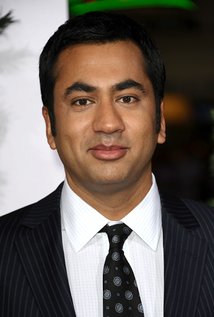
Happy Birthday: Michael Moore

michaelmoore.jpgHappy Birthday director Michael Moore

Born: Michael Francis Moore
April 23, 1954 in Flint, Michigan, USA

Best of Michael Moore quotes:

On being an altar boy, carrying the incense censer: This had all my favorite activities rolled into one: fire, smoke and emitting a strange odor.

We have got to get more documentaries in the theaters. Distribution in this country sucks.

It’s not envy, it’s war, it’s a class war that’s been perpetrated by the rich on to everyone else. The class war is one they started. The mistake they made to deal with the racial part of this is, um, their boots have been on the necks of people of color since we began. This is a nation founded on genocide and built on the backs of slaves, so alright, we started with a racial problem.

On Bowling for Columbine (2002) in 2013: I never thought I would have to, a decade later, stand here and say that that film of mine did no good. That, to me, is personally heartbreaking. Every word in it stands true to this day, which is the saddest thing.

I really didn’t realize that librarians were, you know, such a dangerous group. They are subversive. You think they are just sitting there at the desk, all quiet and everything. They’re like plotting the revolution, man. I wouldn’t mess with them. You know they’ve had their budgets cut. And libraries are just the ass end of everything, right?

I have, when I’m on Bill’s [Maher] show, told him that there are far more examples historically of the death and destruction that Christians have brought to planet. From the Crusades to the Inquisition to the wiping out of Native Americans to the Holocaust.

Laughter is a way, first of all, to alleviate the pain of what you know to be the truth. And if you’re trying to be truth-tellers as filmmakers, then for God’s sake, what is wrong with giving the audience a spoonful of sugar to help the medicine go down? It’s hard enough for people to have to think about these issues and grapple with them, and there’s absolutely nothing wrong with letting them laugh, because laughter is cathartic.

I don’t want people leaving the theatre depressed after my movies. I want them angry. Depressed is a passive emotion. Anger is active. Anger will mean that maybe five percent, ten percent of that audience will get up and say’ ‘I gotta do something. I’m going to tell others about this’ ..Or, in the case of Quentin Tarantino, who was the president of the jury at Cannes when the jury gave ‘Fahrenheit 9/11’ the Palme d’Or , said to me afterwards, ‘I’ve got to tell you what your film really did for me. I’ve never voted in my life, in fact Ive never even registered to vote, but the first thing I’m going to do when I get back to L.A. is register to vote’.

The first rule of documentaries is: Don’t make a documentary – make a movie! You’ve chose this art form – the cinema, this incredible, wonderful art form – to tell your story. You didn’t have to do that. If you want to make a political speech, you can join a party – you can hold a rally. If you want to give a sermon, you can go to the seminary, you can be a preacher. If you want to give a lecture, you can be a teacher. But you’ve not chosen any of those professions. You have chosen to be filmmakers and to use the form of Cinema. So make a movie!

Happy Birthday: Kal Penn

kalpennHappy Birthday actor Kal Penn

Born: Kalpen Suresh Modi
April 23, 1977 in Montclair, New Jersey, USA

Read reviews of the best of the actor:

 Movie PosterHarold and Kumar Escape from Guantanamo Bay
2008
dir. Jon Hurwitz
Hayden Schlossberg
Starring
John Cho
Kal Penn

MOVIE POSTER A VERY HAROLD AND KUMAR CHRISTAS
dir. Todd Strauss-Schulson
Stars:
Kal Penn
John Cho
TV POSTER24 SEASON 6
2007
Starring:
Kiefer Sutherland
James Morrison

Superman ReturnsSuperman Returns
2006
dir. by Bryan Singer
starring
Kate Bosworth
Brandon Routh
Spacey

MOVIE POSTERMAN ABOUT TOWN
2006
dir. Mike Binder
Stars:
Ben Affleck
Rebecca Romijn

Happy Birthday: William Shakespeare

williamshakespeare.jpgHappy Birthday William Shakespeare

Date of Birth 23 April 1564, Stratford-upon-Avon, Warwickshire, Kingdom of England [now England, UK]

Date of Death 23 April 1616, Stratford-upon-Avon, Warwickshire, Kingdom of England [now England, UK]

William Shakespeare’s birthdate is assumed from his baptism on April 25. His father John was the son of a farmer who became a successful tradesman; his mother Mary Arden was gentry. He studied Latin works at Stratford Grammar School, leaving at about age 15. About this time his father suffered an unknown financial setback, though the family home remained in his possession.

An affair with Anne Hathaway, eight years his senior and a nearby farmer’s daughter, led to pregnancy and a hasty marriage late in 1582. Susanna was born in May of 1583, twins Hamnet and Judith in January of 1585.

By 1592 he was an established actor and playwright in London though his “career path” afterward (fugitive? butcher? soldier? actor?) is highly debated. When plague closed the London theatres for two years he apparently toured; he also wrote two long poems, “Venus and Adonis” and “The Rape of Lucrece”. He may have spent this time at the estate of the Earl of Southampton. By December 1594 he was back in London as a member of the Lord Chamberlain’s Men, the company he stayed with the rest of his life.

In 1596 he seems to have purchased a coat of arms for his father; the same year Hamnet died at age 11. The following year he purchased the grand Stratford mansion New Place. A 1598 edition of “Love’s Labors” was the first to bear his name, though he was already recognized as England’s greatest playwright. He is believed to have written his “Sonnets” during the 1590s.

In 1599 he became a partner in the new Globe Theatre, the company of which joined the royal household on the accession of James in 1603. That is the last year in which he appeared in a cast list. He seems to have retired to Stratford in 1612, where he continued to be active in real estate investment. The cause of his death is unknown.

Anne Hathaway (27 November 1582 – 23 April 1616) (his death) (3 children)

Happy Birthday: Jaime King

jaimeking.jpgHappy Birthday actor Jaime King

Born: April 23, 1979 in Omaha, Nebraska, USA

Read reviews of the best of the actor:

MOVIE POSTERSIN CITY: A DAME TO KILL FOR
2013
dir. Frank Miller
Robert Rodriguez
Stars:
Clive Owen

ConstantineSin City
2005
dir. Robert Rodriguez
Frank Miller
starring
Rourke
Bruce Willis

FANBOYSFanboys
2009
dir. Kyle Newman
Starring
Sam Huntington
Kristen Bell
Bedtime StoriesThe Tripper
2006
dir. David Arquette
Starring:
Jaime King
Lukas Haa

BRIDE WARSMy Bloody Valentine 3-D
2009
dir. Patrick Lussier
Starring
Jaime King
Kerr Smith

PEARL HARBORPearl Harbor
2001
dir. Michael Bay
starring
Affleck
Josh Hartnett

MOVIETWO FOR THE MONEY
2005
dir. D.J. Caruso
Starring:
Matthew McConaughey
Al Pacino<

Interview with Festival Director Jason C. Hignite (HorrorHound Festival)

HorrorHound Weekend Film Festival (as part of HorrorHound Weekend Convention) has been a fan favorite for several years. As the number 2 genre magazine (globally) their fan base draws people from around the world. They host two events per year, one in March (Indianapolis, IN) and one in September (Cincinnati, OH). Their events draw large crowds, with over 12,000 people at our Indianapolis show and over 25,000 people at our Cincinnati show.

Website: www.horrorhound.comwww.horrorhoundweekend.com

Interview with Jason C. Hignite:

Matthew Toffolo: What is your Film Festival succeeding at doing for filmmakers?

Jason C. Hignite: Our best offering to an indie filmmaker is exposure. Being that we (HorrorHound) are among the top genre magazines (globally) and that our events are the largest horror-specific in the United States, we are able to do several things. First, with our two events per year, we are able to put indie horror, thriller, sci-fi, dark comedy, etc. films in front of a genre-centric audience. Our events draw 25,000+ at the spring show and 12,000 – 15,000 at the fall show. Granted, our screening rooms may not accommodate all of those people; however, everyone in attendance is exposed to every film we screen (write-ups in the convention exclusive magazine, indie filmmaker panels, filmmaker booths, etc.). Furthermore, our fans are “noisy” … in the best way possible. People who attend our events and sit through the screenings will blast about the films on social media for weeks after each event.

Second, we are also able to promote indie horror films in the magazine and online. Filmmakers who screen at our events receive attention not only from our event promotion, but also on our company website and in our globally distributed magazine (HorrorHound).

Third, we give the filmmakers who attend with their films a chance to speak to the viewers. We offer filmmakers a chance to introduce their film, to do a Q&A after the film, to sit on the indie filmmaker panel, etc. We also offer networking events allowing the filmmakers to meet one another, share ideas, and build relationships.

MT: What would you expect to experience if you attend the festival this year (2016)?

JCH: Our March 2016 event in Cincinnati, Ohio, U.S.A. was a huge success. We had films from around the world. Furthermore, several filmmakers from the U.K. made the trip to the U.S. to premiere their film at HorrorHound. We are always humbled by such an honor. Our fans were treated to some amazing horror films from across the U.S., the U.K., Canada, France, Germany, India, and Iraq. Our event coming in September 2016 (Indianapolis, Indiana, U.S.A.) is shaping up to be another amazing and exciting show. We will have filmmakers (both independent and studio), SFX artists, celebrities, and vendors peddling all things horror and macabre. Check out http://www.horrorhoundweekend.com for more info.

MT: What are the qualifications for the selected films?

JCH: The only “qualification” is genre. The HorrorHound Film Fest screens films within the greater horror genre; including creature features, slashers, thrillers, dark sci-fi, dark fantasy, dark comedy, horror comedy, etc. Beyond that, the films are screened and evaluated by our festival screening committee, who collectively has decades of horror film festival experience.

MT: Do you think that some films really don’t get a fair shake from film festivals?

JCH: I believe some films can have a difficult time finding their niche. Many film festivals are thematic and/or genre specific. And, there seems to be a festival for any type of film imaginable. Yet, every so often a filmmaker produces a piece of cinematic brilliance that does not necessarily fit into any particular genre. Or, perhaps their film is too “low-brow” for some of the more elite festivals … and at the same time, too avant garde for the B-movie festivals.

MT: What motivates you and your team to do this festival?

JCH: We are motivated by an absolute and almost-obsessive love of film. We are true cinephiles. Though our festivals focus on horror (which we have all loved from our childhoods), we love all genre of film. And, we collectively feel that the most daring, most entertaining, most original, and most FUN horror films today are coming from independent filmmakers.

MT: How has the festival changed since its inception?

JCH: When HorrorHound Weekend began, we screened films; but, for the first few years it was not an official film festival. The HorrorHound Film Festival began big. The convention was already well established. In our first few years we worked with brilliant people like Clive Barker, Dario Argento, Cassandra Peterson (Elvira), etc. to bring new horror to a dedicated audience. We have added staff, upgraded equipment, learned from mistakes, and cultivated our festivals. And, we continue to work with some of the top names in horror as well as many of the exciting up-and-comers.

MT: Where do you see the festival by 2020?

JCH: The horror genre continues to grow. It has gone far beyond cinema and is now dominating television, cable, and VOD entities. If our festival’s trend continues to grow as the market trend grows, I believe we will need to find are larger space for our event that will include more screening rooms. We are already at capacity for our fall event. The convention center that we use for our spring event is adding 50% more space. Hopefully, that can accommodate a few years-worth of growth.

MT: What film have you seen the most times in your life?

JCH: That is a difficult question to answer. My taste in film is as varied as my taste in music, and I treat them both the same way … it depends on my mood. I will list the films I have watched the most times in my life and maybe someone can help piece together my cinematic-schizophrenia: An American Werewolf in London, Squirm, It’s a Wonderful Life, Animal House, Jaws, Cannonball Run, Alien, Psycho, Poltergeist, National Lampoon’s Christmas Vacation, Monty Python’s Quest for the Holy Grail.

MT: In one sentence, what makes a great film?

JCH: A good story in the hands of an adept storyteller, surrounded by gifted artists and technicians, portrayed by a great relationship between director and actors, shot in the perfect location, and scored with the perfect music.

MT: How is the film scene in your city?

JCH: Are events take place in Cincinnati, Ohio (spring) and Indianapolis, Indiana (fall). The film scene in these cities is different. Cincinnati tends to draw and support indie horror better than just about any city in the U.S. Indianapolis is a bit more conservative in regards to horror; however, it is becoming well known for the more dramatic and artistic indie film scene.

horrorhound.jpg

Interviewer Matthew Toffolo is currently the CEO of the WILDsound FEEDBACK Film & Writing Festival. The festival that showcases 10-20 screenplay and story readings performed by professional actors every month. And the FEEDBACK Monthly Festival held in downtown Toronto on the last Thursday of every single month. Go to www.wildsound.ca for more information and to submit your work to the festival.
Interview with Festival Director Jaka Polutnik (Student Cuts Film Festival)

Student Cuts film festival is aimed at young authors in the early stages of their film careers. Their independence lets them work on unconventional, creative, energetic and subtle ideas. Such films are an important insight into the local environments and everyday themes seen from a different perspective. By joining Student Cuts network the authors not only gain access to the big screen, but a network of audiences all over Europe, contacts with experts and simply gain exposure. In the end, films are made to be watched.

Website: www.studentcuts.eu

Interview with Jaka Polutnik

Matthew Toffolo: What is your Film Festival succeeding at doing for filmmakers?

Jaka Polutnik: Student Cuts film festival is giving opportunity to be seen to film makers, who are not professionals and they learn the film language through diverse sources. In the 5 years since we started our festival the growth of affiliated events and films submitted has been staggering. We went from 30 submitted films in the first year to more than 2000 for the latest edition. We expanded film screenings to 5 countries: besides Slovenia we are also present in Croatia, Finland, Spain and Portugal. The most screened films have been shown to the audiences up to 13 times at various locations. Films from the festival can also be seen on the regional public television station. We do not have illusions that we will create a new Martin Scorsese as our festival is not dedicated to similar film maker profiles. But we would like to show, there is more than just professional production. We would like to show ideas of amateur film makers that are equally good or even better. Their ideas are unlimited and less self-censored – they are honest and film makers believed in them, and it can be seen on the big screen.

MT: What would you expect to experience if you attend the festival this year (2016)?

JP: We make small steps to progress each year. This year the main driving force is a change of venue. The old city cinema where we hosted the festival over the past few years has unfortunately closed its door so we had to find a new place. Even though the new venue is not a cinema, we believe the ambience is going to be even better. We will be able to offer more of a connection between our guest experts, so our visitors will be able to have some informal time with them, not just listen to their lectures.

MT: What are the qualifications for the selected films?

JP: We have to distinguish between two categories. If we are talking about films at the official selection program, who are in the running for symbolic prizes, we impose several criteria: (1) films need to be under 15 minutes in duration, (2) film maker had to be 30 years old or less at the time the film was finished, (3) films had to be finished in the past two years relative to the date of the festival and (4) films had to be produced without any professional help. All other aspects are open for film makers (topic, techniques, technology etc.). On the other hand we have many promotional events (not all of them are under our organizational control) where we have no limitations. All films, registered to the festival, can be shown at promotional events regardless of the length and other criteria mentioned earlier. It is not against our policy to show films by professionals as well, but they have to be aware we cannot offer any financial compensation in return. Our festival is dedicated to amateur film makers and those who normally do not have the possibility to come show their work on the big screen.

MT: Do you think that some films really don’t get a fair shake from film festivals?

JP: Film festivals come in various shapes and sizes. Especially with digitalization the possibilities really are endless. Every author can find a way to distribute her film, if she wants to do it. What we see as a problem, are films done outside of film schools or by other young authors, who learned the film language on their own and really know how to use it. These films are far from perfect, but they can tell us so much. Film language is a language like any other, so I can compare our philosophy with usage of a foreign language. Pretty much everyone has to (or at least should) learn a foreign language at some point. In most cases this just happens to be English, however we could use any other as an example. Some people come close to native speaking proficiency and others have minor or major difficulties with that language. The latter will likely never succeed in a storytelling competition as they cannot compete against those who know how to use the language really well. Nevertheless, people with poorer language proficiency still might have something to tell. And even though sometimes the message is not very clear, the message can be strong and powerful. If they would be heard, it might increase their motivation to improve their language skills and start telling more stories to a bigger audience. And that is what we are trying to do with young film makers. Such niche films are not very interesting for sponsors or wider support, but we believe they are an important step for those who are learning the language of film through alternative ways. The support of our institution, University of Maribor, Faculty of Electrical Engineering and Computer Science (UM FERI) enables us to work with these films on a low budget and this is the only way we can keep the festival alive and well. Otherwise there is simply not enough financial support to run such a festival as we would like to have. On the other hand the reception by the audience is continuously improving as we have been steadily logging more than 100 people at monthly screenings. Compared to often miserable attendance for major motion pictures at the big city cinemas it clearly shows that such films have a storytelling potential. Film makers just need the opportunity.

MT: What motivates you and your team to do this festival?

JP: We have to understand the beginning of the festival to understand the motivation. Everything started as a small local event, where students of Media Communication at the UM FERI wanted to present their work. As the youngest study program we were constantly facing questions like: ”What are you guys actually doing?” or: ”What can you become when you finish the studies?”. We wanted to show, who we are. This was back in 2010. In six years the local media event transformed into a global film festival, our work is on display around Europe from Portugal to Finland and we would like to establish connections with even more partners. It is not about the festival itself, it is about film makers. And even if we achieve all that, we still want to follow the same aim as when we started: to show films of local film makers to diverse audiences. For me, and my closest coworkers, the festival represents a valuable insight into diverse production centers enabling us to forward the knowledge gained to the next generations of students. On the other hand the project is run by students, who get practical experience, references, they meet new people, maybe even contacts for future jobs. Students also want to learn whatever is new in film production and they are a bit oversaturated with Hollywood production. The team of students working on this changes more or less annually and new talents start to organize everything that takes place throughout the year (film festival itself and eight more monthly film nights hosting talks with local authors). The only constant are teaching assistants at the Institute of Media communication, who try to harness everything and focus the work of students towards the main aim of Student Cuts.

MT: How has the festival changed since its inception?

JP: As mentioned, we did not plan to organize the festival in the first place. We just wanted to show the work of our students to the public. Among other work there were some documentary films we wanted to show. Until 2012 the film projections were part of the one day event called Media day. But in 2012 we found that films simply don’t fit to the structure of the event, so we decided that we will screen films separately. The first day was reserved for film projections and the second day was structured around talks by media experts. We invited some partner institutions to join us and send films their students made and we enjoyed a cozy little festival shaped event in 2012 as part of Media day. This was still just 30 films from 5 countries. The following year Mojca Pernat from Film Factory joined the organizing team and with her experience from other festivals we tried to find a form that would fit our needs and that would be more like a festival oriented event. Mojca also used her contacts to promote our film festival and the result was almost 100 films from around 20 countries. As such a response surprised us we did not know what to expect in the future. Nevertheless, so many films gave us a chance to do something more. It panned out in a way that the film festival became the dominant part of the event, taking over the Media day and so the Student Cuts brand was born. As submissions for the 2016 festival just closed, we already know we are dealing with 2519 registered film from 114 countries and during this festival year we will organize, or be a part of, more than 30 events. Such massive growth would not be possible without dedicated students, who work hard and care about the idea behind it. There have been more than 40 students over these years who all deserve massive appreciation for their work; partners, who share a similar philosophy and they see the potential in our idea; and last but not least my coworkers, who have been around for all these years and took care of all the issues largely behind the scenes. As soon as we finish the renovation of our web page, all of them will get a proper place and honorable mention there as Student Cuts would never be so successful without them. So thanks to all who helped Student Cuts to become what it is.

MT: Where do you see the festival by 2020?

JP: As our development in the past 6 years was fast and unpredictable, this becomes a bit of a trick question. I don’t expect any further growth in the amount of submitted films and it would be great if we can remain at the level we are now. We do not predict any major changes for the festival itself at the moment. If financial resources allow, we would like to extend the festival over several days and invite more foreign film makers to the festival, not just the locals. But as long as we are dependent on local companies to support us financially, we do not plan any major changes in near future. The festival is free for film makers and the audience, as this is based on our core philosophy, and it will remain that way in the future as well. Our plans with the festival are aimed more at expanding the Student Cuts affiliate network. We would like to find new, strong partners, who would support us with regular screenings for a growing variety of local communities. It would be nice if these promotional affiliate events would increase to more than 50 per year. That would mean there is on average at least one projection of Student Cuts films per week during the festival year. That would be a nice increase in exposure for all of our film makers. But let’s wait and see what the future brings.

MT: What film have you seen the most times in your life?

JP: Huh, difficult question. I would say War Photographer by Christian Frei from 2001.

MT: In one sentence, what makes a great film?

JP: In very simplistic version I would say the film is great, if the audience accepts the message, the idea of the film, and that it gives them something to think about. Even if it is a light comedy, where you just switch your mind off, you can still get the promising idea behind it. But now these are two sentences already.

MT: How is the film scene in your city?

JP: Well, Maribor is a sleeping giant at this point. In the past we had several city cinemas, but this year the last of them closed its doors and only two multiplexes are operational. Official numbers of sold tickets in these multiplexes rise year to year, but every time I’m in the cinema, it is more or less empty and I can often enjoy the film alone or with only a handful of other moviegoers. As there is no real alternative in the city anymore, we had a giant problem searching for a new place for our festival. The last cinema closed due to many financial problems when the local government denied the support and they refused to return some overpaid rents to the cinema. At the same time Maribor was the only city in Slovenia, where the city cinema didn’t get digital technology for the main screen. Beside the infrastructure, the film offerings are quite poor and we can hardly talk about film diversity. Besides the usual Hollywood films it is hard to find any other production. One of the multiplexes is trying to bring art films in town, but the concept is still under development as this was in the domain of the recently closed cinema in the past. And last but not least, professional film production in this area is poor or almost nonexistent. Even some promising groups of film makers have to move to other parts of Slovenia or abroad in search of better opportunities to create films. That is why it is essential that we encourage our students to produce films and that we keep working on Student Cuts film festival and enrich the local film culture. But in the end you have to accept the fact it is not only up to us to do that.

studentcuts.png

Interviewer Matthew Toffolo is currently the CEO of the WILDsound FEEDBACK Film & Writing Festival. The festival that showcases 10-20 screenplay and story readings performed by professional actors every month. And the FEEDBACK Monthly Festival held in downtown Toronto on the last Thursday of every single month. Go to www.wildsound.ca for more information and to submit your work to the festival.