Full Review: WHAT THEY HAD (USA 2018) ****

Submit your Film & Screenplay via FilmFreeway:

What They Had Poster
Trailer

Bridget (Hilary Swank) returns home at her brother’s (Michael Shannon) urging to deal with her ailing mother (Blythe Danner) and her father’s (Robert Forster) reluctance to let go of their life together.

Director:

Elizabeth Chomko


Before reading this review, it be best noted that the writer’s mother passed away from Alzheimer’s.  The film thus hits more than a number of soft spots, and though WHAT THEY HAD a film about a mother with the decease is occasionally flawed, the film kept me at most parts in tears. 

Playwright and theatre actress Elizabeth Chomko delivers a gut wrenching directorial debut with her award winning screenplay.  The film is fortunate to have four top notch actors delivering unforgettable performances – Hilary Swank and Michael Shannon playing duelling siblings trying their utmost best to look after their parents, Robert Forster playing the father looking after his dementia stricken wife played by Blythe Danner.

The film’s plot can be summed up simply with a few lines tut it is the drama and details that create the movie (i.e. the writing and direction).  Bridget (Hilary Swank) returns home at her brother Nicki’s (Michael Shannon) urging to deal with her ailing mother, Ruth (Blythe Danner) and her father Burt’s (Robert Forster) reluctance to let go of their life together.

The film fails to identify the ugly aspects of living with the disease.  For example, my mother did not shower for 8 months before I discovered it and and to get a caregiver come into help her shower weekly.  And still, every week she would forget and we and to literally drag her to the bathroom.   She would also do her number two before reaching the toilet and not remember about it a day after.  The film also never showed at any point Burt’s loss of patience over his wife’s forgetfulness.

The drama works as the script offers each of the family’s point of view on the problem.  And each member is right and has sacrificed in her or his own way.  There is no one correct solution.  As the Burt character talks about love: “You find someone you can commit to, and then you work at it.”  This line is also true even if you one finds ones soulmate or love at first sight.  One has to work at it.  The film contains many dramatic sets-ups with excellent dialogue and tearful moments.

The script shows its occasional brilliance.  One is the use of the scenario of the dementia-ridden mother hitting on Nicki, her son.  The incident is first milked for laughs and then the same one for sympathy.

One might complain that the film tugs too are at the heartstrings.  The Christmas setting adds on to the sentiment especially in the exchanging of gifts scenes.  But audiences love a good cry just as a good laugh at the movies.

Two-time Oscar Winner Hilary Swank (MILLION DOLLAR BABY and BOYS DON’T CRY) who not only stars in the film but co-produced it is known to make films about subjects that matter.  They might have been successful such as in BOYS DON’T CRY about LGBT rights or less successful such as in FREEDOM FIGHTERS about at-risk students.  WHAT THEY HAD is an earnest and sincere film about a subject every human beings will face in their families at one time or other, sooner of later.

Trailer: https://www.youtube.com/watch?v=1kBGxsyp__o

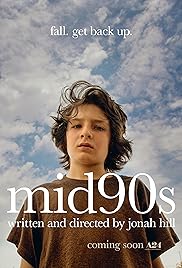
Film Review: Mid90s (USA 2018) **

Submit your Film & Screenplay via FilmFreeway:

Mid90s Poster
Trailer

1:21 | Trailer
Follows Stevie, a thirteen-year-old in 90s-era LA who spends his summer navigating between his troubled home life and a group of new friends that he meets at a Motor Avenue skate shop.

Director:

Jonah Hill

Writer:

Jonah Hill

Actor Jonah Hill (MONEYBALL) makes his directorial debut in the highly touted Mid90s, a film that centres on rebellious youth.  Like all first time directors, tJonah Hill demonstrates in the film’s strengths what he is familiar with – in this case his acting.  His young actors perform magnificently capturing the spirit of troubled youth.  But there is much lacking in the overall bigger picture.  For one, Mid90’s captures a minuscule portion of the life of its subject, 13-year old Stevie (Sunny Suljic last seen in THE KILLING OF A SACRED DEER) but omits the larger story of perhaps examining the advancement in his coming-of-age rites.

The film begins with a skateboarding segment where the camera fluidly follows the smooth gluing movement of the sport.  It is a promising start showing expert technical camerawork.  The film then settles on Stevie and his friends who hang around a skateboard park with other misfits, some of whom are acquaintances with others they have altercations with.

One of the film’s troubled scenes involve a party where most of the partygoers are between the ages of 18 to 30 where obviously, drug and sex are going on, besides alcohol consumption.  Stevie meets an older black girl.  They chat before heading upstairs to a room where they make out, Stevie for the first time and her, to satisfy her curiosity.  If the gender of these two were reversed, the elder participant would be considered a pedophile, a dirty old man akin to a Harvey Weinstein type sex offender.  Also, Stevie is of the young age where he should be sheltered from foul language, such that is frequently uttered with the skateboard buddies.  One wonders if his dialogue was dubbed into the film, and if not, that would be trouble for tHill and his filming company.

Credit is to be given to Hill and Suljic however in the creation of this sweet 13-year old character who comes across as vulnerable, goofy and occasionally strong and clever.  The other buddies are more cardboard characters despite given interesting names like Fourth Grade (Ryder McLaughlin), perhaps for the reason he behaves and thinks like one and Fuckshit (Olan Prenatt) called that for other reasons.

The script, probably with a lot of dialogue improvised is street smart talk, fast and furious and often hilarious and occasionally hits the nail on the head with respect to youth observation.  One must be fast to catch the lines or one will miss out.  Political correctness is thrown out of the window in the film with the N word constantly in use and dialogue like “Don’t say thank you, that’s gay!”  One could argue that this is the way words are used on the streets.

Jonah Hill’s Mid90s may be interesting in parts containing impressive performances from its young cast but the film is too short sighted.  Despite being authentic and entertaining, Mid90s is nowhere remotely close to Truffaut’s 400 BLOWS.  The film has garnered rave reviews and one can see that is a street-smart down-to-earth crowd pleaser, despite its flaws.

Trailer: https://www.youtube.com/watch?v=w9Rx6-GaSIE

Full Review: TRANSFORMER (USA 2018) ***

Submit your Film & Screenplay via FilmFreeway:

Transformer Poster
Trailer

In the summer of 2015, former US Marine and world record weightlifter Matt “Kroc” Kroczaleski was publicly outed as being transgender. The reaction was universal: her sponsors abandoned her… See full summary »

Writers:

Michael Del MontePaul Kemp (story editor)

Better a big muscular woman or a small weak man?

TRANSFORMER, the true transgender story of a muscled power lifter undergoing a sex change operation offers an unique perspective on the transgendered community and how each transition is unique to the person transitioning.  Janae (aka Matt) Kroc was as masculine as you can be prior to her transition, a world record powerlifter renowned for her masculinity. When she transitioned, she struggled with remaining true to her passions as a powerlifter while wanting to become more feminine.  The film illustrates a lesson that transitioning doesn’t mean leaving one person behind to become another – so audiences should be prepared to be taking for quite the ride.

Krocs’s personal and family are also on display.  Kroc bears all his secrets.  He admits to the origin of his power weightlifting.  He was bullied as a very young boy and never liked to be in that position.  After getting bigger. no one would mess with him.  That is until he started dressing up as a female.

The film follows not only Kroc through his weight lifting exhibitions and contests, but also through his personal life.  He is shown swimming with his three boys in the house pool.  He informs the audience that his wife would not allow him to dress in front of her or the children.  Unlike his children, she never understood or gave him a chance, which means it best if they separated.  The children speak highly of their cross-dressing father, saying that everyone should be able to do what he or she wants. 

It is indeed sad to see that there are still people in the world who are unacceptable of gays or people who are different in general.  A moving while disturbing segment shows protesters during an LGBT march.  These people carry just awful and nasty signs like LGBT (Let God Burn Them) and HOMO Sex is Sin.  Well, Kroc has admitted earlier in the film that he is still attracted to females and not men.  One really nasty sign reads” Get AIDs yet?”  What is wrong with these people?  Why is there a need to be plain nasty?  After that segment, the camera then focuses on Kroc back in male clothes.  One certainly gains a new respect for this man – one who is able to stand up for what he believes and to challenge all the unacceptable idiots in the world, who are the ones who should burn in hell.  Kroc is also shown boding with other transgender power lifters.  They share their emotions and experiences in a very sensitive moment. 

But one can tell the film is short of material.  Director Del Monte inserts Krocs’ pumping training sessions as filler.

TRANSFORMER turns out to be everything a solid documentary should be – a well. made doc on an intriguing subject based on a  character that inspires and teaches, an one who will persevere despite all odds.  The doc opens the audiences eyes to the good and the bad.  The good being that here are still people that are giving and understanding like Kroc’s children and the bad or very bad, the homophobic who are bullies, idiots and just plain nasty people.  The film premiered at Hot Docs 2018 and it is rewarding to see this well deserving piece get a full wide distribution.  A film that celebrates man’s diversity and one that demands to be seen, if not for just one transgender’s personal fight against all odds – a case of the underdog winning in a sort of feel-food documentary.

Trailer: : https://vimeo.com/233416373

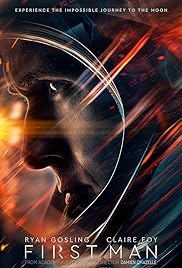
Film Review: FIRST MAN (USA 2018) ***

First Man Poster
Trailer

A look at the life of the astronaut, Neil Armstrong, and the legendary space mission that led him to become the first man to walk on the Moon on July 20, 1969.

Director:

Damien Chazelle

Writers:

Josh Singer (screenplay by), James R. Hansen (based on the book by)

FIRST MAN tells the trials and triumphs of astronaut Neil Armstrong as he trains, tests and finally lands on the moon.  The film is written by Oscar winner Josh Singer (SPOTLIGHT) adapted from James. R. Hansen’s book with cinematography by Linus Sandgren whose visuals are the best thing about the movie.  It is best seen in IMAX, as the screen jolts during the segment of the moon landing, as if to remind the audience of the glorious IMAX format.

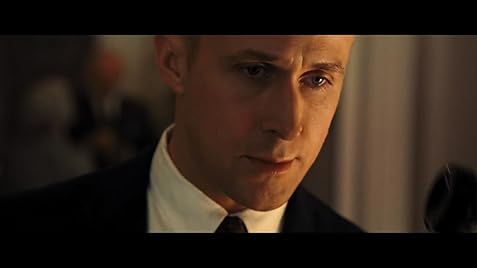
The film opens with Armstrong (Ryan Gosling) in the cockpit of a rocket as it tries to re-enter the earth’s atmosphere.  It has troubles as it is bouncing off the atmosphere with altitude rising instead of decreeing.  The ship rattles like crazy.  It is a long 15-minute or so sequence with screeching metal and jittery frames, enough to give anyone a headache.  It is clear that director Chazelle wants the audience to realize the absolute torture that the astronauts endure, which he repeats more than once again during his film.  Subtlety is clearly not Chazelle’s strong point.  Chazelle loves to inflict torture on his subjects like in Armstrong as in Miles Teller’s drummer in WHIPLASH and career bound musician Ryan Gosling in LA LA LAND – two of Chazelle’s previous outings.

The film unfolds during the period of 1961 to 1969, ending with the success of the moon landing and of course Armstrong’s famous words: “One small step for man, one giant leap for mankind.”  But the euphoria is again diminished by Chazelle insisting on reminding the audience (though flashback) that Armstrong lost his little girl, Karen through cancer.

FIRST MAN is extremely choppy in its storytelling.  It requires that titles onscreen to tell the audience the year a segment is set and and what point NASA is at in its testing.  There are scenes that are disorienting that the audience is left for a while not knowing where the film is at.  An example is the wife Janet (Claire Foy) distraught at her husband’s survival followed by a scene when all is well.

Chazelle’s film and Singer’s script capture both the intimacy of Armstrong’s family life and camaraderie of his fellow astronauts more effectively.  The confrontation between Janet and Neil where she loses it, forcing her husband to talk to the boys makes one of the film’s best segments as in the astronauts beer drinking segment.  The choice of the musical score and the songs chosen by the astronauts to play in space is also interesting,

FIRST MAN is Chazelle’s biggest project and it looks superb not only for the moon segments but the ones on earth.  No expense has been spared to provide the 60’s atmosphere from the vintage cars, clothing, wardrobe and 60’s dialogue.

FIRST MAN is visually more arresting than most space movies, excepting Kubrick’s 2001: A SPACE ODYSSEY.   But Philip Kaufman’s THE RIGHT STUFF remains the best space movie about astronauts and their families.  A little lengthy at 2 hours and 20 minutes, FIRST MAN is a solid experience demonstrating what Armstrong went through for success but unlike the other two aforementioned films, seeing FIRST MAN once is more than enough.

Trailer: https://www.youtube.com/watch?v=PSoRx87OO6k

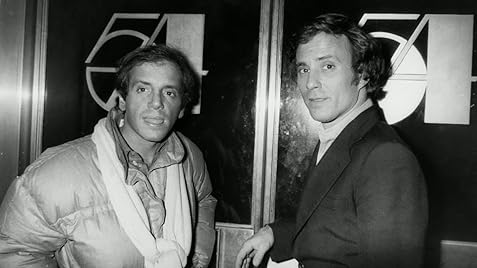
Film Review: STUDIO 54 (USA 2018) ***

Studio 54 Poster
Trailer

Studio 54 was the epicenter of 70s hedonism–a place that not only redefined the nightclub, but also came to symbolize an entire era. Its co-owners, Ian Schrager and Steve Rubell, two …See full summary »

Director:

Matt Tyrnauer

Everyone has heard of STUDIO 54, arguably the most famous of all the dance clubs in the world.  Studio 54 is now closed and is currently a Broadway theatre, located at 254 West 54th Street, between Eighth Avenue and Broadway in Midtown Manhattan, New York City. The building, originally built as the Gallo Opera House, opened in 1927, after which it changed names several times, eventually becoming CBS radio and television Studio 52.

The doc is set in the late 1970s, at the peak of the disco dancing and music trend when the building was renamed after its location and became a world-famous nightclub and discotheque.

But director Matt Tyrnauer’s doc centres more on the nightclub founders than on the club itself.  The founders Steve Rubell and Ian Schrager spent hundreds of thousands of dollars on professional lighting design and kept many of the former TV and theatrical sets, in the process creating a unique dance club that became famous for its celebrity guest lists, restrictive (and subjective) entry policies (based on one’s appearance and style), and open club drug use. Founded in 1977, the club was final sold in 1980 to Mark Fleischman who reopened the club after it had been shut down following the conviction of Rubell and Schrager on charges of tax evasion. In 1984, Fleischman sold the club, which continued to operate until 1986.  Long history, here, provided with credit to Wikipedia for the invaluable information.

Everyone loves a trip down nostalgic memory lane – especially when one is older and memories involve their youth.  Rubell is now deceased, having passed away from the AIDs epidemic while Schager is now an old man.  But it is good to see these two hard working individuals during their height of their powers and youth giving everything to their baby, STUDIO 54.

Director Tyrnauer is fortunate to be able to obtain old footage of the club, since there are lots as the club was ultra famous.  There are many clips of past interviews with both Rubell and Schrager including them with many celebrities.  Tyrnauer begins with a recent interview with Schager.  In the words of Schrager, this is a story that needs to be told as it is, and after 40 years, Schrager is now comfortable to have his say to the camera.

STUDIO 54 is as much a story about the club (or studio) as it is about Rubell and Schrager.  The film documents the two boys from Brooklyn who met in college and became fast friends like a husband and wife, in the words of Schrager.  

The film’s first 50 minutes show the club’s upside.  The pair can do no wrong, but make lots of money with their club.  The approval of a liquor license seems a minor problem.  They had to turn down hundreds of partygoers who could not get into the club.  There are lots of shots of the celebrities who celebrated at STUDIO 54 including the Rolling Stones, Liza Minnelli, Paul Newman with a list of countless other celebs.  But all good things have a turning point.  The film also documents the jail sentences served by the pair due to tax evasion and drugs.

STUDIO 54 will probably not be cater to the non-partying crowd.  But for the majority who love to have a good time forgetting all their troubles while dancing in a club, STUDIO 54 brings back fine memories and serves as a worthy tribute showing immense trouble comes hand in hand with the success of any huge club venue.

Trailer: https://www.youtube.com/watch?v=w99oGMwbTy4

Film Review: BIGGER (USA 2017) **

Trailer

The inspirational tale of the grandfathers of fitness as we now know it, Joe and Ben Weider. Facing anti-Semitism and extreme poverty, the brothers beat all odds to build an empire and inspire future generations.

Director:

George Gallo

Originally entitled BIGGER THAN LIFE, the film has had its title changed to just BIGGER, perhaps not to be confused with the Nicholas Ray 1956 film.  The title LARGER THAN LIFE has also already been taken by the Carol Channing documentary.  BIGGER tells the story of two Canadian boys and how they shaped the fitness industry into the multibillion-dollar industry it is today.

The film unfolds in flashback as told by an elderly Joe Welder (Robert Forster) during his brother, Eddie’s funeral.

BIGGER falls into the trap of being too willing to please.  Director Gallo includes too many romantic episodes and too many incidents that have Joe ending up looking good.

Gallo’s script is so manipulative, it becomes too obvious what he is trying to do.  In one scene, Joe (Tyler Hoechlin) is trying to get his health/bodybuilding magazine financed by a big publisher who when seeing him, is coughing and smoking like a chimney.  The irony is noted.  Gallo does this a second time when Joe seeks finance from a smoking and fat banker.  Joe is supposed to be short in the emotions side.  This fact is made known in bed right after a lovemaking session where his girl, Betty (Julianne Hough) freaks out at not knowing anything about him.  Ok – the audience gets the point.  There is no need for her to go on and on nagging him with Joe maintaining his “je ne sais quoi” facial expression.  The musical score is also there to ensure the audience feels the way they are supposed to during the different scenes.

Subtlety is clearly lacking in the film.  This is not helped by Kevin Durand overacting in his role as arrival publisher, Hauk, who in desperation in one scene, punches Joe up.  The script treats Hauk as a super villain, the type found in action hero movie, so one might not blame Durand for this horrid performance.  As far as other performances go, the accent seems to be placed in terms of great importance.  Hoechlin speaks with a strong mixed Jewish accent throughout the movie and in short spurts.   Australian built actor, Calum Von Moger who plays Arnold Schwarzenegger does a solid Schwarzenegger accent.

BIGGER has a lot of solid well built and toned bodies, both male and female, for one to gawk at.

It is ironical that American actor Hoechlin plays the Canadian title role while Canadian Kevin Durand (from Thunder Bay, Ontario) plays an American.  Durand overdoes his part proving himself to be the worst actor in the movie.  It is not helped that he plays a despicable, arrogant ashore in the film.

Gallo’s film turns quite different during the last third when Joe starts sporting a ridiculous (laughable) moustache.  Once the Schwarzenegger character appears, the film turns unintentionally funny.  But surprisingly, one gets used to the Schwarzenegger character who lifts the film out of the doldrums.

BIGGER can best described as a relatively entertaining but cheesy biography of the two brothers that put bodybuilding into sports.  But Joe’s predictions have come true.  There are now gyms all over every city and solid portion of the population (myself included) now have gym memberships.

Trailer: https://www.youtube.com/watch?v=G3k1BKNIV9c

Best of October 2018 Film Festival Interviews

These are festivals to look out for. Read interviews with the Festival Directors and learn more about them.

Interview with Festival Director Daryl Bates (A SHORT NIGHT)
READ Interview

Interview with Festival Director Edward Payson (an Anti-Hero Production Genre Fest)
READ Interview

Interview with Festival Director Dr. James Rowlins (Brighton Rocks Film Festival)
READ Interview

Interview with Festival Director Cato ML Ekrene (The Norwegian International Seagull Short Film Festival)
READ Interview

Interview with Festival Director Aleksander Sakowski (THE VISION FEAST)
READ Interview
.

Interview with Festival Director Sally Bloom (LONGLEAF FILM FESTIVAL)
READ Interview

Interview with Festival Director Pierre Cialdella (San Francisco LGBTQ Coming of Age Short Film Festival)
READ Interview

Interview with Festival Director Avery Cohen (Macoproject Film Festival)
READ Interview
.

Interview with Festival Director Gian Smith (The Black Film Festival of New Orleans)
READ Interview

Interview with Festival Director Gia Frino (Wollongong Film Festival)
READ Interview

Interview with Festival Director John LaBonney (DAM SHORT FILM FESTIVAL)
READ Interview

Film Review: BEAUTIFUL BOY (USA 2018) ***

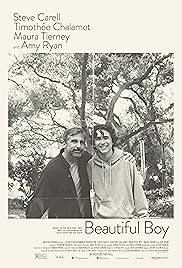
Beautiful Boy Poster
Trailer

Based on the best-selling pair of memoirs from father and son David and Nic Sheff, Beautiful Boy chronicles the heartbreaking and inspiring experience of survival, relapse, and recovery in a family coping with addiction over many years.

Writers:

Luke Davies (screenplay by), Felix Van Groeningen (screenplay by) |2 more credits »

Films about addiction no matter how well made are a difficult watch.  Acclaimed films of this genre in the past, Blake Edwards’s DAYS OF WINE AND ROSES (alcoholism) and Otto Preminger’s THE MAN WITH THE GOLDEN ARM (drugs) are examples.  The title of this latest opus on drug addiction supposedly crystal meth addiction, attempts to disguise the unpleasant material at hand.

Based on the bestselling pair of memoirs by father and son David and Nic Sheff, Belgium director Felix van Groeningen’s first English language film chronicles the heartbreaking and inspiring experience of survival, relapse, and recovery in a family coping with addiction over many years.  The son is the addicted one, and the father a mild user of drugs when younger goes all out to save his son from devastation.  As the story is derived from their memoirs, one can safely assume that all the events that occur in the film are true, maybe with just a little bit of dramatization.

Academy Award nominee Timothée Chalamet delivers a better performance here than in the over-rated CALL ME BY YOUR NAME.  But it is Steve Carell than achieves the acting honours.  At times, one hates his character for being too controlling and at other times, sympathize for his defeat.  It is when one never notices an actor’s performance that he is doing a phenomenal role and Carell achieves this feat proving himself apt at both comedy and drama.

Nic is indeed a beautiful child with two brothers.  Nic’s drug use grows uncontrollably.  The film traces his genuine attempt at rehabilitation, then coming clean before a relapse.  His parents (Amy Ryan plays the mother) are always there for him, though too angry and controlling (understandably) at times.  Nic comes close to death as well.  As said, it is a chore to watch the downward spiral of a drug addict.

Though film’s press kit says that the drug of addiction is meth, the film shows otherwise.  Nic is shown at various point heating up a liquid in a spoon and then injecting the solution into his veins.  Meth is just mixed with water when injected, so Nic must have progressed to crack, which is not explained to the audience.  In another scene, David, the father sniffs a line of powder as he claims he wishes to experience first hand of the drug.  Again, nothing is explained to the audience as meth is normally consumed by snorting (as David did) but more commonly by smoking it in a meth pipe (never shown) though the use of injection (which gives a faster high) is less common.

The film is well shot (the surfing segment) and there are no complaints with regards to the other departments.

BEAUTIFUL BOY premiered at TIFF together with another drug addiction film, Baldvin Z’s LET ME FALL from Iceland set in the capital of Reykjavik.  Baldvin Z draws his film on true stories and interviews with the families of addicts and is clearly the better film in terms of raw authenticity.  In this film Magnea the addict is never really keen of rehab and constantly lies to her long-suffering parents who finally gives up on her.  BEAUTIFUL BOY in comparison is American and the boy Nic genuinely wishes to come clean though the film proves this an extremely difficult task.  But BEAUTIFUL BOY proves once again the triumph the human spirit over adversities like meth addiction.

Trailer: https://www.youtube.com/watch?v=y23HyopQxEg

Cinefranco 2018 Review: LE FINALE (IN THE GAME) (France/Belgium 2018) ***

In the Game Poster
A rebellious teenager must travel the country with his sick grandpa to get to his basketball game.

Director:

Robin Sykes

The final game referred to in the film title is the FIFA 1998 World Cup in which France won.  Trouble is that this is the year 2018 and for Roland (Thierry Lhermitte) who suffers from Alzheimer’s, that game is still to be played.  The whole Verdi family is caring for Roland, the grandfather, who is affected by Alzheimer’s disease.  JB, the family teenager (Roland’s grandson) has only one goal: to go to Paris to play his basketball final.  But his parents want him to give it up and keep an eye on his grandfather as they are busy this weekend. JB decides to take him with him.  During this trip, nothing will happen as planned.  The film is better than it sounds.  It is quite funny with slid humour on the disease as well as some racists jokes throne in for good measure.  Excuse is that Roland with memory problems can make them.  The Chinese  have it the worst, but me, being Chinese still find it laugh-out loud hilarious.  Truthfully, they are quiet harmless.  A sweet segment in the film involves two Alzheimer’s patients, falling in love.

Thierry Lhermitte (DINER DE CONS, ZEBRA, RIPOUX CINTRE RIPOUX) is excellent.  This is the kind of French comedy that calls for a Hollywood remake.  But who could tell that France would win the World Cup again this year in 2018?

Trailer: http://www.allocine.fr/video/player_gen_cmedia=19577015&cfilm=257438.html

Film Review: FREE SOLO (USA 2018) ***1/2

Free Solo Poster
Trailer

Follow Alex Honnold as he becomes the first person to ever free solo climb Yosemite’s 3,000ft high El Capitan Wall. With no ropes or safety gear, he completed arguably the greatest feat in rock climbing history.

FREE SOLO is the new documentary by Chai Vasarhelyi and Jimmy Chin who wowed audiences years back with the other mountain climbing 2015 doc MERU that chronicled the first ascent of the “Shark’s Fin” route on Meru Peak in the Indian Himalayas.  Chin is himself a mountain climber who has climbed with the subject, Alex Honnold. Chin is also a close friend of Alex.

To appreciate FREE SOLO the documentary, one must understand the sport of free soloing.  

Free solo climbing, also known as Soloing, is a form of free climbing and solo climbing where the climber (or free soloist) performs alone and without using any ropes, harnesses or other protective equipment, relying entirely on his or her ability instead.  Soloists typically climb above safe heights, where a fall would always result in serious injury or death. In ordinary free climbing, safety gear is used to protect from falls, although not to assist the ascent.

FREE SOLO the doc offers an unflinching portrait of 31-year Alex Honnold as he prepares to fulfill his long-time dream to climb the face of Yosemite’s El Capitan – 3,200 feet of sheer granite – without a rope.  Less than 1% of those who climb attempt free solo.  The film explores his psyche and relationships, with interviews from Honnold, his mother, his girlfriend and fellow climbers.  

The film be best seen on the big screen due to the majestic landscape of rock, mountains and natural vegetation.  I, unfortunately viewed the film on a streaming link, but better  to have seen it this way than not at all.  Not every person can be a free solo climber but watching this doc on the big screen offers audiences the opportunity to experience the thrill the subject Alex Honnold goes through.  The director of photography credits go to Mikey Schaefer with Chin and Clair Popkin.

A funny segment of the doc (providing the audience with a break) involves Alex doing an MRI of his brain.  It is determined that he needs more stimuli than most to get himself excited.  Alex is extremely fit and has a muscled wiry physique, though is is clear he has a bit of a posture problem, which could be due to a past injury.

To make the film more human, the directors devote some screen time to Alex’s family background.  His mother is a French teacher and Alex never knew how to hug or use the word love as a kid.  Alex also speak candidly on screen as to what motivates him and to the reasons of his choice of the sport.  The film examines the relationship between Alex and his new girlfriend, she obviously deterring him from giving 100% to the sport.  And the final portion of the movie is the filming of the climb on El Capitan.

FREE SOLO gives a new meaning to the term edge-of-your-seat suspense.  The film won won the People’s Choice Award (Documentary) at TIFF 2018.

Trailer: https://www.youtube.com/watch?time_continue=2&v=LvOB5MYHjuk