April 2018 Winning Fantasy/Sci-Fi Films, Screenplays & Stories

March 2018 Winning Fantasy/Sci-Fi Films, Screenplays & Stories

fantasyscififestival's avatarFantasy/Sci-Fi FILM & WRITING FESTIVAL

A FilmFreeway preferred festival:


festival posterTHE SURVIVOR, 12min., UK, Sci-Fi/Drama
WATCH Audience FEEDBACK

festival posterTHE CASSETTE, 5min., USA, Drama
WATCH Audience FEEDBACK

ACTORTV 1st Scene Screenplay – TOUCH
March 2018 Reading
by Robert Cox
ACTORFAN FICTION SHORT Screenplay – FALLEN: A STAR WARS STORY
March 2018 Reading
by George Deihl Jr.
ACTORSCI-FI SHORT Screenplay
March 2018 Reading
by Jade S. Bokhari
ACTORFANTASY 1st SCENE Screenplay – ENTANGLED
March 2018 Reading
by Sharon Powers
ACTORFANTASY BEST SCENE Screenplay
March 2018 Reading
by J. David Thayer
ACTORFANTASY BEST SCENE Screenplay – BIOS
March 2018 Reading
by Michael Clohesy
ACTORNOVEL Transcript Reading – ODE TO THE DARKEST DAYS
March 2018 Reading
by M. Ryan Hollows
ACTORSHORT STORY Reading – NOOKMIS
March 2018 Reading
by Athena Wisenrich
ACTORSHORT STORY Reading – KIEL
March 2018 Reading
by Keith Brandon


****

Producer/Director: Matthew Toffolo http://www.matthewtoffolo.com

Festival Moderators: Kierston Drier, Shepsut Wilson
Casting Director: Sean Ballantyne
Editor: Kimberly…

View original post 20 more words

Film Festival Testimonial – Sci-Fi/Fantasy Festival

Michael Willer
Michael Willer

I had a great experience with this festival. They’re very accomodating to the filmmakers, very good about communicating, and the quality of their screenings is excellent. Their format is solid, allowing time for in depth feedback while also keeping the screening moving along without any lulls. And the screening was held at the Regal at LA Live, which is awesome. Will be submitting again!

5 Star Review

Submit via FilmFreeway, the exclusive way our festival accepts submissions.:

THE VOLUNTEER, 27min., USA, Sci-Fi/Romance 
Directed by Michael Willer  

A woman fleeing a dystopian city forms a connection with someone she cannot touch.

CLICK HERE – and see full info and more pics of the film!

Film Review: NICO, 1988 (Italy/Belgium 2017) ***1/2

 Submit your Screenplay to the Festival TODAY

Nico, 1988 Poster
Trailer

The last year of singer Nico’s life, as she tours and grapples with addiction and personal demons.

NICO, 1988 is as the title implies, about Nico during her last years before 1988.  Nico is Christa Päffgen (an outstanding performance by Dane actress Trine Dyrholm), known to the world by her stage name “Nico”.   Nico was one of Warhol’s muses, a singer of The Velvet Underground and a woman of legendary beauty.  But expect a different person portrayed in the film, as Nico says in the film: “Don’t call me Nico.  My name is Christa.”  She admits she does not want to talk about The Velvet Underground followed by confessing that she thinks she is ugly.

The film follows Nico as she lived a second life after the story known to all, when she began her career as a solo artist.  Nico, in the time prior to 1988 is the story of Nico’s last tours with the band that accompanied her around Europe in the Eighties: years in which the “priestess of darkness”, as she was called, found herself again, shaking off the weight of her beauty and rebuilding the relationship with her only forgotten son.   The son, Ari (Sandor Funtek) appears at exactly the half way mark of the film.  Besides the story of an artist and her tour, the film is also the story of a rebirth, of an artist, of a mother, of the woman beyond the icon.

One problem with NICO, 1988 is that the many people familiar with her would have high expectations for this biography, since Nico is a larger than life personality and hard to replicate.  Getting the audience interested and caring for Nico is another thing –  an important task for the director making the film..  

As in most films on music performers, the drug problem needs be addressed.  Nico is no stranger to drugs.  It gets ugly.  She uses the hard stuff – heroin and is not afraid to state it.  In one  disturbing scene set in a Prague restaurant, she goes ballistic when she cannot get some, blaming the communists for stealing her passport.

The last half hour of the 90 minutes film is a powerhouse where director Nicchiarelli

turns up the film full throttle.  The audience sees Nico performing her songs.  One can see the reason she got so popular.  The film ends in the year 1988, which the audience can predict as her end.

The film’s best segment is the one Nico performs at her illegal concert in Prague.  Before she goes on stage, she curses her manager for arranging the gig.  But when the spotlight shines on her on the stage and she starts crooning, director Nicchiarelli captures the singer’s anger, regret and finally respect for her audience.  It is a powerful, unforgettable and rare moment beautifully captured on screen.

What is also interesting is Nico’s despicable personality.  She calls her band members amateur drug addicts.  She springs her drug addicted son, Ari from the sanatorium and drags him on tour believing herself that she is doing good, loving her son.  She also accuses her manager (John Gordon Sinclair who played the main role of Gregory in GREGORY’S GIRL, way back when) of devising different ways of stealing from her.  In one rare mement though, she unexpectedly thanks him.

NICO the film, (like the artist herself), can be best described as an exhilarating feel-bad biography.

Trailer: https://www.youtube.com/watch?v=38RBdHtWkWo


 Submit your Screenplay to the Festival TODAY

Today’s FilmFreeway Testimonial – August 10 2018

From Filmmaker Jim Wilmer (WATER short film)

FilmFreeway is a great platform to submit to festivals around the world with a minimum of redundancy or hassle. We love the platform and try to use it exclusively for our film submissions.

Learn more about the Film and Screenplay Festival platform FilmFreeway:

Interview with Festival Director Ronald Quigley (PITTSBURGH INDEPENDENT FILM FESTIVAL)

The Pittsburgh Independent Film Festival is Pittsburgh’s own film festival for truly independent films, and a headline event for micro-budget films in the USA and world wide. PIIF offers a fantastic opportunity for undiscovered filmmakers to showcase their achievements, filmmakers who posses an independent vision and operate to create innovative work outside the studio system. Two recent winners of the festival have secured a distribution deal, as a result of entering our festival. Both our 2016 and 2018 winners are now in worldwide distribution. The Pittsburgh Independent Film Festival was founded by Ronald Quigley a Pittsburgh native who now lives and works as an  Actor / Director in Los Angeles.  Ronald, re-located from Pittsburgh to Los Angeles in April 2002.  He is the CEO of Last Act Entertainment a production company with several credits to it’s name.  Ronald acts as the Festival Director while our panel of judges are comprised of industry professionals from different fields within the film making community of Hollywood. The PIFF was created in 2010 and screened 48 films from around the world at the Hollywood Theater in Dormont PA,  a suburb of Pittsburgh.  Although the Hollywood worked well for the first year, Ronald felt a need for a venue that was more conducive to a film festival atmosphere. In 2013 the Pittsburgh Independent Film Festival moved to The Father Ryan Arts Center in McKees Rocks. For the 2019 season the PIFF is being held at the newly remodeled Parkway Theater. Aaron Stubna has taken an old theater and turned it into a hip modern cafe screening room with a Restaurant and Bar integrated all together to make this one of the coolest places to have a Film festival I have ever seen. We hope to be here for many years to come.    Link   http://communityreelartscenter.org/

Matthew Toffolo: What is your Film Festival succeeding at doing for filmmakers?

Ronald Quigley: The competition in the independent film world has become fierce, the quality of films has grown exponentially almost every year over the 9 years of our existence. We give an opportunity to filmmakers to screen their film on the big screen and perhaps secure distribution.

2) What would you expect to experience if you attend your next festival?

This year we have found a newly remodeled hip little theater in Pittsburgh The Parkway Theater. Aaron Stubna the owner, has taken an old theater and turned it into a hip modern cafe screening room with a Restaurant and Bar integrated all together to make this one of the coolest places to have a Film festival I have ever seen. We hope to be here for many years to come. In addition to our already one of a kind official submission plaque that is presented to every selected submission. We are the only festival in the world that does this.

3) What are the qualifications for the selected films?

The only qualification is that they be good. They must be shot on a very high level sound, picture and color all have to be great. I have said that you will be judged by your lowest common denominator not only by my festival but that holds true for your audience you wont be remembered as getting it pretty good your will be remembered as the film with bad sound or color whatever the worst part of your film is is what they remember.

4) Do you think that some films really don’t get a fair shake from film
festivals? And if so, why?

I don’t know about any other festival but at our festival every film is reviewed very carefully.

5) What motivates you and your team to do this festival?

The love of film. We are all filmmakers in one way or another. Our team is comprised of directors, producers, sound people, and just plain old filmmakers. We don’t make money from this the festival barely breaks even every year. We are a smaller festival because of where we are located,.but don’t get me wrong Pittsburgh is a great place to have a festival.

6) How has your FilmFreeway submission process been?

Filmfreeway is now our main portal for submissions we get most of our submissions through them. They have come on like gangbusters and have done everything for the better.I love Filmfreeway.

7) Where do you see the festival by 2023?

That’s a good question. We have grown every year and now that we have a hip new venue I think we could have like a little Sundance where everyone can’t wait to come. Anyhow that’s my dream.

8) What film have you seen the most times in your life?

The Wizzard of OZ still to me the greatest film ever made. No one disagrees with me when I say that, but they may have a different favorite. I vever miss it when it comes on TV.

9) In one sentence, what makes a great film?

A great film takes you on an emotional roller coaster ride you don’t think about anything else you are invested and engaged and you forget about the real world.

10) How is the film scene in your city?

Well that’s kind of a loaded question I live in Hollywood but my festival is in Pittsburgh. But the Pittsburgh film scene has been pretty vibrant Pittsburgh gets about 8 to 10 Major motion pictures a year made there.

These are multi -million dollar productions. Pittsburgh is a very cinematic city and many top rate filmmakers have no problem coming there to shoot 

pittsburgh-1
Interviewer Matthew Toffolo is currently the CEO of the WILDsound FEEDBACK Film & Writing Festival. The festival that showcases 20-50 screenplay and story readings performed by professional actors every single month. And the FEEDBACK Monthly Festival held in downtown Toronto, and Los Angeles at least 3 times a month. Go to http://www.wildsoundfestival.com for more information and to submit your work to the festival.

Interview with Festival Programmer Aaron Leventman (Santa Fe Film Festival)

The initial idea for a Santa Fe Film Festival was first introduced in May, 1980 when Bill and Stella Pence, founders of Taos Talking Picture and Telluride Film festivals, started an event with a New Directors/New Film program, co-sponsored by the Museum of Modern Art in New York City. The Pences led a festival for four years, with such notable guests as Francis Ford Coppola, Charlton Heston, Sam Peckinpah, and Lillian Gish.  The current form of the Santa Fe Film Festival was inaugurated in 1999 as a nonprofit and began showing films in the year 2000. Festival awards varied over the years. Initial categories included: Best Short, Best Documentary, Best Feature, Best Native American, and Best Latino Film. By 2006 the awards became the Milagro Award (best American independent film), the Independent Spirit Award, and the Audience Award, Honorable Mention in the Creative Spirit Award and Lifetime Achievement Award.The Film Festival has now continued for 16 consecutive years. The special setting of the festival in the unique and historic City of Santa Fe allows filmmakers, journalists, industry leaders and audiences from around the world to gather together in celebration of film. The festival’s annual program includes curated selections of over 40 film programs including narrative and documentary features, shorts of all types, tributes to world-renowned film artists and industry professionals as well as a spotlight on local, New Mexican filmmakers and crew. Embracing the full spectrum of cinematic arts, the Santa Fe Film Festival extends beyond screenings in theaters to panels, workshops, art exhibitions and fabulous parties. Come experience the beauty of Santa Fe and join us for our upcoming celebration of cinematic arts.

Matthew Toffolo: What is your Film Festival succeeding at doing for filmmakers?

Aaron Leventman: Our festival has provided an opportunity for filmmakers to screen their work for a film savvy audience of both locals and international attendees. There is also the opportunity to educate oneself on industry related topics with experts and celebrities at high-powered panels. They have the chance to make both industry and personal connections that in some cases has resulted in distribution deals and the development of new projects particularly for our festival award winners.

2) What would you expect to experience if you attend your next festival?

You will be able to see a variety of shorts, documentaries, and narrative films for both mainstream and underserved audiences in a beautiful southwestern environment with many great historic and cultural tourist attractions.

3) What are the qualifications for the selected films?

They must tell a good story, whether fiction or documentary, with high quality filmmaking. Locally made films are also given special attention.

4) Do you think that some films really don’t get a fair shake from film festivals? And if so, why?

Sometimes a submitted film with a similar theme from a major release comes out in the same year. Those films are often not selected because festival programmers are afraid that they won’t have an audience. For example, the year the 12 Years a Slave came out, other films with a similar topic had a hard time getting into festivals.

5) What motivates you and your team to do this festival?

I love the chance to showcase important works by lesser known artists and to provide additional opportunities for them. I also appreciate the chance to celebrate the life of seasoned filmmakers that have contributed to the industry for many decades.

6) How has your FilmFreeway submission process been?

We appreciate receiving submissions by both first time and famous filmmakers on FilmFreeway. We receive many shorts but would love to receive more features.

7) Where do you see the festival by 2023?

We will have more international attention because of the increase in popularity of the community of Santa Fe. Cross promotion with other film festivals will result in more recognition. I think we will receive more sponsors from major companies because of the increased interest in our film industry which will allow us to show more major titles and be able to bring in more filmmakers to present their work from around the world.

8) What film have you seen the most times in your life?

Annie Hall

9) In one sentence, what makes a great film?

Good structure, a well paced narrative, relatable themes, identifable characters, and strong visual storytelling makes a great film.

10) How is the film scene in your city?

We have a thriving film and TV industry where many Netflix and other major networks are shooting in New Mexico in additional to Hollywood films, independent features, and shorts. Local theatres are committed to showing both commercial and foreign cinema supported by our diverse audiences.

santa fe - 1.jpg


  Bio for Head of Programming, Aaron Leventman

Aaron Leventman was previously the producer of the Bioneers Moving Image Festival, part of the Bioneers Conference. and previously worked for the Sundance Film Festival. Most recently, he was the Director of Programming for Santa Fe Film Festival and the premiere event of the Albuquerque Film and Media Experience. Aaron has also given presentations with the Popular Culture Association Conferences around the country and has been on the awards jury for the Wild and Scenic Film Festival in Nevada City, CA. He has an M.F.A. from Columbia University’s film program, and is an actor who has appeared in many feature films, shorts, commercials, and industrials as well as theatrical productions in Santa Fe, San Francisco, Boston, and Provincetown, MA. He is also a published playwright (https://tinyurl.com/y9btfqen) whose works have been performed all over the U.S., most recently in New York City. Aaron is currently a writing coach and film and acting instructor at the Santa Fe Community College and Renesan for Lifelong Learning.


Interviewer Matthew Toffolo is currently the CEO of the WILDsound FEEDBACK Film & Writing Festival. The festival that showcases 20-50 screenplay and story readings performed by professional actors every single month. And the FEEDBACK Monthly Festival held in downtown Toronto, and Los Angeles at least 3 times a month. Go to http://www.wildsoundfestival.com for more information and to submit your work to the festival.

Film Review: EL ULTIMO TRAJE (THE LAST SUIT) (Argentina/Spain 2017) ***

 Submit your Screenplay to the Festival TODAY

El último traje Poster
Abraham Bursztein, an 88 year-old Jewish tailor, runs away from Buenos Aires to Poland, where he proposes to find a friend who saved him from certain death at the end of World War II. After…See full summary »

Director:

Pablo Solarz

Writer:

Pablo Solarz


When Hollywood makes a movie about old people, they normally turn out to be old fart fantasies where old people live forever (COCOON), win some competition (FINDING YOUR FEET) or find love again.  Often the actors playing the old farts try to outdo each other in looks and cosmetic get-up so much so that watching these movies have become so cliched.  In this Argentine/Spanish co-production about an 88-year old man, the subject is not the  search for the fountain of youth.  Abraham Borsztein runs away from his home in Buenos Aires for survival.  His daughters not only want to put him in a nursing home but amputate his and leg.  Armed with the little money that he has managed to save, he bolts for dear life off to Poland.

Why Poland?  Apparently some guy there had saved him from certain death at the end of World War II.   Abraham has made a promise to bring him a suit (THE LAST SUIT of the film title) and he aims to keep that promise.

The journey does not run as smooth as expected.  Abraham misses his train and gets his money stolen.  But the adventure has only begun.  He meets Maria (Angela Molina) who also has a few dreams of her own.

Director Solarz has his audience sympathize with Abraham.  The camera is not shy to reveal an awful looking bad leg, all white in colour and might in need to be amputated to prevent the poison from spreading throughout he body.  Details are not mentioned.

THE LAST SUIT is a nicely made (pardon the pun) film that may be described as a coming-of-age story of a senior 88-year old man.  His journey of escape and fear for his last days is a real one for many seniors who cannot help themselves but fall to the mercy of their sometimes uncaring and insensitive children.  One thing Abraham still has are his wits.  He is sharp as can be.

The story also reveals that there is some good in man.  The rude musician that Abraham first meets on the plane who first has his feet upon the chair turns out to be a really kind man after Abraham reluctantly helps him at customs.

THE LAST SUIT would be a film that targets the older demographic.  The film’s pace suits an elderly crowd as its good intentions.  It is a good natured as many of the characters Abraham meets during his journey.

Despite its lightness in tone, THE LAST SUIT gets serious at the end, with a message that replaces a climax.  Abraham searches for the friend that saved his life, mainly through his memories.  Through flashbacks, the audience is brought back to the war and the injustice committed against the Jews.  The film offers redemption in the form of a very kindly Germany lady that Abraham meet who helps him along the way.  Though this is enlightening, the audience is manipulated in a way.

The film brings the thought that without memories, nothing else matters.  One feels sadder for those with dementia and have nothing else when they reach that demise.  THE LAST SUIT ends up a sad film about old age, but at least it is a realistic one about certain hardship that seniors can never escape.

Trailer: https://www.youtube.com/watch?v=BLZVMgJoo-k

 Submit your Screenplay to the Festival TODAY

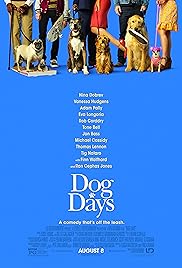
Film Review: DOG DAYS (USA 2018)

 Submit your Screenplay to the Festival TODAY

Dog Days Poster
Trailer

Dog Days follows a group of interconnected people in Los Angeles who are brought together by their lovable canine counterparts.

Director:

Ken Marino

Writers:

Elissa Matsueda (screenplay by), Erica Oyama (screenplay by) | 1 more credit »


The logo at the start of the film “Life is better with a dog” implies what director Manrino’s film sets up to prove.  It is not a very subtle message and not a very subtle film too.  DOG DAYS is a family oriented movie about humans and man’s best friend.  Unfortunately the word dog can also be used to describe the movie.  DOG DAYS is sporadically funny at best with a very low joke hit/miss ratio.

The film contains four humans stories – all silly and uninteresting.  The first is a TV host who ends up interviewing Jimmy Johnston a sports star only to end up arguing on set.  The cliché ridden script would mean that the two will fall in love, which they do, and lo and behold, what a surprise – it also turns out that they each own a cute dog.  The next story begins at a Starbucks style coffee shop where a regular customer meets an employee who falls for Mr. Hots, a dog doctor who owns a fabulous car.  The customer, as geeky as they come owns a dog shelter that, yes, any 2-year old can guess is going to have trouble financially.  She helps him out with a fundraiser but is dated by Mr Hots.  A one-year old can guess what happens next – yes, she discovers Hots to be an a-hole and realizes true love might be Mr. Geeky himself.  Then there is the musician who babysits sister’s dog while she is having twins.  The dog is a huge but cute one who changes Mr. Annoying’s life.  My Annoying is not only annoying buy terribly unfunny. The last story involves a sad man who ha substituted the love for his past wife with a dog he has lost due to Pizza boy.  The dog is found and looked after by a couple who adopts a little girl.  

Director Marino clumsily intercuts these stories with weak links.  For example, Johnson’s dog is brought to the clinic owned by Mr. Hots.  The lack of a villain in the story means that each story meanders around with no purpose except to display the cuteness of different dog breeds.

The film has no shortage of cliches.  A girl ditches her not-that-good-looking friend to date Mr. Hots only to find Mr. Hots an idiot and then dates back her not-that-good-looking friend who is actually in love with her. A lost dog found by a family who needs the dog more than the owner is eventually given the dog by the owner and so on.

The human stories are weakly linked to each other like an excuse.  The stories are predictable and unexciting.  No one really cares. 

As if cliches are not enough, director Marino aims to pull at the heart strings with no signs of stopping  A lost dog is re-united with its owner; an owner learns about life lessons from his canine friend. It is as if Marino has discovered that his humour is to working and trying for tears as a last resort.  

Containing more cliches than dog tricks, DOG DAYS makes one wonder who let this one out of the dog house?  This is just a very bad dog of a movie.

Warning!!  Make sure you leave before the closing credits.  There are extra takes of the actors cracking more unfunny jokes that will guarantee to make your skin crawl.  

Trailer: https://www.youtube.com/watch?v=zEilmeGeVXY&t=5s

 Submit your Screenplay to the Festival TODAY

Film Review: THE BOOKSHOP (Spain/UK 2017) ***

 Submit your Screenplay to the Festival TODAY

The Bookshop Poster
Trailer

England 1959. In a small East Anglian town, Florence Green decides, against polite but ruthless local opposition, to open a bookshop.

Director:

Isabel Coixet

Writers:

Isabel Coixet (screenplay), Penelope Fitzgerald (novel)


The underdog trying to keep his or her land against insurmountable odds like high authority and the government has been a solid premise for films.  Two routes may be taken – the comedy or drama.  One of the most successful Australian films THE CASTLE saw a country bumpkin fighting to keep his house (a castle is a man’s home) from being taken way to build an airport runway.  In best selling novel adapted into the film THE BOOKSHOP, a widowed woman attempts to fulfil her dreams be opening a bookshop in a small English town which the town wants to take away from her.

Though looking quite the ordinary film Isabel Coixtet’s THE BOOKSHOP , based on Penelope Fitzgerald’s acclaimed novel arrives in Toronto of a special engagement run after winning 3 prestigious Goya Awards including Best Film and Best Director. Director Coixtet is Spanish.  The film stars Patricia Clarkson as the ‘baddie’ who has previously worked with Coixtet in LEARNING TO DRIVE as well as stars Emily Mortimer and Bill Nighy.

This is the second British film this year to tout reading books in a period setting, the other being the yet to be released Mike Newell’s THE GUERNSEY LITERARY AND POTATO PEEL PIE SOCIETY.  Both films involve the rendering of personal resolve, tested in the battle for the soul of a community.

The setting is England, 1959.  Free-spirited widow Florence Green aka Mrs. Green (Emily Mortimer) risks everything to open a bookshop in a conservative East Anglian coastal town.  While bringing about a surprising cultural awakening through works by Ray Bradbury and Vladimir Nabokov (who wrote the controversial LOLITA which Mrs. Green intends to promote and sell in the bookshop), she earns the polite but ruthless opposition of a local grand dame (Patricia Clarkson) and the support and affection of a reclusive book loving widower (Bill Nighy).   As Florence’s obstacles amass and bear suspicious signs of a local power struggle, she is forced to ask: is there a place for a bookshop in a town that may not want one?   

Coixtet’s film unfolds at such a leisurely pace, it might turn out too slow for some audiences (just as people might nod off during reading a book, as one character in the film says). .  She spends a good third of the film introducing the film’s main characters.  Clarkson is only seen for a few minutes during the first half the the film and Nighy only speaks after a third of the film.  

Based on a book by a female author and directed and starring a female, the film naturally extols female independence.  Unfortunately, the film falls into the familiar trap of containing weak or dislikable male characters, the exception being the Bill Nighy character despite revealed of a timid nature.   All other male characters like the General (the grand dame’s husband), Mr. North and Mr’s Green’s solicitor are all spineless detestable beings.

THE BOOKSHOP opens Aug 24th, but being British and already released n Europe, is also readily available on disks through Amazon and other similar platforms.

Trailer: https://www.youtube.com/watch?v=3KgMW3rowXY

 Submit your Screenplay to the Festival TODAY