Film Review: ABU: FATHER (Canada/Japan/Saudi Arabia/Pakistan/Thailand 2017) ***1/2

Submit your Screenplay to the Festival TODAY

Abu: Father Poster
Trailer

Using family archives and animation, Arshad Khan shares a deeply personal story of migration from Pakistan to Canada, self-discovery and familial reconciliation.

Director:

Arshad Khan

Writers:

Arshad Khan (story), Arshad Khan


On the imdb film website, a user review praised ABU as the most moving film he had ever seen in his life.
ABU is the first name of filmmaker’s Arshad Khan’s father.
A documentary about a son spending his whole life trying to gain his father ’s approval is certainly a moving subject especially proven with books/films like EAST OF EDEN.  ABU is moving without sentimentality.
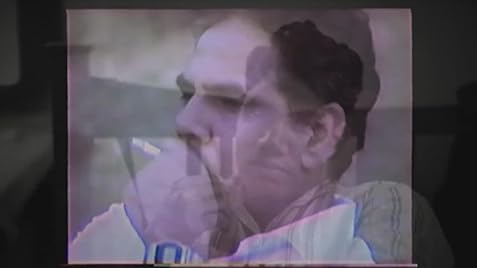
Using family archives and animation, filmmaker Arshad Khan turns the camera (Khan studied cinema in Montreal in 2006) on himself with his father Abu Khan, always in the foreground affecting his every move in life.  This is a sort of home movie that serves as a life story as well.  This is a very intimately painted picture that would move every immigrant.  Every person (or a family member) is an immigrant at some time or other.  The Khan family immigrated to Canada to Mississauga in 1991.  (Myself I immigrated here in 1986, not long before.)   Khan shares a deeply personal story of migration from Pakistan to Canada, self-discovery and familial reconciliation.  An additional factor is that Khan is gay.  Therefore, as a gay man, Khan examines his troubled relationship with his devout, Muslim father Abu.
One of the most fascinating points in the film is Abu’s dream, that Abu only disclosed to his wife.  The dream concerns three wise men who visited the father.  One told him of a visit to a mosque in Pakistan another of his pilgrimage to Mecca in Saudi Arabia and the third of his death at 3 o’clock.  The prophecy of the three events including the timely death in the hospital with the death certificate stating the time of death at 3 pm all came true.  (Abu 1937 – 2011).  This is disturbingly coincidental.  Is Islam really the true religion?  This would be a question to ask the filmmaker for sure.
ABU begins with an animated sequence involving a dream and a prophecy of a monster wearing a light blue buttoned shirt.  (Khan seems extremely fond of prophecies).  It was a dream Khan had 6 months before his father’s death.
Abu used to tell the family and relatives that Arshad and his sister would bring him either great fame or great shame.  From the film, Arshad probably brought him both at various times in his life.  But often enough shame or fame could be interchanged, depending how one looks at it.
The film contains many moving moments for sure – besides the father/son re-conciliation.    (That occurring on the father’s death bed makes it even more endearing.)   The part of his father telling his son that he loves him despite being gay is also unexpected given the Islam’s non-acceptance of homosexuality.  Yet another, is Khan’s initial encounter with gay love at the age of 14 (with a fellow Pakistani called Elvis) and his parents relationship.
ABU is an extremely watchable and moving film made entertaining from Khan’s personal style of filmmaking.  It unveils the fact that every other person in the world has an equally interesting story that needs to be told and filmed.

Submit your Screenplay to the Festival TODAY

Film Review: LOVE, CECIL (USA 2017) ***1/2

Love, Cecil Poster
Lisa Immordino Vreeland directs this documentary about Academy Award-winning costume designer Cecil Beaton. A respected photographer, artist and set designer, Beaton was best known for … See full summary »

LOVE, CECIL is a love letter by director Lisa Immordino Vreeland on two-time Academy Award-winning costume/set designer Cecil Beaton.  Cecil Beaton won Oscars for Best Costume and Set Design for MY FAIR LADY (a clip is provided of Audrey Hepburn and Rex Harrison at the races from the film illustrating the gorgeous costumes included)  and GIGI.  Cecil was also a respected world renowned photographer, artist and set designer.

When asked whether to describe himself as a painter, a photographer, an author or even a dandy, Cecil has no particular one to choose from.  Cecil is in is own words, fascinated by the labyrinth of choice so does not undertake a single path like most people.  Much of the film’s narration comes from his personal diary, as voiced in the first person by Rupert Everett.  “Hundreds of thousands of words and pictures to describe fleeting moments.”

“I started out with so little talent but was tormented by too much ambition…”  The film also contains interviews with photographer David Bailey, artist David Hockney, designer Isaac Mizrahi, and Beaton’s biographer Hugo Vickers.

Like the subject itself, the doc is filled with beautiful narration (with many quotables) and visuals so that the audience is completely immerse in Cecil’s personal world.  The camera is often on Cecil himself, courtesy of archive footage and the audience gets a good glimpse of the man, from his ‘pretty young things’ age to his older years.   It is funny that Cecil was bullied at Health MountSchool by Evelyn Waugh who wrote “Pretty Young Things” that was also made into a film by Stephen Frears.

Cecil’s career is intimately traced by Vreeland.  As expected, it is not entirely a bed of roses.  Cecil has a bad spell when he played a joke by means of a photograph in American Vogue.  He had the word ‘kike’ scribbled obscurely in the photograph.  The word could still be seen by its Jewish owners  This was an act that got Cecil fired and perhaps humbled the man.  It took a while during the war when he finally redeemed himself by taking sympathetic shots of the devastation of War.   Many said that his work influenced America to aid Britain in the War effort.

What is most impressive and invigorating about Vreeland’s film is that she excites the audience to see the beauty that Cecil himself sees, the beauty captured in his photographs and his work.

LOVE, CECIL is an intimate portrait of an artist by Vreeland.  She makes no attempt to convince her audience to like Cecil.  She provides a detailed documentary of the man showing his openly gay life, dandy and all.  She lets Cecil’s work speak for itself, that the audience can see the genius in the man’s work – visually and verbally.  If one is not drawn by art, film, photography and words, which is rare, LOVE, CECIL might a total bore and the document of the life of the man would mean nothing.

Still, LOVE CECIL is a beautiful biography of Cecil Beaton and many who have not known him will at least now be able to appreciate his 60 years of work.

Trailer: https://vimeo.com/249642067

Film Review: FOXTROT (Israel/France/Germany/Switzerland 2017) ****

Submit your Screenplay to the Festival TODAY

Foxtrot Poster
Trailer


FOXTROT as most people know is the name of a dance, which is performed a third through the film by a bored soldier at his deserted outpost.  It is also known in the military to stand for the letter ‘F’ when spelt out as taught in signalling courses to prevent confusion in communication.  (Alpha is for ‘A’, Bravo for ‘B’ etc.)  In the film it is also the name given to a military operation.

The film is divided into 3 parts, each almost equal in running time.  The opening sequence is reminiscent of Steven Spielberg’s SAVING PRIVATE RYAN when a mother faints after hearing the news of her son’s death during WWII.  The story begins at the home of Michael Feldman (Lior Ashkenazi) and his wife Dafna (Sarah Adler), where an army detail arrives with the news of their son Jonathan ((Yonatan Shiray).  Dafna faints and is sedated.  Meanwhile Michael spirals from anguish to anger.  He even kicks his poor unsuspecting dog.  Nothing new here, the film seems treading on water.  The film picks up when he begins to suspect that he has not been told the whole story when the army refuse to let him see the son’s body in the coffin during the military funeral.  Not soon after, there is news that the boy is alive.  Apparently, there is another Jonathan Feldman and it is this other Jonathan that died.  Michael freaks out and demands that his son be returned home right away.  Michael and Dafna have an argument, she accusing him of being nasty, he of her being too nice being sedated on drugs.

The film ends on a bright note, with a touch of surrealism.  The second section begins with the narrator describing the foxtrot dance followed by a very uplifting and amusing dance sequence.  The musical interlude jumps out of the blue and is a fantastic surprise.  The audience then learns of Jonathan’s mundane military duties at the check post, identifying everyone that drives through.  The soldiers also let a camel through.  Writer/director Maoz pulls another trick up his sleeve with a twist in the plot.  When  a passenger in a car tosses out an empty drink can, the soldiers open fire thinking it to be a grenade.  There are been more twists in the plot but they will not be mentioned in the review to prevent to many spoilers.   A few of these twists could be reduced for the film to be more effective.

The film works as a very different film audiences have never seen before.  FOXTROT is a  surrealistic film set in the midst of the israeli/Palestinian conflict, a very unlikely setting, which makes the surrealism work even better.  Maoz’s story also shows that fate plays games with people’s lives – and there is nothing one can do about it.  Michael and Dafna try to make sense of what is happening.  At their best moment, as their daughter, Alma tells them: “You two look beautiful when you are together.”  Perhaps, that is the only thing human beings can hang on to, each other in the midst of the quirky hands of fate.

The film won the Silver Lion (Grand Jury Prize) at the 2017 Venice Film Festival.  FOXTROT is definitely worth a look.

Trailer: https://www.youtube.com/watch?v=wrBEDEmUceM

Submit your Screenplay to the Festival TODAY

Film Review: DEAR DICTATOR (USA 2016) ***1/2

Submit your Screenplay to the Festival TODAY

Dear Dictator Poster
Trailer

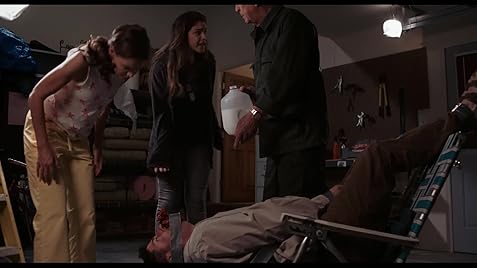
When political turmoil forces a British-Caribbean dictator to flee his island nation, he seeks refuge and hides with a rebellious teenage girl in suburban America, and ends up teaching the young teen how to start a revolution and overthrow the “mean girls” in her high school.


DEAR DICTATOR has an usual and outrageous premise for its script.  Dictator teaches school girl how to deal with the ‘mean girls’ in her school while initiating a revolution on his own island.

When political turmoil forces a British-Caribbean dictator to flee his island nation, he seeks refuge and hides with a rebellious teenage girl in suburban America, and ends up teaching the young teen how to start a revolution and overthrow the “mean girls” in her high school.  The sparks really fly when General Anton Vincent (Michael Caine) actually appears to Tatiana (Odeya Rush).  “Don’t worry, mom!  He is not a creepy child molester.  He is just a Dictator!”  Tatiana re-assures her mother after she finds him in the closet, thinking she has hidden Danny there.  Other subplots like the one with the mother (Katie Holmes) trying to make it with her employee, dentist (Seth Green) also works the humour favourably.

Despite the highly unbelievable plot, the script makes no effort to make it more credible, which is a good thing.  The film takes it that everything as a given and totally believable and even takes things several steps further.

The film also works primarily due to the comedic performance of veteran British actor Michael Caine.  Caine seldom does comedy, but when he does he can be really funny, as he proved in his role as the father of Austin Powers, Nigel Powers in GOLDMEMBER.   I still remember his classic line in that movie “There are only two people I do not like in this world – the racists and the Dutch.”  The reason Caine is so funny is that he takes all the writing dead seriously, delivering the lines as if his life depends on it.  The result is the over-the-top humour that suits most of the writing in this film.  The film has a preposterous over-the-top premise and Caine makes it work.  And work well.  It is good to see Caine take on a variety of different roles and not old fart roles like a seniors trying to have sex or fall in love.  Other comedians Seth Green and Jason Biggs as Mr. Spines are also funny.

The film also contains many messages as well, and hilariously delivered at that.  The film pokes fun at America as the General criticizes Americans saying:” You eat and eat until you cannot speak anymore.”   He even convinces Tatiana that she has the power to change her school.  Also the General teaches her to diffuse factions as they rule by “fear or love”.

The film contains many quotable lines.  Besides Hamlet’s “Conscience makes cowards of us all”, there is the General Anton quote: “I am a rebel, I keep going until I am stopped!”

Another surprise is the film’s serious tone.  General Anton’ speech to Tatiana about doing what’s right despite hurting the ones one loves should be taken with a pinch of salt.

A smaller budget comedy that is well delivered because everyone is convinced that the material works, ends up entertaining and hilarious for audiences as well.  Many, many laugh-out loud moments.

Trailer: https://www.youtube.com/watch?v=drbcXMdfNkA

Submit your Screenplay to the Festival TODAY

Film Review: TOMB RAIDER (USA/UK 2018)

Submit your Screenplay to the Festival TODAY

Tomb Raider Poster

Trailer

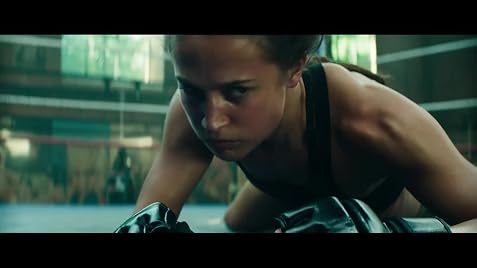
Lara Croft, the fiercely independent daughter of a missing adventurer, must push herself beyond her limits when she finds herself on the island where her father disappeared.

Director:

Roar Uthaug

Writers:

Geneva Robertson-Dworet (screenplay by), Alastair Siddons (screenplay by) |2 more credits »


Submit your Screenplay to the Festival TODAY

Film Review: THE LEISURE SEEKER (USA 2017)

Submit your Screenplay to the Festival TODAY

The Leisure Seeker Poster
Trailer

A runaway couple go on an unforgettable journey in the faithful old RV they call The Leisure Seeker.

Director:

Paolo Virzì

Writers:

Michael Zadoorian (novel), Stephen Amidon (screenplay) | 3 more credits »


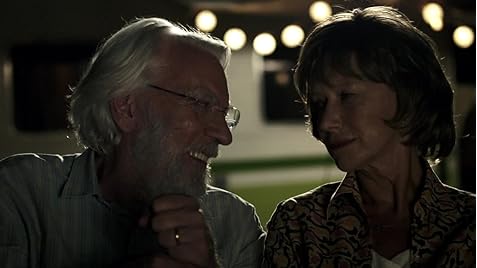
Oscar winner Helen Mirren (THE QUEEN) and Donald Sutherland star as an elderly couple looking for adventure on one boisterous and bittersweet final road trip.

It has finally come the time (UGH!) when both Mirren and Sutherland star in a old fart film, and one that goes all the way.  Yes, heaven forbid but the worst can happen. THE LEISURE SEEKER is the camper that the elderly married couple take off on their road trip.

Italian director Paolo Virzi who also did the music for the film makes clear of his American political stand.  The film opens with Trump, newly elected voicing his speech on the radio “We will make America great again.”  Another scene later on in the film has the couple walking through a pro-Trump rally.

Ella (Mirren) is dying of cancer.  Her husband, John (Sutherland) is suffering from Alzheimer’s disease.  As the film opens, their son and daughter discover that their parents have taken off with THE LEISURE SEEKER, on a last road trip.  Neither Ella nor John is interested in quietly fading away surrounded by nurses and machines just to needlessly prolong a winnowing life.  They travel from Boston to Florida (some nice scenery on display) with John behind the wheel.  He may not always be cognizant of the nature of their trip — she assures him it is just a vacation — but he gets into the spirit.  As they pass through cities and towns they see how much the world they know has changed for ill or for good.

The film is based on the novel by Michael Zadoorian.  But as a film, there is too much tackled in the film.  Everything that one can think about growing old is in the film and covered unfortunately in a clinched manner.  

The issues covered include:

sex between an elderly couple

sickness that are incurable such as cancer and memory loss

past skeletons in the closet

children who care too much

being a burden

loss of bodily functions

dying

retirement homes

being taken advantage of as seniors (the hold-up scene)

what old people really look like outside their make-up and hair pieces

Director Virzi acts like a traffic cop ushering these issues in an out.  The incidents like the traffic comes and goes, none too memorable, and quite boring too, just as the job of directing traffic.

Helen Mirren does a southern accent though her British accent can still be heard.  Her first few dialogue lines are done with British accent which is odd.  Mirren is brave enough to show her real looks, with thinning white hair and all.  Sutherland, looking really lean and sexy in the old (younger days) photographs on display in the film.

The script attempts to put some insight with lots of quotations from Hemingway as John is a former professor of Literature.

It is clear that the film is aimed at displaying humour, affection, observation, and maybe a little satire, but the result is another old farts fantasy film about old people trying to be young again.

Trailer: https://www.youtube.com/watch?v=VGGKsVFslJ8


Submit your Screenplay to the Festival TODAY

Film Review: ISLE OF DOGS (USA 2017) ***** TOP 10

Submit your Screenplay to the Festival TODAY

Trailer

Set in Japan, Isle of Dogs follows a boy’s odyssey in search of his dog.

Director:

Wes Anderson

Writers:

Wes Anderson (screenplay), Wes Anderson (story) | 3 more credits »


ISLE OF DOGS lies on many critics’ list as one of their most anticipated films of the year.  The reason is easy to see.  It has been 4 years since Anderson wowed both audiences and critics alike with the excellent THE GRAND BUDAPEST HOTEL.  ISLE OF DOGS is also Anderson’s second animated feature after THE FANTASTIC MR. FOX and judging from that film, ISLE OF DOGS arrives with high expectations.  Fortunately, these are all met.  The film also won Anderson the Silver Bear Award for Best Director for ISLE OF DOGS which also opened the Berlin International Film Festival.

In a dystopian future Japan, dogs have been quarantined and banished to a remote island due to a “canine flu”.  Major Kobayashihas (Kunichi Nomura) who has won the election and has convinced all his voters that this is the best idea.  The all-important question is then posed; “Whatever happened to man’s best friend?”  

There is hope for the dogs.  A boy, ironically the major’s nephew, Atari (Koyu Rankin), ventures to the island to search for his dog, Spots (Liev Screiber).  There is at least one human being who still loves his pet dog.  Dogs Chief (Bryan Cranston), Rex  (Edward Norton), Boss (Bill Murray), Duke (Jeff Goldblum), and King (Bob Balaban) help him search for Spots and evade the authorities.  Eventually Atari discovers his uncle’s plot to eliminate all dogs on the isle and with the help of the dogs led by Chief saves the dog world.  The film is enough to seriously have audiences consider getting themselves a pet dog after watching the moving saga.

The film is shot in both English and Japanese.  The dogs speak English which English audiences understand while the humans speak Japanese which the dogs (and audiences do not understand).  This is a brilliant concept which is even more brilliant when one considers the reverse effect when Japanese watch the film.

The ensemble voice cast is impressive but largely wasted as many of the voices cannot be recognized.  Even Yoko Ono is on the list, but very few know what she sounds like, less alone the more famous stars that include Ken Watanabe, Frances McDormand, Harvey Keitel, Scarlett Johansson, Greta Gerwig, just to name a few.

And the film is extremely funny with more than I can count, laugh-out loud moments.  Anderson’s humour is mostly tongue-in-cheek, which is not the characteristic humour (slapstick, sarcasm, dead-pan) found in many films.   Examples are the way Anderson shoots his animated feature as if all happening is live action.  The segment on the liver transplant is done in an overhead shot as if the operation is actually filmed live with live characters.  Dialogue like one dog saying: “The ones I want are never in heat!” or “I see cats with more balls than you guys,” also come across as very funny in their situations.  The most hilarious of these occur after the film’s climax where the mayoral elections are finally over with the commentator announcing in a sort of anti-climaxed statement: “Boy, What a night!”

On originality alone, ISLE OF DOGS scores 100% which makes it one of the first 10 best films of 2018.  Boy! What a movie!

Trailer: https://www.youtube.com/watch?v=dt__kig8PVU


Submit your Screenplay to the Festival TODAY

Film Review: UNSANE (USA 2018) ***1/2

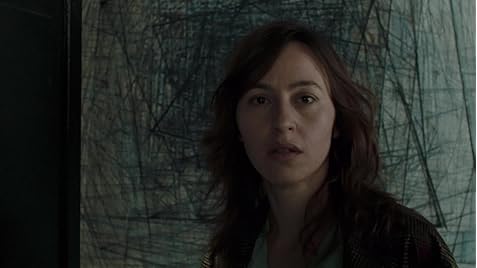
A young woman is involuntarily committed to a mental institution, where she is confronted by her greatest fear–but is it real or a product of her delusion?

Director Steven Soderbergh alternates between making big budget Hollywood blockbusters like OCEAN’S ELEVEN, ERIN BROCKOVICH and small budget personal movies.  UNSANE falls into the latter and shows the director in playful mood.  His playful mood translates to genuine scares and twisted humour in UNSANE, the story of a businesswoman institutionalized against her free will.

UNSANE contains touches of Soderbergh’s past films like a female heroine discovering a conspiracy (ERIN BROCKOVICH) and even has a welcome appearance of a cameo from a famous actor from one of his blockbuster films, even if not for more than a minute.  The film is updated to a scene similar to what the heroine would face if placed in a Harvey Weinstein like situation.

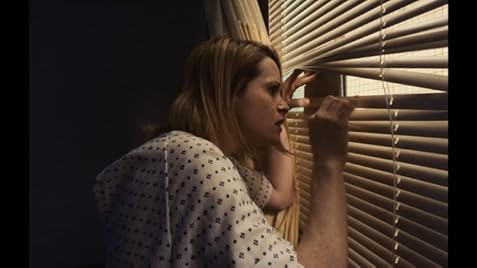
The heroine of the piece is Sawyer Valentini (Claire Foy), a young, pretty and bright but troubled businesswoman.  She begins to find out that her past is catching up to her when she encounters a stalker. To ensure her safety, Sawyer signs up for a support group that helps people tackle stalking problems.  She also moves to a different city leaving her mother and friends behind, leading an excluded life that would likely bring her paranoia.  She gets help from a stalking support group.  Unfortunately, Sawyer finds out that she has involuntarily placed herself in a mental institution with strict rules that there should be no contact with the outside world.  The message here is to be careful what you sign.  Never sign what you have not read!  Now, Sawyer is alone and trapped against her will.

According to the film’s ad, Sawyer must fight her own demons within the twisted asylum as the visions of her stalker begin to take over.

There are are two main questions posed in the film’s premise:

what the reason is for her to be institutionalized against her own free will

whether she is imagining the stalker now or is it the real thing

To avoid any spoilers, the answers will not be revealed in this review, safe to say that they are revealed to the audience quite early in the film.  Nevertheless, director Soderbergh devises other means to scare his audience.  And quite effectively too.  One is the placement of another scary, mental patient in the bed next to Sawyer.  Olivia (JunoTemple) is not all there and carries a sharp object which she threatens Sawyer with.  Her mother (Amy Irving) inadvertently lets Sawyer’s stalker into her apartment as he poses to be the maintenance man.  (Message: Never let strangers with no identification into you home.”  The element of audience anticipation is cleverly evoked.

The film has a few flaws.  The monologue that Sawyer delivers to her tormentor that results in his breaking down garnered a few laughs in what was supposed to be a dead serious segment.  UNSANE contains a few ultra-violent scenes reminiscent of another kidnapping film, Stephen King’s MISERY.

Coming out of the film, I heard a member of the public complain that she had watched a dissatisfying movie.  There is nothing dissatisfying about this movie.  Great premise, apt performances and scary atmosphere – no complaints in these departments!  UNSANE is a genuinely scary, well executed movie that brigs closure to all the issues tendered.  What she saw was a less commercialized movie she and many are not used to.

Trailer: https://www.youtube.com/watch?v=u7KZrt_cHH0

HIGHLIGHTS & VIDEOS: February 2018 Sci-Fi/Fantasy Festival

fantasyscififestival's avatarFantasy/Sci-Fi FILM & WRITING FESTIVAL

AUDIENCE AWARD WINNERS:

BEST FILM: Monsieur Hernst
BEST PERFORMANCES: Monsieur Hernst
BEST CINEMATOGRAPHY: Monsieur Hernst
BEST MUSIC: Tears in the Rain

Watch the Audience FEEDBACK Video:


festival posterBREAKER, 10min., Japan/Canada, Sci-Fi/Action
WATCH Audience FEEDBACK

festival posterSKIN DEEP, 20min., UK, Fantasy
WATCH Audience FEEDBACK

festival posterMONSIEUR HERNST, 15min., France, Sci-Fi/Drama
WATCH Audience FEEDBACK

festival posterLILITH, 19min., USA, Sci-Fi/Drama
WATCH Audience FEEDBACK

festival posterBACK PAGE RIPPER, 5min. USA, Sci-Fi/Mystery
WATCH Audience FEEDBACK

festival posterMAN-AT-ARMS, 10min, UK, Fan Fiction//Animation
WATCH Audience FEEDBACK

festival posterTEARS IN THE RAIN, 11min., South Africa, Fan Fiction/Sci-Fi
WATCH Audience FEEDBACK

The 1st Sci-Fi/Fantasy Film Festival event of 2018 was a great success.
The theme of the event was “Saving or Being Saved”.

Every film was about seeing a situation or person was being saved. Or someone saving someone else.

I have to say that the short film showcase of Sci-Fi/Fantasy movies is always a great success. It sells out quickly and a whole new crowd…

View original post 233 more words

Film Review: TEARS IN THE RAIN, South Africa, Fan Fiction/Sci-Fi 

TEARS IN THE RAIN, directed by Christopher Harvey, is an eleven minutes fan-fiction short film coming out of South Africa, that is inspired by the works of Philip K Dicks’ novel Do Androids Dream of Electric Sheep? As well as the motion picture Blade Runner. Our hero is met unexpectedly at a restaurant to be terminated by an insurance worker. But while the irreversible termination takes place our hero frantically tries to reason with his assailant that there has been a terrible mistake- he is not, in fact, a machine, but a real person. The back-and-forth continues, scratching the surface of morality, philosophy, technology and our transhuman future. But when the end finally comes, our insurance villain realizes that he may have actually terminated not something- but someone.

A love letter that pays homage to some of the great creative media works of our age, TEARS IN THE RAIN does justice to the fiction is draws its inspiration from. Excellently cast, brilliantly acted and incredibly powerful (although surprisingly simple) this is a film that reminds us that we do not need million-dollar special effects to create a story with edge-of-your-seat intensity. Well done, Christopher Harvey, well done.

Review by Kierston Drier

Film played at the 2018 FANTASY/SCI-FI Film Festival on Valentine’s Day in downtown Toronto, Canada

WATCH the Audience FEEDBACK Video:

TEARS IN THE RAIN, 11min., South Africa, Fan Fiction/Sci-Fi 
Directed by Christopher Harvey 

Tears In The Rain is a short film set in the world of Philip K. Dick’s novel Do Androids Dream of Electric Sheep? (1968) as well as the motion picture Blade Runner (1982).

CLICK HERE – and see full info and more pics of the film!