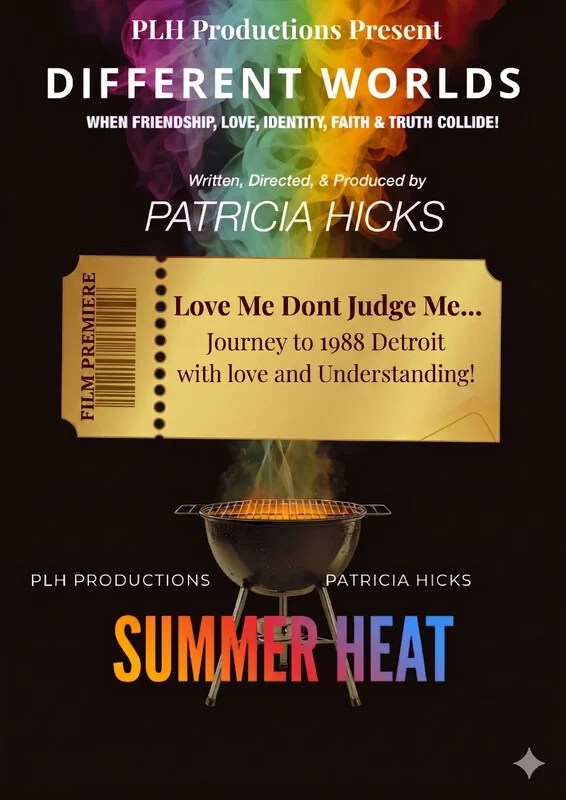
Imagine a friend inviting you to a barbecue in 1988 Detroit hosted by a gay man named Larry and then you will understand the point of view of the main character Patrice as she has to argue with her inner thoughts verses the world around her in DIFFERENT WORLDS: SUMMER HEAT. In the height of the HIV/AIDS crisis, where the propaganda is making even people like Patrice suddenly begin remembering that she was raised in the church without being able to quote exact scripture.
This exact era was depicted perfectly in this film through the point of view of an outsider witnessing what the fear mongering was doing to the LGBTQ community. Patrice was unexpectedly flung into this scenario by her friend, which brought her defenses up as she began to rationalize her judgments against every person rather than listen to the stories that revealed deep hypocrisies. One woman mentioned that she was also raised in the church, but her mother used her as a check from the welfare system and did drugs all week long. This same woman was kicked out as soon as her mother learned she was a lesbian and condemned.
This film gives a powerful lesson about judgement, which shows that if we lift the roofs off of other people’s homes that no one would have the right to judge another person. This comes through in the most powerful character, Larry, who is the voice of reason. He starts off as the fun jokester, the person that the viewer wouldn’t think would be the voice of reason by the end of the film. His party was essentially ruined through all the tension and fighting, to the point that he burnt the burgers that he bragged about, as he had to calm everyone down. Everyone needs a Larry in their life, the person that worries about other people and genuinely cares about people. Larry stated that he tries to live as a good Christian, which means loving everyone without judgement.
A woman has gone missing. The agoraphobic Keith Lamont is her last hope. But to find her, he’ll have to face his deepest fears.
Review by Victoria Angelique
The feature film, AWAKEN THE REAPER, is the perfect analogy for why people shouldn’t do drugs but put into a horror film scenario. The story starts slow, but once the action begins, it never stops until the last few minutes and makes it worth the wait.
The narrative follows Keith as he comes back from a camping trip with his rehab buddies, when one of his cohorts goes missing. Like any good friend, Keith is worried about Sarah, but she’s answering her text messages. When Keith’s friends start dying Final Destination style deaths, it makes him paranoid to leave his house. This raises the question, can that actually prevent a person from dying when several of his friends were killed inside their homes? For Keith this proves his worst fears, when the killer breaks in to kill him but kills his parents.
The graphics show high definition blood creeping up walls and black goo easing up drains as if out of nowhere. This is coupled with the dark shadows and sinister music that states a villain is nearby. Like all good horror films, the bad guy wears a mask and this is one that stands out as different, like an angel of death with how black it is against the night to blend in with the shadows.
The entire film is a metaphor for why people shouldn’t do drugs. It is just as each character relapses from their sobriety that they are killed in the most graphic of ways. Each of Keith’s friends are killed in gruesome and graphic murders that will make the audience cringe.
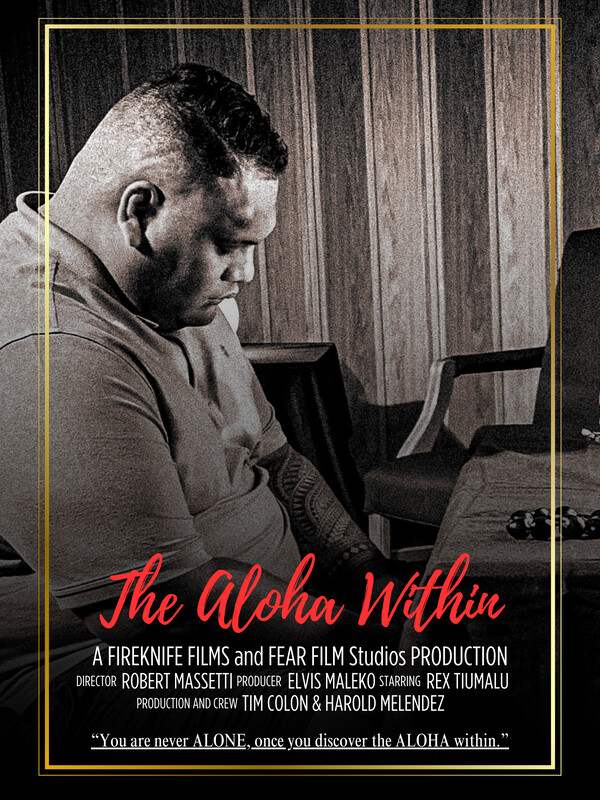
Through a time of personal struggle and tragedy, a young Polynesian stage performer named Marc discovers a new meaning of hope. This hope is found through a support system he never knew he had. As he pieces together the support of family, friends, and culture, Marc realizes something of great worth and value, the Aloha within.
This is a really beautiful film from Elvis Maleko about grief, healing, community and the deeper meaning of the word “aloha”. Elvis was the creator, co-director, he starred and edited this film which is definitely a labor of love. I really loved learning that the deeper meaning of Aloha is: “the presence of life”. Plus the on screen rapport between Elvis and Rex was lovely.
The music for this film was done exceptionally well, the vocalist at the very beginning had this amazing high tenor voice that was just breathtaking. Plus the filmmakers were very smart letting the music tell a portion of the story so there was no dialogue needed. The story was really well thought out and beautifully told.
It was stunning to watch the different performances, the fire work and the various traditional dances were incredible. I think it was very clever that the filmmakers used a voice over and sound effects to help the audience understand that they were watching a “live performance before an audience”- it’s such a simple effect but one that worked brilliantly.
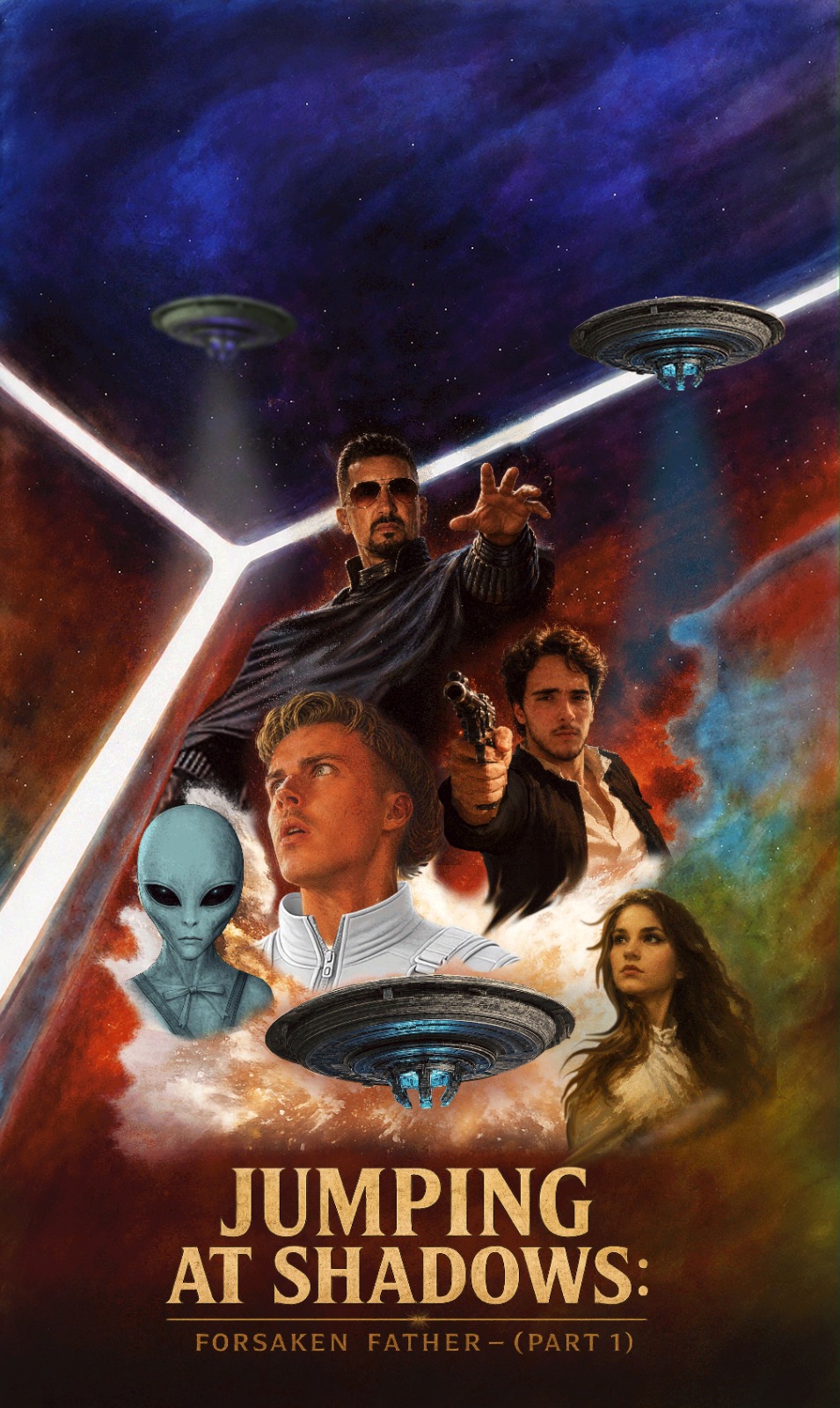
Charlotte’s 18th birthday takes a dark turn when Agent Nixon arrives with shocking revelations about her past and his true reasons for hunting aliens. When a desperate attempt to change history unleashes catastrophic consequences, Locky and Jett are thrown into a terrifying alternate future where humanity faces extinction, and must find a way to undo the damage, before it’s too late!
Directed by Locky Boaretto
Review by Victoria Angelique:
The first part of the series told in storyboard, JUMPING AT SHADOWS, follows Locky and Jett as they literally race through time to stop a man named Nixon from destroying all of civilization in his pursuit for vengeance. This story thrusts the audience into action within the first five minutes of the narrative, when Nixon arrives on Charlotte’s birthday and begins poking holes in everything she believed was true. He is an alien hunter, her best friend is an alien, and Nixon is also not her father like she has always believed because her parents were killed by aliens.
The story continues on these same types of twists and turns throughout the entire episode to keep the viewer interested. Just when the story starts to become predictable, another twist is thrown in to keep the audience guessing about what could come next for Locky and Jett as they race through time and space to save their friends and humanity.
Time travel has rules, but what happens when someone like Nixon ignores the fabric of reality? The world is thrown into chaos and he erases the very person that he wanted to protect, Charlotte.
JUMPING AT SHADOWS proves that actions have consequences and why it is imperative to think before jumping into action. It could have devastating effects on more than just one person, but an entire civilization as this pilot episode proved. If the entire series continues down this trajectory, it will be an exciting journey to take with Locky and Jett as they are forced to save humanity multiple times. It’s been a few years since there has been a series with a good brother duo taking on the world together.
In the twilight of his years, a once celebrated chef, now a humbled widowed dishwasher, conceals his storied past while caring for his adult special needs son. As the echoes of his culinary fame fade, a serendipitous encounter reignites his passion, compelling him to embrace his mentorship role and rediscover the art of inspiration. This is a fictionalized view of a unromanticized reality. Not star chefs, not kitchen combat. The characters of the culinary world who’s stories are never told. A story about a father’s love for his son, and relighting his inner beacon, allowing his light to shine outwards once more and illuminate the path for others.
Review by Victoria Angelique:
The short film, WHAT’S LEFT, is a poignant film about the sacrifice’s a parent will make for their child after the death of a spouse. The themes covered in this film relate to many moments in life, that one event can change an entire person’s life. For this man, it is the death of his wife after a battle of cancer and he becomes the sole caretaker of his special needs son.
The cinematographer captured the life this father once had, a Michelin star chef that once headlined newspapers, and now to support his adult child, he washes dishes at a restaurant where the chef abuses his staff rather than teaches them when they make mistakes. This chef is arrogant and makes it clear that he doesn’t know what his own craft is when this kind father has to step in to correct a frustrated sous chef by patiently teaching her the steps rather than belittling her.
This demonstrates the kind of man that he is because how many people could remain quiet when being berated by a much younger boss when you know that your own skills are far superior than his own? This is the kind of man that knows his son comes first and what his wife would’ve wanted, though the cashier at the gas station kindly reminds him she wanted him to work as a dishwasher for a horrible boss as he prays about winning the lottery.
This film is a character study about one man and what he has sacrificed for his child. This is a wonderful story about a father’s love for his child and how it doesn’t matter what his boss says to him, because at the end of the day it is worth it to go home to his son, even if he is no longer a five star chef.
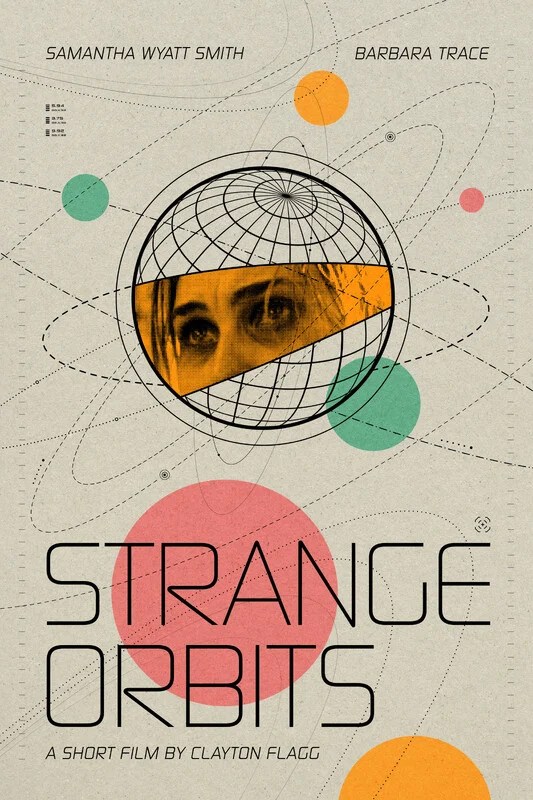
Isolation and a foreboding fear of death surrounds this uncanny sci-fi short film, Strange Orbits. The unknown planet on which the ailing astronaut finds herself is well conceived, with hazy lighting, unrecognizable plants and chirps of unidentified animal life.
The sci-fi essence is clear with the Star Wars-like roving robot and its quirky sarcasm, that accompanies the astronaut. The lush, humid location of the dangerous swamp is especially well-selected, given the arrival of the ominous, ghostly inhabitant that offers a lifeline to the main character.
The echoey whispers surrounding this scene serve the eerie narrative perfectly, and its blurry imagery is a striking foil to the crystal clear camera work of the hospital rescue setting that follows. It seems to be assumed that while death is no longer a worry, existing forever on a planet in a strange orbit is now the astronaut’s frightening fate.
Mon Amour leans into the atmosphere, allowing Paris to become as much a character as the musician who wanders its streets with a guitar slung over his shoulder. This artistic intent is immediately established by the opening wide shot, which frames the lone traveler against one of the city’s grand public spaces, presenting him less as a conventional performer and more as a wanderer searching for something just out of reach before a single lyric is ever sung.
The first close up on his fingers strumming suggests a familiar Parisian image: the street busker. Dressed in a vintage red flat cap and a playful motorcycle print shirt, he feels comfortably out of time, as though he belongs equally to modern Paris and an older postcard version of the city. Throughout the video, his wardrobe changes repeatedly, cycling through different colored caps and patterned shirts. These shifts reinforce the dreamlike quality, where the editing lets memories blur together instead of following strict chronology.
Color carries much of the video’s emotional weight.
The recurring red is impossible to ignore. The musician introduces it through his cap before the mysterious woman appears wearing her own red beret and matching tailored suit. Even the lyrics compare her to “sweet red wine,” tying romance directly to the color palette. Red becomes more than attraction. It becomes memory itself, lingering long after a chance meeting should have faded.
The woman watches the musician perform among tourists and locals, her floral pink heels adding a gentle softness beneath the bold red silhouette. The camera holds them in the same frame but rarely lets them share the same plane of focus, so their connection feels immediate, yet strangely distant, as if each occupies a slightly different version of the same afternoon.
The setting does much of the storytelling.
The musician serenades strangers beside fountains framed by elegant architecture while life continues uninterrupted around him. Families stroll past. Children play. Couples linger by the water. The blocking never isolates him from this world; Paris remains indifferent to his longing, reminding us that even our most personal moments unfold inside a city that barely notices them.
Several visual transitions deepen that sense of nostalgia. Close shots of footsteps crossing cobblestones guide the audience toward the riverbanks, where the lyrics speak of boat rides beneath the moon and evenings spent with red wine, haunted by thoughts of a woman whose name he may never know. A beautifully framed statue briefly enters the narrative, standing as another silent witness to fleeting romance.
One of the strongest visual touches comes through the woman’s purple scarf. Against her dominant reds, the subtle splash of purple introduces emotional complexity through color grading alone. Traditionally associated with melancholy, reflection, and the space between passion and grief, it quietly suggests the death of possibilities before the relationship has truly begun.
By the closing moments, the boundaries between fantasy and reality dissolve completely. The musician imagines life without Paris, only to open his eyes and find the woman from his dreams beside him. They smile. They walk together. The edit never fully confirms whether this reunion exists or simply represents the ending he wished for.
That ambiguity becomes the video’s greatest strength.
Mon Amour understands romances are defined less by what happened than by what almost happened. Through gentle performances, thoughtful color symbolism, and an affectionate portrait of Paris as both stage and witness, it captures the bittersweet feeling of carrying someone in your mind long after they’ve disappeared into the crowd. It is wholesome without becoming sentimental, cinematic without demanding attention, and quietly asks a question that lingers after the music ends:
Was this love ever real, or was Paris simply the perfect place to dream it?