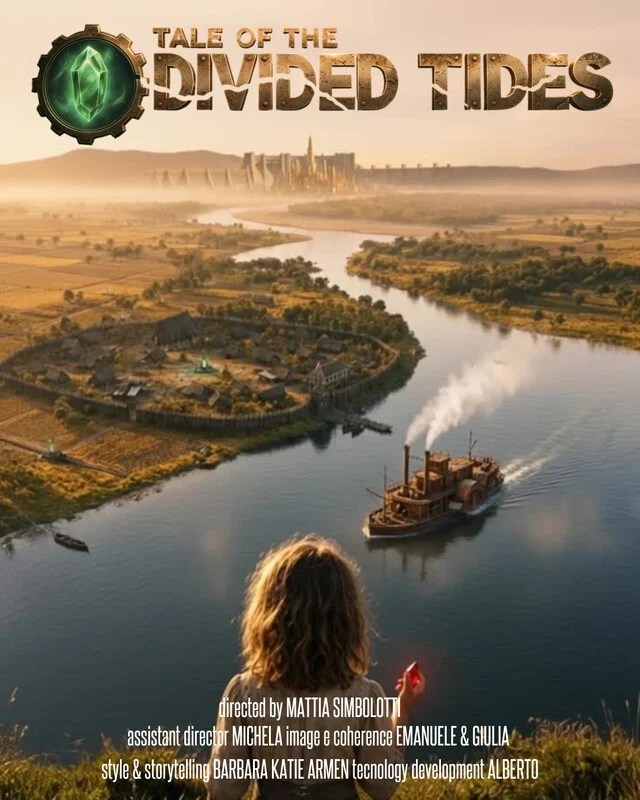
Short Film Review: Tale of the Divided Tides – The Beginning, Italy

Real Facts inspired movie that tells something about our world following Miles in search of equilibrium, Patrick in search of his father, Edith that might solve the world’s greatest riddle

Project Links

Directed by Mattia Simbolotti
Review by Andie Kay:

Storytelling 2.0 with the power of Artificial Intelligence is something some folks adore and some hate. I do appreciate a story that is well told and everything is clear. And a film using AI that’s based on “real facts” – is simply a cool way to make a film. It’s a way to pull the viewer in 100%.


This film had that beautiful, slick feel that AI brings to the table and thanks to Image and Coherence team members Emanuele and Giulia everyone looked the same from scene to scene. They were working closely with Alberto who handled Technology Development.

The story was interesting and captured your attention and Barbara, Katie, and Armen handled that plus the overall style of how the film should look. This was all brought together by Director, Mattia Simbolotti, with the support of Michela, the Assistant director. Overall it made sense to use AI for this, especially not having a major studio backing you and using their resources to convey the special effects throughout the film.
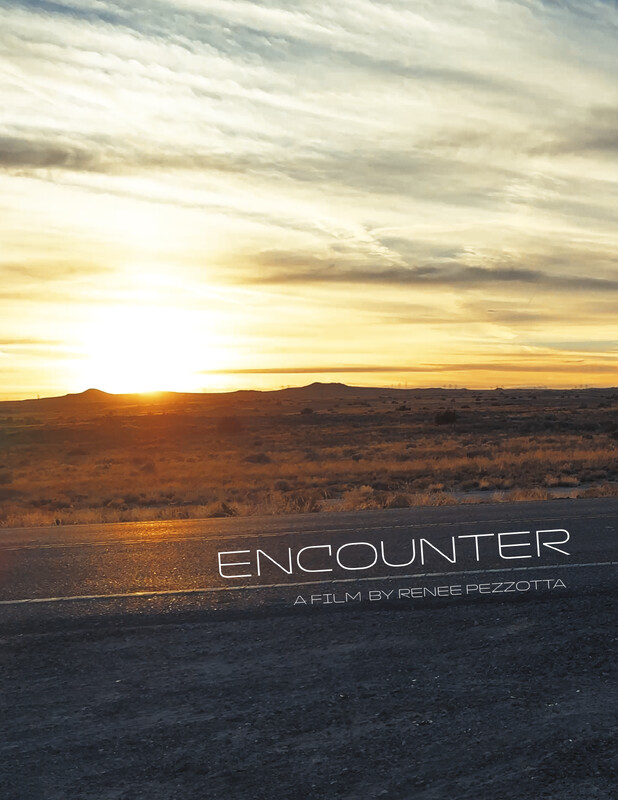
Short Film Review: ENCOUNTER. Directed by Renee Pezzotta

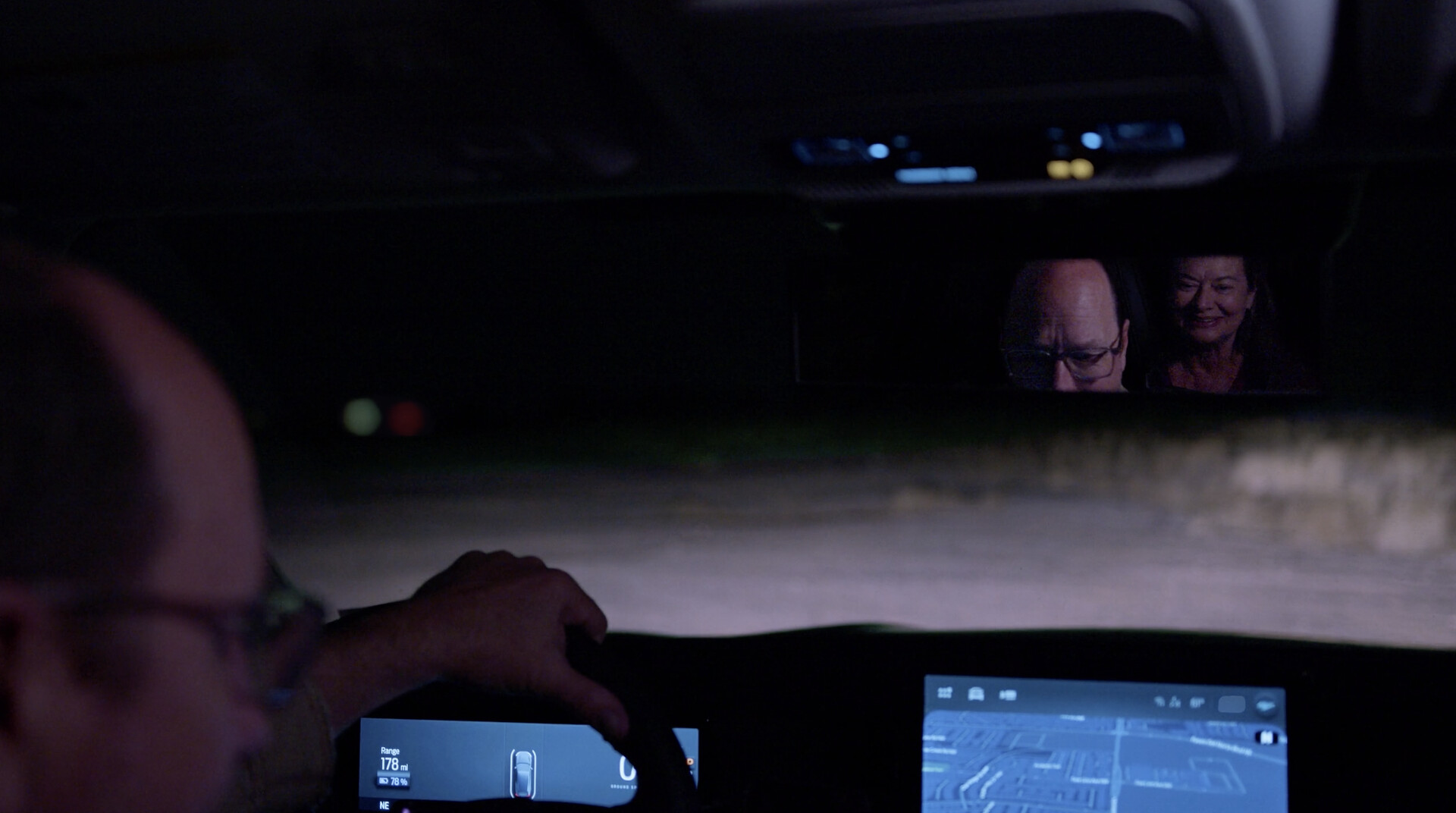
A seemingly ordinary rideshare turns into an extraordinary encounter.

Project Links

Review by Victoria Angelique:

ENCOUNTER sets itself up around a familiar setting that deals with the unpredictable nature of rideshare driving. The film takes place almost entirely inside of a car, which mirrors the everyday reality for many people that work for a rideshare company. The two characters, the driver and his passenger, explore themes of empathy and skepticism that all comes with a day’s work.

The film’s primary strength lies in its psychological tension and character contrast. The driver represents the everyday person that is hardworking but still a decent person that questions about dropping someone off in a strange location. The passenger  is erratic as she attempts to prove her conspiracy theories to an unbeliever. The narrative relies heavily on this tension between believing sound logic or falling into the world of conspiracy when confronted with another person’s proof. The film is asking the audience if compassion and empathy still applies when someone appears crazy and could potentially put another person in danger. It queries if self perseveration should come before being a good person that worries about others. 

The film uses props, like a notebook filled with bizarre formulas and incoherent text, to show how obsession can take over someone’s life. The passenger’s frantic belief creates the tension inside the car, forcing the viewer to decide whether the woman is simply mentally ill or telling the truth about an unexplained phenomenon. 

ENCOUNTER transforms a simple rideshare commute into a world where instinct is pitted against societal norms. It examines the length someone should go for a job that requires helping a stranger, leaving the audience to question whether trusting a person that appears severely mentally ill is an act of foolishness or simple human empathy.

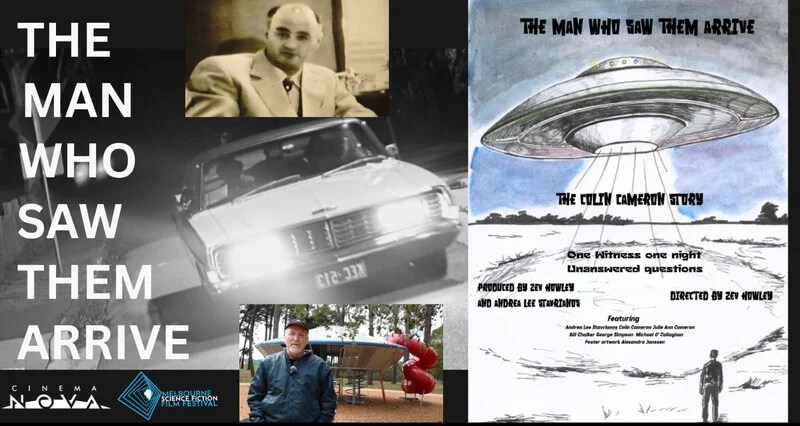
Feature Film Review: THE MAN WHO SAW THEM ARRIVE. Directed by Zev Howley

One night in 1968, Colin Cameron witnessed something that would consume the rest of his life. Filming unexplained phenomena in suburban Melbourne, his search for truth blurred the line between obsession and survival. Through family testimony and landmark UFO cases, this film explores a hidden chapter of Australia’s unexplained history.

Review by Victoria Angelique:

Do you believe in UFOs and Aliens? The feature documentary THE MAN WHO SAW THEM ARRIVE tells the story of Colin Cameron, an Australian man that claims to have witnessed a UFO landing on January 6, 1968. This film serves as a tribute to Colin from those that loved him as they talk about his life and how this encounter impacted his mental health. 

Colin Cameron had footage of what he stated was a UFO landing and the documentary even shows his grainy film footage. Cameron knew what he saw and would teach other people in his life about the incident. There was a round burnt ring and the documentary even interviews other people that claimed to see UFOs throughout the late 1960s and early 1970s. The witnesses include school children in Australia and a man that took classes on UFOs in the United States. One man was in England, but the question to skeptics remains, did they actually see UFOs?

This film will have audiences questioning who is telling the truth. Footage shows politicians giving plausible explanations for UFOs or stating to the public that they are looking for plausible explanations to the sightings. Being told that someone didn’t witness something that was being taught in universities during the 1970s on how to search for UFOs would impact anyone’s mental health. The documentary shows photographs and grainy footage of what appears to be Polaroids or film footage of UFO sightings. 

Colin Cameron’s mental health is reported to have declined throughout his life. This seems reasonable when even his colleagues and friends would’ve thought he was crazy. He knew what he saw and was only able to find a handful of people to believe him. That would make anyone depressed when they are being told to deny something that they truly believe was real.

Fortunately for Colin, his legacy remains as he has loved ones continuing to search for what he saw. He has people that believe him and are joining in the search for an explanation to the footage he captured. This documentary will have viewers questioning what is out there and if Colin really did something on January 6, 1968 based on the film footage shown within the film.

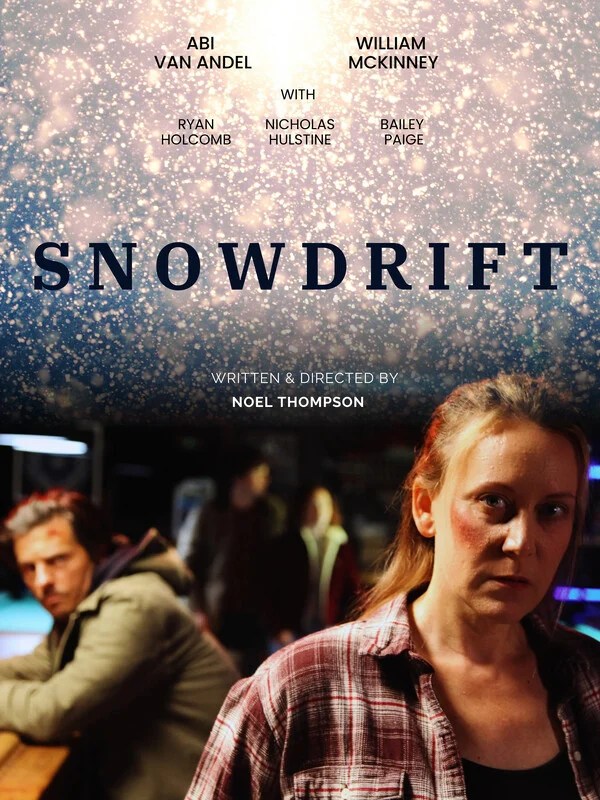
Short Film Review: SNOWDRIFT. Directed by Noel Thompson

A grieving father, a disillusioned barmaid, a sketchy barman, a newlywed couple, and a sheriff converge in a rural bar during a violent snowstorm, but little do they know only four of them will make it out alive.

Review by Julie C. Sheppard:

The gripping short Snowdrift is rife with tension and unspoken truths. As the film unfurls, it becomes apparent that characters have some dark secrets to hide.

Darkness also permeates the atmosphere of the central setting – – a gloomy, claustrophobic bar serves as a fitting temporary shelter from a nighttime snowstorm. In addition, there are apt sounds of howling winds, and nervous movements of the characters shifting around the creaky space. The music soundtrack also creates an atmosphere of fear and foreboding.

The acting is superb, as edginess simmers just below the surface, and the skillful screenplay allows for truths to gradually play out to a satisfying resolution, creating a sense of “cleaning house” from corruption. Justice has been served, despite the fact that certain truths must remain hidden.

Short Film Review: AT THE TURNING. UK Documentary

Throughout history, at such critical moments, visionary figures have emerged. The idea of The Coming One is found within all religions, and many believe we are living in a time when that expectation could be fulfilled. “At the Turning” presents the controversial idea that Maitreya, the World Teacher — expected under various names across many spiritual traditions — has in fact returned to the everyday world.

Project Links

Review by Julie C. Sheppard:

At the heart of the short At The Turning is both a warning and a call to action. It is visionary in its urgent messaging, and is passionately delivered by an articulate narrator, and thoughtful on-camera commentary from academia. This messaging is accompanied by a rapid series of video images from around the world, which effectively reveal the dire need for humanity to more equitably share resources – – the starkest being footage of wealthy yachts (with commentary highlighting the fact that there are more billionaires in the world now than ever) closely followed by images of crowded slums, where poverty is rampant.

On a lighter note, the film is also playful, interspersing footage of young children enjoying pleasures of life, which underscores a common human goal. Another positive message in the film is the prediction that our confused and disordered world is due for a prophetic messenger, Maitreya, who will awaken civilization to become more aware of the vital need to look out for one another.

The dynamic soundtrack flows beneath the film’s activity with grace and energy, moving from vibrant synth to stirring orchestral refrains, as the film moves to its climactic resolution. This important piece should be universally “sung from the rafters”– it is a wake-up call for everyone, from world leaders to the general populace, who seem to be stubbornly unheeding of humanity’s potential for collapse if collective action of altruism is not taken.

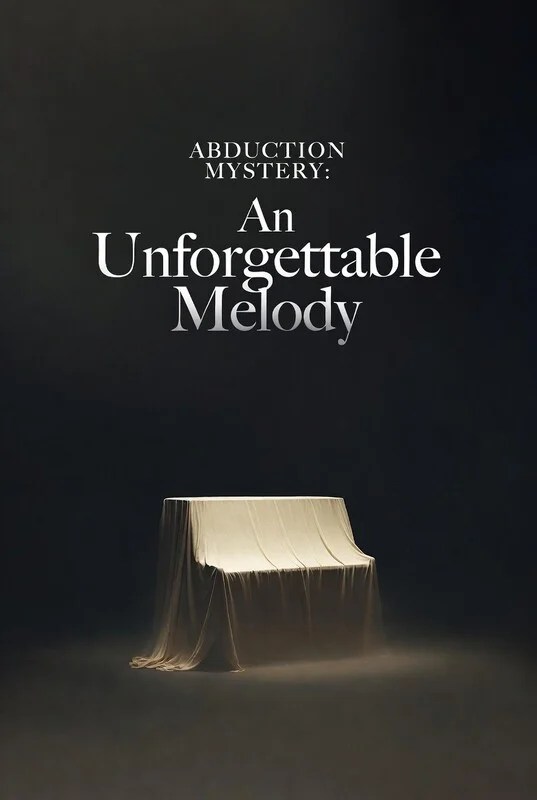
Short Film Review: Abduction Mystery: An Unforgettable Melody. South Korea

An obscure composer, a mysterious teenage girl, a scrappy reporter, a conspiracy theorist, a civil servant, and a punk—six strangers are held inside a remote house in the mountains by a shadowy organization.

Review by Victoria Angelique :

The feature film, ABDUCTION MELODY: AN UNFORGETTABLE MELODY, invokes a mystery that will cause viewers to begin questioning reality as they are immersed in an intense world that involves adult kidnappings and alien conspiracies. The film begins with Ms. Kim being abducted and utilizing one primary location makes the audience feel as trapped as this woman that feels like she is going crazy. What makes the story even more of a cinematic, immersive world is that the viewer will feel like they are going as crazy as Ms. Kim feels as the film begins to feel like a choose your own adventure book. 

The story on the surface seems simple, but it is when the scenario begins repeating that Ms. Kim realizes that she isn’t going crazy, but that she is being manipulated. Olga is the ringleader of this abduction campaign and she keeps mentioning to the abductees things about aliens and alien substances, which throws the film into an alien conspiracy and government involvement to kidnap people that might have been compromised by this substance. 

Olga has the power to restore each person’s memory and reset the timeline to before each person was abducted. Issues arrive when Ms. Kim and Su-Jin can remember each missing person, which causes Olga to continue to make excuses for keeping them imprisoned. Su-Jin has the power to turn back time for one hour and Ms. Kim had touched the green ooze from a suspected UFO, explaining their memories of each timeline. 

The most beautiful part of this film is the sisterly relationship that Ms. Kim and Su-Jin form. Ms. Kim wants to protect the much younger girl, but it’s not always possible, especially when faced with a much more powerful woman like Olga and a foreign reporter that will kill to protect herself. 

Ms. Kim starts as a skeptic when it comes to alien conspiracies that mingle with government programs, but by the end of the film, she is a believer.

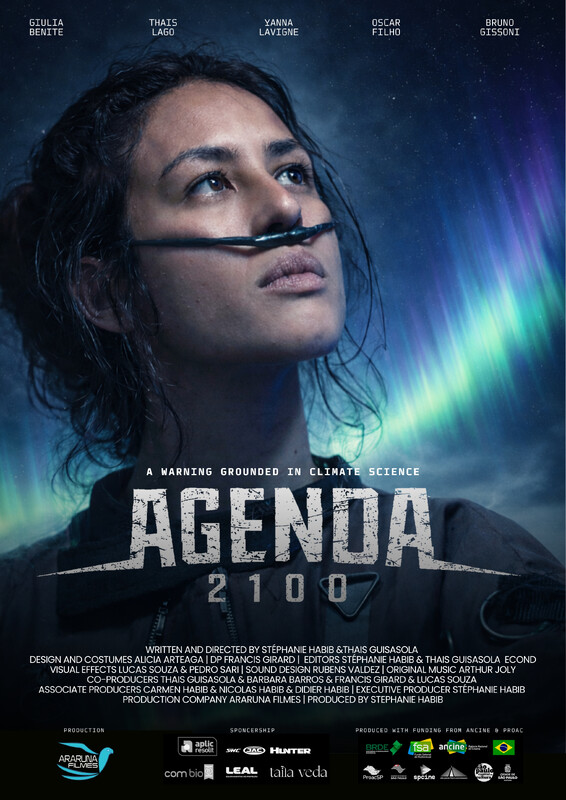
Short Film Review: Agenda 2100. Directed by Stéphanìe Habíb, Thais Guisasola

In the year 2100, on a planet devastated by environmental collapse and ruled by a totalitarian regime, Gaia — a young member of the resistance — risks everything to change the course of history. Earth has reached the +3°C threshold projected by climate science; ecosystems have collapsed, oceans have turned toxic, and humanity survives under strict control in underground enclaves.

Project Links

Review by Victoria Angelique:

The dystopian world of AGENDA 2100 depicts a grim reality where every move is controlled and food is rationed. It begs the question of what someone will do to secure a better future for an unborn baby, even if it means breaking the law to send a message to the past. 

The first few seconds opens with stunning graphics that display a desperate mother-to-be, Gaya, attempting to send a message to the past. This level of special effects remains throughout the film, which allows the viewer to see just how grim a future awaits the world in the year 2100. The world has no wildlife left, not one single bird or butterfly, which is why it stuns Gaya to see a real butterfly behind her colleague that is in the year 2020. This is her desperate attempt to send a code to this woman that will hopefully begin to lead to a better world. 

This is a dangerous attempt for Gaya, as sending unauthorized messages is illegal due to what the government deems a waste of energy. Her husband, Alexis, is slipping his pregnant wife extra rations from his government job to protect their child. Alexis ends up being killed shortly after his son is born and never gets to meet the child that he was excited to bring into the world. A devastating blow to Gaya as she imagines the meeting she had envisioned in contrast to this stark reality that has left her a single mother that is being actively hunted by their government for being a rebel. 

AGENDA 2100 isn’t only a dystopian world, but most importantly, a story about how far parents will go to preserve the future for their child. The tragedy of the dark world is broken when Gaya sees a butterfly, which lets her know that every effort was worth it for her newborn son.

Short Film Review: Munkács Miracle

Born days apart in 1930 and raised in Munkács, Czechoslovakia, Holocaust survivors Magda Bader and Ruth Cohen were transported to Auschwitz on the same day from the same spot when they were 14 years old. A chance encounter with an educator visiting the Holocaust Museum in Washington, D.C. brought them together after 81 years.

Review by Julie C. Sheppard:

The documentary short Munkács Miracle is indeed an exploration of the miraculous. The fact that the two main figures Ruth and Magda, from the same home town and survivors of the Holocaust as young teens, have met many years later in the United States is unbelievable, but true. This piece zeros in on the kind-hearted faces of these women, and also reveals that they are still experiencing pain and trauma, almost as fresh as if these atrocities were happening to them today. Scenes capture the quiver in their voices and their intense sadness, and the flashes of anger at what was experienced.

The subtle, yet evocative musical score below the interviews carry the heartbreaking storytelling along. Another filmic element that frames the piece is the stark archival footage of Hitler and Nazi soldiers and people being shuttled aboard train cars and crammed into ghetto bunks. These scenes are sickening to see, and they are also a reminder of the potential of how inhumane we can be towards one another. A memorable quote by Magda is a particularly apt regarding what we need to do to avoid the risk of dehumanization, in that “the earth was created for everybody, and nobody should feel like they are superior, and treat each other like human beings”. The decision to produce this film right now is quite timely when, no matter the background, humans must treat others with respect.

The film shows optimism in that these women, who have gone through so much, are offering themselves up as volunteer educators in hope that history does not repeat. The warmth and care that the woman share for each other on screen is lovely and it is indeed miraculous that they have come together after all this time.