Winning Short Story: THE POET by Stephen Karnaghan

wildsoundwritingfestival's avatarWILDsound Writing Festival

Performed by Geoff Mays
 
Get to know the writer:

What is your story about?

‘The Poet’ is a story about the lies we have to live in order to be accepted and praised. Even at the end of time, the protagonist has to lie to be accepted, when his truth is lost for ever.

Why should this story be read by people?

All the artists of the world, working to be recognised, and working to have their work loved by the masses have to create a body of work that is accepted. Is this the true message they want to put across? How would they react in the same circumstances?

How would you describe this story in two words?

Truth lost

What movie have you seen the most in your life?

‘Koyaanisqatsi’ by Phillip Glass.

How long have you been working on this story?

As I work on several…

View original post 204 more words

Winning Short Story: Seedy Hotel Sex by R James Turley

wildsoundwritingfestival's avatarWILDsound Writing Festival

Performed by Geoff Mays

 Get to know the writer:

What is your story about?

A guy angered from rejection.

Why should this story be read by people?

Because I think a lot of people can relate to getting rejected by someone they lust after.

How would you describe this story in two words?

Lonely heart.

What movie have you seen the most in your life?

Major League.

How long have you been working on this story?

One day

Do you have an all-time favorite novel?

No, just love fiction.

What motivated you to write this story?

I wanted to write something erotic.

What artist would you love to have dinner with?

Sir Paul McCartney

Apart from writing, what else are you passionate about?

Baseball

What influenced you to enter the Novel Festival?

An email

Any advice or tips you’d like to pass on to other writers?

Just keep writing.

View original post 11 more words

Winning Short Story: On the Hill by Kenya Abney

wildsoundwritingfestival's avatarWILDsound Writing Festival

Performed by Geoff Mays

Get to know the writer:

What is your story about?

The main character’s childhood boyfriend breaks up with her before they go off to college. It is about how she lets that event overshadow all the events unfolding around her.

Why should this story be read by people?

Everyone has experienced an unexpected ending of a relationship. Some people live in the emotions of loss. Others take a pause and move unto the next moments in life.

How would you describe this story in two words?

Relatable experience.

What movie have you seen the most in your life?

Love Jones

How long have you been working on this story?

It took me a couple of hours to write it. And, it took a little longer for me to cut it down to fit on one page.

Do you have an all-time favorite novel?

No.

What motivated…

View original post 330 more words

Interview with Film Festival Director Emmanuel Anyiam-Osigwe (British Urban Film Festival)

BUFF wants to change the face of British film. They want it to reflect all of us, not just some of us. They have made great strides in the right direction for over a decade. There’s no reason why that shouldn’t continue for a decade more. Across the film & TV industry, Britain’s filmmakers are much less diverse than Britain itself. And that can sometimes mean it’s much more of an effort to make films and TV programmes diverse, because they have to make an effort. This, in turn, is understandable.

Contact

 
Matthew Toffolo: What is your Film Festival succeeding at doing for filmmakers?

Emmanuel Anyiam-Osigwe: In the last few years, over 20 filmmakers have won an award through having their work showcased by the festival. Also, since 2012, over 20 festival films have been acquired for broadcast on Channel 4, BBC i-player, Community Channel and London Live.

What would you expect to experience if you attend the festival this year (2017)?

We’re only as good as our last festival and so for this year we have really pushed the boat out for filmmakers and audiences in general. For the first time ever, BUFF will be in attendance at Cannes to announce details about this year’s film festival and awards. Once again, the festival will run for a whole week in Central London in September. In terms of what to expect experience wise – we are planning the most audacious and memorable experience yet.

What are the qualifications for the selected films?

We don’t have specific qualifications for the films which get selected for the festival. When i’m asked what an urban film is, my response remains the same: it’s whatever you perceive the word ‘urban’ to be. It’s important that writers and directors retain the one power that they have over all of us – telling us a story that we’ll give a damn about – and not the other way round.

Do you think that some films really don’t get a fair shake from film festivals? And if so, why?

It depends on what you mean by fair shake. For a film festival like BUFF, the main work starts after the premiere as we believe in extending the commercial and PR shelf life for a film for as long as possible. It’s the primary reason why we established the BUFF Awards to provide further incentive for filmmakers to enter their films into our festival.

What motivates you and your team to do this festival?

For as long as I can remember, I have always cared about how I am represented. This is moreso in an industry which is rapidly having to deal with such an existential issue as diversity. Films are the lifeblood for any festival and with each passing year, me and my team, along with our esteemed patrons are able to see firsthand just how passionate other people are about diversity and representation. We have a duty to serve these filmmakers and audiences in general.

How has your FilmFreeway submission process been?

We offer great value for money therefore we’re not surprised by the phenomenal response from filmmakers and scriptwriters since submissions opened last November, moreso than ever before. We have also seen a greater number of countries enter submissions to our festival. It is heartening to know that our brand of diversity is universally acknowledged in places like Canada, Germany, Russia, Australia, Israel and Taiwan.

Where do you see the festival by 2020?

As the leading film festival for diversity in the world, we would like to take our brand of diversity to other countries. From a national perspective, there’s work to be done across the UK also and this will become one of our key objectives by the time we host what would be our 15th annual festival and 5th annual awards.

What film have you seen the most times in your life?

I could give you 10 as it’s a close run thing. Men In Black.

In one sentence, what makes a great film?

Attention to detail, on-screen chemistry, psychologically tortured characters.

How is the film scene in your city?

I am passionate about my city as a home for creative talent to firmly establish themselves. London is home to the UK’s biggest film and TV companies and there’s a wide variety of film festivals for audiences to attend. Its’ iconic locations are the envy of the world and continues to attract film studios and production companies from far and wide.
 

buff1.jpg

—-

Interviewer Matthew Toffolo is currently the CEO of the WILDsound FEEDBACK Film & Writing Festival. The festival that showcases 20-50 screenplay and story readings performed by professional actors every month. And the FEEDBACK Monthly Festival held in downtown Toronto, and Los Angeles at least 2 times a month. Go to www.wildsound.ca for more information and to submit your work to the festival.

SUBMIT your TV PILOT Screenplay or TV SPEC Script
Voted #1 TV Contest in North America.
Screenplay CONTESTSUBMIT your Short Screenplay or FEATURE Script
FULL FEEDBACK on all entries. Get your script performed

Rabia Khan- Inside The Chaos: The Pilot Project

by Kierston Drier

We are often bombarded with images, messages and notices on social media. When it is flooding to us from every conceivable angle, dissecting the quality within such quantity can be overwhelming. But every once in awhile, some perfect gem surfaces- a piece of information that takes hold of us.


In my case, this gem jumped out of the internet and grabbed me, when Rabia Khan posted about it on a local writers’ Page we are both a part of. The piece? Her newly established The Pilot Project- an academic project where undiscovered writers can have a chance to have their work read by established Industry Professionals. Generously volunteering their time, and hand picked with great thought, these professional writers and showrunners must have produced work that is or has been on air. Their goal is to read your work and give you honest and legitimate feedback. The submitters? The just have a good script.


It was such an amazing opportunity I had to find out more. I contacted Rabia to have a coffee and talk about the project and how it originated. To begin, Rabia Khan herself is a graduate of the Toronto Film School and a professional writer for page and screen, working on both films and novels. I wanted the scoop on how her project got started. At a sunny coffee shop one afternoon we met and she gave me all the details


Khan explained the concept for The Pilot Project began as a response to Canadian writers not having anywhere to take their work. Once a great script has been created, getting it noticed can feel like an impossible task. Yet Khan faced a larger issue: the scripts she was reading weren’t up to the professional Industry standard. She would read scripts with great characters, but little adherence to form. Or she would read wonderful stories with deal breaking formatting issues. The content was there, but the basics were not.


Khan launched her website www.the-pilot-project.simplesite.com, a place where aspiring writers can go to gain tools to help them move their good ideas through the arduous task of adhering to industry standards. From here, The Pilot Project took its full form. Khan began reaching out to established industry professionals and built up a panel of experts. Each expert would be given the script of a selected unknown and asked to read through it and give their most professional feedback.


“One thing I want to acknowledge,” Khan mentioned, “was how incredibly generous this panel is. It is all volunteer, and these are all working professionals. Their donating their time to give raw, honest feedback on the work of the aspiring writers.”


After the panel was selected, the next step was to get submissions. Khan took on the task of reading every submission personally. The submission volume was large and the pool of writers moving forward would not be, so Khan devised a checklist to begin screening the submissions. “It’s very transparent”, she explained, “Everything The Pilot Project is looking for is clearly stated on the website.” She went on to credit her mathematical mind for her diligence is screening the applicants. “This is in no way in accordance with personal tastes in entertainment. It is an academic exercise. The scripts moving forward have to have clear adherence to format and structure.” As soon as a piece failed to meet the checklist, it was put aside. The final scripts were sent into the panel for serious professional feedback.


The Pilot Project was successful. The four scripts that moved forward all got Panel coverage and invaluable feedback. Further, this entire process is completely free. Why wouldn’t every writer throw their ring in the hat? It was time to ask Rabia the big questions.


Who Should Apply To The Pilot Project?

  • If you have an original concept that you have developed into a strong  half hour or hour pilot.
  • You have looked carefully at your piece and the story material is structured solidly.
  • It is formatted to proper industry standard and free of spelling or grammatical errors.
  • If you have put the work into creating a well polished piece, and are looking for feedback on content and quality of story.


What You Should Prepare

  • Review The Pilot Project website and the “Things We Look For” page.
  • Remember that the selection process is not personal- it is an academic excercise created with a rigorous industry-based checklist in mind. Only qualified participants are able to advance.


In keeping with the fashion of my last series Inside The Chaos, through FilmArmy, I had to end my coffee with Rabia asking her my usual question: If you could give advice to someone new  in the Industry, what would it be?


Rabia thought  for a moment, then answered,  “If you want in the industry- then get on set, any set! If you are new, and you want to be a writer, write for the audience, not for yourself. And take accountability for that writing. The ending you write must leave the audience feeling what you have asked them to feel.”  Then, she adds, “This might sound harsh, but if you’re in film school, then let Film school crush your dreams. Once that has happened, and the ego that is often attached to our work is stripped away, what you have left is you and your work at it’s rawest form- what makes you excited, what makes you happy, what makes you sad. Those things are your inspiration. After that, it’s just you and your hard work.”


​If you would like to submit to The Pilot Project, submissions for round two are opening May 15-18 2017. Find all details attached at the website http://www.the-pilot-project.com ​”

Film Review: VIOLET (Belgium/Netherlands)

Deadlines to Submit your Screenplay, Novel, Story, or Poem to the festival: http://www.wildsound.ca

violet.jpg15-year-old Jesse is the only one who witnessed the stabbing of his friend Jonas. Now he has to face his family and friends form the BMX riders crew and explain the unexplainable – how he feels about it.
Director: Bas Devos
Writer: Bas Devos
Stars: Cesar De Sutter, Koen De Sutter, Mira Helmer

Review by Gilbert Seah
 
Bas Devos has been described by the film’s publicist, from his film VIOLET as a young Bela Tarr. Though both directors share their love for long takes, there are also differences and similarities. For one, VIOET has a running time of only 81 minutes compared to the lengthy Bela Tarr epics.

VIOLET tells the story of the aftermath emotional trauma caused on 15-years old Jesse (Cesar de Sutter) when he witnesses the meaningless killing of his friend Jonas in a mall. The entire horrible incident is captured on close circuit television, and viewed by the mall’s security as well as the audience. Director Devos puts the audience in voyeur mode. But what is seen is from the point of view of what is in front of the camera rather than what is at the end of it.

Another segment, worthy of mention has the camera placed outside Jesse’s house at night time. From the figures in the windows that are lit up, the audience can see what is happening with the three family members – a sort of a more ingenious take of the split screen technique.

The most stunning visuals are shot in the woods where Jesse and his BMX rider friends ride their bikes across the moguls. The sight of the bikes and riders jumping up and down, without showing the ground will well be remembered from the film.

The killing is seen in a long take, as observed by an unseen security guard (who even goes and returns from a break). Afterwards, it shifts to the activities and emotional trauma of Jesse.

What is important is that Jesse feels guilty that he did nothing to intervene with his friend’s stabbing. His friends and family cannot understand why Jesse’s behaviour either. His guilt is heightened by one if his friends ostracizing from his bike group, saying to him that he cannot be one of them. The deed results in the additional odd behaviour of his parents (Raf Walschaerts and Mira Helmer). His father shows him sudden bursts of affection like hugging and kissing while his mother acts as if nothing has happened, as evident in the scene where the two eat popcorn and laugh, watching TV.

The film is characterized with long takes and imagery that is often hazy, distorted, colour saturated and blurry. Perhaps they are used to emphasize Jesse’s the mental state.

The film contains intervals of silence. The film title is taken from the musical group Deafheaven’s song “Violet”. In contrast, the film contains a heavy metal song in a set-piece when father and son attend a Deafheaven concert, where the spectators are seen (out-of-focus) jumping up and down.

VIOLET has an open ending in which there is a 6-minute long, long take that is both mesmerizing and puzzling.

Though this art house piece might be too slow and artsy for commercial audiences, Devos’ film is nevertheless fascination in its look, presentation and execution. That is perhaps the reason this 2014 film took a while, but at least got commercial distribution.

Trailer: https://www.youtube.com/watch?v=77d1wq-1qBw

_________

Also, Free logline submissions. The Writing Festival network averages over 95,000 unique visitors a day.
Great way to get your story out: http://www.wildsound.ca/logline.html

Deadlines to Submit your Screenplay, Novel, Story, or Poem to the festival:http://www.wildsound.ca

Watch recent Writing Festival Videos. At least 15 winning videos a month:http://www.wildsoundfestival.com

Film Review: PARIS CAN WAIT (USA 2017) Directed by Eleanor Coppola

Deadlines to Submit your Screenplay, Novel, Story, or Poem to the festival: http://www.wildsound.ca

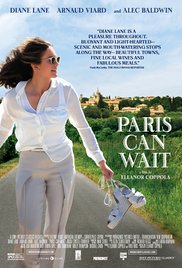
paris_can_waitAnne is at a crossroads in her life. Long married to a successful, driven but inattentive movie producer, she unexpectedly finds herself taking a car trip from Cannes to Paris with a business associate of her husband. What should be a seven-hour drive turns into a carefree two-day adventure replete with diversions involving picturesque sights, fine food and wine, humor, wisdom and romance, reawakening Anne’s senses and giving her a new lust for life.

Director: Eleanor Coppola
Writer: Eleanor Coppola
Stars: Diane Lane, Alec Baldwin, Arnaud Viard

Review by Gilbert Seah

 PARIS CAN WAIT opens at the Cannes Film Festival (where the film was shot). (Nothing is seen of the Cannes film festival or of any stars though, so one assumes that it was not shot during that time.) Anne (Diane Lane) is here with her producer husband Michael (Alec Baldwin) who can be observed as loving his wife yet too busy to pay her much attention. When she thinks he is answering her questions, he is actually speaking to the person on the other side of his phone. When an earache prevents Anne from flying to Budapest with Michael, Michael’s film associate Jacques (Arnaud Viard) offers to drive her to Paris, while Michael heads to Budapest for a film.

But Jacques diverts on the trip, and hence the title PARIS CAN WAIT. Anne filly arrives in Paris at the end of the film, delayed while her husband grows suspicious. In the mean time, Jacques plays on his charm to woo Anne – and finally makes his move.

PARIS CAN WAIT is a light comedy that is neither very funny nor amusing. The characters are superficially pleasant, but only to each other. If one looks deeper, each one is selfish to each one end.

Coppola’s film is full of little observations. She uses her characters nuances to point out flaws and strengths in their personalities. But the three characters are the idle rich who probably have lived all their lives in luxurious decadence. As a result, the audience can hardly feel for any of the three – whether they cheat or remain faithful. They just come across as three annoying people unconnected to the real world.

In the film, Coppola takes her audience to see the France only the fortunate see. Thee are no scene of poverty or minorities or any of the hardship that is taking place in the E.U. The characters wine and dine in luxury, always complaining about the ridiculous. Anne complains a great deal about how she cannot get cheese at room service that she had to order a cheeseburger to get some. It is a haughty and selfish behaviour with that spirit prevailing throughout the film. The two principal characters are travelling around in a gorgeous Peugeot convertible.

It is surprising the this is the same director that made the insightful documentary HEART OF DARKNESS that revealed the insides of her husband’s APOCALYPSE NOW. Where did all the talent and insight disappear to?
The film is shot in English and French without any subtitles for the French portion. The dialogue is mostly inconsequential which means that is no need for any translation.

The climax of the film is the scene where Anne ends up putting a clip to tidy up her hair behind her head, as if tidying up all the ends that have taken place, a clever subtle metaphor in the film. It is an odd way to end the film, as it is an odd film – indulgent, insufferable and impossible.

Trailer: https://www.youtube.com/watch?v=HTrT6QSqnGs

_________

Also, Free logline submissions. The Writing Festival network averages over 95,000 unique visitors a day.
Great way to get your story out: http://www.wildsound.ca/logline.html

Deadlines to Submit your Screenplay, Novel, Story, or Poem to the festival:http://www.wildsound.ca

Watch recent Writing Festival Videos. At least 15 winning videos a month:http://www.wildsoundfestival.com

Film Review: THE GARDENER (Canada 2016) ***

Deadlines to Submit your Screenplay, Novel, Story, or Poem to the festival: http://www.wildsound.ca

the_gardener.jpgThe Gardener is a documentary directed by Sebastien Chabot about Frank Cabot’s Les Quatre Vents, aka Cabot Garden, a magnificent private garden in the Charlevoix region near Quebec City.

Director: Sébastien Chabot
Writer: Sébastien Chabot
Stars: Francis Cabot, Anne Cabot, Adrienne Clarkson

Review by Gilbert Seah
 
Veteran of Canada’s TV industry, director Sébastien Chabot first feature documentary THE GARDENER offers audiences a rare opportunity to experience arguably the most beautiful garden in the world. This garden is designed and cultivated by Frank Cabot (recently deceased in 2011), THE GARDENER of the title who is also a philanthropist and horticulturalist.

The garden’s beauty, as well as Cabot’s boundless passion and his commitment to refining their every last detail are captured in the pensive and stunningly photographed film.

The garden is called Les Quatre Vents (The Four Winds) at Malbaie, Quebec. It is only near the end of the film that Chabot reveals that this Garden of Eden is now open to the public. It is open only for 4 Saturdays of the year at a price of $30 per person and sold only in November. Needless to say, the tickets are always sold out and each person is allowed a maximum purchase of 4 tickets. (this year’s tickets are sold out and the 2018 tickets go on sale in December). It is practically a sure thing that anyone watching Chabot’s film will mark this calendar date to book the tickets.

The film contains two days of interviews of Cabot. It is fortunate as audiences get to hear Cabot’s perspective on life and on the design of his garden. Cabot was ill at that time but agreed to be interviewed. His wife and close friends also tie in their points of view on the garden.

The best segments of the film are the shots of the garden. From the tiered waterfalls, sculptured hedges, flowers and stone sculptures to the garden paths, the tour of the 20-acres of Cabot’s land is nothing short of magnificent.

Cabot talks about his garden being like a symphony. It is a bit tacky that Chabot immediately follows this comment with symphony music. It is also quite obviously artificial that he adds in the sound of bird chirping during the tracking shots. These are a few forgivable complaints on the film. Original music of the film is provided by Luc St-Pierre.

Chabot spends a fair amount of time, necessarily on the background of the man. It is insightful to see where his ideas originated. Cabot was a rich and wealthy man and a genius in his own right. One can see that a man full of riches and owner of such a magnificent garden would eventually want to share the beauty with the rest of the world. He thus opened the garden to the public for the first time in 1987.

“It was a true pleasure to document the beauty of Les Quatre Vents, and the bold vision of Frank Cabot,” said director Sébastien Chabot. “I’ve been elated to see festival audiences respond so enthusiastically to the film, it’s a privilege to offer people the opportunity to experience a stunning place that only a lucky few have had a chance to see.” These are the same thought echoed in the words of Chabot when interviewed in the film.

The film offers a rare opportunity to see true beauty. Don’t miss it! From May 19, THE GARDEN opens theatrically at the Hot Docs Ted Rogers Cinema for a week-long run.

Trailer:​ https://vimeo.com/213602278

_________

Also, Free logline submissions. The Writing Festival network averages over 95,000 unique visitors a day.
Great way to get your story out: http://www.wildsound.ca/logline.html

Deadlines to Submit your Screenplay, Novel, Story, or Poem to the festival:http://www.wildsound.ca

Watch recent Writing Festival Videos. At least 15 winning videos a month:http://www.wildsoundfestival.com