Watch the festival NOW for the next 48 hours by signing up for the FREE 3-DAY trial using the link, or go to http://www.wildsound.ca
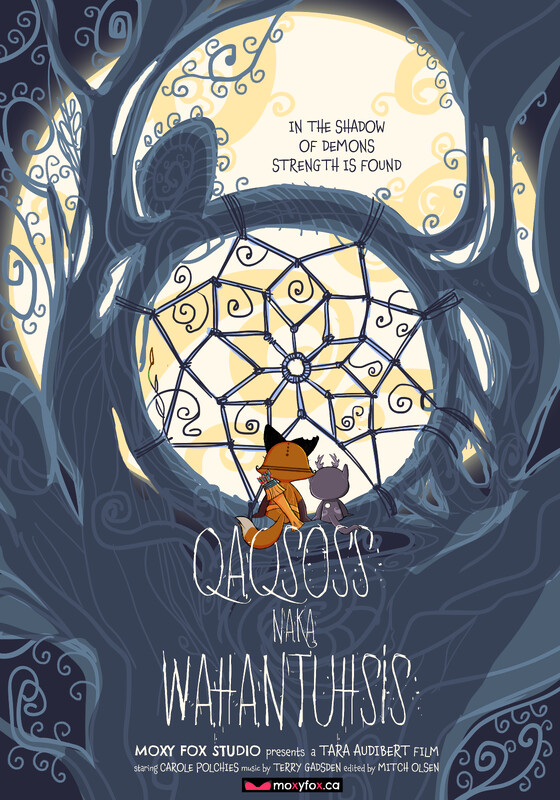
Qaqsoss naka Wahantuhsis (Fox & the Tiny Demon), 80min,. Canada Directed by Tara Audibert Qaqsoss naka Wahantuhsis is an animated allegory about Qaqsoss, a fox who is haunted by Wahantuhsis, a tiny demon. Set in an enchanted forest, the film explores themes of mental illness, trauma, and generational pain through Qaqsoss’ struggles with both her inner demons and the mischievous demon that follows her. As Qaqsoss faces her fears, she discovers resilience and growth. Ultimately, the story intertwines Indigenous culture and personal experience, showcasing the importance of self-healing and the understanding of others. The film, told in Wolastoqey, is a poignant exploration of survival and connection.
HOMEPLANET, 26min., USA Directed by Andrew Pritzker Barefoot on a country highway, a Disoriented Man is picked up by Two Local Cops who suspect he may be a space alien.
Crispin Green has edited some of the top TV shows in recent times. It was a pleasure to site down with him to talk about the craft of editing and his career.
Interview with Crispin Green:
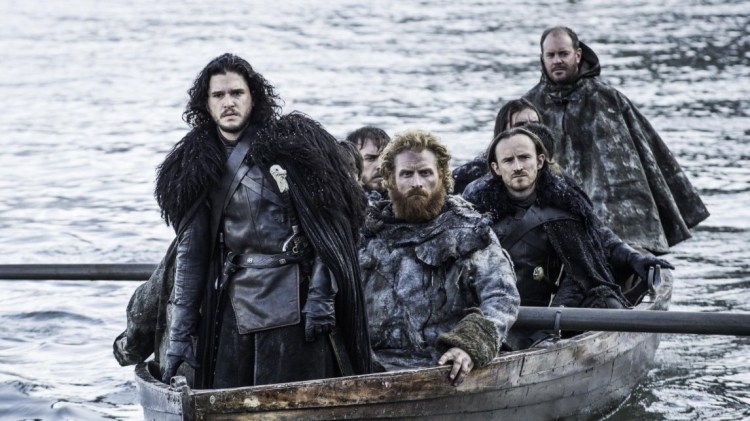
Matthew Toffolo: Tell us about the “Game of Thrones” experience. How is editing such a unique show where there are 4-7 plots occurring in a single episode?
Crispin Green: It’s an experience quite unlike working on other shows in that the editors are there for the duration of the shoot (about 6 months) rather than blocks of two or three episodes. This can help in the editing process as you get more of a sense of the season as a whole story.
MT: Will you be back to editing the series “Game of Thrones”? How does the process work? Who do you report to and collaborate with? The showrunners? The novelists? The director of the episode?
Yes I’ll be back if the opportunity arises.
CG: When assembling the dailies I work closely with the director, showing him or her cut scenes as the shoot progresses. He or she will give me notes as we go along if needed as they only have limited time for fine cutting when the episodes are complete. Some VFX heavy scenes have to be fine cut early so that the VFX team has a chance to get their work done in time (dragons take a long time to animate!), in these cases the showrunners will get involved with the cutting process. Once the director has presented a fine cut to the producers, the showrunners take over and I will work with them until picture lock.
PHOTO: Game of Thrones Season 5:
MT: I have to ask you about editing “Doctor Who”. Another iconic series. Were you a fan of the show before you began editing it? How was your experience working on the show?
CG: Yes I was a fan, I grew up watching the show and couldn’t quite believe it when I got to actually work on it! It was great fun to work on, the showrunners were very open to unusual ideas.
PHOTO: Doctor Who Season 4:
MT: What’s the key difference between editing a feature film in comparison to editing a TV episode?
CG: I’ve only cut one feature (and co-editor on The Great Rock n Roll Swindle – which wasn’t normal!) so I can’t really comment but I would imagine that TV shows have less time available due to pre-booked transmission dates.
MT: Besides “Game of Thrones”, and “Doctor Who”, do you have a favorite experience and film/TV show that you’re most proud of?
CG: Series one of “Bodies” was a ground-breaking medical drama written by Jed Mercurio where we got to try out some interesting stuff and equally “Misfits” was a pretty cool show to cut the first episodes of.
MT: What are the key qualities to be a great editor?
CG: The ability to get the story across in the most interesting way, understanding the director’s vision and being ready to adapt to what the writer/showrunners want.
MT: What is an editor looking for in their director/show runner?
CG: Someone who is good to work alongside (we spend many weeks together in a small room!) and who has an interesting vision of the project.
MT: What is a director/show runner looking for in their editor?
CG: Same answer as above but also it helps if the editor can second guess what the director wants while assembling the scenes.
MT: What film, besides the ones you’ve work on, have you seen the most times in your life?
CG: It’s a three way tie between “The Blues Brothers”, “Some Like It Hot” and “The Italian Job”!
MT: What advice would you have for people who like to be an editor in the film/TV industry?
CG: I started as a runner and worked my way up and I would recommend this route to anyone, you get to meet lots of people on the way who, more often than not, will be happy to help you on your journey. Also, try and cut as many things as you can to develop your cutting instinct, and watch lots of TV shows/movies to try and understand how to (or how not to!) construct an understandable story.
_____
Interviewer Matthew Toffolo is currently the CEO of the WILDsound FEEDBACK Film & Writing Festival. The festival that showcases 10-20 screenplay and story readings performed by professional actors every month. And the FEEDBACK DAILY Festival held at http://www.wildsound.ca and in downtown Toronto on the last Thursday of every single month. Go to www.wildsound.ca for more information and to submit your work to the festival.
Really loved the experience with this festival. Nice team and communication ! And good promotion for my movie VOIGHT-KAMPFF. Thanks !
Fantastic film festival! We are sincerely grateful for the incredible experience we had at the FEEDBACK Under 5 Minute Film Festival. Winning an award and receiving such thoughtful film reviews means the world to our team. Thank you for recording the audience feedback video and featuring our director’s interview online. We truly appreciate the opportunity to showcase our work and connect with the audience. Your support and recognition inspire us to continue creating meaningful projects.
Wowser. It feels so fulfilling to hear people commenting about and analyzing our documentary THE TRENT SAUCER, which won for Best Short Film. This is why we create films – to share with the wider world. Thank you for building this festival!
Thank you for great communication and help in creating the interview and the video about the audience’s reactions!
Absolutely amazing! Really loved my experience with this festival.
SAVE $40 off the regular submission for full novel submissions. Garner FULL FEEDBACK on your novel by our committee of industry professionals. Get a transcript of your novel performed by professional actors at the Thriller/Suspense Festival.
This festival has a guaranteed 4-tier set up for each accepted script. (No matter what, all screenplays submitted receive FULL FEEDBACK on their work.) 1) Full Feedback on your script 2) Actors performance video reading of your script 3) Blog interview promotion. 4) Podcast interview on the Film Festival ITunes show
Sprucilla and The Queen of Trees, 9min., USA Directed by Chris DiFiore Barē is a Halloween tree decoration living in the clearance aisle at Bargain Branch, but their dreams refuse to be boxed in. They think they’ve got what it takes to be crowned as the next Queen of Trees, even though they don’t have luscious green leaves or dazzling decorations like the other trees in the competition. After Barē gets some guidance from Sprucilla, a legendary Queen of Trees winner, they embrace their chance to shine as their true self and prove that being different isn’t a weakness—it’s a superpower.
I Mean Live is our nonprofit animation studio dedicated to spreading empathy through the power of storytelling, so “Sprucilla and the Queen of Trees” was a natural fit as the first short film project for the studio and I to take on. At its heart, the story of ‘Barē’ is one of redefining labels and forging your own unique path, despite what anyone else may think. Having support and inspiration can be essential fuel on your journey through life; ‘Sprucilla’ and the other clearance aisle items who support ‘Barē’s’ journey represent the love we all deserve.
2. From the idea to the finished product, how long did it take for you to make this film?
The inspiration for the short film was something we thought about at the studio for a long time, but production lasted about four months from beginning to end.
3. How would you describe your film in two words!?
Empathetic and hopeful!
4. What was the biggest obstacle you faced in completing this film?
I wanted the short to not only capture the empathy and hope that is integral to I Mean Live’s ethos, but also display the quality of animation we as a studio are capable of. We spent a lot of time refining the 3D animation to display that quality and we’re so happy with the results.
5. What were your initial reactions when watching the audience talking about your film in the feedback video?
Everyone at I Mean Live loved watching the audience reactions to the short. Even though this began as a very personal project, the ability to share our work with audiences and spread the message of acceptance and love is key to our mission statement, and has been the most fulfilling aspect of this entire project.
6. When did you realize that you wanted to make films?
I’ve always loved storytelling and technology, and for the past 20 years, 3d animated films have been at the heart of both.
7. What film have you seen the most in your life?
National Lampoon’s Christmas Vacation
8. What other elements of the festival experience can we and other festivals implement to satisfy you and help you further your filmmaking career?
I think watching the film play to a live audience is the most gratifying experience a filmmaker can have, so anything that could bolster or promote in-person screenings would be a great addition.
9. You submitted to the festival via FilmFreeway. How has your experiences been working on the festival platform site?
Excellent. I’ve enjoyed the vast network of festivals FilmFreeway provides access to.
10. What is your favorite meal?
Waffles. Pretty much any breakfast food.
11. What is next for you? A new film?
Our nonprofit studio I Mean Live is tackling several projects and campaigns across 2025, including a bridge animated series Flower and Flour that is currently in production and set to premiere in early 2026, several graphic novels, a (LGBTQ) Pride Month campaign for the Hetrick-Martin Institute For LGBTQIA+ Youth, and a series of PSA’s (Public Service Animations) to spread and champion empathy and inclusivity.
1. What is your novel about? The Origin of Humanity: A Real Dream is a deeply spiritual and philosophical novel inspired by a vivid dream I had. It explores the mysterious beginnings of humanity through a cosmic journey of creation, identity, mortality, and divine purpose. The story is both mystical and grounded, merging poetic storytelling with existential questions that challenge the reader to reflect on the meaning of life and the courage to awaken.
2. What genres would you say this story is in? Spiritual Fiction, Metaphysical Fantasy, Philosophical Sci-Fi, Visionary Fiction.
3. How would you describe this story in two words? Divine Awakening
4. What movie have you seen the most in your life? The Matrix — for its blend of philosophy, reality-bending concepts, and spiritual undertones.
5. What is your favorite song? (Or, what song have you listened to the most times in your life?) “Dreams” by Fleetwood Mac — it’s timeless, haunting, and resonates with the journey of vision and destiny.
6. Do you have an all-time favorite novel? The Alchemist by Paulo Coelho — it taught me that the journey is as important as the destination, and that dreams are sacred.
7. What motivated you to write this story? A dream — but not just any dream. It felt like a calling, a vision I couldn’t ignore. It was filled with clarity, symbolism, and emotion, compelling me to put it into words so it wouldn’t be lost. I felt it needed to be shared, not just as a story, but as a message.
8. If you could have dinner with one person (dead or alive), who would that be? Denzel Washington — his life story is powerful, grounded in faith, discipline, and purpose. He carries wisdom not just as an actor, but as a man who understands struggle, destiny, and the importance of using your gift to uplift others.
9. Apart from writing, what else are you passionate about? Exploring spirituality, having deep conversations about life’s mysteries, and connecting people through meaningful storytelling.
10. What influenced you to enter your story to get performed? I believe stories like this should be experienced, not just read. Seeing my dream come to life visually and sonically would help others feel what I felt — and perhaps awaken something in them too.
11. Any advice or tips you’d like to pass on to other writers? Honor your inner voice. Even if no one understands at first, stay true to the vision that chose you. Write from the deepest part of yourself — that’s where your power is.
In the year 1816, volcanic eruptions cause the sky to be covered in ash and the world is sent into darkness. Emory is the personal attendant and secret lover of the consumptive Lord Ambrose Aphelion. Together, they escape to a castle in the French alps with a number of other odd guests with the hopes that the mountain air will aid Ambrose’s declining health.
2. What genres would you say this story is in?
Historical Fiction and Gothic Horror.
3. How would you describe this story in two words?
Darkness Visable
4. What movie have you seen the most in your life?
Dracula (1931)
5. What is your favorite song? (Or, what song have you listened to the most times in your life?)
My favourite song is Slice of Life by the Bauhaus.
6. Do you have an all-time favorite novel?
My favourite novel typically changes depending on what I have read most recently, but I go back and reread Dracula and Frankenstein regularly.
7. What motivated you to write this story?
I have a passion for historical settings, diseases, and I find the weather phenomena of 1816 terribly fascinating. I love to explore the creeping horror of disease, the effects of social castes, and inequity.
8. If you could have dinner with one person (dead or alive), who would that be?
I would love to speak with Mary Shelley. One of my biggest inspirations for The Sky’s Gone Out is the time she spent trapped in a castle with fellow writers Percy Shelley, Lord Byron, and John William Pollidori during 1816.
9. Apart from writing, what else are you passionate about?
Medicine. I am currently in premed and plan to go to medical school when I graduate. I hope to study and prevent infectious disease. Perhaps this is obvious from my story, but my favourite disease is tuberculosis. It is terribly fascinating and it is the most deadly infectious disease of all time. While many people think it to be a disease of the past, it is still painfully relevant today. Last year alone, it killed 1.25 million people, beating COVID and making it the single most deadly infectious disease of 2024.
10. What influenced you to enter your story to get performed?
I hope for my work to reach a wider audience and to assist my journey into the publishing world.
11. Any advice or tips you’d like to pass on to other writers?
I have a few. In no particular order:
Make friends with fellow writers. Peer opinion and feedback are incredibly helpful during the writing process. Sometimes you need someone to bounce ideas off of and to push you to rewrite that scene.
Do something weird while you are writing that does not require a lot of focus but gets your thoughts flowing. I personally jump on a trampoline while working.
Write even if you do not think it’s good. You can always go back and edit or scrap. Practice is always good and your work cannot be good if it is never written down.
Be prepared to write anywhere when inspiration hits. Bring a notebook or use your phone’s notes app to write down the pretty words when they strike. You may get an idea for the most beautiful prose on the train, and there’s a fair chance you will not remember by the time you reach your destination.
Figure out what people like and make note of it. Then immediately ignore that and do what you feel compelled to do.
Write for yourself first and foremost. Pleasing everyone should never be your priority, as good writing should be derisive.
Do things. Go to events. Have conversations with strangers. People watch. The best way to write accurately is to experience and understand your topic.
Research! Research! Research! There is no such thing as knowing too much about your subject, but there absolutely is a problem when you do not know enough.
Take criticisms in stride. If one person out of thirty has a critique, consider it but do not necessarily take it to heart. If you trust that person and feel they are skilled, absolutely take that advice. If fifteen of those thirty people have the same critique, you should seek to mend the issue. Be able to make fun of yourself and your work, because if you can’t, nobody can. Be confident in your work, but not to a fault.
A former Army lawyer, Gemma Lightwater battles troubled family and calculating investors to reopen her Missouri Ozarks ranch that pairs broken veterans with broken horses
GEMMA LIGHTWATER a mid-30s Army veteran struggles to reopen the Red Rock Ranch that serves female veterans wellness. That is until she receives a five million dollar offer from her former captain, ASTRID MITCHELL, but the money comes with a ticking clock and giving up decision-making control to her former JAG leader. As the new veteran arrivals, tensions run high as NORMA JONES, Gemma’s right hand at the ranch tries to help Gemma and Astrid understand what a deal means for them. After a few rounds of will they or will won’t they sign, Gemma and Astrid find common ground to finalize the deal. Then tragedy strikes leaving Gemma conflicted and suspicious at the exact time she is supposed to be opening a new chapter for the only real mission she has left, saving others to save herself.
2. What genres does your screenplay fall under?
Thriller, Drama, Suspense
2. Why should this screenplay be made into a movie?
As a female veteran, I look into the eyes of women in uniform and remind them that our service matters. They remind me to tell their stories. The doubts of if female veterans deserve a seat at the table of service will be removed. And in this show, we ARE the table. This pilot should do for women veterans what Orange is the New Black did for incarcerated women. And do for Missouri what Yellowstone did for Montana. What Band of Brothers did for male veterans. We have a long historic legacy that quickly being erased. Women have put their lives on the line since the beginning of time, when do we see them as the main characters.
3. How would you describe this script in two words?
Veterans, horses
4. What movie have you seen the most times in your life?
Auntie Mame, “Life is a banquet and most poor suckers are starving to death!”
5. How long have you been working on this screenplay?
2021. I developed it during the Veterans Writing Project by the WGA.
6. How many stories have you written?
Five finished, two are published novels.
7. What motivated you to write this screenplay?
As a female veteran, I am not seeing us portrayed us as deeply and richly as we deserve. We deserve to see many versions of a veteran.
8. What obstacles did you face to finish this screenplay?
Learning to show and not to tell – as a former journalist and award-winning author, formatting a screenplay still gets me. Thankful for editors.
9. Apart from writing, what else are you passionate about?
Speaking on behalf to and for female veteran advocacy. My background in the Army was Public Affairs Specialist so I realize I have to use my voice and ability for all those women who will not speak up.
10. What influenced you to enter the festival? What were your feelings on the initial feedback you received?
I was looking for a way to have my script read. The feedback was spot on. I believe “good books not written, they are rewritten” shows the value of iteration listening to your audience. It’s not always about what I think makes sense.
Narrator: Elizabeth Rose Morris Martin: Geoff Mays Abraham: Steve Rizzo
Get to know the writer:
1. What is your screenplay about?
My screenplay is about a teenager named Abraham and his best friend Martin who are both on the precipice of graduating high school. As Abraham grapples with the typical issues of the impending change from high school to adulthood, he must also contend with his unrequited feelings for Martin and his dysfunctional home life.
2. What genres does your screenplay fall under?
There are glimmers of humor here and there, but “Missing Persons” is pretty firmly grounded in the category of drama.
3. Why should this screenplay be made into a movie?
I would love to see this screenplay made into films for a lot of reasons. I think it touches upon issues that many films don’t. For instance, while the dysfunctional family sub-genre of drama is not a new invention in and of itself (it possibly perfected in 1980 with “Ordinary People”), the specific issues particular to this dysfunctional family are not things I’ve seen before in other films, at least not touched upon this explicitly anyways. Similarly, I haven’t seen many (if any) films that touch upon what it means to be gay and in love with someone who is out of reach for one reason or another. And, finally, I would love to see this screenplay made into a film because there are so few films that take teenagers seriously, and even fewer where at least one of those teenage characters is gay.
4. How would you describe this script in two words?
Unresolved trauma.
5. What movie have you seen the most times in your life?
When I filled this questionnaire out for my last screenplay that won – “Lost & Found” – I said films like “Troop Beverly Hills” (1989), “Indiana Jones and the Temple of Doom” (1984), “Beetlejuice” (1988), “Pee Wee’s Big Adventure” (1985), and “Back to the Beach” (1987), but here are a few more that I’ve seen countless times: “Don’t Tell Mom the Babysitter’s Dead” (1991), “Batman” (1989), “Jaws” (1975), and “Drop Dead Fred” (1991).
6. How long have you been working on this screenplay?
The short answer is it took me about a month and a half to write. The long answer is that this is a script that I’d been thinking about and grappling with for the better portion of 25 years.
7. How many stories have you written?
This was the first screenplay I’ve ever written, however, I wrote it at the same time I was writing its sequel, “Lost & Found” which meets up with the two central characters from this film seven years later. Beyond that, I just put the finishing touches on the first draft of my third full-length script titled “Roanoke”, which is another LGBTQIA+-themed story, set in the present day but with ties to the mystery of the lost colony in North Carolina.
8. What motivated you to write this screenplay?
I couldn’t not write it. It’s a story that had been circling around in my head for the better portion of two and a half decades and the events and corresponding emotions that informed it were so immediate at the time I originally came up with the idea. After the better portion of two and a half decades when the memories attached to those feelings hadn’t subsided, I knew I had to take the dive and, if for no other reason, use the writing of this story as a kind of therapeutic exorcism, so-to-speak.
9. What obstacles did you face to finish this screenplay?
The biggest obstacle was just the formatting. I’d never written a script before and so the physical layout of the type and ensuring that I was following proper script notation (i.e. the differences between how to write actions vs. characters vs. dialogue, vs. scene setting, etc…) was kind of this immediate, bitter hobgoblin that pestered me for awhile. I’m a bit of a perfectionist (which probably accounts for some of the length between story inception and story completion 25 years later), and so I fixated a lot of my energy on ensuring things just looked properly formatted. If I’m honest with myself, I think I also used that perfectionistic fear that I wasn’t doing it According-to-Hoyle-properly as a way to participate in my favorite type of procrastination: approach-avoidance.
10. Apart from writing, what else are you passionate about?
Film. Always film. I can’t remember a time in my life where film hasn’t played the most integral part in shaping who I am and how I see the world. A day doesn’t feel complete to me until I’ve seen at least one film, hopefully something I’ve never seen before.
11. What influenced you to enter the festival? What were your feelings on the initial feedback you received?
The thing that influenced me to enter this festival specifically was the fact that it was focused around LGBTQIA+ writers and stories. Today, more than ever, we need to champion the voices from the vast spectrum of our community. I have been sitting on this story for the better portion of 25 years and finally sitting down to write it after all that time, the emotions that it conjures for me are so strong and so urgent and I’m just one storyteller in a sea of LGBTQIA+ writers who all have their own urgent stories vying to be told. Spaces like this festival give our community a chance to share in that act of storytelling and ground us in all of our own urgencies.
The initial feedback I got was actually really surprising for me since this was my first script. I was not expecting to win, let alone receive any feedback beyond “this needs a lot of work.” In my mind, anything I create will always need a lot of work. I also have to keep in mind as I’m writing that anyone who reads my work is going to bring their own subjective experience to bear on whatever material they’re interacting with. Everyone will always have suggestions for improvement and, I think the goal is to find that sweet spot where people can put their quibbles aside and relate to the material at its core.
One of the great things about this festival is that it has given me a chance to work with various people in various settings that have shown me ways to improve my writing and enhance the work that I do. I did a script consultation with someone who offered me ways to look at my story that, in a million years, I never would have thought to do, but, whose perspective enriched my writing so thoroughly that, even though I’d been sitting with these characters in my head for so long, I was able to see them in an entirely different light than I’d ever seen them before. My favorite thing about that experience was that, with those suggestions, I was able to make some tweaks, resubmit, and my score eventually changed from a 7 out of 10 to a 9 out of 10. And, I still get a chuckle whenever I think of the feedback I received about that score change that it couldn’t be raised to a 10 out of 10 because it’s inherently too depressing. It is, and I agree, and that’s why I go back to this idea that writing this story, for me, was an act of therapy.