A very insightful experience! The Feedback video was a gift and the entire team was extremely professional and helpful throughout the process.
This festival is designed to showcase the best of LGBTQ+ stories from around the world today! We accept screenplays (short, TV Pilot, feature) and short & feature films.
Film Festivals:
Festivals occur every single month. We accept an assortment of shorts & feature films from around the world today monthly. We are proud to announce that we will be using the audience feedback format where all accepted films receive a video of people talking about their film at the festival. Excellent video to use for promotional purposes too.
Screenplay Festivals:
We are proud to showcase 2-5 winning LGBTQ+ screenplays at our festival every single month!! Go to the site and watch the winning readings each month.
All entries receive full feedback from the industry. Accepted screenplays get their screenplays performed by professional actors.
One of North America’s leading gay destinations, Toronto has been holding Pride observances since the ’70s. The Pride parade draws more than 1.2 million spectators and participants annually, making it one of the top such draws in the world. The cinema is located in the Church & Wellesley area, where all of the Pride Events take place.
LGBTQ+ festivals occur 12 times a year. Go to the website for information on the next events.
All submissions receive feedback on their film no matter what.
And the Community Will Rise embodies the significant role that residents and advocates for public housing play in ensuring the social, political, and cultural integrity of San Francisco in the face of the current housing crisis, gentrification and displacement threatening the city. Chinatown’s Ping Yuen buildings were the first high-rise public housing in the U.S. built in 1952, and provide crucial affordable housing for the community.
A collection of stories within a public housing structure called Ping Yuen comprises the film AND THE COMMUNITY WILL RISE in a unique way to depict what the true United States looks like beyond what the news media depicts. Told in voice over format, with a combination of dance and music, the history of a community within Chinatown and the residents of the Ping Yuen in San Francisco are unveiled in this documentary.
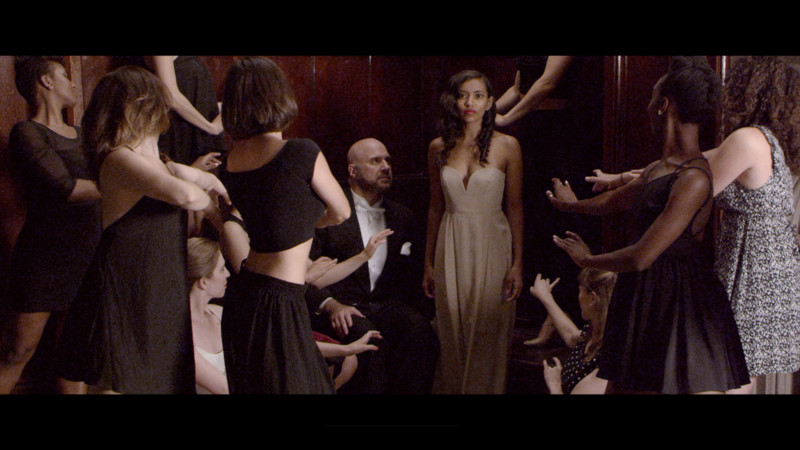
This is far from a typical documentary film as there are no talking heads, but historical pictures and dance reenactments to tell the story as residents, both old and new, speak of their personal experiences within the close-knit Ping Yuen community. The film begins with the historical background that led to forming the public housing establishment for Chinese immigrants to the diverse complex it is today. It’s a story of racial inequality, discrimination and history that is rarely told as the film delves into real memories that depicts both the fight and the good times to first get and then maintain the Ping Yuen.
Lenora Lee Dance approach to making a historical film was quite different from most documentaries involving minority communities. Rather than have historians tell the story, Dance chose to find the residents who have lived the history and those who currently live in the community, making it clear that preserving individual cultures while befriending newcomers is what makes the Ping Yuen different from other public housing structures. The film consists of dance, music and cultural reenactments to tell the entire history of the community.
Lenora Lee Dance shows several rare moments rarely seen in the divisive narratives spread across various media formats. The film displays what the United States truly is, a diverse population where the majority of people are able to put differences aside and become a single community such as within the Ping Yuen. The community lives true to the title of the film, AND THE COMMUNITY WILL RISE.
A fading movie star, fresh from a rejection for a starring role, is drugged and photographed by her devious and self-serving girlfriend, an aspiring photographer she nurtured. The images, displayed at a high-profile London galley, shatter the actors’ dignity. She digs deep to turn the tables.
Directed by Gary Grant
Written by Priya Giga
Written Review by Andie Karvelis
Everyone can relate to that crushing blow of betrayal, especially when it comes from someone you’ve fallen in love with. We’ve all sat there concocting wonderfully heinous forms of revenge that leave our betrayers sobbing and begging forgiveness…or perhaps that’s just me.
Priya Giga has expertly crafted a story of such devious betrayal and a delicious revenge that is not only fitting, but eloquently done. Even the film’s title leaves you thinking “Aw, what a lovely name” until you realize a Lily of the Valley flower is quite poisonous.
The film’s stars Fernanda Lippi and Laura Glaser did an amazing job with their characters. The multi-layered performances were believable and organic. You embarked on a journey with them, finding yourself at the edge of your seat to see what was going to happen next. The director, Gary Grant, really understood how to bring out the nuances in Fernanda and Laura’s performances and keep the audience in suspense.
Some incredible cinematography by Bruce Melhuish rounds out his very clever film. Creatively finding ways to do a gallery showing without putting large framed photographs on the walls but using flashes of the still photos instead. Ingenious!
I don’t want to give too much away but the payoff at the end left me wanting to give Fernanda a standing ovation. Sensational film all around and the music was perfectly chosen.
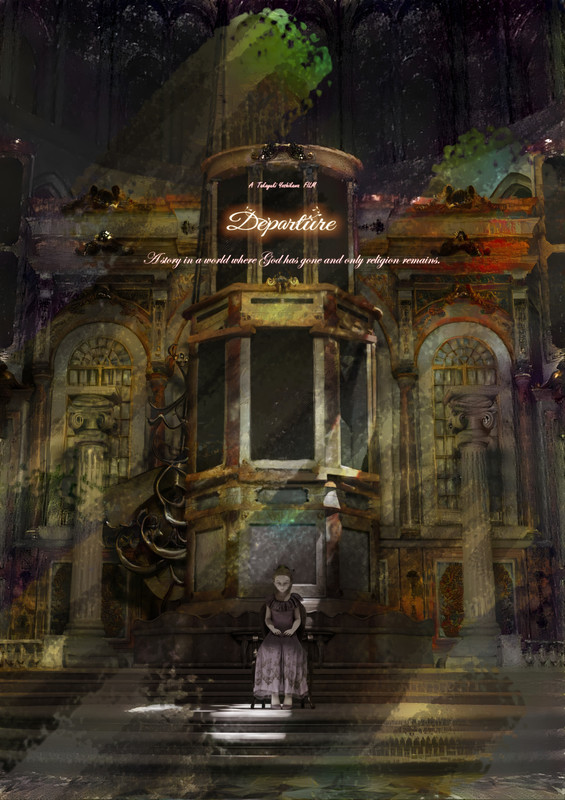
A lonely robot is left behind in a closed, deserted church. She longs to leave and explore the world outside, but her abilities are limited due to her immaturity, narrow field of vision, and difficulty in moving her body.
Directed by Takayuki Yoshikawa
Written review by Parker Jesse Chase
“Departure” is a captivating short film that delves into the transformative power of music and its profound influence on our daily lives. Music is personified as a character itself within this piece. Through a mesmerizing blend of animation and storytelling, the film takes us on a journey alongside a woman as she prepares for the day ahead.
One of the first things that strikes viewers is the exceptional animation quality. The attention to detail is remarkable, particularly in the depiction of fabric movement and sci-fi elements. The animation team has managed to breathe life into the surroundings, creating a tangible sense of realism, especially as the sun rises and the mirror falls. It is through this meticulous attention to detail we are drawn into the protagonist’s experience and become invested in her story.
The film cleverly utilizes the contrast between black and white and vibrant colors to convey the protagonist’s emotional transformation. Initially, we find ourselves in a monochromatic world, symbolizing the mundane routine of everyday life. However, as the woman immerses herself in the power of music, the world gradually bursts into a kaleidoscope of hues. The transition from black and white to a vivid watercolor palette is visually stunning and leaves a lasting impression.
As the film progresses, we witness the woman’s journey of self-discovery and empowerment. Music serves as her companion, and in a literal sense no less, providing a soundtrack to her preparations and infusing her with a newfound confidence. The carefully selected tunes in the background effectively mirror her emotional state, allowing viewers to connect with her on a deeper level. The film reminds us of the profound impact music can have on our mood, serving as a powerful form of expression and inspiration.
The narrative beautifully captures the universal experience of finding one’s bearings before embarking on a new day. Through the protagonist’s actions and emotions, we witness the duality of vulnerability and strength that exists within all of us. Her struggles and triumphs become relatable, and we find ourselves reflecting on our own relationship with music and how it influences our daily lives.
“Departure” is a delightful exploration of the connection between music, self-expression, and personal growth. The animation and storytelling techniques are masterfully executed, creating an immersive experience for the audience. As we witness the protagonist’s transition from black and white to a vivid world of color, we are reminded of the transformative power of music and its ability to set the tone for the day ahead. This short film serves as a testament to the profound relationship we have with music and its potential to inspire and uplift us in our everyday lives. Bringing confidence through its melodic embrace.
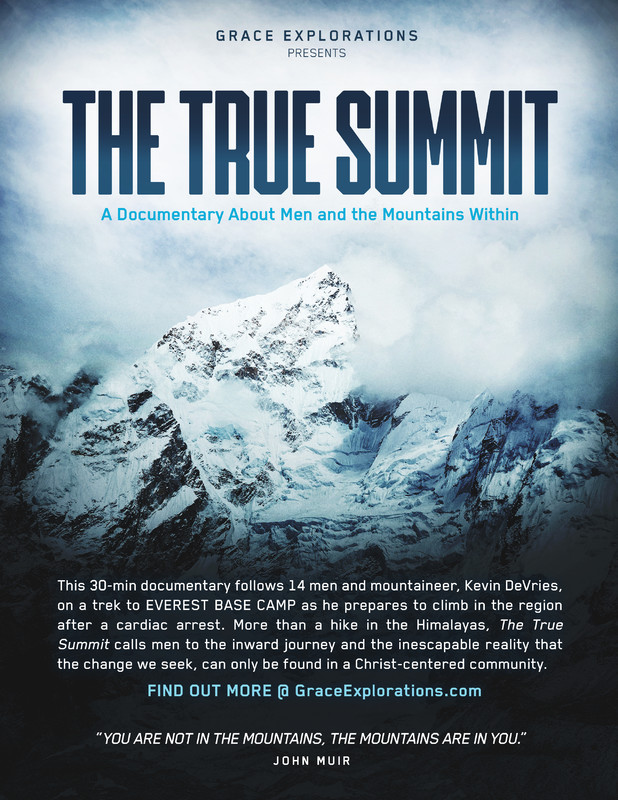
This 30-minute documentary follows 14 men and mountaineer Kevin DeVries on a trek to EVEREST BASE CAMP as he prepares to climb in the region after a cardiac arrest. More than a hike in the Himalayas, THE TRUE SUMMIT calls men to the inward journey and the inescapable reality that the change we seek can only be found in a Christ-centered community.
Directed by Corban Robbe
Written review by Parker Jesse Chase
“The True Summit,” a compelling documentary by Corban Robbe, takes viewers on a captivating journey of resilience, self-discovery, and the power of human connection. Inspired by John Muir’s profound words, “You are not in the mountains, the mountains are in you,” the film follows a group of fourteen men as they embark on a challenging expedition to climb Mount Everest.
The documentary delves into the physical and emotional challenges faced by the climbers, revealing that conquering the external mountain is only a fraction of the battle. The climbers quickly realize the real mountain lies within themselves—a daunting and formidable obstacle they had not fully prepared for. As the narrative unfolds, we witness their struggles, physically, mentally and spiritually, as they confront their inner demons and grapple with their limitations.
One of the film’s most striking themes is the power of unity and the transformative effects of shared experiences. As the climbers navigate the treacherous terrain together, they forge a deep bond, sharing stories, supporting one another, and finding solace in their collective journey. Through their interconnectedness, they develop a profound sense of resilience, drawing strength from each other to overcome the hurdles of which lay before them.
Robbe skillfully captures the climbers’ spiritual awakening amidst the harsh conditions of the mountain. As time passes, their experiences in this majestic setting transcend the physical realm, delving into a more profound and introspective space. The film highlights the transformative nature of the journey, where the climbers explore their inner selves, contemplate their purpose, and gain a renewed perspective on life.
The documentary emphasizes the significance of human connection and the need for community in navigating life’s challenges. The climbers realize the arduous task of scaling Mount Everest is made more manageable when they have a support system by their side. The film underscores the importance of having people who genuinely care about one another, providing an extra set of eyes and ensuring each other’s safety. It beautifully showcases the inherent strength found in collective efforts that emerges when individuals come together.
Corban Robbe’s direction and storytelling technique offer a captivating and immersive experience. The breathtaking cinematography transports viewers to the awe-inspiring landscapes of Mount Everest, capturing both the beauty and the treacherous nature of the mountain. The film seamlessly weaves together personal narratives, stunning visuals, and a thoughtful musical score, evoking a range of emotions and leaving a lasting impact on the audience.
“The True Summit” serves as a powerful reminder of the significance of our connections with others, the transformative potential of shared experiences, and the strength that lies within each individual. Through the lens of this remarkable documentary, viewers are reminded that when faced with seemingly insurmountable challenges, the journey becomes more bearable and fulfilling when one has a community to lean on.
A troublemaking toddler tests the limits of child safety.
Directed by David Maddox, David Blood
Review written by Victoria Angelique
The question posed in BABY PROOF is if we take baby proofing too far or not far enough as the baby in the film gets into literally everything that could pose a danger. The choice to put the film in the baby’s point of view was a brilliant choice as the audience can see through the eyes and imagination of a baby. The pure innocent curiosity as the baby explores the world is brilliantly executed as adults watching the film will gasp each time the baby get close to something that could be deadly.
The news playing in the background relates to most households with children, where so much information is shoved at parents that it would be easy to ignore until it almost happens to their baby. The newscast seems to portray how ridiculous the world is by having products banned by sue happy adults that are injured rather than focusing on what could potentially harm or kill the infant.
The baby the film follows seems to having the time of her life. Scarlett Josephine is laughing the entire time as she gets into dangerous situations, which proves that David Blood and David Maddox are great filmmakers in order to get an infant into various predicaments and have her enjoy it without making her scream on camera. It’s clear they had fun making this film.
The mischievous score as the baby continues her hijinks only aids to the satirical nature of the film, especially since caring parents wouldn’t really be that negligent. This is proven in the end when after fully baby proofing their house, they hand their baby back an unloaded gun based on her cartoonishly laughing out “Second Amendment”. It’s the statement to show how absurd the world can be when it comes to caring for an infant, along with the fact that the film is clearly in the baby’s point of view rather than the parents.
This film causes both gasps and laughter, something that could not have been achieved through the parents perspective. It made baby proofing fun, rather than tedious and necessary. Anyone who has a baby should see BABY PROOF just to see exactly what little ones can get into when parents’ backs are turned away for a few seconds by using real world examples of common household dangers that curious infants might get into while exploring their house.
The way sound is used in THE PAGE TURNER is nearly perfect. It never even occurs to the audience until the very end that the protagonist is a blind man as at first it just appears that he is quirky with his repetitive movements. The soundscape coupled with the excellent acting makes the film more like a dance as every single action is timed to the soundscape. It’s quite rare to find films that use sound as well as this film did, with every single sound being able to be heard such as tying shoes or the dusting of chairs. These should be the first clues that the Pageturner is blind, yet the clever manipulation of sound makes the brilliant ending a complete surprise as the focus becomes focused primarily on the sounds he experiences.
The superb direction and story by Siúbhán Ní Ghríofa makes this film an instant classic. The precision of the shots, accompanied by the changing of lights with the brilliant score conveys every emotion within the film. It’s nearly impossible to not be enraptured and drawn into tears by the end of THE PAGE TURNER. The euphoric revelation as the music engulfs the Pageturner’s emotions so that he could see light for the first time is what could make this film a masterpiece.
The score drives the entire short film, with the dialogue at the very end when the Pageturner steps into the light of day. The emotional rollercoaster is well worth the ride. If someone wanted a film to explore the impacts of sound and award winning acting, THE PAGE TURNER would be the film to recommend to vast audiences.
Siúbhán Ní Ghríofa did an exquisite job on this film. There is nothing missing as the filmmaker carefully plays with the lighting, sound and acting. THE PAGE TURNER had everything that a short film needs to become an award winning film in multiple markets.
Professor Johnson, a college poetry professor, lectures his students on a poem by Rumi. When class finishes, one of the students, Olivia, approaches the professor with a question about the poem. This leads into a romantic fantasy musical sequence. Conflict arises soon after when Dean Cox and his secretary, Miss Flannigan, accuse Professor Johnson of exploiting Olivia.
Written & Directed by George Kostopoulos
George Kostopoulous has created a dark comedy centering around the taboo of a teacher sexually involved with his student and having to defend his actions to the school’s principal. But is it really that simple? No, no it isn’t.
As the film opens, the first thing that captures your attention is some fantastic cinematography thanks to Nicola Raggi. The slow pans and seamless transitions from shot to shot was expertly crafted. This really helped highlight a wonderful performance by Greg Amici, who was portraying ‘Professor Johnson’. The actors definitely had a rapport with one another and it showed in how believable they were.
One of the most comedic moments was Miss Flannigan’s facial expressions as she stood listening in at the Professor’s door. Quite possibly my favorite scene was the one choreographed by Joe Medeiros. The other students as dancers doing pirouettes and jete’s around the two lead characters as they were dancing was a joy to watch. The music seemed a bit more of a Tango than a Rumba to me, but “Rumi’s Tango” doesn’t give you that fun alliteration.
All in all, this definitely had the feel of: things aren’t always what they seem. George Kostopoulous put together a unique and comedic film about reversing roles and having a student entrap their teacher.
Walt Whitman is one of the most important poets in American literature. His main work, Leaves of Grass, was written over a period of forty years, and describes human nature, society, and the natural world, both physically and philosophically.
The vintage feel combined with the iteration of a poem by Walt Whitman, makes ONCE I PASSED a very beautiful short film. The visuals and score really make the classic poem come to life, although with a few changes to apply to the particular story that Martin Gerigk is using to tell. The use of old photography juxtaposed with moving still photography across the screen made the story really pop and grab the attention of the audience by invoking curiosity.
The film really explores the use of memory. Nostalgia is invoked first when the use of old black and white photography. This combines with a soothing voice that feels quite panicked in places as if the narrator is struggling to remember a specific moment in his life. The repetitive lines makes the entire film seems like the memory of an old man desperate to remember more than just small details from a trip when he was a young man.
The score is almost bittersweet, telling the tale of a forbidden romance between two men in a time where their relationship would never have been accepted. Making this film almost like it’s trying to recall memories from a clandestine affair in a city far from home. The geometric shapes give the film a spark almost like the brain is struggling to remember more details about a flame from the past. The accompanying charts seems to be an attempt to reignite the brain through old science experiments from a time long ago.
Martin Gerigk is able to explore the full depth of fleeting memory by capturing the key moments the brain can remember. The story tells of what seems like a pleasant trip, but the brain only clings to the negative moments for years to come by blocking out the positive. The film explores the range of human senses in order to recapture a memory, playing with sight, touch and sound in order to activate the full memory.
The combination of Walt Whitman’s poem with the vintage, fleeting images makes this a great film for fans of Whitman. It fully captures the themes that Whitman explored by combining editing techniques with an intriguing score.
‘Night Ride from LA’ is based on a real car ride at night from downtown LA to the desert near Palm Springs a few years ago. The footage was taken from the car by continually shooting single long exposure photos to document the ride of about two hours without any break. This technique condensed the whole trip to a flickering twirl of time-stretched movements and night light graffiti causing a kind of psychedelic trance. A love letter to the energy and vibe of the Californian way of life.
The perfect way to describe driving in Los Angeles at night would the film NIGHT RIDE FROM LA. The film feels chaotic with moments of peace interspersed throughout the brief five minutes. Dividing the piece into 3 segments was a great way of capturing the moment of California driving, especially with the soundscape that was included to really feel immersed into the drive.
Martin Gerigk’s two hour drive is sped up in a way that really makes the tone of the film feel like Los Angeles. The use of inverted images of the drive keeps the film entertaining, as it captures what sometimes a long drive can do to the mind. Gerigk seamlessly moves from phase to phase in order to capture both the chaos and peace of driving at night. Lights play with the imagination as cloud cover brings a sense of serenity.
The score captivates the viewer in a way that feels authentic to Los Angeles at night. The combination of a strong percussion with the sounds of the city makes the heart race as if it’s not Gerigk driving, but the audience. It almost feels like a race or adrenaline high that eventually leads to the inevitable mental crash. The soundscape makes the film a perfect marriage between driving in Southern California at night and the vibe of the nightlife atmosphere.
Separating the film into three parts, using vastly different visuals that compliment each other, was a great filmmaking tactic to really draw the audience in to an authentic drive. The chaos followed by a brief moment of peace amongst the tall palm trees only to be thrusted back into city driving makes the final part of mentally crashing makes the film feel complete. Gerigk even managed the feeling of the mind going numb with the Sesame Street like countdown of close-ups of license plate numbers until the film finally came to an abrupt stop.
If someone wants to feel what driving in Southern California is really like, this film would capture the full experience.