HIGHLIGHTS & VIDEOS: September 2017 FAMILY FEEDBACK Film Festival

1997 Movie Review: THE ICE STORM, 1997


THE ICE STORM, 1997
Movie Reviews

Directed by Ang Lee
Starring: Kevin Kline, Joan Allen, Sigourney Weaver, Janey Carver, Henry Czerny, Tobey Maguire, Christina Ricci, Elijah Wood, Adam Hann-Byrd
Review by Russell Hill

SYNOPSIS:

Set just before the Watergate Scandal was exposed to the world, a group of neighbours live the 1970’s lifestyle in the most hedonistic way possible.

REVIEW:

Responsible for bringing together a stellar cast of true Hollywood greats, some even not that recognised at the time of the movies release, THE ICE STORM has all the hallmarks of a well-made independent movie; great script, good character development and amazing direction. But what’s this? It’s actually a Hollywood release?

Based on the 1994 novel of the same name by Rick Moody, the main bulk of the movie revolves around an actual ice storm that hit Connecticut in 1973 that turned the nutmeg state into an overnight icy Armageddon. The main family of the movie are the Hoods, with husband Ben (Kline) and wife Elena (Joan Allen) along with their kids Wendy (Ricci) and Paul (Tobey Maguire) and they seem as normal as any other. But not all is what it seems. Ben and Wendy aren’t exactly getting along, with Ben having an affair with the neighbour’s wife Janey (Weaver). Elena isn’t the happiest sandwich in the picnic hamper of the world either and always suspects of her husbands infidelity. What of her children? 14-year old Wendy is growing up fast, and starts to find other things to do with the neighbours’ kids, such as Janey’s son Mikey (Elijah Wood), than play monopoly. Even Mikey’s brother Sandy (Adam Hann-Byrd) is fond of Wendy, but too shy to do anything about it. I’m sure we can all relate to Sandy when we were his age. Paul lives away from home, but remains on good terms with his family. Even he has his own problems in his love life. Unsuccessfully vying for the affections of his school mate Libbets (Katie Holmes), Paul too isn’t getting the best ride life can offer.

These people are not exactly poor, and shower themselves with all things expensive that was available in the 1970’s. But, despite this wealth, they’re still not happy. Their depression of being in this situation they have found themselves in is masked over by alcohol and an obscene amount of extra-marital sex. The phrase that children follow in their parents footsteps can sure be applied apply to Wendy and Mikey. Wendy, confused by the unfolding events of Watergate and her home life, finds solace in the arms of a very nervous-looking Mikey. What a shit storm of a world these families are in. By the time the ice storm has hit town, the accumulation of the actions that all involved partake in result in quite a dramatic and upsetting scene that is bound to distress even the more placid of viewers.

Applauds to all cast here must be made. Kline, as in all roles I have seen him in, is quite the professional here. He is known as a joker on set, but you couldn’t tell it from his performance here. Allen too shines here once more. Over the past decade or so, she has appeared in some sublime movies with PLEASANTVILLE being one of her best. Allen’s solemn looks throughout really do portray the depressed housewife well. It seems at times that just one look from Allen could be painted onto canvas and be the backdrop for a Dali painting, but instead her figure is limited to celluloid but it sure is great to see her in a role she was born for. Weaver too excels here. It is strange to see her playing this adulterous character, with not one alien in sight, and shines in every scene she appears in. Her inability to cope with her current predicament of cheating on her husband with her children growing up quicker than she would like to have had them do is a credit to Weaver’s talents and, as with Allen and Kline, acts in a role it seems as though she was born to play.

It may be shocking to say, but I believe the more-younger actors outshine the senior members of the cast. Before the movies release, Ricci was seen as a child actor who could not cope with more mature roles. Her role of Wendy is delivered with maturity that seems a long way from the days of Wednesday Adams. Wendy is not your innocent character and, despite Ricci being only 17 years old at the time of this movies release, deals with more grown-up aspects life very respectfully. Despite appearing for only a brief amount of screen time, Maguire too is given the opportunity to excel and succeeds beyond all expectations. Before THE ICE STORM, he was restricted to appearing in lacklustre made-for-television movies, but soon after the release of this 1997 classic he was appearing in films such as THE CIDER HOUSE RULES, PLEASANTVILLE and more recently as your friendly neighbourhood Spiderman. His on-screen persona as the unlucky-loser-in-love started with his part here as Paul. It always seems odd to see Maguire playing anything else but this type of character and long it may continue. Just like Maguire, I have to commend Adam Hann-Byrd for his role as Sandy. His nervous character that is madly in love with Wendy is played to perfection. Since his role as Sandy, he hasn’t been given the roles like the other’s he acted alongside. A shame really. Over the past decade or so, there have been a number of quite excellent independently made movies that have made it onto the mainstream market and reaped rewards. It was due to THE ICE STORM that several doors were opened for Ricci and Maguire, and to this day they have gone onto bigger and better roles. Even the more senior members of the cast have continued this success. If it wasn’t for THE ICE STORM, then who knows who would have played Peter Parker and Frodo to perfection. A highly recommended movie for those aged thirteen and up.


the ice storm

1997 Movie Review: GUMMO, 1997

GUMMO, 1997
1990s Drama Movie Review
Directed by Harmony Korine
Starring Jacob Reynolds, Chloe Sevigny
Review by Alex Haight

SYNOPSIS:

Lonely residents of a tornado-stricken Ohio town wander the deserted landscape trying to fulfill their boring, nihilistic lives.

REVIEW:

“When I sit down to eat, I get sexy! When I go to bed, I get hungry! I saw a man lying in the street, and I said, “Can I help you?” He said, “No. I just found a parking space. Now I’m waiting for my wife to go buy a car!” – Tummler (played by Nick Sutton)

There is no preparation possible before viewing the directorial debut of Harmony Korine’s follow up to “KIDS” (which he wrote it at the age of 19). With the latter he provided an honest and abrasive script about the affect of underage sex and drug use in America- and the spawn such acts breed.

His follow-up seems like a De Sade horror show.

By way of “Gummo”, Korine instead offers a nightmare-fairytale of nihilism and faithlessness set against the desolate backdrop of Xenia,Ohio. Set between a mirage of sideshow characters, non-actors, and troubled underage youth’ (this stuff would make John Waters shutter) it plays out like vignettes hand made to disrupt most sensibilities. Anyone who relies on a strong moral fiber, should be warned…this is hard stuff to swallow. There are images here that will be burned into your mind for days, weeks, dare I say-years later.

It’ll be that film that you compare to every other “shocking” one made to.

It sets the bar…then sets it again…then makes a new bar…only to set it. He goes about crafting this voyeuristic sophomore effort by stitching together absurd images and storylines, ie. bacon on the wall, clogging in a mirror, dead cats, homosexual midgets, mentally handicapped prostitutes etc…to subject the viewer to answer the same questions he asked in KIDS-the nature of good and evil and the persuaded path life leads you on towards each one.

This time around however, he tips that thesis on its ear and adds a large heaping spoonful of broken glass disguised as sugar. That is his method…to wash the audience with frames of intense subject to the point of nausea , then bring you down with careful intent.

He himself has even said that the movie was about jokes sans the punch lines.

Try and keep that fact in mind and see how far that gets you.

1997 Movie Review: GROSSE POINT BLANK, 1997


GROSSE POINT BLANK, 1997
Movie Reviews

Directed By George Armitage

Starring John Cusack, Joan Cusack, Minnie Driver, Dan Aykroyd, Jeremy Piven
Review by Christopher Upton

SYNOPSIS:

Finding himself dissatisfied with his life as a professional killer, Martin Blank returns home to take stock of his life, visit his high school reunion and make one final hit. Nothing could ever be simple though and while he attempts to make it up to his jilted date before the big reunion, he has to contend with a large collection of men trying to kill him.

REVIEW:

Contract killers aren’t known for being the warmest of characters. As such you’d think it’d be difficult to get a whole load of laughs from them, unless of course Dan Aykroyd and John Cusack play them. Sarcastic and silly combine to create a hilarious situation comedy with the added bonus thrill of knowing that either of the two leads could be killed at any moment. Talk about edge of your seat comedy.

Martin Blank (Cusack) is having an existential crisis; he’s girlfriendless, childless, his therapist is scared of him and he’s lost the taste for his work, which just so happens to be shooting people in the head. All of this is bought home to him when he receives an invitation to his ten-year high school reunion. Though he refuses to go fate conspires to send him back to Grosse point to face the music for abandoning the town and its inhabitants.

It’s not all existential though as he has a very real crisis to contend with. His colleague Grocer (Aykroyd) is trying to get him to join his killers union and he’s very insistent that they join forces. So insistent in fact that he has hired government-contracted killers to take him out if he refuses. On top of this there is a bounty on his head for a job gone wrong involving an over friendly dog and some explosives.

Being killed strangely becomes the least of Martin’s worries though, when he runs into an old flame that he abandoned on prom night ten years ago and feelings are reignited. So now he must win back the girl and re-evaluate his life while at the same time trying to remain bullet hole free. Not many people would be able to tie so many strings together so convincingly but John Cusack as Martin Blank is such a brilliantly sarcastic and quick-witted performance that you know if anyone can, he can.

The character maintains a near constant narration of his life telling everyone his anxieties, almost Woody Allen-esque. While this might seem like an annoying trait if handled by anyone else, Cusack manages to make it endearing, making Martin Blank very relatable if you ignore the killing part.

Outside of Pulp Fiction professional killers are all portrayed in a pretty similar way; they have some variety of deep inner torment and they are remorseless, lonely, psychopaths. In Grosse Point Blank the killers have personalities and ingratiate themselves to the audience; something that is particularly difficult to do when your job is to get rid of people. In fact, Grocer and Blank don’t just make you feel comfortable with them; you actually end up in a bizarre way emphasising with them because of their charisma. As Martin Blank says, “If I show up at your door, chances are you did something to bring me there.”

It isn’t just the leads that perform excellently though. The shockingly overlooked Jeremy Piven plays an old friend of Martin Blank, still living in the town that he hates and is hilariously bitter because of it. The blasÈ government guns for hire, in the form of Hank Azaria and K. Todd Freeman, are so laid back that the only thing that can get them out of their job inspired stupor is making fun of these violent killers. This makes them equally funny and monstrous and every bit as bad as the people they are after.

One of the most impressive things about Grosse Point Blank is there isn’t really a bad performance in it. Even the smallest characters are perfectly formed little caricatures that manage to squeeze laughs out of every inch of the film. This also has a lot to do with the script, which is frenetic in it’s pacing, rarely passing a scene without inserting some kind of witty one liner or aside. This means that if you aren’t paying attention a lot will go past you, but it also means that if you miss one joke there’ll be another one along in a second.

The script excels in making mockeries of some very dark situations and deriving a lot of laughs from things you really shouldn’t be laughing at. It’s not just through assassinations where the guilty laughs come either. You can’t help but laugh as the reunited lovers insult all their old classmates, most of which have become depressing caricatures of small town life. The coked up bully who runs his own dealership, the small town cop desperate to enforce some variety of law or the girl desperate for approval are easily what you could imagine your old classmates turning into.

Mention must also be made of the incredible soundtrack. Put together in part by the late Joe Strummer, the music flows throughout the entire film creating a solid backbone and allowing for some of the most memorable scenes; like a fight to the death to the tune of 99 Luftballons. The addition of the radio station playing hits of the day is a great choice, not only in terms of story but also in allowing the directors obvious love of music come through.

There aren’t a lot of bad points to aim at Grosse Point Blank, but if you were looking for them then the immediate one is the fact that this is very much a nineties film. In terms of look, scripting and storyline it is very much of its time, but this is an exceptionally small complaint against such a strong film. The combination of quality soundtrack, outstanding performances and a viciously tight script means that this is one of the best, is not one of the most overlooked, romantic comedies of the decade.

grosse point blank


1997 Movie Review: GOOD WILL HUNTING, 1997


GOOD WILL HUNTING MOVIE POSTER
GOOD WILL HUNTING, 1997
Movie Reviews

Directed by Gus Van Sant
Starring: Matt Damon, Ben Affleck and Robin Williams
Review by David D

SYNOPSIS:

Will Hunting, a janitor at MIT, has a gift for mathematics which is discovered, and a psychologist tries to help him with his gift and the rest of his life.

REVIEW:

If you can put aside the rumor that William Goldman doctored the Oscar winning script for Good Willing Hunting AND that it features funnyman Robin Williams in a serious role, you are in an excellent two hours of viewing.

Written by a young Matt Damon and Ben Affleck, the story focuses on a young prodigy named Will Hunting. Will (aptly played by Matt Damon and nominated for an Academy Award) is a genius foster kid that works as a janitor in a prestigious university (MIT) in South Boston. Ben Affleck plays his best friend, Chuckie.

The plot focuses on the discovery of Will’s genius and other people attempts to either use or save him from himself. Will Hunting, on the other hand, has plans of his own.

Robin William pulls in a great performance as Will’s therapist (Sean), pushing him past the anger and sarcasm, to discover what his life is really all about.

This film works on couple of levels. As a viewer, we admire Will’s photographic memory and his uncanny ability to solve incredibly complicated math problems with ease, but at the same time resent the fact that he takes these abilities for granted. The audience musters the requisite ‘If I had that kind of ability I would…’ rhetoric but the script and director ask a much harder question ‘How do we define happiness?’

Will wants a simple life; he doesn’t want the complications of his genius. His actions betray his words as he voluntarily studies late into the night on various subjects, espouses classic lines from English texts and solves mathematical problems on a university blackboard without being asked. Inside, there is a person wanting to break free.

The another level is questioning whether a person is chained to their past. Will was shuffled & abuse from foster home to foster home, and because of this, very wary of human closeness and contact. It is akin to the sting we feel when we fall in and out of love. He is chained to his past because of the anger he still feels towards these betrayals.

His session with Sean (Robin Williams) also belies his true desires. With Sean as his therapist, Will is critical, confrontational and always on the defensive. Fortunately, Sean never pushes too far and because of this understanding, a critical bound is formed between them. Will has a distrust of adults because of the abuse he suffered at the hands of a foster father – one of the many reasons he distances himself from figures of authority.

Will spends most of his time with his friends who would ‘lay down their life for him’. They provide the only human closeness that Will feels towards anyone. When a mathematician Gerald Lambeau (Stellan Skarsgard) saves Will from a stretch in prison, Will can only thank him with harsh words and scorn.

During Will’s sessions with Sean, he learns that it is ok to take a chance and falls in love with Skylar (Minnie Driver). This relationship has all the hallmarks of defeat as we learn that Will cannot deal with the closeness that comes from trusting someone.

This last plot point is truly what the film hinges on: Will’s inability to trust because of his past. The final reel is emotional and satisfying. We see the journey that Will takes both on an emotional and physical level; from a wounded, cornered animal to a person that realizes hurt is a part of life. As an audience we feel for Will and participate in his struggle to reconcile his past feelings with his chance at a better future and happiness.

GOOD WILL HUNTING.jpg

1997 Movie Review: THE GAME, 1997 (David Fincher, Michael Douglas, Sean Penn)

THE GAME, 1997
Movie Reviews

Directed by David Fincher
Starring: Michael Douglas, Sean Penn
Review by Mike Peters

SYNOPSIS:

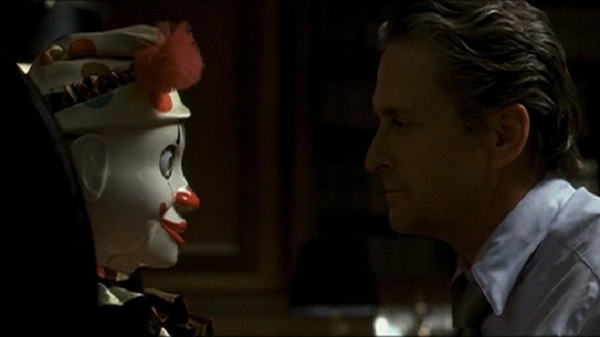
Nicholas Van Orton (Douglas) is an investment banker who is always in control of the situation. He is cold, calculating and always on his game. Nicholas lives a well-ordered life-until an unexpected birthday gift from his brother, Conrad (Sean Penn), destroys it all.

Review:

David Fincher has once been quoted as saying “I don’t know how much movies should entertain. I’m interested in movies that scar”. Whether he is referring to the scarring of the characters within his films or of the audience voyeuristically partaking in his dark and twisted tales is unclear. What is definitely accurate about Fincher’s films is that they leave an undeniable mark on each and everyone involved.

It is hard to mistake a Fincher film. They usually contain very little natural light and the atmosphere will be extremely unsettling. This will then force the audience to share the protagonists’ feelings of unease and paranoia. As well, by the end of the film, Fincher’s “hero” has usually undergone some sort of life-changing trauma.

The Game is a film that may be the least known of Fincher’s. It arrived in between Seven (1995) and Fight Club (1999) and has seemed to have been overlooked as a great film. This is a great film. The manipulative control Fincher seems to possess over his audience is mastery in its calculation and concoction.

The story is simple. A man is given a present that will eventually drive him to the depths of depravity and despair by turning him into the character he has always deemed offensive and unimportant. It is a well known story cliché. He will then become a better person as a result of his journey which will be expressed through his change in character and his thoughts and actions towards others. However, Fincher beautifully makes this simple story his own. Fincher is a master of brooding and depressing atmospheres. There is no life in his films. Oh, there are people alive but his focus seems to be on reanimating the dead that exists within the body. Nicolas Van Orton is a character who lives alone. He is rich, powerful and most of all, successful. But yet, he is dead within. He rarely smiles and seems to have become who he is now as a result of witnessing his father’s suicide at a young age. Other than talking to his housekeeper and his lawyer (which he still does to a limited degree), he is a man who keeps to himself. He does not want to be bothered and will only bother another if there is progress to be made. He is sort of a 90’s version of Gordon Gekko from Wall Street (who Douglas played as well) who is more in touch with control and intimidation then he is with emotional contact.

The idea that Nicolas was unable to prevent his father’s suicide left him in a state of shock. He was unable to control the situation and thus he felt pain for the very first time. The film starts off with images of Nicolas as a child and his father and it is clear that this event was crucial in the shaping of Nicolas as a man. He lost a very important person in his life and as a result, he became a closed off and emotionally detached human being. He feels that being in control will prevent him from ever feeling pain again but yet (unaware to him until after the “game” begins) he yearns for closure in regards to his father’s death. It is only when the “game” begins that he slowly begins to exist once again and to reemerge as a living entity.

Douglas is masterful in his performance. He refuses to break character at any moment until it is deemed necessary by the script. Even when this “game” begins, Douglas portrays Nicolas as a character who still believes he is in control of the situation. He believes he has it all figured out until, of course, he doesn’t. When things do not go as planned, he panics as a result. He does not know how to control the situation which leaves him vulnerable and confused (feelings he has cut himself off from). He has never had to cope with change because he has never attempted to change himself. He must rediscover his inner self before there is any chance of redemption or rebirth.

Within moments of the films’ commencement, we come to identify with Nicolas. He may not be the most friendly and admirable protagonist in film history but yet we still attempt to identify with him. As a result, we form some sort of control over the narrative. We believe that we understand the simple structure of the story and will not be undermined by it in any manner (as Nicolas feels when the “game” begins). However, as this film progresses, we, the audience, become lost and confused. We, as Nicolas, are unaware of our surroundings and have become paranoid and fearful of the people within the narrative. Who do we trust? Where do we go from here? It is now the blind leading the blind.

This film may not be noted as one of Fincher’s more important pieces of work but yet it is a beautifully crafted piece of entertainment. The writing is taut and the acting is superb. Yes, many of the events are implausible and rely heavily on coincidence and chance but it is told and shot in such a high octane sort of way that the audience is quick to forgive the filmmakers for these insignificant and basically pointless quibbles.


the game.jpg

Film Review: UNARMED VERSES (Canada 2017) ***

Unarmed Verses Poster
This feature documentary presents a thoughtful and vivid portrait of a community facing imposed relocation. At the centre of the story is a remarkably astute and luminous 12-year-old black girl whose poignant observations about life, the soul, and the power of art give voice to those rarely heard in society. Unarmed Verses is a cinematic rendering of our universal need for self-expression and belonging.

Director:

Charles Officer

UNARMED VERSES arrives with all the critical and public raves after being named Best Canadian Feature Documentary at this year’s Hot Docs 2017.   It is a National Film Board of Canada production which means it is (as most NFB films are) a meticulously constructed arty small budget film. 

The centre of the film is 12-year old Francine Valentine, played by the real Francine Valentine.  So, the film is a documentary of sorts, a documentary of the present so that the film feels like a fiction piece.  Francine is a Jamaican Canadian (as seen from the country’s flags in her house) who has been to live with her old grandmother and father inToronto so that she can obtain a better education.  The film follows her throughout the entire film with her often speaking out loud so that the audience can relate not only to her thoughts but also with what is going on in the film.  Francine’s family in Toronto is not rich.

As the film opens, her community faces a difficult transition, when the largely low-income residents of a rental housing block in the city’s northeast end are threatened with imposed relocation due to the impending demolition of the place they call home.  They have to move out and given a chance to return.  They are unable to afford even renting the new condominiums that will be built.  They are informed, as expect from the typical government, that that any of their questions will be answered though this does not mean that their problems will be solved.  Francine’s grandmother, old but still bright a a light questions the schools that need to be changed for the children.

The film follows the thoughts of Francine, as she reads poems, writes her thoughts and composes her songs,  Through the activities, the audience sees Francine’s reflections on life, the self, and the soul.  

But Francine is not the only person on display.  Her rhythmic father also sings reggae in the film.  Another older black teen inner community class, raps and writes poetry.  

One wonders about the authenticity of the scene in which Francine is so shy at the recording studio, almost unable to go on.  If this is so, how come she could sing in front of the film’s camera earlier in the film?

A highlight of the film is Francine’s visit to the Basquiat exhibit at the Ago (Art Gallery of Ontario)in Toronto.  She gives her 12-year old view on art.

The film ends up a quietly insightful film that also serves as a coming-of-age drama of Francine Valentine.

UNARMED VERSES screens in Toronto at the Hot Docs Ted Rogers Cinema, 506 Bloor St. W., starting Friday, October 6. There will be a Q&A with producer Lea Marin and guests from the film on opening night, October 6; and with director Charles Officer and guests from the film following the 8:30 p.m. screening on Monday, October 9.

Trailer: https://vimeo.com/212776693

Film Review: LUCKY (USA 2017) ***1/2

Lucky Poster
Trailer

Director:

John Carroll Lynch

Writers:

Logan Sparks (screenplay), Drago Sumonja (screenplay)

Stars:

Harry Dean Stanton, David Lynch, Ron Livingston

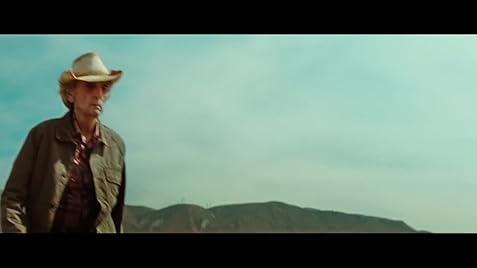
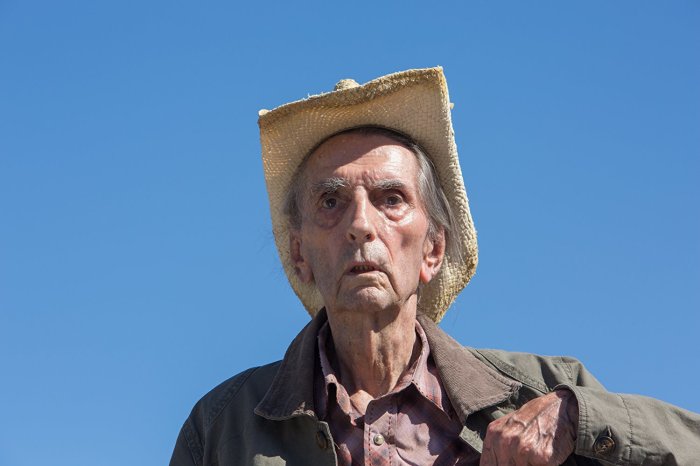
Harry Dean Stanton plays the character of LUCKY of the film title in a film that audiences recognize could be the real Harry Dean Stanton.  LUCKY is the nickname the ex-navy man earned after being designated the cook in the Navy while others were sent to fight and die during the War.  Lucky is 90, bitter, alone (but not lonely as he has a routine of chores to do each day), cynical, sickness free, and smokes a lot.

The audience sees Lucky doing the same things daily – visiting the grocery store with the Mexican cashier to get his cigarettes; having some drinks at the bar; having coffee at his dual diner; and watching his favourite quiz show – but with different reactions.  The soundtrack replays the tune of “Old River Valley’ on a harmonica.

The film contains a lot of musings like what realism (as explained by Lucky as real for one person but not necessarily in another occurs to another) is or even the friendship between man an animal as the latter discussion (it is apparently essential to the soul) starts.  Lucky’s friend, Howard (David Lynch) at the bar walk in to sadly announce the loss of President Roosevelt, his pet tortoise. (Lucky does not believe this….. not the statement but the existence of a soul.)  Though the latter statement seems inconsequential dialogue in the script, it is important in the way Lucky looks at life if he does not believe in the existence of a soul.

The film is directed by actor John Carroll base on the script by Logan Sparks and Drago Sumonja.  The film pays more attention to the character than to plotting.  The film is also wonderfully acted by Stanton.  Director David Lynch delivers a surprisingly moving speech defending his case of leaving his inheritance to his tortoise that has apparently escaped as does James Darren how a nothing person like him transformed to one who now has everything.

LUCKY the film can be best described as a cynical coming-of age movie of a 90-year old man who has almost given up on life.  It is quite an idea for a film which is likely the story got made.  It is a film about an old fart that is not the typical Hollywood old fart film like the fantasies of old people reminiscing on their youth or having sex one more time.  Lucky confesses in one scene that he can hardly get it up any more.  Here, Lucky says in the film’s most intimate scene where he reveals his deep secret to his friend, Loretta (Yvonne Huff): “I’m scared.”  It all happens when he falls down out of feeling faint, though doctor (Ed Begley Jr.) tells him that nothing major is wrong with him.

Harry Dean Stanton passed away this year (2017).  LUCKY is a worthy swan song of an actor that has surprised audiences many a time with his wide range of performances.

Trailer: https://www.youtube.com/watch?v=YurR6xZeBCk

lucky

HIGHLIGHTS & VIDEOS: September 2017 ANIMATION FEEDBACK Film Festival

feedbackanimationfestival's avatarFEEDBACK Animation Film & Screenplay Festival

AUDIENCE FESTIVAL AWARDS

Best Film: FRUIT

Best Animation: ONE PER PERSON

Best Characters: Pushing

Best Music: PERFECT TOWN

festival posterestival posterPEPITA & MAX, 6min, Family/Animation 
WATCH Audience FEEDBACK
festival posterUKA, 3min, Spain, Animation/Family
WATCH Audience FEEDBACK
festival posterKARMA, 4min., USA, Animation/Family
WATCH Audience FEEDBACK
festival posterPERFECT TOWN, 4min., Switzerland, Animation/Fantastic
WATCH Audience FEEDBACK
festival posterONE PER PERSON, 10min., Canada, Animation/Comedy
WATCH Audience FEEDBACK
festival posterFRUIT, 7min., Germany, Animation/Experimental
WATCH Audience FEEDBACK
festival posterOUR CRAPPY TOWN, 8min, USA, Animation/Comedy
WATCH Audience FEEDBACK

The FAMILY SEPTEMBER 2017 FEEDBACK Film Festival was truly a great success.

The theme of the festival was “CYCLE OF LIFE”.

Every film showcased was about the process of life. We are born. We live. We pass on.

NOTE: This was a showcase of the best FAMILY films from around the world.

This was a two part night. The first half was the best of live action shorts. And the 2nd half was the best…

View original post 166 more words