TV REVIEW: GAME OF THRONES – SEASON 07 – EPISODE 05

eastwatch-1Daenerys demands loyalty from the surviving Lannister soldiers; Jon heeds Bran’s warning about White Walkers on the move; Cersei vows to vanquish anyone or anything that stands in her way.

Director: Matt Shakman
Writers: David Benioff (created by), Dave Hill (written for television by)
Stars: Peter Dinklage, Nikolaj Coster-Waldau, Lena Headey

Review by Mary Cox

“Eastwatch”

Tonight sees the reunion between the Dragon Queen and our favorite friend-zoned hanger-on, Jorah Mormont, who is summarily planning on throwing his second chance at life straight into the trash by setting out to capture a White Walker with Jon Snow. Once they somehow capture one, the Dragonstone crew intend on taking their frosty friend on a cross-country tour to help negotiate and armistice with Cersei.

The question of this season is: what is Littlefinger up to? After we see him plant a note with the intention to damage Sansa and Arya’s already splintered relationship, it makes me wonder what he’s really after. All signs point to Sansa and being the new Warden of the North, but what’s his end game?

Littlefinger is known for being allied to himself and himself only, so does he intend on backing the Lannister or Targaryen claim to the throne?

Jon’s positive interaction with Drogon once again is pointing to the all but directly established theory that he is the son of Rhaegar Targaryen. Another moment that happened so quickly and quietly that you could have easily missed it was when Gilly brings up the annulment and secret second marriage of Prince “Raggar” in Dorne. This seems to again allude to the notion that Rhaegar and Lyanna’s relationship was legitimate.

Down in King’s Landing, everything is pointing in the direction of Cersei losing her grip on her sanity and on her acceptance of reality. It’s being heavily implied that Jaime is going to potentially have to make a choice between his sister and his country. Calling it now: Jaime’s going to end up beheading Cersei before this whole affair is over. If we think back to the prophecy given to Cersei by a fortune teller, her death was predicted to happen at the hands of a “Valonqar,” which we know is High Valyrian for “little brother”. Cersei always assumed that this meant that Tyrion would be responsible for her death, but with all the signs pointing to Jon’s Targaryen heritage, we can’t be so sure.

eastwatch-2.jpg

******
“Mary Cox is an entertainment writer from the United States. Her hobbies include making good beer and bad decisions, watching drag queens fight on the internet, and overanalyzing everything. Mary one day hopes to be the person shouting “World Star” in the back of a Waffle House brawl video. She is currently tolerating life in Toronto. You can follow her on Twitter at @M_K_Cox”t

TV REVIEW: RICK AND MORTY – SEASON 03 – EPISODE 04

rickandmorty1.jpgRick and Morty are summoned by the Vindicators to stop Worldender but end up in a deathtrap conceived by Drunk Rick.

Creators: Dan Harmon, Justin Roiland
Stars: Justin Roiland, Chris Parnell, Spencer Grammer

Review by Mary Cox

“Vindicators 3: The Return of Worldender”

 Rick’s functional-dysfunctional alcoholism sets the stage for a Saw-like series of challenges that are meant to reveal the true nature of the Vindicators to Morty. This episode was a clear criticism of contemporary super heroes, specifically, those involved with The Avengers franchise.

This plan ultimately works, but not without adding to some of the existing tension between Rick and Morty’s relationship. It seems like Hammond and Roiland are setting the stage for some kind of major schism between our two titular characters, but one thing you have to remember about this series is that nothing is ultimately taken too seriously. Rick and Morty is a powerhouse of a series with a huge fan following, but Adult Swim’s mastermind Mike Lazzo has pulled the plug on popular shows that pivoted too far to drama in the past, such as Metalocalypse and Moral Orel.

Rick and Morty’s recurring show of heart does give the series an element of greater purpose and emphasis, but after so much time this season has been dedicated to the Sanchez family’s drama, it’s nice to see the series return to a Rick-centric perspective. It’s difficult to determine where the series is heading this season, but it’s unlikely that it will venture too far down the path of melodrama 

******
“Mary Cox is an entertainment writer from the United States. Her hobbies include making good beer and bad decisions, watching drag queens fight on the internet, and overanalyzing everything. Mary one day hopes to be the person shouting “World Star” in the back of a Waffle House brawl video. She is currently tolerating life in Toronto. You can follow her on Twitter at @M_K_Cox”t

TV REVIEW: TWIN PEAKS – SEASON 03 – EPISODE 14

twin_peaks_13.jpg“Part 14: We are Like the Dreamer”

Creators: Mark Frost, David Lynch
Stars: Kyle MacLachlan, Sheryl Lee, Michael Horse

Review by Mary Cox

After a few particularly draggy episodes, tonight’s installment of Twin Peaks was all about action. Even though Part 14 was technically leaked when Sky aired the wrong episode last week, people who successfully managed to avoid spoilers have been decently rewarded for their wait. Fans who criticized the slow pace of past episodes will rejoice at how much actually happened tonight. Janey-E is Diane’s sister! Chad finally got thrown in jail! The Giant has a real name! Most importantly, the Twin Peaks PD have finally made it to Jack Rabbit’s palace. A vortex that was similar to the Woodsmen-filled portal seen by Gordon Cole appeared and temporarily kidnapped Sheriff Andy. After the Fireman laid a montage of truth on Andy, he and the other officers reappear in the woods in a manner that is incredibly similar to how the Woodsmen move between our world and
the Black Lodge. Between this sequence, the introduction of Freddie and his power glove, and Naimo’s arrival on Earth, it seems like the Fireman trying to assemble a team to combat the forces of the Black Lodge.

Something serious is up with Sarah Palmer. Between the visual reference to the ceiling fan, which we know is an established link to Bob, and last week’s boxing loop, it’s no surprise at all that Sarah Palmer went straight up Mike Tyson on that guy. We’re also seeing a parallel between Laura in the Red Room and Sarah in our world. It’s been heavily implied that Laura was engineered in what is almost a Messiah narrative to be the anti-Bob, and Sarah’s literal unmasking reinforces that theory.

However, not everything has been sorted out. There are still a considerable amount of untied loose ends. In another chapter of the Billy/Tina drama (that seems to be connected to much more of the story than we originally thought) we learn that Tina’s daughter saw Billy bleeding from the nose and mouth before he disappeared. We’re only four episodes away from the grand finale of this series, and it’s only a matter of time before all of the paths in this series finally cross. Once again, all roads lead to the Roadhouse.
 

We are Like the Dreamer

******
“Mary Cox is an entertainment writer from the United States. Her hobbies include making good beer and bad decisions, watching drag queens fight on the internet, and overanalyzing everything. Mary one day hopes to be the person shouting “World Star” in the back of a Waffle House brawl video. She is currently tolerating life in Toronto. You can follow her on Twitter at @M_K_Cox”t

TIFF 2017 Movie Review: PORCUPINE LAKE (Canada 2017) ***1/2

Movie Reviews of films that will be playing at TIFF (Toronto International Film Festival) in 2017. Go to TIFF 2017 Movie Reviews and read reviews of films showing at the festival.

PORCUPINE LAKE-1.jpgPorcupine Lake is a story of bravery and the secret life of girls set in Northern Ontario during a hot and hazy summertime when adulthood has not yet arrived, but childhood is quickly vanishing.

Director: Ingrid Veninger
Writer: Ingrid Veninger
Stars: Delphine Roussel, Christopher Bolton, Lucinda Armstrong Hall

Review by Gilbert Seah

Canada’s darling Ingrid Veninger has always been a director of films with strong female content. Who then best to write and direct PORCUPINE LAKE, a story of bravery and the secret life of girls set in Georgian Bay, Northern Ontario during a hot and hazy summertime when adulthood has not yet arrived, but childhood is quickly vanishing?

Ally (Delphine Roussel) arrives with 13-year old daughter, Bea (Charlotte Salisbury) in tow from Toronto to meet up with her husband, Scotty (Christopher Bolton). Bea learns through a local, Kate (Australian Lucinda Armstrong Hall) independence, as well as the facts of life about boys and growing up. Kate is the companionship Bea’s mother is unable to offer, and the two bond a strong friendship.

PORCUPINE LAKE is the most ambitious and strongest of Veninger’s films (also beautifully shot by Benjamin Lichty), her popular film ONLY being screened at a local cinema that Bea and Kate attend at one point in the film. Veninger proves once again, she is always in control of her material and meticulously drives her film to its emotional climax and coming-of-age mesage.

Trailer: https://www.youtube.com/watch?v=S0Lm-EC3e5s

Film Review: INGRID GOES WEST (USA 2017) ***1/2

INGRID GOES WESTAn unhinged social media stalker moves to LA and insinuates herself into the life of an Instagram star.

Director: Matt Spicer
Writers: David Branson Smith, Matt Spicer
Stars: Aubrey Plaza, Elizabeth Olsen, O’Shea Jackson Jr.

Review by Gilbert Seah
 
Actress Aubrey Plaza has been busy in the production chair lately with her recent THE LITTLE HOURS, a naughty little comedy about misbehaving nuns and now with INGRID GOES WEST, again a naughty little comedy but with more drama about a misbehaving Ingrid. Plaza stars in both films, creating a niche for herself as in DIRTY GRANDPA always playing a misbehaving youth.

INGRID GOES WEST (great title, by the way), is a more ambitious project with a stronger narrative this making way for a better picture. INGRID GOES WEST is the most accomplished of all the Aubrey Plaza films so that fans of hers are aware. She play a psycho habitual stalker desperate to make friends at all costs, including causing grievous bodily harm to her targets and herself.

When the film begins, she has already stalked Charlotte who has got a restraining oder on her. Yet Ingrid (Plaza) shows up at Charlotte’s wedding and pepper sprays her during the wedding dance. Ingrid is then institutionalized. The sudden passing away of her mother leaving her a large sum of money, $60,000 in cash allows her to carry on her stalking comfortably till all hell breaks lose. The coming across of the money is an excuse for the story to have its character continue her exploits.

Plaza’s character reminds one immediately of Anna Faris, the lead in Gregg Araki’s SMILEY FACE, in which the f***ed up lead goes around the entire film causing drama and damage to herself and every person around her. In this story, Ingrid’s new target in Instagram celebrity Taylor (Elizabeth Olsen) and her artist husband (Wyatt Russell). Taylor and Ingrid initially hit it along, with Ingrid stalking her half the time photographing everything without her knowledge. Ingrid also has an admirer, her black landlord (O’Shea Jackson Jr.), who she eventually has a relationship with. His obsession with everything Batman proves a lot of laugh-out loud jokes. But things get tough with the appearance of Taylor’s obnoxious but good-looking buffed up drug taking drunken brother, Nicky (Billy Magnussen) who finds out the truth about Ingrid’s motives. He blackmails her and things get out of control.

The film rarely contains a dull moment. When things start to smoothen out, one can always count on Ingrid to f*** things up again.

The film also contains a soundtrack of popular 80’s and 90’s tunes that keep the spirit of the film going.

One of the rare achievements of the film, courtesy of both actress Plaza and writer/director Spicer is the creation of a character that is such an alpha female loser that the audience wishes the worst on her and that all her plots be foiled. Yet the character created is one to sympathized.

The film’s one flaw is the tacked on unhappy ending. The ending is predictable for a film with a story centring on social media. Apart from that, this is one totally entertaining f***ed up movie about a f***ed up person doing f***ed up things. The film debuted at Sundance 2017, where it won the Waldo Salt Screenwriting Award for co-writers Spicer and David Branson Smith.

Trailer: https://www.youtube.com/watch?v=xP4vD1tWbPU
 

Also, Free logline submissions. The Writing Festival network averages over 95,000 unique visitors a day.
Great way to get your story out: http://www.wildsound.ca/logline.html

Deadlines to Submit your Screenplay, Novel, Story, or Poem to the festival:http://www.wildsound.ca

Watch recent Writing Festival Videos. At least 15 winning videos a month:http://www.wildsoundfestival.com

Film Review: MENASHE (USA 2017) **1/2

menasheWithin Brooklyn’s ultra-orthodox Jewish community, a widower battles for custody of his son. A tender drama performed entirely in Yiddish, the film intimately explores the nature of faith and the price of parenthood.

Director: Joshua Z Weinstein
Writers: Alex Lipschultz, Musa Syeed
Stars: Menashe Lustig, Yoel Falkowitz, Ruben Niborski

Review by Gilbert Seah

 
Performed entirely in Yiddish – a language not used in cinema for many decades – Joshua Z. Weinstein’s Menashe is a tender drama that burrows into Brooklyn’s Hasidic community and tells the story of an Ultra-Orthodox Jewish widower who risks losing custody of his son due to tradition. If a film in Yiddish and one about a Hasidic community are not enough to put an audience off, director Weinstein makes a lot of effort to make his story a universal one. Here in MENASHE, which is based on a true story, actually loosely based on the life of lead actor Menashe Lustig, the story is an endearing one, based on character that is of good moral fibre and well-intentioned and an underdog at that. His only sin appears to be his well-meaning intentions going at logger heads to the religious beliefs of his elders and contemporaries.

The film opens with a scene in Brooklyn’s Hasidic Community. Those walking around sport beards and don Jewish apparel. The cameral cuts to a grocery store where the audience is introduced to the lead character, a chubby cashier called Menashe (Lustig). Director Weinstein makes sure Menashe is likeable. His first good deed as grocery cashier is to exchange an unwashed lettuce for a customer.
The film immediately reminds one of the Dustin Hoffman KRAMER VS. KRAMER characters where Kramer (Hoffman) has to prove that he is a father capable of looking after his son alone, while working a full-time job. Although his wife died a year ago, Meneshe (Lustig) refuses to remarry just for convenience. He does try, going on a date as set up by a matchmaker. But his young son (Ruben Niborski) is now living with Menashe’s strict brother-in-law’s family, because the rabbi says the boy won’t be allowed to stay in school unless he’s in a two-parent home. The film is about trying to do what is right but are unable to do so because of laws. It is true that these laws are surely there to protect the majority but what about the special minority? Weinstein, as observed from his film, is pro-Hasidic but does not shy away from the faults of being too religious for religion’s sake. It is also noted that Menashe, at one point in the film, hangs out with other groups, the Latinos of his work, to forget his troubles.

But the film does not tackle the fact that Menashe is actually not a good example of being a father. He is always out of money, always late for appointments and gets drunk once too often.

The film benefits from the cast of mainly non-professionals. Many are from the Hasidic community, many of whom had never seen a film before.

Weinstein’s film provides a simple yet insightful look into a society many are unfamiliar with. His film is likeable and entertaining, but that is about all it has to offer. The film premiered at at the 2017 Sundance and Berlin festivals.

Trailer: https://www.youtube.com/watch?v=83UoZcdX__Y

Also, Free logline submissions. The Writing Festival network averages over 95,000 unique visitors a day.
Great way to get your story out: http://www.wildsound.ca/logline.html

Deadlines to Submit your Screenplay, Novel, Story, or Poem to the festival:http://www.wildsound.ca

Watch recent Writing Festival Videos. At least 15 winning videos a month:http://www.wildsoundfestival.com

1987 Movie Review: THE JETSONS MEET THE FLINTSTONES, 1987

  MOVIE POSTERTHE JETSONS MEET THE FLINTSTONES, 1987 
Movie Reviews

Director: Don Lusk

Starring: Mel Blanc, George O’Hanlon, Henry Cordon and Penny Singleton.

Review by Joseph Paul John McCarthy

SYNOPSIS:

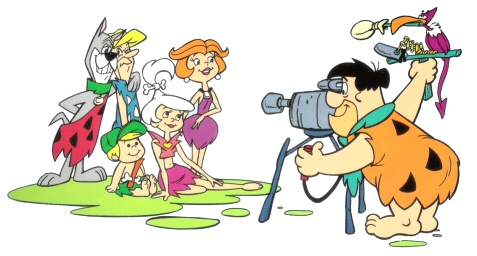
From the 1980’s comes one of the most famous crossovers in history. Elroy Jetson is working on a time machine which the family wish to use to holiday in the 25th century, but an accident sends them hurtling into the distant past where they meet up with the Flintstones.

REVIEW:

From the 1980’s comes one of the most famous crossovers in history. Elroy Jetson is working on a time machine which the family wish to use to holiday in the 25th century, but an accident sends them hurtling into the distant past where they meet up with the Flintstones.

This was one of those inevitable crossovers that just had to happen otherwise, the individual franchises would have to have come up with a new idea. Just like ‘Alien vs Predator’ or ‘Freddie vs Jason’ or even ‘Archie Meets the Punisher’ (which did happen, look it up!) there are some positives and some negatives to this crossover.

Admittedly this film isn’t one of those childhood cartoon films that we all remember, it is probably less memorable than even ‘The Jetsons: The Movie’. But it’s still a good children’s film and you should show it to your kids.

Being a Hanna-Barbera production the animation is pretty damn good, as is the storyline and dialogue. Technically this is a fairly flawless film; there are a few goofs here and there, but nothing worse than most other straight-to-video cartoon films. However being technically flawless does not make a children’s film great.

The plot is great in its simplicity, Elroy Jetson is building a time machine for a school science project, whilst the rest of the family have their own problems, George is fed up with Mr. Spacely telling him what to do and Judy Jetson is upset because she has just broken up with her rock star boyfriend. So the family decides to use the time machine to go on a vacation to the 25th century.

Meanwhile (for want of a better term) in the distant prehistoric past and in a little town called Bedrock; Wilma Flintstone and Betty Rubble are trying to convince Fred and Barney to take them on a vacation to Honolourock. Fred and Barney plan to go on an even better vacation after they win a game of poker. This back fires of course when not only do they lose their money to their boss; they also wind up getting fired.

The Flintstones and Rubbles now have to vacation in the middle of nowhere at the “same” “time” as the Jetsons are just about to travel in time. Just as the Jetsons are set to take off, Astros tail knocks a lever, changing the setting on the time machine from ‘Past’ to ‘Future’. Fred and Barney are setting up the camp just as the Jetsons appear in their time machine.

After some initial mistaking each other for aliens, the two groups become fast friends and even end up working together. The majority of the film then deals with the Flintstones and Jetsons swapping places in time, Fred becoming famous in the future for being a caveman and George being useful in the past with all his futuristic machines.

There are a lot of family style laughs and it generally is an enjoyable film, but it doesn’t really stand up to the test of time. Really young children would like it but it doesn’t hold the same kind of nostalgic love screen up in front of your eyes that other 80’s cartoon movies seem to have.

THE JETSONS MEET THE FLINTSTONES, 1987

1987 Movie Review: HELLRAISER, 1987

HELLRAISER, MOVIE POSTERHELLRAISER, 1987
Movie Reviews

Directed by Clive Barker
Starring: Andrew Robinson, Clare Higgins, Ashley Laurence, Oliver Smith, Robert Hines, Sean Chapman, Frank Baker
Review by Melanie Tighe

SYNOPSIS:

A man finds he is given more than he bargains for when he solves the puzzle of the Lament Configuration – a doorway to hell. But his ex-lover has found a way of bringing him back, and his niece, Kirsty Lawrence, finds herself bargaining with the Cenobites, angels to some, demons to others, whose greatest pleasure is the greatest pain.

REVIEW:

Clive Barker’s first feature-length film is a visually stunning exercise in visceral horror.

Kirsty, her father Larry and his partner, Julia, move into an old house previously owned by Larry’s mother.

The house is jointly owned by Larry’s estranged brother Larry, who’s pureed remains fester beneath the floorboards in the attic.

Frank and Julia were once lovers.

Julia finds evidence in the attic that Frank had been engaging in sex acts and reminisces about their passionate affair.

Sex was not enough for Frank and he went to great lengths to track down a mysterious puzzle box in search of the ultimate thrill.

Sadly for him, he is torn to pieces and his soul dragged to hell by S&M deities, The Cenobites.

The Cenobites are highly skilled in the art of administering a mixture of pleasure and pain (evidently more of the latter), incorporating chains, hooks and skewers. Their own bodies’ are testament to the journeys they themselves once took.

A rusty nail, a few drops of Larry’s blood later and Franks glistening, skinless corpse is talking Julia into murdering strangers in order to restore his body and the lover she once knew.

Kirsty finds Frank and the puzzle box and accidentally summons the Cenobites but they spare her from hell when she explains that Frank has escaped them and promises to show them where he is.

Frank is reclaimed (not before stealing his brother’s skin) and the Cenobites come after Kirsty.

Like all typically resourceful Final Girls, Kirsty sends them packing and the puzzle box finds a new owner.

Andrew Robinson’s role as serial killer, Scorpio, in Dirty Harry (1971) is a great contrast to that of drippy Larry. Our expectations are challenged and we are invited to anticipate the progression of his character. We are rewarded when Frank claims Larry’s skin; creepy Frank is also briefly played by Robinson.

The Cenobites were instant horror icons, with stunning costumes and make-up showing much skill and imagination, they are appalling and charismatic works of art, decorated with lacerations and mutilations.

The odd camera angles (born out of necessity due to the film being shot in a real house) and the eerie atmosphere that Barker creates succeed in isolating the family from the world outside of the house.

Added to this accomplished make-up, special effects and solid performances from the cast (save perhaps Kirsty and her boyfriend); Hellraiser raised the bar for future horror films.

It is entirely possible that the premise of a woman led to murder by remnants of her ex-lover, and the Cenobites pleasure and pain doctrines could have seemed too bizarre. The themes are so well-executed; however, that not only do these revolting things seem plausible, they make Kirsty’s “normal” relationship with her boyfriend seem positively boring.

Groundbreaking.

SCREENPLAY CONTESTSUBMIT your SCREENPLAY
Voted #1 screenplay contest in the world!
NEW MOVIE REVIEWSNEW MOVIE REVIEWS
Read Today’s POSTED REVIEWS
MOVIE KILLSEE 1000s of PICTURES
Best of photos, images and pics
MOVIE YEARMOVIES YEAR BY YEAR
Pages from 1900 to present


HELLRAISER, 1987

1987 Movie Review: FULL METAL JACKET, 1987

FULL METAL JACKET MOVIEFULL METAL JACKET, 1987
Movie Reviews

Directed by Stanley Kubrick

Starring: Matthew Modine, R. Lee Ermey, Vincent D’Onofrio, Adam Baldwin, Vincent D’Onofrio, Ed O’Ross, Arliss Howard, Kevyn Major Howard, John Terry

Review by Surinder Singh

SYNOPSIS:

A two-segment look at the effect of the military mindset and war itself on Vietnam era Marines. The first half follows a group of recruits in basic training under the command of the punishing Sgt. Hartman. The second half shows one of those recruits, Joker, covering the war as a correspondent for Stars and Stripes, focusing on the Tet offensive.

REVIEW:

There have been many classic movies made about the Vietnam War: The Deer Hunter (1978) and Apocalypse Now (1979). And when Stanley Kubrick decided to take on the challenge of adding to this already impressive milieu, it was clear that cinema audiences were in for a real treat! Full Metal Jacket was not made during the powerhouse decade of cinema (also known as the 1970s) and when the war itself was most prominent in popular culture. This allowed Kubrick adequate time to reflect on the subject, the themes and the ideas he wanted to explore. His legendary pre-productions always ensured that he never made a rash film and that every one of his films was flawlessly designed in style and substance.

The structure of the movie is quite brilliant. Like a documentary we follow in perfect chronology the journey of these young Americans. Kubrick shows us the intensive training and conditioning that transforms boys into Marines or rather “killing machines”. The training sequences in Full Metal Jacket are now amongst the top all-time classic scenes in modern American cinema. Kubrick has never forgotten the importance of acting in his movies. He has never fallen prey to the tendency that some directors have of being distracted by the practical side of production, forgetting the need for believable performances.

A prime example is the powerhouse performance of Drill Sergeant Hartman delivered with perfection by R. Lee Ermey. Even though Hartman is not the central character he commands your attention and pulls you into the movie with his unrelenting barrage of sadistic yet hilarious jibes to instate his authority over the young boys: “I bet you’re the kind of guy that would fuck a person in the ass and not even have the goddamn common courtesy to give him a reach-around!” Kubrick uses the performance to entertain, thrill and inform us with total believability that this man can turn mere boys into the toughest soldiers in the world. How could they not be ready for war if they can endure him?

Private Joker is quick to make a name for himself and is promoted to squad leader after impressively showing he was brave enough to reject the Virgin Mary directly to his deeply Christian Drill Sergeant. Joker is from the very start following his own moral compass and isn’t afraid to stand by it. Many directors would not be brave enough to have such a seemingly amoral central character in their movie (out of fear of loosing the audience). But the effect Joker has on the audience is one of wonder. He isn’t the usual boring, all-American son going into the savagery of war, rather he’s a complex character with an interest in killing. While we may not agree with Joker we still want to see what happens to him when he does end up in the thick of war and this keeps us immersed: “I wanted to see exotic Vietnam, the crown jewel of Southeast Asia. I wanted to meet interesting and stimulating people of an ancient culture… and kill them.”

The other outstanding performance is that given by Vincent D’Onofrio as the unforgettable Private Pyle! Never before or since has there been such a harrowing portrait of the demoralizing nature of war. Pyle never even makes it into the conflict but in his eyes is a war, a war within himself. Private Pyle enters training as nothing more than just a big, innocent baby. But he finishes training as a terrifying tower of insanity! With the grueling training, the Drill Sergeant constantly on his back and his lack of focus, Pyle eventually cracks and becomes a completely different person. In the US Marine Core’s strive to create Killing Machines they were bound to be some unfortunate accidents. While many of the other notable Vietnam movies were all to eager to get straight into the war, with the training section Kubrick hit upon an area of exploration that other filmmakers tackling the subject missed.

While it’s important to show the horrific acts of violence Americans bestowed on the Vietcong and Vietnamese people, it is also important to show the violence that Americans bestowed upon other Americans. Private Pyle symbolizes the failure of the US Vietnam War effort on the American people and while films like Born on the Fourth of July (1989) also tackled this, the idea was best realized in that final training sequence when Private Pyle (sat on the toilet) loads the full metal jacket. There are many harrowing images in pop culture about Vietnam, so creating something memorable in any medium is a tall order. Alas, the sight of Private Pyle reciting the US Marine Corp’s Rifle Creed and then shooting both himself and his Drill Sergeant is definitely one of the most important and lasting Vietnam War images in any medium.

After this the movie changes gears and starts to resemble some of the other Vietnam War movies of the past. The most notable similarity is the way the director balances humor, exhilaration and tragedy within each scene. While Kubrick cares about people on both sides of the conflict, he does realize that some things about the experience of war are funny. The truth is that even in the face of death young men will continue to goof around, indulge themselves in playful banter and whatever entertainment is available. In war you can be larking around one minute and be shot dead the next so… why not have a laugh?

In all the praise showered over Kubrick’s directing, his skill in directing comedy is always left out. While Full Metal Jacket is no M*A*S*H (1970) it does have some brilliant comedy sequences in it. Take the scene with the Vietnamese hooker (Leanne Hong) trying to entice Private Joker: “Me love you long time!” Another classic movie quote, providing the perfect distraction for thief (Nguyen Hue Phong) to steal Joker’s camera and make a getaway, not before performing a hilarious martial arts routine to rub his nose in it! The scene is funny even on repeat viewings thanks to Kubrick’s great understanding of comedy.

The climax of Full Metal Jacket is perhaps the greatest action set piece in any War movie. Kubrick subtly conducts a symphony of shockingly sudden impacts of violence with beautifully staged slow motion shots that show the effect of this violence. The scene is loaded to the brim with nail biting suspense that pushes you to the edge of the edge of your seat for every second of its duration. Kubrick shows us everything: the pain, the excitement, the loss and the beauty of warfare. And like all great filmmakers how does he end the sequence? With a revelation that raises the film to an even higher artist level! We see that the deadly sniper (Ngoc Le) is just a lonely, scared, young girl trying to protect herself from danger.

Full Metal Jacket is one of the best war movies ever made and is compulsive viewing for anyone interested in the Vietnam War and the fine works of modern cinema.

By Surinder Singh – Apr 2010


CLICK and WATCH MOVIES ONLINE!

MOVIE KILLSEE 1000s of PICTURES
Best of photos, images and pics
NEW MOVIE REVIEWSNEW MOVIE REVIEWS
Read Today’s POSTED REVIEWS
SCREENPLAY CONTESTSUBMIT your SCRIPT
Voted #1 screenplay contest in the world! with FULL FEEDBACK
FREE EVENTSFREE MONTHLY FILM FESTIVAL
RSVP to watch the best of new films and screenplays!

FULL METAL JACKET, 1987

1987 Movie Review: EMPIRE OF THE SUN, 1987

EMPIRE OF THE SUN MOVIE POSTER
EMPIRE OF THE SUN, 1987
Movie Reviews

Directed by Steven Spielberg
Starring: Christian Bale, John Malkovich, Miranda Richardson, Nigel Havers, Joe Pantoliano
Review by Matthew Lohr

SYNOPSIS:

A young English boy struggles to survive under Japanese occupation during World War II.

Nominated for 6 OSCARS – Best Cinematography, Best Sound, Best Art Direction, Best Editing, Best Music, Best Costume Design

REVIEW:

After years of being pigeonholed as simply an entertainer, a populist producer of popcorn frivolity, Steven Spielberg has finally won acceptance as a serious filmmaker. His “Schindler’s List” won awards and acclaim and was cited as a milestone in historical cinema, while “Saving Private Ryan” has grown in the public mind into much more than a mere film; indeed, it more or less served the role of a de facto World War II veterans’ monument until the federal government actually got around to building a real one. Even when the public does not embrace his forays into serious cinema quite so fervently, as with the acclaimed but financially underperforming “Amistad” and “Munich”, Spielberg no longer has to fight for respect and the right to be regarded as a cinematic “artiste”.

Such was not the case when “Empire of the Sun” was first released in 1987. Though Spielberg’s previous film, 1985’s deep-Southern drama “The Color Purple”, had won him some acclaim and a Director’s Guild award, many critics charged that the picture prettified human suffering, turning true experience into mere pageantry. It was still hard for audiences to find the artist inside the entertainer, and they responded to “Empire of the Sun” in kind, greeting it with both mixed reviews and lukewarm box office. It would take a few more crowd-pleasers (another Indiana Jones picture, “Jurassic Park”) before Spielberg finally got his due with “Schindler’s List”. “Empire of the Sun” provides an interesting contrast to that film, presenting a vaguely similar subject with all of the Hollywood gloss and glamour that the later film eschews…and ultimately suffering for it.

Adapted from J.G. Ballard’s semi-autobiographical best-seller, “Empire” tells the story of young Jim Graham (a pre-teen Christian Bale), a pampered son of wealthy English parents living in 1940s Shanghai. Jim is obsessed with planes, and dreams of someday joining the mighty Japanese air force. One day, however, the dreams stop when the Japanese take the city and Jim is separated from his parents. Drifting through a series of increasingly harrowing adventures, he eventually finds himself in a Japanese internment camp, where the once-arrogant son of privilege is forced to get down in the muck and learn how to survive.

It’s grand material for a cinematic treatment, but Tom Stoppard’s screenplay does not take it far enough. We never really get a clear sense of exactly what Jim learns from his experiences. Sure, he finds out that life’s not as easy as he thought it was, and that the Japanese army he so idolized is indeed vulnerable, but these lessons are never clearly articulated by the script’s events, and we’re left to piece it together later in our heads (I think this is where the playwright in Stoppard comes through; film scripts often don’t bear up to such abstraction). Jim’s plane fixation likewise seems meant to hold a metaphorical weight that it never truly assumes. What’s more, when Jim is finally delivered from his predicament, we get no scenes showing us his life after his ordeal. How can we really know how he’s changed, what he’s learned, if we don’t get to see the new Jim in action? Spielberg and Stoppard don’t bother to provide any answers, and the film becomes too remote as a result.

Bale, admittedly, makes even this truncated Jim a compelling and fascinating character. The actor holds the screen with utter command; it’s not a stretch for us to follow him anywhere. He’s equally convincing as the snobby, snide boy of early scenes and as the haggard, battle-hardened survivor of the later camp sequences. Spielberg has always been one of our best directors of children, and Bale’s performance here is some of the best work he’s ever solicited from a young actor.

The supporting cast, while impressive, is unfortunately hamstrung by insufficiently defined roles. Miranda Richardson and Peter Gale have some nice moments as Jim’s surrogate prison-camp parents, and Nigel Havers makes us wish we saw more of his dedicated camp doctor. Masato Ibu is also commanding as the cold-eyed Japanese commandant, and Emily Richard has a few moments of chilling power as Jim’s mom. Still, these characters are never given much to do by the story, and merely seem to be around to react to Jim’s actions. The only truly vividly drawn supporting player is Basie (John Malkovich), a former merchant sailor and full-time survivor who teaches Jim the hard facts of camp living while plotting an escape and a new life as a river pirate. He’s a complex and interesting character, both a pragmatist and a dreamer, and Malkovich invests him with hard-bitten smarts and a surprising soulfulness that makes his every scene compelling.

This being a Steven Spielberg picture, naturally, everything looks just great. The cinematography by Allen Daviau is gorgeous, and the production designers craft an always-convincing facsimile of World War II China. John Williams’ score is undistinguished, but the soundtrack makes use of a haunting Welsh lullaby that stayed in my head for days. And, of course, there’s plenty of Spielbergian set pieces: the harrowing moment where Jim loses his mother, a tense sequence where a Japanese gunman stalks the boy through a field of weeds, Jim saluting a band of Japanese kamikaze pilots, and a well-staged air attack on the camp, with Jim cheering wildly for the planes about to destroy him.

Still, should a film like this even HAVE set pieces? “Schindler’s List” had memorable moments, to be sure, but none of them seemed to be there just so the director could show off; everything emerged naturally from the events of the story, and thus became organic parts of a whole, not “big scenes”. “Empire of the Sun” gave Spielberg a serious subject matter and a broad canvas to explore, but the populist was still too much at play. It would take a few years and a few more films, but Spielberg finally got it right, proving that even the most financially successful director of all time can learn a few new tricks every now and again.This film won Best Director and Best Cinematography, and was nominated for five other categories. The screenwriter was nominated, and rightly so. Taken from a short story that first appeared in the Saturday Evening Post in 1933 by Maurice Walsh, Green Rushes, Frank Nugent was able to weave a story rich in subtext and conflict.

The collector’s edition of the DVD includes an interview with Maureen O’Hara where she reminisces about filming The Quiet Man, and is well worth watching.

SCREENPLAY CONTESTSUBMIT your SCREENPLAY
Voted #1 screenplay contest in the world!
NEW MOVIE REVIEWSNEW MOVIE REVIEWS
Read Today’s POSTED REVIEWS
MOVIE KILLSEE 1000s of PICTURES
Best of photos, images and pics
MOVIE YEARMOVIES YEAR BY YEAR
Pages from 1900 to present


EMPIRE OF THE SUN, 1987