Film Review: A BAD MOMS CHRISTMAS (USA 2017)

Submit your Screenplay to the Festival TODAY

A Bad Moms Christmas Poster
Trailer

A Bad Moms Christmas follows our three under-appreciated and over-burdened women as they rebel against the challenges and expectations of the Super Bowl for moms: Christmas.

Directors:

Jon LucasScott Moore


Christmas comes early this year with Hollywood’s first Christmas comedy opening on November the 1st.  And it is a nightmare – a nightmare before Christmas.  When Publicity handed out sheets of an embargo to be signed with the embargo lifted at 9 am on opening day, the critics attending knew that something about the film must be amiss.  A BAD MOMS CHRISTMAS is really bad, and a major turn of events considering that BAD MOMS was really funny and that the entire crew responsible for the first successful comedy hit returned for this dud.

Once again, under-appreciated and overburdened moms Amy (Mila Kunis), Kiki (Kristen Bell) and Carla (Kathryn Hahn) rebel against the challenges and expectations of Christmas.  As if creating the perfect holiday for their families is not hard enough, they will have to do it tho time around while hosting and entertaining their own respective mothers (Christine Baranski, Cheryl Hines and Susan Sarandon) when they come to visit.  But in the moms’ own words, they want to reclaim Christmas for themselves, very much the same way they did in the first movie.

When the three moms in the first movie decided to take back their own lives, it was funny and fresh.  Here, the freshness has changed to stale.  All the perkiness and naughtiness, especially with the Kathryn Hahn’s character rubs totally the wrong way – especially in a Christmas movie.  The stripper dance during the Christmas dinner (at the end of the film) with the kids present is the perfect example of humour gone wrong.  Kahn is obviously trying too hard her and the directors Lucas and Moore given her too much to do after her first success.  Waxing too many vaginas in her job at the spa where she works, her foul language, her way with men and her drunkenness and loudness in public have been reduced from funny to annoyance.  The romance element of Carla and her new stripper boyfriend is both unfunny and silly.  Also missing in this sequel is Christina Applegate who played the bitchy head of the PTA who fought with the BAD MOMS.

Also to keep with the spirit of Christmas films, the film has to bring in the expected sentiment of good cheer, with too much material falling into cliched territory.  As expected, each mom is told off by each respective daughter, for whatever reason – not being able to let go of mommy strings; borrowing money and then comes the reconciliation, one of them done in the midst of a church service, as if no one in the congregation minded or noticed.  The worst sentimental crap is Amy’s father (Peter Gallagher) given his daughter the speech on how special her mother is.

Oddly the moms’ moms are funnier.  The only decent scene is the one where Sarandon, Hines and Baranski end up in church as they help each other out with their daughters amidst insulting each other.  But the film ends with the three bad grandmothers  heading for Las Vegas – which makes for a terrible thought – the possibility of two sequels in the making. 

Trailer: https://www.youtube.com/watch?v=7ERrTQJkZoA

Submit your Screenplay to the Festival TODAY

Film Review: THE DIVINE ORDER (Switzerland 2017) ***

Submit your Screenplay to the Festival TODAY

The Divine Order Poster
Trailer

Switzerland, 1971: Nora is a young housewife and mother who lives with her husband and their two sons in a peaceful little village. Here, in the Swiss countryside, little or nothing is felt… See full summary »

Director:

Petra Biondina Volpe (as Petra Volpe)

Writer:

Petra Biondina Volpe (as Petra Volpe)


There have been quite a few films about women fighting for their right to vote, the most notable being the splashy SUFFRAGETTE that had Meryl Streep in a cameo.  DIVINE ORDER from Switzerland examines the same subject but makes it clear from the beginning that it is taking its study from a different point of view.

When the film opens, archive footage of current events in the world (particularly in the U.S.) – the hippie movement, the rock and roll, the political unrest are displayed on screen with the voiceover emphasizing that the small Swiss village the film is set is still behind the times.    

THE DIVINE ORDER thus makes its stance on a different footing, differentiating itself from films like SUFFRAGETTE, and works in a way, as the film not only becomes more personal but one that people around the world can relate to.  It is no surprise then that THE DIVINE ORDER  was selected as the Swiss entry for the Best Foreign Language Film at the 90th Academy Awards.

The film is set in a small Swiss village in the year 1971. Nora (Marie Leuenberger) is a young housewife and mother, living with her husband and their two sons. The Swiss countryside is untouched by the major social upheavals the movement of 1968 has brought about.  Nora’s life is not affected either; she is a quiet person who is liked by everybody.  But when she finds her niece taken away for ‘retraining’ after having a boyfriend and her refused by her husband from taking a job, she sees the need to fight for women’s rights.  She starts to publicly fight for women’s suffrage, which the men are due to vote on in a ballot on February 7, 1971.

Director Volpe plays her film safe.  Unfolding in chronological order, she  shows the audience Nora’s life, and how she eventually discovers the need to stand up.  An excellent moment is her waking up in the morning with her young son asking her about his breakfast, as is expected by a male from a female, without much thought from the son. This follows with the opportunity for her to make a difference, followed then by her acquaintance with others who feel the same way.

There is always something moving to watch an underdog (Nora in this case) give everything to do what is right.  Director Volpe milks this tactic to the fullest thus making her little film work wonders.

Though the subject has been covered in other films, Volpe’s film is incident driven, which breaks the monotony at many points in the film, when one feels that it is just about to occur.

THE DIVINE ORDER is a quiet and small film but effectively done, clearly executed by the cast, crew and director who are convinced of the importance of its subject matter.  The film is shot in German.

Trailer: https://vimeo.com/204361593

Submit your Screenplay to the Festival TODAY

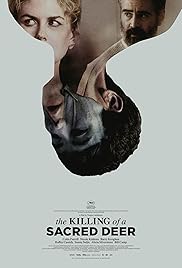
Full Review: THE KILLING OF A SACRED DEER (UK/Ireland 2017) ****

Steven, a charismatic surgeon, is forced to make an unthinkable sacrifice after his life starts to fall apart, when the behavior of a teenage boy he has taken under his wing turns sinister.

Director:

Yorgos Lanthimos


Greek director (DOGTOOTH and THE LOBSTER) Yourgos Lanthimos’ latest feature is a supernatural psychological thriller that is the most difficult to watch despite its bouts of black humour.  The reason the film is titled THE KILLING OF A SACRED DEER becomes apparent at the film’s end and exposing the reason would spoilt the film’s key plot point.

The film follows Dr. Steven Murphy (Farrell), a cardiac surgeon who is first seen at a diner meeting with a 16-year-old named Martin (Barry Keoghan).  The doctor buys the boy an expensive watch as a present.  The relationship between the two is revealed as the film goes on.  Steven introduces Martin to his wife (Nicole Kidman) and two children.  Martin, determined to ingratiate himself into this unfamiliar new family, becomes something like an adopted son.  Strange things begin to happen with the children developing paralysis right out of the blue.  Dr. Murphy and his team of surgeons are unable to put a medical explanation for the illnesses.

Secrets start coming out of the closet.  Director Lanthimos unveils bits at a time, thus keeping the audience in anticipation.  Revealing more of the plot in this review will definitely spoil ones enjoyment of the film, and thus no more of the story will be revealed.

It is safe to say that the film gets more and more serious and ends up becoming quite a disturbing watch.  Lanthimos does not skimp on the violence and language.  The film has a lot of anger and the anger is slowly but surely unleashed by every one in the part concerned.

The humour often comes in the form of inconsequential dialogue, often spoken by the main character, Dr. Steven Murphy (Colin Farrell).  Hunour is also provided in the way drain information, is relayed to the audience.  For example, Steven tells his colleague out of the blue for no reason, that his daughter has begun her menstruation.

The sex scene between husband and wife is as expected a strange one, but sufficiently erotic.  Kidman has an almost perfect body.  Farrell, Kidman and Keoghan all deliver chilling performances.

The film demands the audience sit back and immerse themselves in the environment of horror.  The film is clear a horror film with scary results that resulted in quite a few of the audience at the screening walking out.

The film uses quite a bit of choral music wit a scene of a scene of the daughter singing in the choir.  Sound is also used effectively as when Steven takes off his wife’s panties, like the snapping sound of him taking off his surgical gloves.

The film contains some very scary scenes.  These include the ones with the son and daughter both paralyzed from the waste down, dragging their bodies around the house, up and down the stairs using their arms.  There is also an almost unwatchable scene of Russian Roulette

THE KILLING OF A SACRED DEER is a well executed psychological and emotional horror film.  Not for everyone!

Trailer: https://www.youtube.com/watch?v=eOxiMR6aL74

Film Reviews: The films of Johnnie To

TIFF Cinematheque Presents – The films of Johnnie To

Considered one of the greatest Hong Kong directors still working today, Johnnie To has amassed an impressive list of films that include many different genres. To is best known a an action director with films like PTU and THE HEROIC TRIO, both films spurning sequels.  His films have graced Cannes as well as the film festivals in Venice, Berlin and Toronto.

This is TIFF Cinematheque’s first retrospective of To which will include films that have influenced him. One is King Hu’s DRAGON INN one of the best sword sagas ever made.  The climatic battle at the end is unforgettable.  To will be present to introduce that film as well  as a few other screenings.  A real treat!

A total of 19 films are in the series.  A full review of OFFICE and capsule review

For complete listing, venue and ticket pricing, please check the TIFF website at:

tiff.net

The program runs from October 26th right through Christmas, a good well spread out of the 19 films. 

THE HEROIC TRIO (Hong Kong 1993) ***
Directed by Johnnie To

THE HEROIC TRIO stars three of the most famous stars in Hong Kong films of the 90’s – Michelle Yeoh, Anita Mui and Maggie Cheung.  They play action super heroes with super powers battling the ’evil one’ who has a scheme to rule the world forever with his emperor who is to be chosen for kidnapped babies.  Meanwhile, back on earth, the police led by Inspector Lau (Damian Lau) are baffled.  They are not the only ones, as the audience often feels the same way for the way the convoluted story unfolds.  Anything can happen in the film and does with no time boundaries.  There is old fashioned martial-arts combined with machine guns and motorbikes, computers mixed with swords and ancient artifacts.  But at least To’s film is full of energy and invention if one can put up with the nonsense.  The ending with the charred skeleton emerging from an explosion is an un-shamed copy from TERMINATOR 2, but who cares as long as the film is uninhibited fun not meant to be taken seriously.  And the three females stars are exciting to watch.

Trailer: https://www.youtube.com/watch?v=pXfNg6NN3C4

ELECTION (Hong Kong 2005) ***
Directed by Johnnie To

The ELECTION in this film refers to the election of the new head of the Triad gangsters in Hong Kong.  The two candidates are Big D (Tony Leung Ka-fai) and Lok (Simon Yam).  Lok is the more stable, even tempered and logicalmone while Big D is flashy, hot-tempered and unpredictable.  When Lok gets elected, Big D threatens to unstable by forming a new group.  The cops want no Wars while Lok agrees to some truce.  There is some fight over the baton, which symbolizes power.  There is more dialogue and story in ELECTION compared to the other To films, credit given to its scriptwriters Yau Nai-hoi and Yip Tin-shing, who seem to somehow know how the underworld operates.  The film premiered at Cannes before opening in Hong Kong and is one of the more successful of the To films spawning a sequel ELECTION 2.

Trailer: https://www.youtube.com/watch?v=zEJfx0z8DUc

OFFICE (Hong Kong 2015) ***
Directed by Johnnie To

The story of OFFICE follows the IPO (Initial Public Offering) of shares by a major  company, Jones & Sunn led by the Chairman (Chow Yun-Fat) and his CEO who also happens to be his mistress (Sylvia Chang).  The film opens as two new interns Lee Xiang (Ziyi Wang) and Kat-Ho (Yueting Lang) start new jobs but learn that there are lots of kissing asses and dirty business that need be done in order to be successful.  Lee Xiang is earnest and naive. Two other characters that play a part in the plot are high flyers Sophie (Wei Tang) and David (Eason Chan) who forge financial figures.  OFFICE is pleasant to the eyes – great set decoration and design.  Each office space is designed artistically and modern, often with crystalline and curved shapes.  Wardrobe, especially those worn by Sylvia Chang are haute couture.  The characters break into song at any time but the songs are often clumsily inserted, and break the flow of the narrative.   OFFICE barely succeeds as a musical and satire and runs a bit long at just under two hours.  The novelty of the sets and songs wears off quite soon. 

Trailer: https://www.youtube.com/watch?v=hFS1sdkSOwQ

Johnnie To

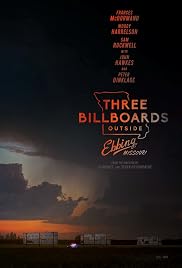
Film Review: THREE BILLBOARDS OUTSIDE EBBING, MISSOURI (USA/UK 2017) *****

Submit your Screenplay to the Festival TODAY

Three Billboards Outside Ebbing, Missouri Poster
Trailer

In this darkly comic drama, a mother personally challenges the local authorities to solve her daughter’s murder, when they fail to catch the culprit.

Director:

Martin McDonagh


Written, co-produced, and directed by one of the most esteemed playwrights in Ireland (the play, THE BEAUTY QUEEN OF LEENAN) Martin McDonagh, THREE BILLBOARDS OUTSIDE EBBING, MISSOURI arrives with all the hype after winning this year’s Toronto International Film Festival prestigious People’s Choice (Most Popular) Film Award.  This is a film that can be enjoyed by both the commercial audience and critics alike.  It is smart, funny (darkly so), suspenseful and brilliantly acted by all concerned.

Nine months after her daughter is raped and murdered, a woman, Mildred Hayes (Frances McDormand) is totally frustrated that there has been no progress with the investigation led by the local police chief, Bill Willoughby (Woody Harrelson).   Using the last of her hard earned money, she leases three billboards from Red (Caleb Landry Jones) on the edge of her Missouri town to condemn the local police force for failing to find the culprit.  This angers the sheriff and one of his top officers, Jason Dixon (Sam Rockwell), a red-neck racist mamma’s boy, with a temper to suit his prejudice.  Mildred is one angry, foul mouthed woman who would kick any man in the nuts if they comes across her the wrong way.  The billboards gradually lead from one bad incident to another resulting in the suicide of Police Chief Bill Willoughby.  This infuriates Jason who beats Red up, ending up in Red being in hospital and himself fired from the force.

Despite the wicked humour, McDonagh’s script is smart enough never to forget the main issue at hand – the desperation of a mother to see justice done.  The irony though, is that Mildred is not that good a mother who on the eventful night of the rape, had an argument with the daughter that led her to walking alone and abducted.  Those like myself who love irony, will see it rearing its head again when the racist Jason coming up as the one with the best clue as to the killer.

As one would imagine after the film passes its half way mark, it is not the identity of the killer that is important.  It is the nature of people – how people change, and in this film for the better.  The chief who kills himself writes letters to Mildred and Jason that would change them.  This is the reason audiences would favour the film.  It has heart, sympathy despite the dark humour and foul language – more irony here (the film with the most foul language has the biggest heart.) 

One might argue as to the necessity of the abusive language used in the film.  To McDonagh’s defence, thee are people in the world that utter the ‘f’ word in every sentence.  Mildred happens to be one of them. 

McDonagh develops excellent characterizations.  The best is the lead, Mildred.  Mildred has so fierce and powerful a personality that one is never sure what she will do, thus becoming an exciting presence in every scene she is in.  Sam Rockwell achieves marvellous results with his complex character which might win him an oscar nomination for Best Supporting Actor.  McDonagh’s film’s ending is also impressive.  It is a 4 way open ended non-Hollywood ending, which is the smartest conclusion I have seen in a film this year.

Trailer: https://www.youtube.com/watch?v=Jit3YhGx5pU

Submit your Screenplay to the Festival TODAY

Film Review: SUBURBICON (USA 2017) ***

Submit your Screenplay to the Festival TODAY

Suburbicon Poster
Trailer

A home invasion rattles a quiet family town.

Director:

George Clooney

Writers:

Joel CoenEthan Coen 


Written by the Academy Award wining Coen Brothers, Grant Heslov and George Clooney himself, this odd piece of satire on the American dream turning into an uncontrollable monster nightmare has its wicked charm but unfortunately fails.  But better an ambitious failure than a simple minded film with no faults – I always say.

The film is set in the fictitious community of SUBURBICON – of perfectly manicured lawns and white picket fences (as in similar films, FAR FROM HEAVEN, PARENTS), one can tell something is amiss or going to go terribly wrong.  In PARENTS, the boy discovers that his parents barbecue human flesh and in FAR FROM HEAVEN, the husband comes out of the closet.  In SUBURBICON, the father of the family, Gardner Lodge (Matt Damon) hires two killers to do away with his wife in a home invasion scenario so that he can be with her sister, Maggie (both roles played with Julianne Moore with blonde and brunette hair).  They plan to go to Aruba with the collected insurance money.  But things get complicated, particularly with the interference of an enterprising insurance investigator (Oscar Isaac) who ends up being poisoned by Margaret.  Their son, Nicky (Noah Jupe) is totally aware of everything that is going on, as he is always snooping or eavesdropping.  Father has no qualms  with doing away with the meddling son, just as the cannibalistic dad would gladly eat his son in PARENTS.  (The film feels very similar to PARENTS at some points.)  A lot of fun in the movie is observing how Nicky discovers what is going on and tries to save his own life.

SUBURBICON’s humour and writing has the distinct Coen Brothers touch, especially in the way events suddenly occur out of the blue and how violence can also suddenly come into the picture (reference: the Coen’ ARIZONA).  But the humour can be so sly and at times so dead-pan, that the humour can be missed.  Also, the film unfolds at a dead slow snail’s pace.  One would definitely fault the film’s direction and editing, though Clooney has directed a few outstanding films in the past.

The art direction of the 50’s idle housing estate is nothing short of perfect.  As the camera pulls back, one can see how all the houses and streets are interconnected.

The film also intercuts into the main story a side-plot of the first coloured family that moves into SUBURBIA.  From initial surprise to full outrage, the neighbourhood finally riots right outside the coloured family’s house.  Ironically the two boys, the coloured boy and Nicky become the best of friends, playing throw and catch baseball, the typical American sport.  The two kids show how adults should behave.

Despite the film that illustrates Murphy’s Law that if anything that can go wrong will and at the worst possible time, the film does end beautifully on an optimistic note, which almost saves the film. One plus of the movie is French composer Alexandre Desplat’s score that includes some suspense music as heard in a typical Hitchcock film.

SUBURBICON premiered at the Toronto International Film Festival to mixed reviews.  Still, it is an interesting failure, and by no means a dull piece despite its slow pacing.

Trailer: https://www.youtube.com/watch?v=cBezc1S1BAQ

Submit your Screenplay to the Festival TODAY

Film Review: WONDERSTRUCK (USA 2017

Submit your Screenplay to the Festival TODAY

Wonderstruck Poster
Trailer

The story of a young boy in the Midwest is told simultaneously with a tale about a young girl in New York from fifty years ago as they both seek the same mysterious connection.

Director:

Todd Haynes

Writers:

Brian Selznick (based on the book by), Brian Selznick (screenplay by)

Runaway kids escaping to a strange, new town in search of a parent.  This subject has always been a favourite for films and plays, the most notable being the recent Tony Award winning THE CURIOUS INCIDENT OF THE DOG IN THE NIGHT-TIME, in which a boy travels to London to find his father.  IN WONDERSTRUCK, a young deaf autistic boy leaves home after his librarian mother is killed in a car accident.  All he has is a little clue of a museum.  He takes off with some cash obtained from his Aunt Jennie (Michelle Williams), gets his wallet snatched but eventually finds out the truth about his father, who he initially knew nothing about.

WONDERSTRUCK appears like a a typical story but director Haynes (CAROL, POISON and his best movie SAFE FROM HEAVEN) decides to do it different.  The openly gay director has always dealt with isolated loner characters who has to come to terms with some truth.  In WONDERSTRUCK, because the subject is deaf, Haynes blacks out all words, so that the film feels like a silent movie with just background music.  The film is alternatively shot in colour and black and white for the flashbacks (in the year 1927).  It seems a good tactic but it does not all work.  For one, the film ends up very difficult to follow.  With no dialogue, one has to figure out who is whom, how the subjects are related and basically what is going on with the plot.  It does not help that the film intercuts two stories set fifty years apart, switching frequently between them.  Each tells the story of a child’s quest.  In 1927, Rose (Millicent Simmonds) runs away from her father’s New Jersey home to find her idol, the actress Lillian Mayhew (Julianne Moore). In 1977, recently orphaned Ben (Oakes Fegley) runs away from his Minnesota home in search of his father.  Moore plays two roles – the older Rose as well as Lillian Mayhew which confuses matters even more.

The reason the film is called WONDERSTRUCK is revealed towards the end of the film.  The film’s sets are amazing, special mention to be made of the New York City model though details are not really shown.

Director Haynes leaves the audience much in the dark for the first half of the film.  Though one might, upon considerable thought put all the jigsaw pieces together, it is a very frustrating process.  Director Haynes, gives the full explanation during the last third of the film, what then is the purpose?  Is it to illustrate to the audience the inconveniences of being deaf?

The cast largely of unknowns (excepting Moore, Michelle Williams in a token role and Tom Noonan) including Fegley do an ok job, noting exceptional.

Though credit should be given to Haynes for his non-conforming storytelling techniques, it does not really work.  It comes together at the end, as if Haynes gave up and decided that it is safer to tell it all the usual way.

Trailer: https://www.youtube.com/watch?v=n207k52C3DM


Submit your Screenplay to the Festival TODAY

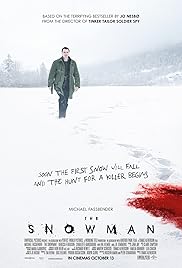
Film Review: THE SNOWMAN (USA 2017) **

Submit your Screenplay to the Festival TODAY

The Snowman Poster
Trailer

Detective Harry Hole investigates the disappearance of a woman whose pink scarf is found wrapped around an ominous-looking snowman.

Director:

Tomas Alfredson

Writers:

Peter Straughan (screenplay by), Hossein Amini (screenplay by)


Submit your Screenplay to the Festival TODAY

Film Review: TAKE EVERY WAVE: THE LIFE OF LAIRD HAMILTON (USA 2017) ***

Submit your Screenplay to the Festival TODAY

Take Every Wave: The Life of Laird Hamilton Poster
Trailer

This is the remarkable story of an American icon who changed the sport of big wave surfing forever. Transcending the surf genre, this in-depth portrait of a hard-charging athlete explores.

Director:

Rory Kennedy


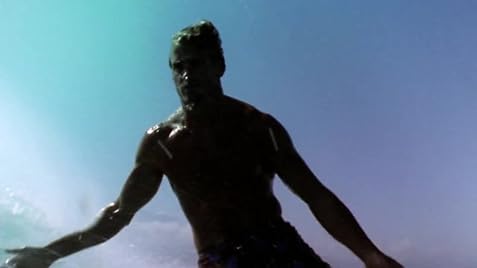
The film opens with breathtaking cinematography that puts the audience right inside the surging waters, a real high even when watching the waves on screen before introducing the main star and film subject – big wave surfer Laird Hamilton.

After 5 minutes of surf footage, director Rory Kennedy (LAST DAYS IN VIETNAM, GHOSTS OF ABU DHABI), delves into the life of Laird Hamilton.  Director Kennedy, born into the Presidential Kennedy family knows what it is like to be singled out and looked upon by the world.

Kennedy’s film uses archival footage, home movies, contemporary scenes, and interviews with his step-father, Bob Hamilton who introduced Laird to the sport, his wife (former volleyball star and model Gabrielle Reece) and his surfing buddies (even those with whom he’s fallen out) and former editors of Surfer Magazine. 

Told in chronological order, the film traces Laird’s early beginnings as a boy raised by his single surfer mother left pregnant by another surfer dude.  When meeting Bob for the first time on the beach, he is shown how to body surf before his mother meets up and ends up marrying Bob.   In his interview on camera, the now middle-aged Laird recounts his rebellious days in school, throwing desks out the classroom window and yelling obscenities while getting the occasional whopping for his stepfather Bob.  As the story goes, Laird finds solace in the ocean.

It is fortunate that Laird’s life is interesting as there is more of his life on show than of surfing footage.  As Laird never competes, there is not competition that needs to be won that often forms the climax of sport documentaries.  So Kennedy relies on a different technique to climax her film – Laird riding the biggest wave EVER.

Hawaii where Laird grew up as a boy is revealed for all its racial prejudice – reverse white prejudice that is.  The was one of the few whites in the class and whites always get beaten up and singed out.

There are tons of good looking blond surfing hunks in this movie.  But the good looks slowly fade just as youth does.  Both Bob and Laird Hamilton are gorgeous hunks in the early twenties.  This led to Laird, who dropped out of school, to get into the modelling business – a part of his life just barely touched upon in the film.

Director Kennedy sidetracks his film just as Laird sidetracks his life on big wave surfing.  Laird is also revealed as an inventor, first of the foil board (a surf board that rides above the water, amazing as it looks due to Physics), then of the board strap, that enables surfers to do summersaults while being attached to their boards.

The film also brings into the picture, the invention of both the jet ski and the windsurf.  Laird and his gang tackled the new sport of windsurfing (I myself tried it too, – and it is not easy), but gradually went back to big wave surfing.

TAKE EVERY WAVE is a documentary that ends up as interesting as Laird the man.  The best scenes are the ones with the biggest waves.  Director Kennedy has done his research and TAKE EVRY MAN is as exhaustive as any filmmaker can get on Laird.

Trailer: https://www.youtube.com/watch?v=vaGCdymhA40

Submit your Screenplay to the Festival TODAY

Film Preview: Half Magic (2017)

Three women unite out of their frustration over men. They pledge to each other that they should each learn to love themselves before they become romantically involved with anyone again.

Director: Heather Graham

Writer: Heather Graham

Stars: Heather Graham, Stephanie Beatriz, Johnny Knoxville, Jason Lewis, Thomas Kennon, Angela Kinsey, Molly Shannon, Luke Arnold, Chris D’Elia, Alex Beh, Michael Aronov, Jesse Heiman, Odessa Rae, Sandra Rosko, Patty Guggenheim, Lee Raviv

Half Magic is the directorial debut of Heather Graham. While the actress has starred in several mainstream and indie flicks, this is the first project where she serves as part of the creative team. According to Hollywood Reporter, the comedy film follows Honey (Graham’s character), along with two of her friends, as they make a pact to each find great sex and a good man, preferably from the same person.

Starring in a comedy is not particularly new to Graham, whose recent projects include the indie films “Wetlands” and “Last Rampage” and an advertising campaign for the hugely popular British gaming community Foxy Bingo. In fact, it has somewhat become her brand over the years. The Huffington Post said that the actress, who has consistently ranked as among the most beautiful faces in Hollywood, used her looks to her advantage and managed to make a career off the back of it. Writing the script and directing Half Magic, however, proves that she is more than just another pretty face in the industry.

Graham confessed to the People that the urge to write the script came after she broke up with someone. She purposely made her writing funny to help her get over the relationship, and incorporated some of her own, as well as her friends’, life experiences in the story. Although, it’s worth noting that they were exaggerated for comedic value.

But beyond the humor of the film and the catharsis it gave her post-breakup, Graham admitted in an interview with Digital Spy that she wrote the film as a way to address sexism in Hollywood. The actress explained, “It’s hard – you want to make a movie about how some of the entertainment industry is sexist, and then you’re like, ‘Why doesn’t everyone want to make this movie?’”

In another interview, Graham mentioned the reason why she pushed to turn her script into a full-fledged movie. She realized that instead of waiting for the dream role to come to her, she would just create that dream role herself. While she was quick to say that she’s thankful for her projects throughout her career, she wished there were more movies made that told things from a feminine point-of-view. The thespian commented that Hollywood’s tendency is to present things from the male perspective. She actually stated in several interviews in the past that her reason for taking on raunchy roles was to help open discussions on female sexuality.

In fact, her character in the film is a tongue-and-cheek parody of what she experienced in her career. She relayed that Honey works for a man who told her that the content she produced will never get picked up because it was written from a woman’s perspective. And the only way to have her story made was if she instead told things from a man’s point-of-view.

The release date of Half Magic is yet to be announced.
half_magic