Film Review: BAD GRANDMAS (Canada 2016)

Bad Grandmas Poster
Four grandmothers accidentally kill a con man. When his partner shows up, things go south quickly.

Director:

Srikant Chellappa

Stars:

Pam GrierJudge ReinholdFlorence Henderson

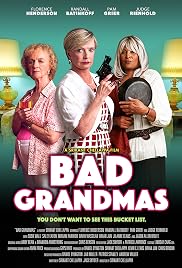
It has barely been two weeks since two films about old ladies hits the screen.  There was THE BEST OF THEIR LIVES and now BAD GRANDMAS, a Canadian feature where one granny accidentally kills her friend’s bad son-in-law resulting in all other cronies trying to hide the body and cover up the deed.

The film’s first scene shows an American flag out front of a building of an insurance company in this IndieCan production.  Obviously, the film is set in the States (Southern U.S.A. to be more accurate) to expand the film’s marketing base.  All the grandmas in the film thus speak with a southern drawl.

The film contains typical scenes of the elderly ladies doing jumping jacks and smoking up, trying to look cool, things that have been done in films on old farts before.

Four grandmothers spend their twilight years in peace playing card games and baking cakes.  Their world is turned upside down when one of ladies (Bobbi played by Susie Wall) son-in-law Jim (David Wassilak) cons the lady.  In the process of trying to fix the problem, Mimi (chief protagonist, ringleader and brains played by Florence Henderson) accidentally kills him. Things go from bad to worse but the ladies are smarter than they seem.  The premise does not sound original and this plot of accidental killing has been done more than once in other films, for example in the best film dealing with accidentally killing, Robert Carlisle’s THE LEGEND OF BARNEY THOMSON, where a barber’s accidental killing leads to another to another.  BUT BAD GRANDMAS is hardly funny, despite many opportunities for comedy.  The film is a clear textbook example where timing is essential in comedy.

The addition of the character of the investigating Detective Randall Mclemore (Randall Batinkoff) is puzzling.  His character is a smug rather good-looking man who charms the daughters of the grandmothers.  He does not add much humour either but not for want of trying.

There is also one bug flaw in the script.  If the ladies have in their possession  the CCTV video of the villain kidnapping Bobbi, why don’t thy just go to the police in the first place?

The film is performed by a cast of mostly little heard actors except for veterans Pam Grier and Judge Reinhold,who do nothing to lift this piece out of the doldrums.

The film contains countless attempts at humour but none too successfully.   The only laugh out loud joke for me is the one when one of the grandmas remarks after seeing a dead body: “This makes me more nervous than a long tail cat in a room full of rocking chairs.”  But this is not because the joke itself is funny but because it has ben ions when I used to repeat that line.  The film improves during the second half, story-wise.

BAD GRANDMAS attempts to cash in on the successful comedy BAD MOMS by adding the murder angle.  Better skip this one and wait for BAD MOMS AT CHRISTMAS or BIG DADDY 2 where the 2 grandpas (played by Mel Gibson and John Lithgow) are added to the story.
Trailer: http://indiecanent.com/movies/bad-grandmas/

Film Review: LOVING VINCENT (Poland /UK 2017) ***

Submit your Screenplay to the Festival TODAY

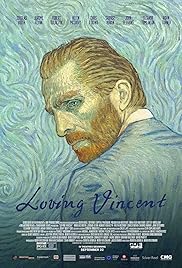
Loving Vincent Poster
Trailer

The world’s first fully oil painted feature film, brings the artwork of Vincent van Gogh to life in an exploration of the complicated life and controversial death of one of history’s most celebrated artists.

A Polish English co-production, the film features Polish animators with voices from actors largely from the United Kingdom.  LOVING VINCENT boasts to be the first hand painted animated feature.  It examines the mysterious facts surrounding the death of the famous Dutch painter Vincent Van Gogh.

It took more than 100 animators and them to be re-trained in animation for the film.  It shows.  The film is beautifully ‘painted’ in the style of the Master himself.  Each frame could very much be something Van Gogh himself might have painted.  The segments in the farm fields and the colours used are reminiscent of Van Gogh’s most famous paintings.

Audiences should be familiar with the particularities of Van Gogh’s life.  Among these facts are his suicide, his stay at a mental asylum, his cutting off of his ear in Arles and his relationship with his brother Theo.  LOVING VINCENT reveals more of the facts and details with some doubt given on the reasons behind Van Gogh’s death.  But many will not know that he wrapped the severed ear as a present to given to a whore or that Theo paid for most of Vincent’s art materials and lived poorly as a result.

All the incidents surrounding Van Gogh’s death are revealed through the excuse of the delivery of one last letter Vincent apparently wrote to his brother Theo.  This letter was undelivered by the postman Joseph Roulin (Chis O’Dowd), so he commission his son Armand (Douglas Booth), a hard drinker and scrapper to do the job  He reluctantly does.  When he discovers that Theo is also dead, he finds the good doctor who was Van Gogh’s good friend and mentor to give the letter to.  He then finds out the truth behind Van Gogh’s death.

Directors Dorota Kobiela and Hugh Welchman play their film like an investigational whodunit.  One segment has Armand explained that Van Gogh could not have shot himself in the stomach due to the impossibility of the gun’s angle.  Why too would Vincent ask for art supplies the next day from his brother if he was to commit suicide?  Doubts are also put about on Van Gogh’s flirting with whores and also at one point possible homosexuality at a possible gay encounter with the teen village idiot.

The film could do with a bit of humour even though the subject matter is serious.  I cannot recall a single bout of humour in the film.  The film also does not justify Armand’s motivation into wanting to know the truth of Vn Gogh’s death.  He does say at one point in he film: “I want to do more for the artist,” but why he feels that way is never dealt with.

But not all of the artist’s bad points are highlighted in a film that is affectionally called LOVING VINCENT, though moments that highlight the artists work are rare.  Van Gogh’s dream of showing the world that a nobody like him could have the world remember him forever is inspirational.  The film’s romanticizing of his death as a short cut to heaven instead of the slower route of a  normal death is cute. 

The coloured hand painted animation is well worth the price of the admission ticket of LOVING VINCENT, despite the events of its intriguing premise unfolding stoically. 

Trailer: https://www.youtube.com/watch?v=47h6pQ6StCk

LUCKY (USA 2017)  ***1/2

Directed John Carroll Lynch

Harry Dean Stanton plays the character of LUCKY of the film title in a film that audiences recognize could be the real Harry Dean Stanton.  LUCKY is the nickname the ex-navy man earned after being designated the cook in the Navy while others were sent to fight and die during the War.  Lucky is 90, bitter, alone (but not lonely as he has a routine of chores to do each day), cynical, sickness free, and smokes a lot.

The audience sees Lucky doing the same things daily – visiting the grocery store with the Mexican cashier to get his cigarettes; having some drinks at the bar; having coffee at his dual diner; and watching his favourite quiz show – but with different reactions.  The soundtrack replays the tune of “Old River Valley’ on a harmonica.

The film contains a lot of musings like what realism (as explained by Lucky as real for one person but not necessarily in another occurs to another) is or even the friendship between man an animal as the latter discussion (it is apparently essential to the soul) starts.  Lucky’s friend, Howard (David Lynch) at the bar walk in to sadly announce the loss of President Roosevelt, his pet tortoise. (Lucky does not believe this….. not the statement but the existence of a soul.)  Though the latter statement seems inconsequential dialogue in the script, it is important in the way Lucky looks at life if he does not believe in the existence of a soul.

The film is directed by actor John Carroll base on the script by Logan Sparks and Drago Sumonja.  The film pays more attention to the character than to plotting.  The film is also wonderfully acted by Stanton.  Director David Lynch delivers a surprisingly moving speech defending his case of leaving his inheritance to his tortoise that has apparently escaped as does James Darren how a nothing person like him transformed to one who now has everything.

LUCKY the film can be best described as a cynical coming-of age movie of a 90-year old man who has almost given up on life.  It is quite an idea for a film which is likely the story got made.  It is a film about an old fart that is not the typical Hollywood old fart film like the fantasies of old people reminiscing on their youth or having sex one more time.  Lucky confesses in one scene that he can hardly get it up any more.  Here, Lucky says in the film’s most intimate scene where he reveals his deep secret to his friend, Loretta (Yvonne Huff): “I’m scared.”  It all happens when he falls down out of feeling faint, though doctor (Ed Begley Jr.) tells him that nothing major is wrong with him.

Harry Dean Stanton passed away this year (2017).  LUCKY is a worthy swan song of an actor that has surprised audiences many a time with his wide range of performances.

Trailer: https://www.youtube.com/watch?v=YurR6xZeBCk

Film Review: PROFESSOR MARSTEN AND THE WONDER WOMEN (USA 2017) ***

Submit your Screenplay to the Festival TODAY

Professor Marston and the Wonder Women Poster
Trailer

The story of psychologist William Moulton Marston, the polyamorous relationship between his wife and his mistress, the creation of his beloved comic book character Wonder Woman, and the controversy the comic generated.

Director:

Angela Robinson

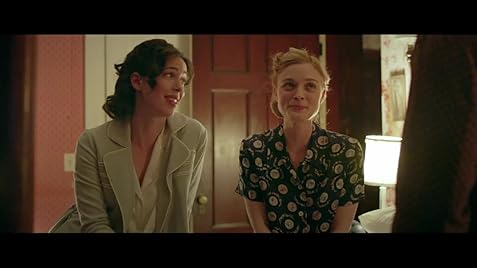
PROFESSOR MARSTEN AND THE WONDER WOMEN examines the relationship of Dr. William Moulton Marston (Luke Evans), the creator of WONDER WOMAN with his wife, Elizabeth (Rebecca Hall) and the second girl, Olive Byrne (Bella Heathcote) in their menage a trios.  A man with two women living together with S&M sex including bondage and spanking, set in the 40’s does not an easy film make.  Credit therefore goes to Robinson for incorporating an uncomfortable subject into a movie for general audiences.  In fact, the film goes to accredit bigamy.  Those that do not agree are said in the film to be simple.  The film will definitely infuriate many. The film does not always work, as do awkward projects.  

The film begins with the rejection of the violence and sex depicted in the Wonder Woman comics.  While appearing at the Board on Enquiry, Dr, Marsten explains his case, while the film flashes back to his marriage and sexual arrangements with Olive under the guise of psychology apprenticeship.   Complications arise when Olive’s two boys come into the picture and when a neighbour enters the house unexpectedly and catches the three in a  sexual bondage act.

For a film promoting the acceptance of S&M and bondage, it is surprising that there are no graphic sex scenes nor even nudity.  Yet the film comes across as disturbing one.  It shows that no graphic scenes are needed to take the sexual content to an different psychological frontier.  By means of intercutting of scenes with the Wonder Woman comic book showing tied up prisoners, whipping and spanking, director Robinson cleverly makes her point.

But if one examines the situation on another level, there is nothing really objectionable.  Many men have mistresses.  The only difference in this case is that the wife is also in love with the mistress.  It also makes the sex affair more congenial for everyone if the three decide to stay together.  Everything works well till society objects.  The same thing happened in the past for gay couples.  They were rejected and ostracized from society with their acts deemed evil.  Now that society has condoned same sex marriages, gays living together are cool.  Robinson recognizes the fact and emphasizes it in one key scene where Marsten screams that it is only society that has to accept them.   As to sexual fetishes, everybody has them, in one form or another.

Robinson is also quick to point out that the film is set in 1928 (though Wonder Woman was created in 1941), at the start and that there is a new psychology that is in the making.  At one point, Professor Marsten says to Olive: “How do you expect to learn about life if you refuse to live it?”   Some psychology is also thrown into the film for good measure, like Marsten’s explanation of the 4 categories of dominance, compliance, inducement and submission.  This enhances the credibility of the characters and the plot of the film.

After viewing PROFESSOR MARSTEN AND THE WONDER WOMEN, one will never look at the WONDER WOMAN comics again in the same light.
Trailer: https://www.youtube.com/watch?v=r991pr4Fohk

Film Review: SCHOOL LIFE (Ireland/Spain 2016) *** 1/2

Submit your Screenplay to the Festival TODAY

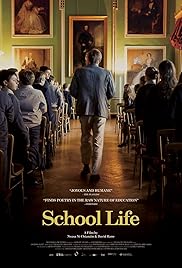
School Life Poster
Trailer

2:24 | Trailer
Long careers are drawing to a close for John and Amanda, who teach Latin, English, and guitar at a stately home-turned-school, where they are legends with a mantra: “Reading. ‘Rithmetic. Rock ‘n’ roll!” But leaving is the hardest lesson.

Writers:

Etienne Essery (script and story consultant), Neasa Ní Chianáin


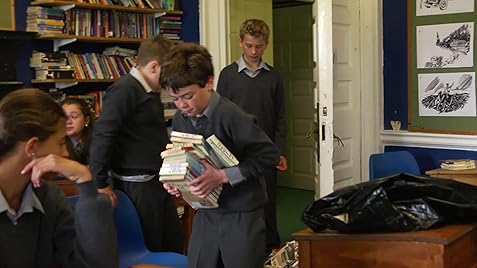
Premiering at Sundance and Hot Docs in Toronto, SCHOOL LIFE begins its theatrical run and is one film sure to captivate audiences for its charm and magic.  Almost everyone has fond memories of their primary school and their teachers who are very impressionable.  The film takes the audience around the classes to reveal the studies, the hobbies as well as they extra-curricular activities.  Watching the children read End Blyton’s Famous Five novels will certainly make one wish for to re-live these wonderful times.

SCHOOL LIFE begins with an excellent introduction of two old teachers, a husband and wife as they talk and prepare for their new term.  They teach in the only primary-age boarding school in Kells, Ireland.  Headfort, a school not unlike Hogwarts with its 18th century buildings, secret doors and magical woodlands, has been home to John and Amanda Leyden for 46 years and a backdrop to their extraordinary careers.  For John, rock music is just another subject alongside Maths, English, Scripture and Latin, all of which are taught in a collaborative and often hilarious fashion.  For Amanda the key to connecting with children is the book, and she uses all means to engage the minds of her young charges with literature.

The film charmingly demonstrates what it means to educate.  It is not merely the dissemination of information but the care and concern given to the kids.  This is especially true for a boarding school whee the children are left behind for the first time not to see their parents for a few weeks.  For nearly half a century John and Amanda have shaped thousands of minds but as the film opens, it is finally time for them to start making preparations for their retirement.  “What are we gong to do when we have nowhere to go?” questions the husband.  The two are still healthy though they smoke quite a bit.

The film’s best segment has a teacher discussing with the class the controversial issue of same sex marriage.  The reactions from the primary school students are innocent, revealing and sometimes surprising.  “It is not right,” says one. “God made a man and a woman not two men, to which the teacher replies, “How do you know God exists?”   Other keen observations from the film include the teachers’ speed at rebuttal and the delicate concern each one has over their pupils.

The film ends with the pupils finishing the school year and leaving the school with their parents.  It is a touching moment when goodbyes are said.  The audience also feels sad to have to depart with the film’s characters who have been made so endearing by the filmmakers.

The film flows so smoothly it feels as if the doc is scripted.  Well conceived from start to finish, moving, sad, funny and inspirational, SCHOOL LIFE turns out to be marvellous entertainment.

Trailer: http://www.imdb.com/title/tt5475022/videoplayer/vi974108953?ref_=vi_nxt_ap

Film Reviews: CINEFRANCO 2017 (from October 6th)

Submit your Screenplay to the Festival TODAY

CINEFRANCO 2017 (from October 6th)

Now in its 20th year, Cinefranco is one of the longest running film festivals in Toronto.  One must give praise and credit to the ever cheerful and tireless directrice of the festival, Marcelle Lean who is always present to say ‘bonjour’ to Cinefranco fans.  It is hard to survive in this festival eats festival world, but Cinefranco has got a loyal base of sponsors that come back year after year not to mention a good selection of films from France, Quebec, Belgium and Africa.

Last Year’s Cinefranco was in a bit of trouble because of lack of sponsorship.  Things appear improved and the fete du film has now been pushed to the late part of the year/

The films are screened at the smaller Carlton Cinemas but the good news is that it is in a very central location, right in the City Centre.  The other difference is that ‘comedy’ is the subject for the year, so expect plenty of light entertainment.

For complete program information, ticket pricing and bookings, please check the Cinefranco website at:

http://2017.cinefranco.com/en/

This site is grateful to Cinefranco and Virginia Kelly Publicity for providing screeners for the capsule reviews below:-

And don’t forget to say ‘Bonjour’ to Marcelle.

Bon Cinema!

CAPSULE REVIEWS:

(Trailer links provided at the end of each review)

BIENVENUE AU GONDWANA (WELCOME TO GONDWANA) (France 2016) ***

Directed by Mamane

A comedy of manic proportions set in the fictitious African country of very, very democratic Gondwana.  Manic because it contains too many characters who all are half crazy most of the time.  There is the young French idealist plunged into African reality which are the controversial presidential elections, a dictator determined to remain in power by cheating, two sidekicks adept at geopolitics, a French congressman determined to sell asparagus to Africans and a young and pretty revolutionary.  The purpose of the landing of all these characters in Gondwana is to oversee the elections to make sure that they are unit rigged.  The film works well in the first third with superior laugh-out loud jokes but when it tries to get serious with a few messages and romance, the comedic momentum is lost.  One might quiver at the way black African governments are stereotyped and the way Africans act and dance (as in the Gondwana welcome ceremonies) but these jokes still pack quite the punch.

Trailer: https://www.youtube.com/watch?v=jjSDwiv9JuY

RAID DINGUE (France 2016) ****

Directed by Nicolas Benamou

After the Boston marathon bombing, the U.S. made PATRIOT  DAY about the hunting down of the bombers and STRONGER about the survival of a victim who lost his leg.  It takes the French to make a comedy after their terrorist attacks.  RAID DINGUE is an action comedy featuring two very funny actors. Alice Pol and Dany Boon (WELCOME TO THE STICKS).  The excuse to bring them together?  Johanna Pasquali (Pol) is a female cop unlike any other. Distracted, dreamy, and clumsy, from a purely policewoman point of view she is awfully nice but totally useless.  Although endowed with real skills (shooting, hand-to-hand combat, police intuition, etc.), her clumsiness makes her a danger for criminals, the greater public, and her colleagues.  Her father (Michel Blanc) wants her to be accepted for RAID training but kicked out.  So, she finds herself in the hands of officer Eugène Froissard (Boon), the most misogynist and vulgar of all the RAID officers.  Together they go after the Leopards.   The film is current with the recent terrorist attacks and also deals with issues like women in a male dominated work force.   Director Benamou and his two leads have perfect comedic timing.  Laugh-out loud humour all the way.  The impressive cast includes veteran actors like Michel Blanc, Sabine Azeman and Yvan Attal.

Trailer: https://www.youtube.com/watch?v=05qHBDBuxrY


UN PETIT BOULOT (France/Belgium 2016) ***
Directed by Pascal Chaumeil

Another comedy but a darker (and serious) one at that.  The setting is a small French town where jobs are slowly lost and the inhabitants get poorer.  The protagonist is Jacques (Romain Duris sporting a beard but still recognizable).  Dead broke with gambling debts, he reluctantly takes a job from a local gangster, Gardot (Michel Blanc) to kill his wife.  One killing is easy enough for Jacques and that leads him to do more.  Blanc wrote the dialogue and script for the film.  Gardot arranges for Jacques to do more killings for a 70-30 split.  One of these takes place in Brussels as the film is a Belge French co-production.  The awkward romance pops up with no warning at the 40 minute mark with Jacques suddenly meeting a girl he had not see for a while.  An all right comedy aided by the performances of its to lead veteran an actors Duris and Blanc.

Trailer: https://www.youtube.com/watch?v=Z_W4PPldtkw

cinefranco

Film Review: GOODBYE CHRISTOPHER ROBIN (UK 2017)


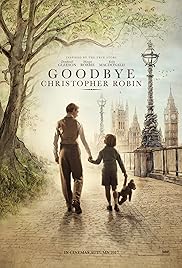
Goodbye Christopher Robin Poster
Trailer

A behind-the-scenes look at the life of author A.A. Milne and the creation of the Winnie the Pooh stories inspired by his son C.R. Milne.

Director:

Simon Curtis


There is one scene that sums up Simon Curtis’ film on the life of author A.A. Milne and the creation of the Winnie the Pooh stories inspired by his son C.R. Milne.  It is the one where father, A.A.  fondly called Blue (Domhnall Gleeson) serves his son fondly called Billie (Will Tilston) porridge he had made as the nanny has the day off.  Billie lifts his spoon to reveal a real lumpy porridge.  That is exactly the way director Simon Curtis (MY WEEK WITH MARILYN) has served his film and it is going to go down lumpy down the audience’s throats.

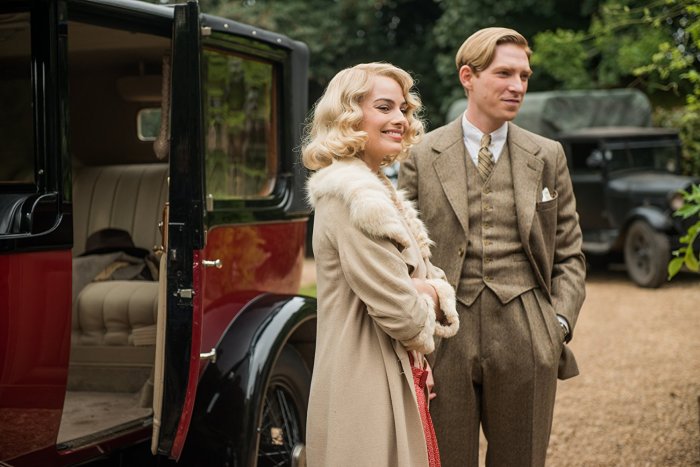
The film, however, does open impressively with shots (cinematography by Ben Smithard) of the beautiful English woods with sunlight beaming down the trees and spreading among the flowers, pretty much like the pictures of a Winnie the Pooh children’s book.  Blue receives a letter from the postman, the wife, Daphne (Margot Robbie) looking on, obvious that the letter brings bad news of the death of their son who has gone off to fight in the War.

The film tells the story of Blue’s creation of Winnie the Pooh and how the fame aversely affected the family especially the impressionable child Billie.  Blue goes to war and comes back with shell shock.  His evil wife Dafne, insists he keeps writing and he eventually lies it and takes the whole family to live in the country.  Evil wife gets upset ,leaves and threatens never to return unless the husband writes again.  Father and son bond in the woods and father creates Winnie the Pooh (the name Winnie coming from the rescued bear from Winnipeg, Canada).   The boy, Billie also appears in the Pooh books and known as Christopher Robin.  Fame and publicity prevents the boy from playing and having a normal childhood.  Confrontation results between husband and son (now played by Alex Lawther).  Amidst all this is the cheerful nanny, Olive (the wonderful Kelly Macdonald) who can never do any wrong.  She gets to tell the parents off and to calls the evil mother a horse in her face.

As the film is not based on a book, one wonders where all the material for the story comes from.  One can surmise that a lot has been imagined by the scriptwriters Frank Cottrell-Boyce Simon Vaughan.  The film turns into sentimental mush at the end with the news of the son’s death.  Dad, mum and Olive are grieving and more lumpy mush again when it turns out when Billie shows up.  The father son reunion is neither credible as well.

Robbie and Gleeson sport silly English accents.  At least Macdonald, the only one worth watching in this silly enterprise gets to keep her Scots accent.

The film has one believe that Winnie the Pooh did wonders for world peace just because one soldier fighting in the trenches hummed a Pooh tune.

The film ends with old photographs of the real characters in the film followed yes, by old photos of the real toys of the bear tiger, piglet and all.  As if the film is not sentimental enough.

Trailer: https://www.youtube.com/watch?v=rX1oe9JmtUw

GOODBYE CHRISTOPHER ROBIN

Film Review: REBEL IN THE RYE (USA 2017)


Rebel in the Rye Poster
Trailer

The life of celebrated but reclusive author, J.D. Salinger, who gained worldwide fame with the publication of his novel, “The Catcher in the Rye”.

Director:

Danny Strong

Writers:

Danny StrongKenneth Slawenski (biography “J.D. Salinger: A Life”)

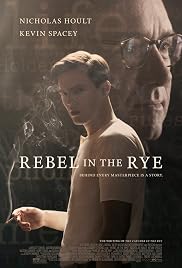
REBEL IN THE EYE is an American biographical drama film based on the author of the famous ‘The Catcher in the Rye’.  It is directed and written by Danny Strong, who adapted the book J. D. Salinger: A Life by Kenneth Slawenski.  Director Strong bought the book rights with his own money which must mean that the book really fascinated him.

A film about successful creative writing appeals to many particularly film reviewers who could learn a thing or two about their writing.  The spill on voice in writing illustrated by a passage read by Whit Burnett (Kevin Spacey) in a William Faulkner novel is especially engaging.  He reads a passage in a monotonous tone to illustrate the fact that it is the incidents will make the writing and not the tone.  But if the author’s voice or impression is added, that would be inspiring.  Unless the voice comes across as pompous instead of sincere.

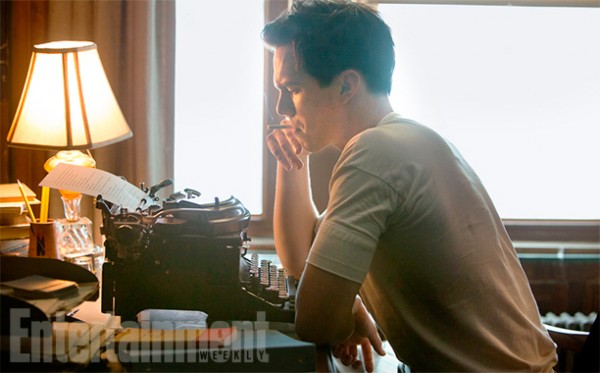
The film follows the life of Jerome Salinger (Nicholas Hoult).  He attends writing at Columbia University where Professor White Burnett grinds him to be a successful writer.  His devastating experiences during the War watching many die during the D-Day beach landing earn him the maturity that finally gets the fame he seeks with ‘The Catcher in the Rye’ but not after suffering mentally.  He is aided by an Indian Swami (Bernard White).

The message in the film is quite obvious – the importance of truth in writing.  Salinger refuses to compromise changing his story to the notes of the New York Times in order to be published.

Besides the story of J.D. Salinger as a writer from budding writer to published author, the film has several major subplots that undermine the film’s goal.  One is the relationship between Salinger and his mentor Whit Burnett.  The second is the failed love affair between Salinger and Oona (Zooey Deutch).   All the action takes place during World War 2 with Salinger himself going off to fight in the war.  The segments with the Indian Swami are more laughable than credible,

In Strong’s attempt to put his voice into his film, he gets too obvious.  One example (too in-your-face metaphor) is the blurred image of Salinger’s face as seen through the glass of his mother in the homecoming dinner.  This also comes across as an attempt to be too pompous instead of sincere – advice that he should have taken himself from the film.

For a film that stresses about voice in a story, Strong falls again into the trap of not following his own advice.  He resorts in too many familiar filming formats.  One is the over-use of voiceover.  Another is obvious at the start of the film when a scene is shown and then the film flashes back to years earlier (in this case 6 years) to the events that precede the scene.  The over use of music, as if to force the audience to feel a certain way (Indian music during the Swami advice segments and a musical interlude when Salinger gets published) is yet another.  Every character in the film speaks the same way – with sarcasm and with anger. 

REBEL IN THE EYE ends up a flawed biography in which director Strong commits all the mistakes the writing professor Burnett in the script warns Salinger never to make.

Trailer: https://www.youtube.com/watch?v=VWRhXMMb7CY

rebel in the rye

Film Review: UNARMED VERSES (Canada 2017) ***

Unarmed Verses Poster
This feature documentary presents a thoughtful and vivid portrait of a community facing imposed relocation. At the centre of the story is a remarkably astute and luminous 12-year-old black girl whose poignant observations about life, the soul, and the power of art give voice to those rarely heard in society. Unarmed Verses is a cinematic rendering of our universal need for self-expression and belonging.

Director:

Charles Officer

UNARMED VERSES arrives with all the critical and public raves after being named Best Canadian Feature Documentary at this year’s Hot Docs 2017.   It is a National Film Board of Canada production which means it is (as most NFB films are) a meticulously constructed arty small budget film. 

The centre of the film is 12-year old Francine Valentine, played by the real Francine Valentine.  So, the film is a documentary of sorts, a documentary of the present so that the film feels like a fiction piece.  Francine is a Jamaican Canadian (as seen from the country’s flags in her house) who has been to live with her old grandmother and father inToronto so that she can obtain a better education.  The film follows her throughout the entire film with her often speaking out loud so that the audience can relate not only to her thoughts but also with what is going on in the film.  Francine’s family in Toronto is not rich.

As the film opens, her community faces a difficult transition, when the largely low-income residents of a rental housing block in the city’s northeast end are threatened with imposed relocation due to the impending demolition of the place they call home.  They have to move out and given a chance to return.  They are unable to afford even renting the new condominiums that will be built.  They are informed, as expect from the typical government, that that any of their questions will be answered though this does not mean that their problems will be solved.  Francine’s grandmother, old but still bright a a light questions the schools that need to be changed for the children.

The film follows the thoughts of Francine, as she reads poems, writes her thoughts and composes her songs,  Through the activities, the audience sees Francine’s reflections on life, the self, and the soul.  

But Francine is not the only person on display.  Her rhythmic father also sings reggae in the film.  Another older black teen inner community class, raps and writes poetry.  

One wonders about the authenticity of the scene in which Francine is so shy at the recording studio, almost unable to go on.  If this is so, how come she could sing in front of the film’s camera earlier in the film?

A highlight of the film is Francine’s visit to the Basquiat exhibit at the Ago (Art Gallery of Ontario)in Toronto.  She gives her 12-year old view on art.

The film ends up a quietly insightful film that also serves as a coming-of-age drama of Francine Valentine.

UNARMED VERSES screens in Toronto at the Hot Docs Ted Rogers Cinema, 506 Bloor St. W., starting Friday, October 6. There will be a Q&A with producer Lea Marin and guests from the film on opening night, October 6; and with director Charles Officer and guests from the film following the 8:30 p.m. screening on Monday, October 9.

Trailer: https://vimeo.com/212776693

Film Review: LUCKY (USA 2017) ***1/2

Lucky Poster
Trailer

Director:

John Carroll Lynch

Writers:

Logan Sparks (screenplay), Drago Sumonja (screenplay)

Stars:

Harry Dean StantonDavid LynchRon Livingston

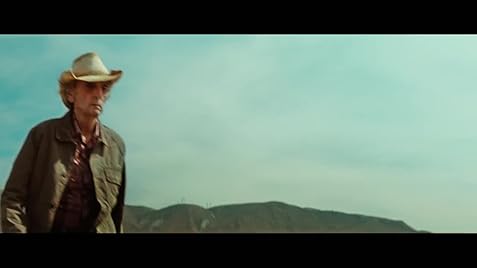
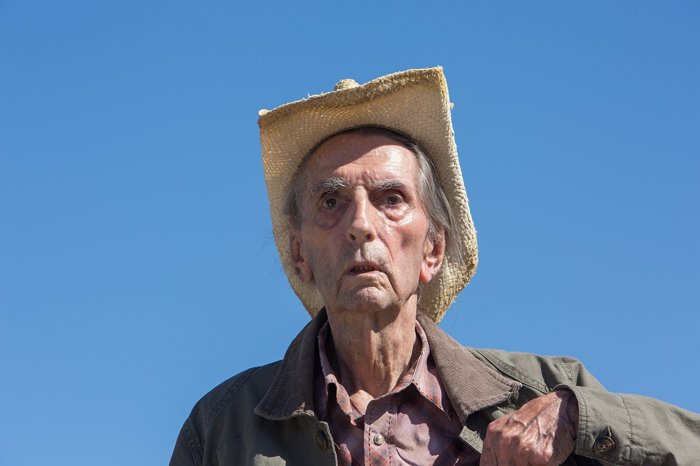
Harry Dean Stanton plays the character of LUCKY of the film title in a film that audiences recognize could be the real Harry Dean Stanton.  LUCKY is the nickname the ex-navy man earned after being designated the cook in the Navy while others were sent to fight and die during the War.  Lucky is 90, bitter, alone (but not lonely as he has a routine of chores to do each day), cynical, sickness free, and smokes a lot.

The audience sees Lucky doing the same things daily – visiting the grocery store with the Mexican cashier to get his cigarettes; having some drinks at the bar; having coffee at his dual diner; and watching his favourite quiz show – but with different reactions.  The soundtrack replays the tune of “Old River Valley’ on a harmonica.

The film contains a lot of musings like what realism (as explained by Lucky as real for one person but not necessarily in another occurs to another) is or even the friendship between man an animal as the latter discussion (it is apparently essential to the soul) starts.  Lucky’s friend, Howard (David Lynch) at the bar walk in to sadly announce the loss of President Roosevelt, his pet tortoise. (Lucky does not believe this….. not the statement but the existence of a soul.)  Though the latter statement seems inconsequential dialogue in the script, it is important in the way Lucky looks at life if he does not believe in the existence of a soul.

The film is directed by actor John Carroll base on the script by Logan Sparks and Drago Sumonja.  The film pays more attention to the character than to plotting.  The film is also wonderfully acted by Stanton.  Director David Lynch delivers a surprisingly moving speech defending his case of leaving his inheritance to his tortoise that has apparently escaped as does James Darren how a nothing person like him transformed to one who now has everything.

LUCKY the film can be best described as a cynical coming-of age movie of a 90-year old man who has almost given up on life.  It is quite an idea for a film which is likely the story got made.  It is a film about an old fart that is not the typical Hollywood old fart film like the fantasies of old people reminiscing on their youth or having sex one more time.  Lucky confesses in one scene that he can hardly get it up any more.  Here, Lucky says in the film’s most intimate scene where he reveals his deep secret to his friend, Loretta (Yvonne Huff): “I’m scared.”  It all happens when he falls down out of feeling faint, though doctor (Ed Begley Jr.) tells him that nothing major is wrong with him.

Harry Dean Stanton passed away this year (2017).  LUCKY is a worthy swan song of an actor that has surprised audiences many a time with his wide range of performances.

Trailer: https://www.youtube.com/watch?v=YurR6xZeBCk

lucky

Full Review: DON’T TALK TO IRENE (Canada 2017) ***

Don't Talk to Irene Poster
When Irene – the fattest girl in high school – gets suspended, she must endure two weeks of community service at a retirement home. Following her passion for cheerleading, she secretly …See full summary »

Director:

Pat Mills

Writers:

Pat MillsPat Mills

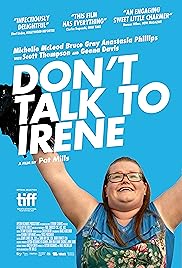
DON’T TALK TO IRENE takes its cue from Woody Allen’s PLAY IT AGAIN SAM the Herbert Ross film where the Allen character takes advice from Humphrey Bogart with regards to getting a girl.  In DON’T TALK TO IRENE, the protagonist, an overweight teenage girl takes advice from Geena Davis as she follows a different goal, in this case of pursuing her passion for cheerleading.  She signs up for a talent-search reality show in order to prove that “physical perfection” isn’t everything.

Irene Willis (Michelle McLeod) lives in a town of a small fictional town of Parc supposed to be just north of Toronto.  The film was shot in Hamilton, Ontario.  It is described in the film as the worst of small towns, where Irene goes to the worst of high schools.  Her cycle of life is predictable and bland.  Fuelled by the dream of becoming a cheerleader, but constantly told by both her overprotective mother (Anastasia Philips) and classmates that she does not fit the mild of a cheerleader.  But Geena Davis, speaking to Irene via the A League of Their Own poster on her bedroom wall tells her “Never quit!”

When Irene gets suspended and is forced to do community service at a retirement home — run by Barrett (Kids in the Hall’s Scott Thompson) — alongside her bullies and her new friend, Tesh (a gender non-conforming, glitzy dreamer), an opportunity arises.  She rounds up her new-found circle of elderly friends into an unlikely dance troupe.

The film has the story of a socially unaccepted underdog doing it successfully at the end.  It is an age old story which audiences have seen time and again.  In fact this is not the first film in which seniors enter a dance competition.

But it is often the story that does not make a good film.  Despite the story’s limitations, the film benefits for the sly humour of its writer/director Pat Mills.  Mills gives himself a cameo as a drunken teacher in a few segments in the movie.  Mills, in his 2014 film, GUIDANCE, made an imprint with his dark and really funny comedy.  DON’T TALK TO IRENE is not as good as GUIDANCE but it has its moments.

The character of transgendered, smart-talking Tesh is not that funny and appears in the film to set a politically correct statement.  The mother and daughter relationship is also nothing new and the mother’s final acceptance of her daughter’s goals is predictable, if not tiresome.  The film also aims to be too smug with strong language added to create a more edgy film.  The seniors, again all try their best to show that they still have it, in terms of ingenuity, sex drive or dance skills.

McLeod is a rare find and is able to carry the film well.  The film contains a nice surprise with the actual appearance of Geena Davis.

Still everyone loves a feel-good movie.  Undemanding viewers should lap this tale up, with no problem at all.  Critics can only wince at the goings-on of this girl that finally makes good.

Trailer: https://youtu.be/56xfd8POz4c