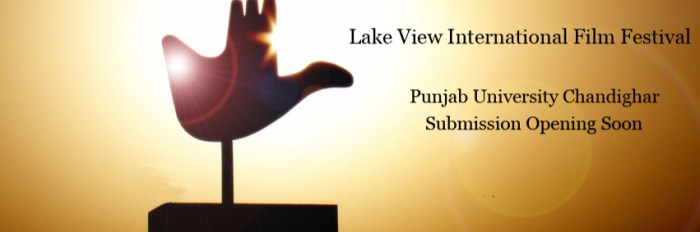
Interview with Festival Director Gabbar Punjabi (Lake View International Film Festival)

Lake View Film Festival aims to inspire, motivate and award the true innovative and artistic geniuses of our time. Every independent artist hopes to one day emerge from the underground scene and share their talents with the masses.

http://www.lviff.net/

Interview with the Festival Director:

 Matthew Toffolo: What is your Film Festival succeeding at doing for filmmakers?

Gabbar Punjabi: Lake View International Film Festival gives opportunity to independent filmmakers to show their work at a new platform.

MT: What would you expect to experience if you attend the festival this year (2017)?

GP: High-Quality Independent films across all genres, from around the world.

MT: What are the qualifications for the selected films?

GP: Our platform is designed for independent filmmakers. We accept films from independent filmmakers with strong storytelling, All genre with high-quality films are acceptable.

MT: Do you think that some films really don’t get a fair shake from film festivals? And if so, why?

GP: Film Festivals receive thousands of entries and out of them only a few films are acceptable. Many of the films face rejection because I think, sometimes filmmakers do not read rules and regulations before submitting their films to
festivals. Also, it is difficult for festivals to show each and every film because of a limited number of screenings, limited time and so many other factors vary from festival to festival. ​

MT: What motivates you and your team to do this festival?

GP: Cinema of Punjab is still under a big change, recently one of the Punjabi films was officially selected at Cannes. Our team’s passion toward films motivates us to present a good platform for independent filmmakers to show their work.

MT: How has your FilmFreeway submission process been?

GP: FilmFreeway is really an awesome platform for both filmmakers as well as festivals. This is very easy to access, easy to manage your entries, and so many features which other platforms not yet provide.

MT: Where do you see the festival by 2020?

GP: It will become better and better, more numbers of screenings and there is soo many things which we want to do.

MT: What film have you seen the most times in your life?

GP: Malena, Thelma and Louise, Water and Qissa

MT: In one sentence, what makes a great film?

GP: A great way of storytelling makes a great film.

MT: How is the film scene in your city?

GP: The Punjabi film industry is stuck in film mafias. A very low number of theatres, very few independent venues. But I was told it is under a big change so we still have hopes every year new good independent productions.

lakeview_2

—-
Gabbar Punjabi is a small town boy with loads of ambition. He completed his graduation in life science after which he joined film school and started learning filmmaking. During film course, he wrote and directed three short films. After successfully completing filmmaking course, he moved to Mumbai where he starts working as an assistant director in the television and film industries. In 2014, he started his banner script factory production and started working as an independent filmmaker. He also the Director of Independent film festival Lake View International film Festival.
_____

Interviewer Matthew Toffolo is currently the CEO of the WILDsound FEEDBACK Film & Writing Festival. The festival that showcases 20-50 screenplay and story readings performed by professional actors every month. And the FEEDBACK Monthly Festival held in downtown Toronto, and Los Angeles at least 2 times a month. Go to www.wildsound.ca for more information and to submit your work to the festival.

Interview with Festival Director Jonatan Petré Brixel (Berlin Experimental Film Festival)

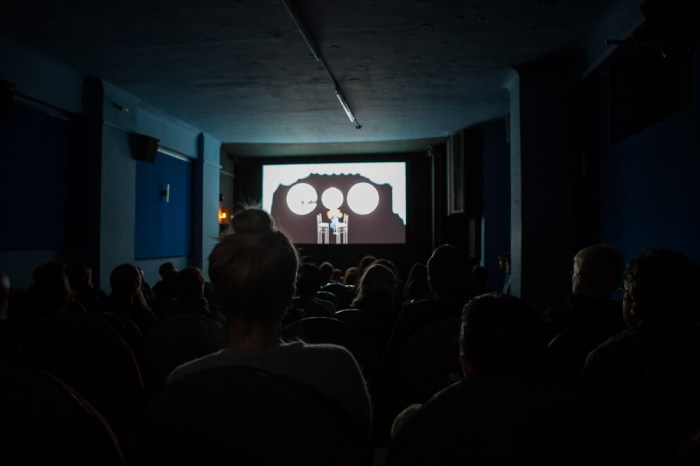
Berlin Experimental Film Festival focuses solely on Experimental films of all kind from all around the world. The Festival takes place at Kino Moviemento, the oldest Cinema in Germany, founded in 1907 located in Kreuzberg in the middle of Berlin. Regardless if its a quiet sensitive film about personal pain, an angry roar against society, a light hearted documentary about a grandmother, a visual portrayal of sound itself or an insecure attempt to wander into an unknown sexuality – the Experimental Film making as such is what the curated program is be built upon.

Visit the website for more information.

Matthew Toffolo: What is your Film Festival succeeding at doing for filmmakers?

Jonatan Petré Brixel: We’ve had it once and we aimed at having quality fundamentals – paid accomodation for filmmakers, properly present and advertise the films and film screenings and to invite Film organizations that work with distribution, screening and promotion of experimental films. We succeeded which was real nice, we had full house on the Festival.

MT: What would you expect to experience if you attend the festival this year (2017)?

JPB: A festival much like the first but with more films, more attending film makers and more attending film organizations. We’re looking at screening around 70-80 films in our 2nd edition, while still having a proper presentation and promotion for the films.

MT: What are the qualifications for teh selected films?

JPB: The foundation for the Festival and the guideline for film makers submitting and for us who curate the program is the experimental method as such and the personal approach of the filmmaker, regardless of who made it or what it is about. We then have different sections for Narratives, Non narratives, Documentaries and Berlin Originals but all of them builds on the same core principle – a lust to experiment using film and the personal approach of the film maker.

MT: Do you think that some films really don’t get a fair shake from film festivals? And if so, why?

JPB: I think many established festivals tend to push their own ideological agenda and then choose films that fit and that irritates me but hey, it’s not like they owe me to promote my film.

All these festivals and other forms of film promotion places popping up – ours included – basically fill a need that has been growing and I think as a film maker it is more important to seek out the people you think promote your sort of film instead of complaining that the ones you know doesn’t. And if you cannot find any – do it yourself. That’s what we did, and funnily enough we discovered we were far from alone there were lots of people and organizations out there doing amazing things. Ever since we started working with the festival we’ve come in contact with alot of
people doing some really great things.

MT: What motivates you and your team to do this festival?

JPB: It is really great promoting other people’s work and making things happen. Organizing an event seeing all the impulses you sent out coming together is real fun even though it’s is a enormous amount of work and involves both monotomous grinding as well as stressfull sudden changes.

MT: How has your FilmFreeway submission process been?

JPB: Excellent, they have a superb platform they keep improving all the time. Easy to work with too.

MT: Where do you see the festival by 2020?

JPB: We’re working on several things, hopefully some of them will see reality even at the next edition 2017.

MT: What film have you seen the most times in your life?

JPB: Escape from New York followed by Big Troubble in Little China, I had them on a 4 hour VHS tape that i kept watching over and over.

MT: In one sentence, what makes a great film?

JPB: If I feel that they went for it may it be in the script writing, acting, directing or post production or of course at best all of them – it’s a great film. Sometimes it’s young kids unknowingly reinacting all hollywood movies they ever seen, sometimes it’s the life work of someone with a long career behind them, sometimes a manic up and comer, and sometimes it’s a failure and others a success for whatever reason but to go for it is the absolute essence of any great film in my opinion.

MT: How is the film scene in your city?

JPB: All over the place. Berlin has both the established Institutions as well as a gigantic amount of people doing their own thing with or without money. And of course all sorts of scenarios and collaborations in between.
berlin_experimental_2.jpg

*******

Organizers:
Festival Director, Jonatan Petre Brixel (b. 1984 Sweden) has a background in Philosophy and started making films 2007, first Film titled “Pig Man gets a Visit”. He has since made several short films and is currently filming his first Feature Film “Sven Harald’s Adventures”.

Festival Manager, Andrija Jovanovic (b. 1982 Serbia) made his first film the moment he laid his hands on a digital photo camera. His first stop motion project “The big bad bag” was broadcasted on a Swiss SRF2 in 2012. Since then he made several short films and is currently working on his first feature project “Ana”. He has a background in literature and painting.

Interviewer Matthew Toffolo is currently the CEO of the WILDsound FEEDBACK Film & Writing Festival. The festival that showcases 10-20 screenplay and story readings performed by professional actors every month. And the FEEDBACK Monthly Festival held at least twice a month in Toronto & Los Angeles. Go to http://www.wildsoundfestival.com for more information and to submit your work to the festival.

Interview with Festival Director Loren W. Lepre (Freedom Shorts)

Now entering it’s 5th year, the film industry of Philadelphia has come together to make this city an active spot for short films from around the world to be screened and celebrated. Average Superstar films has stepped up and lead the way for this massive event. This event truly gives both local and international filmmakers their due over a 3 day weekend! It is held at the world famous Trocadero Theatre in Philadelphia. With a $60,000 sound system, and a FULL screen, the theater seats up to 600 movie-goers.

Go to the website for more information.

 Matthew Toffolo: What is your Film Festival succeeding at doing for filmmakers?

Giving filmmakers from around the world a major stage to shine on. Philadelphia is one of the biggest cities in the U.S. and our main stage The Trocadero is an amazing place to have an event. PhilaMOCA is another great place to have a screening and is active weekly with screenings. This event really makes the filmmakers shine and our venues are a great place to showcase their films.

MT: What would you expect to experience if you attend the festival this year (2017)?

Expect the best short films from around the world! Our team selects the best of the best and the event keeps growing and growing. Freedom Shorts is FUN! The Audience always seems to walk out with a smile with the entertainment that comes along with our events!

MT: Do you think that some films really don’t get a fair shake from film festivals? And if so, why?

I can only say that when a film is submitted to our event. It’s fully watched by our team no matter how good or bad if somebody took the time to submit to us we got the time to watch. We only run short films and charge low punk rock prices to submit. It’s only “a short film” I think it’s gross seeing the fees at some of these festivals. The price they’re charging to watch a short flick! I see some charging $40-$60 at some these things! IT’S A SHORT FILM! How can you ask a price like that? The higher the price to submit at a fest I wonder if everybody is getting a fair shake or not. I will say that The Trocadero Theatre can match or come pretty damn close to any of the heavyweight festivals in the world. I don’t think that gives me the right to charge the filmmakers out the ass.

MT: What motivates you and your team to do this festival?

I’m an actor and director myself and I can tell you that I LOVE watching all the films from around the world that are submitted. It makes me want to be better actor . It allows me to see as a director where I need to go. Where the bar is set. The watching process is the most enjoyable part. I did ALL of this myself for the first 2 years. Than help came strong help Brenden Hubbard (Curfew 2013) he is part of the Curfew Team. He has seen it all and was a great help with upgrading Freedom Shorts. Steven Carino (The Unsung Hero) of the event. This guy has endless thanks for what he brought to the table. The rest of my Average Superstar T.V. team helped take this event to the next level.

MT: How has your FilmFreeway submission process been?

I can tell you that FilmFreeway was the spark that opened the doors to the world for Freedom Shorts. They really have been great.

MT: Where do you see the festival by 2020?

We hope “A Must Stop” for a filmmaker and the torch of Philadelphia as far as Film Festivals go.

MT: What film have you seen the most times in your life?

Red Dawn (1984) Lost Boys, Young Guns, Porkys 1,2,and 3.

MT: In one sentence, what makes a great film?

Taking your time with pre production, filming and editing.

MT: How is the film scene in your city?

Philadelphia has a sea of problems that won’t be fixed anytime soon. I try to be a good help desk where I can. Philadelphia is well mislead on how to make a film as far as independent films go. Most films made here are by actors that have been in a few films and than decide it’s time to direct. The problem with that is most of the films that they’re in had NO LIGHTING, NO SOUND, NO SHOT LIST, NO STORYBOARD, NO funding for an editor, NO funding to shoot, NO funding for marketing. When these films finally surface and are screened in front of family and friends they get praise. This leads to the virus growing and growing. Philadelphia needs cleansing the ACTORS should be outing these people. The ACTORS should also hold DIRECTORS accountable on completing a GOOD project. Philadelphia has a awful sea of directors that start and don’t finish the film or shelf it and move onto the next one. This boils my blood. Whats about all that time that actors gave you? What does that do for him or her? You wasted the actors time! This person believed in you and got NOTHING out of it. These directors should be dragged out in the street and beaten with hammers. The city is filled with directors that cast and than roll the dice with Indie Go Go and this is NOT how you fund a film. Philadelphia is filled with false directors that are more about the praise on social media than putting out the work itself. I would like the see the actors show stronger backbone and put these directors in check or stomp them out. 90% of the independent actors CAN’T direct family and friends to anything to watch due to poor leadership. To put all that time and effort into something and yet you can show off your skills by showing it to anybody is NOT helping The Philly actors advance. 90% of the actors work full time jobs and act on the weekends for free hoping this can be the one that launches them to the next level. It’s a shame because Philly is filled with good actors that deserve a shot at the dance.
freedom_shorts_2

*******

Interviewer Matthew Toffolo is currently the CEO of the WILDsound FEEDBACK Film & Writing Festival. The festival that showcases 10-20 screenplay and story readings performed by professional actors every month. And the FEEDBACK Monthly Festival held at least twice a month in Toronto & Los Angeles. Go to http://www.wildsoundfestival.com for more information and to submit your work to the festival.

European Union Film Festival (from Nov 10 to Nov 24, 2016) – FREE!

European Union Film Festival ventures into new programming territory with exhibitions, short films and a round table discussion

The 2016 edition of the festival will take place November 10 to 24 at the Royal Cinema euffto.com

TORONTO – The European Union Film Festival (EUFF) is thrilled to announce that for 2016 it’s venturing into new programming territory. In addition to showing 28 feature films from each of the 28 EU member countries, this year EUFF will include a round table discussion with award-winning filmmakers from the region, be part of two cinema-focused exhibitions, and showcase a selection of short films, all firsts for the Festival.

On November 12, during the EUFF’s first weekend, audiences will be able to enjoy a round table discussion on what makes a film European. Participants include Greek film industry veteran and founding member of the Hellenic Film Academy Panos Karkanevatos, the Netherlands’ multi-award-winning director Joram Lürsen, who has received both critical acclaim and great box office success with his films, and German-born, Montreal-based filmmaker Wiebke von Carolsfeld, best known for her feature Marion Bridge, which introduced a very young Ellen Page. Her latest, The Saver, has already earned her countless international nominations and will be distributed in the US in the winter.

Opening on November 16 at the Alliance Française de Toronto, the exhibition CINEMA FACES will showcase the work of Toronto-based photographer Jean-Baptiste Le Mercier, whose portrait sessions at TIFF captured the highlights of the presence of French cinema at the Festival. It will run until December 16, 2016.

EUFF is also co-presenting an exhibition, with the Goethe Institut and TIFF, celebrating New German Cinema Director Rainer Werner Fassbinder, which will feature film posters and statements from prominent international directors, including Atom Egoyan and François Ozon.  FASSBINDER 1945-1982 will run October 21 to December 20, 2016 at Toronto’s Goethe Institut.

Showcasing short films for the first time at the Festival, EUFF will be showing six student shorts from the EU, each screening in front of a feature. The titles and pairings for this selection will be announced with the Festival’s full film line-up on October 13.

About the European Union Film Festival

The European Union Film Festival (EUFF), a not-for-profit organization, strives to reflect the excellence, innovation, and diversity of European cinema in Toronto, the world’s most multicultural city. Founded in 2004 as a salve to Hollywood monotony, this free festival has grown to now showcase 28 contemporary films drawn from each of the EU’s member countries. The EUFF is a unique festival and the only one in the world to bring together disparate EU Consulates and local cultural institutes for collaboration. Represented countries: Austria, Belgium, Bulgaria, Croatia, Cyprus, Czech Republic, Denmark, Estonia, Finland, France, Germany, Greece, Hungary, Ireland, Italy, Latvia, Lithuania, Luxembourg, Malta, Netherlands, Poland, Portugal, Romania, Slovakia, Slovenia, Spain, Sweden, United Kingdom. EUFFTO.COM

General Admission to EUFF events is FREE. Availability works on a first-come, first-served basis.

——

 CAPSULE REVIEWS of selected Films:

CLOSING NIGHT FILM:

EVA NOVA (Slovakia 2015)  ***

Directed by Marko Skop

EVA NOVA is the closing night film for the EUFF.  The film title is also the name of the protagonist of Marko Skop’s film of redemption.   Eva was at the peak of her career as an actress when her drinking caused a downward spiral in both her family life and career. Now, at the age of 62, she is dead set on staying sober and determined to reconcile with those whose confidence she lost during the worst years of her addiction.  More than anything else, she wants to regain the love of the person she values most in life, her son Dodo.  At one point in the film, Eva complains about young directors not having enough emotion in their films.  Well, there are lots of emotion in this film, that’s for sure, particularly Eva’s.  Emília Vásáryová delivers an impressive performance as the distraught Eva.

Trailer: https://www.youtube.com/watch?v=3BaWGVaslcQ

—-

KAISA’S ENCHANTED FOREST (FINLAND 2016) ***
Directed by Katja Gauriloff

A weird documentary about the wilderness nomadic people in Finland called Skots, the film traces the tales told to the protagonist Robert Crottet (1908-1987) by an old Skots lady called Kaisa.  One of her fairly tale sessions is enough to fill two books.  The film is shot partly in black and white with grainy scratches, reminiscent of the typical Guy Maddin film.  And just as odd too.  An additional bonus is the animation added into the storytelling.  The film is a period piece that spans the second world war and celebrates land and nature.  It also pays homage to the first settlers in Finland, displaying their way of life in term of reading reindeer, cooking and storytelling.  Never mind the loose narrative – just sit back and enjoy the story telling and wonderful black and white cinematography.  The director is Kaisa’s great grandson

Trailer: https://www.youtube.com/watch?v=2X_o1cQd5oA

OPENING NIGHT FILM:

A NOBLE INTENTION (Publieke Werken) (Netherlands 2015) ***1/2

Directed by Joram Lürsen 

This Dutch period piece that celebrates the toil of the poor Dutch people who stand for their principles is the perfect selection for the opening film at the European Union Film Festival.  There are several stories on display, the main one being the building of the historic Victorian Hotel near the new Central Station in Amsterdam.  Old Vedder has to step aside and sell his shop making violins as it is part of the site of the planned Victoria Hotel.   Meanwhile, his cousin Anijs, pharmacist, has gotten into a fix after illegal medical practices and is looking for a way out.  For himself and his wife but also for some peat cutters whom he promises a future in the United States.   Vedder is to use the sale of his shop to finance the emigrants.  But he is too stubborn to come down in the price with the result that the Hotel builders decide to build around his who instead.  The film is quite a downer with hopelessness always in the atmosphere, despite the tacked unhappy ending.  I checked the history of the Victoria Hotel and it says that the hotel built around two ships that the owners of the hotel could to agree with.  

Trailer: https://vimeo.com/161025449 

—-

WHILE AYA WAS SLEEPING (Bulgaria 2015) **
Directed by Tsvetodar Markov

Seven year old Aya spends a lot of time in the theatre because her father, Asen, is an actor.   One night Aya falls asleep in the control room.  After the end of the show, intrigue, betrayal and tension in the theatre group gradually escalate all of which occur WHILE AYA WAS ASLEEP.  Asen’s illusions collapse, when he finds out that the television star, Boyan, will replace him in an upcoming premiere. Aya’s father provokes a scandal, which turns into a drunken brawl.  Will Asen succeed to rediscover himself with the unreserved support of his wife and the selfless love of his daughter?  It does not help that Ansen is depicted as a drunken hopeless has-been.  The film clearly wants the audience to side with him, but unfortunately the film does not do him justice with no redeeming qualities.  A sad, boring film about the ins and outs of theatre life that no one really cares for.  The climax of the brawl is funny but not enough to save the movie.

Trailer: https://www.youtube.com/watch?v=pMZqco81AC0

Interview with the director/star of THE EAGLE HUNTRESS

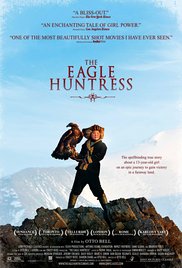
the_eagle_huntress.jpgWhat a thrill it was to chat with the team of one of the best documentary films of 2016 in THE EAGLE HUNTRESS.

Director Otto Bell and his subject, the eagle huntress Aisholpan Nurgaiv chatted with me in a press junket hotel room in downtown Toronto during the Toronto International Film Festival. It was a bit of a surreal moment for me walking in as Aisholpan was dressed in her full huntress gear. English isn’t her first language so she didn’t have much to say in this interview. What was striking for me was her demeanor and eyes. At 13 years old, there was wisdom way beyond her years. It was interesting to hear what her next passion is (read below) too. Enjoy. And make sure you check out the film. It’s playing in all of the big cities in North America today.

Matthew Toffolo: Who is taking care of the Eagles right now while you’re in Toronto?

Aisholpan Nurgaiv: My older and younger brothers are taking care of them right now.

MT: What attracted you to making this documentary and going to Mongolia to film Aisholpan and her family?

Otto Bell: I saw a BBC photograph on the day it was posted. I was struck by it immediately. The backdrop and setting was beautiful. It was almost like an oil painting. She (Aisholpan) was training with her father’s bird at the time and the eagle had a 7 foot wingspan – like it was from prehistoric times. And I saw her face, it was striking. Those three factors got me thinking. Is there a movie here?

I found the photographer on facebook that day. Skyped him and then was on a plane to Mongolia in a matter of days.

MT: Wow. What was your headspace like when you saw the photograph?

OB: I was in my cubicle at work.

MT: I mean mentally. spiritually. What propelled you to skype with the photographer and then jump on a plane?

OB: I was in New York making short documentary films for IBM, Philips etc…. I was looking to make a feature film. At least attempting to make one. And the photograph came at the right time. It had to be the right film in order for me to plunge my life savings and go for it.

I got into some pretty tight corners making this film and I was luckily saved by Morgan Spurlock who set me up with more financing. I was able to finance about 2/3rds of the film and then they (Morgan and his team) were able to add some checks and balances to the film and legalize everything. I’m grateful

MT: (to Aisholpan) What is your feeling having Otto and his camera team consuming your lives for so many months?

Aisholpan: We got used to the cameras quickly and it was fine.

MT: Is this your film time in Toronto, Canada?

Aisholpan: Yes.

MT: How do you like the North American culture?

Aisholpan: We were in Utah for Sundance and the culture there with the mountains was fine. Not used to New York or Toronto yet.

MT: Would you ever want to live in North America?

Aisholpan: Yes.

MT: What would you like to do if you lived here?

Aisholpan: First I want to study. I want to be a doctor. I like to be a surgeon.

MT: Did you have a script already completed when you started shooting? Or did you make it ala cinema verte?

OB: I made the film with a compass, not a map. Things kept coming up and I was able to adjust. What made me able to finish was the story map of her going through the stages of being a true Huntress. So that was good.

I first thought it was going to be a “girl power” film, but the strongest theme that came out of it is a story of a father/daughter relationship.

MT: There is still a lot of social commentary happening with the female empowerment.

OB: Yes, I didn’t want to hit people over the head with that. It comes out and that’s great.

MT: You were able to grab Daisy Ridley to do the voice over. How did that come to be?

OB: Initially, there wasn’t a voice over when we first showed it at Sundance. We sold the film to Sony Pictures Classic. Through Morgan Spurlock’s machine at CAA, they had Daisy on the books and they showed it to her.

She called me up saying that she loved the film and she really got it. That was nice.

Then Sony suggested that I add some voice over in it. What they wanted to provide was a little bit of a hand-hold for the viewers. To make it easier for kids to watch. I was hesitant at first, but when they suggested Daisy I thought it would work. She has a fantastic voice and it really needed to be from a female perspective. So I was sold and it makes the film better.

MT: Tell us your experience working with your cinematographer Simon Niblett? What an amazing job he did.

OB: Simon and I made about 8 short films together around the world. I was very used to him and vice versa. He’s a natural world documentarian. And he’s an inventor. He brought in a lot of equipment, which was my biggest expense. And that’s how we got all the terrific landscape shots in the film.

MT: When I watched the film and the credits came up, I was shocked by how small the list was. A DP. An assistant. An editor. That’s it.

OB: Yes. It was very small. And we made it look like there was a whole lot more.

MT: (to Aisholpan) What is your all-time favourite movie?

Aisholpan: Ice Age. Animation films are my favourite.

MT: What film have you watched the most times in your life?

OB: The Quiet Man. I love that film.

PHOTO: Aisholpan Nurgaiv – THE EAGLE HUNTRESS:

aishpolan.jpg

****

Interviewer Matthew Toffolo is currently the CEO of the WILDsound FEEDBACK Film & Writing Festival. The festival that showcases 10-20 screenplay and story readings performed by professional actors every month. And the FEEDBACK Monthly Festival held in downtown Toronto on the last Thursday of every single month. Go to http://www.wildsound.ca for more information and to submit your work to the festival.

Interview with the Executive Director of VanChan (The Vancouver Channel)

vanchan_2.jpgVanChan or “The Vancouver Channel” is a North American, MONTHLY, webisode festival in where the contestants create a pilot WEB SERIES. Comedy, Drama, Cooking show? Anything goes and any genre is allowed as long as it has a Series Title, is 5 minute’s or less in length and it’s an episode 1 to a larger story you want to tell.

For more information go to: www.vanchan.ca/

Interview with Executive Director Zia Marashi

Matthew Toffolo: What is your Film Festival succeeding at doing for filmmakers?

Zia Marashi: Our festival connects emerging artists with the community of filmmakers (and film lovers) of Vancouver. Together we are shaping the film culture in our city.

MT: What would you expect to experience if you attend your festival?

ZM: VanChan is the best way to spend 3 hours every month. We are a budding community that supports emerging filmmakers by providing a space where ‘stretch their creative muscles’.

As an audience member, you can expect a playlist of amazing short films and night full of mingling, networking and drinks.

As a filmmaker, you can expect to meet fellow passionate filmmakers and connect face-to-face with your audience and experience.

MT: What are the qualifications for the selected films?

ZM: To qualify for VanChan we only have three rules:

1) Must be under 5 minutes
2) Must be intended to be a web series
3) Must have the Web-Series title featured on-screen at some point.

And that’s it. Oh and it has to be good. We get a lot of good stuff and we only select 5 films every month.

MT: Do you think that some films really don’t get a fair shake from film festivals? And if so, why?

ZM: I’d have to say the #1 reason for films not to be considered for film festivals is for “breaking Festival rules” – the only films VanChan.ca have immediately disqualified are those that did not follow the our 3-rule instructions (listed above).

With everyone and their mom making movies nowadays, the other main reason films don’t get ‘their fair shake’ in film festival is because of the film’s quality and creativeness. (e.g. boring / redundant story (or lack there of), poor sound quality and bad casting choices, to name a few.)

MT: What motivates you and your team to do this festival?

ZM: We at VanChan.ca were all at one point unemployed, starving artists, who grew up in the art vacuum that was Vancouver, Canada.

We love making our film festival a reality every month because our city struggles to support its local artists.

MT: How has the festival changed since its inception?

ZM: Its only been 18 months, but our film festival has reported increases in attendance, increase in quality films and increase in brand recognition.

MT: Where do you see the festival by 2020?

ZM: To become a live streaming subscription based website.

MT: What film have you seen the most times in your life?

ZM: Me? Thats tough. Probably the LOTR triolgy. It never gets old.

MT: In one sentence, what makes a great film?

ZM: A great film is a form of ‘translation’ – great artists see the world differently and a film is how they communicate that world to us.

MT: How is the film scene in your city?

ZM: Good, the BCFilm Industry is booming with work pouring in from the US – we help shoot popular TV/Film like ‘Once upon a time’, ‘Star Trek: Beyond’ and ‘A series of Unfortunate events’ – there is also a lot of support for local artists from Telus StoryHive, Crazy8s Film Society and Vancouver International Film Festival.

Our festival hopes to add onto our cities growing set of ‘wins’

____
Interviewer Matthew Toffolo is currently the CEO of the WILDsound FEEDBACK Film & Writing Festival. The festival that showcases 10-20 screenplay and story readings performed by professional actors every month. And the FEEDBACK Monthly Festival held in downtown Toronto on the last Thursday of every single month. Go to www.wildsound.ca for more information and to submit your work to the festival.

Interview with Festival Director Ian Skorodin (Los Angeles Skins Festival)

laskinsfest.jpgLA SKINS FEST annually showcases works by independent Native American filmmakers that provide insight into the beauty, complexity and diversity of Native American people. The festival helps filmmakers show their work so audiences of all ages and interests can enrich their experience and understanding of Native American cultures.

Interview with Festival Director Ian Skorodin 

Matthew Toffolo: What is your Film Festival succeeding at doing for filmmakers?

We offer great venues, a great audience and, most importantly, we offer great support for our filmmakers. Our support system includes additional programming that includes development initiatives that offer career opportunities at the network and studio level.

MT: What would you expect to experience if you attend the festival next year (2017)?

Attendees can expect to see the best movies from Native America as well as meet several talented filmmakers. This year, we are having an opening night event at the comedy central stage featuring a sketch comedy showcase of native american actors. We have several development workshops for adults and youth in partnership with networks and studios. Our mixers host the largest urban collection of Native Americans in the US located here in Los Angeles.

MT: What are the qualifications for the selected films?

The LA SKINS FEST requires that films be by Native filmmakers or about Native America.

MT: Do you think that some films really don’t get a fair shake from film festivals? And if so, why?

Film festivals are a competitive field and not every film fits into the festival circuit.

MT: What motivates you and your team to do this festival?

We are motivated to showcase Native American writers, directors, actors, and producers. We feel there is incredible talent that has not entered the mainstream marketplace. We want to address that absence and offer a genuine opportunity to be a part of the entertainment industry.

MT: How has the festival changed since its inception?

The festival has grown in the amount of films we show and the level of our venue. This year we are opening at Barnsdall Art Park Gallery Theater and continue through the weekend at the Mann Chinese Theater. These are great venues with a long history in Los Angeles.

Our sponsors have also grown to include numerous studios, networks, art organizations, the City of Los Angeles and Native American tribes. This has been crucial in growing our festival and offering the best showcase for Native American filmmakers.

MT: Where do you see the festival by 2020?

in 2020, the festival will offer genuine distribution opportunities for Native American cinema. The LA SKINS FEST will showcase new Native American movies that can be used to find distribution and new opportunities for its participants.

MT: What film have you seen the most times in your life?

Once Upon A Time In America.

MT: In one sentence, what makes a great film?

Strong characters with purpose offer the strongest cinematic experience.

MT: How is the film scene in your city?

Los Angeles is the entertainment capital of the world and is very much on the minds of everyone here.

laskinsfest_2.jpg

***

Interviewer Matthew Toffolo is currently the CEO of the WILDsound FEEDBACK Film & Writing Festival. The festival that showcases 10-20 screenplay and story readings performed by professional actors every month. And the FEEDBACK Monthly Fesival held in downtown Toronto on the last Thursday of every single month. Go to http://www.wildsound.ca for more information and to submit your work to the festival.

Interview with Festival Director Ginger Marisa Tontaveetong (ASIFA International Animation Society)

asifa.pngTheir aim is to put the spotlight on artist and animators locally and globally. Their signature event ASIFA-South RYO Animation Festival has been running for 14 years. With local panels involving professional locally as well as a monthly online panel with professionals in the industry around the world from Canada to the West Coast to Asia, they seek to provide our members and local community with the latest update of know-how.

URL: http://www.asifa-south.com

Interview with Ginger Marisa Tontaveetong

 Matthew Toffolo: What is your Film Festival succeeding at doing for filmmakers?

Ginger Marisa Tontaveetong: Our film festival has succeeded in extending exposures for our filmmakers/animators beyond the life of the festival to worldwide locations. With our screening selection from RYO (Southern Spotlights), the block is shared with ASIFA (International Animation Society) chapters around the world in which content is selected to screen around the world with participating locations such as Colorado, Australia, China, and more.

MT: What would you expect to experience if you attend the festival next year (2017)?

GMT: In 2017, we are planning to increase the size of our screening and really focus on spotlighting our filmmakers. As we have two annual signature screenings each year: RYO animation and International Animation Day screenings, we will be consolidating the two screenings into two different blocks. These blocks are competitive. As with 2016 RYO, the judges were industry professionals based in Atlanta ranging from Directors to Producer from the Emmy award animated series Archer to Bento Box Entertainment’s HULU web series The Awesome. We will also be arranging a Animation VERSUS Puppetry Smackdown event along with other professional industry panels. But perhaps most of all, at heart, we keep our filmmakers our top priority and aim for visibility and promotions. We are planning to have a platform for filmmakers in attendance to be able to showcase and talk more about their work and introduce them to the natives and local artists/ animators in Atlanta. Our RYO screening is held in the landmark Plaza Theatre and in addition to our Atlanta location for International Animation Day this year, we also are screening our International Animation Day selection in Savannah’s Trustee Theater.

MT: What are the qualifications for the selected films?

GMT: Films selected for 2017 may fall under two different categories:
For Southern Spotlights: Qualifications are for animation that are created by animators in South US or have southern ties (Georgia, Florida, Alabama, North Carolina, etc. Maryland included) These films will be selected for trade and showcase on International Animation Day screenings with other ASIFA chapters (50+) around the world. They must not be longer than 15 mins. and have 70% animated content. Puppetry entries are also accepted. This is a competitive category with a Best in Show and Audience Choice Award.

For International category, all animated shorts are accepted with a special attention to animation that addresses diversity, issues, and relevant world contents. This category is a showcase with one award called Animation for All that focuses on best entry for its content.

MT: Do you think that some films really don’t get a fair shake from film festivals? And if so, why?

GMT: This is true. Film festivals are very subjective and sometimes filmmakers may not realize why their entries do no qualify as festivals rarely provide feedback as to why a film is rejected. Our screening is focused on Animation so while there are content that are great that are life action, they are disqualified right away because those do not fit our qualifications. Another criteria is based on length of content and sound quality. If an animation is too long and content is not strong throughout, it may be brushed over in favor for two shorter animated shorts. From my experience, a lot of things are also very subjective to the taste of the juries and committees involved. In other cases, I’ve also seen some animation picked because of the names they are attached to as opposed to the quality because some festivals believe a bigger name will get them more audiences. We have actually passed over some big-named entries because we didn’t believe the content this round was as strong as their other works or the works submitted by other filmmakers.

MT: What motivates you and your team to do this festival?

GMT: ASIFA-SOUTH as an organization hangs on four main goals, two directly related to the festival are promotion of artist visibility and diversity in animation. In order to make sure filmmakers have a platform to showcase their film and encourage animators to produce independent work, we aim to make sure their work gets as much exposure as possible around the world. We also strongly are conscious in our choices to make sure our picks are diverse not only in technique but in narrative and have content that promotes LGBT themes, politics, and functionality diversity. We want not just diversity in content but to showcase the stories directly from representational filmmakers as we believe it is important to hear directly from minority groups their stories in their own vision.

MT: How has the festival changed since its inception?

GMT: ASIFA-SOUTH was established about two decades ago as ASIFA-Atlanta. Our path as an organization and the screenings have changed alot since a turnover change of committee members in 2014 with a stronger and more urgent vision of what animation can be for the world and how it can influence the coming generation. We have started to focus more on diversity as a core message, with a very diverse committee with all representation of gender and race (Of our 15 committee members, we have representation in LGBT, equal parts gender, Asian, Blacks, Caucasians, Latino, etc)

MT: Where do you see the festival by 2020?

GMT: By 2020, we will move into expansion of becoming an Animation Conference with the animation screenings as part of the hi-light. We aim to become a professional hub which caters to the advancement of the animation industry in the South. We also see ourselves working with more of our other festival partners to maximize exposure for animators so expect to see a screening of our programs not only in Atlanta but neighboring states as well so that filmmakers, especially those in the South, will be able to conveniently visit their closest location to see their films and engage with the audiences better.

MT: What film have you seen the most times in your life?

GMT: This would be a tie-in with Jurassic Park chronicles, Deep Blue Sea, and Tremors…I love animation but I also really love creature features.

MT: In one sentence, what makes a great film?

GMT: Beauty is in the eyes of the beholder but if you are making a film you are passionate about, be it narrative or abstract, that makes it a great film.

MT: How is the film scene in your city?

GMT: Atlanta is a great hub for filmmakers and is booming. Due to the tax incentive here, it is one of the top locations for the film industry with lots of activities. We also have a lot of supporting organization and an amazing art/film community such as Film Bar Monday, where industry professionals gather each Monday to mingle without business cards, Atlanta Film Society that really pushes out filmmaker works with year round programs and support, as well as support groups and agency such as My Animation Life that does recruitment for animators, Art is King which supports entrepreneurial skills for artists, Georgia Production Partnership that protects the film tax incentive (up to 30%), and Georgia Game Development Association that hosts the biggest Game and Interactive Development conference in the South East (SIEGE). As a community, this is really the rising backbone of indie films and what we are working to support. We also have the Puppetry Center of Art here that support puppeteers and filmmakers with grants to create their own performance and films.

asifa_2.png

***

Interviewer Matthew Toffolo is currently the CEO of the WILDsound FEEDBACK Film & Writing Festival. The festival that showcases 10-20 screenplay and story readings performed by professional actors every month. And the FEEDBACK Monthly Fesival held in downtown Toronto on the last Thursday of every single month. Go to http://www.wildsound.ca for more information and to submit your work to the festival.

Interview with Festival Director Daniel Hoyos (Seattle Shorts Film Festival)

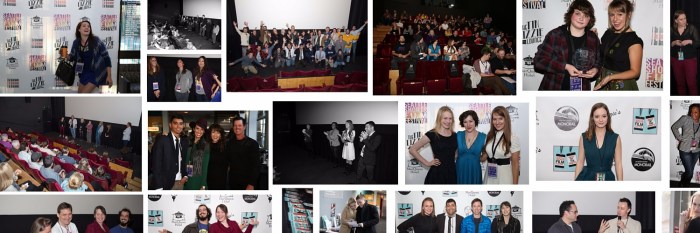
seattle_shorts.jpgSeattle Shorts Film Festival may feature short films, but big things are in the works for the sixth year. This year the festival will be three days, Friday November 11th to Sunday the 13th, with new program elements. Seattle Shorts once again received over 1,000 films from Pacific Northwest, national, and international filmmakers. Seattle audiences should be ready to watch a wide variety of films this year, from music videos to shorts to even a full feature film.

http://www.seattleshort.org/

Interview with Daniel Hoyos

Matthew Toffolo: What is your Film Festival succeeding at doing for filmmakers?

Daniel Hoyos: The Seattle Shorts Film Festival succeeds at giving filmmakers a one of a kind experience where they can interact with Hollywood stars, and indie filmmakers at the same event while watching each other’s work on the big screen.

MT: What would you expect to experience if you attend the festival this year (2016)?

DH: We’re very excited to announce Fatima Ptacek the voice of Dora the Explorer will be joining us for a special screening of Before I Disappear Friday November 11th 7:00pm at the SIFF Film Center. Also this year we’re throwing a dance party at the Seattle Center pavilion, and we’re excited to host two awesome panels focusing on learning more about how to navigate film festivals, and young actors in the business.

MT: What are the qualifications for the selected films?

DH: Each year we get about 13,000 submissions roughly so, selecting the best shorts is not always such an easy task. The Seattle Shorts Film Festival accepts films from 5 minutes to 30 minute in length in the following categories Narrative, Documentary, Animation, Music Video, and College Student.

MT: Do you think that some films really don’t get a fair shake from film festivals? And if so, why?

DH: As a filmmaker myself I do believe that some films don’t get a fare shake at the film festival, but also in defense of programmers it can be very difficult to program shorts just based on quality alone. When selecting films we also have to take into account the length, which is very essential because, of our limited time slots.

MT: What motivates you and your team to do this festival?

DH: The Seattle Shorts staff has always takes great pride in being able to help independent filmmakers reach a wider audience, and provide a unique venue to showcase their short films. Being able to see filmmakers, actors, and producers go on to bigger and more exciting heights is the most rewarding experience working at Seattle Shorts Film Festival.

MT: How has the festival changed since its inception?

DH: Since 2009 the founding year of the Seattle Shorts Film Festival, we’ve grown in size from a single day event to a full two-day festival at the SIFF Film Center. The festival has also grown to include panels, discussions, and more parties for filmmakers during the weekend long event.

MT: Where do you see the festival by 2020?

DH: We’re very excited to announce the Seattle Shorts Film Festival, will be moving to the Uptown Theater in Queen Anne for 2017 which, is a bigger theater owned by SIFF by moving to a larger venue this will allow us to grow our audience even more.

MT: What film have you seen the most times in your life?

DH: That’s a tough question, but I will probably say “Back to the Future” which is a fantastic film that has stood the test of time because, of the rich characters and the way Robert Zemeckis was able to make the film very relatable.

MT: In one sentence, what makes a great film?

DH: The acting is always the first thing that draws me into any type of film.

MT: How is the film scene in your city?

DH: The film scene is Seattle has grown quite a bit over the last 5 years; in fact we have double the number of film festivals that I sometime lose count of just how many we have in the area. The main part of the Seattle Shorts mission is always to help grow the Seattle film community.

seattle_shorts_2.jpg

____

Interviewer Matthew Toffolo is currently the CEO of the WILDsound FEEDBACK Film & Writing Festival. The festival that showcases 10-20 screenplay and story readings performed by professional actors every month. And the FEEDBACK Monthly Festival held in downtown Toronto on the last Thursday of every single month. Go to www.wildsound.ca for more information and to submit your work to the festival.

Interview with Festival Directors Nicolas Iordanou & Sylvia Nicolaides (Paphos International Film Festival)

The Paphos International Film Festival (PIFF) is an annual festival held every June in Paphos in the Mediterranean island of Cyprus. PIFF is an independent not-for-profit organization committed to supporting authentically independent films and it aims to research, promote and develop the art of independent filmmaking. We support low (or no) budget films because we strongly believe that they are worth a chance. PIFF is a platform giving a voice to directors and filmmakers who work with very little, but have a lot to give.

Facebook | Website  (Open for submissions until April 21st, 2017)

Matthew Toffolo: What is your Film Festival succeeding at doing for filmmakers? 

Nicolas Iordanou & Sylvia Nicolaides: Paphos International Film Festival is the only film festival of the city of Paphos, which is also the European Capital of Culture in 2017. Our aim is to support, promote and develop the art of independent cinema. We want to support films that were produced with a low (or sometimes zero) budget, because we believe that they are worth a chance. PIFF is a platform giving a voice to directors and filmmakers who work with very little, but have a lot to give. We, the directors of the festival, understand this because we are also independent filmmakers and we recognize the difficulties.

Each year, in each category, there is an Audience Award, where the audience gets to vote for the films that were the most inspiring to them. We believe that it is a great honor to receive an award given by the audience.

We also arrange a ‘meet and greet’ get-together with the directors and producers/distributors that attend the festival, and encourage them to exchange ideas, interests and create possible new collaborations.

MT: What would you expect to experience if you attend the festival this year (2017)? 

NI & SN: Three days of open-air cinema, with ice cold drinks with friends and of course a great selection of independent films from all over the world.

MT: What are the qualifications for the selected films? 

NI & SN: We appreciate and value independent films that were made from directors and filmmakers who have something to say that is essential and genuine. We look for filmmakers that manage to connect themselves in a personal way with their film and at the same time reflect the issues that concern today’s society.

MT: Do you think that some films really don’t get a fair shake from film festivals? And if so, why? 

NI & SN: Some films get lost due to the large number of submissions that the festival receives and that’s where we come in: because we want to take on the films that did not make it in other film festivals, just because they have not been filmed with the best cameras, the best lighting, etc. We support these productions that despite the difficulties, they have strong and essential ideas, they have quality, and we can see their potential.

MT: What motivates you and your team to do this festival? 

NI & SN: Our own personal experiences as independent filmmakers. We also have to work sometimes with very little, and we would like to show our support and give a voice to all the filmmakers out there who have a vision, a passion, and want to tell compelling and inspirational stories.

MT: How has the festival changed since its inception? 

NI & SN: It is only our second year, but we are determined to keep improving and keep this festival growing and becoming part of the city. PIFF has four categories: International short films, Cypriot short films, Student short films and a Special Category. The Special Category’s thematic is changing every year: last year we dedicated this category to films about refugees and immigrants and we had many powerful films and documentaries on that subject. The most moving part was that because of this, we had many Syrian refugees in our audience who came especially to watch them and this brought them closer to the locals who were attending the festival. This year, we dedicate the festival to our dear friend and a great Cypriot artist Costas Economou (1925 – 2016), so our Special Category is devoted to films about art, artists and art forms.

MT: Where do you see the festival by 2020? 

NI & SN: We hope to start a tradition of cinema in our city, a film festival that will inspire people and that will bring people together. Our aim is to make this festival part of the city. We are working on growing and evolving our network, bringing together different elements of the industry, like filmmakers, distributors, producers, actors, artists, and start a constructive dialogue about social, environmental, political and personal issues that are essential to us, through new collaborations between us.

MT: What film have you seen the most times in your life? 

NI & SN: Darren Aronofsky’s Pi (Π). We love its thematic and the fact that he produced it with such a low budget by asking friends and relatives to support him with small amounts of money. We appreciate the spirit of making a film possible without having a budget. What is admirable, and that is what we would like to pass to the emerging filmmakers, that no matter the difficulties, there are always ways to make a film and share it with the world.

MT: In one sentence, what makes a great film? 

NI & SN: A great script and the desire to translate it in the best possible visual way.

MT: How is the film scene in your city? 

NI & SN: Unfortunately it is very limited and almost nonexistent. That is why both of us, as filmmakers and as the directors of this festival, we are now creating the environment through filmmaking courses, workshops, lectures and through the festival itself and everything is encompasses. Our mission statement is that instead of complaining of all the things that do not exist in our city, we ourselves with our community, are trying to cultivate the film culture here with our vision and actions.

THE DIRECTORS:

Sylvia Nicolaides studied Fine Arts in Chelsea College of Art and Design (University of the Arts) London and received a Master’s Degree in Audio-Visual Studies in the Academy of Performing Arts, in the Film and Television department (FAMU) in Prague, Czech Republic. She participated in several group art exhibitions and her films were awarded and screened at several film festivals both in Cyprus and internationally. In 2013 she participated in the exhibition ‘Catharsis/Rebirth’ in Paphos, Cyprus and co-directed a short film presentation from it, which was selected and presented in the Louvre Museum in Paris as part of the Michelangelo Pistoletto’s exhibition ‘Annee Un – Le Paradis Sur Terre’. She is the co-founder of Kimonos Art Center in Paphos, and the co-founder and co-director of the Paphos International Film Festival (PIFF).

Nicolas Iordanou studied Photography at Columbia College Chicago. From 2001 until 2006 he worked as a photojournalist, dealing with conflict and postwar photography in Afghanistan, Pakistan, Iran, Palestine/Israel, Uganda, Lebanon and also covered the September 11 attacks in New York City. He also collaborates pro bono with the United Nations (UNHCR). In 2005 he was invited by the Goethe Institut as a reviewer in the 1st Photography Festival of Berlin. In 2007, he was assigned to photograph an international project called ‘Challenging Walls’ in collaboration with Akademie der Künste – Berlin and Sibylle Bergmann, whose goal was to bring conflicted communities closer, having a common vision of peace and coexistence. In 2013 he participates in the exhibition ‘Catharsis/Rebirth’ in Paphos, Cyprus and co-directs a short film presentation from it, which was selected and presented in the Louvre Museum in Paris as part of the Michelangelo Pistoletto’s exhibition ‘Annee Un – Le Paradis Sur Terre’. He directed documentaries and short films that were awarded and screened around the world. He is the co-founder of Kimonos Art Center in Paphos and co-director of Paphos International Film Festival in

logolaurels

***

Interviewer Matthew Toffolo is currently the CEO of the WILDsound FEEDBACK Film & Writing Festival. The festival that showcases 10-20 screenplay and story readings performed by professional actors every month. And the FEEDBACK Monthly Fesival held in downtown Toronto on the last Thursday of every single month. Go to http://www.wildsound.ca for more information and to submit your work to the festival.