Movie Review: DIAL M FOR MUDER (1954) Directed by Alfred Hitchcock

Deadlines to Submit your Screenplay, Novel, Story, or Poem to the festival:http://www.wildsound.ca

DIAL M FOR MURDER MOVIE POSTER
DIAL M FOR MURDER, 1954
Classic Movie Review

Directed by Alfred Hitchcock
Starring Ray Milland, Grace Kelly, Robert Cummings
Review by Steve Painter

SYNOPSIS:

An ex-tennis pro carries out a plot to murder his wife. When things go wrong, he improvises a brilliant plan B

REVIEW:

Alfred Hitchcock is known as “The Master of Suspense.” This is true when it comes to the film world. In the literary world, no one was a better suspense writer than Frederick Knott. So when the mater of literary suspense had his play optioned by the master of cinematic suspense, a quality movie was sure to be produced. It was in the form of Hitchcock’s most suspenseful picture, Dial M For Murder (1954).

Unlike in other movies adapted from literary works, Hitchcock didn’t tinker with the successful stage play Knott had written. There are a few Hitchcock touches, like stalling the climatic murder sequence by having Ray Milland’s watch stop and then having him wait to make a phone call as someone is using the phone booth. All this heightens the suspense as the audience waits, paralyzed to see if Grace Kelly will be murdered.

One of the most poignant Hitchcock touches comes at the very beginning. We see Milland kiss Kelly in a standard, everyday, run-of-the mill kiss given by a wife to a husband before he leaves for work. When the American, Mark, arrives on the screen he has a passionate kiss for Kelly. Without words we know the relationship of the three main characters of the story. That is a standard device employed by Hitchcock. It allows the audience to see the exposition quickly at the beginning of the movie and does not have it intrude on the story. Much like his cameo appearances. He appears here in a photograph Tony shows Charles Swann. It appears about 20 minutes into the picture.

Knott’s story is not that original. A husband wants to kill his wealthy wife for the insurance money. It is the motive in countless suspense or mystery stories. What makes this so suspenseful is that Ray Milland’s character, Tony, sets out how the murder will be committed. From there the audience is hooked as to how everything should go. It is up to Knott and in the movie Hitchcock to introduce devices that stall the plan and make the audience squirm as they wait for Grace Kelly to be murdered. It is suspense at its most basic, but most brilliant. A key aspect to making the suspense work is the way Ray Milland acts. He is a suave criminal who is completely confident in his ability. He meticulously blackmails common criminal Charles Swann, played by Anthony Dawson, to help him murder his wife. Throughout the picture, the audience wants Tony to be successful. He has gotten us to believe that murder is a perfectly innocent thing to do, like buying a car.

Another interesting aspect of this movie is that it was released in 3D. Just like today, in the 1950s the 3D craze was in. Most famously The Creature from the Black Lagoon (1954) was shot in this way. Hitchcock had amazing foresight, one of the qualities which make his movies so wonderful for today’s audiences, and felt that the 3D craze was just a fad. In order to not ruin his movie, but still give in to the 3D crazy studio bosses,

Hitchcock used to form sparingly, but effectively. The most breathtaking example of 3D occurred while Grace Kelly was being strangled. At one point she reaches back for a pair of scissors. For an audience watching this in 3D it seemed like she was reaching out at them. In today’s prints without the 3D, the shot is still stunning. Ray Milland gives a great performance. As does Grace Kelly, who seems unaware of the whole thing. Robert Cummings as Mark, the American, is good in a supporting role. As is detective, and constant Hitchcock supporting actor, John Williams.

Anyone interested in the art of suspense needs to see this movie. It should be taught in film and writing classes as textbook examples of how to manipulate an audience.


Also, Free logline submissions. The Writing Festival network averages over 95,000 unique visitors a day.
Great way to get your story out: http://www.wildsound.ca/logline.html

Deadlines to Submit your Screenplay, Novel, Story, or Poem to the festival:http://www.wildsound.ca

Watch recent Writing Festival Videos. At least 15 winning videos a month:http://www.wildsoundfestival.com

Movie Review: TO CATCH A THIEF (1955) Directed by Alfred Hitchcock

Deadlines to Submit your Screenplay, Novel, Story, or Poem to the festival:http://www.wildsound.ca

TO CATCH A THIEF MOVIE POSTER
TO CATCH A THIEF, 1955
Classic Movie Review

Directed by Alfred Hitchcock
Starring Cary Grant, Grace Kelly
Review by Steven Painter

SYNOPSIS:

American expatriate John Robie living in high style on the Riviera is a retired cat burglar. He must find out who a copy cat is to keep a new wave of jewel thefts from being pinned on him. High on list of prime victims is Jessie Stevens, in Europe to help daughter Frances find a suitable husband. Lloyds of London insurance agent is using a thief to catch a thief. Take an especially close look at scene where Robie gets Jessie’s attention, dropping an expensive casino chip down decolletage of French roulette player.

REVIEW:

The French Riviera is the setting for Alfred Hitchcock’s To Catch a Thief (1955). This movie is beloved by audiences and typically dismissed by film theorists and critics. The disappointment expressed by critics is understandable. But so is the joy coming from any audience that watches.

In this movie we see the French Riviera at its best. Robert Burks won an Academy Award for his color cinematography. Grace Kelly is cool, charming and elegant. This is one of her best performances and probably the best of her three Hitchcock films. The others being Dial M for Murder (1954) and Rear Window (1954). Cary Grant is also great in this movie. He always gave great performances when working for Hitch, but this one is special. These are the reasons why audiences enjoy To Catch a Thief.

The story is the main reason why theorists and critics dismiss it. It revolves around a series of burglaries. Grant plays John Robie, also known as The Cat. Robie used to be a great cat burglar, specializing in jewelry. He became a well-respected hero during World War II though when he joined the Resistance against the Nazis. His good name is being dragged through the mud when a new cat burglar takes to the streets stealing jewelry. Of course everyone believes Robie is the one doing all the taking.

He is able to avoid the police in the opening sequence of the film. He ends up on a passenger bus into town. This is where Hitchcock makes one of his best cameo appearances, be sure to check it out.

Once in town Robie goes around to old friends to see what they can dig up about the new cat burglar. They don’t give him much and he makes his way to the hotels on the Riviera. His only ally seems to be insurance agent Hughson, played by Hitchcock stalwart John Williams. Hughson’s priority is to insure the jewelry of a wealthy American woman who is on vacation with her daughter, Francie, played by Kelly.

Here Robie and Francie fall in love. Francie seems fascinated by Robie’s former career as a burglar. The mystery and suspense is put on the backburner as the two stars’ romance develops. Although there is a daring car chase in which Kelly drives through the winding hills of the Riviera. This is an eerie scene to watch considering what would happen to Kelly later when she became Princess of Monaco.

Now, I’m not someone who thinks there should be suspense in every scene or that romance has no place in a mystery film, but the techniques Hitchcock uses are not very original. This is one of the reasons why I’m not a huge fan of this movie. For instance there is a scene where Kelly and Grant are kissing. That is intercut with fireworks. I haven’t seen that this month. I guess I just expect something different from a technical pioneer like Hitchcock.

The mystery gets started again as the romance gets hotter. The climax of the movie takes place at a costume party. Edith Head did a marvelous job in designing the costumes for this movie. She did a great job on costume design for all movies she did, but the gowns she designed for Grace Kelly in the three Hitchcock pictures are ones that stand out. Hitch loved working with her and all the leading ladies adored her designs. The most suspense in the movie comes during a rooftop chase. This is well done and adds something new to the Hitchcock cannon, but it is not the reason why people watch To Catch a Thief. This scene, and really the whole movie, needs to be watched on the big screen. That way you can fully appreciate the gorgeous cinematography of Robert Burks and the great gowns of Edith Head.

One of the main reasons why I disliked the movie is that I knew who the cat burglar was early on. I’m not sure if other people will figure it out that quick, but if they do then it could be a long ride to knowing that you are right. Not that there isn’t great scenery and great acting to help pass the time. It’s just that I expected a little bit more from Alfred Hitchcock.


Also, Free logline submissions. The Writing Festival network averages over 95,000 unique visitors a day.
Great way to get your story out: http://www.wildsound.ca/logline.html

Deadlines to Submit your Screenplay, Novel, Story, or Poem to the festival:http://www.wildsound.ca

Watch recent Writing Festival Videos. At least 15 winning videos a month:http://www.wildsoundfestival.com

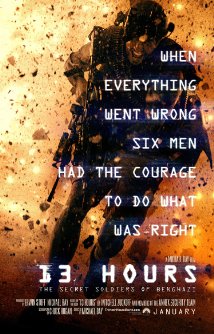
Movie Review: 13 HOURS: THE SECRET SOLDIERS OF BENGHAZI (2016)

Deadlines to Submit your Screenplay, Novel, Story, or Poem to the festival:http://www.wildsound.ca

13_hours13 HOURS: THE SECRET SOLDIERS OF BENGHAZI (USA 2015) ***
Directed by Michael Bay

Review by Gilbert Seah

There is one scene in the middle of Michel Bay’s 13 HOURS that accurately describes his political stance of the movie. As the American ambassador Chris Stevens (Matt Letscher) delivers his speech on American involvement in Libya, one of the secret soldiers, Paronto (Pablo Schreiber) dozes off.

Michael Bay, director of Hollywood action packed blockbusters such as the TRANSFORMER films, PEARL HARBOR, ARMAGEDDON, THE ISLAND (his best movie) and others, is not interested in polities but in the action that takes place. In this case, the action involves the 6 secret soldiers that heroically served their country way above and beyond their call of duty.

To Bay, politics is a nod to sleep. Those in politics that fear that the film will have an adverse effect for Hilary Clinton who was the Secretary of State at that time or to the Obama Administration need not be worried. The only political notes in the film appear at the beginning of the film with the titles that America got involved after the Gadaffi was overthrown and at the end of the film with a note of the gratitude of the Libyan people. But certain facts are true – the main one being that the secret soldiers were not supported effectively by the U.S. and security was far from sufficient.

The story, as the film stresses a few times is a true one. Libya, one of the most politically troubled countries in the world has no American embassy but has what is called a low security diplomatic outpost. Here the CIA, who has in their employ, the 6 secret soldiers mentioned has to escape with whatever Americans or American sympathizers are left as they are attacked by unknown hostile forces. Among the escapees is the American Ambassador. It is a continual battle for survival.

13 HOURS is pure Michael Bay. There are lots of explosions, pyrotechnics and special effects with the help of Lucas Light and Sound Company. It is a man’s world. All the 6 actors/soldiers are buffed, bearded and tough or at least talk tough.

At the promo screening, actor Schreiber who was present mentioned that Bay’s intention was to give an account of what happened on the ground. This he has done while emphasizing the camaraderie of the men under fire. 13 HOURS is not the first film depicting the behaviour of men under combat stress. THE HURT LOCKER, KILO TWO BRAVO and AMERICAN SNIPER are a few films that have done just that. Bay uses the same tactics as these films. The soldiers are observed skyping their wives and talking to their kids, the wives are shown freaking out and flashbacks are used to emphasize better family times. The soldiers also refer to what is happening as a horror film. And like in a horror film, Bay also introduces false alarms, like shocking the audience when a lady trips breaking the glasses of tea during a high profile political meeting. Besides action, Bay a few solid suspense segments like the one Jack (John Kravnski) gets out of, lying about drones at the start of the film.

One fault of the film is the relatively simple story that Bay stretches into a 140-minute action film. Boredom sets in quite soon as the audience observes the senseless fighting reflecting the senseless action in the movie.

At only $50 million, Bay is an efficient director delivering a high demand product at a low cost using little known actors, except for John Kravinski who plays the lead character. The film was shot 3 months in Malta and 4 days in Morocco. Like AMERICAN SNIPER and LONE SURVIVOR, this film will likely make lots of money.

Also, Free logline submissions. The Writing Festival network averages over 95,000 unique visitors a day.
Great way to get your story out: http://www.wildsound.ca/logline.html

Deadlines to Submit your Screenplay, Novel, Story, or Poem to the festival:http://www.wildsound.ca

Watch recent Writing Festival Videos. At least 15 winning videos a month:http://www.wildsoundfestival.com

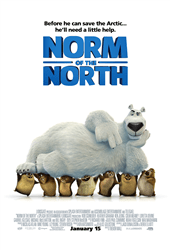
Movie Review: NORM OF THE NORTH (2016) Animation, Family

Deadlines to Submit your Screenplay, Novel, Story, or Poem to the festival:http://www.wildsound.ca

norm_of_the_north_poster.jpgNORM OF THE NORTH (Normand du Nord) (USA 2015) ***
Directed by Trevor Wall

Review by Gilbert Seah

The first family film of 2016 proves to be not too bad a family outing but lacks the innovativeness of many primed animated features. Director Wall and his scriptwriters (five no less) play it safe. The result is a safe film – but nothing out of the ordinary.

Many of the characters in NORM OF THE NORTH is derived from other animated films. Norm, himself is a polar bear (Rob Schneider) who does not fit in the North pole. He is too kind to hunt and eat his fellow Arctic animals. But he has a gift. He can understand the human language (English to be particular). No reason is offered why. So when trouble arrives in the north in the form of Mr. Greene (Ken Jeong of THE HANGOVER films) who wants to destroy nature and build condos, it is up up to Norm to save the day. He travels to NYC with his troupe. His troupe consists of three lemmings, who utter gibberish, very similar to the minions of DESPICABLE ME.

The voice characterizations are again competent at most. Rob Schneider is sufficiently amicable as Norm. Of the recognizable talents, Bill Night as Socrate, the bird, Colm Meaney as the grandfather and Jeong as the villain stand out. But the villain is more goofy than mean, who eventually gets his comeuppance as deserved.

The film contains a few songs and a few dance numbers. Norm looks cute jiggling his polar white furred bum. Again, the dance is a milder form of HAPPY FEET, just as Norm is a very mild version of a clumsy SHREK. The human beings that meet Norm are females, which should delight the fairer sex of the audience. There is no violence at all and no foul language, though with just a little hint. These come mainly from the villain, Mr. Greene. There is also a noticeable lack of romantic interest in the film. But that would tend to slow an already slow-paced animated movie.

The sight of animals in a big city has also been done before in the MADAGASCAR films. The scene of Norm and the lemmings travelling by boat to America is too familiar and similar the sight of the ship sailing by the penguins in MADAGASCAR.
The message of saving the world (THE LEGO MOVIE, DESPICABLE ME) and its natural environment is also a well-worn one, though well intentioned.

The animation is competent enough. I cannot comment about the 3D effects, as the screening I attended was a 2-D version.

Overall, NORM OF THE NORTH is an ok piece. The sight of a fuzzy giant dancing around should surely amuse the kids in the audience. If only the humour was goofier and the script was more inventive to entertain the adults. But the film should attract the same audience that made ALVIN AND THE CHIPMUNKS a hit at Christmas.

Also, Free logline submissions. The Writing Festival network averages over 95,000 unique visitors a day.
Great way to get your story out: http://www.wildsound.ca/logline.html

Deadlines to Submit your Screenplay, Novel, Story, or Poem to the festival:http://www.wildsound.ca

Watch recent Writing Festival Videos. At least 15 winning videos a month:http://www.wildsoundfestival.com

Movie Review: THE TROUBLE WITH HARRY (1955)

Deadlines to Submit your Screenplay, Novel, Story, or Poem to the festival: http://www.wildsound.ca

The Trouble With Harry, 1955
Classic Movie Reviews
Directed by Alfred Hitchcock
Starring John Forsythe, Shirley McLaine, Edmund Gwen
Mildred Natwick, Mildred Dunnock, Jerry Mathers
Review by Cheryl Farr

Synopsis

When Harry’s corpse is discovered in the countryside of a quaint town, the residents struggle, very politely of course, with who is responsible for the untimely death, and what to do about the troublesome corpse.

Review

This dark, quirky comedy deals with death in a very matter-of-fact manner. Hitchcock grew up with a European outlook of death—not necessarily morbid, but with the ability to find humor in it. As a result, he was able to take the novel by Jack Trevor Story, and present one of his few true comedies. The storyline is fairly simple, the corpse of an outsider is discovered and three different people believe they may have been the killer.

Throughout the film, the creative artist helps gather clues and by the end, the truth is revealed. What makes this fun to watch is the way the characters react to the death and their possible responsibility for it—with proper decorum. As Miss Gravely comes upon Captain Wiles dragging the corpse away, she calmly asks, “Is there a problem?” Or the bespectacled doctor who trips over the corpse on three different occasions before he sees that it’s a corpse and Captain Wiles comments that he hopes the doctor never performs surgery on him.

What’s also interesting about the story is that this dead man has the uncanny ability to bring people together. Sam now has the opportunity to meet Jenny, a girl he has admired from afar. Miss Gravely now has the courage to ask the Captain to tea. Harry has done more for the people in death than in life. Unloved, un-mourned, they all see him as a problem to be solved rationally and logically. Even by today’s standards, some of the dialogue is hilarious. This comedy stands up to the test of time. The beautiful autumn panorama of Vermont and light, comedic score lighten the subject matter and add greatly to the peaceful calm that has been disturbed by Harry’s appearance.

Last Thoughts: Unfortunately, this was not a box office success for Hitchcock. This was a departure from what he had produced earlier. The audiences were expecting a thriller rather than a comedy and were disappointed. Additionally, American audiences didn’t find the subject matter particularly funny. However, European audiences loved it and the film played there for a year or more. This was Shirley McLaine’s first film role as an energetic 19 year-old.

Also, Free logline submissions. The Writing Festival network averages over 95,000 unique visitors a day.
Great way to get your story out: http://www.wildsound.ca/logline.html

Deadlines to Submit your Screenplay, Novel, Story, or Poem to the festival:http://www.wildsound.ca

Watch recent Writing Festival Videos. At least 15 winning videos a month:http://www.wildsoundfestival.com

Short Film Movie Review: GREECE (Canada, 16min. Drama)

  MOVIE POSTERGREECE, 16min, Canada, Drama
Directed by Sarah Deakins

On a rainy afternoon in a British nursing home, a woman struggles to make a last connection with her seemingly catatonic mother.

“A tribute to the complicated relationships between parents and children with moving dialogue and expressions…A deeply personal journey with beautiful cinematography.”
– Best Shorts Competition

Watch the Audience FEEDBACK Video of GREECE from the FEEDBACK Film Festival:

Movie Review by Amanda Lomonaco:

This film hits near and dear to my heart. With many family members who have suffered from Alzheimer’s and dementia, I am all too familiar with the struggles and frustrations the disease can cause on victims, family members, and caretakers alike. Sarah Deakins has done a fantastic job in portraying these struggles through an incredibly simple, yet equally powerful screenplay.

I suppose my personal experience with this illness creates an obvious bias towards this film, but it wasn’t so much the subject matter that drew me to this film so much as the way the subject matter was treated. I felt that Deakins did an exceptional job in portraying a very realistic, emotional scenario without dipping too far into cliché. It was all very believable, very clear, and very close to the reality of what families can experience when a loved one is suffering from Alzheimer’s.

The performances contributed greatly to sharp sense of realness of the short. This is particularly surprising for a film supported almost entirely by a monologue from one of the characters. Deakin’s superimpositions of the fantasy images that are going through each of the character’s heads only magnify the already brilliant cinematography of Greece, luring you in further.

Greece is not an excessively dramatic film, though it speaks of quite a terrible tragedy. It doesn’t take you on a crazy emotional journey, but it still tugs, ever so gently, at your heart. It’s a warm cup of tea on a quiet, melancholy, cold day. It might make you tear up a bit, it might make you appreciate your parents or your grandparents more, it might bore you or not affect you at all. Still it’s worth a watch, a thoughtful, reflective watch, when you’re in the mood for some more serious pondering. If nothing else I hope it reminds you to enjoy your life and appreciate it for all it is and for all you can do within it, because one day you might not be able to anymore.

Short Film Movie Review: MOUSSE (Sweden, 40min. Comedy/Crime)

  MOVIE POSTERMOUSSE, 38min, Sweden, Comedy/Crime
Directed by John Hellberg

MOUSSE is a medium length droll and blackly comic tale of an honest criminal and police ineptitude.

MOUSSE was the winner of best film at the 2014 FEEDBACK Film Festival. 

Watch the Audience FEEDBACK Video of MOUSSE:

Movie Review by Amanda Lomonaco:

Absolutely brilliant. I’ve seen this movie 3 times already and I can’t get enough of it. After watching it the first time at WILDSound, I could not stop thinking about how great it was, I even hunted parts of the soundtrack down, until finally I had to hunt down the film itself. This is especially surprising considering this film is one of the longer selections I’ve seen at WILDSound, standing at 41 minutes. Even if you’re not a lover of subtitles, I would give this film a try.

To begin with, the acting in this film is exceptional, particularly for a film with such a wide diversity of cast, and an equal diversity of languages. Every character in Mousse is meticulously developed and well rounded, and every performance throughout the film feels nothing but genuine. The casting of the elderly policemen could equally not have been more perfect as it added a surprising element of hilarity to the film.

It’s hard to call John Hellberg’s picture a “short film” given its ambiguous length, standing somewhere between a feature and a short film, but at no point during the film do you find yourself disengaged or uninterested. Hellberg propels the story forward through a series of juxtapositions that intertwine seamlessly into the main story line, and prevent any semblance of boredom. Moreover, the production quality gives no sense of cutting any corners, giving Mousse an almost feature like quality.

Between the odd translations and awkward pauses in communication, the age and attitude of the policemen, & the jokes the actors tell each other, it’s hard to say what part of Mousse isn’t hilarious. It’s almost as if Hellberg is trying to cover all his bases in the humour category, from visual, to verbal, he even throws a couple of fart jokes in there just in case.

If you haven’t caught on by now, I think this film needs more visibility. Heck, if it were a part of a DVD collection I would buy it right away just to show others. It will take a little more of your time than most short films, but you’ll be laughing so hard the whole time you’ll hardly notice it passing. This is the first of Hellberg’s films that I’ve ever encountered, but I hope to come across many more in the future.


Movie Review: TORN CURTAIN (1966) Directed by Alfred Hitchcock

Deadlines to Submit your Screenplay, Novel, Story, or Poem to the festival: http://www.wildsound.ca

TORN CURTAIN MOVIE POSTER
TORN CURTAIN, 1966
Horror/Thriller Movie Review

Directed by Alfred Hitchcock
Starring Paul Newman, Julie Andrews, Lila Kedrova, Hansjörg Felmy, Tamara Toumanova, Ludwig Donath
Review by Steven Painter

SYNOPSIS:

An American scientist publicly defects to East Germany as part of a cloak and dagger mission to find the solution for a formula resin and then figuring out a plan to escape back to the West.

REVIEW:

Alfred Hitchcock never really worked with big stars, or at least he never worked with big stars he wasn’t familiar with. Ingrid Bergman and Cary Grant were making their second movies with Hitchcock when they appeared together in Notorious (1946). Grace Kelly and James Stewart had appeared in one Hitchcock movie apiece before appearing together in Rear Window (1954). Grant and Kelly had two Hitchcock movies under their belts before making To Catch a Thief (1955). So things were different when Hitchcock cast Paul Newman and Julie Andrews in Torn Curtain (1966).

Many things are different about Torn Curtain. For one, the movie has aged severely since 1990. The phrase “torn curtain” obviously refers to the Iron Curtain, which was the largest symbol of the Cold War. It no longer has any significance now that the war is over. It is also different because the two major stars, Newman and Andrews, had long, distinguished careers, but this movie is rarely mentioned as being a part of it even though they appeared in a movie directed by the world’s most popular director at this point. Perhaps the reason why this movie is not mentioned is because it is not that great. It received lukewarm reactions from audiences and critics when released and has only gotten worse since the fall of the Berlin Wall.

Our story begins on a boat filled with nuclear physicists. One of them, Michael Armstrong, played by Newman, is actually a spy for the U.S. government. His assistant and fiancée, Sarah Sherman, played by Andrews, has no idea of his real work. So she is very surprised when she finds out her husband has decided to defect to East Germany.

He does his best to lose her, she does her best to follow him and the two end up in an East German airport. Michael is celebrated by the East Germans as he is a symbol of people in the west getting fed up with democracy and coming over to their side.

Michael confesses to Sarah the real reason why he has defected. This scene is interesting, not only for the information gained, but because it occurs in a large hotel room in which the only lighting Hitchcock used seemed to come from natural places i.e. windows and lamps. Typically movies use light sources from off-screen, but act as if they are coming from on-screen. In this movie Hitch tried to keep all the light used coming from natural sources. It works to various degrees, but is most pronounced in this scene.

Adventures ensue as Michael has the task of trying to learn a secret formula from the East German scientist Dr. Lindt.

Michael is forced to murder Gromek, a taxi driver who brings Michael to a farm in which he has been instructed by the U.S. government to make contact with. Gromek gets some ideas as to why Michael is really in East Germany and Michael must kill him. Unlike other Hitchcock murders, this one is not short and pretty. It is long and hard. It was an attempt at Hitchcock to capture more realism, since killing someone is not as easy as it typically looks in the movies.

Michael meets Dr. Lindt and is able to trick him into giving him the formula. From here the suspense is ratcheted up as Michael and Sarah make a daring escape back to the west. They are the ones who create a sort of tear in the Iron Curtain by acquiring the formula.

The suspense in their escape is well done, but it should have been as each situation the coupe finds themselves in seems to have been taken from another Hitchcock movie. There is a bus ride with interesting characters that echoes similar trips in The Man Who Knew Too Much (1956) and Saboteur (1942). The couple ends up in a theatre, surrounded by bad guys. This is similar to The 39 Steps (1935), The Man Who Knew Too Much (1934) and (1956) and Stage Freight (1950). Of course Michael and Sarah get out of each situation in a different way than in previous Hitchcock movies. In the theater they shout “fire!” and everyone promptly moves towards the exits. Even the final escape for the couple, from a Scandinavian ship, seemed like a rehash from the Marx Brothers’ A Night at the Opera (1935). Michael and Sarah end up in the icy water, forced to swim ashore to the free west instead of being removed from the ship while hiding in boxes like the Marx Brothers were.

Torn Curtain probably wasn’t a bad movie when it was released. It is long and does rehash some familiar territory for Hitchcock, but the formula was effective and created suspense. It does lag in some parts, but Newman and Andrews give good performances. For today’s audience though, the movie can be hard to watch as the premise behind it has no relevance in the world of today.

Also, Free logline submissions. The Writing Festival network averages over 95,000 unique visitors a day.
Great way to get your story out: http://www.wildsound.ca/logline.html

Deadlines to Submit your Screenplay, Novel, Story, or Poem to the festival:www.wildsound.ca

Watch recent Writing Festival Videos. At least 15 winning videos a month:http://www.wildsoundfestival.com

Movie Review: BOY & THE WORLD (2015) Directed by Alê Abreu

Deadlines to Submit your Screenplay, Novel, Story, or Poem to the festival: http://www.wildsound.ca

boy_and_the_worldBOY AND THE WORLD (O Menino e o Mundo) (Brazil 2013) ***1/2
Directed by Alê Abreu

Review by Gilbert Seah

As in last year’s SHAUN THE SHEEP MOVIE, BOY AND THE WORLD is a wordless animated feature though gibberish Portuguese can be heard occasionally in the film’s soundtrack. Thus, this Brazilian import, has a more universal appeal, as it can be understood by people in countries speaking different languages.

The story is also a universal one. Being wordless, one must concentrate a bit more to put together the film’s narrative. The story concerns the boy of the film’s title, one who journeys to the big city, to see what is both fascinating and frightening. All this is captured by the film’s colourful visuals.

The film begins with the boy (animated as a stick figure with huge round Charlie Brown head with black slit eyes and no mouth) looking at a coloured rock. The patterns turn out to be inside other patterns as the camera weaves in and put different colours and patterns. All this is very mesmerizing and captivating. The boy then jumps onto a cloud and after jumps into the waters of a stream and runs into the woods.

The story involves the boy leaving for the city (that looks like Rio de Janeiro) in search of his father. He has various adventures including getting a dog, meeting mechanized workers (looking like THE WALL) and facing police oppression. The film also has abstract moments like the symbolic fight between good and evil as seen by the fight between a black bird and colourful phoenix.

The film contains beautiful moments such as the one emphasizing the importance of family, in which the boy eats bread with a melon dip with his mother and father. But the film has an overall bleak look as director Abreu lays his views on world pollution of lumber and oil, as well as the slow destruction of natural resources.

The visuals are amazing – simple and colourful being the two words best used to describe it – just like the kaleidoscope toy the boy looks and plays with. The segment of the tankers carrying colourful containers, all rectangular in shape filling the screen makes one of the more memorable moments. But just as amazing as the visuals is the film’s soundtrack that is made up of instruments like the flute, and Brazilian music like the samba and hip-hop.

The film has the feel of METROPOLIS and is at times, just as intense. To Abreu’s credit, the film is without dialogue and thus has to be more cinematic. Though the film is animated and about a boy, children might find the film difficult to understand. But the film has a total Brazilian feel about it – from the characters to the background.

BOY AND THE WORLD is welcome, very original adult animation so different from what other studios like Disney, Ghibli and Aardman provide. The film is unique and has won over 40 film festival awards so far.

Also, Free logline submissions. The Writing Festival network averages over 95,000 unique visitors a day.
Great way to get your story out: http://www.wildsound.ca/logline.html

Deadlines to Submit your Screenplay, Novel, Story, or Poem to the festival: www.wildsound.ca

Watch recent Writing Festival Videos. At least 15 winning videos a month: http://www.wildsoundfestival.com

Movie Review: VERTIGO (1958) Directed by Alfred Hitchcock

Deadlines to Submit your Screenplay, Novel, Story, or Poem to the festival: http://www.wildsound.ca

VERTIGO MOVIE POSTER
VERTIGO, 1958
Classic Movie Review

Directed by Alfred Hitchcock
Starring James Stewart, Kim Novak
Review by Steven Painter

SYNOPSIS:

A San Francisco detective suffering from acrophobia investigates the strange activities of an old friend’s wife, all the while becoming dangerously obsessed with her.

REVIEW:

Vertigo (1958) is the first of Alfred Hitchcock’s four straight masterpieces of the late-50s and early-60s (North by Northwest, Psycho and The Birds being the others). It also might be the best of the four. It is the most complex.

The story revolves around Scotty Ferguson, played by James Stewart, who is a retired detective in San Francisco. Ferguson retires after coming down with arachnophobia. The move opens with a rooftop chase. Scotty and another officer are hot on the trail of a criminal. They jump from roof to roof. The other officer makes the jumps fine, but Scotty has trouble on one. The officer stops his pursuit to help Scotty. Unfortunately for the two, Scotty has a case of vertigo and the officer loses his balance, falling from the roof.

While trying to get over his arachnophobia, Scotty spends a lot of time with Midge, a former fiancée, who is nothing more than an interesting character. In fact, she is basically forgotten in the second half of the movie for some reason. She is basically someone who is inserted for Scotty to talk to. She has some fine qualities, but they are not accented enough in her brief screen time.

Anyway, a former schoolmate of Scotty’s, Gavin, calls him up for a job. At first Scotty refuses — saying he is retired. But Gavin convinces him that the job is good. Scotty is asked to look after Gavin’s wife, Madeline, who seems to believe she is the reincarnation of an ancient relative named Carlota. Carlota had committed suicide and Scotty’s friend feels that Madeline will do the same.

Scotty sees Madeline first in a restaurant and then follows her throughout the next day. He is struck by her. In fact, the audience is captivated by her. Kim Novak, despite her tumultuous relationship with Hitchcock, does a great job in this movie. She is very photogenic and her presence captivates the audience. Hitch also devoted a lot of time to her trivial routines. Or at least what would normally be a trivial routine. Hitch makes sure we pay attention to Novak’s beauty and the beauty of the city.

This is where Vertigo stands out from a lot of Hitchcock movies. The story might be more complex than a lot of his other movies, but the photography is so simple. The city of San Francisco has never looked so good on film. The winding streets, the local shops (Ernie’s was one of Hitch’s favorite restaurants), the Redwood forest, the deep history of the Bay Area, are all brought to life. Of course there is the famous Golden Gate Bridge and the monumental scene where Scotty saves Madeline when she jumps into the bay. Typically movies shot in Technicolor tend to make colors too bright. That is not the case here as all the color saturation seems perfect.

Once Scotty saves Madeline, the two fall in love. Madeline is crazy though. Because of his love for her, Scotty is unable to notice the warning signs of Madeline’s suicide. She and he make a trek down the coast to an old mission. This is where Carlota died — it is where Madeline wants to die. Because of his arachnophobia, Scotty is unable to prevent Madeline from climbing the steps and throwing herself out the bell tower at the mission.

During an inquest, it is found that Madeline died accidentally and Scotty could do nothing to prevent her death. The scenes in the mission bell tower are most famous for Hitchcock’s “Vertigo shot.” The shot that mimics the effect of vertigo was something Hitch had been working on for over 20 years. It was finally perfected here and was done by using miniature models. The camera was moving toward the models while the lens was zooming out. The technique has been used in movies many times since Hitch first pioneered it.

Devastated by another death he feels he could have prevented, Scotty goes into rehab. This is the last time we see Midge, as she and the other doctors are unable to get Scotty back on track. After an unspecified length of time and for some unknown reason, Scotty is taken out of rehab and put back in the real world. Here he drifts along thinking about Madeline. One day, while walking along the street, Scotty notices a girl who looks a lot like Madeline. He stalks his prey to her hotel where he makes his move. The girl’s name is Judy. After some resistance she agrees to go out with Scotty. After their first date, in which Scotty talks a lot about Madeline, it is revealed to the audience that Judy is in fact Madeline. Kim Novak plays both characters and just has dyed her hair. Although there are times when it seems that she has done more than just dye her hair to change from Madeline to Judy.

This would be a good time to mention that Novak was not Hitch’s first choice for the role. He wanted to use Vera Miles. But since it took so long for a script to be written, Miles was unable to be used because she got pregnant. So Novak was used and Hitch didn’t like her. The two didn’t get along. Novak had other ideas on how the play the character. Despite the tension, the performance on the screen is great.

Scotty decides to remake Judy in the model of Madeline. Of course Judy resists this. She had been hired by Gavin to play Madeline once in order to cover up the murder of Gavin’s real wife, the real Madeline. Since Scotty had arachnophobia, something Gavin knew, Scotty would be unable to save Madeline when she “jumped” from the bell tower. In fact, Judy ran up the bell tower where Gavin threw his wife’s body off.

This is not realized by Scotty until the fully remade Judy puts on a necklace that had belonged to Madeline and Carlota before her. Obsessed with the crime, Scotty forces Judy back to the mission and up the steps of the bell tower. In triumph, Scotty makes it to the top. In tragedy, footsteps are heard coming up the stairs and Judy jumps out of the tower in one of the most frightening scenes of the Hitchcock cannon.

Vertigo is a masterpiece plain and simple. It is regarded highly by critics, scholars and audiences. The main reason for this can not be found, at least to me. It has some sort of quality that just makes it enjoyable to watch. Maybe it is the complex story. Maybe it is the luscious scenery. Maybe it is the performance of Jimmy Stewart. Maybe it is the chemistry between Stewart and Kim Novak. Whatever it is, this movie is a must see for anyone who likes movies.


Also, Free logline submissions. The Writing Festival network averages over 95,000 unique visitors a day.
Great way to get your story out: http://www.wildsound.ca/logline.html

Deadlines to Submit your Screenplay, Novel, Story, or Poem to the festival:www.wildsound.ca

Watch recent Writing Festival Videos. At least 15 winning videos a month:http://www.wildsoundfestival.com