An adventure seeking young girl comes of age, joins the Peace Corps, gets posted in the Congo and takes a wild ride through culture clashes and love affairs.
Get to know the writer:
1. What is your screenplay about?
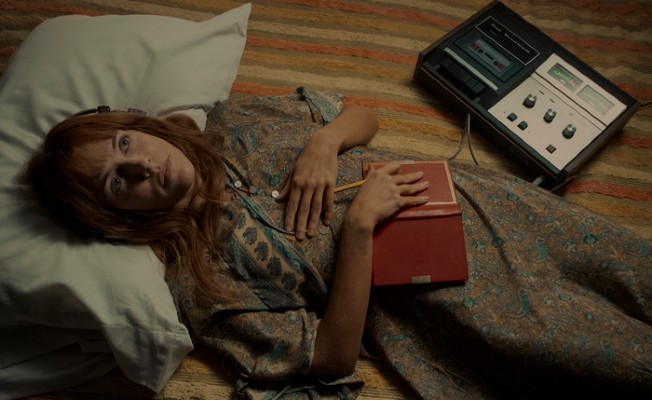
My screenplay is about an adventure seeking young woman who joins the Peace Corps to advance her career, gets posted in the Congo, and ends up falling in love with two fellow volunteers.
2. What genres does your screenplay fall under?
The genre is Romantic Drama.
3. Why should this screenplay be made into a movie?
This movie needs to be made because there has never been a Peace Corps movie made before, and the Congo is the 4th world that Americans need to see.
4. How would you describe this script in two words?
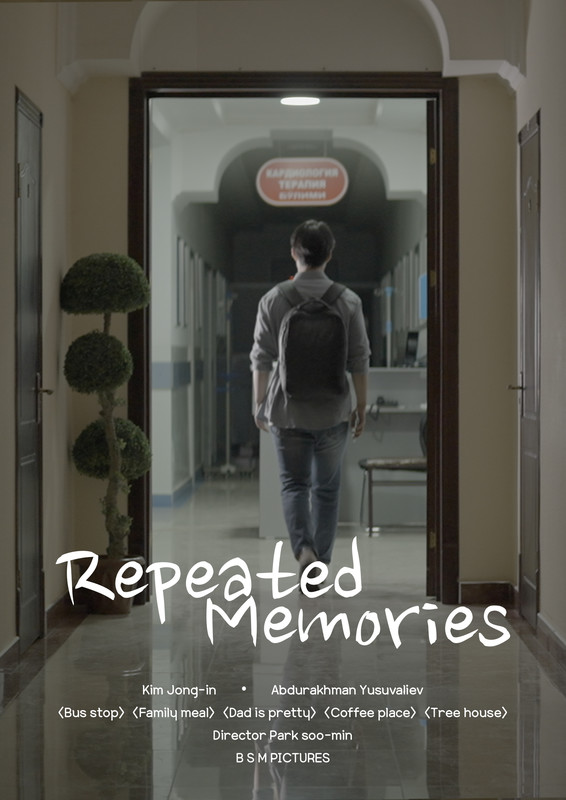
Repeated memories, 15min., Uzbekistan Directed by Soo-Min Park Jong in studies in Uzbekistan and works as a part-time carer. Same as always, he spoon-feeds patients, cleans rooms and also toilet. One day, he gets a call from his friend, Ha-yeong. “I have a job for you. There an one old man who is blind and deaf. He is just waiting for his dying day. Your job is acting like his son and eating dinner with him. It’s for 100 dollars for a day. I’ll send you some details.”
TREE HOUSE, 12min., South Korea Directed by Soo-Min Park Won-Jae (70) ‘s wife passed away a few years ago. He climbs the mountain to visit her grave for the memorial day of his wife’s death. The young married couple, Jung-Heon (38) and Moon-seon (36), think that the ceremony is nothing more than an simple act. They just want to finish things up quickly. Only Ha-yeon (6), his granddaughter, can understand his heart.
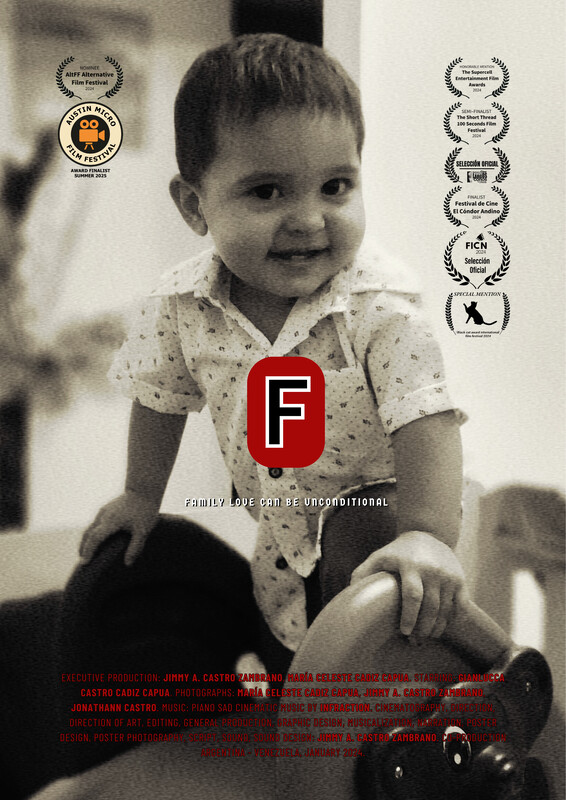
F (V), 1min., Venezuela Directed by Jimmy Alejandro Castro Zambrano Jimmy Alejandro Castro Zambrano
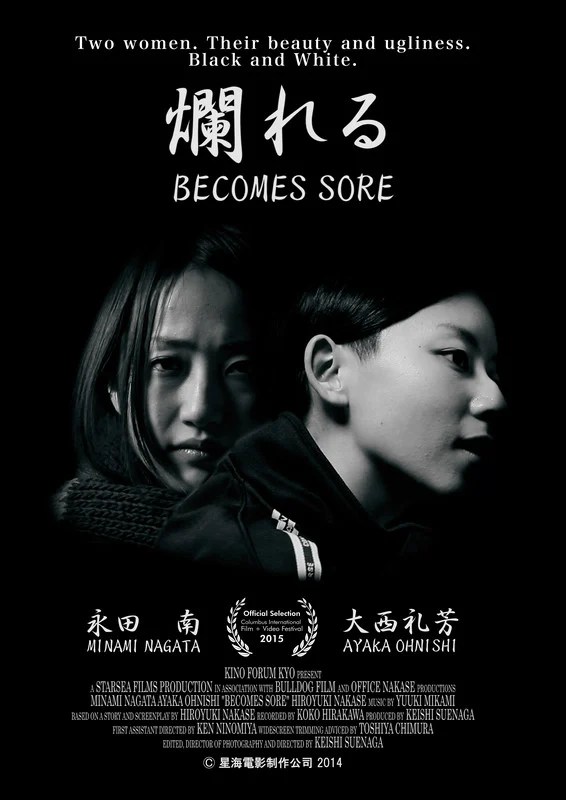
Tadareru/Becomes Sore, 17min., Japan Directed by Keishi Suenaga Kazuya and Miyuki Matsuhashi’s May-December marriage has lost its spark. It’s already been four days since Miyuki’s younger sister, Chiharu, showed up on their doorstep. Living each day in frustration, Miyuki can’t bear Chiharu’s reckless abandon, nor her husband’s favourable treatment of Chiharu any longer. One day on her way home, Miyuki spots Kazuya and Chiharu holding hands, and her suspicion grows…
LARIAT, 5min., Directed by Komalankutty Methil Any companion becomes an unwelcome companion at times
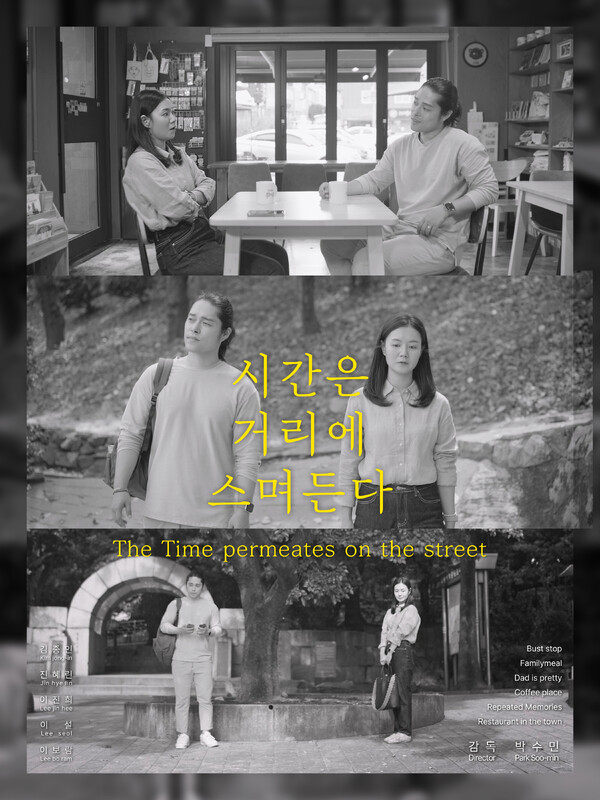
The Time permeates on the street, 28min., South Korea Directed by Soo Min Park After a successful experimental theatre performance in Seoul, Min-su is urgently asked to perform at an arts festival in Busan, so he goes back to his homeland. One day before the performance, he goes to his hometown of Suyeong to prepare for the play. There he meets his ex-lover, Su-min. She works in the office of the festival’s secretariat. She had to work on that day in the field because of her chef, which a fan of Min-su is. She asks him for an interview. He didn’t have time for it, but he said yes on the condition that she would help him prepare for the play. They walk along the streets and have formal interview(?) about recent updates. Suddenly, they meet someone who knows Min-su in front of a school and it makes them recall to the past. Su-min’s interview and Min-su’s play subtly change their relationship. With different ideas and values for the future, they begin to clash over the present and their marriage, which is another beginning for them. The two, travelling to the past, is subtle…
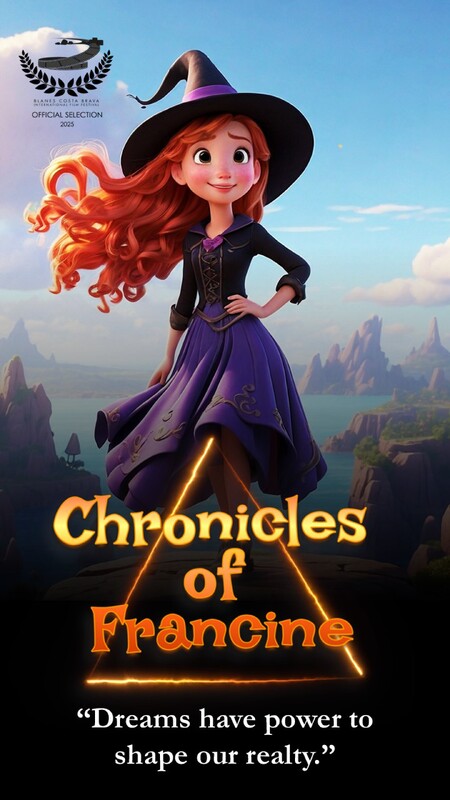
CHRONICLES OF FRANCINE, 3min., USA Directed by Orlando Mendes In the heart of the Bermuda Triangle lies Monster Island, a land of secrets, danger, and twisted power. Francine, known as Fran, returns to the island as a spy on a deeply personal mission. Raised by Dr. Frankenstein Jr. after losing her parents, Fran is the last heir of the Sorcerers’ Clan and carries her father’s legacy—a legacy shattered when the dark sorcerer Zoriky turned her father into a statue. Now, she’s back to end Zoriky’s reign and uncover the mysteries of Monster Island.
An Iraq War veteran is haunted by a tragic mistake he made on the battlefield. When the CIA accidentally kills his family in an illegal domestic drone strike intended for terrorists, they cover it up, but he is suspicious and sets out to investigate. As his quest for the truth unfolds, he must weather increasing attempts to deter him through deception as he crosses paths with an attractive FBI agent with a secret of her own, then dodge the CIA’s attempts to kill him. The truth he uncovers shakes his faith in the government he served on the battlefield. Ultimately, with the clever assistance of an unusual and resilient young female co-worker, he achieves justice, can conquer his demons and start life anew.

Chatting with Cinematographer Checco Varese on the phone for almost an hour inspired me. He brought so much passion to the way he talked about cinematography and creativity in general. He’s a man that obviously loves what he does.
Matthew Toffolo: Tell us about “Miracles in Heaven”? How were your experiences working on the film?
Checco Varese: It’s a very beautiful movie. It’s more than a faith based movie. It’s really a spirituaul film. It was shot in Atlanta, Georgia – a fantastic experience.
MT: This is your 2nd film in a row that’s based on a true story. You want to tell a cinematic story of course, but I’m assuming you also want to keep the real experiences as accurate as possible. What is the process of making this type of movie?
CV: With true life experience movies, you’re always walking on this imaginary line that you never want to cross. You want to make it entertaining but also make sure it’s real. You have to pick your battles and make the most insightful film possible, but you also have to support what really happened and translate the real story. These are real people and you have respect that. That said, you still have to engage the audience and make it a movie experience. These are tough films but also very rewarding to do.
MT: “The 33” is a stunning film based on the true story of the miners trapped underground for 69 days. How did you come up with the cinematic design of showing the effects of the entrapment underground and making if feel real? How was your working relationship with director Patricia Riggen?
CV: This is my favorite movie. It’s a work of love. When someone asks me what my favorite film I’ve worked on was, I always say my last film. But I can’t say this anymore – “The 33” was the best experience. It was a physically, emotionally, and mentally hard movie to do.
We shot it in a real mine. The whole crew had to drive two and half miles to the set everyday. We were there 12 to 15 hours a day. It was brutal. The rules for a miner is that they can’t work in the mines for longer than 8 hours a day. We were practicially doubling that daily. Every single scene in that film was shot in a real mine.
The look is very specific. When I first read the script, Patricia (the director) told me that you have to find the language that reflects the movie. When preparing for a movie I always ask what painter or photographer best reflects this story.
PHOTO: Behind the Scenes on the film “The 33”:
I looked at the Italian painter “Caravaggio” for inspiration. If you look at his work they are paintings of men suffering, and there is always a bay of light coming in from the distance. He makes things look beautiful, but also dramatic and spiritual.
We used the lights on the miners helmets to light the scenes and the actors. One Sunday before filming I went by myself and brought a few lights and did some measuring. I had 4 lights: a little light, a bigger light, a flashlight, and a miner light helmet. I did my work: testing, measuring distance etc… and decided to do one last thing.
I’ve never been in a mine before and I needed to understand the setting. So I turned off all of the lights and decided to sit alone in the dark for 45 minutes. After 10 minutes, I got very scared and ran out. But that’s when I realized what the minors were going through when they were trapped. Alone, underground, in the dark. It’s a frightening thing to experience and that’s when I found the language of the film.
MT: Your wife is director Patricia Riggen, the same director of “The 33”, and “Miracles from Heaven”. You have also worked with her on “Girl in Progress”, “Lemonade Mouth”, and “Under the Same Moon”. When does the husband/wife relationship start and stop, and when does the DP/Director relationship begin and end?
CV: We met working on set. The respect and then love started there. We do separate our relationship. That said, we do talk about work at home. I have to say, our personal relationship really helps our working relationship.
There are very few, almost none actually, director and cinematographer married couples, so we had nothing to compare it to. But we really make it work.
It works for me as a cinematographer because I’m aware of the film long before most DPs are. Most cinematographers join the film 6 weeks before filming begins. I am fortunate enough to know about the film months, and sometimes years beforehand. So I’m already preparing mentally for the film. That’s a big advantage I have.
That is gwhat happens in many famous creative relationships. You are working on a project for a long time. It’s a marriage of convenience on a creative level. It’s very rare, but amazing.
You do have to separate things at home and not talk about the work. It’s broken sometimes, usually by me, but when one of us doesn’t want to talk about it anymore, we just say stop and move on.
PHOTO: Checco and Patricia work together on set on “The 33”:
MT: What is a Cinematographer looking for in their Director?
CV: The main thing you like to have is a director with a strong opinion on their vision for the film. We are the painters and they are the storytellers.
If they have a vision, then there is a good collaboration. They also need to let the DP do their job. If they don’t, then it becomes a difficult shoot.
MT: You were the Director of Photographer: b camera on Pacific Rim? What does that mean being the “b camera” DP?
CV: I was the 2nd Unit DP, but the director Guillermo del Toro also was the 2nd Unit director. Union rules don’t allow the main director to also be the 2nd Unit director, so I was called the b camera DP. Guillermo has a strong vision so he wanted to direct even the 2nd Unit sequences.
He was working on both units simultaneously. His energy is unparalleled. I don’t know anybody who’s like him. A bundle of emotion. We would have two sets going on the same day and he would jump from set to set and direct the scenes. He would work through lunch and 15-18 hour days.
MT: You’ve started as a camera assistant as for a news program, what brought you to working on films?
CV: I began as a camera war correspondant. We would shoot in some very dangerous situations. I never really wanted this world and was lucky to get out of it. I took a steadicam course and that became my profession. I got lucky landing a job after someone else backed out. The rest is history.
MT: What makes a great steadicam operator? When was the last time you performed the steadicam?
CV: The camera should not move, unless it’s necessary for the story. One of the most difficult things about being a steadicam operator is that it’s the beginning of a shot or scene. It’s difficult to start a shot and end a shot, anyone can start in the middle of a scene.
It’s like riding a bike. I haven’t done it in years. I surround myself with great steadicam operators, so I don’t have to do it anymore.
When it comes to hand-held shots, I always take those shots. I was a camera operator for the news, so I’ve done these shots thousands of times.
MT: Where do you see the future of cinematography in film heading from an artistic and practical standpoint?
CV: This is a two part question. We’re still trying to define the movie language of the 21st century. We don’t know what it is yet. It will probably take about 10-15 years to figure that out. And then another 10-15 to define it.
In our craft, yes, things have developed….a lot. None of this change has been the choice of the painter. The change is based on what the movie industry wants. So you have to go with it.
The worst thing a cinematographer can do is get caught up in the technology. It’s not about the tools – it’s about what story you’re trying to tell.
Initially pianos were only made for specific people, then eventually pianos became accessible to everybody. Just like cameras etc.. were only used by a specific amount of people, and now everyone has one. In today’s world, eventually a Mozart will emerge, and that is amazing. A 12-13 year old kid who makes a masterpiece of a movie. 3% of YouTube videos are fascinating. 97% is unwatchable. That’s the process.
People have a tendancy to talk about technology too much. They try to overwhelm you with tech-gargle. You can’t get caught up in this. It’s all about the result.
It’s easier to worry about the tools. It’s hard to really talk about your skills and talent. What you are capable of. The tools will only take you so far. Technology will always have its limits.
MT: What film, besides the ones you’ve worked on, have you seen the most times in your life?
CV: Lawrence of Arabia. Raiders of the Lost Ark. The Battle of Algiers. Die Hard. I like to watch those 1980s action flicks.
MT: So, if I’m reading between the lines, it seems like you want to DP an action movie some day?
CV: Of course. Action movies are armies. 17 cameras and 17 camera crews on a single day on set. DPing an action movie is broad strokes. Large canvasses. It’s like being a foreman on a construction site. All kinds of tools and machines to make a great building. And a lot of skilled people who are good at performing those tools and machines.
____
Interviewer Matthew Toffolo is currently the CEO of the WILDsound FEEDBACK Film & Writing Festival. The festival that showcases 10-20 screenplay and story readings performed by professional actors every month. And the FEEDBACK DAILY Festival held online and in downtown Toronto on the last Thursday of every single month. Go to www.wildsound.ca for more information and to submit your work to the festival.