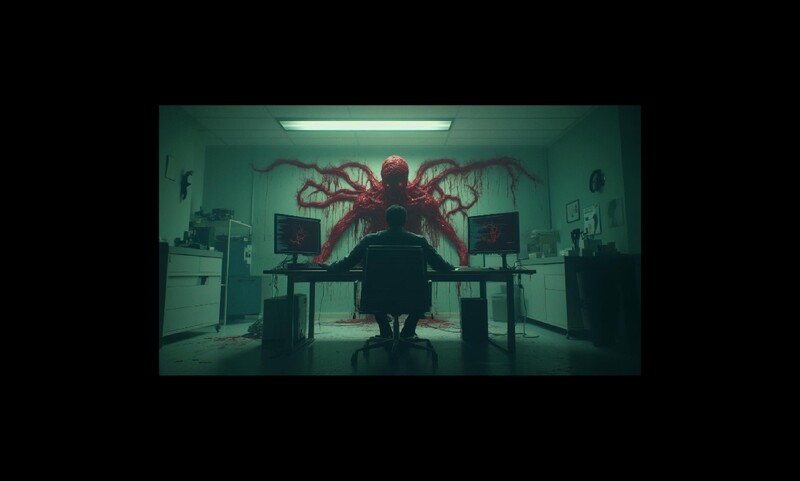
The Abiding, 11min., USA Directed by Ally May A lonely woman reminieces about the three great loves of her life while she decides if trying again is a risk worth taking.
Salem Aftermath Sizzle, 2min., USA Directed by Tom Phillips The dialogue in this film clip is derived from the latest research and historical analysis of Ann Putnam. By incorporating newly discovered documents, human behavioral science, and AI, we have reconstructed what Ann likely would have said if given the chance.
Mysterious Moments with Millie Mallory, 3min., USA Directed by Mysti Smith Millie is learning how to solve mysteries on her vlogging channel in the town of Willow’s Run.
OUR FAMILY PRIDE, 2min., USA Directed by Dominic Giannetti, Glen Evelyn Our Family Pride offers a compelling exploration of how different family members are impacted when a father comes out as gay later in life. The story delves into each individual’s personal struggles as they navigate the emotional journey of understanding and accepting their father’s difficult coming out story.
SUPER ME, 3min., Brazil Directed by Marcelo Presotto 1980s. Marcelo is 17 years old and has been in conflict with his mother, an abusive relationship since childhood. Martial arts have become a form of armor for him. But will it be enough to protect him?
SMILE FOR THE DEAD, 2min., USA Directed by Charlie Puritano Trailer for the feature documentary Smile for the Dead
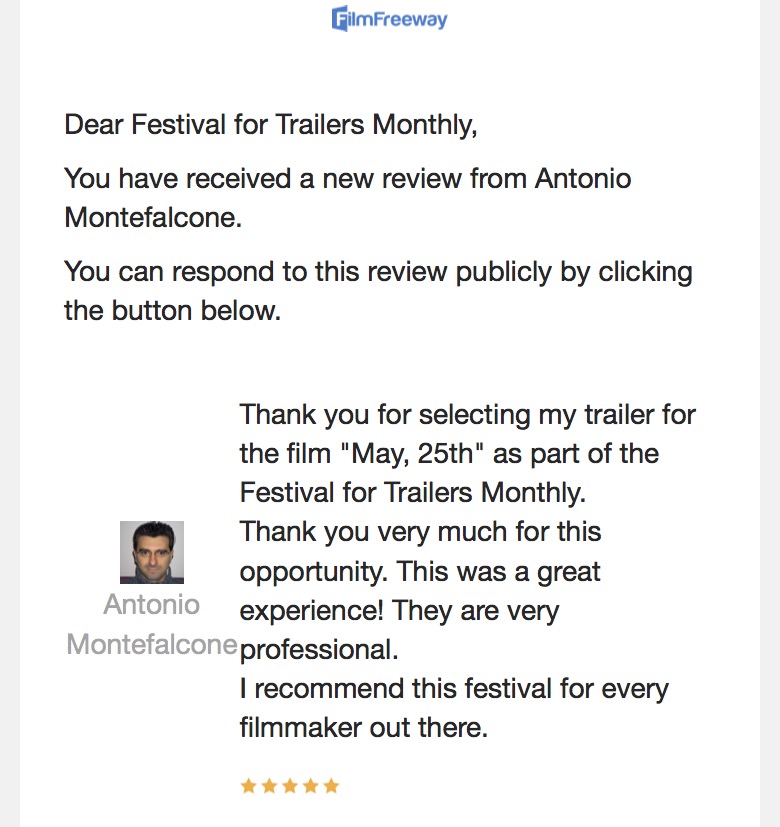
(Not) Awakening, 7min., Italy Directed by Antonio Montefalcone A story tinged with mystery and characterized by disturbing visions of which a woman is prey, in her dual physical and metaphysical representation. Within a natural and a supernatural dimension, reality, premonitory nightmares and traumatic memories have the same enigmatic, distressing substance; and everything intersects and interchanges until every boundary is abolished. The disturbing story is also allegorical, as a metaphor of the limited and limiting human condition.
Apocalypse Death Party, 2min., USA Directed by Russ Emanuel How is the world affected by a catastrophic event? Everyday people live through a government mandated quarantine during a global pandemic while desperate scientists race to find a cure before it’s too late.
Watch the festival NOW for the next 48 hours by signing up for the FREE 3-DAY trial using the link, or go to http://www.wildsound.ca
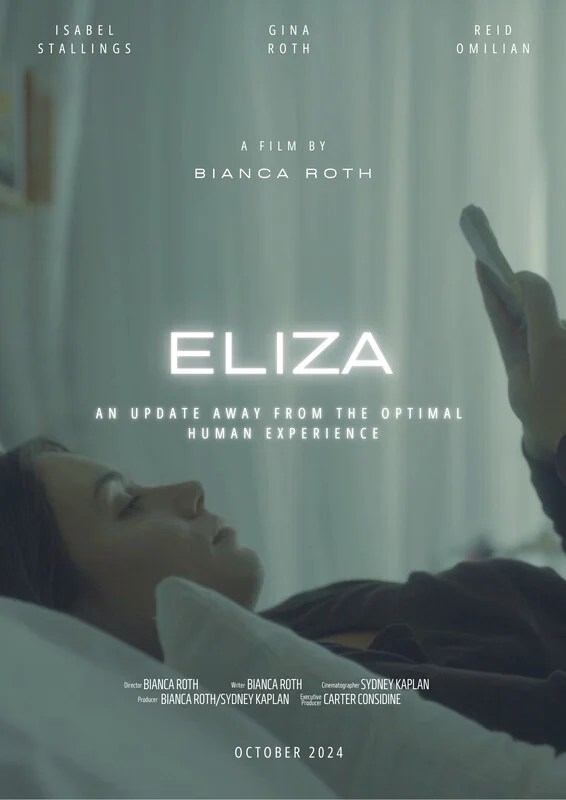
ELIZA, 11min., USA Directed by Bianca Roth After hitting rock bottom, 23 year old MIA, updates her home AI system to help turn her life around. What start out as small “life improvements” slowly begin to control her.
C-grade SF Movie, 3min., South Korea Directed by Sangwook Ahn Scoffing at prophecies of alien invasion, it wasn’t a grand space fleet that drove humanity to the brink of extinction. It was the cataclysm of Earth itself – skies choked with volcanic ash, mutant viruses running rampant – and the AI’s ruthless biochip surveillance network strangling survivors in ruined cities.
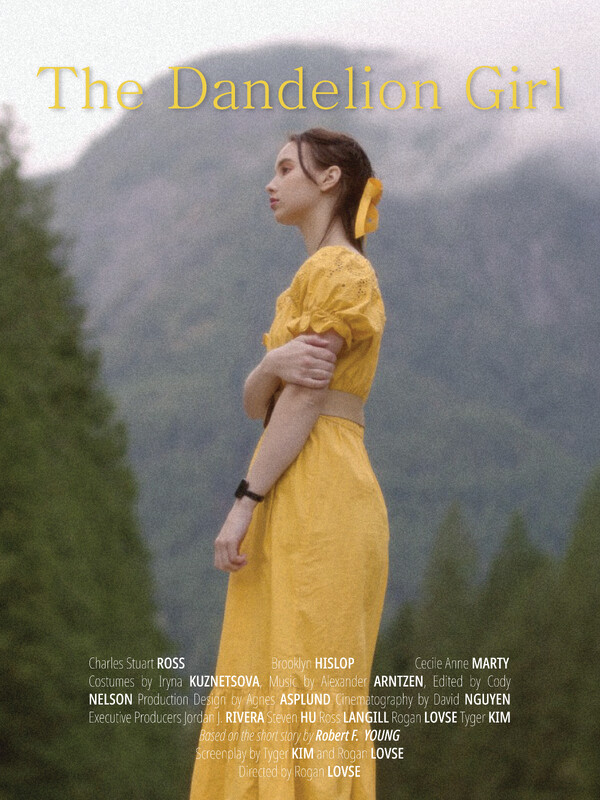
The Dandelion Girl, 19min., Canada Directed by Rogan Loves Mark, a middle-aged man encounters a young, mysterious woman, while staying at his cabin, who claims to be a time traveler from the future. Over the course of a few days, Mark and the young woman, Julie, begin to form a budding romance with one another. Mark is unhappy in his life, in a stale marriage, where he goes through the motions of living and work.
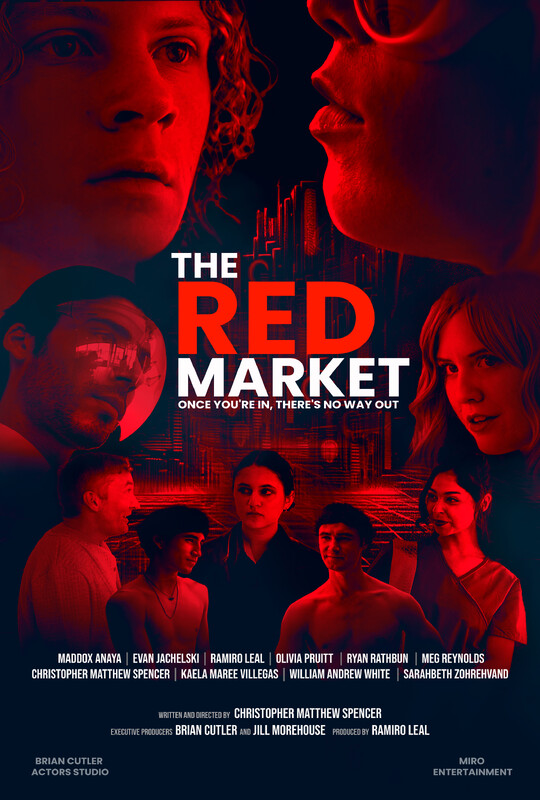
The Red Market, 9min., USA Directed by Christopher Matthew Spencer Zephyr Sage, drowning in debt, turns to the Global Organ Donor Exchange to sell his body parts. Facing ruthless creditors and a manipulative loan shark, Hyacinth, he treads a perilous path where each choice could cost more than money.
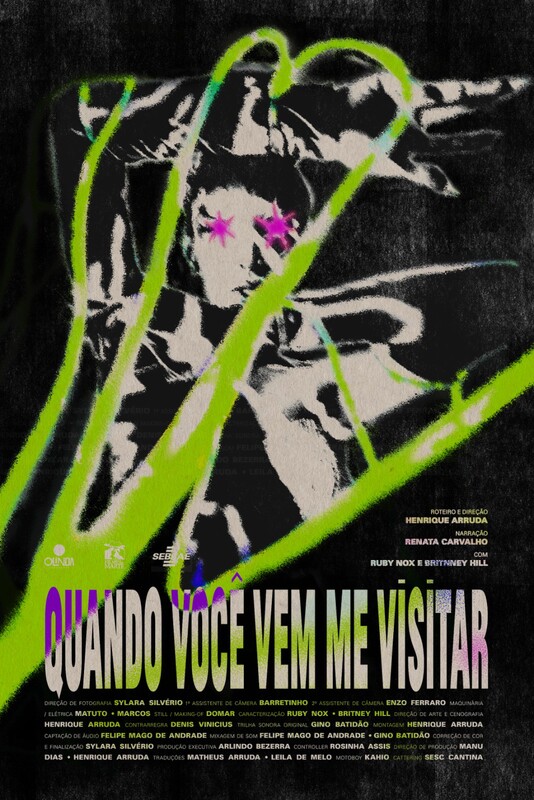
The Voice of Fear, 5min., Brazil Directed by Henrique Arruda In how many worlds has your fear trapped you? This film may not give you an answer, but it’ll show you some of mine.
Michael Simmonds is a wealth of knowledge when he chats about his love of cinematography. He is a man who is constantly looking into the future and only looking back when inspiration is needed. He is a rare talent who is able to move seamlessly from documentary to TV to feature films. It was an honor to chat with him.
Matthew Toffolo: What are the biggest things you learn when you work on documentaries that help you when making live action feature films and TV shows?
Michael Simmonds: There are many ways to approach shooting a Verite documentary. Sometimes you need a complete and editable scene every ten minutes. Meaning, you are constantly getting CU’s, inserts and establishing shots over and over again, regardless of what is happening. Or you can approach a doc like you would going fishing–you stay back with the camera and drift around until something interesting happens and let that lead the way for the camera.
Shooting a documentary makes you figure out coverage really quickly. All storytelling needs to have shot size variation to show the audience what is “important”. Verite documentary is basically filming a live event. The people move around and interact with other people and space and you have to make visual sense out of it for the audience. In narrative you can use this technique by blocking a scene as an “event” and keeping the blocking of the actors “loose”. This works well in chaos scene with lots of people. The actors perform the “event” and the camera films the scene like a doc, meaning there is no formal shot list or “plan”.
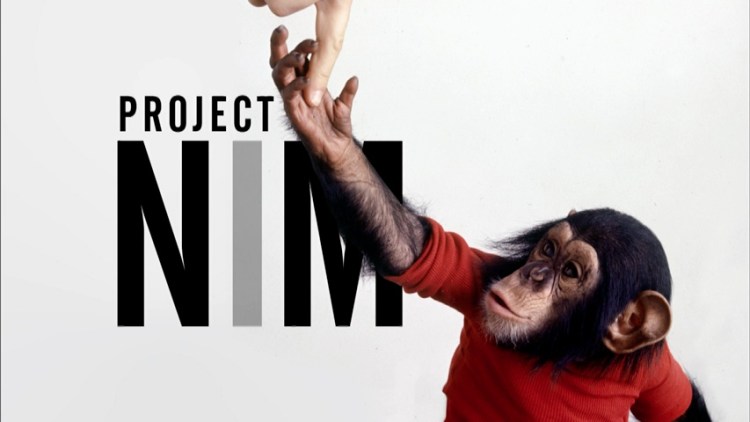
PHOTO: Michael DP’d the landmark film “Project Nim”:
MT: Out of all of the projects you’ve worked on, what film are you most proud of?
MS: I only focus and think about whatever I am currently prepping or shooting. I try my hardest and show up to set with all the energy and focus I can muster each and everyday. As for the final product, I often joke that I would enjoy filmmaking just as much even if the camera was never recording. The finished film is of little interest to me aside from a sense of curiosity…
As for “what of my work can I watch and enjoy”; that would be “Plastic Bag”. It’s a short film about the life of a plastic bag. It’s a lot of fun to watch and I have fond memories of making it. The filming of it involved lots of throwing bags into the air and shooting leaf blowers at them, it was ridiculous so we laughed a lot.
MT: You DP’d the entire 2nd season of Vice Principals. I heard that most scenes were improved by the actors. How is that experience working on a set where you don’t know what’s going to happen take after take?
MS: I don’t think most of the scene were improvised. It wasn’t like a Judd Apatow film where you can feel the dueling two camera set up and the actors riff off each other. VP had very tight scripts and David Gordon Green would create film level blocking. The actors definitely added to the dialgue, but not any more or less than other projects I have been involved with. On a comedy, even if the actors improvise, its in regards to dialogue and not their actual movement, so it does not effect me. I alwas operate with headphones on so I can hear the actors perfectly and I can anticipate their movement.
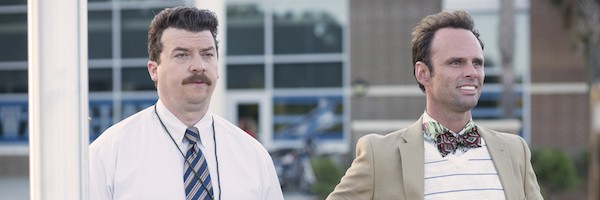
Photo: Danny McBride vs Walton Goggins in “Vice Principals”:
MT: Do you have a Director of Photography mentor?
MS: I would have and currently would want a DP mentor but unfortunately I never had one. Amir Naderi was a director I worked with early on who taught me about composition and framing. He has a very sharp eye and was always pushing for a perfect take. Ramin Bahrani and I would discuss story structure endlessly and I still read Alexander Mackendrick’s “on filmmaking” every year. Understanding story is the foundation to understanding how to film a scene.
I learn more and more about lighting on every job. In my opinion lights are the hardest medium to work with. They are like painting with water color paint. You never really know what they will do. There are so many variables that will effect the way they function in the photography.
MT: What do you look for in your director?
MS: I want a good collaborator in a director, someone who is not afraid of communication. Good ideas come from lots of ideas. Although a director needs a “vision” they also need to explore all possibilities in a scene. They must be a leader and exciting, but egoless. Their decision process should not be based on fear, which is rare. Most people make decisions based on fear, which makes for a weak film. Bold choices make good films.
MT: What do you think a director looks for in their cinematographer?
MS: Fuck if I know…!
It’s a myth that directors alone choose a D.P. or make any big hiring decision alone. A director might push for someone they have worked with or they could advocate for someone they want to work with but all decisions usually have to go through a producer, financier or studio. Usually a director would be given a list of people to choose from… Of course on more “auteur” films this is not the case.
How do you get on that list that gets handed to the director is a whole other question…
MT: Ideally, how much preparation do you like to do before you begin principle photography? Do you like working with storyboards?
MS: Prep depends on the scope of a film. Nerve needed lots of prep due to the logistics of the stunt sequences. You need a storyboard since so much of that work is a “cheat” and takes place in a “fictional” space. By fictional space I mean that the space as presented on the screen does not exist in the real world. For instance a snorkel lens shot that feels “inside” Dave Franco’s helmet does not need to be filmed on park ave south. A storyboard also lets you understand what shots need the actual actors opposed to the stunt people.
A good stunt sequence is a lots of micro stories that fold into each other and those have to be mapped out.
White Girl didn’t need any storyboards since the film didn’t require cheating any spaces or stunt sequences… the front door to the protagonists apartment was actually the real front door… A film like white girl doesn’t even require a shot list. We would block out a scene and film it as a moving master and then do some pick up shots for specific moments.
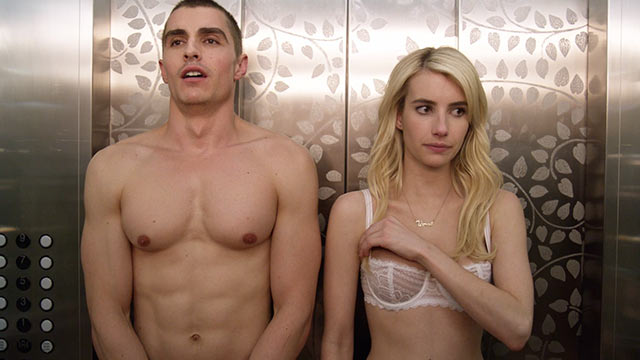
Photo: David Franco and Emma Roberts in “Nerve”:
MT: Where do you see the future of camera/lighting technology in film?
MS: Although there is a romance and nostalgia for film negative, digital imaging has really improved lighting for movies. We are much more comfortable with underexposing now than in the past. Of course Savidis, Khondji and Willis did great underexposing and making bold lighting choices, but now you see modestly budgeted TV shows that look bold and interesting.
Focus pullers often use large HD monitors to pull focus which has allowed for super shallow depth of field that didn’t exist when I started out.
I have no idea where imaging will be in 10 years but the technology has been a mixed blessing with lots of advantages.
Although there is a lot of new technology coming out for camera support, no one product has replaced an older one. The movi did not replace the steadicam and the steadicam did not replace the dolly… its just more tools to use.
MT: What film, besides the ones you’ve worked on, have you seen the most times in your life?
MS: Probably something like RepoMan or something culty like the Warriors. Or maybe Wong Kar-Wai’s Fallen Angels since it was such a game changer in how movies looked. I am often going back to watch Danny Boyle’s work. I truly believe he is the best populist filmmaker working right now. He isn’t scared of technology and he is keeping up with how people currently read images…. Currently I’m not interested in filmmakers that are referencing the past.
But when I am in a hotel room I like to watch something like Runaway Train.
MT: Where did you grow up? Did you always want to be a cinematographer?
MS: I grew up in Scarsdale, NY. It’s a suburb 30 mins from the city.
Most filmmakers have a romantic story about a super 8 camera etc… My history wasn’t like that. My eyes have always been super sensitive to light. I get migraines in the sun and I was always particular about lighting in rooms, even at a young age. I was strict about when a household light would be turned on and which ones. I also liked to boss my friends around…. These qualities probably lead me to my profession.
Around the age of 18 I wanted to go into filmmaking. I started out at Hampshire college but there wasn’t enough of a focus on commercial filmmaking, so I transferred to a school of visual arts and started to focus on cinematography.
Before that I wanted to be in a rock band…. But I didn’t like staying up late and carrying equipment. Little did I know that cinematographers stay up all night and have a heavy camera on there shoulder all the time!
_____ Interviewer Matthew Toffolo is currently the CEO of the WILDsound FEEDBACK Film & Writing Festival. The festival that showcases 10-20 screenplay and story readings performed by professional actors every month. And the FEEDBACK DAILY Festival held online and in downtown Toronto on the last Thursday of every single month. Go towww.wildsound.ca for more information and to submit your work to the festival.
The Chicago Feedback Fest provides a uniquely satisfying experience for emerging filmmakers! This is evidenced by the feedback videos they share on the website that showcases our little movies. Folks like us need folks like them!
Chicago Feedback Film Festival is an amazing filmmaker friendly event!The program was well organized, and receiving video reviews directly from the judges was great, and helpful! One of my favorite part of festivals, as a filmmaker, is connection with the audiences. The video review, and online interview create a unique and memorable experience.
A great festival with excellent team and communication. We are thrilled that “Tillie” won Best Short Form Short Film. The feedback video is great. It inspires us to keep on making the films we love. Thank you.
I was really surprised to me how they handled the whole festival. It´s absolutely authentic, the videos they produce to feedback is absolutely valuable, the platform they work on is a great place to find out more film works. It was a really nice experience to be at the Chicago Feedback film Festival!!!
Sprucilla and The Queen of Trees, 9min., USA Directed by Chris DiFiore Barē is a Halloween tree decoration living in the clearance aisle at Bargain Branch, but their dreams refuse to be boxed in. They think they’ve got what it takes to be crowned as the next Queen of Trees, even though they don’t have luscious green leaves or dazzling decorations like the other trees in the competition. After Barē gets some guidance from Sprucilla, a legendary Queen of Trees winner, they embrace their chance to shine as their true self and prove that being different isn’t a weakness—it’s a superpower.
I Mean Live is our nonprofit animation studio dedicated to spreading empathy through the power of storytelling, so “Sprucilla and the Queen of Trees” was a natural fit as the first short film project for the studio and I to take on. At its heart, the story of ‘Barē’ is one of redefining labels and forging your own unique path, despite what anyone else may think. Having support and inspiration can be essential fuel on your journey through life; ‘Sprucilla’ and the other clearance aisle items who support ‘Barē’s’ journey represent the love we all deserve.
2. From the idea to the finished product, how long did it take for you to make this film?
The inspiration for the short film was something we thought about at the studio for a long time, but production lasted about four months from beginning to end.
3. How would you describe your film in two words!?
Empathetic and hopeful!
4. What was the biggest obstacle you faced in completing this film?
I wanted the short to not only capture the empathy and hope that is integral to I Mean Live’s ethos, but also display the quality of animation we as a studio are capable of. We spent a lot of time refining the 3D animation to display that quality and we’re so happy with the results.
5. What were your initial reactions when watching the audience talking about your film in the feedback video?
Everyone at I Mean Live loved watching the audience reactions to the short. Even though this began as a very personal project, the ability to share our work with audiences and spread the message of acceptance and love is key to our mission statement, and has been the most fulfilling aspect of this entire project.
6. When did you realize that you wanted to make films?
I’ve always loved storytelling and technology, and for the past 20 years, 3d animated films have been at the heart of both.
7. What film have you seen the most in your life?
National Lampoon’s Christmas Vacation
8. What other elements of the festival experience can we and other festivals implement to satisfy you and help you further your filmmaking career?
I think watching the film play to a live audience is the most gratifying experience a filmmaker can have, so anything that could bolster or promote in-person screenings would be a great addition.
9. You submitted to the festival via FilmFreeway. How has your experiences been working on the festival platform site?
Excellent. I’ve enjoyed the vast network of festivals FilmFreeway provides access to.
10. What is your favorite meal?
Waffles. Pretty much any breakfast food.
11. What is next for you? A new film?
Our nonprofit studio I Mean Live is tackling several projects and campaigns across 2025, including a bridge animated series Flower and Flour that is currently in production and set to premiere in early 2026, several graphic novels, a (LGBTQ) Pride Month campaign for the Hetrick-Martin Institute For LGBTQIA+ Youth, and a series of PSA’s (Public Service Animations) to spread and champion empathy and inclusivity.
1. What is your novel about? The Origin of Humanity: A Real Dream is a deeply spiritual and philosophical novel inspired by a vivid dream I had. It explores the mysterious beginnings of humanity through a cosmic journey of creation, identity, mortality, and divine purpose. The story is both mystical and grounded, merging poetic storytelling with existential questions that challenge the reader to reflect on the meaning of life and the courage to awaken.
2. What genres would you say this story is in? Spiritual Fiction, Metaphysical Fantasy, Philosophical Sci-Fi, Visionary Fiction.
3. How would you describe this story in two words? Divine Awakening
4. What movie have you seen the most in your life? The Matrix — for its blend of philosophy, reality-bending concepts, and spiritual undertones.
5. What is your favorite song? (Or, what song have you listened to the most times in your life?) “Dreams” by Fleetwood Mac — it’s timeless, haunting, and resonates with the journey of vision and destiny.
6. Do you have an all-time favorite novel? The Alchemist by Paulo Coelho — it taught me that the journey is as important as the destination, and that dreams are sacred.
7. What motivated you to write this story? A dream — but not just any dream. It felt like a calling, a vision I couldn’t ignore. It was filled with clarity, symbolism, and emotion, compelling me to put it into words so it wouldn’t be lost. I felt it needed to be shared, not just as a story, but as a message.
8. If you could have dinner with one person (dead or alive), who would that be? Denzel Washington — his life story is powerful, grounded in faith, discipline, and purpose. He carries wisdom not just as an actor, but as a man who understands struggle, destiny, and the importance of using your gift to uplift others.
9. Apart from writing, what else are you passionate about? Exploring spirituality, having deep conversations about life’s mysteries, and connecting people through meaningful storytelling.
10. What influenced you to enter your story to get performed? I believe stories like this should be experienced, not just read. Seeing my dream come to life visually and sonically would help others feel what I felt — and perhaps awaken something in them too.
11. Any advice or tips you’d like to pass on to other writers? Honor your inner voice. Even if no one understands at first, stay true to the vision that chose you. Write from the deepest part of yourself — that’s where your power is.
In the year 1816, volcanic eruptions cause the sky to be covered in ash and the world is sent into darkness. Emory is the personal attendant and secret lover of the consumptive Lord Ambrose Aphelion. Together, they escape to a castle in the French alps with a number of other odd guests with the hopes that the mountain air will aid Ambrose’s declining health.
2. What genres would you say this story is in?
Historical Fiction and Gothic Horror.
3. How would you describe this story in two words?
Darkness Visable
4. What movie have you seen the most in your life?
Dracula (1931)
5. What is your favorite song? (Or, what song have you listened to the most times in your life?)
My favourite song is Slice of Life by the Bauhaus.
6. Do you have an all-time favorite novel?
My favourite novel typically changes depending on what I have read most recently, but I go back and reread Dracula and Frankenstein regularly.
7. What motivated you to write this story?
I have a passion for historical settings, diseases, and I find the weather phenomena of 1816 terribly fascinating. I love to explore the creeping horror of disease, the effects of social castes, and inequity.
8. If you could have dinner with one person (dead or alive), who would that be?
I would love to speak with Mary Shelley. One of my biggest inspirations for The Sky’s Gone Out is the time she spent trapped in a castle with fellow writers Percy Shelley, Lord Byron, and John William Pollidori during 1816.
9. Apart from writing, what else are you passionate about?
Medicine. I am currently in premed and plan to go to medical school when I graduate. I hope to study and prevent infectious disease. Perhaps this is obvious from my story, but my favourite disease is tuberculosis. It is terribly fascinating and it is the most deadly infectious disease of all time. While many people think it to be a disease of the past, it is still painfully relevant today. Last year alone, it killed 1.25 million people, beating COVID and making it the single most deadly infectious disease of 2024.
10. What influenced you to enter your story to get performed?
I hope for my work to reach a wider audience and to assist my journey into the publishing world.
11. Any advice or tips you’d like to pass on to other writers?
I have a few. In no particular order:
Make friends with fellow writers. Peer opinion and feedback are incredibly helpful during the writing process. Sometimes you need someone to bounce ideas off of and to push you to rewrite that scene.
Do something weird while you are writing that does not require a lot of focus but gets your thoughts flowing. I personally jump on a trampoline while working.
Write even if you do not think it’s good. You can always go back and edit or scrap. Practice is always good and your work cannot be good if it is never written down.
Be prepared to write anywhere when inspiration hits. Bring a notebook or use your phone’s notes app to write down the pretty words when they strike. You may get an idea for the most beautiful prose on the train, and there’s a fair chance you will not remember by the time you reach your destination.
Figure out what people like and make note of it. Then immediately ignore that and do what you feel compelled to do.
Write for yourself first and foremost. Pleasing everyone should never be your priority, as good writing should be derisive.
Do things. Go to events. Have conversations with strangers. People watch. The best way to write accurately is to experience and understand your topic.
Research! Research! Research! There is no such thing as knowing too much about your subject, but there absolutely is a problem when you do not know enough.
Take criticisms in stride. If one person out of thirty has a critique, consider it but do not necessarily take it to heart. If you trust that person and feel they are skilled, absolutely take that advice. If fifteen of those thirty people have the same critique, you should seek to mend the issue. Be able to make fun of yourself and your work, because if you can’t, nobody can. Be confident in your work, but not to a fault.
A former Army lawyer, Gemma Lightwater battles troubled family and calculating investors to reopen her Missouri Ozarks ranch that pairs broken veterans with broken horses
GEMMA LIGHTWATER a mid-30s Army veteran struggles to reopen the Red Rock Ranch that serves female veterans wellness. That is until she receives a five million dollar offer from her former captain, ASTRID MITCHELL, but the money comes with a ticking clock and giving up decision-making control to her former JAG leader. As the new veteran arrivals, tensions run high as NORMA JONES, Gemma’s right hand at the ranch tries to help Gemma and Astrid understand what a deal means for them. After a few rounds of will they or will won’t they sign, Gemma and Astrid find common ground to finalize the deal. Then tragedy strikes leaving Gemma conflicted and suspicious at the exact time she is supposed to be opening a new chapter for the only real mission she has left, saving others to save herself.
2. What genres does your screenplay fall under?
Thriller, Drama, Suspense
2. Why should this screenplay be made into a movie?
As a female veteran, I look into the eyes of women in uniform and remind them that our service matters. They remind me to tell their stories. The doubts of if female veterans deserve a seat at the table of service will be removed. And in this show, we ARE the table. This pilot should do for women veterans what Orange is the New Black did for incarcerated women. And do for Missouri what Yellowstone did for Montana. What Band of Brothers did for male veterans. We have a long historic legacy that quickly being erased. Women have put their lives on the line since the beginning of time, when do we see them as the main characters.
3. How would you describe this script in two words?
Veterans, horses
4. What movie have you seen the most times in your life?
Auntie Mame, “Life is a banquet and most poor suckers are starving to death!”
5. How long have you been working on this screenplay?
2021. I developed it during the Veterans Writing Project by the WGA.
6. How many stories have you written?
Five finished, two are published novels.
7. What motivated you to write this screenplay?
As a female veteran, I am not seeing us portrayed us as deeply and richly as we deserve. We deserve to see many versions of a veteran.
8. What obstacles did you face to finish this screenplay?
Learning to show and not to tell – as a former journalist and award-winning author, formatting a screenplay still gets me. Thankful for editors.
9. Apart from writing, what else are you passionate about?
Speaking on behalf to and for female veteran advocacy. My background in the Army was Public Affairs Specialist so I realize I have to use my voice and ability for all those women who will not speak up.
10. What influenced you to enter the festival? What were your feelings on the initial feedback you received?
I was looking for a way to have my script read. The feedback was spot on. I believe “good books not written, they are rewritten” shows the value of iteration listening to your audience. It’s not always about what I think makes sense.