Interview with Screenwriter Rich Figel (I GOTTA BE ME)

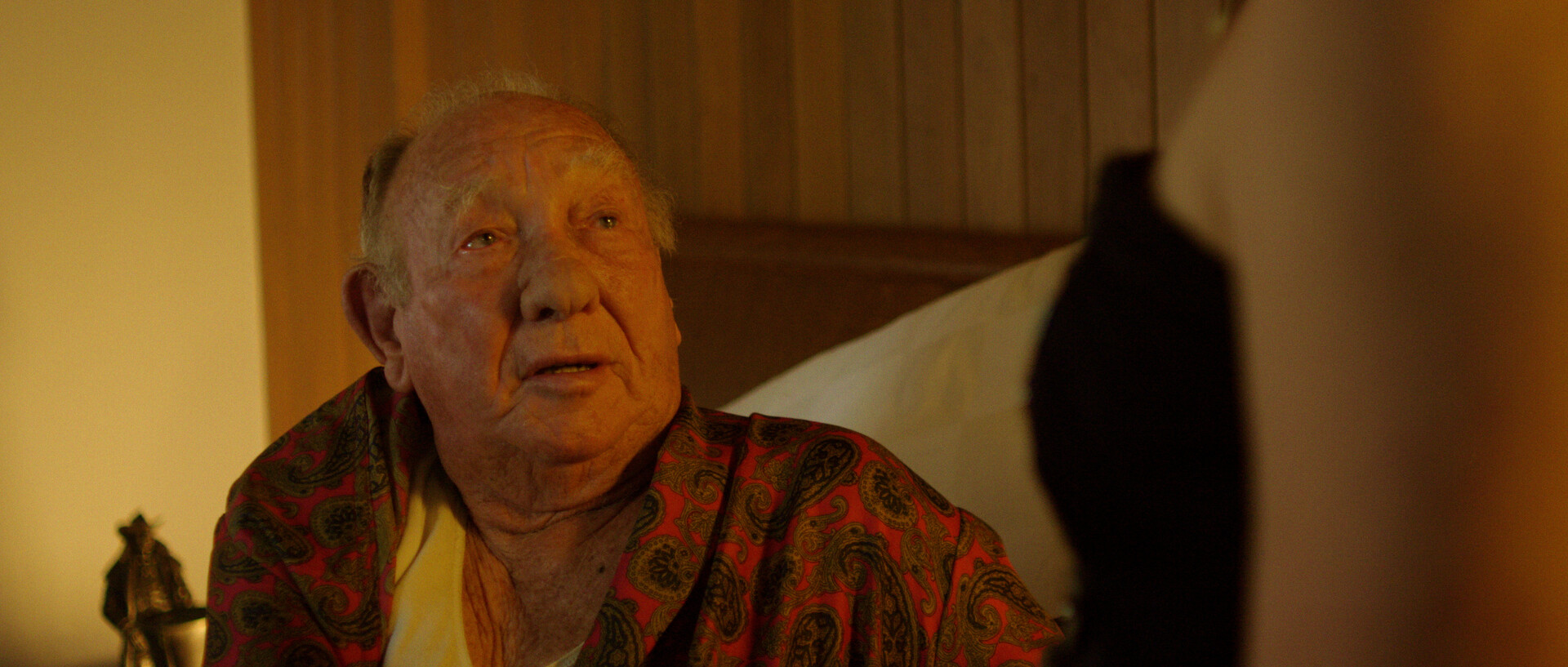
A relentless authentic punk rock dreamer from 1988 Hoboken becomes the unwitting “poster boy” for a megalomaniacal media mogul’s lifestyle makeover scheme, and must fight to reclaim his identity and stop the mogul from destroying his community.

Get to know the writer:

1. What is your screenplay about?

It’s about a budding teenage punk rocker in 1978 Hoboken, New Jersey, with little talent but lots of passion, who refuses to sell out for musical success and fades into obscurity. Ten years later, he’s stuck in a dead-end job at a mall record store in the 1980s when corporations are taking over every aspect of our lives.

The 28-year-old Loser becomes the poster boy for the ultimate lifestyle makeover company that’s part of a Disney-like multimedia empire, which is remaking entire cities so it can brainwash residents into buying their entertainment products from the cradle to the grave. In effect, remaking the Loser who sells out his dreams and even his Punk Rock Girlfriend to become a Winner in the Corporate Empire.

But in the end, he uncovers the corporation’s sinister plan and reverts to his punk rocker persona to make a “loud noise” that snaps the residents out of their brainwashed stupor. In short, it’s about staying true to yourself and your dreams regardless of commercial or critical “success” in the public’s eye.

2. What genres does your screenplay fall under?

It started out as a satirical comedy about 30 years ago, then recently I modified it into a musical movie. Instead of straight dialogue, I envisioned actors singing or talk-singing lines.

3. Why should this screenplay be made into a movie?

It’s funny, smart, and makes you think about the world we now live in. I wrote the original version over 30 years ago, which was optioned by the co-writer of ROBOCOP (Michael Miner) and shopped around to music-related movie prodcos such as MTV Films and Island Films.

But they didn’t get it — this was before studios and big companies started remaking old movies, TV shows, and music for new generations of consumers. It foresaw a time in which corporations recycle and commercialize whatever they can, including our own social media content.

In my script, Lifestyle Consultants & Developers (LCD — Lowest Common Denominator, get it?) literally recycles human shit and sells it back to the consumers who produce it as sanitized, homogenized, pasteurized yogurt. Frozen yogurt or Fro-Yo to be more precise. Because when it starts to melt, it smells like shit.

Coincidentally, the term “enshittification” has come into use to describe how consumers are ensnared by services or platforms that then monetize the product to such a degree the experience becomes really shitty.

4. How would you describe this script in two words?

Bizarre satire.

5. What movie have you seen the most times in your life?

It’s a tie between The Wizard of Oz and Network, my two favorite films of all time.

6. How long have you been working on this screenplay?

It was the second feature script I had written — about 30 years ago as I mentioned. But when the Robocop co-writer and his producer partner were unable to get it made, I shelved it. Then I saw Spike Lee’s movie version of the theater performance of PASSING STRANGE which is about a young black musician’s coming of age story and I was inspired to rewrite my script as a musical movie.

7. How many stories have you written?

Dozens of feature and TV screenplays, hundreds of newspaper articles, columns, and blog posts. Several of my scripts have been optioned or won money and prizes in major contests, shopped around by producers and managers. None produced yet though.

8. What motivated you to write this screenplay?

At the time, I was reading books about screenwriting that listed key ingredients such as 3-act structure, likeable or interesting characters, clear goals and stakes, etc. It felt stifling and boring to follow the rules, so I set out to do the opposite of all that! And when Michael Miner, the Robocop writer, read it as part of a screenwriting workshop I signed up for at the University of Hawaii, he took me aside and said he thought I had something he could sell to his contacts since he started out doing music videos.

9. What obstacles did you face to finish this screenplay?

It was early in my screenwriting career when I had more energy and sheer passion back then, so it wasn’t difficult to finish. I had just gotten out of rehab, which is where I realized I had a second chance to reinvent myself and do what I loved—writing—instead of simply trying to make a lot of money doing things I didn’t care that much about such as sales and marketing work. Fortunately, my wife was completely supportive and since we didn’t have kids, we could afford my decision to be a writer.

10. Apart from writing, what else are you passionate about?

Reading. Art. Listening to music. Politics. Science. Sports. I have very eclectic tastes, which is reflected in my characters and stories that draw on everything from folk tales and mythology to art, classical music, punk rock, and jazz.

11. What influenced you to enter the festival? What were your feelings on the initial feedback you received?

I saw a post on Blue Sky about the Political Screenplay Festival and thought, hmm, that’s different! I’ve won or placed as a finalist in a bunch of respected competitions, beating out thousands of other entries. But they all mostly promote the standard genres that are the most commercial. My I GOTTA BE ME script goes against that grain and is a commentary on mass consumerism, driven by conservative—and political—desires to go back to the Good Old Days that weren’t so good to minorities, women, and LGBT people.

Your reviewer really seemed to get what I was going for and the feedback was spot on. His suggestions were actionable too and made sense. I have paid for Black List professional reader evaluations and feedback in other contests before, and felt the WildSound notes were as good or better overall. I was very impressed with the accuracy and his insights as well.
Interview with Screenwriter Edward Robert Badal (A Place of Beauty)

Madison and her estranged dad, Daniel spend time camping in the forest when an earthquake hits and pushes them further away from civilization.

Get to know the writer:

1. What is your screenplay about?
A Place of Beauty is about a former Navy corpsman with PTSD and his 12-year-old daughter who get stranded in the wilderness after an earthquake, and are forced to survive together while confronting the death of the girl’s mother. It escalates to a cougar attack that nearly kills him, and the daughter, using survival skills he taught her, keeps him alive and signals a rescue helicopter with her mother’s locket. Thematically, it explores concepts of grief, emotional avoidance vs presence, and forgiveness.

2. What genres does your screenplay fall under?
Survival drama, with family/relationship drama as the emotional engine. The script also dips into man-vs-nature thriller in the back third once the cougar attack hits.

3. Why should this screenplay be made into a movie?
From a story perspective, we don’t see too many two-hander survival stories, particularly ones that focus on the parent-child relationship. Most other wilderness/survival films focus on spectacle over relationship, but this one prioritizes the relationship above all else. The setting is also beautiful and unique. From a more practical perspective, there are only two characters and they are complex and would potentially attract strong actors, its (mostly) a single location/area type of film to shoot, and the budget would likely reflect this simplicity.

4. How would you describe this script in two words?
Earned forgiveness

5. What movie have you seen the most times in your life?
Braveheart, which is my favorite! Although Predator, my guilty pleasure, might be a close second.

6. How long have you been working on this screenplay?
About 12 months.

7. How many stories have you written?
12 feature screenplays, with another 4 or 5 in development.

8. What motivated you to write this screenplay?
I really enjoy parent-child themes and exploring that dynamic and the power and responsibility adults have to children. I wanted to do a story where the father must overcome all kinds of obstacles to keep his child alive against all odds, but the richness of the story really comes from how the two of them interact and support each other and ultimately find a way to forgive and grow. Being from Northern California originally, I knew the Sierra Nevadas could make for a great location for such a story.

9. What obstacles did you face to finish this screenplay?
Balancing spectacle scenes vs emotionally intimate scenes, editing and polishing my subconscious mistakes out of the drafts.

10. Apart from writing, what else are you passionate about?
Reading, learning, music & composition, nutrition and exercise, baseball, youth sports & coaching, volunteering with my city, donating blood, financial literacy, and leveraging technology to improve quality of life.

11. What influenced you to enter the festival? What were your feelings on the initial feedback you received?
I wanted some feedback and to see how this story would fare. The feedback was pretty sparse and reiterated the story, character, and themes more than constructive feedback, but I’ll take what I can get!

Interview with Screenwriter  Z Vergun (ONE MORE TIME WITH FEELING)

Ashley Kincaid has never felt at home in their body. But today, they doesn’t even feel at home in their home. Because Ashley just woke up with a man sitting on the end of their bed. The man says his name is Ashley Kincaid. The man says that it’s his turn with the body.

Get to know the writer:

1. What is your screenplay about?

One More Time with Feeling is an allegorical body-horror about Ashley Kincaid, who wakes up to find that the male aspect of their personality believes it’s his turn with the body, and has decided to kill them (again). It’s about the constant discomfort and ill-ease that gender dysphoria can feel like, about how the binary is a lot less rigid than all believe it to be, and the lived reality of the horror that it can be to be trans in modern America.

2. What genres does your screenplay fall under?

It’s definitely a body-horror with a touch of surrealism. It’s sort of a grounded fantasy dramedy horror, in a lot of ways.

3. Why should this screenplay be made into a movie?

Because it’s true. People who have shared experiences of transness have read this script and gone, ‘Oh fuck, that’s exactly how it is.’ People who don’t are often maybe a little confused, but moved and disturbed and know a little better what it’s like. I think that there’s a visceral quality to this script that allows cis people to comprehend one version of the trans experience a little better.

4. How would you describe this script in two words?

Gender nightmare

5. What movie have you seen the most times in your life?

Probably a tie between Brigsby Bear, Rushmore, and Talladega Nights: The Ballad of Ricky Bobby.

6. How long have you been working on this screenplay?

About three years, but it’s been in my mind for longer than that, in one way or another.

7. How many stories have you written?

I’ve lost count! Between screenwriting and other fiction writing, I’m also a professional Dungeonmaster/Gamemaster, and I get to be a co-collaborator of stories in that as well, so I get to be a part of so many stories. I’m a lucky dude.

8. What motivated you to write this screenplay?

I wanted to share what it felt like to be in my skin, a little bit for people who I knew would never entirely get it to try to understand a little better, but mostly for the other people I knew would understand perfectly.

9. What obstacles did you face to finish this screenplay?

Mostly feedback from people who were just like, “There’s no audience for this, I don’t understand this, it’s inaccessible.” I’m more than happy to take feedback, but that was pretty useless. I also had to be emotionally vulnerable in a way that felt very raw, so I still find myself holding my breath a bit when someone whose opinion I really value is reading it.

10. Apart from writing, what else are you passionate about?

Storytelling in every form. Especially stories and media from people who aren’t white and aren’t men. I also really love watching movies with my partner and my cat.

11. What influenced you to enter the festival? What were your feelings on the initial feedback you received?

This was my first horror script, so entering some horror festivals felt like the right idea! I’ve always had good feedback from WildSound competitions, and I enjoyed this one as well!

Interview with Screenwriter Maria Lena Skillings (ECHOES OF ERDINGTON)

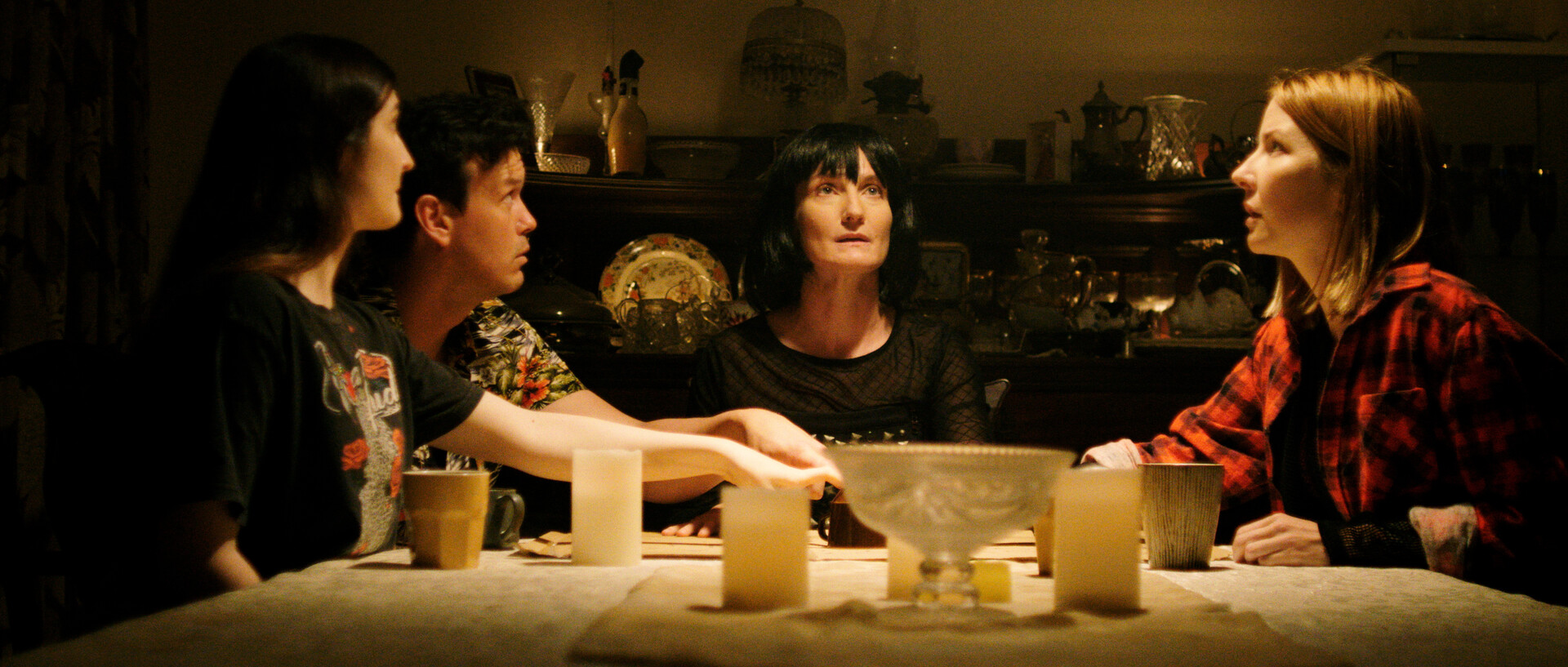
Inspired by true events: After her sister’s death, a young journalism student investigates two identical murders committed 157 years apart and discovers a deadly curse lurking beneath a picturesque New England town.

Get to know the writer:

1. What is your screenplay about?

Echoes of Erdington is inspired by true events: A pair of identical murders in England that occurred 157 years apart. This supernatural thriller tells the story of a young woman (Annie) and her mother (Reagan) who move to a small New England town to start fresh after the death of her younger sister (Sophie). Studying to become a journalist, Annie uncovers a lot more than she bargained for in her new hometown; plagued by ghosts, murder, and a long lasting curse.

2. What genres does your screenplay fall under?

Supernatural thriller, horror, drama

3. Why should this screenplay be made into a movie?

Any movie inspired by true events always intrigues an audience. This is a story of love, loss, and redemption, for those desperate to break toxic cycles.

4. How would you describe this script in two words?

Epically satisfying

5. What movie have you seen the most times in your life?

Complete opposite of this genre….”When Harry Met Sally.”

6. How long have you been working on this screenplay?

From concept to completed script…about seven years.

7. How many stories have you written?

I’ve written about seven screenplays, three stageplays, one novel, one children’s book, and several tv pilots/specs.

8. What motivated you to write this screenplay?

I wanted to tell a story centered around female redemption. Taking a story about violence against women and turning it into something supernatural and cathartic was important to me.

9. What obstacles did you face to finish this screenplay?

Trying to connect the murders and what ending would make the most sense.

10. Apart from writing, what else are you passionate about?

I am very enthusiastic about cooking, painting, and working on my podcast “The Endo Report” to help raise awareness for women’s health.

11. What influenced you to enter the festival? What were your feelings on the initial feedback you received?

I wanted to enter a festival that was strictly focused on horrors and thrillers. I appreciated the feedback and felt like it gave me a stepping stone to better my project. I also loved that I could hear real actors read the opening scene.

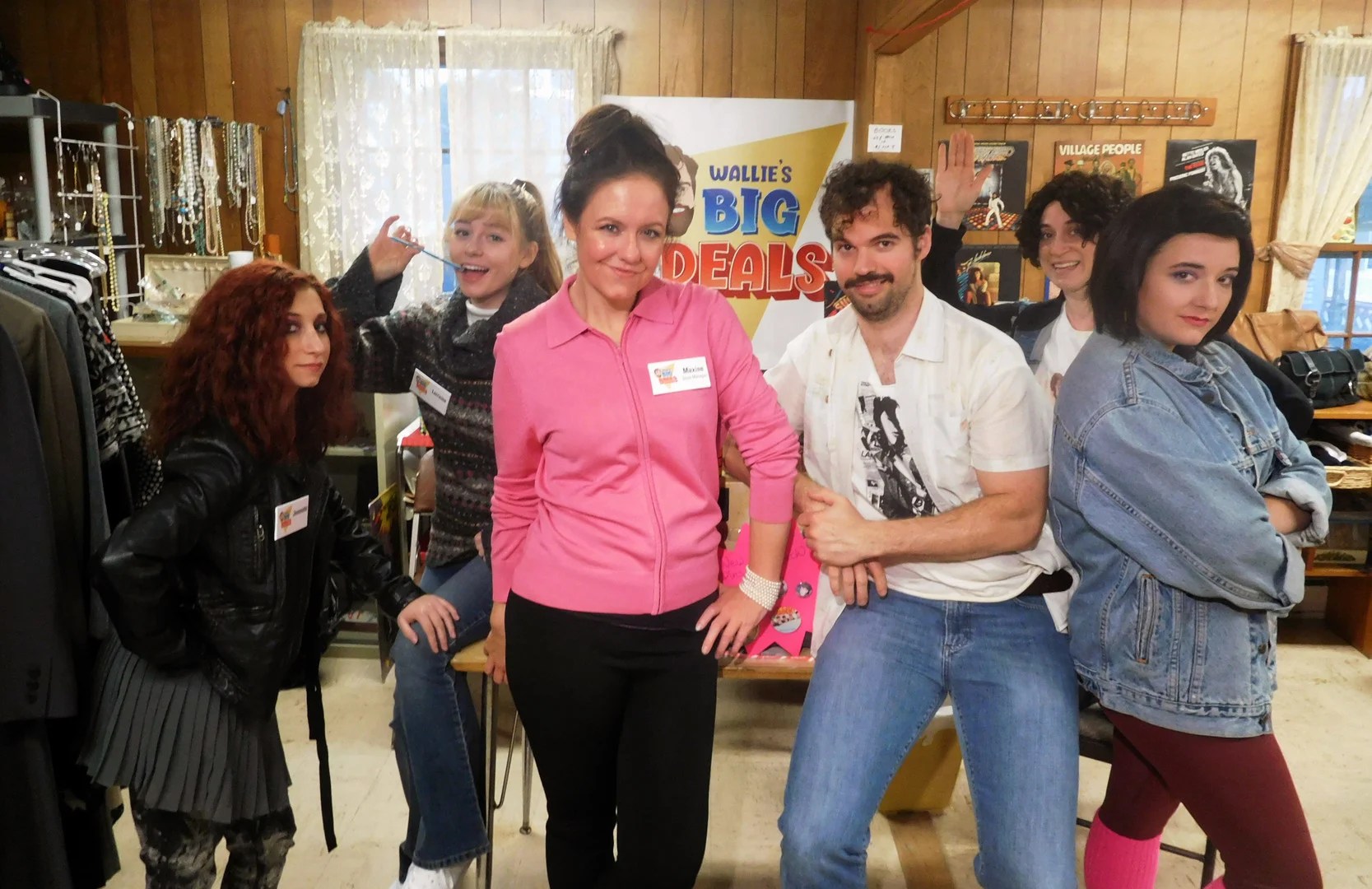
Feature Film Review: Wallie’s Gals. Directed by Mary C. Ferrara

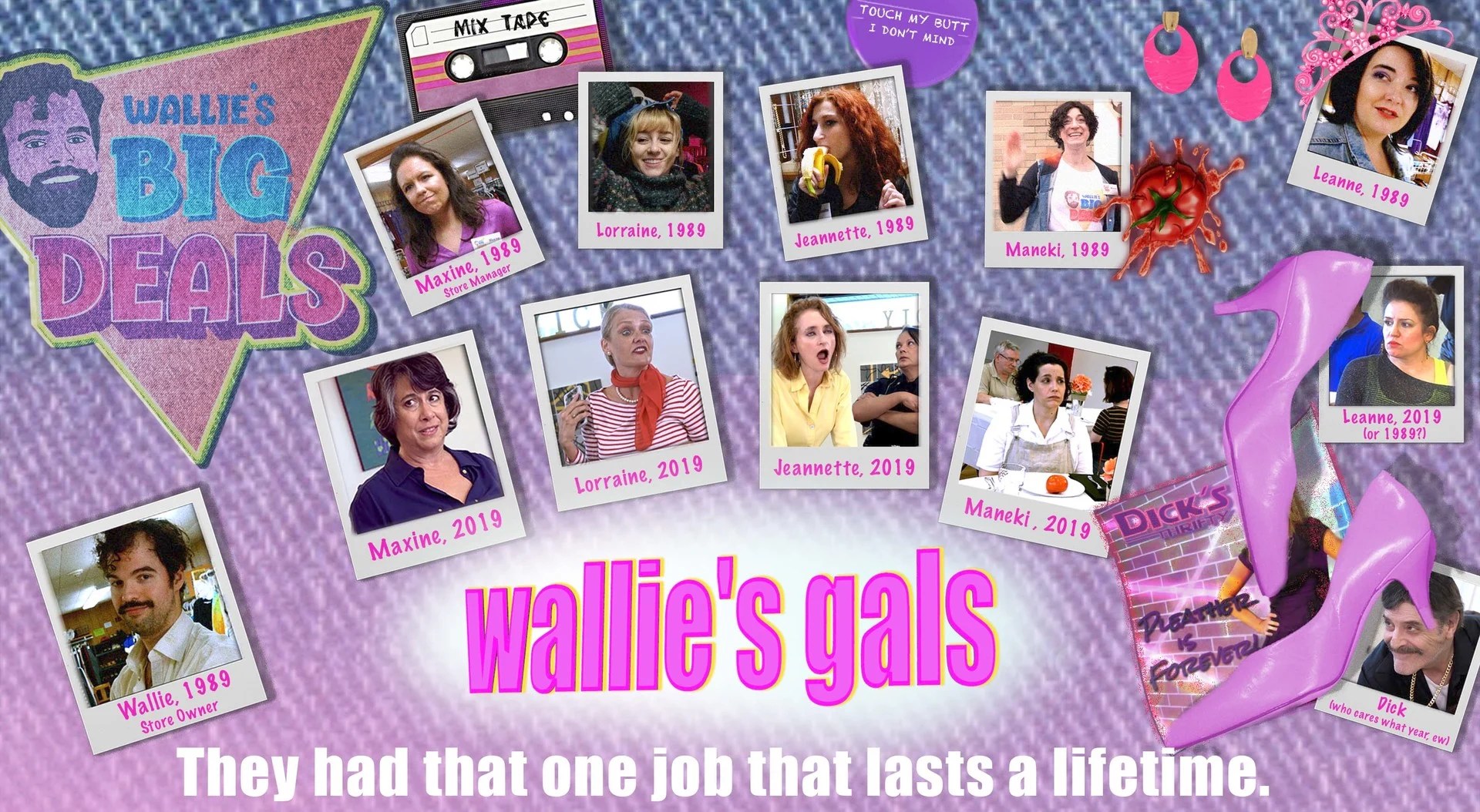
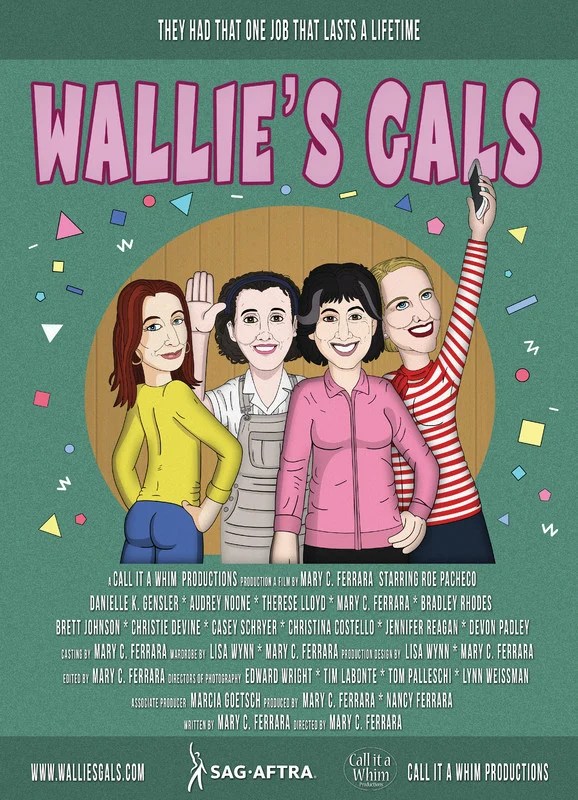
It’s 1989 and “Wallie’s Big Deals” isn’t doing too well due to competition, so the employees, affectionately called “Wallie’s Gals,” use their unique personalities to get more business. Fast forward 30 years, Maxine, the store’s manager, needs them back.

Project Links

Review by Julie C. Sheppard:

Wallie’s Gals is a zany romp of a film with lively remembrances from the iconic 1980’s. Anyone who was once a youngster from this era can recognize a whole series of familiar elements of the time period – – from boomboxes, to pleather, to hair scrunchies, to synth melodies of the day. The production designer deserves much praise for the vast collection of props and costumes of the era assembled for this piece. In addition, brightly-coloured titles hark back to the credits of many popular TV shows of the 1980’s, as do the decorated split screens. 

The flashback scenes when the characters are young are hilarious. It is entertaining to recognize traditional archetypes: the brainiac, the keener, the less-than-sporty, the flirt and the one that, back then, seemed to have it all together. Of course, in amongst these archetypal females is the hot guy that everyone admires. 

The past interactions are innocent and endearing, and it is highly satisfying to see how their young lives influence their choices later when they are united again, much like what is often witnessed at a high school reunion. Despite their varied life choices, the four protagonists are able to once more connect with the fondness they once had for each other. 

The cast members are having the time of their lives playing these characters with countless amusing innuendos in the fabulous screenplay. The introduction of the infomercial couple also adds a humorous touch. The fact that the gals reunite to create a store selling used items brings them back, once again, to the period they once so prized.

Short Film Review: Savannah’s Curse. Directed by Tamara Lisa Cook

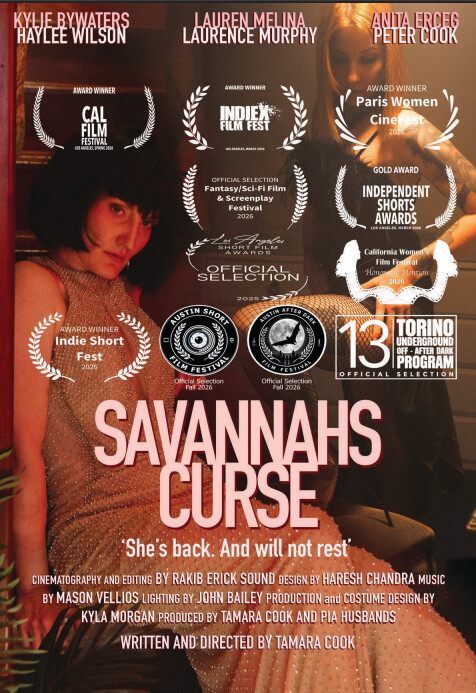
‘Savannah’s Curse’ is set in the future where resources are limited, and reserved only for society’s elite and privileged. The destitute, poor, afflicted and those who cannot be understood either by language or adversity, are institutionalised. Some of these people are ‘saved’ by the elite and forced to work in degrading circumstances, their vulnerability taken advantage of. A woman’s spirit returns, her ghost unable to rest until retribution for herself, those she left behind, and her daughter born into this world, is served.

Project Links

Review by Andie Kay:

Savannah’s Curse is set in an apocalyptic future where the wealthy have the monopoly on power and keep indentured servants to serve their every whim. Writer/Director Tamara Cook set up the premise of this story beautifully and the cinematographer, Rakib Erick did a great job making it look wonderful.


I really have to commend the Visual FX expertise of Jacob Horan because it was done so incredibly well. All of the actors were very likable and did an amazing job with their roles. The paranormal aspect of this was great and I loved how the filmmakers did the séance scene.

There’s an argument that the genre of the film was a bit more defined, but I do not agree with that point of view because it makes the mystery of the story more engaging. The story and the journey it took you on was very engaging and original. It had some cool twists and we all love to see a tyrant get his comeuppance.

Interview with Screenwriter Alexander Peterson (WRONG RIGHT)

Get to know the writer:

1. What is your screenplay about?

I spent a bit of time brainstorming tragedy and when I finally settled in on what would be tragic to me, at this time in my life, I thought of loss. Specifically the loss of love, trust, relationships, and family.

2. What genres does your screenplay fall under?

Drama, suspense, and thriller probably make the most sense.

3. Why should this screenplay be made into a movie?

If it was ever lucky enough, it is because it feels so real. This isn’t an uncommon situation to come across in relationships but it does not mean there isn’t a connection or impact upon seeing it happen and unfold.

4. How would you describe this script in two words?

Lost sight.

5. What movie have you seen the most times in your life?

Kiss Kiss Bang Bang

6. How long have you been working on this screenplay?

One day actually.

7. How many stories have you written?

Written? More than I can count. The question for me is how many have I actually finished. That’s easier for me to count on one hand.

8. What motivated you to write this screenplay?

I wanted to challenge myself to write something new and finish it.

9. What obstacles did you face to finish this screenplay?

Making people care about characters in one page while also finding a conclusion that felt satisfying.

10. Apart from writing, what else are you passionate about?

My family, specifically my 4 month year old son.

11. What influenced you to enter the festival? What were your feelings on the initial feedback you received?

I have submitted to WILDsound before and I enjoy the creative process with them. I felt like taking on a new challenge and they provide it for me constantly.

Interview with Screenwriter Elizabeth Anne von Isse (Angelman Rising)

Angelman Rising follows Eric Dunlop, a 17-year-old with Angelman Syndrome, a rare genetic disorder that leaves him non-verbal, physically and mentally challenged. When Eric begins to inexplicably “remember” intergalactic experiences, he becomes the key to unraveling a covert extraterrestrial invasion. Simultaneously, while astronaut Jon Armstrong and his AI companion, CASSI, are returning from their historic orbit of Mars, they narrowly avoid colliding with an alien spacecraft, setting off a chain of events that intertwine Jon’s fate with Eric’s. ​

CAST LIST:
Narrator: Hannah Ehman
Sheila; Elizabeth Rose Morriss
Grocery Clerk: Shawn Devlin

Get to know the writer:

1. What is your screenplay about?

Logline: Fearing for his life, a severely disabled teenager struggles to share newly implanted alien memories that can save the world from an extraterrestrial invasion.

2. What genres does your screenplay fall under?

Sci-fi / Thriller

3. Why should this screenplay be made into a movie?

There have been very few films made that feature an individual with disabilities as the protagonist. None that I can think of that portray that individual as the “hero” or should I say “superhero”. Angelman Rising is uniquely positioned to expand the traditional superhero genre into a diverse and inclusive space.

4. How would you describe this script in two words?

Disabled Superhero

5. What movie have you seen the most times in your life?

It’s probably a toss-up between The Princess Bride, Big Trouble in Little China and Young Frankenstein – lol.

6. How long have you been working on this screenplay?

I started working on adapting the screenplay from the novel of the same name in February of 2025.

7. How many stories have you written?

I’ve only written features, and this is my third (with at least two or three more rolling around in my brain). The first two I produced and have already been shot – they should both hit streaming platforms this fall. This screenplay will require a much bigger budget, bigger than I can do alone through my production company.

8. What motivated you to write this screenplay?

This particular screenplay is very personal to me. The author of the novel, which the screenplay is adapted from, is my nephew. His son, my great-nephew, was born with Angelman Syndrome and will require special care 24/7 for the rest of his life. The novel was a way to honor his son, the battles he overcomes daily and pivot his disabilities as assets to the world.

9. What obstacles did you face to finish this screenplay?

This was the first adaptation I’ve written. My first draft was almost 200 pages long – lol. It was difficult to decide how to simplify the story and which “babies” to kill. Also, the novel was first published in 2020, so, I had to do a lot of research regarding the current cutting-edge technology.

10. Apart from writing, what else are you passionate about?

I’m an actor, a producer, a fine art painter and copper and silversmith jeweler. To say I keep busy is an understatement.

11. What influenced you to enter the festival? What were your feelings
on the initial feedback you received?

It was important to me to enter a festival that was specific to the genre and offered additional feedback and table read. The notes I received from Jessica Ah Shene were invaluable. They pointed out areas that needed clarification and improved the overall polish of the script.

Interview with Screenwriter Brenda Jackson (THE GOLD PROTOCOL)

A naive teenager discovers that the future Queen of the Universe has been hidden within him, and he must travel the universe and outwit formidable villains whilst dealing with his own family trauma before he can restore her to the throne.

Get to know the writer:

1. What is your screenplay about?

A naïve teenager must travel perilous alien galaxies to outwit formidable villains whilst dealing with his deepest trauma in an attempt to save the universal queen, knowing it could cost him his life.

2. What genres does your screenplay fall under?

Science fiction with some fantasy and action.

3. Why should this screenplay be made into a movie?

This story has all the elements of a compelling film: action-packed, highly entertaining, and deeply heartfelt, with themes that audiences of all backgrounds can relate to. It is crafted to deliver an engaging and satisfying experience that leaves audiences thoroughly entertained and emotionally fulfilled.

4. How would you describe this script in two words?

Epic Sci-Fi

5. What movie have you seen the most times in your life?

Star Wars

6. How long have you been working on this screenplay?

Many years.

7. How many stories have you written?

Six.

8. What motivated you to write this screenplay?

I wanted to tell a story about a young person facing the difficulties and challenges of life, and how, through those experiences, they find the strength to overcome adversity. I have always been passionate about science fiction and fantasy, and I love the freedom these genres offer to create imaginative worlds and explore powerful ideas.

I am especially fascinated by the complexity of youth and the journey into adulthood. It is incredible to see how young people grow, change, and develop their understanding of themselves and the world around them. Through this screenplay, I wanted to explore that transformation through an imaginative and entertaining story, while showing that the difficulties we face can ultimately shape who we become.

9. What obstacles did you face to finish this screenplay?

Working long hours in the workforce and family commitments.

10. Apart from writing, what else are you passionate about?

Family and friends.

11. What influenced you to enter the festival? What were your feelings on the initial feedback you received?

I was inspired to enter the Fantasy/Sci-Fi Film & Screenplay Festival because I am passionate about science fiction and fantasy, and I believe these genres provide an incredible opportunity to tell imaginative stories with meaningful and relatable themes. I was excited to share my screenplay with an audience that appreciates creative storytelling and to receive feedback from people who understand and value the genre.

I was very encouraged by the initial feedback I received. It was exciting and rewarding to know that the story connected with readers and that the ideas, characters, and themes came through. The positive response and sound, constructive feedback gave me greater confidence in the screenplay and motivated me to continue developing the story and grow as a writer. It was useful and helpful.

It was a brilliant opportunity to have my best scene read aloud by professional actors. Along with gaining valuable exposure through the competition, this experience was incredibly valuable for me as a screenwriter.

Short Film Review: THE TRUTH IS DEAD. Directed by Martin Ryan

Messengers from the future try to give a warning.

Review by Julie C. Sheppard:

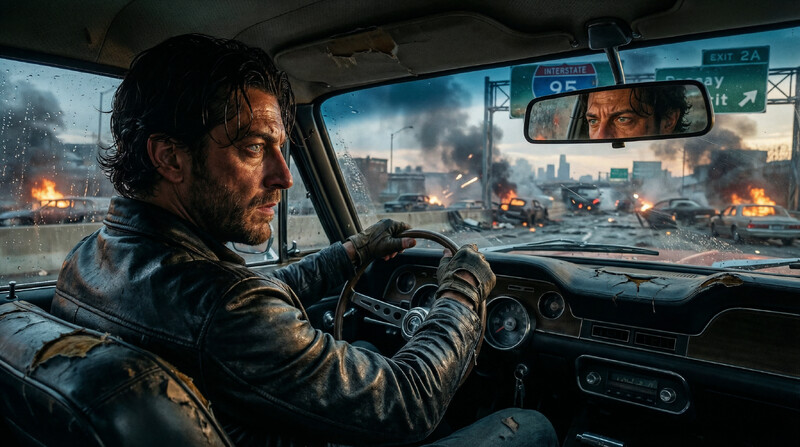
The Truth Is Dead is a thrilling short that simmers and then bursts into fiery action. Rebellion is a strong force against evil in a burning, post-apocalyptic city, as the central protagonist aggressively moves down chaotic streets. He is effectively created with AI—ruggedly handsome with a weathered face that emotes intense feelings of worry, anger, and angst.

The heavy rock refrains and jarring percussion are right in line with the gutsy vigilante-type narrative, as a bullying leader also barks orders to shielded police. The exhilarating pace of this short action can take the viewer’s breath away with its gritty intensity. 

The introduction of a female partner/warrior, who fights alongside the hero, adds an extra dimension—the pair exudes a sexy, romantic energy and riles up crowds to protest against “the man.” The captivating cinematic bonding between these two figures becomes apparent as they are lifted above the fray in a heavenly celestial manner—this time it is their simmering passion that rises above the fear and hate in the world below.