The Importance Of B-Roll

glazemichael's avatarMichael Glaze

What is B-Roll and why it’s so important?!

Screen Shot 2017-05-19 at 10.45.02 AM.png

This video captured my attention because b-roll really is extremely important when it comes to filmmaking. Sometimes we get so caught up in the main focus and the actors but fail to provide environment, detail, artistry and the beauty around us. Instead of having to explain to the audience where you are, what time it is, what is around; show them. Use all the visuals around you to help tell your story in a more creative and visual appealing way. So  this video sums up and explains b-roll but also provides practical ways it is implemented into a video and the overall out comes. It’s a great reminder and expresser of the importance of b-roll, check it out and learn more.

View original post

Film Review: EVERYTHING, EVERYTHING (USA 2017)

Deadlines to Submit your Screenplay, Novel, Story, or Poem to the festival: http://www.wildsound.ca

everything_everything.jpgA teenager who’s lived a sheltered life because she’s allergic to everything, falls for the boy who moves in next door.

Director: Stella Meghie
Writers: J. Mills Goodloe (screenplay), Nicola Yoon (based on the book by)
Stars: Amandla Stenberg, Nick Robinson, Anika Noni Rose

Review by Gilbert Seah
 
EVERYTHING, EVERYTHING is the kind of film that teenagers in love would flock to see. It falls in line with the most awful films of the 70’s like THE BLUE LAGOON, YOU LIGHT MY LIFE and S.W.A.L.K. Young lovers fall in love despite all odds and love conquers all. All logic should be thrown to the wind.

EVERYTHING, EVERYTHING based on the book by Nicola Yoon tells the story of Madeline Whittier (Amandla Stenberg) suffering from some immune deficiency. It can hardly be believed that a book was actually written with this storyline. Any Harlequin paperback would have sufficed and been more believable. The deficiency (referred to as SID – severe immune deficiency in the film), as explained in Maddy’s voiceover prevents her from being exposed to the outside world. She lives in a locked and sealed glass house, with only her mother (Anika Noni Rose) and angelic private nurse, Carla (Ariana Grande) (a latino for political correctness) being her only human contacts.

So what happens? She falls in love with the new neighbour, Olly (Nick Robinson), gets the courage to leave the house and lives happily ever after with no more illness. How does this state of affairs happen? If you really need to know, it is best to read a review with the spoiler than watch this totally bore of a movie. After the first 10 minutes, I was dying for the film to end. No pun intended!

Worst of all, the audience is ‘treated’ to a trip to Hawaii. Apparently Maddy is smart enough to use mother’s credit cards or hack the internet to buy plane tickets for Hawaii and her Olly. They arrive in Hawaii. Lo and behold, they are able to travel in a jeep (courtesy of credit cards) and stay in a stunning resort by the sea. They go swimming and jump off cliffs.

The story skips the details of Olly’s life. The audience sees Olly beaten up by his father. The mother finally separates and leaves with the family to NYC. How can Olly’s family afford such a beautiful home next to Maddy with no solid income?

The attempted political inter-racial romance does not work either. The kissing scenes look awkward. At least the audience is spared from any graphic sex scenes. Kissing is as far as the romance goes. Of course, there is a lot of hugging and shots of smooth teenage skin.

It would have helped if the script by J. Mills Goodloe was at least a bit funny. The only humour present is Ollie’s lame attempts to amuse Maddy through the window. His antics of dropping of cakes as a joke looks more silly than funny. The use of the astronaut as a symbol for Maddy’s seclusiveness is odd. Whenever the couple communicate by text, the film shows them in ridiculous settings, like in a library or in outer space.

One thing that one might do when watching the film is to take out paper and list all the loopholes in the story. Bring lots of paper!
EVERYTHING, EVERYTHING has absolutely nothing to offer in terms of insight into young love, the sickness or family drama. EVERYTHING, EVERYTHING is totally lame in all departments – acting, story, pacing, direction and writing.

Trailer: https://www.youtube.com/watch?v=42KNwQ6u42U
 

_________

Also, Free logline submissions. The Writing Festival network averages over 95,000 unique visitors a day.
Great way to get your story out: http://www.wildsound.ca/logline.html

Deadlines to Submit your Screenplay, Novel, Story, or Poem to the festival:http://www.wildsound.ca

Watch recent Writing Festival Videos. At least 15 winning videos a month:http://www.wildsoundfestival.com

Film Review: THE COMMUNE (Denmark/Sweden/Netherlands 2016) ****

Deadlines to Submit your Screenplay, Novel, Story, or Poem to the festival: http://www.wildsound.ca

the_communeA story about the clash between personal desires, solidarity and tolerance in a Danish commune in the 1970s.

Director: Thomas Vinterberg
Writers: Tobias Lindholm, Thomas Vinterberg
Stars: Ulrich Thomsen, Fares Fares, Trine Dyrholm

Review by Gilbert Seah
 

The latest from Thomas Vinterberg (CELEBRATION, THE HUNT) details what happens in a commune. Communes were popular in the 70’s in Denmark, also the time when the film is set. Vintergberg does not judge the workability of a commune environment but shows both sides of its workings – both good and bad.

Vinterberg’s film is a detailed study of the start (and end?) of a commune. He begins with a couple’s rationale on starting their commune. It all happens when Erik’s father passes away. The couple must decide what to do with the huge house that Erik grew up in, as it’s too expensive for them to occupy on their own. So, they decide to form a commune. They believe a commune will solve the problem of money and being able to live at a large residence close to sailing and the sea while living with friends. Anna, the wife also desires change. The question then is whether the couple is ready with problems that may arise. This is what the film examines. It is a good observation, too, that people seldom look at the possible problems when they get too excited on a new venture.

The first 30 minute of the film is up-lifting. The couple decide on the commune, interview the other co-communers. They sign the papers, move in, and frolic naked, drink beer, drink and be merry. All this is demonstrated through the downward spiral of a couple Anna (Trine Dyrholm, who won Best Actress at this year’s Berlinale for her performance and is the best thing about the movie) and her husband, Erik (Ulrich Thomsen). Though the problems that ensure are predictable – jealousies; some that do less work than others; untidy habits – the events that occur are still well conceived and well executed.

The film also works on different levels. It is also a family drama that concentrates on the couple as well as a psychological study on human behaviour. The film gets interesting when members of the commune sit down for their annual meeting. Each member is asked “How are you?” Mona is accused of too much traffic in and out of the house (she is seeing too many men) while Allon is crying after being accused of not paying his deposit.

Every scene in the film is also ripe for analysis on behaviour. One scene in which Erik interviews Allon as a possible candidate for living in the house illustrates the interaction of two different characters with intriguing results. Another is Erik’s humiliation of Jesper, one of his students. The reason of his doing so forms a good topic for discussion. Yet another is when Erik’s daughter catches her father cheating on the mother.

Compared to other Vinterberg films like CELEBRATION, the images are crystal clear and there is much less hand held camera used. When the actors are seated, the camera is mounted and when the actors are walking or on the move, it is hand held camera (fortunately held quite steady without noticeable jittery movements). THE COMMUNE is Vinterberg’s most emotional film.

The main message of commune living would be that it works if one works at making it work. An insightful and absorbing film!

Trailer: https://www.youtube.com/watch?v=KsEXwrgKjQ0
_________

Also, Free logline submissions. The Writing Festival network averages over 95,000 unique visitors a day.
Great way to get your story out: http://www.wildsound.ca/logline.html

Deadlines to Submit your Screenplay, Novel, Story, or Poem to the festival:http://www.wildsound.ca

Watch recent Writing Festival Videos. At least 15 winning videos a month:http://www.wildsoundfestival.com

Interview with Graphic Designer Tina Charad (Maleficent, Fifty Shades of Grey)

matthewtoffolo's avatarMatthew Toffolo's Summary

A Graphic Designer creates the props and set-pieces for film productions and works directly with the Production Designer. Depending on the period and genre, these can be newspapers, love letters, shop signs, posters, cigarette boxes, logos. Basically, they create the original materials needed for a film that haven’t yet been invented.  

I was fortunate enough to interview the extremely talented Graphic Designer Tina Charad. In the last 10 years she has worked on over 30 productions including the films “Robin Hood”, “Edge of Tomorrow”, “World War Z”, “Pirates of the Caribbean”, “The Fifth Wave”, and “RocknRolla”.

Matthew Toffolo: Is there a film or two that you’re most proud of?

Tina: Well, in terms of pure indulgence, of being spoilt and designing beauty day after day, it would be 47 Ronin. Perhaps Maleficent too – for the same reasons.

Tina created images in the film “47 Ronin”:
47_ronin_imageMatthew: How long…

View original post 1,533 more words

Interview with Production Designer Maria Djurkovic (Oscar Nominated – The Imitation Game)

matthewtoffolo's avatarMatthew Toffolo's Summary

maria_djurkovic.jpgMaria Djurkovic is one of the most talented Production Designers in the industry today. She has created a multitude of worlds in many critically acclaimed movies and TV shows, including: Sliding Doors (1998), Billy Elliot (2000), The Hours (2002), Mamma Mia! (2008), Tinker Tailor Soldier Spy (2011), and Gold (2017).
Matthew Toffolo: Is there a film or two that you’re most proud of?

Maria Djurkovic: Yes – Tinker Tailor Soldier Spy.

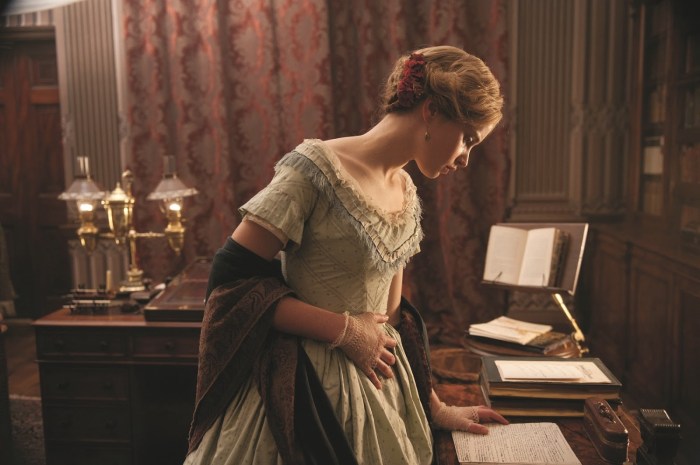
I also was very pleased with The Invisible Woman. I dont think you can tell we had a very small budget.

PHOTO: Still from the film”The Invisible Woman” (Director Ralph Fiennes)

the_invisible_woman.jpgMT: What is a director looking for in a Production Designer?
MD: I am certain each director is looking for something different. Wes Anderson will be looking for very different qualities in a designer than Ken Loach.

MT: What is a Production Designer looking for in a director?

View original post 827 more words

Interview with Emmy Winning Make-Up Artist Paul Engelen (Game of Thrones)

matthewtoffolo's avatarMatthew Toffolo's Summary

Paul Engelen is is 2 time Emmy winner, and 2 time Oscar nominated Makeup artist. He has worked on some of the greatest/most successful films and TV shows in the last 40 years, including: Game of Thrones (2 Emmy wins), Mary Shelley’s Frankenstein (Oscar nomination), The Legend of Tarzan (Oscar nomination), Star Wars: The Phantom Menace (dir. George Lucas), Gladiator (dir. Ridley Scott), Munich (dir. Steven Spielberg), Batman (dir. Tim Burton) and Reds (dir. Warren Beatty).

Many have stated that his makeup design for Nicole Kidman on “The Hours” is the key reason for her Oscar Win for Best Actress (see pic below). The same can be said for his work on Renée Zellweger for her Oscar Win on “Cold Mountain”. How those films received zero Oscar nominations for Makeup is still a mystery.

It was an honor to chat with Paul Engelen and talk about his art:

Matthew Toffolo:…

View original post 745 more words

Interview with Makeup Artist Luigi Rocchetti (Gangs of New York, The Devil’s Advocate)

matthewtoffolo's avatarMatthew Toffolo's Summary

Based in Italy, Luigi Rocchetti has worked with some of the greatest filmmakers of our time as the lead Makeup artist. He currently just wrapped the remake production of Ben-Hur. It was such a pleasure speaking with him about the art of makeup in film.

Matthew Toffolo: You have been a makeup artist and designer on over 70 productions in the last 35 years. Is there a film/TV show or two that you’re most proud of?

Luigi Rochetti: I have to say, “Dolores Claiborne”, directed by Taylor Hackford. At that time there was no Silicon prosthetics to use for aging actors and in that project I had three major actors to make twenty years older. We used stipple aging, with highligths and shadows. I have to give big thanks to the collaboration of the actors, director and director of photography. I think the results were really good and I’m very…

View original post 718 more words

Interview with Emmy Winning Editor Geoffrey Rowland (Path to 911, The Young Messiah)

matthewtoffolo's avatarMatthew Toffolo's Summary

Geoffrey Rowland has worked in the film and television industry for over 50 years. We chatted on the phone for 2 hours with topics ranging from our mutual love for baseball, life lessons, being Canadian, and of course film and editing. He was a pure joy to chat with. Enclosed are the highlights of our conversation:

Matthew: “The Young Messiah” is set to hit the theatres this week. Can you give us a sneak peak as to what to expect? How was your experience working on the film?

Geoffrey Rowland: Terrific experience. I worked 77 straight days editing that film. It became a part of me. I gave it my all and I think it’s a very good film.

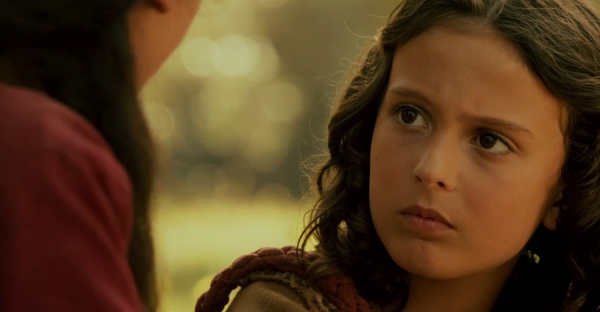
PHOTO: Still from “The Young Messiah” with actress Sara Lazzaro. Geoffrey called her one of the finest actresses he has ever edited. “Amazing eyes”. He praised. 

girl_young_messiah.jpgMT: You’ve worked on over…

View original post 1,203 more words

Interview with Editor Crispin Green (Game of Thrones, Doctor Who)

matthewtoffolo's avatarMatthew Toffolo's Summary

Crispin Green has edited some of the top TV shows in recent times. It was a pleasure to site down with him to talk about the craft of editing and his career.

Interview with Crispin Green: 

Matthew Toffolo: Tell us about the “Game of Thrones” experience. How is editing such a unique show where there are 4-7 plots occurring in a single episode?

Crispin Green: It’s an experience quite unlike working on other shows in that the editors are there for the duration of the shoot (about 6 months) rather than blocks of two or three episodes. This can help in the editing process as you get more of a sense of the season as a whole story.

MT: Will you be back to editing the series “Game of Thrones”? How does the process work? Who do you report to and collaborate with? The showrunners? The novelists? The director of…

View original post 629 more words

Interview with Editor Tia Nolan (How to be Single, Friends with Benefits)

matthewtoffolo's avatarMatthew Toffolo's Summary

Chatting with Tia Nolan about the craft of editing was a pure joy. Her recent credits include: How to be Single (2016), Angie Tribeca season 2 (2016), Annie (2014), Friends with Benefits (2011), The Woman (2008), and Bewitched (2005). She is a wealth of knowledge in the art of making a great comedy – as you’ll learn in his interview. Enjoy!

Matthew Toffolo: What is the role of a TV episode editor? How is this different is comparison to working on a feature film?

Tia Nolan: The role of a TV episode editor is to assemble and fine tune the footage provided to its final broadcast ready product. I have only worked in scripted half hour comedy television. I have found that the craft is similar to feature film editing in performance and timing. The real difference lies in the schedule and who gets final cut. In television, there are usually two…

View original post 1,672 more words