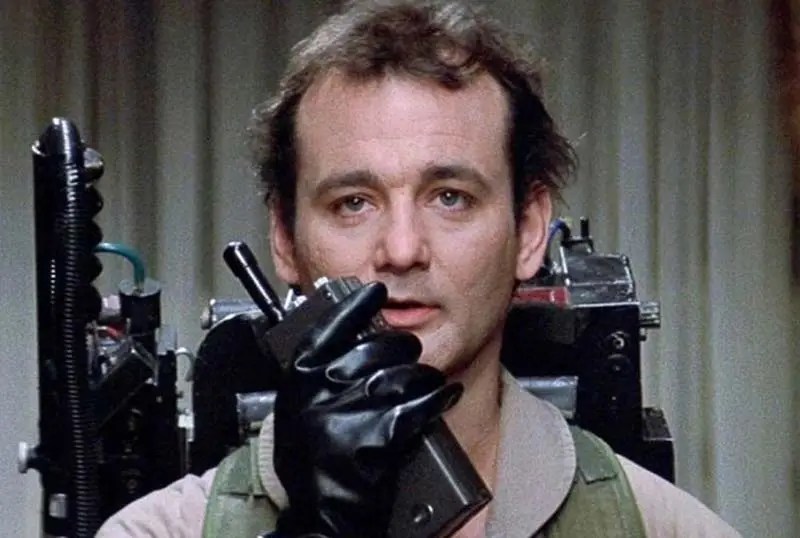
DIMENSIONS: The Interrogation, 8min., USA Directed by Robert James Harden Jr. During an interrogation for the murder of his mother, a man pleads for his release in fear of his life. Two special detectives grill him in order to solve their case. In the shadows of these men’s dimension, the answers to all their mysteries live.
Perrineau is his mother’s maiden name, and his father is Harold Williams Sr. His parents never married, so he used both names growing up, eventually settling on Williams. When he joined SAG there was already a Harold Williams, so he took the Perrineau from his mom and the Jr. from his dad for his stage name, even though there is no actual Harold Perrineau Sr.
WILDsound offers excellent opportunities to elevate your script to the next level. Matthew is incredibly kind and helpful — definitely check out his podcast! Thank you for reviewing my precious baby, Blue Idaho.
The reason why I decided to wait two years after the Bond movie, and to work with Ang Lee in a martial arts movie, is because I really believe that this genre deserves more respect and dignity than it’s ever been given. Before, people saw it as a fairy tale; they felt they could take it easy. But it shouldn’t be about that. It’s so steeped in our culture, it should have more depth to it. It’s never easy to find that balance, when it’s such a magical type of film, to make you accept our soaring to the skies . . . it was a risk, but when we did this movie, it was for a Western audience.
Learning how to walk in a kimono was an art form in itself – if you didn’t learn to do it properly it was like dragging a dead cat across the floor! We had to walk with a piece of paper between your knees and a tea tray balanced on your head.
In Asia, we constantly play Koreans, Malay, Chinese. We do not question that, as you do not question an Englishman playing an American or a German.
I prefer to be kicked four or five times well, you know, hard, than twenty or twenty five times not so good…
The theme of the poem is the comeuppance and downfall of a politician who literally lied his way into office and was then found out.
2) What motivates you to write this poem?
What prompted me to write it? I suppose it was to see how I could express my opinions on the matter in a comic verse form. As I like the comic verse of writers like Swift, Lear and Lewis Carrol.
3) How long have you been writing poetry?
I’ve been writing poetry, on and off, and of varying quality, for some decades. Though poetry isn’t the main focus of my literary work.
4) If you could have dinner with one person (dead or alive), who would that be?
My literary guest. Merlin the magician. If he ever existed?
5) What influenced you to submit your poetry performed by a professional actor?
I would do an awful job of reciting any of my works, so I was interested to hear how someone else would read it. And she did a far better job than I could have done.
6) Do you write other works? Scripts? Short Stories? Etc..?
Yes, I have written other things. I have had stories and articles published in anthologies and literary magazines. A volume of my short stories, entitled, Seven Tall Tales, has been published on Amazon. Have had four one act plays published in separate anthologies published by the Fresh Words publishing company, and a one act play has been performed at a theatre comedy festival.
7) What is your passion in life?
Passions in life. Literature, movies, photography and art.
POEM:
He won his election through lies and deception. And it soon became known, across the nation, that all he had claimed was a fabrication. A web of lies he had woven, to forge the career he had chosen. He said he just wished to do his job, but was hounded by the whole press mob. He was no rogue, he wasn’t a clown, and it was the liberal media that was doing him down. He became a joke, a figure of fun, his career unravelled, and he was undone. He then stepped down, he did claim, to fight for his honor and clear his name. But with his reputation sunk so low, his only option was to go. Though those he did dupe and deceive were all too happy to see him leave. He said his opponents had been spiteful and unfair, and he had merely embellished his resume, here and there. It was tough to be in the news spotlight, every day, and every night, to be constantly doorstepped by the fourth estate, and asked to set the record straight. His career was a ruse and a con, on such an epic scale, that now he’s ended up in jail. Was it worth it, George, to win your election, by such chicanery and deception? To have your name dragged through the mud, and to be seen as a grifter, and a dud? To lose, would have been better by a mile, than to win in such a wretched style.
– The poem celebrates the vibrant, scenic, and lively essence of San Francisco. Its themes include:
Natural Beauty and Scenic Charm: Descriptions of the bay, the Golden Gate Bridge, green ridges, beaches, and starry nights highlight the city’s picturesque landscape.
Joyful Experiences and Leisure: References to lounging on the beach, savoring the coastline, drinking, dancing, and enjoying the night emphasize a theme of relaxation, pleasure, and communal joy.
Nostalgia and Friendship: The tone suggests shared memories and companionship, evoking a sense of warmth and togetherness amid the city’s lively environment.
Celebration of Life: The imagery of dancing daffodils and the lively atmosphere reflect a theme of vitality and appreciating life’s simple pleasures.
Overall, the poem’s central theme revolves around the celebration of San Francisco’s natural beauty, lively culture, and the joyful experiences shared with friends in this iconic city.
2) What motivates you to write this poem?
– I wanted to share with my friends, whether in Korea or around the world, the natural beauty of San Francisco, its vibrant culture, and the charm of this iconic city.
3) How long have you been writing poetry?
– I started writing poetry when I was young and have been writing for over 50 years.
4) If you could have dinner with one person (dead or alive), who would that be?
– If I had the chance, I would like to have dinner with novelist Alexander E. Braun Alex.
5) What influenced you to submit your poetry performed by a professional actor?
– I asked a professional actor to perform my poetry to better introduce San Francisco to many people.
6) Do you write other works? Scripts? Short Stories? Etc..?
– I write mostly poetry, but sometimes I write essays. I also published a collection of essays, “FOUR SEASONS,” in the United States last year.
7) What is your passion in life?
– I think positively in everything, have faith, and do my best in the tasks given to me each day, living passionately and diligently
POEM:
My friend, you’ll see the shore where the blue sky pours its buckets of glaring sunlight; nearby ridges beckon with wings of fresh green foliage.
A chilly wind often wafts in from the Pacific; this is San Francisco.
When you arrive, you’ll find the Golden Gate Bridge, like cherry blossoms, linking north and south.
We could lounge on Baker Beach, and at Fisherman’s Wharf, savor the coastline. At Pier 23 Cafe, we’ll drink and dance.
We could set our chairs facing the waves, gazing at a myriad of stars in the brilliant night sky.
With the fatigue of life’s long journey behind us, we see a crowd, a host of yellow daffodils, fluttering and dancing along the beach like the women we might meet.
My poem’s theme is grief and the lack of understanding of others. This poem centers grievers and how lonely it is at times. People are not taught and often do not know how to interact with people experiencing grief. So many relationships I had changed because of grief. Each day is new. Each new grief experience changes you into a different version of yourself. You’ll never quite be the same as others remember, so they also have to learn to be patient while you accept and learn your new reality.
2) What motivated you to write this poem?
The motivation of this poem was to purge all the things afflicting my spirit that were upsetting me. I needed to write a poem to express the truth of what was hurting me the most during the time I was at my most vulnerable. This poem was written quickly and spilled itself onto the page. The poem is raw and intense because of the truth there– I knew, unfortunately, other grievers knew this was not an uncommon experience of isolation.
3) How long have you been writing poetry?
I’ve been writing poetry as long as I’ve been writing. I remember writing poetry in kindergarten for Mother’s Day. Poetry was always my favorite subject in school. I always craved more of it. Poetry always found me and called me in. Shout out to the poets!
4) If you could have dinner with one person (dead or alive), who would that be?
There’re so many people I’d want to have dinner with. I’d want to eat dinner with Josephine Baker. I’ve always loved learning about how fully she lived her life, but then there’s also Frank Ocean. His lyricism and bravery have always stuck with me and inspired me to live the same way.
5) What influenced you to submit to have your poetry performed by a professional actor?
The arts are so important! Having my work performed by a professional actor is a privilege and an honor. To hear my words given life and performed by another is breathtaking. Thank you for this opportunity.
6) Do you write other works? scripts? Short Stories? Etc..?
I’m dipping my toes into non-fiction. We’ll see what’s next!
7) What is your passion in life?
My passion in life is love. Education is love. Accountability is love. Grief is love. Being able to be in community with one another is love. Showing up for one another is love.
POEM:
Trauma greets me in the morning Growing legs and stretching to lay beside Grief and I My spearmint tea is poured with with tears of solitude steeped into my being
My phone dings, a message from the socials
this “relative” seeking to be absolved “Hey I saw this *grief story* made me think of you (from a person I haven’t heard from since 2 days after Dad died)”
Next a message from 3:06 am… “I know I haven’t been there for you with your grief after your dad. I hope you’re doing better”
The closer to the holidays, the closer I am to the realm of Dante’s Inferno.
So many levels to choose from…
So this is like the ex that called me out of my name once, 4 days after my Dad died. We then broke up.
This is like the man that I thought was a friend when my sister was experiencing that aneurysm (2 months after Dad died) but showed me his unsolicited penis and opinion instead.
This is like the person I thought was a friend told me, I don’t want to be around you when you’re like this. Can we try to see where you’re at in a few months?
This is like when that other “bestie” never initiated contact. Never uttered a word. Nor the other bestie because “I was a downer”.
This is like when I needed support and love and was met with the attention of my lonesome loneliness.
This is the part of the story where I can’t make this shit up,
They’ll say it’ll get better. I’m waiting now like I’m waiting for the 14 trying to get to work. Hummingbirds knew to find the best method of recovery —fly in any direction but love yourself enough to leave
It’s a deceptive tale — subtle, misleading, designed to lead the reader astray. The true meaning only reveals itself in the very last line. To explain more would be to unravel the twist, and I wouldn’t want to steal that moment of discovery.
2. What genres would you say this story is in?
Flash fiction, distilled and sharpened, shaped in a poetic register, lyrical in tone, yet rooted in psychological realism.
3. How would you describe this story in two words?
Don’t trust.
(A) stranger.
4. What movie have you seen the most in your life?
Two films have stayed with me like old companions: Indochine (1992, dir. Régis Wargnier), a sweeping French period drama, and Titus (1999, dir. Julie Taymor), a fierce, surreal reimagining of Shakespeare’s play. Both are vast and visceral, unapologetically emotional. I return to them again and again.
5. What is your favorite song?
That’s a hard one. Maynard James Keenan’s musical universe — whether with Tool, A Perfect Circle, or Puscifer — continues to shape my inner world. It’s difficult to choose just one track; the whole body of work feels interconnected, like chapters in a long, dark gospel.
6. Do you have an all-time favorite novel?
For years, The Thibaults by Roger Martin du Gard was the book I returned to: expansive, introspective, humane. Recently, Demon Copperhead by Barbara Kingsolver took my breath away. A towering novel: raw, urgent, and alive. I could hardly put it down. I could hardly breathe while reading it.
7. What motivated you to write this story?
I was living in a slum at the time. Every day, I saw people standing in silence, vacant-eyed, watching the world go by. Watching us. That image stayed with me, and though the rest is imagined, that gaze, that haunting stillness, is where the story was born.
8. If you could have dinner with one person (dead or alive), who would that be?
Anthony Hopkins. For the grace, the depth, the quiet thunder in everything he does.
9. Apart from writing, what else are you passionate about?
Theater, and contemporary circus. I’ve lived and worked in this world for more than a decade. I entered it as an outsider, an adult, and the circus slowly became my second home. Every performance is a fleeting act of magic, and I cherish being part of that ephemeral, glittering world.
10. What influenced you to enter your story to be performed?
There’s a difference between reading a story and hearing it aloud. A voice gives breath to the text, and with it, a new kind of life. When I read my own work, I’m always revising, doubting, rewriting in my head. But when I hear it spoken by someone else, especially with such care and craft, the anxiety vanishes — and even I can simply listen and believe the story exists.
11. Any advice or tips you’d like to pass on to other writers?
Write every day. Not because inspiration strikes — but because it doesn’t. The muse shows up after you’ve already begun.
On the surface it’s about finding yourself as a trans person. It’s about understanding yourself and having a support system that sees you and supports you. I think underneath that though, it’s about being human. Even beyond being trans. It’s about that moment that you give yourself the permission to take that step forward into the unknown. And more importantly that moment when you use that permission you’ve given yourself. And it’s about being young, broke, and still choosing to live your life despite the hardships that come with both of those.
2. What genres would you say this story is in?
Fairy Tale Reimaginings/Retellings, LGBTQIA+, Coming of Age, Slice of Life.
3. How would you describe this story in two words?
Queer Joy
4. What movie have you seen the most in your life?
This is a hard question to answer. I love films and cinema so much, but I’d wager it’s Scream (1996). It’s the perfect horror comedy.
5. What is your favorite song? (Or, what song have you listened to the most times in your life?)
I’d have to say based on vibes alone, my favorite song is “Store” by Carly Rae Jepsen. There’s something so wonderful about a song that tells a story about someone who doesn’t quite know how to break up with their partner so they just say they’re going to the store and probably won’t be back.
The song I’ve listened to the most times in my life is probably “One Way Ticket (Because I Can)” by LeAnn Rimes. I used to beg my mom to play it in the car whenever we went somewhere as a kid.
6. Do you have an all-time favorite novel?
I don’t think I can pick a favorite novel without more parameters. I have favorites in different genres, but the novel I’ve revisited the most often is The Truth About Forever by Sarah Dessen. It’s for sure a comfort novel. I cry every time I read it.
7. What motivated you to write this story?
I really enjoy folklore and fairy tales. I eventually want to get a doctorate in folkloric literature … someday. And I especially love Hans Christian Andersen tales. I was in a Russian Folklore class at the University of Arizona where we were talking about Andersen tales in comparison to some of the Russian ones we were looking at because his are considered literary tales versus oral folklore tales. There’s this weird divide. I had brought up how it’s important to remember that he’s a queer person and his tales inherently reflect that. And then I talked a bit about how “The Ugly Duckling” in particular can be seen as this reflection of the queer experience and even more so of the trans experience. From there it was kind of just like marinating in my brain and then I wrote out the story. It actually really helped me with my own experiences as a nonbinary person. I find myself relating to Ducky in that I am in the in between somewhere. I’m not quite ready to begin transitioning, but it’s on my brain a lot of the time. For me, personally, Ducky is an extension of who I might be if I ever wanted to take that next step in having my exterior reflect how I feel on the interior.
8. If you could have dinner with one person (dead or alive), who would that be?
Brittany Murphy. I wish I could express to her how much I love her energy and the films she made.
9. Apart from writing, what else are you passionate about?
Cinema. I love the movie going experience. I love watching films. I’m actually taking a screenwriting course through NYU online right now so I can see a different side of the whole thing. I think movies are such a wonderful form of storytelling.
10. What influenced you to enter your story to get performed?
I’ve been telling myself to do more submitting and taking chances for a few years. I saw the submissions open for the performance. I thought it was such a cool way to be part of the oral storytelling traditions in the modern age. It was really one of those “f**k it, we ball” moments.
11. Any advice or tips you’d like to pass on to other writers?
Write whatever it is inside your brain. Just put it down on the page, whether that’s your notes app or a Google doc or a journal with a pen. Just write. I try to write once a week because that’s what works for my life. I know people who try to write 10 minutes a day because that’s what works for them. But, the point is we try to write. Whether that’s working on a story or just writing a little something as an exercise in craft that no one will ever see. I try to think of it like working out my body. I can’t get stronger physically unless I’m actively trying to get stronger by working out. Same with writing.
That and find yourself a community to write with. Writing doesn’t have to be solitary and confined. Share your writing with other writers. Read their writing. Give each other feedback. Be open to taking that feedback. Be open to leaving that feedback behind if it doesn’t work for you. I guess the gist of it is to be open in general. Especially to building a community of other writers around you (whether that’s physically and you meet up or digitally and you hop on discord and/or zoom calls with them).
Caligo Inn is about a power-hungry senator who goes to a secluded inn to work on his vice-presidential platform, only to be confronted by the ghosts of people destroyed by his ambition—soldiers, victims, even his own son. It’s part political drama, part supernatural reckoning, where he’s forced to face everything he’s tried to bury.
2. What genres does your screenplay fall under?
It’s a psychological thriller at its core, but it leans heavily into supernatural horror with a strong thread of political drama running through it.
3. Why should this screenplay be made into a movie?
It puts a fresh spin on the haunted house story by tying the horror directly to real-world politics and personal guilt. It’s creepy, timely, and has a central character who’s both fascinating and deeply flawed—which makes for a compelling watch.
4. How would you describe this script in two words?
Haunting retribution.
5. What movie have you seen the most times in your life?
Probably The Shining. That mix of isolation, psychological tension, and surreal horror really stuck with me, and you can feel its influence in this script.
6. How long have you been working on this screenplay?
Off and on for several months. It’s been through multiple drafts, each one digging a little deeper into the psychological side while sharpening the horror.
7. How many stories have you written?
I’ve written over a dozen screenplays and stage plays, including award-winning pieces like It Happened in Silence and Carol & Hymn.
8. What motivated you to write this screenplay?
I wanted to explore what happens when someone who thrives on control is put in a situation where control doesn’t matter—where the ghosts of their own actions literally come back to haunt them.
9. What obstacles did you face to finish this screenplay?
Getting the balance right was tricky—making sure the political side grounded it while the horror stayed unsettling and surreal. Plus, keeping JJ despicable enough to deserve it but still human enough to keep the audience invested took some fine-tuning.
10. Apart from writing, what else are you passionate about?
I’ve always been drawn to history and journalism—digging into how power, decisions, and consequences shape people’s lives. That definitely filters into my writing.
11. What influenced you to enter the festival? What were your feelings on the initial feedback you received?
I wanted to see how a story that straddles politics and horror would land with an audience. The feedback really confirmed I was on the right track—it pointed out what worked and gave me great notes that helped tighten the emotional impact.