Watch the First Look JUSTICE LEAGUE Trailer from Comic Con:
In theaters November 2017!
http://JusticeLeagueTheMovie.com
https://www.facebook.com/justiceleagu…


Watch the First Look JUSTICE LEAGUE Trailer from Comic Con:
In theaters November 2017!
http://JusticeLeagueTheMovie.com
https://www.facebook.com/justiceleagu…
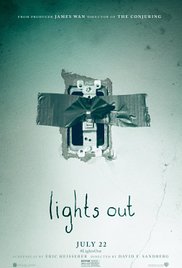 LIGHTS OUT (USA 2016) **
Directed by David F. Sandberg
Starring: Teresa Palmer, Gabriel Bateman, Maria Bello
Review by Gilbert Seah
LIGHTS OUT is a new low budget horror produced by HOSTEL’s James Wan and directed by David F. Sandberg based on his short story.
LIGHTS OUT is based on several potentially scary premises. There is the mother with mental health problems, the imaginary friend who could be a figment of mother’s imagination (or not), a boy scared of the dark and a monster that disappears and burns in light, surviving only in the dark. But one second thoughts, none of those are original concepts. The last one, though seemingly new is the same premise used in all vampire films.
But the movie plays confidently as a film that scares from things that go bump in the night. A large part of the film obviously takes place at night. The majority of the scares come from the ghoul called Diana who can appear out of nowhere, but only in the dark. As the lights go out in the house, a large mansion of course, the survivors have to arm themselves with torches or flashlights, batteries that soon run out of juice. This ‘novelty’ runs out very fast. After half an hour, the film really gets monotonous, with Diana appearing and disappearing. A bit of distraction is also provided in the script in which Diana might be imaginary and in the head of the mother, Sophie (Maria Bello), who was previously a mental patient.
Sandberg knows how to incite fear from small and dark enclosed spaces. But it takes much more to make a complete horror film.
The story goes like this. When the film opens, a creature kills a man who had promised to return home to his son who had complained of his mother being mental. The boy, Martin (Gabriel Bateman) is still afraid years later with the mother still having problems now manifested in Diana, who she has befriended in the mental hospital. Now Diana is able to appear as a creature but only in the darkness. Diana is breaking her promise that she will not hurt the mother’s children. Enter (out of nowhere), Rebecca (Teresa Palmer), Martin’s older sister and her sexy boyfriend, Bret (Alexander DiPersia) to rescue Martin from crazy mom and monster Diana.
The film makes the rules of the monster as it goes along – how it exists and so forth. The actors all do their screaming convincingly with Bret being the beau in distress. This is more of a female film where the women are heroes with the male and female roles reversed. No complaint here, as it is good to see things going the other way for a change.
But LIGHTS OUT would have succeeded as a 30-minute short film. It is stretched out too long, even at only 80 minutes. Boring, over manipulative and predictable, the film is a good idea that unfortunately does not play out as a full length feature. But it should make its money owing to its low budget. It would be interesting to see what writer/director Sandberg comes out with next.
 Amy Winehouse (1983–2011)
Born: September 14, 1983 in Southgate, London, England, UK
Died: July 23, 2011 (age 27) in Camden, London, England, UK
Musically, Amy Winehouse created a cross-cultural and cross-genre style. She experimented with an eclectic mix of jazz, soul, pop, reggae, world beat and R&B. She had a special ability to channel hurt and despair into her performances. Her voice, phrasing and delivery sometimes sounded like a mix between Billy Holliday, Dinah Washington and Sarah Vaughan, and coupled with similarities in personal problems, she at times resembled another incarnation of legendary “Lady Blues”.
Amy Winehouse died at the age of 27, on 23 July 2011, in her London home following a long-running battle with alcohol addiction. She was cremated at Golders Green Crematorium and her ashes were laid to rest in Edgwarebury Jewish Cemetery in London, United Kingdom. Her death caused considerable mourning worldwide.
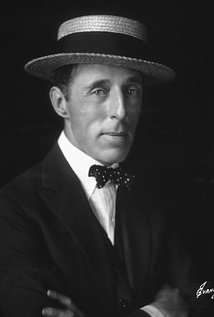 D.W. Griffith (1875–1948)
Born: January 22, 1875 in LaGrange, Kentucky, USA
Died: July 23, 1948 (age 73) in Hollywood, Los Angeles, California, USA
He has been called “the father of film technique,” “the man who invented Hollywood,” and “the Shakespeare of the screen”.
In 1920, he established United Artists with Charles Chaplin, Douglas Fairbanks, Mary Pickford.
Sometimes, whether you like it or not you have to give the devil his due. D.W. Griffith’s “Birth of a Nation” may be an embarrassing reminder of the dark side of our history that we’d just as soon sweep under the rug, but for better or worse it invented the feature film as we know it.
 WAY DOWN EAST 1920 dir. D.W. Griffith Starring Lillian Gish Richard Barthlemess |
 Intolerance 1916 dir. D.W. Griffith Starring Mae Marsh Robert Harron |
 JUDITH OF BETHULIA 1914 dir. D.W. Griffith Starring: Blanche Sweet Henry B. Walthall |
 AN UNSEEN ENEMY 1912 dir. D.W. Griffith Starring: Lillian Gish Dorothy Gish |
 ORPHANS OF THE STORM 1921 dir. D.W. Griffith Starring Lillian Gish Dorothy Gish |
 THE BIRTH OF A NATION 1915 dir. D.W. Griffith Stars: Lillian Gash Mae Marsh |
Similar to our number two, Orson Welles, if that was the only film he ever made it would probably be enough to grant him a spot on this list.
Prior to “Birth” movies were very much filmed stage plays, with single camera’s recording the comings and goings with as little dynamism as possible. Possibly more than anyone else of his day, Griffith understood how film could manipulate an audience’s emotions, put them in the characters shoes through manipulation of images: the jump cut linking disparate images into a combined idea; the use of medium shots and close ups to alter the viewers response to a characters circumstances (the closer the shot the more you feel what the character is feeling): deep focus to enable action to occur on multiple plains, creating visual tension and irony. He used panning shots to communicate real scale and backlighting to enhance mood. He understood that camera height and angle would subconsciously affect the audience’s understanding of a scene.
Others were experimenting with these same techniques of course, and might even have put them all together eventually, but Griffith did it first and best.
And he did it biggest. The James Cameron of his time, bigger was always better for Griffith. “Birth of a Nation” was the most expensive film ever made until a few year later when his next film “Intolerance” premiered. In “Intolerance” he took his experimentation with editing to its next logical step, copying Eisenstein’s theory of montage as he told an epic story intercut across four different timelines, from ancient Babylon to his own modern day.
More important than the scale of his narratives was the, well, scale of his narratives. Until Griffith came along most films were 60 minutes or less, with exhibitors and studios unsure about an audience’s stamina for taking in longer entertainments. Griffith, however, saw the opportunity for longer running times to allow for more development of character and theme and greater depth of storytelling. And with “Birth of Nation’s” colossal box office (approximately $200 million in modern figures, the highest grossing film of all time until the 1930s) he proved it was financially viable as well.
Griffith was undeniably a man of his time and his films, particularly “Birth of a Nation” are filled with the sort of hateful, blatant racism that is so out of step with modern society. An argument can, and has, been made that his film and his own pedestal are built entirely out of his technical skill, that much of the underlying material is cliched and embarrassing despite whatever changes they wrought. There is more than a little truth to that and Griffith’s place in filmmaking history is likely to remain controversial for quite some time.
Roger Ebert made a famous comparison of “Birth of a Nation” to Leni Refinstahl’s “Triumph of the Will,” describing both as great films about evil. In that sense, “Nation” perhaps even achieves a height it’s creator never intended. It tells us not just about what film can do, but also about evil as well and that’s a necessary knowledge because you can never change a thing until you understand it.
The fact is the modern film of today has not moved too far from the standard Griffith created. Whether he was the first to do it or just the best, Griffith was the one who standardized modern film vocabulary for the greatest number of people and thereby set the tone for everyone who came after him. Whether we like it or not, his impact on filmmaking is inescapable.
 Montgomery Clift (1920–1966)
Born: October 17, 1920 in Omaha, Nebraska, USA
Died: July 23, 1966 (age 45) in New York City, New York, USA
| I Confess 1953 dir. Alfred Hitchcock Cliff Karl Malden |
 From Here to Eternity 1953 dir. Fred Zinnemann Cast Burt Lancaster Montgomery Clift |
| Suddenly Last Summer 1959 dir. Joseph L Mankiewicz Starring Elizabeth Taylor Katherine Hepburn |
 The Misfits 1961 dir. John Huston Starring Clark Gable Marilyn Monroe |
 A PLACE IN THE SUN 1951 dir. George Stevens Stars:Elizabeth Taylor |
 Tom Mison
Born: July 23, 1982 in England, UK
Married to: Charlotte Coy (April 2014 – present)
| SLEEPY HOLLOW TV SHOW PILOT 2013 Created by: Len Wiseman, Phillip Iscove, Alex Kurtzman, Roberto Orci |
 ONE DAY dir. Lone Scherfig Stars: Anne Hathaway Jim Sturgess |
|
 SLASH
Born: July 23, 1965 in Hampstead, London, England, UK
Saul Hudson, mainly known as Slash, was born on July 23, 1965, and was raised in Stoke-on-Trent. Both his parents worked in the entertainment business, his mother being a clothing designer (she did some of David Bowie’s costumes) and his father being an art director for a record company. When Slash was 11 he moved with his mother to Los Angeles, leaving his father behind in England, although he eventually joined them in L.A. years later. Slash became sort of an outsider at school since he didn’t really fit in with other kids. In the mid 70s his parents separated and Slash moved in with his grandmother. During this time Slash got interested in BMX riding, and went on to win several awards and money in competitions. When he was 15 he got his first guitar, and his schoolwork started to go downhill as he skipped class to sit playing guitar all day. Slash eventually got so tired of school that he dropped out in 11th grade. As he lived in Los Angeles, a city flourishing with new, young rock bands, he quickly got in touch with people to jam with. After meeting Steven Adler the two of them formed a band called Road Crew. Then he met Izzy Stradlin who played in a band with Axl Rose, and after hearing Axl sing live, he was set on getting him in his band. Soon a bass player answered one of Slash’s ads in the paper, and Slash (guitar), Steven (drums), Izzy (guitar), Axl (vocals) and Duff McKagan (bass) formed Guns N’ Roses in 1986. Soon enough, GNR were known across the globe as the new rock n’ roll sensation.
Married to: Perla Ferrar (15 October 2001 – present) (filed for divorce) (2 children)
Renee Suran (10 October 1992 – 1997) (divorced)
 Marlon Wayans
Born: July 23, 1972 in New York City, New York, USA
Married to:
Angelica Zackary
|
 Paul Wesley
Born: July 23, 1982 in New Brunswick, New Jersey, USA
| Best of THE VAMPIRE DIARIES TV show |
 Best of 24 TV show |
|
 Charisma Carpenter
Born: July 23, 1970 in Las Vegas, Nevada, USA
After 7 years playing Cordelia Chase, 3 years on Buffy the Vampire Slayer (1997) and 4 years on Angel (1999), Charisma was not invited back as a regular for Angel’s fifth and final season. She agreed to return for the 100th episode although she wasn’t asked until Sarah Michelle Gellar turned down the chance to guest star in the episode.
 REQUIEM FOR A DREAM
 Norbit
 LiTTLEMAN
 G.I Joe: The Rise of Cobra
 Marmaduke
 A HAUNTED HOUSE
 24 SEASON 7

