Interview with Festival Director Dave Krzysik (Brainwash Drive-In/Bike-In/Walk-In Movie Festival

Brainwash is the original drive-in movie festival! Since 1995 they’ve delighted audiences with a selection of the bizarre, the unique, and just plain old well-made movies from independent producers all over the world. With an eye toward the abstract, the innovative and the weird, with a name like Brainwash (originally the Cacophony Short Film Video Drive-In Movies Festival), they attract entries they curate to be able to display some of the most cutting edge cinema from up and and coming directors, actors, producers and crews consistently year after year.

http://www.brainwashm.com/

Interview with Dave Krzysik:

Matthew Toffolo: What is your Film Festival succeeding at doing for filmmakers?

Dave Krzysik: We have been working at getting wider exposure through European and domestic (US) cable TV.

MT: What would you expect to experience if you attend the festival this year (2016)?

DK: Some really great and just plain weird movies. People are always out there making them, and we get our share to screen.

MT: What are the qualifications for the selected films?

DK: We have to explain this to producers sometime, and all we could ever think of was one word: “Brainwashy”. I hope that helps!

MT: Do you think that some films really don’t get a fair shake from film festivals? And if so, why?

DK: I really have to say I think it’s fairer to approach this concept from the opposite, that a lot of movies would never get a fair shake outside of film festivals, considering the consistent state of the film industry’s concentration at the top.

MT: What motivates you and your team to do this festival?

DK: I must have been born for the movies, because after 22 years doing Brainwash, it’s still fun! The other people who work on the festival are all cinephiles of a certain type, that is, they appreciate the uncommon and the off-beat, the type of movies attracted to festivals in general and those with that extra edge that come to Brainwash.

MT: How has the festival changed since its inception?

DK: Technology! When we started in 1995, we screened an equal amount of 16mm film and VHS tape (older readers will remember those movie mediums). Then, shifting to digital, DVDs had to be produced by special services and they were expensive. Now, so many movies are produced entirely on IPhones that it has become one of the top rated movie cameras, right up there with Panavision, Arriflex, Bolex, Canon and the rest, and we get mostly digital file downloads.

MT: Where do you see the festival by 2020?

DK: More and more exposure for the producers. We find there’s an industry that’s growing for exposing independent movies for more relevant critical acclaim and more financial benefit for the producers and promoters that I think can continue to do so.

MT: What film have you seen the most times in your life?

DK: Probably The Wizard of Oz, because it was always shown on television, and I liked it a lot, usually during the holidays when I was much younger and out of school and could watch television. But the one I like the best is 2001, A Space Odyssey, by Stanley Kubrick, although I haven’t seen it nearly as many times (yet). The Day The Earth Stood Still is another great I’ve seen a lot, on TV, and, recently, at another outdoor screening.

MT: In one sentence, what makes a great film?

DK: What I call the economy of movement, as with Alfred Hitchcock, Federico Fellini, the afore-mentioned Stanley Kubrick (in 2001), and, one of my favorites, but obscure in the industry, George Kuchar.

MT: How is the film scene in your city?

DK: Always exploding with great movies and festivals in the greater SF Bay Area, a little stunted in Oakland, itself, at the present moment.

drivein2.jpg

_____

Interviewer Matthew Toffolo is currently the CEO of the WILDsound FEEDBACK Film & Writing Festival. The festival that showcases 10-20 screenplay and story readings performed by professional actors every month. And the FEEDBACK Monthly Festival held in downtown Toronto on the last Thursday of every single month. Go to www.wildsound.ca for more information and to submit your work to the festival.

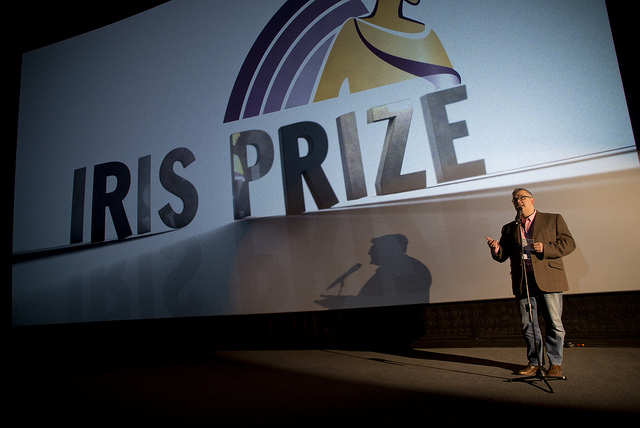
Interview with Festival Director Berwyn Rowlands (Iris Prize Festival)

The Iris Prize Festival is a five day public event which includes screenings of the 35 short films competing for the Iris Prize, 15 competing for the Best British Iris Prize, premiere screenings of new feature films, retrospectives, panel sessions, networking opportunities, parties and a glittering awards show. All events are open to the public and take place at Cineworld, Chapter, and Park Inn Hotel in Cardiff.

Past winners, include Dee Rees (US) – 2007, Till Kleinert (Germany) – 2008, Eldar Rapaport (Israel/US) – 2009, Magnus Mork (Norway) – 2010, Daniel Ribeiro (Brazil) – 2011, Grant Scicluna (Australia) – 2012, Tim Marshall (Australia) – 2013, Brendon McDonall (Australia) – 2014 and Arkasha Stevenson (US) – 2015.

Berwyn Rowlands(4)Interview with Berwyn Rowlands:

Matthew Toffolo: Why is Iris special?

Berwyn Rowlands: The Iris Prize – Cardiff’s International LGBT Short Film Prize is supported by The Michael Bishop Foundation and continues to be the only LGBT short film prize in the world which allows the winner to make a new film. Iris is what film makers need – funding, support and guidance. The winner receives £30,000 to make their next short film in the UK. 7 short films have been produced to date in collaboration with the winning filmmakers of the Iris Prize. The 8th short is in pre-production.

MT: How big is the Iris family?

BR: The Iris family is international and brings together a global network of 25 partner film festivals in 19 countries. Film makers, journalists, distributors and members of the public who are interested in film making – gay or straight are members of the Iris family. Actor Simon Russell Beale (Spooks), authors Alan Hollinghurst (The Line of Beauty) Sarah Waters (Tipping the Velvet), and journalist Johann Hari (Independent) have all been members of the prestigious International Jury. 24% of the Iris audience are straight!

The Chair of the Iris Prize is much respected journalist Andrew Pierce. He is supported by five patrons who offer the festival invaluable support: Lord Glendonbrook (Michael Bishop), Matthew Rhys (Actor), Sara Sugarman (Director), Christopher Racster (LA based Producer) and Carol Coombes (Miami based Festival Producer).

MT: What is your Film Festival succeeding at doing for filmmakers? 

BR: We try our best to find a new audience for filmmakers work and each year our audience numbers increase. I guess we are also unique in that we invest in film production. Each year at least one short film is funded by the festival through the Iris Prize. The £30,000 cash prize is the world’s largest LGBT short film prize and is supported by the Michael Bishop Foundation. To date we have produced 7 short films with the winning film makers and we are currently in pre-production with the 8th.

MT: What would you expect to experience if you attend the festival this year (2016)? 

BR: 2016 is our 10th anniversary so you will experience some reflection looking back but mostly, we will be looking forward. We’ve increased the number of films competing for the two main short film prizes. Five new partner festivals have also joined the family bringing the total number to 25. This network of festivals in 19 countries makes us confident that what you see at Iris is truly the best of the best. Our new motto last year was “Watch Films. Party Nightly. Repeat” I expect more of the same in 2016 with the added bonus of a 5 day long 10th birthday party!

MT: What are the qualifications for the selected films?

BR: We delegate the responsibility for selecting most of the short films at Iris to our 25 partner festivals. Each partner is asked simply to select the best short film from their country or region. We talk about excellence in storytelling, which involves many people across many disciplines. Film is a collaboration! But at the heart is the ability to tell a story and captivate an audience.

MT: Do you think that some films really don’t get a fair shake from film festivals? And if so, why? 

BR: I don’t know is the answer! We are quite unique at Iris in that we can appreciate and understand both sides of the debate as we are both film producers and festival organisers. To get the most out of a festival experience, the film maker needs to do quite a lot of research. Just appearing without any prep work at a festival, could end up a costly and worthless exercise. Similarly I think festivals must be honest about what they can offer the film maker. Don’t exaggerate the number of press attending for example. Try and be as generous as you possibly can with visiting film makers – if they leave happy they will be the best ambassadors for your festival.

MT: What motivates you and your team to do this festival? 

BR: We basically want more people to see LGBT stories. The festival has been a great way to start the process. However at Iris we have adopted a holistic approach to reaching our audience, working in partnership with broadcasters, digital platforms, traditional exhibitors (dvd’s) as well as the more traditional festival / cinema experience.

MT: How has the festival changed since its inception? 

BR: It has changed in a couple of key areas. Firstly, it is bigger. 1500 admissions were recorded in our inaugural year. In 2015, we reached 7000 and fingers crossed we will get closer to 10,000 this year. Secondly digital technology is changing the way we produce films, and is having a huge impact on distribution and exhibition. Sharing films digitally (for selection and exhibition) and screening them at non cinema venues has offered us the chance to reach even more people.

MT: Where do you see the festival by 2020? 

BR: 5 years is a long time in this sector. If we continue to be relevant to film makers and our audience we should still be sharing LGBT stories during the annual film festival, and supporting the production of new films via the Iris Prize. I imagine we will also be reaching new audiences in ways we would not have expected, which might not involve the festival! The opportunities are endless and in a way I’m glad I don’t know about the future – but at the same time I’m excited about what we might achieve.

MT: What film have you seen the most times in your life?

BR: Love Actually followed by Jaws. 

MT: In one sentence, what makes a great film? 

BR: The ability to take you to another place and make you laugh or cry and if you are lucky both!

MT: How is the film scene in your city? 

BR: Cardiff is vibrant and busy. The TV sector is impressive with a lot of UK network television produced by the BBC coming from Cardiff e.g. Casualty and Doctor Who! We also have a strong education sector supporting the next generation of directors and producers.

****

Berwyn Rowlands

Berwyn is a Welsh Internationalist who has 30 years’ experience in film and events with a significant track record of turning artistic and strategic vision into reality.

In 2006 he established the Iris Prize – presented annually during the Iris Film Festival in Cardiff, Wales (UK). 7 short films have been produced to date with the Iris Prize. Burger and Followers were selected out of 8200 entries for the 2014 and 2015 Sundance Film Festival.

In 1997 Berwyn was appointed the Chief Executive of Sgrîn Cymru Wales in which capacity he established Ffresh, the Student Moving Image Festival of Wales, the Wales Screen Commission, and the National Screen and Sound Archive of Wales (in partnership with the National Library of Wales).

Berwyn has produced content which has been broadcast on BBC, ITV and S4C including Llety Piod (UK) starring Bill Nighy.  Among projects for radio, he produced Wales: Land of Film for BBC Radio 2.

_____

Interviewer Matthew Toffolo is currently the CEO of the WILDsound FEEDBACK Film & Writing Festival. The festival that showcases 10-20 screenplay and story readings performed by professional actors every month. And the FEEDBACK Monthly Festival held in downtown Toronto on the last Thursday of every single month. Go to www.wildsound.ca for more information and to submit your work to the festival.

Interview with Executive Director Stefanie Malone (National Film Festival for Talented Youth)

NFFTY is the world’s largest and most influential film festival for emerging directors. In 2015, we screened 248 amazing films from the best filmmakers 24 and younger representing 30 states and 25 countries, with over 12,000 in attendance. We provide a first-class festival experience that includes four days of film screenings, parties, networking events and panels. In 2014, MovieMaker Magazine rated NFFTY as one of the top 50 festivals worth the entry fee.

NFFTY 2016 will be held in April 28 – May 1 in Seattle, WA.

http://www.nffty.org/

Interview with Stefanie Malone:

Matthew Toffolo: What is your Film Festival succeeding at doing for filmmakers?

Stefanie Malone: NFFTY is the world’s largest and most influential film festival for emerging directors. We showcase the best new best new filmmaking talent age 24 and under. NFFTY occurs each spring in Seattle, Washington and includes over 200 film screenings from talented filmmakers and media artists from around the world. Workshops, panel discussions featuring industry professionals, and contests provide educational and networking opportunities for attendees. Filmmakers submit feature-length and short films in narrative, documentary, animation, music video, experimental, and action sport categories. It has been compared to Sundance and Cannes for young filmmakers, and we take that reputation seriously.

Many festivals tend to overlook the potential of a young filmmaker simply because of their age. NFFTY stands apart from those festivals by recognizing the creative talent these individuals really do have and providing them with a one-of-a-kind, first-class festival experience that they won’t get anywhere else. Not only do they get to screen their films to sold-out audiences of hundreds, they get to network with other young people just like them as well as top industry professionals that could help them jumpstart their careers.

I think Kevin Klauber (NFFTY filmmaker and editor of Oscar-winning documentary 20 Feet from Stardom) put it perfectly when he said, “NFFTY is overwhelmingly positive. NFFTY is a perfect test ground for what it’s like to be a filmmaker in today’s world. It’s the most positive festival I’ve ever been to in terms of encouraging creative work.”

MT: What would you expect to experience if you attend the festival this year (2016)?

SM: For starters, you’ll have a chance to see creative endeavors by the next generation of filmmakers. NFFTY is the opportunity to see the next Martin Scorsese or the next Kathryn Bigelow. At NFFTY 2016, we will feature 227 films from filmmakers in 24 countries and 33 US states. We have a variety of genres and some of the most gripping short documentaries in the world.

Opening Night is our biggest affair, kicking off at the world-renowned Cinerama with a red carpet and five short films from NFFTY filmmakers. We then host a Gala presented by Volvo Car USA at the Columbia Tower, the tallest building in Washington state, where the celebration continues.

Some of the highlights of NFFTY 2016 include an incredible selection of documentaries that explore human race, culture and relationship in a screening called “The Human Race” and a closing night screening that (in honor of our tenth festival) explores the power of story through diverse stories called “Around the World in Ten Films”.

Additionally, we have panel discussions like “Get Real: Filmmaking in VR” and a masterclass by Oscar-nominated director Christian Christiansen on navigating the world of independent filmmaking.

MT: What are the qualifications for the selected films?

SM: This year we received over 1,000 submissions from around the world, and I can say that there were many wonderful films that we had to pass over this year. We have an amazing Selection Committee that screens all of the films and provides feedback. Those films then go on to the Programming Committee who reviews comments and films and works from there.

I would say that the biggest factor in getting selected is story. We place higher value on this than on the production quality. With the advancement in accessibility to technology and camera, many people are making films. But what is the story? Where do you take the audience?

MT: Do you think that some films really don’t get a fair shake from film festivals? And if so, why?

SM: I know that we would love to show more films at our festival, and based on the quality of the work that was submitted we had to turn away some really good films this year. We simply have limitations in terms of time and space. This year we had to pass on a lot of quality work and, honestly, it hurts to send those rejection emails. It’s a competitive landscape out there and we do our best to represent great films from around the world.

MT: What motivates you and your team to do this festival?

SM: This is a unique festival that treats these young, creative filmmakers like the VIPs that they are. There is something remarkable about being around young, creative spirits. NFFTY’s filmmakers are supportive, collaborative, and give me hope for the future of film and storytelling. I feel lucky to be surrounded by them, which leaves me feeling refreshed and energized with a renewed spirit of creativity.

MT: How has the festival changed since its inception?

SM: NFFTY grew from a one-day festival in 2007 founded by three teenagers that were hoping to connect young media artists. Today it stands as the world’s largest film festival for young filmmakers (24 and under) that spans four days and has supported over 2,000 filmmakers in its ten years.

Over the years, we have embarked on initiatives to support particular needs in the film community. In 2014, NFFTY created its Young Women in Film initiative, a year-round effort to support young female filmmakers around the world. NFFTY also launched an in-house production company known as NFFTY Creative with the mission of connecting sponsors and brands with the festival’s most promising alumni to work on original branded content projects. The first major project, A Supporting Role, a short documentary earns multiple accolades including ADDY Awards and a Telly Award. These projects and initiatives have allowed the festival to grow a year-round presence with a focus on supporting our young filmmakers.

MT: Where do you see the festival by 2020?

SM: I hope it continues to grow through year round programming, partnerships and a larger global footprint. I would love to see it build upon its educational offerings and unique ways that we can continue to bridge opportunities for filmmakers as they make the leap to the professional world.

MT: What film have you seen the most times in your life?

SM: It would probably be a tie between Annie Hall or Duck Soup. Comedy is good for the soul and I can’t think of anyone funnier than Woody Allen or the Marx Brothers.

MT: In one sentence, what makes a great film?

SM: I think a good film ultimately wrestles with the dilemma: what makes a good life? It can be through the tenderness of a man’s final moments as he grasps onto the cherished memory of Rosebud or through Rick bidding farewell to Ilsa.

This doesn’t mean that every film has to be so grand as Citizen Kane or Casablanca, but that we can experience and share in the human condition and plight — even for a moment — in a film.

MT: How is the film scene in your city?

SM: The film scene in Seattle is growing. We are fortunate to have a strong contingent of talented female filmmakers that rivals the traditional landscape. We are home to two very talented independent directors – Lynn Shelton (Laggies, Your Sister’s Sister, Humpday) and Megan Griffiths (Lucky Them, Eden) and their excellent producers Mel Eslyn and Lacey Leavitt. There is a strong documentary scene in the town as well. There is a host of organizations like NFFTY, Northwest Film Forum, SIFF, Grand Illusion and Three Dollar Bill Cinema that continue to create a thoughtful community for filmmakers and support independent film.

Interviewer Matthew Toffolo is currently the CEO of the WILDsound FEEDBACK Film & Writing Festival. The festival that showcases 10-20 screenplay and story readings performed by professional actors every month. And the FEEDBACK Monthly Fesival held in downtown Toronto on the last Thursday of every single month. Go tohttp://www.wildsound.ca for more information and to submit your work to the festival.

Interview with Festival Director Mark Starks (Superhero Short Film Fest)

Come celebrate the 1st Annual Superhero Short Film Fest at the Grace A. Dow Memorial Library Auditorium in Midland, MI on Monday April 18, 2016! Superhero Short Film Fest features a Live Screening of the Top 10 Films, followed by a Costume/Cosplay Contest!

https://filmfreeway.com/festival/SuperheroShortFilmFest

Interview with Mark Starks:

Matthew Toffolo: What is your Film Festival succeeding at doing for filmmakers?

Mark Starks: Our value – and purpose – is to curate, provide imprimatur and thus help shape the culture of the local community by exhibiting quality films from independent filmmakers.

MT: What would you expect to experience if you attend the festival this year (2016)?

MS: Highlights of the festival include a special screening of the teaser trailer MALELOVENT, the first US 2-D, hand-drawn animated horror movie, starring Morena Baccarin, William Shatner, Ray Wise, Bill Moseley and Dani Lennon, and LIBERATOR – an award-winning 18-minute short starring Lou Ferrigno as a disgraced, washed-up ex-superhero trying to get his life back on the rails. The film also stars Peta Wilson, Michael Dorn and Ed Asner. We’ll also be screening the first episode of WACKY WALLY’S VINTAGE TOYS!, featuring Wally Wingert, a voice actor and pal-of-mine from Hollywood. Wally was the announcer for the last four years of The Tonight Show with Jay Leno. The Top 10 selected films embrace a diversity of genres, including comedy, drama, action, and fantasy. We conclude with an open costume/cosplay contest.

MT: What are the qualifications for the selected films?

MS: Strong writing is essential, along with acting, directing, editing and sound. Many of the selected films have outstanding special effects. For low-budget films, they really push the envelope. Then there is the obvious element of hero(es) with a problem or goal to give the story drive. Lastly, the audience must believe what each is fighting about.

MT: Do you think that some films really don’t get a fair shake from film festivals? And if so, why?

MS: I think a lot of great films are overlooked at festivals, due in part to the volume of submissions. But thankfully, with the advent of digital media and the democratization of filmmaking, there are new avenues for the filmmaker to explore, including speciality theaters, VOD, or simply via social media. A film may be may not get a fair shake on the festival route but become the next viral sensation!

MT: What motivates you and your team to do this festival?

MS: We are excited to offer a de facto four-wall release for filmmakers through festival-run programs and partnerships above and beyond the event itself. We’re motivated by the terrific support of fans, sponsors and the community.

MT: How has the festival changed since its inception?

MS: The festival has obviously grown tremendously since its inception. There are currently more than 3000 active film festivals worldwide. …and there are many more categories, including experimental, independent and animation. I participated in my first film festival in 1978, in middle school, where I screened my Super-8 animated films. It’s great to see more diversity and support than ever for the independent filmmaker.

MT: Where do you see the festival by 2020?

MS: I see more festivals on more screens, along with sponsors and community partners, and continued growth in overall attendance. Look for a record number of guests participating in all of the events the film festival has to offer.

In regards to our festival, we plan to include more activities, including signings and panel discussions. Recently, I was a panelist at Stan Lee’s Comikaze Expo in Los Angeles. We screened a segment of my motion comic book series, MARTIAN. I was truly impressed by the size and scope of the event.

MT: What film have you seen the most times in your life?

MS: Actually, it is the 1966 feature, BATMAN, with Adam West and Burt Ward. As a child, I never missed an episode of the television series. I didn’t see the first run of the film in theaters, but was thrilled to see it for the first time as The ABC Sunday Night Movie. I remember scanning TV Guide back then to see when it would air again. So, as a child, I racked up a lot of viewings of BATMAN – maybe too many. I enjoy seeing the surviving cast members at autograph shows, and even wrote a biography on Johnny Green and the Greenmen, one of the BATMAN guest-stars.

My favorite Hollywood actor is Paul Ganus, a classmate from Midland. It’s a Michigan thing – like Kate Upton and the (Detroit) Tigers.

MT: In one sentence, what makes a great film?

MS: A great story, with engaging characters that you can relate to and root for.

MT: How is the film scene in your city?

MS: Thriving! The MATRIX: MIDLAND Festival at Midland Center for the Arts (one of our sponsors) showcases films, and the Chippewa Nature Center is proud to host one of the stops on the Banff Mountain Film Festival World Tour.

Mark Starks, Festival Director, is an award-winning writer, author and independent film producer. He is a graduate of Central Michigan University (BAA – Journalism/Broadcasting & Cinematic Arts).

____

Interviewer Matthew Toffolo is currently the CEO of the WILDsound FEEDBACK Film & Writing Festival. The festival that showcases 10-20 screenplay and story readings performed by professional actors every month. And the FEEDBACK Monthly Festival held in downtown Toronto on the last Thursday of every single month. Go tohttp://www.wildsound.ca for more information and to submit your work to the festival.

Interview with Executive Director Joseph Shahadi (The Art of Brooklyn Film Festival)

The Art of Brooklyn is a nonprofit, founded in 2011 that celebrates, nurtures and supports Brooklyn’s independent film scene– a local scene with global influence. We produce an annual film festival, curate our own VOD streaming channel and create original, branded media about Brooklyn art and culture.

The 6th Annual AoBFF runs June 8-12, 2016 at multiple venues across the Borough.

www.aobff.org
www.brooklynondemand.com

Interview with Joseph Shahadi:Matthew Toffolo: What is your Film Festival succeeding at doing for filmmakers?

Joseph Shahadi: The Art of Brooklyn Film Festival (http://www.theartofbrooklyn.org/art-of-brooklyn-film-festival.html) is the only international independent film festival in the world dedicated to the vibrant Brooklyn indie film scene. We screen films and entertain audiences across the entire borough, including neighborhoods traditionally underserved by cultural events. And we are committed to inclusion among filmmakers, film genres, and audiences. The Brooklyn scene is overflowing with talent, in every neighborhood and community. But since Manhattan-adjacent north Brooklyn neighborhoods are often seen as the focus for art and culture, the bulk of Kings County is excluded. AoBFF has successfully expanded the notion of “Brooklyn” to include the entire borough again.

We’ve also developed our own streaming channel, called Brooklyn On Demand (http://www.brooklynondemand.com/) — the only video-on-demand platform for Brooklyn-centric titles. By creating our own channel we’re making Brooklyn’s indie film scene accessible to audiences internationally, and affirming the borough’s importance as a center for independent film and media. Technical.ly recognized us with a 2016 Brooklyn Innovation Award for Brooklyn On Demand.

We are a 21st century film festival; we’ve maximized our value to filmmakers and audiences by expanding the idea of what a film festival can — and should— do.

MT: What would you expect to experience if you attend the festival this year (2016)? 

JS: Well I can’t tell you about the films yet because our submissions are still open and we watch everything that comes in until midnight of the last day, which is April 22nd this year. (Yes, we’ve programmed films that were submitted to us at the last minute. More than once.) But one thing we do know is that the films will reflect the diversity of Brooklyn’s independent film scene, both in the borough and around the world. In addition to our “main campus” in Downtown Brooklyn, which is easily accessible from all over the borough and Manhattan, we have screenings set for neighborhoods throughout Brooklyn— Sunset Park, Fort Greene, and Bay Ridge.

This year we’ll have more panel discussions than ever, drawn from current events. One of these is about women in film in front of and behind the camera, co-produced with New York Women in Film and Television. And our Guest Festival Director for 2016, award-winning film maker Eric Trenkamp will host an intensive mini-seminar on micro-budget filmmaking alongside representatives of the city and state film offices.

We also throw a pretty great party to kick off the festival every year with amazing food and an open bar.

artofbrooklyn
MT: What are the qualifications for the selected films? 

JS: We are the only festival in the world that exclusively features films created and catalyzed within Brooklyn’s independent film scene, which has members living and working independently in multiple countries. So in order to qualify for the Art of Brooklyn Film Festival filmmakers have to make a case for how they participate in Brooklyn’s indie film scene either in the borough itself or around the world.

MT: Do you think that some films really don’t get a fair shake from film festivals? And if so, why? 

JS: Festivals often overlook films that don’t fit neatly into genre categories because they aren’t sure how to program them. That can have a chilling effect on experimentation in independent filmmaking as that kind of limitation is internalized. We want to support the next generation of filmmakers in pushing the boundaries of visual storytelling so we introduced a category for experimental films called Film As Art, and we give our Vanguard Award for excellence in this category. Frankly, we’ve been surprised at how popular those screenings are. I once sat next to a pair of very old ladies and I gently inquired if they were at the right screening. They informed me that they’d made certain to attend Film As Art, then they watched intently, asked great questions at the talk back and gave me a piece of hard candy on their way out, like a boss. It goes to show that you can’t make assumptions based on an idea of the popular taste: audiences are smarter and cooler than that. At least in Brooklyn.

MT: What motivates you and your team to do this festival? 

JS: We were inspired to found the Art of Brooklyn Film Festival in 2011 when we realized that— even though Brooklyn is the site of the first great cultural renaissance of the 21st century— the borough didn’t have a large scale, international, film festival devoted to it’s own scene. We have worked to establish ourselves as a real resource for filmmakers and audiences throughout the borough. We were (and are) motivated to produce an inclusive, international independent film event where everyone feels welcome. As far as we’re concerned there are no “wrong” neighborhoods. In 2012 (the last year see were able to keep careful track) we had guests from every single zip code in Brooklyn.

MT: How has the festival changed since its inception? 

JS: We are bigger. Since our start in 2011 we’ve grown every year— with new screening locations, more entries, and a growing network of filmmakers and audience who follow us on social media and look forward to our next festival. We’re now a part of Brooklyn’s cultural landscape.

And of course creating and launching Brooklyn On Demand has been a huge part of our growth as we head into our sixth year. Now we are able to participate in the evolving distribution model that streaming media provides. In October 2015 we launched BKOD as a Roku channel alongside Netflix, Hulu Plus and Amazon Prime and it has over 100K views and 7000+ subscribers to date. We recently expanded our slate of offerings to include original series as well as films. Soon we’ll start producing our own original content.

MT: Where do you see the festival by 2020? 

JS: The director Eliot Lester (Nightingale, Blitz), who has been a judge with us for years, called us “Brooklyn’s Tribeca.” That’s as good a description of our goals as any: We want to be Brooklyn’s flagship indie film event and continue to create platforms for the best of the borough’s independent media makers.

MT: What film have you seen the most times in your life? 

JS: I watch a lot of films for work and pleasure but I always return to movies I loved as a kid. I’ve probably seen David Lynch’s Dune (1984) 75 times. The sleeper must awaken.

MT: In one sentence, what makes a great film?

JS: I think what writer Terence Des Pres says about fiction works for all kinds of films too: 1) Vigorous engagement with life, 2) imaginative force to subvert and remake the world, and 3) the sense to keep them “locked in stubborn love with each other.”

MT: How is the film scene in your city?

JS: It’s amazing. Brooklyn has become an international center for independent film and media makers. We are proud to be their film festival.

;

brooklyn.jpg

____

Interviewer Matthew Toffolo is currently the CEO of the WILDsound FEEDBACK Film & Writing Festival. The festival that showcases 10-20 screenplay and story readings performed by professional actors every month. And the FEEDBACK Monthly Festival held in downtown Toronto on the last Thursday of every single month. Go tohttp://www.wildsound.ca for more information and to submit your work to the festival.

Interview with Festival Director Allen Myers (The Earth Day Film Festival)

The Earth Day Film Festival is a platform to showcase art and film projects of an Earth sensitive population. Our film festival runs entirely on Clean Energy with Zero Waste goals, holding film screenings around the world on Earth Day and throwing fat festival full good earth love and mind expansion in San Francisco. We match the action to the message.

http://www.earthdayfilmfest.org/

Interview with Allen Myers:

Matthew Toffolo: What is your Film Festival succeeding at doing for filmmakers?

Allen Myers: As a filmmaker myself, I understand the work it takes and the value of the films for the creators. It’s important that we honor those who are the backbone of the festival: the films and their creators. We have partnered with Ro*co Films, an international film distributor who will be present at the festival to watch the official selections. Ro*co Films will also hold a panel discussion for filmmakers, describing the current climate of film distribution and steps to bring their films to the market. We have an industry mixer where storytellers- our filmmakers- can partner with environmental organizations. We have also spent a lot of time ensuring that our gift bags for film makers are loaded with great gifts expressing our appreciation. This is a holistic and growth oriented approach that I think any film maker would appreciate.

MT: What would you expect to experience if you attend the festival this year (2016)?

AM: One of our tag lines is, “Changing the content we celebrate and how we celebrate it.” We are not interested in the traditional regurgitated story lines that are being pumped out by hollywood and other avenues looking for a safe, money making approach. We are looking to be as cohesive as possible in a holistic approach to how an “Earth Day Film Festival” should look. We work to ensure our practices match the messages we share by using clean energy to power all of our screenings and maintaining zero-waste goals. We are also stepping away from traditional black box theater experiences and moving into environments that align with the stories we share. For example, we will screen a block of films around this years theme-Water- onto the sails of a sail boat in the San Francisco Bay. We will have a nature walk with a native plant specialist with filmmakers who will sharing their films in the forest. What you are going to experience is the future of how festivals will operate and the stories that will be shared. Its all incredibly exciting.

MT: What are the qualifications for the selected films?

AM: The main requirement we have established is honesty. Is this an honest film? This criteria extends to fiction films too. We select sincere creations, not something that is seeking fame or glory through the traditional channels. We are looking to share stories that inspire us to create a better world. We understand that an earthly experience is a broad experience and we welcome diverse interpretations. We are not set on “nature porn” as some might assume. Some of my favorite films are on the experimental side. There are several stages in this consciousness movement. First is awareness to the veil that has been pulled over us. For most, the initial reaction to this deceit is, understandably, anger. We get a lot of documentaries and films that present that voice. To appreciate films that call others forward into the journey, we present the “Activist Award”. The next phase is application, “what are we doing in our lives to create a better world?” We award this film with “The New Paradigm Award”.

The “Earths Choice Award” goes to the film that has aligned message with produced methods, meaning a environmentally low-impact film about the environment. As you can see we are not a traditional film festival and we are proud of that.

MT: Do you think that some films really don’t get a fair shake from film festivals? And if so, why?

AM: Absolutely, a large part of that has to do with safety. If we continue on the paths that other film festivals have traveled for so long, we will just keep getting more of the same stories and same results.

MT: What motivates you and your team to do this festival?

AM: We are motivated by the shared vision we hold to reconnect humanity to a planet that many of us might feel separated from. That it is somehow just a resource to use, where we believe we are the world and it is through holistic and intentional systems that we will be the healthiest and happiest we can be.

MT: How has the festival changed since its inception?

AM: Growing rapidly!

MT: Where do you see the festival by 2020?

AM: I see this festival continuing on the path that it is on and expanding all over the world. Part of our festival is understanding that a film festival celebrating the Earth should not be location specific; it is for the Earth as a whole! For that reason our selected themed films are open to people around the world who wish to screen them in their communities. All we request is that the films be screened with clean energy and that zero waste goals are upheld (meaning no one time use items such as straws, disposable bags etc). The main idea behind this event is to create a global collective consciousness movement, one that is positively directed and focused around themes of environmental remediation, global community and peace. We are excited about current technological developments around the internet and mass communication and would like to utilize that to affect positive action. This year, selected films around the theme of water will be screened in Los Angles, San Francisco, Vancouver, Mexico City, Madrid and New York. I see our awards like the “New Paradigm Award”, “Activist Award” and “Earths Choice” being as coveted as an Academy Award.

MT: What film have you seen the most times in your life?

AM: Probably “Baraka”

MT: In one sentence, what makes a great film?

AM: Honesty, a true unique voice.

MT: How is the film scene in your city?

AM: San Francisco is rough right now, it’s in a state of ‘pay to play’ and a lot of the artists have up and left for more supportive communities. This does make for great story telling and any artist will tell you that through trial and tribulations some of the best art is brought forward. There are several filmmaker groups and art collectives that continue to share the indy filmmaker voice. Merchants of Reality and the ATA are good examples of that.

earth_day_2.jpg

_____

Interviewer Matthew Toffolo is currently the CEO of the WILDsound FEEDBACK Film & Writing Festival. The festival that showcases 10-20 screenplay and story readings performed by professional actors every month. And the FEEDBACK Monthly Festival held in downtown Toronto on the last Thursday of every single month. Go tohttp://www.wildsound.ca for more information and to submit your work to the festival.


Interview with Festival Director Todd Looby (BendFilm Festival)

13th Annual BendFilm Festival : October 6th – 9th, 2016

BendFilm celebrates the brave voice of independent cinema through films, lectures and education. A constant member on Movie Magazine’s 50 Fests worth the entry fee.

http://www.bendfilm.org/

Interview with Todd Looby:

Matthew Toffolo: What is your Film Festival succeeding at doing for filmmakers?

Todd Looby: We provide a platform for underrepresented / under-appreciated filmmakers. We want to help them build their careers. Our feature filmmakers are now receiving travel stipends to encourage attendance. We also provide lodging for all filmmakers. We want our filmmakers to spend their money on their films and not on plane tickets. We also want to provide an atmosphere where our filmmakers can network with each other and the public to encourage future collaborations. We also offer $8,500 in cash awards (including $5,000 for Best in Show) and a $60,000 Panavision Camera Package.

MT: What would you expect to experience if you attend the festival this year (2016)?

TL: If you’ve been to BendFilm before, you’ll expect to see our best addition yet. We just brought on Erik Jambor as programmer. He has 17 years experience Directing some of the best Fests out there: Sidewalk Moving Pictures, IndieMemphis and even a short stint at BendFilm in 2007. Erik is already putting together a program that will give everybody something to see and hold on to. And, of course…since we are serious about “Celebrating” independent Film, our parties and events will not disappoint!

MT: What are the qualifications for the selected films?

TL: We typically prefer Oregon premieres, but we often screen films that will have played at Ashland or Portland. What we really look for are the diamonds in the rough – again, films that have been underappreciated or we predict will be so. We want to see someone do the impossible. An example is a film that just shouldn’t work on paper and when you actually see what the director, actors and crew were able to do with nothing, you walk out amazed.

MT: Do you think that some films really don’t get a fair shake from film festivals? And if so, why?

TL: Yes. I think some festivals rely too much on where the films have played previously. We want to be a discovery fest and that fits well with Erik’s philosophy as well. Of course, we also program more popular films, but we want to give the smaller films the same amount of exposure and better chances to win our cash awards.

MT: What motivates you and your team to do this festival?

TL: We’re motivated by our belief in the power of film to change lives and improve our community. Bend is relatively isolated in the middle of Oregon. Though a popular destination, our community doesn’t get regular access to working artists. We also only have one small arthouse in town. Our fest provides access to films that wouldn’t otherwise screen in Bend and also provides access to the artists that make these films. Independent Films are more conversation starters than the Hollywood fare. Our community and visitors learn more about hot-button issues and the outside world. Independent films also have higher minority and women representation. We are introducing our community and visitors to different points of view they do not see in mainstream films or media.

MT: How has the festival changed since its inception?

TL: We do a lot of things the same as we’ve always done. However, Bend is changing fast and we are keeping up with the changes and expanding exponentially. In 2015, we received 3x the amount of submissions we did in 2014. This year we expect more. We are doing many more screenings and events throughout the year. We are also expanding our education programs.

MT: Where do you see the festival by 2020?

TL: I think BendFilm has the potential to be a leader in the independent film festival industry. This town can’t be beat. I’m relatively new here and still awed by it’s natural beauty and laid-back feel. Though as a filmmaker I never screened here, the minute I came I had an inking of what a filmmaker sees when coming here for the first time. They’re in awe. Our feedback each year gets better and better. As we improve our programming and national exposure, I think even more and more people will come here for the fest. It’s simply the perfect place to host a festival like ours.

MT: What film have you seen the most times in your life?

TL: Probably “Midnight Run”. Our family finally got cable in 1989 and I was introduced to so many films I hadn’t seen before, but “Midnight Run” sticks with me (though it’s been awhile since I’ve seen it). There was a time when I knew it by heart. It’s my perfect kind of film: It’s hilarious, it has incredible heart, it has a great moral compass and it can change tone at the drop of a hat. It’s really one of the more underappreciated films in existence. I also think it was either that or Untouchables that introduced me to DeNiro and, thus, the other movies I’ve watched most are DeNiro films: Goodfellas, Mean Streets, Raging Bull, Deer Hunter, etc, etc.

MT: In one sentence, what makes a great film?

TL: My compass for a great film is simply that elicits a strong emotional response – whether it’s laughter, tears, genuine shock or deep thought (which I consider emotive). I see too many films these days that are languid. I understand that filmmakers want to get away from the action and plot-driven Hollywood fare, but I think they also sacrifice the need to emotionally connect with an audience. Great filmmakers are able to make character-driven films that are artful, heady, yet engaging and accessible.

MT: How is the film scene in your city?

TL: Our community has a deep appreciation of cinema. This fest is really a community-driven event. It’s so well supported locally. And as far as filmmakers, more and more move here each year. They may fly out to shoot, but the more they’re here, the more local filmmaking will increase. At BendFilm, we’re trying to coalesce everyone together at least quarterly to network and develop collaborations. We also have a great relationship with Tim Williams at the Oregon Film Office. A former BendFilm Director, Sandy Henderson, is also opening up a Central Oregon Film Office to increase local filmmaking.

____

Interviewer Matthew Toffolo is currently the CEO of the WILDsound FEEDBACK Film & Writing Festival. The festival that showcases 10-20 screenplay and story readings performed by professional actors every month. And the FEEDBACK Monthly Festival held in downtown Toronto on the last Thursday of every single month. Go tohttp://www.wildsound.ca for more information and to submit your work to the festival.

Interview with Festival Coordinator Emily Smith Beitiks (Superfest: International Disability Film Festival)

Superfest: International Disability Film Festival is a showcase of juried films held in the San Francisco Bay Area. For nearly 30 years, this annual competition has celebrated cutting-edge cinema that portrays disability in all its diverse, complex, and empowering facets. We are proud to be the longest running disability film festival in the world.

http://www.superfestfilm.com/

Interview with Emily Smith Beitiks:

Matthew Toffolo: What is your Film Festival succeeding at doing for filmmakers?

Emily Smith Beitiks: Superfest provides an opportunity for filmmakers to tell stories about disability that are more nuanced and complex than what we typically see in Hollywood, unfortunately. We celebrate the work of filmmakers with disability and explore how the insights of living with a disability enrich their work. In addition, we work closely with our filmmakers to help them get their films audio described and captioned. Even though the films are about disability, many filmmakers have never considered the importance of making films accessible to people with disabilities. We coach them on how they can go about this, as it is a mandatory requirement for all films that screen at our festival.

MT: What would you expect to experience if you attend the festival this year (2016)?

EMB: Our 2016 attendees will experience some exceptional films that will push our audiences to reconsider what they know about disability and disabled people worldwide, but there’s much more to Superfest than just watching the films. We deliberately choose to limit our festival to a weekend so that it can serve as a more unified cultural event. From our hilarious emcee Nina G (the world’s best female, stuttering comedian) to our rich panels with filmmakers to our event party, Superfest allows our attendees to come together as a community to celebrate how disability enriches the arts. This year is the 30th anniversary of our festival, so we’re working even harder to make this our best year yet.

MT: What are the qualifications for the selected films?

EMB: Most importantly, we seek films that avoid the common but problematic tropes of disability. For example, we’re looking for films that neither patronize nor deify people with disabilities, that avoid stereotypes to go beyond disabled people as victims or villains. We get a lot of submissions that the disability community calls “inspiration porn.” These films look at the stories of individual disabled people while they do things like climbing Mt Everest or biking across continents to show what they can do in spite of their disabilities, never addressing the discrimination people with disabilities face nor questioning why a disabled person should have to do such herculean tasks in order to prove their social worth. Those get rejected real fast.

MT: Do you think that some films really don’t get a fair shake from film festivals? And if so, why?

EMB: It depends on the festival of course, but some prioritize high standards for technical quality and production, which hurts some really great (but radical and incredibly low-budget) stories from getting screened. While we of course want films that are executed with high quality, a film with a really great message made on a shoestring budget can make it into Superfest.

MT: What motivates you and your team to do this festival?

EMB: Personally, I’m grew up with a disabled mother so I witnessed how our society treats people with disabilities. I believe that disability need not be seen as tragedy nor pity, and feel that having a disabled mother transformed me for the better. This upbringing motivates my efforts to showcase how disabled people bring creativity and expertise that enriches our world.

The directors of the festival, Catherine Kudlick, Director of the Longmore Institute on Disability, and Bryan Bashin, CEO of the SF LightHouse for the Blind and Visually Impaired, are both disabled people themselves who are motivated to participate in Superfest because of the festival’s rich history among Bay Area disability groups and long-standing record of promoting the rights and interests of disabled people. All of our judges are disabled people, so we proudly support the disability rights slogan “Nothing About Us, Without Us” through out festival’s grassroots approach.

MT: How has the festival changed since its inception?

EMB: After its developmental years in Los Angeles, Superfest was transferred to the Bay Area in 1998. Operated as a project of Culture! Disability! Talent! (CDT), annual film festivals were held in Berkeley 1998-2011. In 2012, CDT began to search for new leaders with the vision, talent and energy to take Superfest to the next level. They found Catherine Kudlick and Bryan Bashin. Because the festival is now connected two organizations, we have a stronger infrastructure to put on a bigger festival and to promote it more widely. In addition, we’re now making Superfest a model of accessibility. All films screen with audio description and captioning, our spaces are wheelchair accessible, and ASL interpreters are always present.

MT: Where do you see the festival by 2020?

EMB: Since the Paul K. Longmore Institute on Disability and the SF LightHouse for the Blind and Visually impaired took over the festival in 2012, we’ve sold out every single one of our screenings. By 2020, we want to maintain the feeling of community that we’ve achieved in our past three festivals but we want to be able to accommodate an even larger audience so that no one will have to miss out. This would also allow us to make new partnerships and broaden the festival’s reach to groups that might not be thinking about disability in the arts (but would benefit from doing so – veterans are a good example of this).

MT: What film have you seen the most times in your life?

EMB: Well my real answer would probably be something that I watched repeatedly as a kid like The Labyrinth. But if you’ll allow me to connect it to Superfest: in 2014, we screened a short film called “The Interviewer” and since, I’ve probably watched it over 20 times. Many colleagues and friends have spread the word about how great it is and keep requesting that I play it for others. And honestly, I still laugh in earnest every time I see it – that’s how good it is.

MT: In one sentence, what makes a great film?

EMB: A great film takes something ordinary but helps me think about it an entirely new way, or it takes something extraordinary and yet allows me to connect with it.

MT: How is the film scene in your city?

EMB: So, so, so good. San Francisco is a hard place to live with the high cost of rent, but man, the support for diverse culture and arts here is pretty phenomenal. That being said, I’m a mom of two young kids, so I don’t take full advantage of it.

____

Growing up with a disabled mother, Emily Smith Beitiks witnessed how our society treats people with disabilities. She believes that disability need not be seen as tragedy or pity, and feels that having a disabled mother transformed her for the better. Beitiks received a PhD in American Studies at the University of Minnesota in April 2012. In her current position as Associate Director of the Paul Longmore Institute on Disability at San Francisco State University, she continues her work as a scholar and advocate of disability to showcase how disabled people bring unique value that can benefit us all. She is the coordinator of Superfest: International Disability Film Festival.

Interviewer Matthew Toffolo is currently the CEO of the WILDsound FEEDBACK Film & Writing Festival. The festival that showcases 10-20 screenplay and story readings performed by professional actors every month. And the FEEDBACK Monthly Festival held in downtown Toronto on the last Thursday of every single month. Go tohttp://www.wildsound.ca for more information and to submit your work to the festival.

Interview with Festival Director Travis Gonzalez (Yale Student Film Festival)

The Yale Student Film Festival (YSFF) is an emerging student-run short film festival, providing the opportunity for university-level filmmakers, both foreign and domestic, to exhibit their work. It will be held on Yale University’s campus April 18th – 23rd.2016.

Interview with Travis Gonzalez:

Matthew Toffolo: What is your Film Festival succeeding at doing for filmmakers?

Travis Gonzalez: I think the Yale Student Film Festival succeeds at providing a large platform for filmmakers who may not attend a university known for it’s film production students. At Yale, it’s currently the most visible exhibition of our small community of filmmakers, whose work generally will only be seen by a handful of close friends and family (unless they choose to apply to other festivals). YSFF offer visibility where there previously was very little. By opening up the submission process to university-level filmmakers internationally, we are hoping to connect Yalie artists with the larger network of students out there creating work, many on their own or for the first time. The festival is an initiative born out of the Yale Film Alliance, a new umbrella organization fostering growth in the film community through events and coordination with Bulldog Productions (est. 2003, Film Production) and The Yale Film Society (est. 1950s-1960s, Film Appreciation)

MT: What would you expect to experience if you attend the festival this year (2016)?

The 2016 iteration of YSFF, it’s second year, will be a week-long showcase, beginning with screenings and workshops led by Yale Alumni in the entertainment industry. This will culminate in our two-day student screening block, where approximately twenty-five short films will screen across five different blocks (Super Shorts, Narrative Shorts, Documentary Shorts, Experimental Shorts, and The 2016 Yale Senior Thesis Films). Every screening will be followed by a Q+A. The student screenings will be followed by an awards dinner for all invited filmmakers. The festival is designed to be a learning and networking environment, where filmmakers from different universities will be able to connect and exchange ideas, while those rooted in the industry provide guidance and relevant feedback.

MT: What are the qualifications for the selected films?

All selected films must have come from a filmmaker currently enrolled in University. The films must be work that demonstrates movement towards professional filmmaking, but not quite at that level. Basically, we are looking for first-timers or those taking their first steps towards becoming professionals. YSFF is a short film festival, so we have a cap of forty-five minutes for a film, although generally it is more likely for a twenty-five minute film to be programmed into the screenings over one of double that length. Beyond those restrictions, the festival is open to submissions from students at an international level.

MT: Do you think that some films really don’t get a fair shake from film festivals? And if so, why?

Traditionally, Film Festivals can be seen as cultural gatherings that benefit the image of the city or host organization providing support for the event. Because of that, I think many festivals want to select films that are flashy and add to the spectacle of having a multi-day screening event. Films that are more understated, challenging, and out-there have a harder time of being accepted because they run the risk of taking us out of the spectacle. At Yale, however, there is a stronger emphasis on the filmmaker as part of the process, and bringing films to campus that do more to engage with an audience on a more thoughtful level. For us, it’s not a matter of what project will get the most “oohs” and “ahhs,” but whether or not you leave the theatre still thinking about and engaging with the work.

MT: What motivates you and your team to do this festival?

As a filmmaker myself in a school not traditionally known for film production (we have a great Film Studies Program, however), it’s very easy to feel isolated from the arts community. Theatre has very old roots at Yale, and film, by comparison, is very young. My team and I are motivated by a desire to bring our fellow artists into the spotlight and to showcase the work they are making early in their careers. By doing so, this will ultimately foster a stronger network of alumni and current students in the film industry, and bring further resources to filmmakers trying to turn their ideas into reality. This festival will be our roots.

MT: How has the festival changed since its inception?

Last year, the inaugural festival was only a weekend-long and was restricted to Yale affiliated filmmakers across the undergraduate, graduate, and alumni networks. We still screened twenty films, and the result further fortified our community, but it was much more insular than this year’s festival.

MT: Where do you see the festival by 2020?

I definitely see this festival being brought into a larger network of student film festivals, especially within the Ivy League. I definitely predict larger blocks of student screenings, and hopefully expanding our submissions categories to include screenplays and other aspects of filmmaking. Right now the festival is focusing on celebrating the technical craft of filmmaking, but I feel like it will soon expand to cover acting and writing as well.

MT: What film have you seen the most times in your life?

Little Miss Sunshine. It was the first film that I connected to on a deep personal level, and I never saw film the same way after seeing it. And so I watch it any chance I get.

MT: In one sentence, what makes a great film?

A great film is one that can transport you to another world, another time, another way of thinking, but by the end of its runtime, still hit close to home.

MT: How is the film scene in your city?

New Haven has an enclave of artists in general that are sometimes over-shadowed by the Yale Community. There is a festival Arts and Ideas in the summer, and an emerging New Haven Documentary Film Festival that will also be going up around the same time. So, like Yale, I think the New Haven film scene is growing, and finding out what niche of film is the most prevalent.

http://yalefilmalliance.wix.com/yalestudentfilmfest
https://www.facebook.com/yalestudentfilmfestival/?fref=ts

PHOTO: Travis chats with fellow colleagues at the 2015 Film Festival:

yale_people.jpg

_____

Interviewee TRAVIS GONZALEZ is a senior in Film & Media Studies at Yale University and a filmmaker from Staten Island, New York. He was the president of Bulldog Productions, Yale’s only student-run film production company, and is the film festival director for the Yale Film Alliance. Travis has worked as a writer, producer, and director on various student films, and has worked as a freelance filmmaker for several clients, including: The Yale Admissions Office, The Association of Yale Alumni, Paprika!, Sugar Hill Culture Club, Those People, First Things Foundation, City Atlas: New Haven. He is currently in post-production for Over Dinner, a twenty-minute dramedy about an eccentric grandmother, a single mother/daughter, and her son/grandson that he wrote and directed.

Interviewer Matthew Toffolo is currently the CEO of the WILDsound FEEDBACK Film & Writing Festival. The festival that showcases 10-20 screenplay and story readings performed by professional actors every month. And the FEEDBACK Monthly Fesival held in downtown Toronto on the last Thursday of every single month. Go to www.wildsound.ca for more information and to submit your work to the festival.

Interview with Executive Director Mingu Kim (Toronto Smartphone Film Festival)

The Toronto Smartphone Film Festival was created with the goal to encourage aspiring filmmakers to share their stories through film, without having to equip themselves with expensive video equipment, training or field experience. As the largest smartphone film festival in Canada, TSFF provides aspiring filmmakers, from all backgrounds, with an international platform to showcase their work and talent.

Interview with Mingu Kim

Matthew Toffolo: What is your Film Festival succeeding at doing for filmmakers?

Mingu Kim: TSFF provides a unique platform for new, emerging and established filmmakers to showcase their films, not just locally but internationally. It’s another way for filmmakers to express their thoughts and ideas without spending thousands of dollars.

MT: What would you expect to experience if you attend the festival this year (2016)?

MK: This year we are celebrating our 5th anniversary and after several trial and errors, we have stronger award categories for filmmakers and more quality films for people to enjoy than ever. We are also partnered with 2 other organizations, Raindance Canada and Autism in Mind. Raindance Canada is working with us to educate people on smartphone filmmaking and as well as getting local filmmakers to try something different from the norm. Then we have Autism in Mind (AIM) this year to help promote the awareness of autism through film with a separate award category.

MT: What are the qualifications for the selected films?

MK: Our regulations are very simple. All films must be 10 mins or less where all scenes must be shot on either smartphones or tablets. We also receive a lot of international submissions so English subtitles are required if the main language used are not in English.

MT: Do you think that some films really don’t get a fair shake from film festivals? And if so, why?

MK: I think every film festival has its own colour and designated audience members to a certain degree, which can affect film selections. Therefore, filmmakers should also do a thorough research on various film festivals around the world to find a festival that best targets the type of films they produce. But then, it doesn’t hurt providing more room and leniency for new and emerging filmmakers, which would bring a broader spectrum of creativity and messages shared.

MT: What motivates you and your team to do this festival?

MK: I believe our motivation comes from doing what we enjoy. Many of us are independent filmmakers and we are constantly thinking from the filmmakers’ point-of-view to make TSFF a more inclusive festival. Every year has been a challenge but we feel rewarded knowing that filmmakers enjoy watching their films on big screen and viewers enjoy the difference of our festival compared to others.

MT: How has the festival changed since its inception?

MK: Well, to make the long story short, we began the festival within the Korean-Canadian community in Toronto 5 years ago under a different name. It started as a marketing strategy for my TV program on OMNI (Korean language programming). However, I saw the potential growth of the festival which needed to include anyone and everyone, so we changed our name into TSFF the 3rd year and became more global than what I had expected.

MT: Where do you see the festival by 2020?

MK: I am hoping for TSFF to become one of representing smartphone festivals in the world. We want to grow with the development of new technology so that our films are not only creative but also innovative.

MT: What film have you seen the most times in your life?

MK: It’s a touch question to answer because there are so many films. I love watching films in general, but I always tend to come back to Terminator 2.

MT: In one sentence, what makes a great film?

MK: A great film comes from one’s perseverance, dedication and believing in oneself.

MT: How is the film scene in your city?

MK: I think Toronto is one of the best cities representing the film scene. We are so spoiled with hundreds of film festivals that can be enjoyed throughout the year. There’s a film festival for everyone in Toronto!
torontosmartphone

____
Interviewer Matthew Toffolo is currently the CEO of the WILDsound FEEDBACK Film & Writing Festival. The festival that showcases 10-20 screenplay and story readings performed by professional actors every month. And the FEEDBACK Monthly Festival held in downtown Toronto on the last Thursday of every single month. Go tohttp://www.wildsound.ca for more information and to submit your work to the festival.