Film Review: THE BOOKSHOP (Spain/UK 2017) ***

 Submit your Screenplay to the Festival TODAY

The Bookshop Poster
Trailer

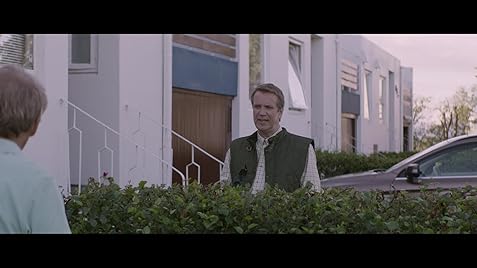
England 1959. In a small East Anglian town, Florence Green decides, against polite but ruthless local opposition, to open a bookshop.

Director:

Isabel Coixet

Writers:

Isabel Coixet (screenplay), Penelope Fitzgerald (novel)


The underdog trying to keep his or her land against insurmountable odds like high authority and the government has been a solid premise for films.  Two routes may be taken – the comedy or drama.  One of the most successful Australian films THE CASTLE saw a country bumpkin fighting to keep his house (a castle is a man’s home) from being taken way to build an airport runway.  In best selling novel adapted into the film THE BOOKSHOP, a widowed woman attempts to fulfil her dreams be opening a bookshop in a small English town which the town wants to take away from her.

Though looking quite the ordinary film Isabel Coixtet’s THE BOOKSHOP , based on Penelope Fitzgerald’s acclaimed novel arrives in Toronto of a special engagement run after winning 3 prestigious Goya Awards including Best Film and Best Director. Director Coixtet is Spanish.  The film stars Patricia Clarkson as the ‘baddie’ who has previously worked with Coixtet in LEARNING TO DRIVE as well as stars Emily Mortimer and Bill Nighy.

This is the second British film this year to tout reading books in a period setting, the other being the yet to be released Mike Newell’s THE GUERNSEY LITERARY AND POTATO PEEL PIE SOCIETY.  Both films involve the rendering of personal resolve, tested in the battle for the soul of a community.

The setting is England, 1959.  Free-spirited widow Florence Green aka Mrs. Green (Emily Mortimer) risks everything to open a bookshop in a conservative East Anglian coastal town.  While bringing about a surprising cultural awakening through works by Ray Bradbury and Vladimir Nabokov (who wrote the controversial LOLITA which Mrs. Green intends to promote and sell in the bookshop), she earns the polite but ruthless opposition of a local grand dame (Patricia Clarkson) and the support and affection of a reclusive book loving widower (Bill Nighy).   As Florence’s obstacles amass and bear suspicious signs of a local power struggle, she is forced to ask: is there a place for a bookshop in a town that may not want one?   

Coixtet’s film unfolds at such a leisurely pace, it might turn out too slow for some audiences (just as people might nod off during reading a book, as one character in the film says). .  She spends a good third of the film introducing the film’s main characters.  Clarkson is only seen for a few minutes during the first half the the film and Nighy only speaks after a third of the film.  

Based on a book by a female author and directed and starring a female, the film naturally extols female independence.  Unfortunately, the film falls into the familiar trap of containing weak or dislikable male characters, the exception being the Bill Nighy character despite revealed of a timid nature.   All other male characters like the General (the grand dame’s husband), Mr. North and Mr’s Green’s solicitor are all spineless detestable beings.

THE BOOKSHOP opens Aug 24th, but being British and already released n Europe, is also readily available on disks through Amazon and other similar platforms.

Trailer: https://www.youtube.com/watch?v=3KgMW3rowXY
 Submit your Screenplay to the Festival TODAY

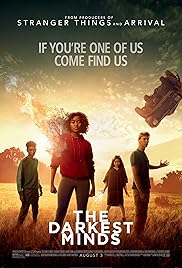
Film Review: THE DARKEST MINDS (USA 2018)

 Submit your Screenplay to the Festival TODAY

The Darkest Minds Poster
Trailer

Imprisoned by an adult world that now fears everyone under 18, a group of teens form a resistance group to fight back and reclaim control of their future.

Writers:

Chad Hodge (screenplay by), Alexandra Bracken (based upon the novel by)


The first of a trilogy, THE DARKEST MINDS is a young adult sci-fi action movie similar to films like the THE HUNGER GAMES, DIVERGENT series that made a whole lot of money for Lionsgate.  20th Century Fox (or Disney for that matter) obviously hopes for the same.  But THE DARKEST MINDS is quite the disappointment.

The premise  involves a devastating disease abbreviated IAAN, whatever it stands for.  

98% of the children are dead and the 2% surviving develop powers that no one understands.  The audience witnesses only one of these deaths though millions have occurred in the world in a school cafeteria of all places.  The film gets worse.  Poor African American Ruby (Amandla Stenberg) sees the poor girl die and the film suddenly focuses on Ruby.  Ruby has some powers that cause her to be taken, again like all the other children in the world to concentration camp like hospital centres to be cured of the powers.  Apparently the government wants to harvest these powers for their own army to fight against …..?  This part is never explained.  There are several levels of powers possessed by children, colour coded.  Ruby is orange which means she has the rare highest of the powers and those with orange are to be eliminated by death – a case of adults scared of the unknown.  (The future is orange!  Joke for the British.)

   One can hardly blame director Nelson whose other credits are the two KUNG FU PANDA animated features which were not half bad.  So one could blame the source martial or the kind of film she had been instructed to direct.  Based on the story described, THE DARKEST MINDS could be a real scary horror/satire involving the end of the world.  Instead, it turns out to be young adult fantasy that despite a few good ideas (like the colour coded powers) no one believes in.  

The film poses lots of unanswered questions.  Questions like: Why do all the parents not care about their children?  How did the disease originate?  What is the reason for the superpowers?  The synopsis in wikipedia describes a vicious bounty hunt by the name of Lady Jane which only appears briefly in the film.  The character must have been either edited out of the film or perhaps she appears in the sequel.

It is hard to describe the film’s best scene as there are none.  The film’s worst scene has the two leads declare their love for each other in a long 5 minute sequence that keeps them babbling sweet nothings to the audience’s yawns.

To the director’s credit, the film was made on a modest $38 million, looks acceptable and probably satisfies the studios.  She has some good images on screen, like the raised coloured hands at the end of the film signalling sequels to come.  I would like to quote a line used by the late Toronto film critic, John Harkness from NOW Magazine to describe the Hulk Hogan film he hated: “Recommended for backward children.”, a line that got him into a lot of trouble for writing, but for obvious reasons I will not use it for this film.  THE DARKEST MINDS shows a little promise and is interesting in certain parts, but could have been a much better start of the trilogy.

Trailer: https://www.youtube.com/watch?v=tN8o_E_f9FQ


 Submit your Screenplay to the Festival TODAY

Film Review: UNDER THE TREE (Iceland/Denmark/Poland/Germany 2017) ***1/2

 Submit your Screenplay to the Festival TODAY

Clip

When Baldwin and Inga’s next door neighbours complain that a tree in their backyard casts a shadow over their sundeck, what starts off as a typical spat between neighbours in the suburbs unexpectedly and violently spirals out of control.

Writers:

Huldar Breiðfjörð (story and screenplay), Hafsteinn Gunnar Sigurðsson (screenplay)


UNDER THE TREE is a simple story that unfolds in all its unpredictability and horror.  It is trouble for two neighbours, something that many can relate to.  The shade from a front yard tree brings tensions to a boil for two families in an Icelandic suburb.  The husbands Baldvin (Edda Björgvinsdóttir) and Konrad (Þorsteinn Bachmann) have a small argument over trimming the big tree as Konrad’s wife, Eybjorg (Selma Björnsdóttir) likes to lie in the sun and does not want the shade from the tree.  But the wives argue.  The tires of  a car are slashed followed by rude gnomes ornaments placed in the front of the house.  Then when the cat goes missing, all hell breaks lose.  

Amidst the arguing, there is a subplot of the son, Atli (Steinþór Hróar Steinþórsson) losing custody of his daughter after cheating on his wife., Agnes (Lára Jóhanna Jónsdóttir).   

Director Sigurdsson knows how to up the angst, as evident at the film’s start, the wife catches the son watching porn.  “Is that you in the porn?”  she suddenly notices.  “Isn’t that Rakel in it with you in the porn?”  she asks again before kicking him out of the house and taking custody of their daughter.  Again this is an incident that many separated couple go through, fighting for custody.   Sigurdsson also keeps certain factors unknown to keep the audience guessing.  Did the neighbour really slash the tires?  Did the neighbour really put in the gnomes?  And where is that darn cat that has disappeared, though the final incident is revealed at the end of the film.

Sigurdsson keeps his film engaging from start to end by making his characters real, reacting and doing things that normal people all over the world might end up doing, when pushed to the limit.  

Of all the characters, Inga (Edda Björgvinsdóttir) seems the nastiest.  She seems to be director Edda Björgvinsdóttir’s favourite. Inga slings dog shit at Eybjorg, calls her a cow and even calls her son a loser when he cheats on his wife.  The wives inch their husbands, who seem more tolerant, on.

Besides the black comedy, the film also contains segments of dramatic tension, like in the ones where Atli abducts his daughter or when he abuses her at her workplace.

The film is shot in the suburbs of the Icelandic capital of Reykjavik.  These houses are modern looking, colourful, modest and too close to each other for comfort.   Trees and sun are scarce in Iceland so one can understand a neighbour not wanting the shade and the other not wanting his tree touched.

Edda Björgvinsdóttir’s film demonstrates the worst there is in human beings, creating a dark comedy at its blackest. His characters are unforgiving (Agnes cannot forgive Atli for cheating), vindictive (Agnes calls her cheating husband out as a masturbator of sex videos he indulges in, at a community meeting) and cowardly.

The ending comes with a good twist that leaves audiences satisfied that they have seen a really black comedy/drama.  The film dominated the Edda Awards (Icelandic equivalent of the Oscars) with seven wins, including best film, director, actor (Steinþór Hróar Steinþórsson), actress (Edda Björgvinsdóttir), supporting actor (Sigurður Sigurjónsson), screenplay and visual effects.

Trailer: https://www.youtube.com/watch?v=tU7KeDwJCAc

 Submit your Screenplay to the Festival TODAY

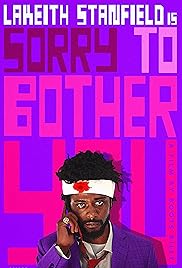
Film Review: SORRY TO BOTHER YOU (USA 2018) ***

Submit your Screenplay to the Festival TODAY

Sorry to Bother You Poster
Trailer

In an alternate present-day version of Oakland, telemarketer Cassius Green discovers a magical key to professional success, propelling him into a macabre universe.

Director:

Boots Riley

Writer:

Boots Riley


SORRY TO BOTHER YOU are the words one often hears on the telephone when called by an annoying telemarketer.  Cassius Green (Lakeith Stanfiled) has just landed the job as one after an interview where he is discovered for bringing in fake trophies and prizes.  He is told that one only needs to read and come to work with a smiling face to get a job.  But one has to stick to the script (STTS), the most important motto and one that is pinned everywhere in notices around the office cubicles.

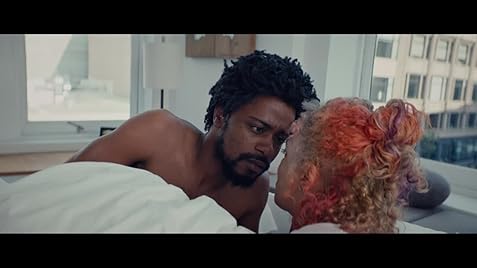
The film is set in an alternate present-day version of Oakland, where Cassius is having a rough life—living in his uncle’s garage with his girlfriend, Detroit (Tessa Thompson) and struggling to find a job.  Strapped for cash and desperate, he lands a position as a telemarketer, but has difficulty getting people to listen to him—until he discovers a magical key (introduced to him by a fellow telemarketer played by Danny Glover) to customers’ attention: using his “white voice”.   David Cross does Cassius’ white voice.  Cash quickly rises to the top of the telemarketing hierarchy, but risks losing sight of his morals as he achieves greater and greater success.

Things get crazier when Squeeze (Steven Yeun) organizes a strike.  But Cassius is singled out to become a power seller.  He gets to meet the big guy, Steve Lift (Armie Hammer) and begins working in a stranger environment when the film becomes weirder and weirder as a satire.  Nods are given to the George Orwell’s “Animal Farm” where Boxer the horse is a hard, tireless worker but eventually turned into glue when unable to work any longer.

SORRY TO BOTHER YOU is a complex satire that obviously had a lot of work put into it.  When Cassius gets to work in his cubicle reading his script to a customer in a home, Cassius literally drops into the homes and catches them in odd positions including making love. 

The film contains no real insightful message of things that people do not already know.  Besides having really impressive sets and art direction, and really hard effort put, the film is a mixed mess.  One has to complement the superb coordination of work by the set and art director and writer/director Boots Riley.  Riley follows the company’s motto of sticking to his script though diverting into surrealism as much as opportunities arise.  One thing to be learnt from this effort is that there need be some order in the creation of a satire on disorder.

For all that has been described this overlong feeling film running at 105 minutes feels really boring for the first 30 minutes or so, as Riley sets up the stage for his satire.  His film then kicks into action and pretty crazy action at that.

Though Riley’s SORRY TO BOTHER YOU might be a textbook example of maximum effort and minimum results, one cannot help but give the man (who is supposed to be an activist, musician and artist) credit for trying.  It is this trying and effort that gives his film the most pleasure.

Trailer: https://www.youtube.com/watch?v=J_5cO6RU3nw


Submit your Screenplay to the Festival TODAY

Film Review: THE DEATH (AND LIFE) OF CARL NAARDLINGER (Canada 2016) ***1/2

Submit your Screenplay to the Festival TODAY

The Death (and Life) of Carl Naardlinger Poster
When a mild-mannered IT specialist discovers that a man with the same name as his is missing, he goes looking for him in the Toronto ravines. But instead of finding him, he finds the missing man’s identical twin brother.


THE DEATH (AND LIFE) OF CARL NARRDLINGER is one of those quirky little films about quirky little characters that succeeds in a quirky sort of way.  Consistent, meticulous and occasionally insightful, this was the kind of Canadian film that shot directors like Atom Egoyan and Ingrid Veninger to fame.

Carl Naardlinger (Matt Baram) has spent most of his life answering questions – on the telephone.  When your computer does not work – he is the IT consultant you call. Patient, intelligent and kind he is a voice in the interconnected ether – touching the lives of thousands of people he will never see, or meet. The film opens with Carl Naardlinger in action, doing what he does best on the telephone, though the caller goes on and on (comically) about her life rather tan seeking the solution from him.

The next scene is set in the Naardlinger home where Carl celebrates his birthday with his wife, Pam (Grace Lynn Kung).  Pam is a real estate agent, over meticulous over her work and also in maintaining the perfect relationship with her husband.  They eat healthy, speed walk daily and tell each other everything that happens daily.  Well, almost.  After Carl blows out the candle on his cake, they are interrupted by a knock on the door by missing persons person, Detective Renton (Anand Rajaram).  A man with the same name as his has gone missing and is presumed dead.  Carl instinctively feels related to the stranger that bears his own name.  Pam, his wife, is unnerved by a shocking coincidence of her own, when their annoying neighbour dies after she wishes it. It seems the Universe is playing a cruel joke on them both. Things get stranger when instead of finding the missing Carl Naardlinger, Carl finds his identical twin brother Don (Mark Forward) who happens to be in town for a conference.

If all these events sound implausible, director Schleemer resolves the puzzle neatly at the end.  But her film is not to be enjoyed for the puzzle but by the odd behaviour of each character in her story.  Two other characters, a couple Paula (Beatriz Yuste) and Larry (Ryan F. Hughes) a non so perfect couple, acquaintances of the missing Carl come into the picture.  The one common trait among all of Schleemer’s characters is neediness.

Of all the actors creating all these oddballs, Grace Lynn Kung is terrific as the perfectionist Pam.  Kung won the Best Actress ACTRA Award for her role in this film.

The film is shot around Toronto in the city area and in the ravines where there still are lots of green.  The script make good use of Toronto and its surroundings with familiar names (to Torontonians) of areas and streets mentioned in the film.

Given the unknown names in the cast, the odd plot and the small budget, the film might no attract big enough a crowd to give this film the credit it deserves.

Trailer: https://www.youtube.com/watch?v=rrWZPADPm3I&feature=youtu.be

Submit your Screenplay to the Festival TODAY

Film Review: DARKEN (Canada 2017) **

Submit your Screenplay to the Festival TODAY

Darken Poster
A nurse finds herself in a dark and mysterious world.

Director:

Audrey Cummings

Writer:

RJ Lackie

The words at the beginning of tho new Telefilm Canada horror film DARKEN tells the audience: DARKEN is the resting sanctuary for all souls – whatever that means.  Darken is set in a bizarre, mysterious, and violent unknown world supposedly set with danger and death around every corner.  

Mother Darken appears to be the God in some alternative universe or different dimension.  Her high priestess, Clarity (Christine Horne) and oddball looking and acting assistant, Martin (Ari Millen) accuse a member of their religious sect of betrayal.  When the betrayer admits her guilt, she is stabbed and pushed out a door out of this universe.

A nurse, Eve (Bea Santos) helps the wounded girl, but ends up entering DARKEN through a one-way door.

Eve finds a violent prison-like world of labyrinthine rooms, interconnected with no apparent rhyme or reason and no way of escape.  If all this sounds weird and unbelievable – it is! As she fights for survival within this brutal place, she finds allies who are rebelling against the rule of a self-appointed religious despot who demands allegiance to the all-powerful god called “Mother Darken.”  Eve and the exiles, as they are called must fight with everything they have if they are to have any hope of surviving the horrors Darken has in store for them.  The exiles are told that they have to keep moving.  But apparently, they are moving nowhere – and getting to nowhere fast.  And again when one exile is wounded, Eve (humorously) says:” We need to move her now.”  

The film plays like a children’s playground game adults that have forgotten to grow up indulge.  The fight scenes are executed for more gore and violence that excitement.  Lots of pain are inflicted on the wounded.

Olunike Adeliyi playing an exile, Kali deserves an acting award for the most over-acting performance in a movie this year.  She demonstrates how to act with her eyeballs, nose, lips and grimaces.   The dialogue is terribly silly: “Mother (Darken) is terribly upset!”  “Whenever I turn my back, they always disobey me.”  “Mother is so angry with us.”  – being a few examples.  The character Clarity is exceptionally good at giving orders and doing nothing.  The exiles use lighters that they somehow have, to light their way in the darkness though none of them smoke.

Prior to the film’s theatrical release, the producers Shaftesbury had released an 11-part digital prequel series, Darken: Before the Dark on YouTube, taking audiences deep inside the fantastic otherworld of DARKEN.  The audience is presented here with multiple points of entry on a range of platforms to build a world around the film. With DARKEN, audiences can watch the digital series, connect and discuss on social, immerse themselves via the VR experience, see the film on the big screen, or pre-order it to re-watch at home

DARKEN went on to win Best Science Fiction Feature at Buffalo Dreams Fantastic Film Festival, Best Fantasy Feature at Motor City Nightmares International Film Festival, and won four awards at Blood In The Snow Festival including Best Director and Best Cinematography.  Whatever all these awards mean, DARKEN is not a very good horror film – overacted, overdone, unbelievable story – a textbook case of maximum effort and minimum results.  But DARKEN is recommended for its unintentional humour!

Trailer: https://www.youtube.com/watch?v=Itt-itaQZi0


Submit your Screenplay to the Festival TODAY

Interview with Festival Director Oliver Wolfson (THE 60 SECOND FILM FESTIVAL)

Introducing The 60 Second Film Festival India 2018. Presented with Yayin Studios, Pune India. Event sponsored by Chandan Kumar Entertainment, Chandan Kumar Film Director & Producer.

Contact

 
1) What is your Film Festival succeeding at doing for filmmakers?

We give filmmakers a chance to be seen and enjoyed by peers and professionals. We also offer freedom of creativity for artists.

2) What would you expect to experience if you attend the festival this year (2018)?

Joy, entertainment, education, and community.

3) What are the qualifications for the selected films?

Films should be 60 seconds or less, and have some good qualities that can benefit a live film festival audience.

4) Do you think that some films really don’t get a fair shake from film festivals? And if so, why?

No we think there are massive opportunities for filmmakers now to get their work seen at festivals, but also a lot of competition. There are no barriers except for the filmmakers energy, endurance, and creativity.

5) What motivates you and your team to do this festival?

We love to see talented creatives join together and become more than the sum of their parts.

6) How has your FilmFreeway submission process been?

We like this platform. It has been wonderful so far.

7) Where do you see the festival by 2023?

We have many interesting plans for this festival, but it will grow organically, so it’s hard to predict. We expect our audience and amount of creators to grow a lot by then.

8) What film have you seen the most times in your life?

16 Candles. I was stuck in a snow lodge for three month with only this VHS (in the late 1980s)

9) In one sentence, what makes a great film?

Emotional impact.

10) How is the film scene in your city?

Film and video is constantly being consumed on big and small screens.

60second1.jpg

____

Interviewer Matthew Toffolo is currently the CEO of the WILDsound FEEDBACK Film & Writing Festival. The festival that showcases 20-50 screenplay and story readings performed by professional actors every single month. And the FEEDBACK Monthly Festival held in downtown Toronto, and Los Angeles at least 3 times a month. Go to http://www.wildsoundfestival.com for more information and to submit your work to the festival.

Film Review: DISOBEDIENCE (UK/Ireland/USA 2017) ***1/2

Submit your Screenplay to the Festival TODAY

Disobedience Poster
Trailer

A woman returns to the community that shunned her for her attraction to a childhood friend. Once back, their passions reignite as they explore the boundaries of faith and sexuality.

Director:

Sebastián Lelio


Three big reasons stand out for one to see DISOBEDIENCE.  The first is its director, Chilean Sebastian Leilo who won the Best Foreign Language Film Oscar for A FANTASTIC WOMAN this year.  The second is the script, based on Naomi Alderman’s 2006 acclaimed novel, co-written by Rebecca Lenkiewicz who wrote the Best Foreign Film Oscar Winner IDA, a few years back.  The third is the cast of Rachel Weisz and Rachel McAdams who go all out to do a same-sex love story compete with a no-holds barred erotic sex scene.

The film begins with a scene of a dissatisfied New York photographer, Ronit (Weisz), a single woman in the city, shown never smiling and having casual sex while receiving news of her father’s passing in London.  She travels to London only to be met with a surprise welcome by the Orthodox Jews that she ran away from.  Her father was a strong pillar, a Rabbi of the Jewish Orthodox Community and she is deemed an outcast.  This is material that moviegoers would shy less run away from.  The film takes a while to gets its footing, and if one is patient enough not to give up on the uncommercial storyline, the reward is a well told powerful tale of freedom, especially from the feminine point of view that is so relevant in today’s times.

So, with her edgy clothing and tousled hair, Ronit looks out of place among the Orthodox women in their plain black garments and synthetic wigs.  She is also in for some unsetting surprises, including the contents of her father’s obituary and will.  She is further shocked to find that her two childhood friends – Esti (McAdams) and rabbi-to-be Dovid (Novice) – are now married.  When Dovid invites Ronit to stay with them, Esti and Ronit rekindle their secret passion for each other.  The film’s second half focuses on the love affair and Esti’s demand to be freed from her marriage form Dovid.

The Jewish rituals are respectfully created with perfect voices singing of the hymns.  But the film clearly has a prejudiced view of the Orthodox Jewish ways.  It looks down at the practices from the very first scene with the over-stern sermon on devils and angels given by the Rabbi before suffering the heart attack that initiates the story’s chain of events.

The sexual scenes are very graphic and erotic especially in the sharing of saliva during a sex scene, reminiscent of Stephen Frears’ sex scene in MY BEAUTIFUL LAUNDRETTE

The same-sex love is also seen for Esti’s point of view, not only from Ronit’s.  This makes the drama even more relevant.  Understandably, the film’s best scene is the confrontation between Esti and her husband when beating him on the chest, she confesses that she always loved Rachel.

The one reason the film about freedom is so powerful is that erector Leilo switches the points of view from Ronit to Esti to Dovid.  The audience sees and sympathizes with each, not only seeing each person in the love triangle’s point of view but knowing that each are trapped by the past and present emotions.

It does not matter how the story ends.  The film is about emotions and the right to choose, and Leilo’s message comes across bight and clear in his well-executed drama.

Trailer: https://www.youtube.com/watch?v=HEVonh8bjC0

Submit your Screenplay to the Festival TODAY

Film Review: A QUIET PLACE (USA 2018) ***1/2

Submit your Screenplay to the Festival TODAY

A Quiet Place Poster
A family is forced to live in silence while hiding from creatures that hunt by sound.

Director:

John Krasinski

Writers:

Bryan Woods (screenplay by), Scott Beck (screenplay by) |3 more credits »

A QUIET PLACE is actor John Krasinki’s third directorial effort, a horror film that premiered at the South by Southwest film festival.  Krasinski also co-write the script with Bryan Woods and Scott Beck based on their story.  His first two films (THE HOLLARS, BREIF INTERVIEWS WITH HIDEOUS MEN) were, to put it mildly, nothing to write home about .  A QUIET PLACE also stars Krasinki’s wife, Emily Blunt, which is a clear signal to stay away.  But DON’T.  A QUIET PLACE is his assured directorial piece that would put many horror directors to shame.  It is scary, suspenseful and even had the audience (at the promo I attended) cheering at the end.  These are signs of a good horror film, and the film has been getting rave reviews since its premiere.

The poster looks like David Cronenberg’s RABID.  A woman, bloodied lies in a bath tub.  The scene occurs in the middle of the film when Evelyn (Blunt) has to deliver a new born in silence while the monster attracted to sound lurks around the house.

The script concentrates on scary set-ups but omits details and history of the setting.  Nothing is mentioned on how the situation came about.  What brought about the destruction of the human race?  Where did these supposedly deaf creatures come from?  What is the reason the Abbott family is the only one that survived?  But one can argue that if the film works in its aim at scaring, no one should question these omissions in plot.  As Hitchcock as proven in many of his films, the same holds true in A QUIET PLACE.

The placement of an expecting mother having to give birth in silence for fear of monsters attracted to noise is nothing short of brilliant.  The delivery scene kept the audience at the edge of their seats, evident as I looked around the theatre during the segment.

A word of warning!  This film requires a very silent audience, so pick a seat away from others.  The screening I attended had a person bring his own snacks, and one could hear him crackling his packages open and cans of pop.  Really annoying.  The theatre should ban popcorn and snacks for the screening of this film.

The special effects and sound are impressive.  The monster with its big ears and dripping saliva moving around to the sound of a creaking door is sufficiently menacing.

It is well to note that Millicent Simmonds (Todd Hayne’s WONDERSTRUCK) who plays Regan the deaf daughter is deaf in real life.  Krasinksi did not want a non-deaf actress pretending to be deaf.  Most important is the fact that a deaf actress would help his knowledge and understanding of the situations tenfold.  Simmonds who communicates in American Sign Language in the film to avoid sound taught the actors ASL during the filming.  The authenticity comes through in the film.

A QUIET PLACE achieves what it aims at, a solid horror film with a message of strong family values that ends up satisfying entertainment for all. 

Trailer: https://www.youtube.com/watch?v=p9wE8dyzEJE


Submit your Screenplay to the Festival TODAY

Film Review: IN BETWEEN (BAR BAHAR) (Israel/France 2016) ***1/2

Submit your Screenplay to the Festival TODAY

In Between Poster
Trailer

Three Palestinian women living in an apartment in Tel Aviv try to find a balance between traditional and modern culture.

Director:

Maysaloun Hamoud


IN BETWEEN is a film that follows the lives of three young Palestinian women living in the vibrant heart of Tel Aviv.  For males just about to dismiss the film as another feminist movie, it should be noted that though all the characters, writer and director all being female, IN BETWEEN especially opens the eyes of those in North America, male and female alike on what it is like to be female in Tel Aviv.  For one, the film covers the little-known underground club scene (which the director grew up on).

The three women are Lalia (Mouna Hawa), Salma (Sana Jammelieh), and Nur (Shaden Kanboura) who share an apartment in Tel Aviv.  Lalia, a criminal lawyer with a wicked wit, loves to burn off her workday stress in the already described underground club scene. Salma, slightly more subdued though no less lively, is a DJ and bartender.  Nur is the younger, religious Muslim girl who moves into the apartment in order to study at the university.  Nur is both intrigued and intimidated by her two sophisticated roommates but eventually grows closer to see a new view of life.

Director Hamoud then introduces males into the picture.  The most hilarious of these is

Nir’s conservative fiancé who visits.  He is totally horrified (to the audience’s delight) by her secular friends, entreating her to hasten their marriage, leave Tel Aviv, and assume her rightful role as a wife.  This is when Hamoud’s film begins to make a statement, and an important one for all females all over the world that has more meaning now with all the sexual abuse allegations going on in the world.  Hamoud turns on the dramatic content in the film’s second half.  Nur refuses her fiance’s wishes, and his violent rebuttal leaves all of the women shaken.  Salma and Lalia also face turmoil: Lalia has found love with a modern Muslim man whose acceptance proves less than unconditional while Salma discovers that her Christian family in a northern Galilean village is not as liberal as they claim.  Hamoud riles up the audience’s anger at the fiancé by making him also a hypocrite and bold face liar.

The three interwoven stories are all very interesting and different enough.  Hamoud has her audience rooting for her spirited characters of three very different women finding themselves doing the same balancing act between tradition and modernity, citizenship and culture, fealty and freedom.  The film’s soundtrack also deserves mention.

Looking deeper into the film, the three characters incorporate females younger and older; from the town and the city as well as more traditional and less traditional.  Feminism is revealed in a different light especially in the film as a necessity to be liberated from the abuse of men.  Hamoud accomplishes the rare achievement of having even males despise male behaviour in her film.

The film has been selected for quite a few International Film Festivals so far including the Toronto International Film Festival in 2016 where it won the NETPAC Award, 2016 Toronto International Film Festival.  

Trailer: https://www.youtube.com/watch?v=fPiVZj8Mm7o

Submit your Screenplay to the Festival TODAY