Film Review: MY PIECE OF THE CITY (Canada 2017) ***

Submit your Screenplay to the Festival TODAY

This feature documentary explores the revitalization of Regent Park through the youth who live there as they navigate the challenges of performing in the musical showcase called ‘The Journey’.

Director:

Moze Mossanen

Writer:

Moze Mossanen

Every year, young people from Regent Park come together to perform “The Journey”, a musical exploring the complex history of their community’s revitalization, one of North America’s largest urban transformations.  The young artists come together to perform THE JOURNEY, a musical that helps them explore various challenges during this crucial period of their lives.  MY PIECE OF THE CITY is the new Canadian documentary that follows these young artists as they create the building blocks of the show, soar with their own artistry, and explore all that they have lost and gained as a new world builds around them.    

The transformations are shown in archive footage showing the old buildings together with the new.

Regent Park first started as a residential estate where there are no roads or streets entering it.  It therefore formed a bubble in the city of Toronto, different from other housing estates.  But this no-streets community became enclosed resulting in high crime of violence and drug dealing with the result of run-down buildings that finally had to be demolished to make for the new.  MY PIECE OF THE CITY is a documentary that tells the stories of the resident of Regent Park – both old and new, from different cultures as far as Brazil and Jamaica all striving to make their lives a better living.  Among the interviewees who have their say are Jackie Richardson, Alana Bridgewater and Jeremiah Sparks.  The documentary captures the hard work and drive of these people, often touching and moving mainly because these rare real people dealing with real problems.  

One character at one point in the doc says how she first came from Jamaica to Canada and this is the only Canada she know.  Another complains about the old community that is lost and how new residents fail to see the history of the community.

This is a story of poor people in a poor community.  Still, it is powerful to see how these people try to make the best of what they have.  The film also shows the difficulty of putting up the musical.  At one point, the organizer loses it for the participants not showing up for rehearsals on time.

MY PEACE OF THE CITY opens at TIFF Bell Lightbox Friday 23rd of February with a Question and Answer session at the 7 pm showing with its director Moze Mossanen.  In his own words: “I am more than thrilled to have “My Piece of the City” screen at the TIFF Lightbox as we’ll be able to share this extraordinary and moving story about the young artists in Regent Park with a larger part of our great city.  The transformation of Regent Park is one of the key turning points in Toronto’s evolution and I’m truly grateful to the programmers at TIFF for shining a light on this important moment as well as the people who are partners in this transformation.” 

This is a small doc with a running time of just an hour that might be a hard sell at today’s box-office. Still MY PIECE OF THE CITY is a quiet important piece that is well worth ones time at the cinema.

Trailer: https://vimeo.com/237568333
 

Submit your Screenplay to the Festival TODAY

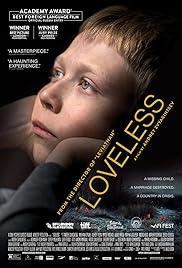
Film Review: LOVELESS (Russia/France/Germany/Belgium 2017) Top 10

Submit your Screenplay to the Festival TODAY

Loveless Poster
Trailer

A couple going through a divorce must team up to find their son who has disappeared during one of their bitter arguments.


Russian director Andrey Zvyagintsev’s (THE RETURN, LEVIATHAN) latest film of a boy gone missing, is one that appears simple on the surface but is in reality an extremely powerful (with strong political overtones) film on the tragedy that emerges from the result of lovelessness.  A divorcing couple’s son goes missing after all their shit.  LOVELESS is an analysis of the couple’s shit intercut with the detailed process with the police and volunteer group involved with the exhaustive search process.

Films about a couple’s breaking up have been surfacing quite frequent lately, the most recent two being AFTER LOVE (L’ECONOMIE DU COUPLE) a French film that has still no release in Toronto and the upcoming Emma Thompson film THE CHILDREN ACT about a high court judge’s foundering marriage.  Though expected to be a difficult watch, these films (LOVELESS included) have astonished with what else can be drawn in with the subject.

Zvyagintsev’s tale unfolds in the midst of the Russian invasion of Ukraine.  While searching for the missing boy, news can be seen on the TV of dozens of people killed senselessly from the war.  The couple’s relationship is also under deep scrutiny by the audience.

When the film begins, Boris and Zhenya are in the midst of a nasty divorce.  They still live together (as in THE CHILDREN ACT and AFTER LOVE) which makes matters worse.  In one of their fights, they argue that their 12-year old boy, Alyosh was a mistake.  Neither one wants custody of the boy and the father remarks that he best be sent to boarding school, in preparation for the army afterwards.  She says she never wanted him in the first place.  The boy, meanwhile, in the film’s most moving scene is shown crying his eyes out, after overhearing what have been said by his parents.  He is clearly, in his opinion unloved.  He disappears.  

Boris and Zhenya are forced to come together to search for their missing son.  The police do not have sufficient resources to help and they seek the aid of a volunteer group.  A huge segment of the film is devoted to the boy’s search.  Besides watching the amazement in efficiency of this group, the audience is treated to the thoroughness of how a search for a missing person could take place.  In the midst, the resentment of husband and wife is still clear, with one fiery argument leading to Boris dumping Zhenya out of the car in the middle of the road.  One can only wonder where their love (if ever they had any) had gone.  Zvyagintsev explains in one scene that this love never existed in the first place.

LOVELESS is not devoid of much needed humour.  The most hilarious scene is the meeting of Boris and Zhenya at her mother’s house.  The verbal intercourse that goes on, says it all.  Zhenya’s mother is all caustic and says the first thing that comes across her mind, including her telling Zhenya in the past to have aborted the child.

Meanwhile Zhenya has another man while Boris another woman.  They do not find the boy but life must go on.  The film ends a few years after the boy’s disappearance – no spoilers to be given in the review.  LOVELESS is a powerful film that instead of showing the power of love, shows the opposite, how life cannot survive with love.  A terrific movie that won the Jury Prize at Cannes!

Trailer: https://www.youtube.com/watch?v=mLegoO4NdD8

Submit your Screenplay to the Festival TODAY

Film Review: THE MONKEY KING 3 (Hong Kong/China 2018) ***

Submit your Screenplay to the Festival TODAY

The Monkey King 3 Poster
A travelling monk and his followers find themselves trapped in a land inhabited by only women.

Director:

Soi Cheang (as Pou-Soi Cheang)

Writers:

Ning Wen (screenplay) (as Elvis Man), Cheng’en Wu(novel) (as Wu Chengern)


The third instalment of the MONKEY KING films, THE MONKEY KING (2014) and THE MONKEY KING 2 (2016), number 3 arrives just in time for Chinese New Year opening on the first day of the lunar New Year.  Chinese film goers are always promised a good blockbuster commercial film treat yearly, and THE MNKY KING 3 is one of the big Chinese films opening that should guarantee good box-office receipts.

Like the other two films, this is an adventure fantasy film based on the classic novel Journey to the West by Wu Cheng’en.  All three are directed by Cheang Pou-soi and all three stars Aaron Kwok, though only the last two with him playing the title role.

The first film had Donny Yen and the second Sammo Hung as the fight choreographers.  This one has none credited as this instalment takes the franchise on a different route.  Romance replaces fights.  The only fights are against monsters.  The Buddhist Monk Xuanzan (Willija Fend Shaofeng) meets his match romantically.

The story involves Buddhist monk Xuanzang and his disciples – Wukong the Monkey King (Aaron Kwok Fu-shing), pig demon Bajie (Xiao Shenyang) and the blue-skinned sand demon Wujing (Him Lo Chung-him) – inadvertently entering the Womanland of Western Liang, a nation populated by women raised to believe that men are fatally deceptive in matters of the heart.  Love nevertheless blossoms between Xuanzang and the Womanland’s young queen (Zhao Liying), even though her royal preceptor (Gigi Leung Wing-kei) is hell-bent on sentencing the men to death.  As Wukong and friends search for a way out of this nation surrounded by a vast magical net, it soon transpires, conveniently, that romantic love is the only key to opening the gate.  So the magic question is whether Xuanzang will give up on his sacred mission and stay with the queen.

The magic net is an excuse for some of the film’s special effects – cheesy though the results turned out.  Monk and gang also get to fly up into the sky with the huge moon in the background.

The film is a take on Amazon Women.  As in similar films tackling this subject, they fall into into identical traps.  The foremost is credibility.  Thee is no explanation on how these females reproduce themselves.  The impregnating river is a laugh. When the males arrive, they are again initially treated with hostility, but that is made way to love (and maybe sex, if the film is more daring).

The humour that largely replaces the action could have been funnier or insightful.  The segment on abortion (called miscarriage in the film) is nothing short of ridiculousness.  There is a scene where the two main characters talk about their shortcomings.  The main one is is monk’s sexual abdication, but like the film, he cannot bring himself to talk about it.

As hard and well-intentioned though the efforts may be by the filmmakers and cast, MONKEY KING 3 ends up a flawed but handsomely mounted production with gorgeous costumes, elaborate sets and landscape, colour and special effects.  Undemanding families out for a good Lunar New Year outing, however should be satisfied.

Trailer: https://www.youtube.com/watch?v=F7MR5MsIoSQ


Submit your Screenplay to the Festival TODAY

Full Review: SHINERS (Canada 2017) ***

Shiners Poster
 Directed by:

SHINERS is a feel good, occasionally over manipulative documentary on shoe shiners.  Writer/director Tenenbaum ensures the audience is constantly kept up with their uplifted emotions.

The film is narrated by the shoe shiners themselves, who dish out their values on life.  What they say is occasionally insightful, though one must always take what they say with a pinch of salt.  They might be biased and slanted in putting in their two cents worth, though what they say may be funny and insightful.

Tenenbaum loos at shoe shiners around the world from the United States to Canada to as far as Bolivia and Japan.

The film opens with shoe shiner Don from New York City, the U.S.  “I plan my route,” he proudly admits while smooth talking, sometimes insulting the passersby while he shines his customers’ shoes on his contraception.  Ron is funny enough to entertain the audience, in fact providing the most laughs of all the shoe shiners on display in the film. 

On a more serous note are two shiners from La Paz, in Bolivia.  Balloo covers his face, as do most shiners in La Paz, afraid of what their friends will think while seeing them doing this low profession.  Sylvia, on the other hand, is proud and carries her baby and does the job with her face uncovered.  She brings dignity to her job as well as the film. Another shiner wears a suit and charges $25 per job, which could take as long as an hour.  Yuya in Tokyo, polishes shoes in a high end establishment.  As does Kevin and Company in San Francisco in another high end store.

Ramiz in Sarajevo is a man who talks about taking over his father’s shoe shoe business.  His family’s business is recognized by the city’s mayor and the entire town.

Toronto, Canada is not forgotten when Tenembaum introduces Vincent in his haircutting place.  Vincent suffers from a mental and physical disability (he is also gay and knits) but the job gives him a life and dignity.

Credit goes to Tenembaum for an excellent cross-section selection of charismatic shoe shiners from all over the world.  What they share is their love for their profession which all of them are very good at. 

Personally, shoe shining is a formidable task.  Being in the army, shining ones own army boots takes days, care, patience and skill. The lumpy boots have to be burnt smooth with a heating iron before they can be polished with a cloth, water and and black kiwi.  It was an art and one that I myself could not master.

SHINERS premiered in Toronto during the Hot Docs festival.  SHINERS might not be the best movie of the year, being small in production (and less than 90 minutes), values and limited in scope by its subject, but it still comes close to being as mighty uplifting as getting a bright new shoe shine.

Film Review: MOM & DAD (USA 2017) ***1/2

Submit your Screenplay to the Festival TODAY

Mom and Dad Poster
Trailer

A teenage girl and her little brother must survive a wild 24 hours during which a mass hysteria of unknown origins causes parents to turn violently on their own kids.

Director:

Brian Taylor

Writer:

Brian Taylor


MOM & DAD is a black horror comedy in which parents go on a rampage turning violently killing their children.  It is not the first time films have pitted parents against their children.  The very clever PARENTS was one of them, way back when, when the son had to deal with his human flesh eating parents.  Black comedy is the best way of dealing with this subject matter.

MOM & DAD imagines a 24-hour nightmare where parents worldwide succumb to a mysterious mass hysteria that turns them violently against their own children.  It is a macabre and inspired conceit, and works mainly because writer/director Brian Taylor (CRANK: HIGH VOLTAGE, CRAMER, GHOST RIDER) knows how to play the genre right and keeps his film funny and smart.  Though one might think this one idea premise might run out of steam, Taylor has fresh ideas all through the film, that runs only at 83 minutes.

Taylor use the tactic of flashbacks to inject humour to many a horror scene.  Taylor has one where Cage and son sit down talking about  his f**ked up life with a flashback on how Cage drove his dad’s car into an accident and had to work and pay him back for the damage. The same goes in the segment where Cage lets it all out in a flashback in the pool table man cave episode.

Taylor pays tribute to the great suspense and horror directors like Hitchcock, Truffaut and Argento.   The scene in which mom and dad spend ages trying to open the basement door is reminiscent of the segment in TORN CURTAIN, where Hitchcock shows how difficult it is to kill a man without a weapon.  The sealing of the air of the basement door immediately reminds one too of Truffaut’s THE BRDE WORE BLACK when Jeanne Moreau sealed off the air from the staircase locker to suffocate Michel Lonsdale.  The suspenseful scene with daughter, peeking through the keyhole where a knife is at the other end is right out of Argento’s OPERA.  There are many other classic film nods that are fun to pick out.  Taylor’s film contains a few ultra violent scenes (the dental hook), though they should be taken tongue-in-cheek.

Like Hitchcock’s THE BIRDS, Taylor does not go into the explanation how the state of affairs parents wanting to do away with their children came about.  It is immaterial.  It could be guilt or nature’s revenge, none really knows.  Like Hitchcock’s THE BIRDS, MOM & DAD has an appropriate abrupt ending.

Nicholas Cage and Selma Blair are nothing short of perfect as the killer parents.  Cage goes into his famous self-ranting rage, playing himself at his crazy best.  He is plain hilarious while occasionally being scary at the ams time.  Blair complements his performance.

MOM & DAD appropriately premiered at the Toronto International Film Festival Midnight Madness Section in 2017 last year.  It is the perfect film parents, frustrated at their disobedient kids need to see to get some steam off.  It is also the perfect anti-family day movie.

Trailer: https://www.youtube.com/watch?v=sPVicWnq_BU

Submit your Screenplay to the Festival TODAY

Film Review: HONEYMOON, Switzerland, Romance

A simple, sweet and heartwarming three-minute comedy coming from Switzerland by director Anaelle Morf, HONEYMOON is about a middle aged man and woman who meet at a bar. Over drinks, dancing and flirting the two rush off to find a quiet place to get some more personal time together. When they finally stumble home, slightly drunkenly, it is revealed they are not having a one-night stand. They are a married couple trying to add some spark to their marriage.

While the story may have been seen before, this film carries its own special type f  heartwarming quality. As our couple get interrupted from their evening of fun by the appearance of their child running into the living room- we do not get a sense that their stale marriage is on the rocks. What we feel instead, is that this date night was an attempt at a romantic adventure- but not an adventure they really needed to take. Who needs to pretend to be someone else, when they are happy with who they are? Getting interrupted from their fantasy wasn’t a evening ruined- it was a reminder that they’ve already built a life they don’t need a vacation from.

Romance is not only for the young and single. Romance exists, and lives well, in anyone who loves. And love knows no age. Well done, HONEYMOON, well done.

Review by Kierston Drier

PLAYED at the January 2018 EUROPEAN Film Festival.

WATCH the Audience FEEDBACK Video:

HONEYMOON, 3min., Switzerland, Romance 
Directed by Anaelle MorfA man and a woman meet in a bar for the first time.

CLICK HERE – and see full info and more pics of the film!

Film Review: BOLD GREEN, Germany, Romance/Drama

BOLD GREEN, a twenty-eight minute coming-of-age comedy about young Alja, who dreams of being an astronaut but is terrified of heights. Terrified of not having her feet on the ground and yet longing to soar above the clouds she seeks help from her friend to face her fears. Ironically though her friend is suffering from MS and everyday for him is a roulette game of debilitating symptoms.

What transpires is a story of love and friendship, humor and poignancy, fear and triumph.   Brightly shot with homage paid to the whimsy of youth, BOLD GREEN is a heartfelt and multi-layered story. There is a charm in its’ composition- the characters are complex, but their goals are simple. Each main character has a rich past and a future full of hurdles, but their dreams are innocent, pure and full of enthusiasm. BOLD GREEN is a film where we watch two young people take the first tentative steps out of childhood and into the rest of their lives.

A lovely blend of comedy, romance and overcoming obstacles, BOLD GREEN is a family film not to miss.

Review by Kierston Drier

PLAYED at the January 2018 EUROPEAN Film Festival.

WATCH the Audience FEEDBACK Video:

BOLD GREEN, 28min., Germany, Romance/Drama 
Directed by Selon FischerAlja just finished school and wants to be an astronaut, despite her fear of heights. Together with her best friend Konrad, who is suffering from multiple sclerosis, she trains to achieve her goal.

CLICK HERE – and see full info and more pics of the film!

Film Review: LET THERE BE LIGHT (USA 2017)

Submit your Screenplay to the Festival TODAY

Let There Be Light Poster
Trailer

An atheist goes through a near-death experience in a car accident before converting to Christianity.

Director:

Kevin Sorbo

Writers:

Dan GordonSam Sorbo


First thing noticeable is that there a lot of Sorbos involved in the making of this Christian movie.  First and foremost, Kevin Sorbo stars (as Saul Hannity) and directs.  His wife, Sam Sorbo co-writes and produces while their sons Braeden and Shane join in the acting cast (terrible though they are) playing Saul’s two sons..  The plot follows an atheist, Saul (Kevin Sorbo) who goes through a near-death experience in an auto accident and converts to Christianity.

Despite the film’s flaws, there are a good moments.  The tenderness the couple go through in the time of Saul’s crisis is believable and touching.  There are also a few genuine funny moments like the running joke of the doorman who lets anyone up to Saul’s apartment.

The script contains references like to Shakespeare’s Taming of the Shrew, though the referenced is explained, director Sorbo probably not believing that his audience is literate enough to get it.  The naming of the main character as Saul is also biblical, the apostle Paul initially called Saul before his conversion to Christianity. 

Another pleasure might be noting all the times the film gets manipulative – which is a whole lot.  The best example can be seen in the scene where Saul is just recovering in the hospital, pushed in a wheelchair while he asked his ex-wife, Kate (Sam Sorbo) to carry his jacket.  Her reply: “I am through carrying your baggage.”  There is no need for him to ask her to carry his jacket as it is laid on his lap but he asks Kate to do so for that one-liner to be made.  Dionne Warwick’s performance at the wedding reception is a neat surprise.

The character of Saul’s agent, Norm (Daniel Roebuck) wears a bow tie and is portrayed as a straight person (he requests Saul in one one scene for his mistress’s sister or cousin introductions) though it is clear he is a closeted gay, from his mannerisms.  Homosexuality is always a no-no, so this portrayal is odd.

Saul’s conversion is difficult to take in, in the film’s key scene – maybe not so for believers but for non-believers.   But there is a test of faith segment in the film’s last 20 minutes that should keep Christians happy and faith enhanced.  Non-believers might shrug unless they love tearjerkers.

To Sorbo’s credit, his direction is effective and suits the film’s purpose.  The conversion scene is a problem, so Sorby quickly moves the next scene to Saul’s baptism.

The film goes right downhill from this point.  Christian believers might well be the only ones that will not complain.  The film’s high point is the start when Sorbu’s Saul puts down Christianity and hails atheism.  Worst is the romantic element pushed to the limit with Saul and his ex-wife Kate romancing again.

Why is the film called LET THERE BE LIGHT?  Besides Davey’s words to Saul during his death moment, the other reason is the shameless spiritual promotion (a phone app?) of Christianity.

Trailer: https://www.youtube.com/watch?v=UeD3sCW7Yag

Submit your Screenplay to the Festival TODAY

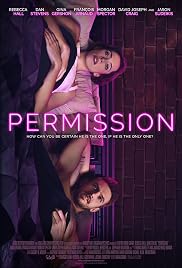
Film Review: PERMISSION (USA 2016)

Submit your Screenplay to the Festival TODAY

Permission Poster
Trailer

A woman on the brink of a marriage proposal is told by a friend that she should date other men before spending the rest of her life with her boyfriend.

Director:

Brian Crano


There are two categories of chick-flick romantic comedies – those made by female directors and those made by male directors.  The former category usually sees everything from the feminine perspective while glorifying the female while more often than not, debasing the male counterpart. 

PERMISSION, the new romantic comedy debut by writer/director Brian Crano belongs to the second category.  Like most films in this category the male filmmaker usually also takes the side of the female, giving them enough respect so as not to offend them.  In PERMISSION, the female is clearly the more mature and intelligent of the couple.  Since the film is written by a male, males cannot complain that this is a feminist film.

The film begins with a really short sex scene between the two leads.  Anna (Rebecca Hall) and Will (Dan Stevens) are very much in love and have great (if not, too short) sex.  Will intends to propose to Anna at her birthday celebrations at a bar with her brother, Hale (David Joseph Craig) and current male lover, Reece (Morgan Spector).  But that is impeded by the suggestion of Reece and Hale to have Anna “test date” other men before she ultimately settles down.  This results in the relationship turning open, meaning that Will can try other girls too. 

The couple faces the obvious problems that result in an accepted open relationship though the film and the couple insist that dating others does not constitute an open relationship.  My question to them is then: What then is an open relationship?  The problems include jealousy number one followed by number two, the craving for wanting for sex with strangers.  But the biggest danger of all is the probability that the stranger might be the better one to marry.  These are two human feelings that cannot be removed, and unless a couple can deal with these two issues, an open relationship or a closed relationship with allowance for multiple sex partners should not ever be considered.   Anna and Will together believe that their love for each other can conquer all.  So the rest of the film goes on to see whether love can.

Writer/director Crano’s film runs into many problems.  For one, the main premise of the couple is compromised by the introduction of Anna’s brother’s gay relationship.  Worst still, Crano inserts a problem into the gay couple’s relationship – the adoption of a child.  This distraction is boring and does not contribute to the main story at hand.  The four characters are all too nice and likeable.  The film would be more interesting if any one would be a complete asshole or one to be totally at fault.  Some of the humour makes no sense at all, as in Will spitting into his lover, Lydia (Gina Gershon) mouth, while high and having sex.

One good insight the film provides is that it shows the hurt the people go through as a result of such an experiment.  The film also surprisingly is almost saved by its ending.

Trailer: https://www.youtube.com/watch?v=EV9ZnPPnyz8

Submit your Screenplay to the Festival TODAY

Film Review: BEFORE WE VANISH (Japan 2017)

Submit your Screenplay to the Festival TODAY

Before We Vanish Poster
Three aliens travel to Earth in preparation for a mass invasion, taking possession of human bodies.

Director:

Kiyoshi Kurosawa

Writers:

Tomohiro Maekawa (based on the play by),Kiyoshi Kurosawa (screenplay) | 1 more credit »


Before watching BEFORE WE VANISH or reading this review of BEFORE WE VANISH, it is best that a bit of background be known of the film’s director, Kiyoshi Kurosawa.

Kiyoshi Kurosawa is better known in North America as an art-house horror director with films like CURE and PULSE both of which I have seen but have not praised.  His best film to date is PENANCE, made for Japanese TV but screened here at the Toronto International Film Festival  and also played at Cannes which won Kurosawa the Best Director Award in the Un Certain Regard Section at Cannes.  Korosawa’s latest, BEFORE WE VANISH (Sanpo suru shinryakusha), is a sci-fi thriller that also serves as a story about the redemptive power of love, played at Cannes 2017 in the Un Certain Regard sidebar.  Not his best film, but interesting, nevertheless.  It should be noted that the film is based on the play by Tomoshiro Maekawa, and co-written with Sachiko Tanaka.

There are strange goings-on in an otherwise ordinary Japanese town.  While investigating a gruesome murder, journalist Sakurai (Hiroki Hasegawa) meets two aliens (Yuri Tsunematsu and Mahiro Takasugi) who have taken up residence in human hosts.  Preparing for a takeover of the planet, the aliens are not only snatching bodies, but also robbing humans of values (family, 

work, good, evil, etc.), leaving only hollow shells, all but unrecognizable to their loved ones.  Meanwhile a third alien has taken over a man named Shinji Ryuhei Matsuda).  After disappearing for several days, Shinji reappears, acting nothing like his former self.  His marriage to Narumi had been on the rocks.  But Shinji seems kinder now.  As chaos ensues, Sakurai and 

Narumi each must make a decision.  Narumi’s, in particular, is heartbreaking.

Interesting though the premise might seem, bringing down an alien invasion down to the personal level, the film has major problems, primarily in the credibility of its story.  The invasion is supposed to take place, masterminded by just three aliens who have taken over human bodies.  Two of them need to find the third, Shinji for success.  The conception idea is a good one, when aliens absorb a human concept from a human.  But the film’s climax is silly and gets worse when the film concludes to a period of two years after the conclusion, when reverse conception takes place.  The film runs into even more problems when Kurosawa brings in human values to save the world.  Kusrosawa turns too preachy as well with a sermon on love: “Love never records wrongs; love never gets angry… etc.”

As talented as Kurosawa is and as good as his best films are, BEFORE WE VANISH is a major disappointment.  Silly even from the very start from the way aliens inhabits bodies or captures conception, the premise might have succeeded in an artsy play, as is the source material, but moviegoers expect certain rules to be followed in a sci-fi alien invasion thriller.  

Trailer:  https://www.youtube.com/watch?v=P8UctjMoo8o


Submit your Screenplay to the Festival TODAY