1997 Movie Review: AIR FORCE ONE, 1997 (starring Harrison Ford)


AIR FORCE ONE MOVIE POSTER
AIR FORCE ONE, 1997
Movie Reviews

Directed by Wolfgang Petersen
Starring: Harrison Ford, Gary Oldman, Glenn Close, Wendy Crewson, William H Macy, Dean Stockwell, Tom Everett
Review by Emma Hutchings

SYNOPSIS:

After Russian terrorists hijack the Presidential plane, the only hope of regaining control and averting disaster is the President himself. He has just made a speech stating he will not negotiate with terrorists, but is he willing to stand by that if it means sacrificing his wife and daughter?

OSCAR NOMINEE for Best Film Editing, Best Sound

REVIEW:

‘Harrison Ford is the President of the United States’. If that tagline fills you with dread, chances are you probably aren’t going to enjoy Air Force One. However, if the image of the great American action star playing the President, as a tough, heroic, Medal of Honor winner, beating up the terrorists who dare to take control of his plane, makes you grin, then you’ll love this action-packed thrill ride.

At the start of the film, President James Marshall makes a brave speech in Moscow condemning terrorists and saying he will not negotiate with them. Coincidentally, upon leaving, a group of Russians sympathetic towards General Radek (the once tyrannical leader of Kazakhstan, now in prison) board Air Force One posing as a press crew, helped by a mole in the Secret Service.

When things get hairy, the President is rushed to an escape pod in the cargo hold. But what the hijackers don’t know is that the President refused to leave and while his staff and family are held captive, he endeavours to rescue them single-handedly.

Consequently, what ensues is your typical ‘lone hero against a group of criminals’ scenario (think Die Hard or Under Siege). The terrorists conveniently prowl around the plane individually and he is able to pick off a few before being rumbled.

This rather tired formula is given a new lease of life and works mainly because of Harrison Ford’s star power. Ford inspires confidence; he does the right thing no matter how difficult, the audience know this and have that expectation before the film even starts. We know he’ll do the right thing, take care of his family and be a great leader of his country because he’s Harrison Ford, the Hollywood star. If it was an unknown actor we perhaps wouldn’t know how he’d respond in certain situations, and we wouldn’t be drawn into the film as much as we are, knowing Harrison Ford is going to save the day. This is basically, ‘what would happen if terrorists hijacked a plane and Indiana Jones was on board?’ or Jack Ryan, or any number of the characters he has previously played.

Praise must go to Gary Oldman as Ivan Korshunov, leader of the group of terrorists. He excels at playing the bad guy but I think this character is something special. Usually the villain’s motives aren’t explained, they are de-humanised and the audience feels no sympathy for them. But far from being a crazy lunatic, he makes Korshunov human, which can be quite unsettling. There are times when his persuasive rhetoric (combined with a convincing Russian accent) makes you wonder if he isn’t just a regular guy who was pushed to the very edge and foolishly chose to resort to extreme methods. In using the argument, “You, who murdered a hundred thousand Iraqis to save a nickel on a gallon of gas, are going to lecture me on the rules of war?” he makes the audience see the Americans, and by association The President, in an unflattering light. Korshunov is a powerful character, and pitting him in opposition to the President adds an extra interesting facet to the film.

The bottom line is that Air Force One is completely unbelievable. It’s a fantasy story about the President saving the day. Yet it keeps you hooked. It’s a little longer than I like my action movies but it held my attention. There are some great action sequences; the pilot’s urgent attempt to land the plane at a German airbase near the start of the film is a remarkable set piece. My advice is don’t think about it too much because if you start to examine the plot you will find gaping holes and you’re likely to realise it’s all a bit silly. But it’s a very enjoyable film if taken for what it was meant to be; a summer blockbuster, a popcorn movie, a film you can sit down and enjoy without taxing your brain. So, just go with it and enjoy the ride, or should that be flight?

AIR FORCE ONE, 1997

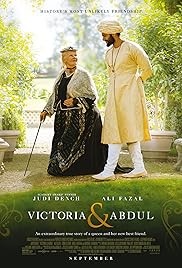
Full Review: VICTORIA AND ABDUL (UK 2017) ***

Victoria and Abdul Poster
Trailer

Queen Victoria strikes up an unlikely friendship with a young Indian clerk named Abdul Karim.

Director:

Stephen Frears

Writers:

Lee Hall (screenplay), Shrabani Basu (based on the book by)

Stars:

Judi DenchOlivia WilliamsMichael Gambon

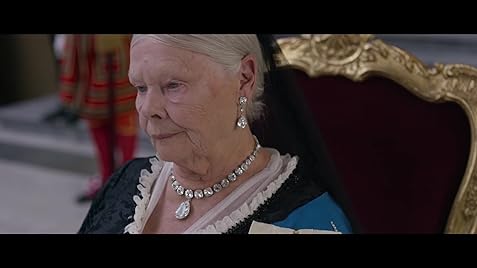
Director Stephen Frears has made great controversial films like SAMMY AND ROSIE GET LAID, THE SNAPPER and MY BEAUTIFUL LAUNDRETTE.  He has also made films about royalty before, like THE QUEEN and also sentimental slush like PHILOMENA, with Judi Dench.  VICTORIA AND ABDUL a film about Queen Victoria (Oscar Winner Judi Dench) and her Indian servant Abdul Karim (Ali Fazal) contains a cocktail of all the elements of the films mentioned above.  The result, as expected as a mediocre Jack of all Trades Master of None film, which shines but only occasionally.


The film chronicles with humour and insight the friendship between Queen Victoria and a decades-younger Indian clerk named Abdul Karim.  Karim has been summoned because of his height to present in England all the way from Agar, India the colonized homeland, a present.   The present is satirically, a ceremonial coin on behalf of British India to the Queen as a part of her Golden Jubilee in 1887,  Abdul with another travel for the intimidating task. 


Abdul has done what is forbidden during the ceremony.  He makes eye contact with the Queen who finds him handsome.  In no time he is cooking her curries, talking to her about his culture, and being elevated to the post of official clerk, or Munshi, becoming an indispensable part of the household — and state.


This is where trouble boils.  The Queen’s son, Bertie and the household take offence that this ‘coloured’ lowly servant is treated royally.  The ultimatum comes when the Queen decides to knight Abdul in order to have her household respect him.  The opposite occur.  The household threaten to resign if Karim is knighted.  This is where the Queen uses her brain and oratory to win the day.  Frears uses the incident to make a statement about the refugee crisis and racial prejudice.  The film’s best segment occurs here when the Queen chides her entire household with a speech that put them to shame.  This is a Dench’s award winning performance.


Frears’ assessment of Britain and royalty remains respectful.  The Queen at one point remarks: “A lot of people around the world hate me.”  Abdul says of the British as uncivilized on the ship en-route to England for the first time: “They put it’s blood in their sausages and eat sheep’s brains.”  The first words heard by Abdul on landing: “Welcome to Civilization!”


Queen Victoria is revealed in the film with all her grandeur (her robe and servants) but also with all her faults and her ageing process.  When she is first seen in the film, her face is not shown, but her body covered in white (like a shroud) in bed with snoring heard.  She also claims herself to be and shown as well as cankerous, ill-tempered, fat but also one that has held five generations of household and mother of many children and grandchildren.  “I am the Queen of England and the Emperor of India,” she claims proudly.


VICTORIA AND ABDUL is Frears’ mediocre film which is tolerant of everything and offends no one.  These kind of films are often humorous, handsomely mounted, well acted but unfortunately forgetful. 


Trailer: https://www.youtube.com/watch?v=BT2Ph_9bGPs

Full Review: STRONGER (USA 2016)

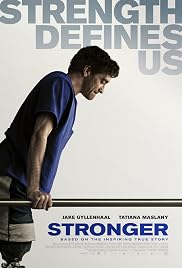
Stronger Poster
Trailer

Stronger is the inspiring real life story of Jeff Bauman, an ordinary man who captured the hearts of his city and the world to become a symbol of hope following the infamous 2013 Boston Marathon bombing.

Director:

David Gordon Green

Writers:

John Pollono (screenplay), Jeff Bauman (based on the book “Stronger” by)

Stars:

Jake GyllenhaalTatiana MaslanyMiranda Richardson

The Boston marathon.  PATRIOT’S DAY saw Mark Wahlberg star in the film that hunted down the terrorists responsible for the bombings.  STRONGER, on the other hand, looks at the Boston marathon from the point of view of a victim.  And a really bad victim at that – one that has lost both his legs in the middle of the bomb explosion.


To the film’s credit, the film is an adaptation of the memoir by Jeff Bauman, recounting his struggles to adjust after losing his legs in the Boston Marathon bombing.  So, it is a true story, rather than one based on true events.  But unfortunately the film wallows in self pity.


The film tells the story of Jeff’s tragedy and rebirth. 


Runner Erin Hurley (Tatiana Maslany) was still a mile away from the finish line when the bombs went off.  Her boyfriend, Jeff (Jake Gyllenhaal), however, was right there.  He is rushed into surgery, but his legs must be amputated.  The bombing’s immediate aftermath provides Jeff with an unexpected sense of purpose as he had seen one of the terrorists responsible for the blasts.  He gives information to the FBI that proves instrumental in their investigation.  But this is not seen in detail in the film.  So one wonders, whether Jeff really saw the bomber or imagined it.  Once that very public drama quietened down,  Jeff’s personal drama, a challenge as much for his morale as his body, is begins.  With Erin by his side, Jeff slowly recovers, one arduous step at a time.


Green’s film centres on the travails and sufferings of Jeff.  But it opts out for cheap shots – like showing the parts where Jeff has trouble in the toilet trying to shit or urinate. 


Jeff is shown in the film on the road of self destruction.  Erin scarifies her all for him.  But he is shown as unrepentant, unhealed by his mother who want him to get all the glory and money for his mishap. 


The film shows Jeff’s change in outlook.  Unfortunately, this change is shown coming from just one event instead of a gradual progression – the meeting of the Mexican who attended to him during the bombing.  Though this might be true, this one event that apparently changed Jeff’s outlook on life seems quite incredible.


Jake Gyllenhaal, Tatiana Malsany and Miranda Richardson (as Jeff’s mother) deliver excellent performances despite the film’s flaws.  If the film turned out better, they might be up for acting Oscars.


The film ends, expectedly during the closing credits with shots of the real Jeff and Erin.  It is revealed  that that the film is based on the book written by Jeff which is not mentioned at all in the film.


One can only wish the film would have been a better one that would show more of the triumph of the human spirit instead of one that showed a man wallowing is self pity.


Trailer: https://www.youtube.com/watch?v=I6MN0QfQx7I

Full Review: BATTLE OF THE SEXES (USA 2017)


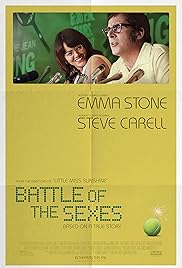
Battle of the Sexes Poster
Trailer

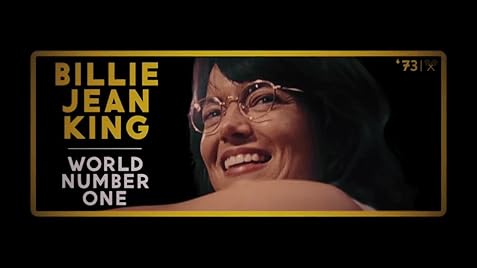
The true story of the 1973 tennis match between World number one Billie Jean King and ex-champ and serial hustler Bobby Riggs.

Writer:

Simon Beaufoy

Stars:

Emma StoneAndrea RiseboroughSteve Carell

BATTLE OF THE SEXES begins with Billie Jean King (Emma Stone) just winning the women’s singles tennis championship making her number one female player in the world. King is outraged with the inequality of pay by the National Tennis League, especially with Jack, the chairman (Bill Pullman), who is shown to be the real villain of the story.

Bobby Riggs (Steve Carell), arranges the battle of the sexes match, using his loud mouth and publicity to earn himself some cash to aid his failing marriage. To King, winning this match is more symbolic. It is a milestone for women’s rights for equal pay, a point that is mentioned at the film’s end credits but not made clear throughout the film.

The lazy script by Simon Beaufoy (SLUMDOG MILLIONAIRE) never bothers with important details of the story. How, for example did King’s husband Larry, learn of his wife’s sexuality. In the film, King tells her hairdresser lover that this is her first time with women, but apparently the husband knows King has has same sex relationships before.
The film overdramatizes to the point of laughter. One scene has Billie’s lover in her hair salon shop hearing the news of Billie, realizing that she is needed and dramatically drops everything to leave the salon.

The wardrobe of the 70’s has never looked so awful in any other film. Did we, in the 70’s really look that bad thinking we were looking so cool? Billie’s husband, Larry ‘s clothes are the worst. Perhaps that might be one reason she later left him. The hair of everyone is just as bad, including Billie’s even after a hairdo from her girlfriend.

The script contains lots of inane dialogue and unfunny jokes. One line has Larry asking his wife if she was getting a blow dry, with full sexual innuendo. The film sheds no real light on the female rights movement, except what we already know. The dialogue contains lot of cheap jokes on women like Riggs saying that he believes women should be on the tennis court, but for picking up balls. These jokes are predictable, told many times before and if they meant to offend women, they still might. Two anti-female remarks are also voiced by two stars Llyod Bridges and Ricardo Montalban shown on old TV footage.

The crucial tennis match between King and Riggs can hardly be called exciting. For one, history already dictates who had won and the audience is in for no surprise. The camera is also placed mainly in one spot, showing the overhead shot of the players. The directors appear more concerned to show the match in long takes than any thing else.

Oscar Winner Emma Stone is too skinny to look like a tennis player. Carell looks remarkably like Bobby Fisher as they are right around the same age in the story. The nude picture of Carell resembles the one taken by Riggs. The rest of the cast of Sarah Silverman, Elisabeth Shue are largely wasted by the script that are unbothered with these characters.

BATTLE OF THE SEXES ends up a boring film on an exciting sport.

Trailer: https://www.youtube.com/watch?v=o5ykcuAS1F4

BATTLE OF THE SEXES 1

1987 Movie Review: SILENT NIGHT DEADLY NIGHT 2, 1987


SILENT NIGHT DEADLY NIGHT 2SILENT NIGHT DEADLY NIGHT 2, 1987
Movie Review

Directed by Alexander Payne
Starring: Eric Freeman, James Newman
Review by Russell Hill

SYNOPSIS:

An evil, psychotic patient at a Mental Hospital tells a psychiatrist of his murderous past.

REVIEW:

Having become an internet phenomenon due to the line “Garbage Day”, this was meant to be a film to scare its audience, chilling the bones to their very core. But instead of a non-stop scare-fest we are treated to what has to be one of the most outrageously funny movies ever released.

Due to Eric Freeman’s fantastic, over-the-top acting we see one of the most unintentional comedic performances this reviewer has seen for some time. Initially told in flashback, we first find Ricky in a mental hospital. A psychiatrist (James Newman) asks Ricky (Freeman) about his brother Billy. To cut a long story short, Ricky’s brother and he had witnessed both their mother and father’s murder at the hands of a man dressed as Santa Claus, as well as her being raped. Fast forward a few years and they find themselves in an orphanage being looked after by Nuns.

Some of the Nun’s are nice, but then there’s Mother Superior. The ultimate bitch in all cinema, she mentally tortures little Billy to the extreme that upon leaving the orphanage he is given a job; as a Department Store Father Christmas. Ultimately, Ricky goes a little crazy, and goes about killing anyone and everyone he sees as being “naughty” and must be “punished”. Thanks to his mental imbalance, he heads to the orphanage to finally see off Mother Superior, but instead is stopped just as his axe misses her. And all this in front of Ricky!

Onto Ricky, he is soon adopted by a young couple and soon leads a normal life. Suddenly his adopted father dies when he is a teenager and decides to go out on his own by landing a number of menial jobs. However, the years of mental torture at the hands of Mother Superior take their toll on poor ol’ Ricky. He too starts seeing people being “naughty”, and carries out punishment in a number of ways, whether it is strangulation or putting an electrical wire in their mouth’s and switching the voltage to its maximum. But the question remains; can Ricky be stopped before finishing the job started by his brother? Will Mother Superior ever be saved?

Only available to the UK on YouTube or if you have a spare £20 to spend on EBay, this was recommended by a workmate who said of the “Garbage Day” quote and since then it was on my list of movies which have to be seen and, boy, it certainly doesn’t disappoint.

The makers were told to re-edit the original film, and then make a supposed sequel. As they discovered that making a completely new movie just by editing the original they realised they had to shoot some new footage but with a substantially low budget. Sometimes, even the filmmakers were paid such a low wage that negative memories are held who worked on the movie. But hey, if you ignore this lack of funds and concentrate on the film as a whole you are treated to such a great flick which is due to raise a smile. And the main reason for such cheer? The answer: Eric Freeman and his eyebrows.

Apparently hired because he looked more like a movie star than another actor who was a better talent, Freeman looks the part of a Hollywood tough guy but just fails on every level. As Stallone and Chuck Norris have both the looks and capability of looking the part of ripping a mans heart out whilst its still beating, Freeman looks as though he would find it impossible just to sneeze in your face. And those eyebrows! Whenever you seem him “threatening” someone, his eyebrows take off like an aeroplane and never seem to land back in one place. According to the production staff, they tried to track down Freeman when the film was recently released in order to do a commentary track. They soon discovered that he is untraceable and cannot be found anywhere. I do hope this guy is still around and not six feet under as it would be great for him to continue acting.

I guess to those who like more highbrow movies should avoid “Silent Night, Deadly Night Part 2”. This is merely a cult movie which many love and even more hate. The sight of a murderous Santa Claus might not be their ideal cinematic representation, but for many this is downright laughable. Anyways, what is not to like? Over the top acting by Freeman, great shootouts and even a love story for the romantics in the crowd. For those reading this not from the USA and Canada, this movie will prove quite troublesome to track down. But then again, there’s always YouTube. Go on, I’m sure you won’t be disappointed.


Also, Free logline submissions. The Writing Festival network averages over 95,000 unique visitors a day.
Great way to get your story out: http://www.wildsound.ca/logline.html

Deadlines to Submit your Screenplay, Novel, Story, or Poem to the festival:http://www.wildsound.ca

Watch recent Writing Festival Videos. At least 15 winning videos a month:http://www.wildsoundfestival.com

1987 Movie Review: WALLSTREET, 1987


WALLSTREET MOVIE POSTER
WALLSTREET, 1987
Movie Reviews

Directed by Oliver Stone
Starring: Michael Douglas, Charlie Sheen, Martin Sheen
Review by Mike Peters

SYNOPSIS:

In 1985, an ambitious young broker, Bud Fox (Charlie Sheen) is lured into the illegal, lucrative world of corporate espionage when he is seduced by the power, status and financial wizardry of Wall Street legend Gordon Gekko (Michael Douglas).

Review:

Janwillem Van De Weterling once said that: “greed is a fat demon with a small mouth and whatever you feed it is never enough”. Greed is good according to Gordon Gekko. It is the template of society. Without greed, there would be no progression, no desire, no nothing.

Michael Douglas’s portrayal of Gordon Gekko is masterly. The slick and calculating financier who uses and abuses the people around him is perhaps one of the most vile and despicable characters in film history. However, for as much as the audience hates him, they can never take their eyes off of him. He controls the gaze and manipulates and twists the emotions of the people he is trying to convince. As he notes to Bud Fox, there are no friends in the business world: “If you want a friend, buy a dog”.

Gekko’s name has clearly been inspired by the insect that feeds off insects less powerful. Scaly and slithery, the gecko is a creature that is quite innocent from a physical perspective but is driven by a desire to live and survive in the jungles of the land from all adversaries. Gordon Gekko is exactly the same. He is not content with merely surviving in the jungles of the business world but rather is determined to destroy all of his competition with a vengeance. He is a greedy, self absorbed mongrel but people attach themselves to him as if they were moths to a flame. Bud Fox fits this analogy to a tee and is definitely burned by it.

The 1980s was a decade in search of an identity. The 1960s and 1970s had been tumultuous years for America and great change was thus needed in the 80s in order to instill some sort of defined leadership to appease society. When Ronald Reagan entered the White House in 1980, he demanded alterations in hopes of witnessing the revival of The United States of America. He pushed forward the prospect of individual freedom and the idea that the individual could accomplish anything on the strength of himself rather then through a reliance on government institutions. In connection with this, Reagan also wanted to reinvigorate the United States economy. As a result, the 1980s became more about the self rather then the country for many individuals. Driven by the idea that dreams could be accomplished through capitalistic practices, America became a self-absorbed culture of excess.

Bud Fox is a man driven by these very needs. A broker who frantically must sell himself to clients all day long finally begins to become disillusioned with his current status. At one point, he notes that he wonders when he will be on the other end of the line. Instead of selling, he wants to be buying. His desire is to be like Gordon Gekko. He is passionate and determined and after 40 days of constant harassment, Gekko finally agrees to see Fox. But he is in over his head from the get go. When he enters Gekko’s luxurious office (which is ten times the size of his apartment on the upper west side of New York), he stares in amazed wonderment. Gekko is such an imposing figure that he intimidates the young Fox. Being slightly coy with him, he demands that Bud tell him something worthwhile. He is playing and toying with him the entire time and is setting him up for the kill. That is until Fox surprises him with a tip. Gekko no longer feels the need to kill him off (figuratively) and cast him back out in the harsh world of bureaucratic business. Gekko understands that he can now use him and mold him into someone who can help him become even richer.

Fox is so enamored by the chance to alter his present situation of financial strain that he quickly is enveloped into the lecherous world of Gekko. Immediately, Fox begins to change both externally and internally. His suits become darker, his hair becomes slicker rather then frazzled, his ideals begin to change and arrogance begins to manifest itself from within (which has never been transparent before). In one instance, his desire to become someone has corrupted his ideals and has transformed him into the man Gekko wants him to be.

Oliver Stone provides an interesting sub-story at this point of the film. Fox’s father, Carl (Martin Sheen), is an honorable working class man who fixes airplanes. He is a morally centered man. He dreams that his son will make something of his life and desires the best for him. He truly cares for his son whereas Gekko merely uses him. In a sense, Carl Fox and Gordon Gekko are vying for the soul of Bud. He must choose between the ideals emphasized by the character traits of these two men. Bud’s desire has always been to become successful and rich and he is easily manipulated by the temptation of what Gekko has to offer him. Gekko not only blackens the soul of Bud but he also becomes a new father figure to him by lavishing gifts and women on him (which Carl never had the ability to do). Bud turns his back on his father because success has tainted him. Money has become his life; his new family. Wall Street is not a perfect film in any way. In fact, it is not one of Stone’s masterpieces. But it does capture a time period with magnificent clarity as a result of Oliver Stone’s ability to capture greed at its finest. With this being said, there are some elements that take away from the overall impact of the film. For instance, Darryl Hannah’s performance is forgettable, Sean Young’s turn as Gekko’s wife is small and unmentionable (she is barely in the film although I assume that this is the point-the business world and personal world do not mix and Gekko has clearly chosen the professional world as his family), the music is typical cheesy 80’s fare and the self reflecting dialogue by Fox is sometimes forced and illogical.

Though the story follows a familiar trajectory with rise, fall and redemption elements, there is still something truly intoxicating about the film. As we journey with Fox, we realize what he is becoming. He is no longer in control of his destiny. He has sold his soul to the devil in order to feel superficially happy. It is a morality tale that can speak to the likes of everyone. How much is too much? Is financial success the true meaning of happiness? Gekko is happy but he never truly lives in this film. He lives for the money but for nothing else. Is this the symbol of what life should be? Only you, the individual, can decide for yourself.

wallstreet.jpg

Also, Free logline submissions. The Writing Festival network averages over 95,000 unique visitors a day.
Great way to get your story out: http://www.wildsound.ca/logline.html

Deadlines to Submit your Screenplay, Novel, Story, or Poem to the festival:http://www.wildsound.ca

Watch recent Writing Festival Videos. At least 15 winning videos a month:http://www.wildsoundfestival.com

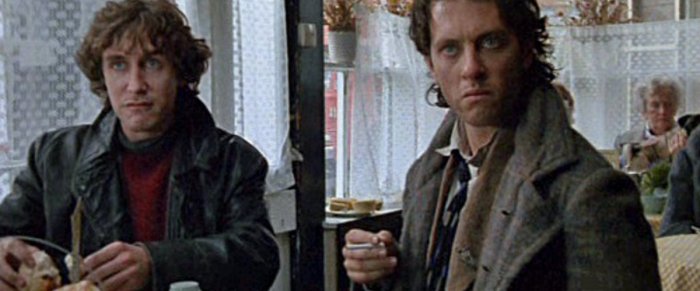
1987 Movie Review: WITHNAIL AND I, 1987

WITHNAIL AND I,  MOVIE POSTERWITHNAIL AND I, 1987
Movie Reviews

Directed By Bruce Robinson

Starring Richard E. Grant, Paul McGann, Richard Griffiths, Ralph Brown
Review by Christopher Upton

SYNOPSIS:

Two unemployed actors tire of their impoverished surroundings in London and head off to a cottage in the countryside for a weekend of heavy drinking, drug abuse and fresh air. However uninhabitable conditions and a home invading uncle with deviant intentions quickly destroy their plans. Based on the life of the director Bruce Robinson.

REVIEW:

The art world is full of people completely convinced the only reason they aren’t famous is because of some horrifying conspiracy, Withnail is such a person. Bruce Robinson based the character on someone he shared a house with in the Sixties, and the film is a mostly autobiographical account of their time together. Withnail was notable for being the first acting job for Richard E. Grant, who captured the drunken spirit of the titular character impressively considering he is a teetotaller.

Trapped in the squalor of his London flat with his long suffering flatmate, the thespian in Withnail itches to get out as it struggles against his alcohol dependency and his, unfortunately all too obvious, lack of talent. Living from week to week, surviving on benefit, the two actors feel the weight of busy London crushing down on them.

The two of them decide on a break and convince Withnail’s equally deluded actor of an uncle to lend them his cottage, a chance to reacquaint themselves with nature in order to rejuvenate and come back fully charged and better than ever. The problem is that what they mainly reacquaint themselves with is pills and enormous amounts of alcohol. In a sense it has a slapstick feel to it, the two of them trying to gather fuel, barter with a local farmer and fend off a bull are sort of a re-imagining of Laurel & Hardy- if they’d had access to a selection of fine wines and a courser grasp of the English language.

Then Uncle Monty turns up and the weekend takes on a much more threatening tone for Paul McGann’s Marwood (though he is never referred to by name in the film, he’s just ‘I’) who has managed to snare the affections of the rotund ex-thespian, much to his horror. The rest of the time at the cottage is spent desperately avoiding flimsily disguised advances and, at the extreme end, avoiding a buggering. Try as they might, they never managed to tackle that storyline in those old silent shorts. Richard Griffiths manages to inject a feeling of deviant menace into every flirting gesture or comment he makes to Marwood, every word is so lascivious and over acted; also a great reference to why the character of Monty never captured his much desired fame.

Over the course of the weekend the two friends start to pull further and further apart, possibly because of Withnail offering up Marwood in exchange for the cottage, and what starts off as a vacation quickly becomes a goodbye note to their friendship. There’s a definite sadness in the way that Withnail is outgrown. You can tell that director, Bruce Robinson, had a real affection for his friend and Paul McGann manages to convey both frustration and adulation towards Withnail effectively.

Clearly, both characters have a similar problem and their chemical dependencies are more than likely what is holding them back. The thing that separates them, and what allows Marwood to move on, is his recognition of his situation. Withnail is stuck within a trap he created and is far too ingrained now to escape. The character is trapped as the world moves on around him, a sign of the times for many towards the end of the decade.


WITHNAIL AND I, 1987

Also, Free logline submissions. The Writing Festival network averages over 95,000 unique visitors a day.
Great way to get your story out: http://www.wildsound.ca/logline.html

Deadlines to Submit your Screenplay, Novel, Story, or Poem to the festival:http://www.wildsound.ca

Watch recent Writing Festival Videos. At least 15 winning videos a month:http://www.wildsoundfestival.com

1987 Movie Review: ROBOCOP, 1987


Robocop (1987)
Directed by: Paul Verhoeven
Classic Movie Review
Starring: Peter Weller, Nancy Allen, Kurtwood Smith
by Mike Peters

Synopsis:

After being murdered by a ruthless gang of criminals, Alex Murphy (Peter Weller) is resurrected as a crime-fighting cyborg named ‘Robocop’.

Review:

Albert Einstein once said that: “It has become appallingly obvious that our technology has exceeded our humanity”. It is a very true fact indeed that technology has become an unstoppable entity. It is ever-growing and constantly on the move. It has strived to make our lives easier but has managed to gain the reputation as a slave master. We, as society, have become enslaved to the very idea of technology. It has taken us over and has rendered us vulnerable to its’ utopian ideals. Some of have said that it has stripped us of what many hold dear to them; our humanity.

Robocop is a film that does much more than entertain. It strives to understand the relationship man has with technology/machine. The fact that Robocop is a man controlled by technology is a statement unto itself. Even the title of the film is a hybrid of two opposing factors; man and machine. After being systematically slaughtered, it is only through the power of technology that Murphy is allowed to live once again. However, as a result, technology has rendered him a thoughtless and emotional free being. He is mundane and computer like in his speech and his suit is highly symbolic of the cold/sterile and colorless world that technology represents.

The film, on the surface, is about his role as a crime fighter, striving to uphold the law no matter the cost. On a much deeper level however, the film is about his fight against the technology that now controls his body. Throughout the course of the film, Robocop attempts to retrieve some evidence of his once prevalent humanity. When he first became Robocop, all his memories and emotional content were erased, thus making him an invalid without the proper guidance of human beings. It is only through a relapse and his quest to regain his old self that the audience begins to realize that man cannot always control technology. It now has the ability to control us.

Robocop soon begins to act irrationally as he begins to have dreams, memories and thoughts (He is now beginning to retrieve some of the individual characteristics that made him human in the first place). The scientists governing him have no idea what has happened as they are no longer able to control him. In one telling scene near the end of the film, Robocop removes his mask and fights without it, revealing the face of Murphy. It is a very shocking sight since Murphy’s human face is fused with the mechanical properties of a machine. The very fact that he begins to speak, think and feel as a human once again during this sequence represents his quest to separate himself from the machine that is now in control of him.

Paul Verhoeven, in his second American film, presents an idea that technology can be understood as a major threat to our very own civilization. In the film, many scenes, in which Robocop or Ed-209 (Robocop’s nemesis) appear, strongly depicts the failures that technology is capable of. In one particular scene, Dick Jones (Ronny Cox) is presenting the new and improved machine crime fighter, Ed-209. In a demonstration, one of the business men present, is told to point a gun at Ed. He does so and the machine tells him to drop it. The man relinquishes the weapon but the machine continues to warn him. In the background, scientists scramble to fix the problem but it is too late. Ed-209 opens fire and massacres the man to death with automatic weapons. It is an undeniable statement that technology which cannot be controlled by man is capable of eventually decimating mankind to the point of extinction.

The film is very strongly-opinionated. It not only critiques technology but, as well, society, politics and commercialism. With that being said, the film is also a solid form of entertainment. It is a must see for action buffs. The film is very violent and unrelenting in it’s’ brutality but it does manage to tell a cohesive story while simultaneously critiquing many things. The next time one watches this film however, try to understand how undermining it truly is. There is a lot more going on then mere action filled sequences. It is a highly subversive piece of work and manages to illicit many reactions as a result.

*Humanity is acquiring all the right technology for all the wrong reasons. ~R. Buckminster Fuller


Also, Free logline submissions. The Writing Festival network averages over 95,000 unique visitors a day.
Great way to get your story out: http://www.wildsound.ca/logline.html

Deadlines to Submit your Screenplay, Novel, Story, or Poem to the festival:http://www.wildsound.ca

Watch recent Writing Festival Videos. At least 15 winning videos a month:http://www.wildsoundfestival.com

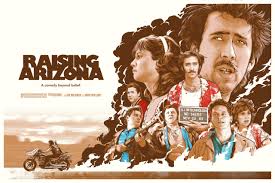
1987 Movie Review: RAISING ARIZONA, 1987


RAISING ARIZONA
Movie Reviews

Directed by Joel and Ethan Coen
Starring: Nicolas Cage, Holly Hunter
Review by Andrew Rowe

SYNOPSIS:

When a childless couple of an ex-con and an ex-cop decide to help themselves to one of another family’s quintupelets, their lives get more complicated than they anticipated.

REVIEW:

10 minutes, that’s how long Raising Arizona rolls until the title card hits. If this sounds odd it is, but so is everything else about the Coen Brothers’ second film. As they’ve often done throughout their career, the brothers normally follow-up a serious film with a comedy. Fargo led to The Big Lebowski, No Country for Old Men led to Burn After Reading. With Raising Arizona the brothers had just come from the neo-noir Blood Simple, their first ever film. Where as that film dealt with deception and murder in the shadows of Texas, Raising Arizona basks in the sun with non-stop slapstick, silly fun.

Nicholas Cage stars as Hi, or H.I. if you’re talking to his friends. He’s a petty criminal who has a thing for robbing convenience stores with ammo-less guns. Because he doesn’t use armed weapons his jail sentences are always small in length, which allows for multiple visits. During these multiple visits he meets Ed, a policewoman played by Holly Hunter. Ed’s fiance leaves her, which opens up the door for Hi to reform and win her heart. This is when the Raising Arizona title card hits.

The unlikely couple moves into a trailer in the desert and realize they need something more in their life because they have too much love to give. After multiple attempts of conception, they learn that Ed is unable to bare children and due to Hi’s criminal record, unable to adopt. Devastated, hope arrives in the form of the ‘Arizona Quints’, 5 boys that are born to a locally famous unpainted furniture storeowner, Nathan Arizona.

Hi and Ed decide that abducting one of the boys for themselves is a good idea and do so. After welcoming the child into their home, Hi and Ed are greeted by two of Hi’s friends from prison, Gale and Evelle, John Goodman, and William Forsythe. The two inmates have broken out of prison because the institution no longer had anything to offer them. Against Ed’s wishes, the two fugitives stay at their home where they begin to influence Hi.

At this same time a heavily armed bounty hunter by the name of Leonard Smalls, “My friends call me Lenny… only I ain’t got no friends”, is on the hunt for the child. Blowing up bunny rabbits with grenades, Leonard is fear itself. Gale and Evelle eventually learn of the child’s actual identity and decide to turn him in for the reward money. Everyone collides on a strip in the middle of the desert highway that involves a bank robbery, gunfire, hand-to-hand combat, screeching tires, and a large explosion.

The script, written by the Coens possesses their trademark tongue-in-cheek dialogue as well as an explosive climax and slow burn denouement. No one writes stupid characters like the Coens do. These people that inhabit the film aren’t very bright, and it’s hard to believe anyone in the world could be of this level of intelligence, but the Coens draw you in, first making the world they live in real, then the characters, then the silly things they do. Besides the charming dialogue, there are so many ridiculous sight gags that you may not even catch them all the first time around.

Raising Arizona is arguably the craziest movie the Coen Brother’s have made in their three-decade career, and that’s saying a lot. The film acts as a live-action Saturday morning cartoon. Working for the second time with cinematographer Barry Sonnenfeld who had shot their debut film Blood Simple, the visuals on screen are closer to a Dr. Seuss book than any of the current film adaptations. Using his trademark wide angles, everything remains in focus allowing the viewer to fully appreciate the immaculate Art Direction. The camera also moves with the action at the right time giving certain scenes a feeling that the camera is a character in the film, namely a chase scene through a house, and a fistfight between two characters.

The actors do a tremendous job of bringing these cartoon characters to life. John Goodman who would go on to work with the Coens several more times is perfect as Gale, the harder of the two brothers and number one bad influence on Hi. Nicholas Cage and Holly Hunter have great comedic chemistry and give weight to characters that otherwise wouldn’t have much soul. Hi may just be a dummy, but he’s a dummy with a large heart that wants nothing more than for his Ed to be happy. He is like Bugs Bunny mixed with Wilde Coyote, he’ll get away from Elmer Fudd only to celebrate and have an anvil fall on his head. Randall “Tex” Cobb is a towering inferno on wheels, and makes lighting a match look almost as cool as Clint Eastwood.

It’s of course the Coens that bring it all together. The characters all seem real in this colorful world they’ve created. The slapstick is done wonderfully and gives you a nostalgic feeling of when these Buster Keaton-style comedies were king. It’s just a really fun movie that’ll have you laughing and shaking your head in tandem. This film is also the Coen’s most family friendly; it is almost Disney-like in some aspects.

The film’s innocence is something rarely seen in today’s crop of comedies as well as in the Coen’s filmography. It doesn’t feature as dark of humor or the violence that comes with most Coen Brothers’ films, but here that’s a good thing. The film is a great little gem that shouldn’t be missed.

raising arizona

Also, Free logline submissions. The Writing Festival network averages over 95,000 unique visitors a day.
Great way to get your story out: http://www.wildsound.ca/logline.html

Deadlines to Submit your Screenplay, Novel, Story, or Poem to the festival:http://www.wildsound.ca

Watch recent Writing Festival Videos. At least 15 winning videos a month:http://www.wildsoundfestival.com

Film Review: HUNTING PIGNUT (Canada 2016)

Hunting Pignut Poster

Bernice, a 15 year old misfit runs away from her rural Newfoundland community in search of Pignut, a tormented and violent gutter punk, after he steals her father’s ashes right out of his urn.

Director:

Martine Blue

Writer:

Martine Blue

Stars:

Taylor HicksonJoel Thomas HynesBridget Wareham

HUNTING PIGNUT can be considered a true female project (from Newfoundland, Canada) with a female writer and director Martine Blue and two strong female protagonists. It is also Blue’s first feature and an autobiographical one at that. It is therefore not surprising that the film won Best First Feature at the Arizona International Film Festival and Best Canadian Feature at the Female Eye Film Festival.

The story centres on 15-year-old Bernice Kilfoy (rising star Taylor Hickson, fresh from her debut DEADPOOL). She hates her life in tiny, isolated Black Gut, Newfoundland. She believes that she will never live down a traumatic childhood that left her body and psyche deeply scarred. Bean (Amelia Manuel), her mother, tries to be a friend but is too busy struggling to get ahead. Self-centred, lonely, starved for attention and shunned by her peers, Bernice, who is bullied and constantly being beaten up, makes up stories about hanging out with her dad, of whom she hasn’t seen in 10 years. Her dejected spirit takes a strange turn when her dad dies of a heroin overdose and Pignut (Joel Thomas Hynes), a nihilistic gutter punk, shows up for his wake.

The death and funeral service occurs at the start of the film. The service is crashed by Pignuts punk friends who are thrown out of the funeral hall. It is discovered that they have stolen the father’s ashes.

Bernice stumbles upon Pignut’s writing journal and becomes obsessed with discovering more about her father, his mysterious facial tattoo, his best friend Pignut and their clan of nomadic gutter punks. Bernice embarks on an odyssey to hunt down her father’s ashes and to discover her place in his heart and in the world.

The best thing of the film is the depiction of the punk gutter scene. Director Blue drew on her previous experiences when she herself was in this scene. These people, squatted, panhandled and ate food from garbage dumpsters.

Bernice is shown in the film as a rebel who dives into the group, which initially rejects her due to her age.

The trouble with the film is that the story is not credible and filled with too may coincidences. The mother, Bean is genuinely trying to make an effort to connect with her daughter and it is hard to believe that Bernice still shuns her. When Bean travels to the city to find Bernice, she finds her out of the blue in a building doing drugs. The chances of this happening is close to negligible. In another scene after Bernice is beaten up by a punk ember, the cops happen to be right there.

At least Hickson and Manuel deliver winning performances as daughter and mother. Comedienne Mary Walsh, who happens to be appearing in anything Newfoundland has a cameo in the film.

Despite the film’s well intentions, like attempting to show love within the punk group, the film fails from its careless writing. The film benefits from a strong female presence but HUNTING PIGNUT deserves much better.

Trailer: https://www.youtube.com/watch?v=XKSGAmuBTN8