Film Review: LUCY IN THE SKY (USA 2019)

Lucy in the Sky Poster
Trailer

Astronaut Lucy Cola returns to Earth after a transcendent experience during a mission to space, and begins to lose touch with reality in a world that now seems too small.

Director:

Noah Hawley

Writers:

Brian C. Brown (story by), Elliott DiGuiseppi (story by) | 3 more credits »

      In short, LUCY IN THE SKY is the story of a crazy woman.  But how the journey gets to this point is quite the intrigue.

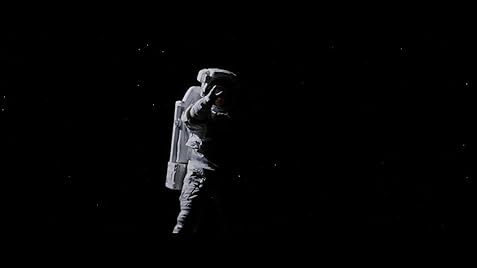
            The film begins with a stunning look of an astronaut in outer space.  Lucy Cola (Natalie Portman) is told: “Warp it up, you are going home.” To which she answers “Just give me a few more minutes.”  The film also flashes on the screen ‘Based on real events.’  The term real instead of true indicates events that are likely disturbing.

            After returning to earth, an obsessive astronaut (Natalie Portman) begins to question her place in the universe — including her relationships with her gentle husband (Dan Stevens) and her alluring crewmate (Jon Hamm.  When she returns, all Lucy wants is to go back to space, at all costs.  er modest family life loses its allure and the comforting support of her gentle husband Drew (Dan Stevens) is suddenly less appealing than the masculine charisma of a fellow astronaut, Mark (Jon Hamm), a divorcee disconcertingly eager to encourage an affair.  As she determinedly trains for her next mission, her growing dissociation threatens to dismantle both her personal and professional lives.  Hawley shows all the ugliness of Lucy’s obsession.  The sympathy goes to the poor husband.  The only reason Lucy can give her husband for her erratic behaviour is: “Can’t you see I have changed.”

  Director Hawley cannot resists using the Beatles song “Lucy in the Sky with Diamonds”.  In fact the title is probably taken from the song as well.  That sequence is artistically done in a surreal sequence Lucy in the foreground and images of her past changing in the background.

LUCY IN THE SKY is not a very good film. Director Hawley takes too much time to set up the film’s premise resulting in a very slow and ponderous first half.  It does not help that the character Lucy is an extremely annoying and unlikable one.  But Hawley pulls a good twist in the last third of the film when the audience finally realizes that the story is about a crazy lady that they are not supposed to sympathize with. 

The cinematography of outer space, courtesy of cinematographer Polly Morgan is nothing short of stunning, especially at the start of the film.

The film includes a few ridiculous bits like one part where Lucy picks up a wig for disguise.  Since when do they ell wigs in a hardware store?  The ending with the bees also makes little sense to the story.

Ellen Burstyn has a small role as Lucy’s mother.  Burstyn steals every scene she is in, with her bitter and somewhat sarcastic dialogue on life, something more of what the film needs.

There event that film is ‘inspired’ by is the story of Lisa Nowak, an astronaut who tried to kidnap another NASA colleague at the Orlando airport.

LUCY IN THE SKY is a dull disappointing drama disguised as a space movie.  It might have worked if the material were given a twisted twist with some black humour.  LUCY had its world premiere at the Toronto International Film Festival but to general lacklustre reviews.


Trailer: https://www.youtube.com/watch?v=vQP-L2pJzmk

Film Review: GREENER GRASS (USA 2019) ***1/2

Greener Grass Poster
Trailer

Suburban soccer moms find themselves constantly competing against each other in their personal lives as their kids settle their differences on the field.

Writers:

Jocelyn DeBoer (created by), Dawn Luebbe (created by)

The opening credits appear framed by a mouth with quivering lips in front of braced teeth.  If you think that is weird, consider the following scenario when a mother Jill (Jocelyn DeBoer) asks if she can get back her baby daughter she had given to her friend Lisa (Dawn Luebbe) because her only other child, her son has turned into a dog.  When the answer is no, Jill says,, “Cannot hurt in asking.” when the reply comes: “It does hurt.”  It is a good reply though it shorts stop any other possible responses that could top that.

Described rather accurately as KAFKA meets THE LOBSTER, this is absurdist satire that not everyone will be comfortable with.  But if this is your cup of tea, GREENER GRASS which could also be called ROOM FOR IMPROVEMENT WITH A DOSE OF OVER-POLITENESS will be quite the delight.

The setting is an unnamed American suburban town.  The lead characters are two families each with children, and children with problems.  Lisa and Dennis (Neil Casey) do not have sex anymore.  Jill and husband Nick (Beck Bennett) on the other hand, have a sex schedule of five times a week.  The former’s son Julian (Julian Hilliard) is horrible at sports, school and music (he plunks the piano) at a concert compared to the latter’s son who is downright rude and would mouthed – all perfect excuses for hilarity.  But everyone is so polite except when telling the truth that they always do resulting in extreme awkward moments.  The grass is always greener on the other side and there is always room for improvement.  Nick thinks the pool filtration results in better drinking water despite the awful taste.  Nick brings his own water to the restaurant for drinking.

Other absurdities involve Lisa giving birth to a football that she keeps wrapped in swathing clothes.  There is another neighbour with twins who wants everyone too know that she is separated.

All the actors play their material straight faced including the child actors who are actually the funniest, special mention going to Julian Hilliard before turning into the cutest dog.  The scene stealer is D’Arcy Carden as Miss Human, the school teacher that conducts inappropriate examples in the children’s classes.

Apart form all this, the film is framed by a serial killer, a bagger at the local supermarket that serves as a kind of whodunit, and also serves as an appropriate climax to the film.

The comedy is fresh, funny and relatively clean except for the few vulgarities uttered by the rude son.  This is the kind of original comedy that one does not want to end, though the film runs only around 100 minutes.

Though relatively unknown, the actors have done Saturday Night Live before and this is SNL that works not like the 90% of the skits every Saturday that are just unfunny.  GREENER GRASS is not 100% flawless.  The film is a bit messy at times as with its ending and a few set-ups like the photography session turning up a dud.  Still it might just end up on the list of cult movies to be remembered. 

Trailer: https://www.youtube.com/watch?v=iyOvQfgQhKQ

Film Review: DOLCE FINE GIORMATA (Poland 2018) ***

Dolce Fine Giornata Poster
The stable family life of a poetess begins to fall apart as she makes a controversial speech to appreciation.

Director:

Jacek Borcuch

Writers:

Jacek BorcuchMarcin Cecko (associate screenplay) | 1 more credit »

This is the rarer Polish film in that it is more light-hearted than the usual depressing Polish films.  Director Jacek Borcuch sets his film in the beautiful Tuscany, Italy.

One wishes director Borcuch would not have tackled so many issues as he did in this movie resulting in no clear direction on where he wishes to go with his material.  Or perhaps he wishes to keep an open mind and let the audience decide for themselves.

The film centres on semi-retired Nobel literature winner Maria Linde who is living out her golden years in casual luxury.  The celebrated Jewish-Polish poet (Krystyna Janda) enjoys a life filled with late-night dinners, wine-infused conversation with friends, and quality time spent with her adult daughter and grandchildren. The free-spirited matriarch’s privileged existence mostly keeps her at a remove from the escalating xenophobia engulfing Italy.  But a secret dalliance with a handsome (and much younger) Egyptian immigrant sets off a chain of events that will eventually lead to Maria’s life coming apart at the seams.

Director Borcuch makes one controversial statement in his script In Maria’s acceptance speech.  Maria says: “I don’t have to give an acceptance speech and that is why I will.”  This spells trouble.  In her disturbing speech she talks about the power of terrorists in using death.  Maria talks about the suicide bomber and asked what can  be done by the celebrated artist.  Then comes the whopper statement is what has been done is the setting up of refugee camps by the Government set up by the Mafia.  And she describes the incident where people have died as a work of art.  She denounces her Nobel Prize in protest for the unsympathetic Europe she is living in.

The character of Maria is that of a famous spoilt bitch.  She has a younger lover, cares not for the law (she deliberately fails to stop at roadside checkpoint) and is rude to the Police Commissioner who was so good to drop everything bare to search fr her missing grandson.  She thinks she is doing the world a whole lot of good while from what transpires is the compete opposite.  One wonders the reason director Borcuch made her character so as it destroys all the messages the film tries to put forward.  But what happens to her at the end (details not revealed here in the review) is what she deserves

Borcuch provides no answers to Europe’s current crisis of morality and identity.   One can hardly praise actress Jandaone for her performance in a conflicting role,  who infuses her protagonist with both the wilful selfishness of a child and the complicated desires of a woman finding her way in life’s later stages.

The use of the Frank Sinatra song lifts up spirits and puts the film into perspective.

Maria claims to be just a poet who is amoral.  She also says that she is made famous by a small group of intellectuals.  This does not explain the reason for her to make a moral speech.

DOLCE  FINE GIORMATA makes its debut at the TIFF Bell Lightbox for a limited engagement.

Trailer: https://vimeo.com/356027770

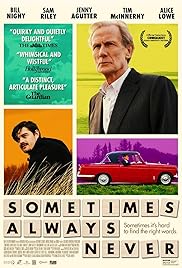
Film Review: SOMETIMES ALWAYS NEVER (UK 2019) ****

Sometimes Always Never Poster
Trailer

A detective fantasy / family drama where a love of words helps a father reconnect with a missing son.

Director:

Carl Hunter

One has to love the ambiguous title SOMETIMES ALWAYS NEVER.  The title is as smart as its quirky script, its occasionally brilliant dialogue and the crazy way it brings the game of scrabble into the story.  But the title is not as innocent as it seems.  The protagonist is a tailor and the 3 words have significant meaning with reference to a suit.  The title refers to the Sometimes, Always, Never Three-Button Rule. When wearing a suit with three buttons a man should sometimes button the top button, depending on the style of the suit, always button the middle button, and never button the bottom button.

Everyone loves a good story.  SOMETIMES ALWAYS MAYBE has one of the best premises ever thought of.  If that is not enough, there is a twist in the plot that no one would ever predict.  Director Hunter is also playful enough (there is also a splash of colour, particularly red) to go with the material as evident at the start of the film.  Some animation is inserted to put some bite into the storytelling.

Firstly, scrabble has everything to do with the story.  Alan (Golden Globe Winner Bill Nighy) is a stylish tailor with moves as sharp as his suits.  He has spent years searching tirelessly for his missing son Michael (Sam Riley) who stormed out over a game of scrabble. With a body to identify and his family torn apart, Alan must repair the relationship with his youngest son Peter and solve the mystery of an online player who he thinks could be Michael, so he can finally move on and reunite his family.  In short, it is about a lonely man trying to gain the love lost of his missing son.  Alan is also a scrabble pro.

My favourite dialogue in the script is the spill on the reason there is no marmite in Canada.  This has significant meaning for me as I grew up on it and bovril in Singapore but never realized the fact about marmite being banned by the government in Canada for its refusal to disclose a secret ingredient.  Such are the  little pleasures in the film.

Actor Nighy is always good in all his performances, again adding dignity in the role of a distraught old man.  Jenny Agutter plays Margaret, always a delight to watch, having seen her when she was much, much younger in films like THE RAILWAY CHILDREN and LOGAN’S RUN.

Though the film has a protagonist in his senior years about to settle the one mystery in his life, the story has universal appeal as it coves other issues like family relationships and senior romancing while being current with day to day stuff like gaming and cell phones.

Does Alan find his missing son in the end?  Alan does in a different way.  Frank Cottrell Boyce (MILLIONS, CODE 46, GOODBYE CHRISTOPHER ROBIN) gets my vote for most original script of the year.

Trailer: https://www.youtube.com/watch?v=22R-JQRov_U

Film Review: HUMAN NATURE (USA 2019) ***1/2

Human Nature Poster
The biggest tech revolution of the 21st Century isn’t digital, it’s biological. A breakthrough called CRISPR has given us unprecedented control over the basic building blocks of life. It … See full summary »

Director:

Adam Bolt

This documentary  on the advancements of DNA technology begins with a speech by an expert on the topic at the Californian Institute of Technology waning that advancements of DNA could lead to either disaster or positive changes.   The ad for the film claims it to be the biggest tech revolution of the 21st Century and it isn’t digital, it’s biological. 

The film goes on to tell the story of one of the most important scientific discoveries of the 21st century – CRISPR, a genome engineering tool that allows to change certain parts of the DNA, and provides a provocative exploration of the potential applications and limitations of this tool.  

Directed by Emmy Award winner Adam Bolt, HUMAN NATURE has successfully premiered at SXSW Film Festival and was further featured as the official selection at multiple film festivals across the world, including Hot Docs. 

The film is told in Chapters.  Chapter 2 itself called CRISPR and Chapter 3 called ‘The Gene Machine’.

Director Bolt’s documentary has this simple aim – to tell the story.  But in order to do so, Bolt has to educate his audience on CRISPR and CAS9 (pronounced KAST 9).  What these are is explained (as described by Wikipedia) below;

CRISPR is a family of DNA sequences found within the genomes of prokaryotic organisms such as bacteria and archaea. These sequences are derived from DNA fragments of bacteriophages that have previously infected the prokaryote and are used to detect and destroy DNA from similar phages during subsequent infections.  Hence these sequences play a key role in the antiviral (i.e. anti-phage) defense system of prokaryotes.

Cas9 (or “CRISPR-associated protein 9”) is an enzyme that uses CRISPR sequences as a guide to recognize and cleave specific strands of DNA that are complementary to the CRISPR sequence. Cas9 enzymes together with CRISPR sequences form the basis of a technology known as CRISPR-Cas9 that can be used to edit genes within organisms. This editing process has a wide variety of applications including basic biological research, development of biotechnology products, and treatment of diseases.

It is not an easy task to understand the last 2 paragraphs or to understand what Bolt’s microbiologists in the film are explaining either.  But Bolt tries hard, credit to him, using everyday English  and animation to illustrate and simplify.  In the end, it is not really necessary to understand the dynamics but how it works.  Bolt also uses an application of it with sickle cell cancer to bring his story down to earth.

Bolt goes to the extreme of using the analogy of the manufacture of the car by the Ford Motor company with genome engineering, even intercutting the latter with cars coming off the auto assembly plant.

But the doc is not without its feel good moments.  In an inspirational segment, Chinese eGenetics engineers describe enthusiastically how they can use pig cells to do the equivalent of organ donors.  With feel good also comes the horror.  Bolt informs that with one gene, it could be made available to that people could for example, be altered to survive with only 4 hours of sleep or given more muscular strength.   The ethical question is whether human beings want to go there.

HUMAN NATURE is educational though at times tough to understand film, but also a provocative and study on an urgent subject that will change the course of the human race.

Trailer: https://vimeo.com/321655980


BEST of TIFF 2019. Films. Awards.

by Gilbert Seah

 The results are in:

In general this year had a super crop of films at both Cannes and the Toronto International Film Festival.

The movement of increased women in films is working. I noticed than close to 50% of all the films I had seen at TIFF had a female protagonist, female director or strong feminine content.

At this year’s TIFF, I have seen a total of 70 feature films, and I have picked out the best of the 70 though I had not seen PARASITE or THE TRAITOR which wee on most critics top films list.

These are listed below in order of my picks.

1. Les Miserables

2. Sorry We Missed You

3. The Whistlers

4. So Long My Son

5. Beanpole

6. There’s Something in the Water

7. The Twentieth Century (also won the Canadian First Feature Award)

8. JoJo Rabbit (also won the People’s Choice Award)

9. Marriage Story

10. Portrait of a Lady on Fire

Below are the TIFF Awards (and the paragraph preceding describing the jury).

The short-film awards below were selected by a jury comprised of Chelsea McMullan, Léo Soesanto, and Andrea Roa.

IWC SHORT CUTS AWARD FOR BEST CANADIAN SHORT FILM The IWC Short Cuts Award for Best Canadian Short Film goes to Chloé Robichaud for Delphine. The jury remarked, “By presenting its main character’s unique point of view through another character’s perspective, Robichaud’s Delphine boldly utilizes an original narrative device to offer a refreshing twist on the coming-of-age genre. This evocative, mysterious, yet sensitive short film brings up powerful feelings of nostalgia and memory, leaving an impact that lingers with the viewer long after its all-too-short run time comes to a close.” The award offers a $10,000 cash prize, made possible by IWC Schaffhausen. The jury awarded an honourable mention to Theodore Ushev’s The Physics of Sorrow for its impressive filmmaking and detailed craftsmanship.

IWC SHORT CUTS AWARD FOR BEST SHORT FILM The IWC Short Cuts Award for Best Short Film goes to Lasse Linder for All Cats Are Grey in the Dark. The jury noted, “Blurring the line between narrative and documentary, Linder’s All Cats Are Grey in the Dark simultaneously observes its main character — and its topic — with both empathy and absurdity. This unexpectedly touching, exceptionally composed, and tender tale of a man’s love for his cats (along with the best employed use of Alexa) surprised the jury with its observational filmmaking and memorable feline performances.” The award offers a $10,000 cash prize, made possible by IWC Schaffhausen. The jury gave honourable mention to Federico Luis Tachella’s The Nap for its brave exploration of age and sexuality.

The Canadian awards below were selected by a jury comprised of Magali Simard, Devyani Saltzman, and Alicia Elliott.

CITY OF TORONTO AWARD FOR BEST CANADIAN FIRST FEATURE FILM The City of Toronto Award for Best Canadian First Feature Film goes to Matthew Rankin’s The Twentieth Century. The jury remarked, “Rankin’s debut feature is superb in its imaginative wildness, taking an otherwise staid historical Canadian figure and propelling him into the heart of one of the most creative, visual, and compelling experiences of the Festival.” This award carries a cash prize of $15,000, made possible by the City of Toronto.

CANADA GOOSE ® AWARD FOR BEST CANADIAN FEATURE FILM The Canada Goose ® Award for Best Canadian Feature Film goes to Sophie Deraspe’s Antigone. The jury said that “Antigone stands out on its own as an electrifying piece of cinema. Tackling with vigour contemporary realities of immigration in Canada through the framework of Greek tragedy, Deraspe created magnificent onscreen humanism. It is imperative to point out Nahéma Ricci’s performance, reminiscent of Renée Falconetti’s Jeanne d’Arc.” This award carries a cash prize of $30,000 and a custom award, sponsored by Canada Goose ® . The jury gave honourable mention to Elle-Máijá Tailfeathers and Kathleen Hepburn’s The Body Remembers When the World Broke Open.

NETPAC AWARD Selected by a jury from the Network for the Promotion of Asian Pacific Cinema (NETPAC), the NETPAC Award goes to Oualid Mouaness’ 1982. Jury members include Chairperson Beckie Stocchetti, Kanako Hayashi, and Albert Shin. The jury remarked that this film was selected “for its adventurous, imaginative style and subtle, confident filmmaking, bravely juxtaposing and framing the universal innocence and charm of youth within harrowing historical context.”

GROLSCH PEOPLE’S CHOICE AWARDS

This year marked the 42nd year that Toronto audiences were able to cast a ballot for their favourite Festival film for the Grolsch People’s Choice Award. This year’s award goes to Taika Waititi’s Jojo Rabbit. The award offers a $15,000 cash prize and a custom award, sponsored by Grolsch. The first runner-up is Noah Baumbach’s Marriage Story. The second runner-up is Bong Joon-ho’s Parasite.

The Grolsch People’s Choice Midnight Madness Award goes to Galder Gaztelu-Urrutia’s The Platform. The first runner-up is Andrew Patterson’s The Vast of Night. The second runner-up is Jeff Barnaby’s Blood Quantum.

The Grolsch People’s Choice Documentary Award goes to The Cave, directed by Feras Fayyad. The first runner-up is Garin Hovannisian’s I Am Not Alone. The second runner-up is Bryce Dallas Howard’s DADs.

TIFF is over for 2019. Preparations begin or 2020.

Reported by:

Gilbert.

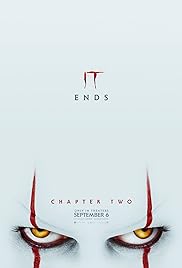
Film Review: IT CHAPTER 2 (USA 2019) ***

It Chapter Two Poster
Trailer

Twenty-seven years after their first encounter with the terrifying Pennywise, the Losers Club have grown up and moved away, until a devastating phone call brings them back.

Director:

Andy Muschietti

Writers:

Gary Dauberman (screenplay by), Stephen King (based on the novel by)

It takes close to 3 hours for 7 adult-children to take down the killer clown Pennywise.  

If you can stomach that together with more gore, loud noise and other excessiveness, then IT CHAPTER 2 might be a treat.  Director Andy Muschietti who helmed the first IT returns tothe director’s chair providing more of the formula that works in the original movie.  

(Reviewer’s note: I sat next to a lady that kept texting throughout the film, which was so annoying that I had to say something.  Worse of all, she was a Warner Bros. publicity employee, which made matters worse.  This is something that is way beyond my understanding why she, of all people would be doing the no-no! This might be a reason I had little tolerance for annoyance in the film).

The film opens with the 8 original children played by Jaeden Martell, Sophia Lillis, Finn Wolfhard, Chosen Jacobs, Jeremy Ray Taylor, Jack Dylan Grazer, and Wyatt Oleff as the younger Losers reprising their roles.  They had left the town of Derry after destroying the evil of Pennyswise but they swear to come back to the town if the evil re-appears.

The evil re-appears.  This is right after a brutal gay bashing (one of the victims is played by Quebec gay director Xavier Dolan).  This segment is the most horrific of all the horror segments put together and makes a  good clear the message regarding the gay cause.  But the segment is unclear as to the story’s significance.  Did the deed bring back the evil or the evil bring about the bashing?

The film moves forward to the year 2016, 27 years after the events depicted in the first film.  Pennywise the Dancing Clown (Bill Skarsgard) returns to create havoc in the town.  The film traces each of the children (now grown ups), leaving their current place of dwelling to return to their childhood town to take down Pennywise.  Each grown up still behave like children.  They hilariously meet at a Chinese restaurant where their fortune cookies turn into little monstrous creatures.  The adults are portrayed by a competent cast comprising James McAvoy, Jessica Chastain, Bill Hader, Isaiah Mustafa, Jay Ryan, James Ransone, and Andy Bean.

At its worst, the script by Gary Dauberman contains inane dialogue which makes no sense like: “We are what we forget…”.  with lots of opportunities for car crashes and puke jokes (the Bill Hader character pukes no less than three times in the film).  The film has impressive horror set-pieces such as: the creatures from the fortune cookies; the attacking spider with the human head;  the monster corpse having from the railings and more but often than not, these are not really connected to the story.  If one is a huge fan of horror or if one consumes a bit of weed before or during the show, it does not matter and the film should be a delicious delight.

IT CHAPTER 2 is the only new big Hollywood film opening these few weeks usually a slow time while the Toronto International Film takes place.  With little competition and a huge fan base, IT CHAPTER 2 should scare up a hefty sum at the box-office.

Trailer: https://www.youtube.com/watch?v=xhJ5P7Up3jA

2019 TIFF Movie Review: PORTRAIT DE LA JUENE FILLE EN FEU (PORTRAIT OF A LADY ON FIRE) (France 2019) ***

Portrait of a Lady on Fire Poster
Trailer

On an isolated island in Brittany at the end of the eighteenth century, a female painter is obliged to paint a wedding portrait of a young woman.

Director:

Céline Sciamma

Writer:

Céline Sciamma (screenplay)

Set in 18th-century Brittany, Portrait of a Lady on Fire follows Marianne (Noémie Merlant), an artist commissioned by an Italian noblewoman (Valeria Golino) to paint a portrait of her reclusive daughter Héloïse (Adèle Haenel), who is soon to be married. The peculiar conditions of this assignment, however, require that Marianne never  announce to Héloïse the objective of her visit.  

Instead, Marianne is to escort Héloïse on walks, posing as a hired companion while closely observing her subject so as to render her likeness on canvas in secret.  

Though nothing much happens, the film includes scenes of exquisite beauty courtesy of the cinematographer  Claire Mathon who did STRANGER BYTHE LAKE back in 2013.  The shot of the facial expressions of the three women playing cards and the one with the household breaking into a chorus of song are incredibly moving.  

It takes 3/4 of the film before the two women embrace, and the segments are executed with grace and erotic taste.

Trailer: https://www.youtube.com/watch?v=64QcwARoZAM

2019 TIFF Movie Review: WHITE LIE (Canada 2019) ***

White Lie Poster
Trailer

A popular undergrad faking cancer struggles to maintain her secret.

This odd feature centres on Katie (Kacey Rohl), a young woman who has become a literal poster child on her university campus: recently diagnosed with cancer, she’s the focal point of an online funding campaign for both herself and other cancer-related causes.  \

The only problem is, it is all built on a lie.   Katie isn’t sick but gets the money she raised for cancer for herself.  When the campus asks for her medical reports, things start spiralling for the worse when she needs money for forged papers.  She lies to everyone including her ever-loyal girlfriend.  The trouble with this film is the indecision of the directors on whether to have the audience like or dislike the protagonist.  

Though one might root for her keeping her secret, Katie is quite the nasty person with hardly any scruples.  Only her father (Martin Donovan who steals the show) calls her bluff.  Just like Katie, WHITE LIE is a difficult film to like especially since it leads nowhere though Rohl is quite convincing in the role. 

Trailer: https://www.youtube.com/watch?v=6146a_vM0HU

2019 TIFF Movie Review: LA BELLE EPOQUE (France 2019) ***

La belle époque Poster
Trailer

A couple in crisis. He, disillusioned, sees his life upset the day an entrepreneur offers him to plunge back into the time of his choice.

Director:

Nicolas Bedos

Writer:

Nicolas Bedos

Stars:

Daniel AuteuilGuillaume Canet, Doria Tillier

A high concept comedy that turns out to smart for its execution, This French comedy follows an old fashioned cartoonist, Victor (Daniel Auteuil) no out of work as print makes way to  websites that do not favour cartoons.  To make matters worse, his wife, Marianne (Fanny Ardant) is totally modern with her self driving Tesla, virtual reality and artificial intelligence and bored with him.  Victor engages in a service called ‘Time Travellers’ that take client their past historical moments.

  Victor hicks 1974 where he meets and falls in love with his wife when they first met.  Writer/director Bedos (MR. & MRS ADELMAN) creates an original premise blending modern technology with old-fashioned French romance.  Bedos edits his film really  quickly at quite the manic pace so that the audience has hardly any time to breathe, often forgetting the simplicity of comedy.  

Still this is Bedos’ unique style that is still entertaining with this film demanding a Hollywood remake int he future.  Auteuil and Ardant are a delight to watch on screen,

Trailer: https://www.imdb.com/title/tt9172422/videoplayer/vi3889675289?ref_=tt_ov_vi