Film Review: JUSTICE LEAGUE (USA 2017) ***

Submit your Screenplay to the Festival TODAY
Justice League Poster
Fueled by his restored faith in humanity and inspired by Superman’s selfless act, Bruce Wayne enlists the help of his newfound ally, Diana Prince, to face an even greater enemy.

Director:

Zack Snyder

Writers:

Chris Terrio (screenplay by), Joss Whedon (screenplay by)  »


JUSTICE LEAGUE is the d.c. comics team of superheroes (conceived by Gardner Fox and first appearing in the 1960 comic) who join together to battle super villains. The seven original members were Superman, Aquaman, Flash, Green Lantern, Martian Manhunter, Batman, and Wonder Woman.  These members rotate and have also included lesser known action heroes like Atom and Plastic Man.

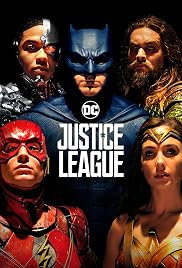
In JUSTICE LEAGUE the film, the league is made up of the leader, Batman (Ben Affleck) , Wonder Woman (Gal Gadot), The Flash (Ezra Miller), Aquaman (Jason Momoa)and Cyborg (Ray Fisher) formed to honour Superman (Henry Cavill) after his death.

The story takes place months after the events of Batman v Superman: Dawn of Justice, where Superman dies.  As the world mourns Superman’s death, the Justice League is formed by Batman to face the catastrophic threat of Steppenwolf (an unrecognizable Ciaran Hinds) and his army of Parademons, who are on the hunt for three Mother Boxes on Earth.

Considering the (critically not commercially) disaster of all the films so far in the D.C. extended universe excepting WONDER WOMAN, director Snyder plays his film safe so it cannot be crucially panned.  The story is left simple and straight forward so nothing can go wrong.  Batman forms the league, the league fights the villain and wins and the film ends.  The mood is kept relatively serious with humour in the form of a few punch lines thrown in periodically.  Of all the superheroes, Wonder Woman has the most screen time and jokes about her sexiness (kept non-feminist) plentiful.

Of the new superheroes, Ezra Miller (WE NEED TO TALK ABOUT KEVIN) puts in some fresh life as The Flash with his cute schoolboy looks and humour.  In the other hand,  Cyborh turns out pretty boring, as he complains of his super powers half the time.  Aquaman has little screen time, perhaps the filmmakers just whetting audience’s appetite for the new upcoming AQUAMAN film by James Wan.

The dialogue ranges from good to plain awful.   Good: When Batman is asked of his superpowers, his reply is :I am rich and wealthy.”  The awful:  words to Wonder Woman: “You smell good” followed by  “I have smelt you before.”  But one should expect better writing for a $300 million blockbuster.

The fight scenes at the end are executed with the expected pyrotechnics (nothing really stands out) that likely cost a big bundle.  Of the $300 million, $25 million went into 2 month of re-shoots and into the post-production digital removal of Cavill’s moustache which he had to sport for his MISSION IMPOSSIBLE 6 role.

At a massive cost of $300 million, the film should make a profit considering the success of the other films in the D.C. extended universe and the huge fan base.  Never mind if the film critically bombs.  Anyway, Warner Bros. has already had a swell year with hits like IT, THE LEGO BATMAN MOVIE and of course, WONDER WOMAN.

Trailer: https://www.youtube.com/watch?v=3cxixDgHUYw

Submit your Screenplay to the Festival TODAY

MY FRIEND DAHMER (USA 2017)

Submit your Screenplay to the Festival TODAY

My Friend Dahmer Poster
Trailer

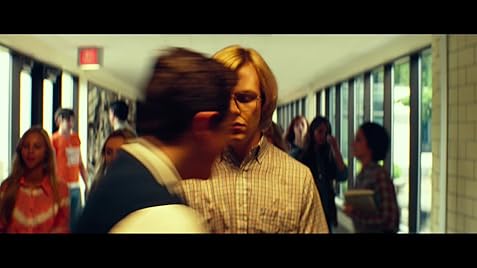
A young Jeffrey Dahmer struggles to belong in high school.

Director:

Marc Meyers

Writers:

Marc MeyersDerf Backderf (based on the book My Friend Dahmer by)


Submit your Screenplay to the Festival TODAY

INFINITY BABY (USA 2017)

Submit your Screenplay to the Festival TODAY

Infinity Baby Poster
A comedy about babies that don’t age.

Director:

Bob Byington

Writer:

Onur Tukel


The execution of the movie is as queer as its conception of the infinity baby.  INFINITY BABY, shot in black and white is a absurdist social comedy that almost becomes a viable satire.

THE INFINITY BABY is so called because this baby does not age (hence being a baby forever).  By giving the baby a fixed medication, the baby only needs to eat once a week and have its diaper changed once a week.  The baby never cries but coos as cute as any cooing baby can be.  The whole package comes at a cost of $20,000.  The film follows one such baby that had her medication changed, died and ended growing up.  How all this happens with all its absurdist hilarity makes up Byington’s occasionally very funny movie.

It is not this baby person that is the subject of the movie.  The subjects are the employees involved with the infinity baby enterprise.  These are imperfect people with imperfect lives which the film milks for all its hilarity.  The inventor of the infinity baby is Neo (Nick Offerman) rich and powerful, and in his own works gives advice that people actually listen to. In his employ is Ben (Kieran Culkin, brother of the HOME ALONE Culkin) who wants a woman but is afraid to commit to a relationship.  When things get too sticky, he brings the girlfriend to her mother who will ream her out and therefore break up the relationship with no guilt accosted to Ben.  It is later learned that this woman is not really his mother, but a woman he pays to impersonate his mother to break up his various relationships.  These scenes have to be seen to be believed.  Ben is nothing more than an overgrown child, wonderfully portrayed by Culkin.

More outrageous are the two baby delivery guys, Larry (Steve Corrigan) and Malcolm (Starr).  They are a gay couple who end up stealing a baby and keeping the $20,000 in order to boost their relationship.  But they are lazy and increase the medication doses of the baby so that they do not have to clean and feed the infant so often.  The bay dies. All hell breaks loose.

Director Byington claims that the film is inspired by Woody Allen’s BANANAS.  The relationship part of the Wood Allen film is similar – the one where the character played by Allen’s then wife, breaks up with him.  Byington’s film, based on the script by Onur Tukel (CATFIGHT) is made up of a series of comedic set-ups that are related by the theme of the infinity baby but mostly unconnected in flow.  The film feels disjointed not aided by a non conclusive ending. 

One would hardly expect a proper closed ending from a film with an absurdist plot.  Still INFINITY BABY is highly amusing for its inventiveness, weirdness and very funny humour.   The film was selected for the SXSW Film Festival and also won the CENTER Film Festival Special Jury Prize for Best Narrative Feature.

Trailer: https://www.youtube.com/watch?v=m1h5QtQ-_ZI

Submit your Screenplay to the Festival TODAY

DADDY’S HOME 2 (USA 2017)

Submit your Screenplay to the Festival TODAY

Daddy's Home 2 Poster
Trailer

Brad and Dusty must deal with their intrusive fathers during the holidays.

Director:

Sean Anders

Writers:

Sean AndersBrian Burns (characters)


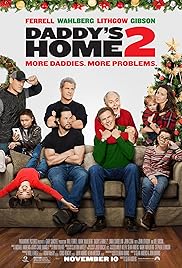
One can tell that there is something wrong with a movie when the movie within a movie turns out to be more interesting than the movie itself.  In DADDY’S HOME 2, the families end up at one point stranded at a suburban cinema where a fake movie MISSILE TOW starring Liam Neeson is playing.  Neeson pays a character (voice only heard) that rescues his family from terrorists at all costs.  That fake film is heard for only a minute or two before director Anders turns the audience back to his nightmare Christmas movie – DADDY’S HOME 2

Moviegoers must have been very naughty during 2017 as Santa has rewarded them already with two awfully bad Christmas comedies – A BAD MOM’ S CHRISTMAS and now DADDY’S HOME 2.  DADDY’S HOME numero uno arrived on Christmas Day 2015 and went on to gross a remarkable $150 million domestically.  Thus arrives number 2 with Paramount hoping to do well again at the box-office.

The first film dealt with step-dad Brad (Will Ferrell) having to deal with his wife’s kids’ real father Dusty (Mark Wahlberg) showing up to undo all the values that Brad had instilled in his family.  HOME 2 ups the angst with the arrival of the dads’ dads in the form of Mel Gibson and John Lithgow.  Gibson has had quite the bad press and has been successful behind the camera (HACKSAW RIDGE, PASSION OF THE CHRIST) than in front of it.  Surprisingly, he is the funniest and best of the cast in the film, playing against his true character in life – a macho, gun-totting anti-feminist old goat.

Like all Christmas comedies, the usual disastrous set ups are there – the setting up of the electrical house decorations that go wrong (at least this one is quite elaborately done); the Christmas tree shopping; the snowball fight (not funny at all); the Christmas dinner; the feel good sentiment (it is only the children that count); the breaking of a hard heart (John Cena’s as the biological father of Dusty’s kid).  The worst of all is the film’s climax, which must rank as the corniest set-up of all time that takes place in a cinema theatre during a blackout.  There is a shameless promotion of the good of going to the movies where audiences are encouraged to turn to the next person to greet them.  

A few non Christmas setups are included – the most notable being the bowling segment where one son has the problem of throwing his bowling ball into the gutter.  It is a rather simple setup that turns out to generate only a few laughs, if any pity laughs.  The predictable shoplifting gag does not work either nor the revelation of the notes that Dusty’s girlfriend takes of Brad’s wife that turn out to be good ones.

DADDY’S HOME 2 might work for the undemanding moviegoer.  There were people applauding at he end of the film, but critics can only shrug at this early Christmas enterprise.

Trailer: https://www.youtube.com/watch?v=p8shgJX14HQ

Submit your Screenplay to the Festival TODAY

MURDER ON THE ORIENT EXPRESS (USA 2017)

A lavish train ride unfolds into a stylish & suspenseful mystery. From the novel by Agatha Christie, Murder on the Orient Express tells of thirteen stranded strangers & one man’s race to solve the puzzle before the murderer strikes again.

Director:

Kenneth Branagh

Writers:

Michael Green (screenplay by), Agatha Christie (based upon the novel by)

Stars:

Daisey Ridley, Penélope CruzWillem Dafoe

Film Review: DARKEST HOUR (UK 2017) ***1/2

Submit your Screenplay to the Festival TODAY

Darkest Hour Poster
Trailer

During the early days of World War II, the fate of Western Europe hangs on the newly-appointed British Prime Minister Winston Churchill, who must decide whether to negotiate with Hitler, or fight on against incredible odds.

Director:

Joe Wright


Director Joe Wright returns to his period World War II roots of ATONEMENT with a theatrical historical drama set during the first year in office of Sir Winston Churchill (Gary Oldman) as Prime Minister of Britain. The United Kingdom was then on the brink of invasion by Adolf  Hitler’s Germany.  Wright covered in ATONEMENT the evacuation of troops form Dunkirk, France and in this film covers the same event but from another angle – the difficult planning and fight that championed it.  It is in many ways a more difficult endeavour as witnessed in this film, appropriately entitled DARKEST HOUR.

The film opens with the forced resignation of then Prime Minister Neville Chamberlain (Ronald Pickup) less than a year into the war due to his incompetence.  Churchill is selected as his only viable replacement despite his controversial career (the most important being the loss thousands of men of men at the Gallipoli War).  With British resources dwindling, France having already fallen, and the U.S. not helping much at the time, a contingent led by Foreign Secretary Lord Halifax (Stephen Dillane) pushes hard for peace talks with Hitler. 

There is much to enjoy in this feel-good, rouse up ones emotions war drama.  Wright provides Churchill a grand theatrical entrance as he is shown first in bed lighting his signature cigar.  The film even ends with his most famous speech in the House of Commons (We will fight in the streets, in the hills etc.)  Between them, Churchill is shown as a man, supported by his wife, who finally gets the courage to fight for his convictions.  His stately residence, the Parliament house, the cabinet rooms all form the mighty props in the grand venture.  The cinematography by Bruno Delbonneland with camerawork is superb, mainly of the interior rather than exterior.

Oldman’s performance of Churchill is magnificent.  Oldman, looking like Churchill, aided by Kazuhiro Tsuji’s great prosthetics and make-up, goes right into character rather than just impersonating the man.  This is an Oscar worthy performance.  Other performances are excellent all around with Kristin Scott Thomas making an impression with her little written role of Mrs. Churchill.

The chief complaint of the film is the manipulative segment of Churchill’s ride on the London Underground, where he speaks candidly to a number of tube riders on their view of entering the war.  He speaks to a too good to be true assortment of characters – a child, a black, a housewife, the working-class who all are able to voice their opinions (including the child and the black who can quote Shakespeare) too eloquently with the scene ending with Churchill crying into his handkerchief.

DARKEST HOUR is the second film this year with Churchill as the main character, the first one being Jonathan Teplitzky’s CHURCHILL starring Brian Cox.  Both films show two different sides Churchill took on the War – the first with Churchill against the Normandy Allied Invasion.  Both are worthy war dramas, both worth a look with DARKEST HOUR being the bigger more splashy production. 

Trailer: https://www.youtube.com/watch?v=4pNOCzV5jG0

Submit your Screenplay to the Festival TODAY

Film Review: LAST FLAG FLYING (USA 2017) ***

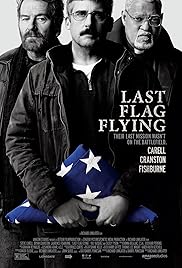
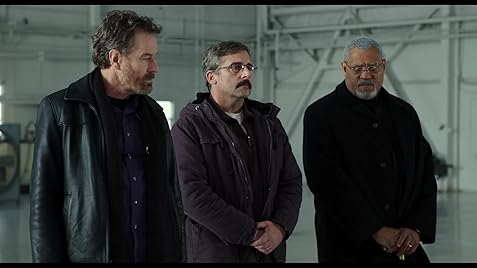
Thirty years after they served together in Vietnam, a former Navy Corpsman Larry “Doc” Shepherd re-unites with his old buddies, former Marines Sal Nealon and Reverend Richard Mueller, to bury his son, a young Marine killed in the Iraq War.

Writers:

Richard Linklater (screenplay), Darryl Ponicsan (screenplay) |1 more credit »

Films Reviews: Films of Andrei Tarkovsky – SOLARIS/STALKER

Submit your Screenplay to the Festival TODAY

TIFF Cinematheque Presents – The Films of Andrei Tarkovsky

Andrei Arsenyevich Tarkovsky (4 April 1932 – 29 December 1986) was a Soviet filmmaker, writer, film editor, film theorist, theatre and opera director.  He is considered to be one of the greatest filmmakers of all time and much respected by other respected filmmakers notably Ingmar Bergman.

Tarkovsky’s films include Ivan’s Childhood (1962), Andrei Rublev (1966), Solaris (1972), Mirror (1975), and Stalker (1979). He directed the first five of his seven feature films in the Soviet Union; his last two films, Nostalghia (1983) and The Sacrifice (1986), were produced in Italy and Sweden, respectively.   His work is characterized by long takes, unconventional dramatic structure, distinctly authored use of cinematography, and spiritual and metaphysical themes.

TIFF Cinematheque presents for the first time a good retrospective of Tarkovsky films with weeklong engagement of both STALKER and SOLARIS (both films capsule reviewed below).

My favourite Tarkovsky film is SACRIFICE (OFRET) with the single long tie at the film’s end of a burning house with its inhabitants running around outside it.

Full fill program and schedule of screenings, please check the Cinematheque website at:

tiff.net

CAPSULE REVIEWS OF Selected Tarkovsky Films:

SOLARIS (USSR 1972) ****

Directed bh Andrei Tarkovsky

SOLARIS is Soviet science fiction art film adaptation of Polish author Stanisław Lem’s novel Solaris (1961).  Co-written and directed by Andrei Tarkovsky, SOLARIS moves at the low moving pace one has associated Tarkovsky’s films with.  This one runs 2 hours and 42 minutes, so be prepared for a long haul.   A meditative psychological drama occurring mostly aboard a space station orbiting the fictional planet Solaris, the story involves a stalled scientific mission because the skeleton crew of three scientists have fallen into separate emotional crises.   The terror in space is not physical but mental and emotional.  Psychologist Kris Kelvin (Donata VBanionis) travels to the Solaris space station to evaluate the situation only to encounter the same mysterious phenomena as the others.  He meets who could be or could not be his wife, Hari (Natalya Bondarchuk) as she had previously died 10 years back.  He sends her off in a rocket getting himself burnt, but she re-appears.  Great ideas but the please in this film has to be earned.  SOLARIS won the Grand Prix Spécial du Jury, the FIPRESCI prize and was nominated for the Palme d’Or and was remade by Steven Soderbergh in a film with the same title.

Trailer: https://www.youtube.com/watch?v=1Tob56MebI8

STALKER (USSR 1979) ****

Directed by Andrei Tarkovsky

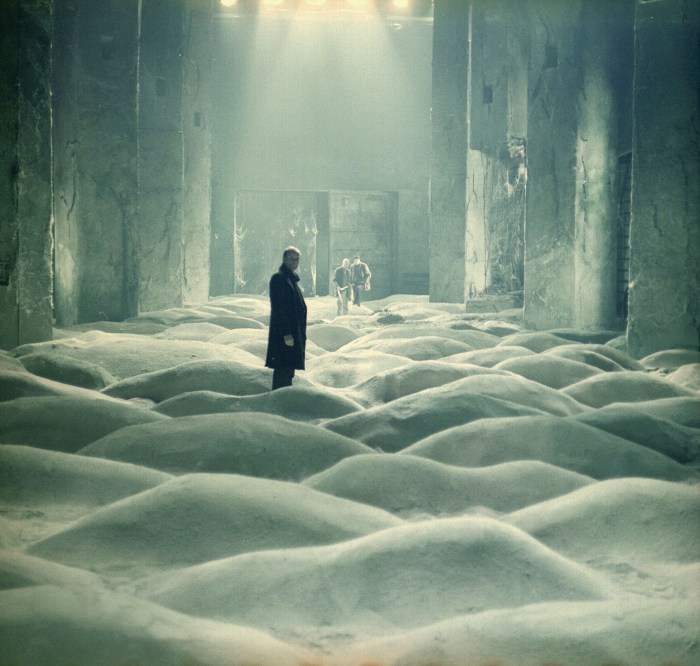
STALKER refers to the guide to a special place called The Zone in Tarkovski’s boring mini-masterpiece of the same title.  In it three men, THE STALKER, the guide, and two others referred to as the professor and the writer (it be best to remember who is who) enter a place called The Zone.  The Zone is apparently inhabited by aliens and contains the Room, where in it is believed wishes are granted.  The government has declared The Zone a no-go area and have sealed off the area with barbed wire and border guards.  However, this has not stopped people from attempting to enter the Zone.   The writer wants to use the experience as inspiration for his writing and the professor, who wants to research the Zone for scientific purposes.  Things do not turn out as expected.  Neither does this sci-fi film, so beware!  One scene has the trio roaming in a long pipe (tunnel) before one says:  “There is a door.”  They argue not only who should go in first but why bring and point a gun through the door.  “No one waits at the door,” one answer when questioned whether to enter.  This scene is typical of what happens throughout their trip into The Zone.  Nothing happens but a lot of arguments.  The sets like the tunnel dripping with water from the ceiling are stunningly bleak and typical of a dystopian society.  Running at over two and a half hours with nothing much happening for a sci-fi film, STALKER is undeniably boring.  Very, very boring!  But crazy as it might sound, it is still a captivating film that should be seen by all cinephiles.

Trailer: https://www.youtube.com/watch?v=xB7jVTut3-g

Andrei Tarkovsky.jpg


Submit your Screenplay to the Festival TODAY

Film Review: DINA (USA 2017)

Submit your Screenplay to the Festival TODAY

Dina Poster
Trailer

An eccentric suburban woman and a Walmart door greeter navigate their evolving relationship in this unconventional love story.

DINA is a romantic comedy combined with the element of the documentary.  It follows the real life romance (bliss and troubles; warts and all and a lot of warts at that) of a real life couple Dina Buno and Scott Levin.  They are not the flashy Hollywood type romantic comedy couple but everyday normal looking folk.  They are decent looking but not overtly attractive.

Dina is an outspoken and eccentric 49-year-old (she looks younger) living in suburban Philadelphia.  She had a past marriage and a bad accident which has resulted in her living alone and not wanting to settle down again.  But things never go as expected.  Dina falls in love with Scott (as seen wen the film begins) who seems a decent and loving and simple guy working as a Walmart greeter.  She invites her fiancé Scott, to move in with her.  Scott has never lived alone.  Having grown up neurologically diverse in a world blind to the value of their experience, the two are head-over-heels for one another, but shacking up poses a new challenge.

Though they constantly whisper sweet nothings to each other, their awkwardness is also present.  This is observable during their short holiday trip to Ocean City, as Dina has never seen the ocean before. Other events shot in the film include Dina’s racy bachelorette party and on honeymoon in the Poconos.

One wonders at the authenticity of parts of this documentary – when an incident is re-enacted or on-the-spot.  The best example is the one with the couple on the bus arguing as they are lost.  Is the cameraman sitting behind them on the bus filming their predicament as it happens, or is this a set-up?

The film hints of Dina’s previous marriage and the problems associated with it.  That relationship seems more intriguing than the one on display in this film.  To make the film more interesting, the problem of sex is introduced into the relationship.  All romantic comedies have a problem that the couple faces which they will overcome.  Scott is uncomfortable with touching and being affectionate, thus posing a problem as Dina who is very compassionate.  The camera follows them as they often argue and bicker.  The odd thing is that Scott always agrees with Dina but never proves himself.

DINA is brightened up by occasional musical interludes made up of popular tunes like “I am a Lady” and “We are Family” as well as songs written and performed by Michael Cera.

DINA, about a not so perfect couple with a not so perfect romance ends up a not so perfect movie.  The question is whether audiences would want to spend 90 minutes and hard earned money watching something too ordinary.  The film will be a tough sell.  Audiences want to go to the movies to escape from their humdrum lives not watch one on screen.  But the film did win the Grand Jury Prize at the 2017 Sundance Film Festival, which might be the reason the film got distribution.
Trailer: https://www.youtube.com/watch?v=f4BSWA7pWuc


Submit your Screenplay to the Festival TODAY

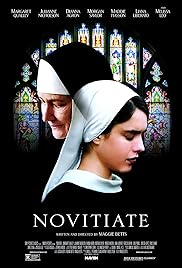
Film Review: NOVITIATE (USA 2017) ****

Submit your Screenplay to the Festival TODAY

Novitiate Poster
Trailer

Set in the early 1960s and during the era of Vatican II, a young woman in training to become a nun struggles with issues of faith, the changing church and sexuality.

Director:

Margaret Betts

Films with the Catholic Church as its subject have always painted a ghastly picture of the religious institution.   Recent films like the Foreign Film Oscar Winner IDA and the Best Picture Oscar Winner SPOTLIGHT immediately come to mind.  But is the Peter Mullan’s 2002 biting satire THE MAGDALENE SISTERS that bear the closest resemblance to Margaret Bett’s equally scathing drama NOVITIATE.  THE MAGDALENE SISTERS and NOVITIATE take different paths but both make good companion pieces.  

NOVITIATE begins with Cathleen (Margaret Qualley) at a church altar, questioning God on her choice of becoming a nun.  The film flashes back to 1964, 10 years earlier to follow the chain of events that led her to make this decision and how she has come to question that decision.  By immersing the audience into the single character of Cathleen, Betts brings her audience to the first lesson in ‘novitiation’ or “Becoming a nun 101”.  It is an eye-opening and gruelling lesson.

Cathleen enters a convent, convinced she’ll never be more in love with anyone except for God.  Her mother, (Julianne Nicholson) is totally against the idea, chastening her daughter telling her she knows nothing about religion or that love for God.  Betts puts the audience on Cathleen’s side, but later on in the film, turns the audience back to the mother;s side, when the church has gone so wrong that Cathleen’s decision might not have been the right one.

The church gone wrong arrives in the form of the Reverend Mother (Melissa Leo).  When the film opens, the Pope and higher ups in the Vatican decided on reforms (called Vatican II) to modernize the Church so that it be more relevant in current times.  The Reverend Mother must learn to relinquish authority after the news of planned reforms from Vatican II.

Melissa Leo steals the show, aided by three segments containing well written dialogue for her character.  One is her opening speech stressing that there is no love without sacrifice.  Another is her defence against the Archbishop when confronted on her authority and the last is her confrontation scene with Cathleen’s mother.

One glaring problem of the film is Cathleen’s make-up.  It is clear to everyone that nuns or those in training are not allowed any makeup.  Yet, Cathleen is seen with eye shadow, powder and light lipstick.

Betts keeps her film always interesting by the addition of several subplots that back up the main one of Cathleen.  One is the abuse of Sister Sissy who ends up being sent home.  Another is Sister Mary Grace’s service at the convent.  She is sincere, loving and open but finally is forced to confront the Reverend Mother.

NOVITIATE ends with the note that after the Vatican’s reforms (which are signalled as progressive in Betts’ film, 90,000 nuns have since left convents all over the world.  This poses the disturbing implication that these 90,000 nuns must have been against these reforms and have been practising cruelty of the past.

Trailer: https://www.youtube.com/watch?v=8kKexutLfE0


Submit your Screenplay to the Festival TODAY