Inside The Chaos: 5 Rules for Your Short Film

We’ve all heard it before – your short film is a calling card for your work in your industry. A highlight reel of your best work. Many of us come out of school having made one, or on our way to making one. We often pour our hearts, hopes, souls, and paychecks into their creation. But are they good?

Today we will be analyzing the very first step of making a film: Crafting the script. Below are five major things that help shape a good script into a great script.

*Note: Rules are meant to be broken. There will always be films that make it big that transgress the general rules. But it is also true that the elements below will be found in more successful films than not.

effeciency.jpg1. EFFICIENCY

Bow down before this God. Your film must be efficient. What does that mean? The baseline definition follows ” to accomplish something with the least waste of time and effort; competency in performance” (Dictionary.com)

What does that mean for your short film? There must not be a wasted line, useless character or excess action. Every act and every sentence must do one of three things 1) assist in the goal 2) conflict with the goal 3) Pass on crucial information.

Even in comedy, where banter can be a source of humor, that banter must be directed towards the task at hand, and it must resolve with information being passed.

Consider Abbott and Costello’s Iconic “Who’s on First” sketch. This piece is nothing but quick and witty banter about a confused identity, but at the center, both characters are attempting to pass along vital information. Every line either assists that goal, conflicts with that goal, or passes on information.

originality.jpg2. ORIGINALITY

This is a tricky one. It can be argued that there are no new ideas. And countering against that, film genres like Romantic Comedies have been successfully exploiting the same plot arch for decades. Bottom line: Make sure your idea hasn’t been done before. And if it has, look for a way to get your emotional goals across in a slightly different way.

Research your concept! Has it been done before? If it has, find out how well it worked and why? How can you make your concept be the story you want to tell, without being a story that has already been told.

spoon feed.jpg3. DO NOT SPOON FEED YOUR AUDIENCE

A classic rule of cinema is “show, don’t tell”. Don’t tell us character X is having money problems. SHOW character X’s credit card being declined at the grocery store, show them digging in their pockets for bus money, show them walking past a pile of “urgent” bill notices in their hallway. Trust the audience. They will get it.
make us feel.jpg4. MAKE US FEEL

Like any true art form, there is some unknowable sense of magic in this element. I once went to a stand-up comedy class where the teacher said, “I cannot make you funny. But if you are funny, I can teach you tricks to make your funnier.” This is, essentially, the same deal. From the most novice writer to the most advanced, this is the jewel of a short film.

Whatever you are writing- comedy, tragedy, drama- we need to care about the character’s goal. We may hate them, we may love them, we may want them to win, we may want them to fail- but we, as the audience, need to want something from the character and their goal.

How exactly does a writer accomplish this? It is a highly subjective debate. But it starts making the character unique and still relatable. If your character is a jerk, they need to be a jerk in a way that everyone in the audience can relate to. If they are unknowable and horribly evil, they need to have a moment early on where they imply their reasons for being evil- and they have to be understandable, even if horrible. (Ex. “There is no good and Evil. Only power and those too weak to seek it”) If they are the dramatic hero, we need to see a human element of the hero within ourselves.

It is a tricky thing to accomplish, but if your work can make us feel, you have accomplished your primary goal.

take risks.jpg5. TAKE RISKS! (but educated ones)

Take some risks! Start your piece in the middle of the action. Make your main character a deplorable villain. Leave us on a cliffhanger or twist ending- but make sure these risks are measured, educated and, most importantly, well executed.

Your film should have one major over-arching goal: Leave the viewer with a feeling. You can take chances in your attempts to get there. The only guideline is to make sure those chances work. Want your characters to have a big twist ending? Great! Make sure it works sensibly and clearly, and that twist is air tight.

CLOSING

Short films are their own unique beasts, but a good short film can scream out to the industry that you are a professional who knows your stuff. These five guidelines are good ground rules for anyone taking the initial steps in crafting a film

Inside the Chaos: How to Eat Healthy on a Movie Set

movieset3.jpgby Kierston Drier

We’ve all been there.

You know what I am talking about the great divide that is your health and the workplace. It’s no different for the industry of film and television. Oh wait… yeah it is. Juggling health, cost and time is always a hassle. And let’s not forget those five to ten servings of fruits and veggies followed by that roughly 90 minutes of cardio at least once a week.

CONS:

Long working hours

You’re probably working a 12-hour day plus lunch and commuting. So lets round that up at a 15-hour day. (One hour lunch, plus approximately one hour in commuting each way.) Add an average eight hours for sleeping  (and yeah, who REALLY gets that much?!) and you have “drum roll please” one extra hour in your day! One whole hour to do everything else in your life like showering, checking emails, paying bills, answering personal calls, seeing your friends and/or family, maybe unwind with a glass of wine and somewhere in there maybe fit in some step aerobics.

High Stress- High Energy Job

Any job on set is usually specialized, and there’s normally a lot of pressure on set “get the right shot, meet a deadline, hit your mark, and do it all with a smile on your face.” Regardless, while life in production has a lot of hurry-up-and-wait, and standing around, it definitely makes up for it in the times when it is go-go-go and totally hectic.

PROS:

Almost constant access to food

Enough said. Between catered meals and craft tables, on any show above a student-level film, you will likely at least be fed.

The great debate is how to manage hunger, boredom and hectic lifestyles with the constant access to food of all kinds around you!

I’m not a nutritionist, a dietitian, or even someone who claims to be super healthy, but here’s how I break down a (fairly) guilt-free day of set-snacking. While set calls vary by show, I used a standard 12+1 hour daytime schedule.

4:40 a.m.– I’m up and out the door for a 6 a.m. call. I’ve showered the night before, check my emails on the streetcar, and grab a 1/2 a banana on my way out to jump start my metabolism, wake me up and follow my grandmothers’ advice (“never skip breakfast!”).

6 a.m.- My actual call time. Hopefully your crafty is on set and has the basics out, which hopefully includes the “hot and ready” breakfast. If you have this luxury, I advise to take advantage of it. I always vouch for a high-protein option to fill me up. Eggs and bacon are my go to if I have them, but for vegetarians and vegans look for oatmeal or a granola with non-dairy milk.

8:30-9 a.m.– Sometimes you miss breakfast, and sometimes you only get the tiniest bite before you have to run off! Regardless, three hours into call, craft services should at least have the two Big C’s: coffee and carbs. In my opinion, this is the time (if you have it) to grab something carb heavy. You have the whole day to work it off, and it will keep you from being super hungry later. I’m a morning person, so I usually skip the coffee and grab some more fruit: pineapple, cantaloupe, fresh berries with maybe a small yogurt, will keep me going. Note: Also, now would be a good time to grab a bottle (or two) of water!

11 a.m.- If I’ve missed my chance to grab food, this is when I’ll grab coffee number one. As a personal rule I don’t add sugar to any beverage; sugar wiggles its way into so much food on set, I do what I can to limit it when I have the option. I usually grab a coffee with a non-dairy option (almond, rice, or soy milk). If a sub is going out I ask myself this system of questions to decide if I take the AM sub or not: Am I hungry? Do I really want this sub? Is it better to have something smaller now (like a piece of fruit) knowing lunch is coming?

1 p.m.- Usually lunch time! I fill up my plate accordingly:

1/4 plate: Hot veggies (Steamed green veggies like green beans, broccoli, asparagus, etc.)

1/4 plate: Cold veggies (Raw veggies, salad greens, mixed salads, marinated veg salads, whatever they have)

1/4 plate: Starches (Baked yams, squash or rice. You can also do pasta or potatoes!)

1/4 plat: Protein. (There is usually a vegetarian protein option, but I often go for the leanest meat I have access to. Chicken or lamb are good options, as is fish!)

Note: Remember to grab a beverage! My recommendation: water.

3 p.m.- This is when I get coffee. And I might take this opportunity to indulge with chocolate, a cookie or maybe even a handful of potato chips. If you’re really conscious about eating healthy, can those indulgences and reach for the trail mix, some raw veggies or fiber-filled fruits that will fill you up and keep you full!

5 p.m.- I’m usually not hungry around now, but if you are, grab a handful of one of the treats mentioned above! Try hummus and crackers, raw veggies or a banana/apple/pear, or even soup if the crafty has prepared some. Also, don’t forget to stay hydrated with maybe another glass of “dare I say water.”

7 p.m.- If all goes well, by now I am wrapped and on my way home. I try to use my time to my advantage “I check my emails on the bus”, and, if I catch craft in time before they leave, I’ve filled a thermos with a sugarless herbal tea to drink on the way home.

9 p.m.- Of course as it would have it, now I’m hungry, but trying to be good, I’m likely to grab something like cheese and crackers, hummus and crackers, soup I’ve made at home or even a bowl of popcorn. When I get home I usually make a snack, hop in the shower, call a friend or family for a brief chat, then put my feet up for 20 minutes and read or noodle around the internet until sleep time, at say 10:45 p.m.

movie set1

movie set2.jpg

Inside The Chaos: When to Walk Away from a job.

When to Walk Away from a job.jpgby Kierston Drier

An adage in my family has long since been, “Some of the best jobs are the ones you don’t take.”

I can’t believe I am writing this, but for this first time since entering the world of film and television, I turned down work.

Not just turned it down, but walked away from a job that was handed to me. Walked out in the interview. And I firmly believe it was the right thing to do. I gathered enough information during the interview to understand that the show I was being offered a job in would be far more difficult than the reciprocation they were offering. I’m going to share with you some of the warning signs for what to look for and how to tell when it might be better to let a job pass you by.

KNOW HOW YOU GOT THE CALL

It’s important to start at the beginning here. There is a difference between getting an interview for a mass applied for job posting online, a call from a head hunter, and a personalized referral from a colleague or known source. Mass applied for jobs are likely to have a large pool of applicants, and head hunters can usually guarantee a certain amount of quality in their offers . Referrals are common and trusted in the film and television industry, but that doesn’t mean you shouldn’t consider the person who referred you, what your professional relationship with them is, and who they chose to send your information to.

KNOW THE COMPANY

Research the production company, the show, and, if possible, the team you’re with. Some shows are secretive and keep their information quiet, but that doesn’t mean that you can’t research the production company or tap your industry resources for reviews and references on working with the company or similar team. Listen to multiple viewpoints, and listen to everyone’s opinion. Don’t make an opinion on your own immediately, but listen to and tuck away what you hear from others and what you glean from your own personal research.

KNOW YOUR JOB

Know what job you’re going in for. Know it inside and out. Know what it takes to do your job correctly and what things you need the job to be able to provide you in order for you to perform your responsibilities. Need access to reliable transportation? Need to be promised a certain type of equipment? A specifically allocated budget? Know what you’d like to have, know what you need to have, and know what the happy medium would be between the two so that you can negotiate comfortably.

KNOW YOUR RATE

This is so so important. Know your rate! Know your personal rate, know the professional rate for that job in general, know what your worth is based on your experience and your craftsmanship. Make sure the people hiring you know what that rate is. Go in with knowing what you’d LIKE to make, what you SHOULD make and what rate is TOO LOW.

There is a strategy to working below rate and working for free. Sometimes it is done for experience, for a special credit, or for a passion project or for a friend. But remember when going in for a JOB, what is your relationship to the employer? If the job is one you have done before, and one you have experience in, then there is little reason you should accept any lower than the standard professional rate. Unless you are doing a favour for a friend or close contact, you should not be willing to negotiate that rate any lower than industry standard.

KNOW WHEN TO WALK

Walk away when:

-The company refuses to answer all your professional questions with clear, informative answers.

-The company or production makes unrealistic promises that they do not put in writing.

-The company  or production uses non-committal language while discussing details that are absolutely necessary for your job to be completed. (Ex. ” We’re pretty sure we’ll have enough money for that [insert absolutely necessary item].”)

-The production or company refuses to pay your kit fee, or supplement you for your own materials without prior discussed and written consent.

-The information you are basing your job around keeps changing.  (Ex. A craft person who constantly gets a different head count number than predicted; a location manager whose location requirements keep changing.)

-The job is physically more hours, labour or requirements than is legal.

Remember,  some jobs aren’t worth the headache!

When to Walk Away from a job2

Movie Review: DEVIL WEARS A SUIT, (Australia) LGBT, Sci-Fi

Played at the June 2017 LGBT Toronto Film Festival

Directed by Eli Mak

A high-concept drama/scifi about a Jewish boy who must decide whether to ‘cure’ his homosexuality with an injection or be ostracised from his community forever.

CLICK HERE – and see full info and more pics of the film!

Review by Kierston Drier

 Some films make you laugh, some make you think. Some punch you in the gut and break your heart. Few do this so well as DEVIL WEARS A SUIT, coming to us from Australia by Director Eli Mak.

In this transcendent science-fiction piece, teenage Adam from an established Jewish household, must submit to a homosexulity test at his school. If he fails and is shown to be gay, he will be kicked out of school and likely disowned by his family and community. But sweeping the world is a new homosexuality “cure”- an injection that can “make your straight.”

Adam considers his options and goes to buy the cure, when he runs into an old friend from high school he hasn’t seen in years, Jarred. It turns out Jarred didn’t move to Israel as his family has said. Jarred didn’t pass the homosexuality test years before, and is now living in near squalor conditions, a social outcast from his community. Seeing what Jarred has, and what he gave up in order to live the life he wanted, Adam must question what his freedom is worth.

Academically speaking, science fiction is a medium of storytelling that addresses a current issues, softened through the lenses of the almost-unbelieveable. When we think of the areas in the world where people must hide and conceal their sexuality for fear of ostracization, it becomes terrifyingly easy to believe a “cure” like the one is this movie might be utilized, even in today’s society. But at what cost to human lives?

Not only is DEVIL WEARS A SUIT beautifully shot, superbly casted and performed and stunningly cinematic, it’s story will leave you breathless. It’s impact will resonate with anyone who has ever questioned what a life without love is worth. It will throw into sharp focus the lengths people can go to in order to conform. DEVIL WEARS A SUIT has an ominous undertone, that foreshadows the outcome of a world that puts conditions of love.

This is science fiction at it’s finest, and it is cinema at it’s most engaging. A special note must be made to the exceptionally well chosen and well executed score, for the music in the piece adds a rich emotional element.

Bravo, Eli Mak. DEVIL WEARS A SUIT is a multifaceted, deeply layered, dramatic, emotional, thought-provoking and fundamentally beautiful film. See it.

devil_wears_a_suit_movie_poster.jpg
 

Movie Review: HOW TO BE ALONE (Israel), LGBT, Drama

Played at the June 2017 LGBT Toronto Film Festival

Directed by Erez Eisenstein

Relying on “How To Be Alone” – a self-improvement audio book – a heartbroken woman, struggling with her lonesome existence, decides to embrace solitude and to learn how to survive without love. 

CLICK HERE – and see full info and more pics of the film!

Review by Kierston Drier

 HOW TO BE ALONE is a pensive film. Coming to us from Israel from director Erez Eisentein, this is a piece that makes you question introversion and healing from a broken heart. Our heroine, a newly single woman gets a self-help audio book about solitude, and following its’ advice, beings to live a life alone.

Regardless of the stoic, yet occasionally humorous advice the audio-book gives her, our protagonist can not seem to shake the image of her lover from her mind. Can her life be lead to it’s fullest without love in it? Will this book with it’s lonely advice deliver her to happiness and self-sufficiency, or will it drive her crazy?

This piece is a thinking piece. It takes us in, and engulfs us in our hero’s world so completely, that by the emotionally packed final scenes we are left to wonder if the book is real, or if it is all in her head.

A testament to good filmmaking, by the end of this film, we watch our hero take a plunge to get her lover back, and we are filled with the overwhelming urge to tell her to stop. Only a well crafted film could make a viewer feel so strongly for the hero’s well being.

Eisenstein has done an excellent job on examining love and human relationships through the lenses of solitude, while crafting emotion with a character that rarely speaks in the film. Silence and space are characters as much as our hero and her lover are. An introspective and poignant cinematic short.

how_to_be_alone_movie_poster.jpg


Movie Review: WAJOOD (SELFHOOD) (India) LGBT, Drama/Romance

Played at the June 2017 LGBT Toronto Film Festival

Directed by Vishal Srivastava

Revolves around a young hijra’s (trans-woman) life, who seems to fancy herself with an auto-rickshaw driver. When confronted by the elders of her community about her unrealistic expectations, she goes on a quest to know if somebody will ever fall in love with her or is this thought as naive as told by everyone around her? 

CLICK HERE – and see full info and more pics of the film!

Review by Kierston Drier

WAJOOD, or Selfhood, is a powerful short coming to us from Indian by director Vishal Srivastava. Bright with colors and boasting gorgeous cinematography, this piece sheds light on a little known part of Indian culture. The Hijra, known as the Third Gender, are a community of transwomen who are often misunderstood and shunned in society.

Yet WAJOOD takes a look at this section of society kind, compassionate and sensitive eyes. We follow our heroine through her emotional journey of dissecting her sense of self. She pines for the attractive rickshaw driver near her community, and wakes every morning to watch him. But her community members remind her that there is no future for people like herself. Her fate has been determined- she is not to be understood, and not to find conventional love. Her life, will be a lonely one. Yet a kind stranger will change her mind about what it means to be who she is.

What make WAJOOD special is it’s bravery. It tackles a topic worthy of discussion, about a group deserving of attention. More than that, it stands before adversity and shouts for recognition. But it will charm you as it does so. It will charm you with its stunning images, it’s entrancing music and it’s’ undeniably lovable and sympathetic main character.

If you watch WAJOOD, you may not identify with my main character right away, but you will love her. WAJOOD reminds us that we are far more similar that we are different.

wajood_movie_poster.jpg

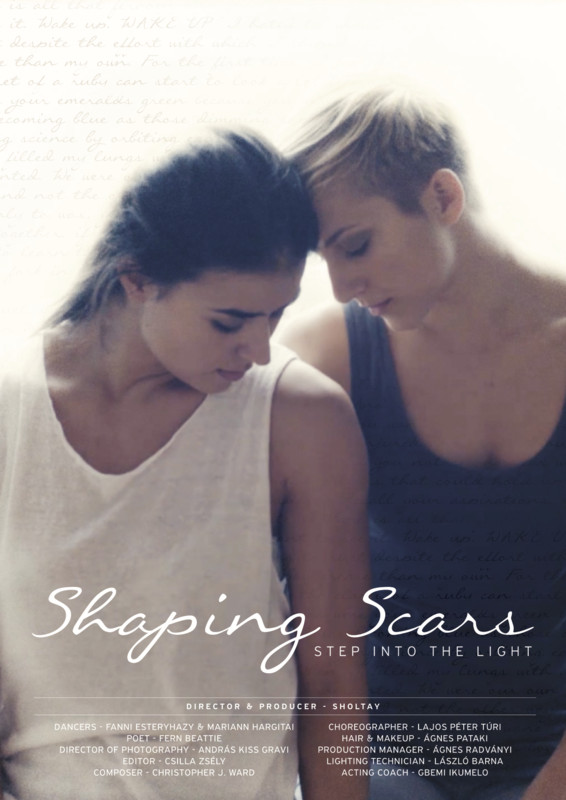
Movie Review: SHAPING SCARS (UK) LGBT, Dance

Played at the June 2017 LGBT Toronto Film Festival

Directed by Zsolti Szabo

A dance journey about two girls who once loved each other, but while one is able to embrace herself openly (and therefore their relationship), the other is struggling to step into the light and shake off her demons.

CLICK HERE – and see full info and more pics of the film!

Review by Kierston Drier

This 7 minute UK experimental Dance piece is a gorgeous intimate dance piece set to a riveting and sparkling slam poem. Director Zsolti Szabo must be commended on the vision behind the work, for not only is a stunning visual dance performance, but film captures its intricacies and puts the performers talents under a microscope.

Two dancer go through the motions (both symbolically and literally) of a relationship gone wrong. Beautifully choreographed and light, a special nod must be given to the performers who engage in the incredibly intricate dance and the spoken word artist who performs the piece.

What sets this piece apart from the usual, is the camera work! The shots in this piece give the feeling that you are standing right beside the dancers. Turely, as much choreography was needed for the camera person as for the dancers themselves. If the film is the eye through which we see this art, then SHAPING SCARS invites you to join the dance.

The film itself has a deeper symbolic meaning as well. Our dancers are partners, but their love is not meant to be. Perhaps what is so touching about this piece is that underneath the vibrant poetics and stunning visuals is a message: that it is better to have loved and lost, than never to have loved at all. A film worth seeing, if for nothing else than that.

shaping_scars_movie_poster.jpg

Movie Review: THE 3RD TRY (USA) LGBT, Drama

Played at the June 2017 LGBT Toronto Film Festival

Directed by Alfonso Rodriguez

An emotionally unstable lesbian couple tries to find solace after experiencing a traumatic loss.

CLICK HERE – and see full info and more pics of the film!

Review by Kierston Drier

In 5 short minutes, this USA film directed by Alfonso Rodriguez will pull you in, break your heart and fill you with hope. Efficient, cutting and a packing a home-run in right in the “feels” The 3rd Try is nothing short of breath taking in its simplicity.

We barely know our main characters, except that they are couple desperate to turn their loving union into a bigger family, but for whatever reason they are never able to have a child.

Part of what is excellent about this piece, is that is not weighed down with expositional, and unnecessary dialogue. It doesn’t tell you what is exactly causing the couple’s’ pain- just that, once again, they are not having the baby they were hoping for.

It is a pain not exclusive to the LGTB community, but a pain certainly not foreign to the community either. The hope, joy, anxiety, disappointment and pain associated with expectation and loss of a child is universal. That is one of the strongest parts of this piece- anyone who has ever contemplated the love and loss of anticipated parenthood is included in this couples tragedy.

But what sets this film above others is its unquestioning resilience. Every tragedy must include hope. And this piece does not fail to deliver that either.

If you have a heart, The 3rd Try will move you. Exceptionally well acted and exquisitely cast, beautifully simply and utterly impactful, this is a film not to miss.

the_3rd_try_movie_poster.jpg

INSIDE THE CHAOS: Interview with Diane Carol Harder on her new short Penny Foster

by Kierston Drier

pennyfosterstilll

We live in the era of reboots, resurgences, and remakes- and while they promise excitement and nostalgia, the hidden gems of our industry are waiting to be discovered. A few weeks ago, I found one.

In a gorgeous cafe hidden at the back of Lavish and Squalor on Toronto’s trendy Queen Street, I met with Diane Carol Harder, an up-and-coming writer, and director, to talk about her new short film Penny Foster. Harder has a strong and well-earned eye when it comes to cinema. After graduating with a B.A from Columbia in film studies and creative writing, she obtained her M.F.A in writing for stage and screen from Northwestern. Harder wrote and directed several shorts throughout her studies, and when she made the decision to direct a short film after graduating, she sent out a request for shorts scripts. Former classmate and friend America Michele Palacios responded with her piece Penny Foster, a piece that Harder liked immediately.

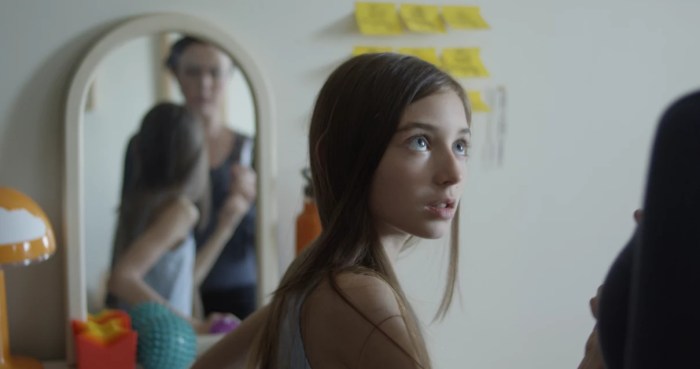
   I had the pleasure of speaking with Harder about the piece and how it came to be. In preparation for a future in writing and directing features, Harder and producer Sarah Senior set out to put together a team for Penny Foster, a dramatic piece with comic elements about a young girl with OCD who slowly discovers her mother is having a very bad day.

   Anyone who has taken on the seemingly monumental task of producing a short film has doubtlessly faced several hurdles:  gathering a team, funding, casting, funding, tech and rental equipment- did I mention funding? Harrowingly, Harder and Senior decided to do their piece as economically as possible without sacrificing production quality. They accomplished this goal. Harder expressed enormous credit for her Director of Photography, Jordan Kennington, who did incredible work in getting beautiful shots. Harder also speaks highly of the talents of their films’ protagonist, ten-year-old Elisa Campanella. Expressive, perceptive and professional, Harder remarks fondly that Elisa was sad to be wrapped on the shoot day and wished she could stay to film longer.

Harder and Senior launched a Kickstarter early in June to help fund the piece. What is amazing about this Kickstarter campaign is that the piece is already fully shot. Unlike many Kickstarters that created in order to raise funds to begin filming,  Harder and her team have already put the work in. This Kickstarter is raising funds to finish final editing and prepare for the cost of festival submissions. The Kickstarter, which you can find Here boasts some excellent rewards, from a personalized thank-you tweets and digital downloads to personalized consultations with industry professionals, coverage of your own work from the films’ producers and IMBD credits. The Penny Foster’s Kickstarter will run until June 26th.

But why should you check out Harder and her projects? Because the cinematic scene is hungry for fresh ideas, new voices, and dynamic content creators- and that is exactly what Harder and her team represent. They have already put their resources into their work, a clear indication of the commitment they have in their project, as well as the dedication they have made to their team. This type of grit, determination and work ethic is much needed in an entertainment world that needs a jumpstart of new and innovative storytelling.


We must support the films we want to see more of. Supporting productions like Harders’ makes a world of impact. It directly affects the driven and talented team behind the film. It also indirectly affects the whole industry: It shines a spotlight on the stories we care about and creates changing cinematic trends. Take a peak below at the talented team! and  check out Penny Foster and keep your eye on Harder and her team for their upcoming work. You can check Penny Foster at #PennyFosterFilm, or at Facebook at http://www.facebook.com/PennyFosterFilm, and you can follow Harder on Twitter @DianeCHarder and on Instagram at dianecarolharder   .


Film Review: FAREWELL (Switzerland)

Played at the May 2017 EUROPEAN Short Film Festival

Plakat

What happens if you want to say goodbye to a loved one but this suddenly no longer find ? The short film “Farewell” tells how want to accompany a group of friends with different characters their deceased friend and brother on a last trip and so much goes wrong.

In bizarre and comical way this short satire will pull you in its spell – and what, if such a thing happened once to me?

Review by Kierston Drier

When we love something, we let it go. Right? It is certainly something we have all been taught. But when you have your buddy’s urn with his ashes in it, you might want to keep it where you know you can find it- just in case. But for five friends charged with the task of caring for their dead friend’s ashes, things don’t go so smoothly.

Enter FAREWELL, a comedy with a curious mixture of strange happenings and humor styles. The dialogue is punchy, the action is raucous and outlandish and the tone is similar to Analyze That with it’s back to back escalation of unbelievable stakes.

Our heroes lose their friend while out to dinner before delivering him to have his ashes scattered. Where they find him? Well they need to backtrack through their steps, stopping at the restaurant, tracking down the waitresses, going through the kitchen and…well things only get more complicated from there.

Boasting some hilarious twists and turns and some great recurring humor, every character in the piece is bright, sharp and full of life. A great piece about learning not to take life too seriously.