Movie Review: A CHRISTMAS CAROL, 1951

Top Christmas Movie of All-Time

A CHRISTMAS CAROL, 1951
Movie Review
Directed by Brian Desmond Hurst
Starring: Alastair Sim, Kathleen Harrison, Mervyn Johns, Francis De Wolff, Michael Dolan, Glyn Dearman, Michael Hordern, George Cole
Review by Megan Powers

SYNOPSIS:

Bitter miser Ebenezer Scrooge is visited by the ghost of his dead partner Jacob Marley on Christmas Eve. He’s told he’ll be visited by three more spirits in an attempt for him to changes his unfeeling ways. He is given one night to re-examine his life and redeem himself.

REVIEW:

Alastair Sim was born in Edinburgh, Scotland in 1900. He was an elocution and drama lecturer at Edinburgh University from 1925 until 1930. He loved the stage and made his London stage debut in Othello in 1930 and appeared for a season at the Old Vic. Sim made his film debut in 1935 and started a decade of prolific supporting actor roles. He was often stole the scene from the star. By the 1940’s, he advanced to leading roles, and became one of the most popular actors in Britain. Comedian Ronnie Corbett (of The Two Ronnie’s) described Sim as a “sad faced actor with the voice of a fastidious ghoul.” Very funny and true, Sim had a long successful career that end with his death in 1976.

Sim’s most indelible role was his portrayal of Ebenezer Scrooge in A Christmas Carol (1951). This story has had many incarnations, but in my opinion this version is the best. The story is well known and has been told and retold, from Mister Magoo to The Odd Couple television show to Bill Murray in Scrooged. Why would this film be the best? Well, because it tells the story in the best way, it feel authentic and because Alastair Sim is the personification of Scrooge.

In Hollywood versions I find the lead actor’s unbelievable as the miserly Scrooge. But Sim is frightening as the bitter and emotionally bankrupt Scrooge. Scrooge’s negative energy just about leaps off the screen at you. His misery is palpable and he chooses to be this way. Every withering look and condescending tone in his voice is chillingly real.

The film opens with Peter Bull’s wonderful narration, his booming voice sets the tone letting us know we are about to be told a great story. The crisp black and white cinematography is beautiful in its depiction of England in the 1800’s. We are transported there to bear witness to the story as Scrooge will have to witness his past and present. There’s a beautiful scene of Tiny Tim looking through a toy shop window. All the toys look magical in their splendor. Tim sees a big toy sail boat taken out to be sold and we see his sad longing face. But Tim is an optimist and doesn’t dwell long on this and is soon smiling again at the bountiful toys. We watch Scrooge’s empty lonely existence turning down charity donations, eating alone, refusing his nephew’s invitation to dinner, and he notices nothing wrong with his life. A blind man’s dog drags away his master as Scrooge approaches. This scene is a wonderful example of the dread that this man carries.

Scrooge is visited by his old partner Jacob Marley (Michael Hordern) on Christmas Eve. He’s told that he’ll be visited by three more spirits to help save his soul. Scrooge remarks that Marley was a good friend and good man of business Marley laments “Business…mankind was my business.” To illustrate the point Marley shows Scrooge spirits attempting to help a woman and her child and they are unable to assist. It torments them. Scrooge looks on in horror.

Scrooge is dubious that he can be helped or that what he’s seeing is real. As Scrooge is shown by the spirit of Christmas Past we see a young Scrooge (George Cole) lonely and left behind at school. His sister comes for him explaining that their father is much kinder know. Scrooge’s mother died giving birth to him and his father had always blamed him. Scrooge truly loves his sister Fan and is devastated when she dies giving birth to her son. Scrooge reacts just as his father did and blames the child for her death. But this time he hears her final wish that he would take care of her boy. He is stricken by this revelation. “Forgive me, Fan, he cries.

Noel Langley, who also wrote the adaptation of The Wizard of Oz (1939), does a wonderful job of creating the chapters in Scrooge’s life. We see the character and the milestones in his life and how those events and his choices slowly changed his disposition. His sister’s death, his sweet-natured employer loosing his business, the insidious love of money over people leading to losing his fiancé, meeting, working with and growing deceitful together with Mr. Marley all contribute to the man we first meet and wonder how he became that man.

Sim gives a rich layered performance. We can see his cold heart slowly melt as he views his past and present. As he watches the poor Cratchit family celebrate Christmas with a robust spirit despite having little money, he is visibly ashamed of how he acted towards Bob Cratchit (Mervyn Johns). He begins to invest his feelings in the family, especially Tiny Tim. Once Scrooge returns from his visits and awakes in his room, he is a man possessed. He vowed to change and he’s good to his word. He has an amusing exchange with his housekeeper (Kathleen Harrison) who believes he’s gone insane since he’s never been hospitable or kind to her before. Sim displays a manic euphoria as Scrooge is grateful that the spirits have allowed him a chance to redeem himself to mankind. He is suddenly full of life and is clearly enjoying the warmth of connecting with other people. I watch this film every Christmas and have done so since I was introduced to it as a child. I continue to enjoy it and discover new nuances in Sim’s performance every time. When Scrooge changes at the end, it as if Sim’s changed every molecule in his character’s body and truly became a new man. That’s what a great actor he was. The supporting actors are all excellent. Mervyn Johns as the put upon clerk Bob Cratchit embodies the good-natured loving husband and father of the Cratchit brood. Kathleen Harrison as Scrooge’s housekeeper Mrs. Dilber is wonderfully dour. Hermione Braddeley as the feisty Mrs. Cratchit. Patrick Macnee better known for the British TV series the Avengers, is the young Jacob Marley. Ernest Thesiger from The Bride of Frankenstein makes an amusing appearance as The Undertaker. Young Scrooge is played by George Cole, who Sim later unofficially adopted to his family. They appeared together in five more films.

Charles Dicken’s message in A Christmas Carol is more relevant then it’s ever been. Mankind is our business and it’s important to practice kindness and compassion all of the days of the year and not just one. Enjoy the film!


Watch Winning Best Scene Readings:

TV CONTESTSUBMIT your TV PILOT or TV SPEC Script
Voted #1 TV Contest in North America.
FILM CONTESTSUBMIT your SHORT Film
Get it showcased at the FEEDBACK Festival
writing CONTEST1st CHAPTER or FULL NOVEL CONTEST
Get full feedback! Winners get their novel made into a video!
SCREENPLAY CONTESTSUBMIT your FEATURE Script
FULL FEEDBACK on all entries. Get your script

Movie Review: WHITE CHRISTMAS, 1954

Top Christmas Movie of All-Time

WHITE CHRISTMAS, POSTERWHITE CHRISTMAS, 1954
Movie Reviews

Directed by Michael Curtiz

Starring: Bing Crosby, Danny Kaye, Rosemary Clooney, and Vera Ellen
Review by Jayvibha Vaidya

SYNOPSIS:

Two former war buddies join showbiz forces with a pair of talented sisters to increase business for their old general’s fledgling inn during the Christmas holiday. But they’ve got their work cut out for them: no snow, no audience and no luck with romance.

NOMINATED FOR 1 OSCAR – Original Song “Count Your Blessings Instead of Sheep”

REVIEW:

“Where’s the snow?!”

Meeting in the army during World War II, Bob Wallace (Bing Crosby) is saved in battle by Phil Davis (Danny Kaye) and a friendship is born. Showcasing their singing and dancing skills, they give their beloved general, Thomas Waverly (Dean Jagger) a rousing send-off as the war comes to an end. Years later, Wallace and Davis are a successful producing team when they meet their former general again. General Waverly is a struggling inn-keeper with a heart of gold, and Wallace and Davis decide to save him from bankruptcy by throwing a Christmas show to end all shows. White Christmas was released in 1954 and was the first film produced in Paramount’s wide screen VistaVision, becoming the year’s top grossing film.

Essentially a buddy film, the story follows Bob and Phil as they bicker, entertain and support each other in their mission to save the Vermont inn. Bob is the more serious of the two, constantly putting in long hours. Phil requests Bob find a bride so he can get some “time to go out and get a massage or something.” The scene when they discuss this matter in their dressing room is shot well; they change out of their costumes, tossing hangers, shirts and matching movements in a perfectly timed scene with energy and humour. Crosby and Kaye display an ease with each other and on screen.

Phil’s wish begins to come true when they meet the Haynes Sisters, a musical act. Betty (Rosemary Clooney) and Judy (Vera Ellen) are gorgeous, talented and sweet. Both men are instantly smitten. Grabbing the opportunity to spend more time with them, Phil sneakily maneuvers another meeting with them which lands all four of them in Vermont. A spectacular Christmas show begins to take form despite the lack of snow, people and money.

Even though it’s a holiday film, the story doesn’t focus too much on Christmas, other than some sets and costumes. Its focus lies in the romance that forms between the sisters and the gentlemen as well as the loyalty they feel toward their former general. A misunderstanding between Betty and Bob causes a rift until she realizes his true intentions. A fake engagement between Judy and Phil results in disaster until they give in to their true feelings. But the most moving storyline is definitely the one that saves the General’s inn. Combining humour, song and gorgeous costumes, the rousing final title song, “White Christmas” tugs on heart strings. A tribute to their former general and a full inn brings in business and more importantly, snow!

Costumes by the talented Edith Head are beautiful and lavish. Cinched waists, flowing skirts, titled top-hats and bright colour all add to the visual appeal of the film. Choreography is intense and Vera Ellen shines in all her numbers, showcasing her teeny-tiny waist and mile-long legs. Bing Crosby croons with ease, displaying one of the best voices to grace the silver screen. His rendition of Berlin Irving’s “White Christmas” at the beginning and end of the story make the film. His duet “Count Your Blessings Instead of Sheep” with Rosemary Clooney is sweet and gorgeously sung. With his kind eyes and tilted hat Crosby exudes a sincerity that works for the holiday-themed film. Danny Kaye as Phil is energetic and funny. Sliding into the role at the last minute, he does well in all the musical numbers, keeping Crosby on his toes in their scenes together. Kaye is especially good at physical comedy, displaying quick reactions and energy. Rosemary Clooney is elegant and confident in every movement; a fine partner to Crosby’s Wallace.

Although the film can sometimes dip into corny territory (an unintentionally funny ode to snow on a moving train: “I want to wash my hands, my face and hair with snow!”) it’s still very entertaining. The songs are lovely; the costumes and musical numbers are bright and cheery. The last song when the entire crowd sings “White Christmas” as the stage is filled with a world of red and white is heart-warming despite being slightly cheesy. And when the snow arrives, the audience can’t help but smile.

White Christmas is a gorgeously shot and well-performed film celebrating one of the world’s most popular holidays. The songs, colour, costumes and sets all add to a festive look, celebrating some of the most loved Hollywood actors in a well-made holiday film. As the huge Christmas tree lights up on stage and General Waverly smiles, it’s a touching moment. Acts of service, contribution and compassion are highlighted in this film, making it one of the best Christmas movies to watch during the holidays.


Watch Winning Best Scene Readings:

TV CONTESTSUBMIT your TV PILOT or TV SPEC Script
Voted #1 TV Contest in North America.
FILM CONTESTSUBMIT your SHORT Film
Get it showcased at the FEEDBACK Festival
writing CONTEST1st CHAPTER or FULL NOVEL CONTEST
Get full feedback! Winners get their novel made into a video!
SCREENPLAY CONTESTSUBMIT your FEATURE Script
FULL FEEDBACK on all entries. Get your script

Movie Review: THE FAMILY MAN, 2000

Top Christmas Movie of All-Time

THE FAMILY MAN, 2000
Classic Movie Review

Directed by Bret Ratner
Starring Nicolas Cage, Téa Leoni
Review by Russell Hill

SYNOPSIS:

A successful unmarried Wall Street broker wakes one morning living the life of a family man with a wife and two kids.

REVIEW:

Very similar to It’s a Wonderful Life, The Family Man is a movie that could be forgiven for acting as a vehicle for Nicholas Cage’s talents, but is much more than that.

A fantastical tale of asking questions that everyone must ask themselves at one point in life, it is Jack Campbell’s (Cage) story we follow. Jack is a very successful and extremely rich Wall Street broker. One Christmas Eve, he finds himself on the verge of landing a deal that would make him richer beyond his wildest dreams, as well as earning major kudos with the boss. When waking on Christmas Day, a woman (Leoni) is draped across him, followed by two young children who run into the room. Freaked out to say the least, Cage overreacts. Where is the life he once had, he asks himself.

The night before, Jack had helped stop what could have been quite a horrible robbery. The person responsible for the potential robbery (Cheadle) seems to know who Jack is. What do you want Jack, he asks. I’ve got everything I need, replies Jack. But the next morning when he awakes, everything he has that made him happy such as money, a great career and top-quality suits are all gone. Due to his good deed, Jack believes he has found himself in hell. But all is not lost.

In spite of this minimalist monetary and possession existence, there are many good elements to this new life. Loving wife of thirteen years, two adorable kids and a best friend that would walk over fiery coals for him. Although his life is of a lower status than before, men want to be him and women want to have him. But to Jack, this isn’t what he wanted. Despite not possessing this in his previous affluent life, he sacrificed this exact situation for his career but, as in every situation that appears when we are presented with it, we just deal with it. Roll on. Pull your socks up. Get on with it. But, with Jack’s predicament and situation, will he actually enjoy himself or wish he was somewhere else?

For those who have not seen The Family Man, and believe me I’ve met many who know nothing of this movie, it would be too easy to class it as simply a vehicle for Cage. Although it does borrow elements from It’s a Wonderful Life, the look of the movie is a very classy one that moves along very quickly with it ending as soon as you know it. This is exactly the type of movie Cage is made for. Think of Cage’s more recent mainstream movies, and you are sure to reel in horror at their very existence. Ghost Rider was an abomination of cinema, and The Wicker Man should never have been given the green light for production. And don’t get me started on the National Treasure franchise. Cage is simply not suited for these kinds of movies, with their high-octane moments, and is more suitable to play anything but an action-hero. In The Family Man, he is an opposite character and definitely not your stereotypical leading man. As in The Weather Man, his depressive character was much more suitable for him and, as with The Family Man, harks back to the days when he started out in more independent movies as an everyday-man.

But hey, Cage wasn’t the only actor in the film. Not always a fan of Tea Leoni’s work, her performance in Deep Impact was laughable to say the least, this is by far the best role I have seen her in. Her character Kate is one of the loving wife and Leoni really pulls it off. Her girl-next-door persona fits well into the character of Kate, and is as cute as a baby seal. Cheadle is great too. Despite his talents wasted in the horrific remake of The Italian Job, which just like The Wicker Man remake should never have been made, he relishes every screen moment. At some points, his performance seems very Shakespearian in the way he recites his lines and is certainly admirable. His scenes, although minimal, is used to his full potential. Cheadle has since moved onto greater roles since The Family Man, a prime example being Hotel Rwanda, and is sure to continue being a shining example of what an actor in Hollywood should be. As long as he doesn’t take any more roles like in The Italian Job, that is.

The surprise of the film, in this reviewer’s opinion, is the role of Jack and Kate’s young daughter Annie. Played by Makenzie Vega, she was only six years of age when this film was released but acts beyond her years. In the Making of… feature on the DVD, Cage remarks how great an actress she is. Acting alongside an A-List cast might be daunting to some people, but Vega takes it in her stride and certainly matches her fellow actors in all scenes she appears in. She only had a solitary role before playing Annie, and since then has gone on to appear in such movies as Sin City and X-Men 3. This reviewer hopes for her continued success in Hollywood.

To those who have not seen The Family Man, I strongly recommend you see this. I know it may sound difficult but try to cast Cage’s recent roles out of your mind. The performances by all is of the highest quality. Tea Leoni for once gives a credible performance and the emergence of Makenzie Vega as a potentially great talent is certainly worth a watch.


Watch Winning Best Scene Readings:

TV CONTESTSUBMIT your TV PILOT or TV SPEC Script
Voted #1 TV Contest in North America.
FILM CONTESTSUBMIT your SHORT Film
Get it showcased at the FEEDBACK Festival
writing CONTEST1st CHAPTER or FULL NOVEL CONTEST
Get full feedback! Winners get their novel made into a video!
SCREENPLAY CONTESTSUBMIT your FEATURE Script
FULL FEEDBACK on all entries. Get your script

Movie Review: DIE HARD (1988)

Top Christmas Movie of All-Time

DIE HARD MOVIE POSTER
DIE HARD, 1988
Movie Reviews

Directed by John McTiernan
Starring: Bruce Willis, Bonnie Bedelia, Reginald VelJohnson, Paul Gleason
Review by Kabir Shukla

SYNOPSIS:
Visiting his estranged wife for Christmas in her office building in LA, New York City cop John McClane finds himself in the wrong place at the wrong time. A group of German terrorists have held everyone hostage at gunpoint, leaving only McClane to foil their plan. Equipped with his pistol and bare feet, McClane must figure out a way to stop the terrorists and save his wife’s life before it’s too late.

REVIEW:

This is a must-see for any Bruce Willis or action movie fan. In the role that launched his career, Willis does not disappoint as John McClane. His portrayal of an everyday, struggling cop, with personal and family issues, and an uncanny ability to stay alive, is spot on. He is perfect for this role. And ironically, he was the studio’s 5th choice to play John McClane. The first was Ahhhnold, and the fourth was Richard Gere (yes THAT Richard Gere). So it seems everyone lucked out when Willis got the job.

Making his big screen debut, Alan Rickman fills the role of the sociopathic German villan-mastermind, Hans Gruber, perfectly. Long before he donned the black wig and cloak as Severus Snape, he was Hans Gruber, a true 80’s villain. Having done only TV roles before, Rickman proved early why he was cut out to be a Hollywood actor. Though his role didn’t require an overt dramatic portrayal, he was very convincing in every scene.

Also in the film, who you may recognize, is Reginald VelJohnson as Sergeant Powell. To some, he is better known as Carl Winslow. This movie was made one year before “Family Matters” debuted, so we cannot say that he is reprising his role as a beat patrol cop here, but it seems to be something he does well. He plays the, at first bumbling clueless policeman, who in the end is an integral role in the film’s ultimate conclusion. He also seems to know every ingredient in the Twinkie off the top of his head (he literally lists them without hesitation).

Director John McTiernan was just coming off directing “Predator” a year earlier when he directed Die Hard. So he must have still had some adrenaline in his blood when he brought this action-packed thrill ride to the big screen. McTieman decided to scrap the stock gun and bullet sound effects for the real thing. He used custom-made extra-loud blanks for each gun. In addition, he used the sound of live rounds from each gun recorded at a firing range to dub over the gunshot noises when necessary. You can tell. The guns are louder and the muzzle flashes are brighter. In addition, to add to the grittiness, he chose to go with the big-boy squibs. So when a man gets shot, the blood shooting out lets you know that he’s not getting up.

But enough about the players, lets get to the movie.

Die Hard has the dry wit mixed with action that has kept the franchise going for its 19-year and 4 movie lifespan. Always breaking the tension with a quick one-liner, the timing and delivery is perfect for the subtle, yet noticeable comedic element to the movie. Also noticeable is a 32-year-old Bruce Willis with a full head of real hair, which is something that we need the photo-album to see now.

The plot is pretty straightforward. McClane is visiting his wife at her office Christmas party in LA. In this building are bonds of $600 million. Gruber and his associates take over the building, hold the workers hostage and hatch their plan to steal the money. What they did not expect was McClane to be there. The movie follows McClane as he must fight and shoot his way to stopping Gruber’s plan from succeeding. He befriends Sergeant Powell, a policeman on the ground outside the building who helps him stay sane. The other officers are not so friendly.

The rest goes as expected. McClane shoots, the bad guys shoot back. McClane punches, the bad guys punch back (namely a blond Fabio look-alike). In the end, who will outlast the other? I suppose you have to watch to find out.

The movie flows very well. I have no gripes. We all know that the bad guys don’t shoot very accurately and the good guys never run out of bullets. But one clichÈ that I don’t like in this movie is Paul Gleason’s (R.I.P.) portrayal of the deputy police chief Dwayne Robinson. While Powell knows that McClane is doing his best to help the situation, Robinson insists that Mclane is even worse than Gruber and the other terrorists. His decisions sometimes do not make sense, as his only agenda is to contradict McClane to prove is own point. In reality, I think we know that personal issues would be put aside in a hostage situation as this. Logic would prevail. But in a film, there needs to be an anti-hero on the good guys’ team to increase the dramatic element. Enter deputy police chief Dwayne Robinson.

Now please do not misconstrue this peccadillo as anything more than that. I just feel I have to present the good with the bad. In the case of Die Hard, the good far outweighs the bad, but again, I must present both.

For those of you who love to look for continuity errors, you will be pleased to know that the Die Hard(s) are notorious for them. I won’t give away where and when, because frankly I don’t know all of them, but in many instances McClane goes from dirty to clean to dirty again and from wearing this to not wearing it to wearing it again many times. If you are watching the movie for the X’th time, it may be fun to look for them. You’ll be surprised to see how many things you missed the first time around.

So if you want my overall take, which I assume you do if you have read this far, is that Die Hard is a MUST SEE. If you have a heartbeat and a Y chromosome, you will love this movie. The action is non-stop, Willis is spot on, and the suspense is palpable. This movie really set the tone for future action films. Anyone who claims to be a fan of the genre has seen this movie. Anyone who wants to be must watch it immediately.

Yippee-ki-yay.

Watch Winning Best Scene Readings:

TV CONTESTSUBMIT your TV PILOT or TV SPEC Script
Voted #1 TV Contest in North America.
FILM CONTESTSUBMIT your SHORT Film
Get it showcased at the FEEDBACK Festival
writing CONTEST1st CHAPTER or FULL NOVEL CONTEST
Get full feedback! Winners get their novel made into a video!
SCREENPLAY CONTESTSUBMIT your FEATURE Script
FULL FEEDBACK on all entries. Get your script

ASSASSIN’S CREED (2016) Michael Fassbender. Marion Cotillard.

assassins_creed_movie_poster.jpgDirector: Justin Kurzel
Writers: Michael Lesslie (screenplay), Adam Cooper (screenplay)
Stars: Michael Fassbender, Marion Cotillard, Jeremy Irons, Brendan Gleeson, Charlotte Rampling, Michael Kenneth Williams

Review by Gilbert Seah

 Assassin’s Creed is an action-adventure video-game series created by Ubisoft that consists of nine main games and a number of supporting materials. The games have appeared on the PlayStation 3, PlayStation 4, Xbox 360, Xbox One and many other platforms. The games are set in a fictional history of real-world events and follows the centuries-old struggle between the Assassins, who fight for peace with free will, and the Templars, who desire peace through control. From the game came the book series and it is inevitable that a film follows. Very bad idea! For a game about peace, the film is quite violent. Even with Oscar nominee Michael Fassbender starring and producing it, ASSASSIN’S CREED for all its $125 million production cost and star power like Marion Cotillard (barely recognizable), Jeremy Irons, Brendan Gleeson and Charlotte Rampling, the film comes out incredibly dull. For one, moviegoers know the famous adage: “It is hard to get excited over a movie made from a video game.” Yes, no matter how much the filmmakers try.

Cal Lynch (Fassbender) is about to be executed as his capital punishment. But he ends up travelling back in time to 15th-century Spain through a revolutionary technology that unlocks the genetic memories contained in his DNA. There, he lives out the experiences of Aguilar de Nerha, a distant ancestor who is also a member of the Assassins, a secret society that fights to protect free will from the power-hungry Templar Order. Transformed by the past, Cal begins to gain the knowledge and physical skills necessary to battle the oppressive organization in the present. There are lots of fighting with Fassbender shirtless showing off his super-toned body.

That is about it for story and plot. The visuals are mainly done though Computer Graphics with the film looking much like a video game with computer generated figures fighting or shown in large crowds. The visuals are nothing out of the ordinary. There are lots of action scenes with characters running about on rooftops, firing arrows or jumping around. These hardly generate any excitement.

The key prize that the Templars and Creed both seek is the apple, supposedly the one from the Garden of Eden that Eve ate, and so released the knowledge of Good and Evil. The audience is supposed to believe that the non-rotting apple has survived through the years and that anyone who possesses it can control man’s free will. So, the Templars wish to control humanity by owning the apple.

The film is directed by Australian Justin Kurzel who directed Fassbender in last year’s MACBETH. He did a good job, rising to fame with SNOWTOWN, but none of his talent is observable in this poor effort.

So during the Christmas season, it is a hard toss which is the worst film of the season or for the year for that matter. The three contenders are PASSENGERS, COLLATERAL BEAUTY and this one!

Trailer: https://www.youtube.com/watch?v=gfJVoF5ko1Y

Watch Winning Best Scene Readings:

TV CONTESTSUBMIT your TV PILOT or TV SPEC Script
Voted #1 TV Contest in North America.
FILM CONTESTSUBMIT your SHORT Film
Get it showcased at the FEEDBACK Festival
writing CONTEST1st CHAPTER or FULL NOVEL CONTEST
Get full feedback! Winners get their novel made into a video!
SCREENPLAY CONTESTSUBMIT your FEATURE Script
FULL FEEDBACK on all entries. Get your script

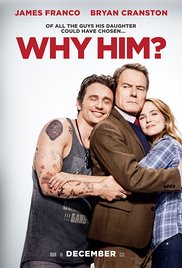
Film Review: WHY HIM? (USA 2016). James Franco. Bryan Cranston.

why_him_movie_poster.jpgDirector: John Hamburg
Writers: Jonah Hill (story), John Hamburg (story/screenplay), Ian Helfer (screenplay)
Stars: Zoey Deutch, James Franco, Tangie Ambrose, Bryan Cranston, Cedric the Entertainer, Megan Mullally

Review by Gilbert Seah

There are smart dumb comedies and there are dumb, dumb comedies. WHY HIM? directed and co-written by John Hamburg (who wrote MEET THE PARENTS, MEET THE FOCKERS and the ZOOLANDER movies) falls into the latter category. But all is forgiven for like the hit comedy DUMB AND DUMBER, WHY HIM? is quite funny.

As in MEET THE PARENTS and MEET THE FOCKERS, it is the story of the guy trying to impress his future in-laws. The hitch in WHY HIM? is that the guy is a weird monstrous hip games designer millionaire who swears in every sentence he utters. So will Laird (James Franco) be able to charm his future father-in-law Ned (Brian Cranston) so that he can give him permission to wed Stephanie (Zoey Deutch).

The audience is set up for an all-out gross film with the beginning scene where Laird is close to show Stephanie his almost black blue balls in a video chat. The scene shifts to Stephanie’s dad’s birthday celebration where she is video chatting him when Laird suddenly appears in the background and takes off his pants. There is nothing highly original about this comedic set-up but it still brings on the laughs.

Stephanie (Zoey Deutch) invites her father Ned Fleming (Bryan Cranston) and mother Barb (Megan Mullally), along with their 15-year old brother Scott (Griffin Gluck), to stay with her wealthy and famous boyfriend, Laird Mayhew while visiting her at Christmas. Laird’s vulgar, gregarious, and blunt personality is slightly overwhelming for Barb and Scott, but causes Ned to downright despise him. However, Stephanie insists that Laird is a nice person, and that he makes her happy. But when Laird reveals he plans to propose to Stephanie in only five days, the race to prove himself worthy of her love so Ned can give them his blessing begins. Laird goes out of his way to win over Barb and Scott, while Ned schemes to make sure Laird goes down in flames.

Laird throws a Christmas party for the Flemings that goes out of control. But the three minute Christmas party segment puts OFFICE CHRISTMAS PARTY to shame. The segment moves on fast, furious and funny and generates more laughs in the three minutes that the entire party section in OFFICE CHRISTMAS PARTY.

For a film about a wild person, the film stays away from lewd scenes. There are no hard core drugs only marijuana and no smoking is shown – only the after effects (the horny mother inching her husband for sex in the bedroom). Swearing, however is plentiful but done in a humorous manner. There are also bukkake and double dicking jokes (but nothing seen) – which the gays in the audience should be familiar with. The film also steals from the Kato and Inspector Clouseau fights in the PINK PANTHER films with Laird’s man-servant, Gustav (Keegan-Michael Key) always laying in wait to fight him. But these scenes are still funny.

Where the film starts to slack is when it gets emotional with the different relationships (father/boyfriend; father/daughter and boyfriend/girlfriend). The ending 20 minutes drags too long and is a bit of a let down considering the fast pace of the rest of the film. There is a surprise appearance of a famous band at the end of the film. Still WHY HIM? succeeds as quite a hilarious though quite a dumb comedy.

Trailer: https://www.youtube.com/watch?v=CO6qLC4cL8E
 

Watch Winning Best Scene Readings:

TV CONTESTSUBMIT your TV PILOT or TV SPEC Script
Voted #1 TV Contest in North America.
FILM CONTESTSUBMIT your SHORT Film
Get it showcased at the FEEDBACK Festival
writing CONTEST1st CHAPTER or FULL NOVEL CONTEST
Get full feedback! Winners get their novel made into a video!
SCREENPLAY CONTESTSUBMIT your FEATURE Script
FULL FEEDBACK on all entries. Get your script

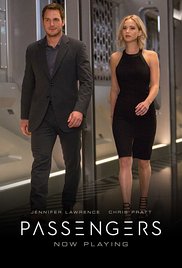
Film Review: PASSENGERS (2016). Jennifer Lawrence. Chris Pratt

passengers_movie_poster.jpgDirector: Morten Tyldum
Writer: Jon Spaihts
Stars: Jennifer Lawrence, Chris Pratt, Michael Sheen

Review by Gilbert Seah

 
PASSENGERS arrives at the height of the success of polished looking sci-fi hits like THE MARTIAN, GRAVITY and ARRIVAL. PASSENGERS also looks stunning, thanks to the awesome art direction, wardrobe, cinematography and sets. But unfortunately, the film soon gets lost in space, unable to wake up from its initial promise.

The film’s action takes place aboard the Starship Avalon, on a 120-year voyage transporting over 5000 colonists to Homestead II, a planet so far from earth the journey takes 120 years. The colonists are placed into hibernation for the journey. The ship hits a meteor storm. A malfunction wakes up a passenger, mechanical engineer Jim Preston (Chris Pratt), 90-years early. The film spends a lengthy first 40 minutes or so with Jim roaming around the spaceship alone discovering the horror of not only being the only one alive but knowing he would be dead by the time the ship reaches its destination. Humorously, he tries to send an S.O.S. message back to earth but realizes that it not only takes 5 years for the message to reach earth but that it will cost him several thousand dollars.

He gets some companionship (and free drinks) from a bartender android (Michael Sheen). Preston notices a beautiful sleeping writer in another pod, Aurora Lane (Jennifer Lawrence) and decides to wake her up from hibernation to keep him company. (The script could also have been more imaginative than naming the heroine Aurora.) This means a death sentence for her as well. They fall in love and things go smoothly till she learns the truth. This is when the film falls apart.

The couple eventually get back together with Aurora finally saving Jim from being lost in outer space very much the same way Matt Damon almost got himself lost in THE MARTIAN. Things get even more ridiculous with an oasis present complete with birds (yes, birds – where did they come from?) by the 90 years the ship reaches Homestead II.

PASSENGERS is directed by Morten Tyldum who made the World War II thriller THE IMITATION GAME. In PASSENGERS, he and the scriptwriter Jon Spaihts cannot decide if the film is supposed to be a thriller, horror, romance or sci-fi adventure. They decide on ‘all of the above’. This is basically a story of a really intelligent writer and a creepy stalker who should pay for his sins. Instead, he is forgiven and saved and made a hero. PASSENGERS would have succeeded as a horror flick close to what ALIENS was.

The film is also basically a two handler. Lawrence and Pratt are fortunately two fine looking actors that audiences can look at for two hours. But the introduction of Lawrence Fishburne as Gus, an engineer also woken up by pod failure, adds a welcome change to the proceedings.
There are a few action sequences such as Jim’s race against time to repair the ship before it explodes in heat and his rescue from outer space. These are two of the film’s most ridiculous segments. PASSENGERS ends up both ridiculous and plain silly.

Trailer: https://www.youtube.com/watch?v=7BWWWQzTpNU

Watch Winning Best Scene Readings:

TV CONTESTSUBMIT your TV PILOT or TV SPEC Script
Voted #1 TV Contest in North America.
FILM CONTESTSUBMIT your SHORT Film
Get it showcased at the FEEDBACK Festival
writing CONTEST1st CHAPTER or FULL NOVEL CONTEST
Get full feedback! Winners get their novel made into a video!
SCREENPLAY CONTESTSUBMIT your FEATURE Script
FULL FEEDBACK on all entries. Get your script

Film Review: HARRY BENSON: SHOOT FIRST (USA 2016) ***

harry_benson_shoot_first_movie_posterDirectors: Justin Bare, Matthew Miele
Writers: Justin Bare, Matthew Miele
Stars: Harry Benson, Alec Baldwin, Gigi Benson

Review by Gilbert Seah

Directors Matthew Miele and Justin Bare are the co-founders of Quixotic Endeavors, a multimedia production company focusing on subjects with an iconic theme. In their new documentary, their subject is Scottish photographer Harry Benson, now 86. The documentary charts the illustrious career of the renowned photographer who initially rose to fame alongside The Beatles, having been assigned to cover their inaugural trip to the United States in 1964. With unprecedented behind the scenes access, Benson captured some of the most vibrant and intimate portraits ever taken of the most popular band in history.

The two most famous of these is the pillow fight in their hotel and the one in a gym with Muhammed Ali.

Miele and Bare’s film is quite plain in terms of narrative and research. They let the fame and photographs of Benson speak for themselves. And this is a good thing. It also helps that Benson is still alive and able to give a perspective of both his work and life as he is present from the start to end of the film. Among the interviewed are his wife (behind every successful man is a woman), his assistant and various famous icons in the publishing and fashion world.

The film also charts his background back to Scotland. There is a segment where Benson visits his old house and school. The interviewed are asked what they thought was the secret of Benson’s success. The answer is hard work. Benson would leave everything at any moment if there is an opportunity for a good photograph. He had to be at the right place at the right time. Then comes the part of creating art out of his work. Benson hated posing and wanted his subjects to be shot candidly.

The paparazzi side of Benson is also mentioned. He captured a private shot of ageing star Greta Garbo to her chagrin. Other private shots, however, he was given permission like to shoot the shaved head of Elizabeth Taylor right after her surgery.

The film is fascinating for all the celebrities Benson has shot during his career. These included Dr. Martin Luther King Jr., Bobby Kennedy, Charles De Gaulle, Michael Jackson in his private ranch and even Sir Winston Churchill.

The question arises as to which of his photographs are the best. The one on the cover of Vanity fair with Ronald and Nancy Reagan dancing is one of them. The two with the Beatles are another two. There is also a great one with Bill Clinton kissing his wife. The photographs speak for themselves and illustrate Benson’s talent. Directors Miele and Bare ensures that the audience see the talent as well.

HARRY BENSON: SHOOT FIRST is a very easy-going watchable film. All one needs to do is sit back and enjoy Benson’s work, travelling through time and observing candid shots of celebrities through the years. There is as a bonus, Benson’s work in areas of war and famine that show human suffering.

Trailer: https://www.youtube.com/watch?v=8o-RC4YWkWg


Watch Winning Best Scene Readings:

TV CONTESTSUBMIT your TV PILOT or TV SPEC Script
Voted #1 TV Contest in North America.
FILM CONTESTSUBMIT your SHORT Film
Get it showcased at the FEEDBACK Festival
writing CONTEST1st CHAPTER or FULL NOVEL CONTEST
Get full feedback! Winners get their novel made into a video!
SCREENPLAY CONTESTSUBMIT your FEATURE Script
FULL FEEDBACK on all entries. Get your script

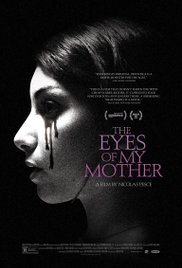
Film Review: THE EYES OF MY MOTHER (USA 2016) ***1/2

the_eyes_of_my_mother_movie_poster.jpgDirected by Nicolas Pesce

Writer: Nicolas Pesce

Stars: Kika Magalhaes, Will Brill, Olivia Bond

Review by Gilbert Seah

It takes less than the first 10 minutes of watching THE EYES OF MY MOTHER to realize that this is going to be one creepy, scary little film. Writer/director/editor Nicolas Pesce seems to have got the grip of the art of creepiness.

THE EYES OF MY MOTHER can best described as a gothic horror film. It is shot in black and white with the set design set up as a gothic tale, though the setting of the story is the remote American countryside where the subjects live on an isolated farm. The camera almost always tracks the characters from the back. The characters from the mother to the daughter and father to the stranger all possess a weird look. The music (by Ariel Loh) is haunting and the cinematography (by Zach Kuperstein) chillingly dark. The dialogue is ripe for terror. The boy is scolded by the mother at one point in the film: “I told you never to go in the barn.” or “You have done this before, haven’t you?” the girl questions the serial killer.

The story begins with a home invasion killing but the victim daughter indulges in more violent acts. Pesce also ensures the audience feel the horror. When Francisca ties a cloth around a victim’s neck, one can almost feel the tightening of the cloth as the moaning highlights the horror.
Francisca (Olivia Bond) and her mother (Diana Agnostini) live on a farm where they raise cows and other animals. A trained surgeon, Francisca’s mother teaches her how to remove eyeballs (another creepy scene) from farm animals, and is taught the legend of Francis of Assisi. Suddenly, Charlie (Will Brill), a door to door salesman, appears and against her better judgment, Francisca’s mother lets him use the bathroom. After a struggle, Charlie kills Francisca’s mother.

The father (Paul Nazak) arrives home and injures Charlie. Francisca and her father bury Francisca’s mother in the backyard while holding Charlie captive in the barn. Francisca (Kika Magalhaes) is now grown up. Charlie explains to her, the incomparable thrill of killing others. Francisca then removes Charlie’s eyes and vocal cords. Francisca explains to Charlie that he was not killed because she has no other friends, and tortures Charlie with her mother’s surgical tools.

This is only the mild part of the film. It gets really horrifying when Francisca steals the baby of a woman, Lucy (Flora Diaz) she hitches a ride from. Lucy is given the same treatment as Charlie and kept in chains in the barn for years while the baby grows up to become a boy. Francisca is the name given to Francis of Assisi who is the patron saint of animals and the natural environment. The character survives in her little world of animals and nature in her own distorted universe.

To watch an innocent mother deprived of her baby son, and blind and dumbed, living in bondage is unbearable. So, the film is definitely not for the faint hearted. Pesce’s film, that premiered at Sundance to accolades is well constructed and executed achieving what it intended – to scare or horrify audiences. But it is clearly not everyone’s film – so, the faint hearted had better stay away.

Trailer: https://www.youtube.com/watch?v=WWLNn5kk0iU


Watch Winning Best Scene Readings:

TV CONTESTSUBMIT your TV PILOT or TV SPEC Script
Voted #1 TV Contest in North America.
FILM CONTESTSUBMIT your SHORT Film
Get it showcased at the FEEDBACK Festival
writing CONTEST1st CHAPTER or FULL NOVEL CONTEST
Get full feedback! Winners get their novel made into a video!
SCREENPLAY CONTESTSUBMIT your FEATURE Script
FULL FEEDBACK on all entries. Get your script

Film Review: FENCES (USA 2016) ****

fences_movie_poster.jpgDirected by Denzel Washington

Writers: August Wilson (screenplay), August Wilson (play)

Stars: Denzel Washington, Viola Davis, Mykelti Williamson

Review by Gilbert Seah

FENCES is the film adaptation of the Pulitzer Prize source material by August Wilson, who passed on in 2005. His only demand for consent of his play being filmed was that it be directed by an African American. So, when Denzel Washington came on board, Wilson could not be too pleased in his grave.

FENCES has been produced twice on Broadway with James Earl Jones in the title role in the first production and Washington in the title role in the second. Both won Tonys for their performances. Washington does justice in his directorial debut, with Viola Davis, playing his long-suffering wife of 18 years. Davis also won a Tony for her performance in the second production on Broadway, and she just shines in her role in the film. The 2016 Best Supporting Actress Oscar is practically hers.

As the film opens, Troy (Washington) is working his garbage collection job with his buddy Bono (Stephen Henderson). The camera is proud to span the streets of the city filled with the vintage cars of the 50’s period when the story is set. There is not only two or three cars but a dozen or more – to show that director Washington spares no expense to take his film out into the open. There are as many sets as there are story set-ups. But the film still feels stagey – not for any fault of Washington but for the well written dialogue that come out of the actors’ mouths as written by August Wilson.

The film looks stagey. This is expected as the film is based on a play. The same can be said for all Neil Simon film adapted plays (THE ODD COUPLE, MURDER BY DEATH, THE CHEAP DETECTIVE) or for Norman Jewison’s adapted play films like A SOLDIER’S STORY and AGNES OF GOD. At least film audiences get a chance to see a good play – when adapted to the screen. And FENCES is more than a proficiently adapted play on film with the play’s two stars reprising their roles – and performing their best as well.

As an African American film, FENCES is more positive compared to the other recent ones like MOONLIGHT, THE BIRTH OF A NATION and LOVING. The main character, Troy a black worker believes in the working class system. In fact when he complains that he should be given the position of driver of a trash truck as only whites have been given that opportunity, the complaint gives him the promotion. But Troy is his own worst enemy. He enforces the system he believes in but not for his two sons, For them, hard work achieves results and nothing else. When his younger son is offered the chance of a football scholarship, he resents and prevents his son the opportunity. But it is when he cheats on his wife Rose (Viola Davis) that all hell breaks loose. Sample of confrontation scene as shown in the trailer: Troy: It’s not easy for me to admit that I’ve been standing in the same place for eighteen years! Rose: Well, I’ve been standing with you! I gave eighteen years of my life to stand in the same spot as you! This marks the film’s best segment – well worth the price of the admission ticket.

The film, a bit dated, shows the tragedy of the black working class, but it can be apply to white working class folk as well. FENCES has many good reasons to be seen – Viola and Washington’s Oscar winning performances, the convincing period setting, but most of all August Wilson’s brilliant written words performed on screen. It is seldom that a hardworking American hero with good heart is laid bare faults and all – due to the fact that no human being can be perfect. The film opens Christmas Day.

Trailer: https://www.youtube.com/watch?v=a2m6Jvp0bUw


Watch Winning Best Scene Readings:

TV CONTESTSUBMIT your TV PILOT or TV SPEC Script
Voted #1 TV Contest in North America.
FILM CONTESTSUBMIT your SHORT Film
Get it showcased at the FEEDBACK Festival
writing CONTEST1st CHAPTER or FULL NOVEL CONTEST
Get full feedback! Winners get their novel made into a video!
SCREENPLAY CONTESTSUBMIT your FEATURE Script
FULL FEEDBACK on all entries. Get your script