Film Review: ARRIVAL (USA 2016) ****

arrival_poster.jpgARRIVAL (USA 2016) ****
Directed by Denis Villeneuve

Starring: Amy Adams, Jeremy Renner, Forest Whitaker

Review by Gilbert Seah

The Quebecois director Denis Villeneuve has never failed to impress. From his early French Canadian films UN 32 AOUT SUR TERRE and MAELSTROM to his English Hollywood films SICARIO, PRISONERS and ENEMY, Villenueve has transcended different genres though his films share one common trait. There is the human angst mixed into a thriller/mystery story. The same can be said in his latest, most ambitious and biggest production to date – ARRIVAL. The ARRIVAL here could refer ever to the first contact of the aliens or the birth of the baby girl to the film’s protagonist, Dr. Louise Banks (Amy Adams).

As in any good mystery thriller, Villenueve whets the audience’s appetite at the film’s start by teasing them with the voiceover by Dr. Banks. “I used to think this was the beginning of your story that we are bound by time and by its order.” And then as she holds up her baby daughter, saying: “Come back to me.” Why is she saying this to her baby and why is the order of time being questioned. The question is answered as the film unfolds. The pleasure of this film lies not in an action packed climax but the revelation of the mystery of the reason the aliens arrive, in 12 simultaneous locations around the world. ARRIVAL is a thinking man’s sci-fi and also a very satisfying one.

When the film opens, 12 alien spacecraft land around the world. Linguistics expert Dr. Louise Banks and theoretical physicist Ian Donnelly (Jeremy Renner) are recruited by the US military to obtain the answer to one question: “What do they want?” Arriving in Montana, working under the leadership of Colonel Weber (Forest Whitaker), Louise and Ian are only remotely aware that their lives and the future of humanity are about to become inextricably linked. As the unlikely pair collaborate to solve this extraterrestrial translation puzzle, 11 other teams around the world are attempting to do the same.

Unlike other films like GRAVITY, ARRIVAL begins with the intimate personal story of Dr. Banks and ties the worldly events to her. In contrast to GRAVITY, for example, where the personal life of Sandra Bullock’s character is only tied in (her miscarriage) half way through the film or in THE MARTIAN where Matt Damon’s personal life is next to non-existent, the only mention being his tenure at a university. ARRIVAL has the audience connected with the protagonist well way before the alien arrival and the arrival totally affects her life.

The film also cleverly teases with questions like: Why do the doors of the spaceship open every 18 hours? Or “Why are there spaceships in 12 simultaneous locations?

The film also celebrates the human being’s ability to communicate by focusing on the fundamentals. The spill by Dr. Banks on how for example, a language like chess could affect mis-communication is excellent thinking fodder.

Bradford Young’s arresting cinematography, Johanna Jóhannsson’s haunting score (especially during the beginning and ending credits), and long-time collaborator Patrice Vermette’s minimalist production design (the monolithic look of the spaceship) all aid in creating the mystery atmosphere surrounding the alien arrival.

ARRIVAL also challenges the audience’s logic in appreciating the science of time. Though the notion is rather incredible, the film succeeds in making the audience think that all is possible. A true test of a good film is whether the film survives a repeat screening. After first seeing ARRIVAL first at TIFF and now again, ARRIVAL still amazes.

Trailer: https://www.youtube.com/watch?v=tFMo3UJ4B4g


SUBMIT your TV PILOT or TV SPEC Script
Voted #1 TV Contest in North America.
FILM CONTESTSUBMIT your SHORT Film
Get it showcased at the FEEDBACK Festival
writing CONTEST1st CHAPTER or FULL NOVEL CONTEST
Get full feedback! Winners get their novel made into a video!
SCREENPLAY CONTESTSUBMIT your FEATURE Script
FULL FEEDBACK on all entries. Get your script performed

Film Review: TROLLS (USA 2016) ***

trolls_poster.jpgTROLLS (USA 2016) ***
Directed by Mike Mitchell and Walt Dorn

Starring: Anna Kendrick, Justin Timberlake, Zooey Deschanel, Christina Baranski, Russell Brand, Gwen Stefani

Review by Gilbert Seah

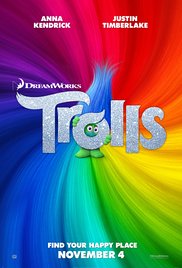
The new Dreamworks animation released by 20th Century Fox, TROLLS is a happy enough 3D computer-animated musical buddy comedy film based on the dolls of the same name created by Dane Thomas Dam way back in 1959.
The TROLLS are colourful figurine-sized doll characters who are known to be happy all the time. They sing, dance and hug constantly. But the happiness is now under threat as creatures known as Bergens have discovered the trolls and eating them up. They do so in order to be happy as Bergens do not know how to dance or sing or be happy. The name Bergens is likely derived from the coastal city of Bergen in Norway, the only country in the world known for trolls.

Many animated features share the identical premise (ZOOTOPIA, for example) of heroes saving their village. In TROLLS, the plot revolves around two trolls on a quest to save their village.

Princess Poppy (Anna Kendrick), throws a big party to celebrate one trolls’ escape from the Bergens, despite the fears and warnings of the glum and paranoid troll Branch (Justin Timberlake) that loud parties will attract them again. Branch’s fears are realized when indeed the banished Bergen Chef sees the fireworks and captures a number of trolls. Poppy is among the trolls who manages to hide, but discovers that none of the other trolls dares to venture to the town of the Bergens to rescue their friends. She and the reluctant Branch together journey to the Bergen’s town to rescue their friends.

The Bergens also have interesting characters. The scullery maid Bridget (Zooey Deschanel) strikes a deal with the trolls.: if she frees their friends, they will help her get a date with the now King Gristle Jr. (Christopher Mintz-Plasse). A plot twist involves the Zen-like troll Creek (Russell Brand) who after being apparently swallowed by the young king has been discovered being held captive in the jewel that decorates the king’s mantle. But things obviously work out in the very end, with as expected a happy ending that cannot be happy enough.

TROLLS is definitely a kid’s movie. The only scary part involves a troll eaten by a Bergen, but thankfully there is minimally done with little troll gulped down. The jokes are goofy enough for both adults and children to enjoy. TROLLS is not as funny as SHREK but the humour is at least funnier than the average animated feature.

TROLLS is also part musical. Most of the songs are popular pop songs that suit the atmosphere of the film. Of all the voice characterizations, John Cleese’s and James Corden’s are immediately recognizable. The film is super colourful. It helps too that the animated choreography is inventive enough to be entertaining as well as good silly.

As in most animated feature these days, TROLLS arrives in 3D. It answer the question whether audience can or cannot do do with too much happiness.

Trailer: https://www.youtube.com/watch?v=xyjm5VQ11TQ


TV CONTESTSUBMIT your TV PILOT or TV SPEC Script
Voted #1 TV Contest in North America.
FILM CONTESTSUBMIT your SHORT Film
Get it showcased at the FEEDBACK Festival
writing CONTEST1st CHAPTER or FULL NOVEL CONTEST
Get full feedback! Winners get their novel made into a video!
SCREENPLAY CONTESTSUBMIT your FEATURE Script
FULL FEEDBACK on all entries. Get your script performed

Film Review: DOCTOR STRANGE (USA 2016) ***

doctor_strange_poster.jpgDOCTOR STRANGE (USA 2016) ***
Directed by Scott Derrickson

Starring: Benedict Cumberbatch, Chiwetel Ejiofor, Rachel McAdams, Tilda Swinton, Mads Mikkelsen

Review by Gilbert Seah

The Marvel superhero DOCTOR STRANGE gets his first debut on the big screen complete with 3D. Though the character has appeared in a TV movie and animated film before, he is given a fresh treatment which is a good thing considering that there are already too many super hero action movies each year.

It also helps that the film is directed by a horror film director Scott Derrickson rather than an action director. Derrickson directed the two SINISTER films, THE EXORCISM OF EMILY ROSE including the Hollywood version of DELIVER US FROM EVIL, the latter of which contained a lot of dead-pan humour, repeated in DOCTOR STRANGE. Those who have watched Benedict Cumberbatch in real-life know that this actor is prefect for deadpan straight face comedy.

Stephen Strange (Cumberbatch), the world’s top neurosurgeon, is as rich as rich comes. He stays in a luxurious London apartment. But he has an ego as enormous as his wealthy possessions. His life is changed when he is injured in a violent car accident (well shot) that ruins his career. Strange sets out on a journey of healing, where he encounters the Ancient One, who later becomes Strange’s mentor in the mystic arts.

More satisfying than the action set-pieces are the special-effect set pieces. The first of these is the most impressive with a fight taking place on the side of British-type architecture where the windows turn into revolving folding panels. The look reminds one immediately of Christopher Nolan’s INCEPTION, the film which likely gave Derrickson some inspiration. Like that film, characters also travel through portals in between different dimensions.

As expected in all Marvel film adaptations, Stan Lee provides his surprise cameo. Where he appears will not be revealed here, as it is always fun to spot him.

DOCTOR STRANGE contains less at action than the expected super hero action film. A bit too much time is devoted to Strange’s moping about everything. For all the film’s different twists on the action hero film genre, the results are conventional. There is the good guy (in this case a lady in the film personified by Tilda Swinton) that turns out questionable and the possible good trainee (Dane Mads Mikkelsen, MEN & CHICKEN, QUANTUM SOLACE) who turns out finally to be villainous.

But despite all these praises, the film begins to lag towards the middle. The film also descends into a conventional action film by the climax – the fight between Strange and the villain, which is a real shame given the initial promise at the film’s start.

The film contains too many puns that go with the hero’s name ‘Strange’ – a temptation that scriptwriter clearly yields to.

The Audience should stay for the end of the closing credits. As in the other films set in the Marvel Universe, there is a short clip teaser of what is to arrive in the next instalment.

It is also odd that DOCTOR STRANGE gets a post summer release unlike the other action hero blockbusters. This should work in favour for the film after a quiet weekend at the box-office where the previous week only saw one major Hollywood release (INFERNO).

Trailer: https://www.youtube.com/watch?v=HSzx-zryEgM


TV CONTESTSUBMIT your TV PILOT or TV SPEC Script
Voted #1 TV Contest in North America.
FILM CONTESTSUBMIT your SHORT Film
Get it showcased at the FEEDBACK Festival
writing CONTEST1st CHAPTER or FULL NOVEL CONTEST
Get full feedback! Winners get their novel made into a video!
SCREENPLAY CONTESTSUBMIT your FEATURE Script
FULL FEEDBACK on all entries. Get your script performed

HACKSAW RIDGE (USA/Australia 2016) ***** Top 10

hacksaw_ridge_poster.jpgDirector: Mel Gibson

Writers: Andrew Knight (screenplay), Robert Schenkkan (screenplay)

Stars: Andrew Garfield, Sam Worthington, Luke Bracey, Teresa Palmer, Vince Vaughn, Hugo Weaving.

Review by Gilbert Seah

After about a decade absence from the director’s chair (his last film was the misunderstood APOCALYPTO in 2006), the director of BRAVEHEART and THE PASSION OF THE CHRIST returns in top form as if redeem in himself of all the bad press he had garnered since he said and did some foolish things. It’s another situation in this 21st century social media era where the outside events of the director “tarnish” the actual film itself. Think “Birth of the Nation”. Two films that should potentially receive multiple Oscar nominations. But will they? And should they?

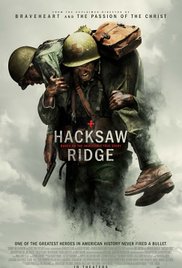
The film is a true story, bravely told, inspiring as well, set in World War II featuring the most unlikely of heroes – a pacifist who refuses to carry a rifle. Not only does the film boast inspired direction by Gibson, but it also contains perhaps the best performance of the year by a young actor, the most recent SPIDER-MAN, Andrew Garfield – if not the best performance of his career. It should be a crime against someone like Garfield for being so good-looking and talented at the same time.
The true story of medic, Private Desmond T. Doss (Andrew Garfield), who won the Congressional Medal of Honor despite refusing to bear arms during WWII on religious grounds. Doss was drafted and ostracized by fellow soldiers for his pacifist stance but went on to earn respect and adoration for his bravery, selflessness and compassion after he risked his life — without firing a shot — to save 75 men in the Battle of Okinawa.

The script by Andrew Knight and Robert Schenkkan can hardly go wrong. What the story needs, the script does. Firstly, it strongly establishes the reason for Desmond’s behaviour and beliefs. The contradiction of the father’s character is also smoothly tied in with conviction. The film is basically divided into two parts. The first is Desmond’s basic training (boot camp) where he is mocked by both his superiors and his fellow soldiers. He is also given the dreaded blanket party at night. The second part of the film and the most brutal is his service in the battlefield. At times, the film feels like Stanley Kubrick’s FULL MEATL JACKET which contains two similar segment but Gibson’s second section, unlike Kubrick’s is the more exciting one.

Besides Garfield’s outstanding performance, Vince Vaughan delivers an equally impressive one, the role of a stern sergeant, much uncharacteristic of what audiences expect from him. Aussie Hugo Weaving (THE MATRIX movies; PRISCILLA, QUEEN OF THE DESERT) is also perfect as the hard drinking father who when finally does good and justice for his son, whose performance will break the hardest of hearts.

Those who are able to remember THE PASSION OF THE CHRIST will see more tortured scenes in the film. The battle scenes – with heads exploding; guts pouring out; dismembered bodies and wounds infested with maggots and rats are not easy ones to watch. The scenes rival Spielberg’s unforgettable beginning sequence in SAVING PRIVATE RYAN and one can only guess what is yet to come with Christophe Nolan’s upcoming DUNKIRK.

The closing credits serve to prove to the audience that as wild as this story might be, the truth exists. Archive footage of the real heroes as depicted in the film speak out, often saying the identical words in the film’s script.

America needs her heroes in these difficult times of terrorism and racism. AMERICAN SNIPER and SCULLY are heroes depicted in films that have done extremely well at the box-office. Opening close to Remembrance Day, this film deserves to do well and might be the hit the flailing studio Lionsgate needs. Forget DOCTOR STRANGE! This film hits the mark!

Trailer: https://www.youtube.com/watch?v=s2-1hz1juBI


SUBMIT your TV PILOT or TV SPEC Script
Voted #1 TV Contest in North America.
FILM CONTESTSUBMIT your SHORT Film
Get it showcased at the FEEDBACK Festival
writing CONTEST1st CHAPTER or FULL NOVEL CONTEST
Get full feedback! Winners get their novel made into a video!
SCREENPLAY CONTESTSUBMIT your FEATURE Script
FULL FEEDBACK on all entries. Get your script performed

Movie Review: GUNG HO, 1986

SCREENPLAY CONTESTSUBMIT your SCRIPTS
Voted #1 screenplay contest in the world!

GUNG HO MOVIE POSTER
GUNG HO, 1986
Movie Reviews

Directed by Ron Howard
Starring: Michael Keaton, Mimi Rogers, Gedde Watanabe, George Wendt, John Turturro, Sô Yamamura
Review by Brent Randall

SYNOPSIS:

Gung Ho explores the similarities and differences between the American and Japanese cultures when a Japanese car manufacturer comes to America to revive a car plant in Pennsylvania.

CLICK HERE and watch 2009 MOVIES FOR FREE!

REVIEW:

Starring Michael Keaton as Hunt Stevenson, the movie opens with showing the doldrums of the town of Hadleyville, Pennsylvania. Hunt is the former foreman of the currently closed Hassan Motor’s plant that was the economic hub of Hadleyville. Hunt’s girlfriend, Audrey (Mimi Rogers) is picking him up to drive him to the airport, where he is on his way to Japan. Hunt’s mission is to persuade the Japanese executives at Hassan Motors to come to Hadleyville and reopen the Hassan plant there. His nervousness is quickly seen when Hunt puts his suitcases in Audrey’s trunk, and then proceeds to put his garbage too. This kind of humor, which Keaton pulls off so well, is seen throughout this movie (and many other Michael Keaton films as well), and it is this kind of humor that gives the viewer a much needed break from the difficulties facing Hadleyville. As the car progresses towards the airport, we quickly see through the various closed businesses that Hadleyville is struggling, and we see how important the Hassan Motors plant is to the success of other surrounding businesses. Hunt is fully aware of the importance of his mission, and knows that without the plant reopening, the town is likely to evaporate.

Hunt arrives in Japan and his struggles are illustrated through a variety of hilarious scenes showing Hunt trying to get acclimated with the Japanese culture. He finally arrives at Hassan motors and enters the executive board room. Upon giving his presentation to these executives, the owner and other members of the board seem completely uninterested in the jokes and humor Hunt uses to lighten the mood of the room. They also seem completely anything but impressed with Hadleyville, Hunt, or the prospect of coming to America to open the plant. After what seems like an unsuccessful attempt to woo the Hassan executives, Hunt returns to America. Audrey picks him up from the airport and asks him how the meeting went. Hunt reminds Audrey of the time when he first met her father, and how her father came after him with a power sander. Audrey says she remembers, and Hunt tells her that the meeting did not go quite that well. Once again, the quick witted humor Keaton employs helps illustrate beautifully the details of the meeting with the Japanese.

Hunt assumes the meeting was a failure and begins searching for other jobs all across the country. However, much to his surprise, he is informed from a friend that the Japanese will be coming to reopen the plant. Hunt and his fellow employees are estatic about the opportunity. The Japanese executives arrive in Hadleyville, and Hunt meets with them at the Hassan Motors plant. From this initial meeting, Hunt is given the job of leading the American workers and a raise in pay. Hunt is excited about the opportunity, but we also can already that the Japanese view of how the plant should run is quite different than that of Hunt’s view. For example, Hunt assumes the plant will actually open once all the structures are back in place, but the Japanese remain skeptical. We know by this pivotal meeting, the differences in work ethic, culture, and general ideas regarding business will play heavily in the success or failure of the plant.

Fortunately, for everyone involved, the plant does open, and the American workers are able to go back to work. It seems as if Hadleyville has been saved, but these successes may be short lived. From day one, the Japanese and American workers begin butting heads. In a pivotal scene, we as viewers see how their differences are vast by their approach to work. The Japanese workers believe in starting each day with morning exercises and taking a team approach to running the company, regardless of individual gains, and the Americans are much more individualistic, and are reluctant to even perform the exercises, much less take a team approach. As the days and weeks progress, these difference begin causing significant friction between the two cultures and threatens the future of the plant, and the way these two groups of people work through these differences will determine whether or not this plant, and more importantly, this town, will survive.

Gung Ho does a wonderful job illustrating the differences between cultures and how one must embrace differences and use these differences in order to achieve success. When I taught school, I used this movie to illustrate the differences of collectivism (a teamwork approach) to individualism (individualistic approach) in the workplace, and how these varying viewpoints can truly alter the way one views a working enviroment. These two schools of theory constantly show up in various aspects of this film and drive the way the Japanese and Americans think. This point is seen best when the Americans play the Japanese in a softball game. The Japanese show up in uniforms, warm up as a team, and play team ball by bunting and moving runners over, etc. The Americans, on the other hand, all are wearing different uniforms and trying to hit the ball as far as they possibly can. Niether way is right or wrong, it simply is a different philosophy, and it will take both sides working towards a common goal as opposed to working against each other to achieve success. Yes, Gung Ho is a hilarious movie if you like quick wit humor, and yes, Michael Keaton is fabulous, but it also dives deeper into how cultural differences can truly cause rifts between people. These differences, if we allow them to, can create gaps so large, that even the Grand Canyon would fail in comparison. We learn that different is not either right or wrong, it is simply different. Learning to embrace these differences can be difficult, but it can be accomplished. By embracing differences instead of critiquing them, great success can be achieved. Gung Ho shows us how we can do just that, and by doing so, how much more successful we can be when we choose to accept different viewpoints as opposed to simply rejecting them without just cause.

SUBMIT your TV PILOT or TV SPEC Script
Voted #1 TV Contest in North America.
FILM CONTESTSUBMIT your SHORT Film
Get it showcased at the FEEDBACK Festival
writing CONTEST1st CHAPTER or FULL NOVEL CONTEST
Get full feedback! Winners get their novel made into a video!
SCREENPLAY CONTESTSUBMIT your FEATURE Script
FULL FEEDBACK on all entries. Get your script performed

Movie Review: NIGHT SHIFT, 1982

NIGHT SHIFT MOVIE POSTER
NIGHT SHIFT, 1982
Movie Reviews

Directed by Ron Howard
Starring: Henry Winkler, Shelley Long, Michael Keaton
Review by Drew Greco

SYNOPSIS:

A nebbish of a morgue attendant gets shunted back to the night shift where he is shackled with an obnoxious neophyte partner who dreams of the “one great idea” for success. His life takes a bizarre turn when a prostitute neighbour complains about the loss of her pimp. His partner, upon hearing the situation, suggests that they fill that opening themselves using the morgue at night as their brothel. Against his better judgement, he gets talked into the idea, only to find that it’s more than his boss that has objections to this bit of entrepreneurship.

REVIEW:

When most people think of Ron Howard as a director, they think of such dramas as The Da Vinci Code, Frost/Nixon and A Beautiful Mind. When I think of Ron Howard, however, my first thoughts are of pimps and prostitutes. Allow me to explain.

Before Howard struck gold with the literal fish out of water comedy, Splash, he directed Night Shift, an overlooked and underrated classic about two aimless men running a prostitution ring out of the city morgue. While this might not sound like the basis for a comedy, Night Shift manages to make light of the illicit subject matter by focusing less on the bedroom and more on the unlikely friendships that develop between the three main characters.

Henry Winkler plays Chuck Lumley, recently demoted city morgue employee. You might think that having the coolest guy on television playing a pimp is a stroke of genius. And it is. But Winkler’s Chuck Lumley is the polar opposite of his Arthur Fonzarelli. Chuck is the type of guy who is content to watch life pass by as long as he doesn’t have to get involved. All he wants is to be left alone.

Enter Bill Blazejowski, a.k.a. Billy Blaze (Michael Keaton in a star-making performance). Chuck’s new partner can’t keep his mouth shut for more than a few seconds. He even carries a tape recorder with him at all times to catch such innovative ideas as edible paper and feeding mayonnaise to live tuna fish. It’s hard to believe that this is Keaton’s first feature film. His manic “idea man” walks away with every one of his scenes.

Shelly Long is Belinda Keaton, the hooker with the heart of gold. Her life is in disarray because her pimp has just been murdered and now there is no one to protect her and her friends. She has also recently moved next door to Chuck, who finds her slumped in the elevator after being attacked by a customer.

Feeling guilty about telling Bill to shut up and leave him alone, Chuck decides to open up and share some details about his life. He makes the mistake of telling Bill about Belinda’s plight. The idea man immediately jumps on the opportunity. He reminds Chuck how they have no supervision on the night shift, and utters two words that change their lives forever: Love Brokers.

Normally, Chuck would just ignore Bill’s latest scheme. But Bill has a new mission in life, to make Chuck a man. And Chuck is finally ready to stop being afraid of joining the rest of the human race. He also can’t stop thinking about his alluring next door neighbor.

Chuck and Bill become agents to Belinda and her friends. The ladies appreciate their new professional organization, which includes health, dental, and part ownership in a fast food restaurant. Business is booming until the men who murdered Belinda’s pimp go looking for the new guys who took over the business.

No, Night Shift is not the typical romantic comedy, and that’s exactly what makes it work. Most of us would never decide to get in over our heads and become pimps. But somehow, it seems like a good idea for our two morgue attendant heroes. As Billy Blaze puts it, “Well, we couldn’t be doctors.” It’s hard to argue with logic like that.


SUBMIT your TV PILOT or TV SPEC Script
Voted #1 TV Contest in North America.
FILM CONTESTSUBMIT your SHORT Film
Get it showcased at the FEEDBACK Festival
writing CONTEST1st CHAPTER or FULL NOVEL CONTEST
Get full feedback! Winners get their novel made into a video!
SCREENPLAY CONTESTSUBMIT your FEATURE Script
FULL FEEDBACK on all entries. Get your script performed

Film Review: THE DAVID DANCE

Deadlines to Submit your Screenplay, Novel, Story, or Poem to the festival: http://www.wildsound.ca

the_david_dance.jpgTHE DAVID DANCE

Director: Aprill Winney
Writer: Don Scime
Stars: Don Scime, Guy Adkins, Antoinette LaVecchia

Review by Gilbert Seah

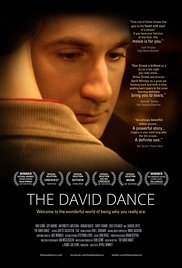
THE DAVID DANCE follows the adventures of a local gay radio DJ, David (Don Scime) in Buffalo, New York.

The film tackles quite a few issues. At the film start, David listens and calls a rival radio show in which an Anita Byrant type woman, June Hendley (Jordan Baker) makes her stance against homosexuals. She is against gay marriage, gay sex and almost everything gay just like the original Byrant. An easy target no doubt, David through his show gets the better of her. David then meets his new technician Chris (Guy Adkins) who pines for him. The two have met before at one of the weddings of David’s sister, Kate (Antoinette LaVecchia). The film goes into a subplot of a sibling relationship before revealing that dear old sis has plans of adopting a Brazilian girl. She needs support that he reluctantly gives. David visits a nursery, sees a baby that smiles at him and gets all baby happy. He discusses children with Chris. David and Chris fall in love.

The film flows smoothly from one topic to another. Gay films these days have the problem of originality. In the 70’s when gay films were the rage in the business, topics like coming-out, children adoption, same-sex romance, gay marriage, rent boys were all hot topics never covered before. Now 40 years later, every gay issue has been covered and films are in need for a fresh look at used topics. Unfortunately, THE DAVID DANCE touches on too many of these topics without any fresh take. The romance between two older middle-age guys is something seldom covered, but the romance is mired in melodrama and sentimentality.

One must admire director Winney for trying hard in a small budget movie. But trying is not good enough. The film plods along just like the the film’s protagonist – without much aim and just letting things come and go. And like the protagonist, the film needs more firm direction.
The film becomes extremely self-defeating towards the half way mark. Just when things begin going great for David, such as his positivity towards his sister’s adoption, his new love and his newly found boldness, he sinks back into self pity. He tells Chris that he is not ready when asked to move in with him, starts retreating from he adoption idea and turns negative on TV. During one TV spot, he goes on and on , saying: “Why don’t people just ask gays to shut up?” Maybe the filmmakers should heed the advice, shut up about the complaining.

The film has been described by a few critics as a charming little film. But the film is riddled with cliches with the tough spots that David keep running into tiresomely put in by the manipulative script. It would have worked if they made the David character a more charismatic gay man. But the actor who plays David also wrote the script, which means he likely convinced the filmmakers to cast him in the lead role.

Director Winney takes her film outdoors as much as she can, whether in a car or on the road with some well shot scenes like the hillside cemetery that David visits.

At another point in the radio show, he condemns gays as lonely people, being out of place even among themselves. He complains that he is too unattractive to dress up or go dance and have a good time. This statement makes one wonder who the film’s target audience would be. If the filmmakers are aiming at the quiet, shy and less outlandish gays to see their film, They should realize that these are the very same people that would not dish out money to go out see a movie.

The film is lovingly dedicated to the late Guy Adkins who has passed away in 2010 from cancer.

Trailer: https://www.youtube.com/watch?v=R5SZz20YoSk

Also, Free logline submissions. The Writing Festival network averages over 95,000 unique visitors a day.
Great way to get your story out: http://www.wildsound.ca/logline.html

Deadlines to Submit your Screenplay, Novel, Story, or Poem to the festival:http://www.wildsound.ca

Watch recent Writing Festival Videos. At least 15 winning videos a month:http://www.wildsoundfestival.com

Film Review: THE VIOLIN TEACHER (Brazil 2016) ***

Deadlines to Submit your Screenplay, Novel, Story, or Poem to the festival: http://www.wildsound.ca

the_violin_teacher_poster.jpgTHE VIOLIN TEACHER (Brazil 2016) ***
Directed by Sergio Machado

Starring: Lázaro Ramos, Kaique de Jesus, Elzio Vieira

Review by Gilbert Seah

A Brazilian version of Meryl Streep’s MUSIC OF THE HEART?

THE VIOLIN TEACHER, which opens at the TIFF Bell Lightbox, serves both as an art house film and a crowd pleaser. From the film’s very first frame, the audience sees the protagonist, a talented but tortured soul named Laerte (Lazaro Ramos) unable to fulfil his promise during an important violin audition for the famous São Paulo Symphonic Orchestra. When he returns home disgruntled, he has a long distance telephone call with his dad where the audience sees his parents’ full support and him not reaching his full potential. The next scene ups the angst when he quarrels at his orchestra practice and his group is disbanded. To make matters worse, he has no money to pay rent and is served with an eviction notice. But lo and behold! There is hope. He has a chance to make some money by teaching a group of underprivileged violin students in the slums of Helipolis. His path is, as expected, full of difficulties but the film attempts to show that the transforming power of music and the friendship arising between the professor and his students open the doors into a new world. This is where the story is stretched a bit too far in crowd-pleasing territory. This comes despite the fact that the film is based on a true story.

The film contains two scenes that are quite difficult to believe. One is the night scene when thugs threaten Laerte. Laerte takes out the violin and plays a classical piece, apparently so well that the uneducated thugs are mesmerized and leave him alone. The audience also learns during the film that the kids have no knowledge of music theory. They do not know what a treble cleft is nor can they read notes. The scene that follows has the kids at practice playing a classical piece conducted by Laaerte quite effectively.

But the film works when the director stops trying too hard and lets his film flow. The scene that contains no dialogue where Laerte walks with his students demonstrates the new camaraderie created very effectively. The film also bursts into energy in the club scene where dancers rap to the Brazilian beats – a scene that is only loosely tied to the plot.
The segment where Laerte agrees to have his kids play for a drug dealer’s party might sound far-fetched, but one can tell that the incident actually happened.

Flaws aside, THE VIOLIN TEACHERS captures both the atmosphere of liveliness and difficulty of survival in the slums. (The part where a father strikes his son with the hope that the son will not hang around the wrong crowd hits the story home.) That together with Ramos’ performance lifts THE VIOLIN TEACHER over the drabness of a formulaic film too eager to please. Also, needless to say, the film contains a beautiful score of violin classical pieces.

Trailer: https://www.youtube.com/watch?v=TjaDenw6v-U


Also, Free logline submissions. The Writing Festival network averages over 95,000 unique visitors a day.
Great way to get your story out: http://www.wildsound.ca/logline.html

Deadlines to Submit your Screenplay, Novel, Story, or Poem to the festival:http://www.wildsound.ca

Watch recent Writing Festival Videos. At least 15 winning videos a month:http://www.wildsoundfestival.com

Movie Review: TENGU: BIRDMAN OF THE MOUNTAINS (2016)

  MOVIE POSTERTENGU: BIRDMAN OF THE MOUNTAINS, 8min., UK, Action/Fantasy
Directed by Samuel Smith

A father struggles to protect his family against the terror of the Tengu, bird-men of the mountains.

Played at the October 2016 ACTION/CRIME Short Film Festival

Review by Kierston Drier

This poetic fantasy action film, hailing from the United Kingdom and coming to us from director Samuel Smith, is a study in genre splicing. Tengu: Birdman of the Mountains has the poetic elements of a romance, the luxurious visuals of a fantasy, the tension and suspense of a thriller, and the fight scenes of a high-concept action film. Told through the eyes of a child, our hero watches as his highly skilled father, endowed with supernatural natural strength from his Chi, fights off terrifying bird-like villains from this family’s mountain home. Packed with stunning fight sequences that highlight the filmmakers’ excellent technical skills, this piece is a must-see for anyone who enjoys action.

There is some disconnect in the story, although it is justifiable. Despite the glamourous make up and extravagant clothing the Hero’s family wears, the shelter they dwell in appears to be little more than sticks tied to together into a ramshackle hovel. However, when it is considered that this film is taken through the eyes of a child, and also straddles of the line of fantasy and action- this distension of disbelief is well worth it the pay off. And pay off? A glowing story of intrigue, passion, and danger with a dark and sinister twist.

Tengu: Birdman of the Mountains,  is a film that will delight you with its symbology, its imagery and it’s excellent fight sequences, but it goes far beyond that. This film represents of genre-hybrid that should be welcomed into cinema with open arms. It is highly commendable thing to be able to successfully blend genres together, and this film is able to do that. With effortless ease a viewer can watch this film and find something in it to enjoy even if they are not conventionally a viewer of action.

AUDIENCE FEEDBACK VIDEO:

Movie Review: BARROW (2016)

  MOVIE POSTERBARROW, 15min., Australia, Crime/Mystery
Directed by Wade K Savage

A young woman training to be a forensic entomologist is forced to confront her family’s dark past.

Played at the October 2016 ACTION/CRIME Short Film Festival

Review by Kierston Drier

The crime mystery science-fiction short Barrow, coming to us from Australia courtesy director Wade Savage, is a powerful, efficient, masterful piece of cinema. It makes nods to a wide variety of genre motifs including mystery, crime, science fiction and horror, among others, and integrates them seamlessly. The story is rich and engaging, following the story of a young forensic scientist on her quest to understand the mystery forces that saved her life during a brutal and horrifying attack on her family years before.

This film is wonderfully balanced cinematographically, beautifully rendering scenes of dazzling brilliance without having the darker scenes feel out of place. The story is clean, precise and engaging, with thoughtful attention to detail. The character development is logical, well designed and tempered with flawed heroes, tragic backstories and strong performances.

What sets this piece apart however- what makes it a razor sharp cut above the rest, is its efficiency. Every scene is necessary, every detail crucial to the whole. There is no slack moment, no superfluous action. Every line and every visual leads to the betterment of the films’ conclusion. Barrow is a strong cinematic film, short, simple, stunning, and boasting a killer super natural twist.

AUDIENCE FEEDBACK VIDEO: