Interview with Festival Director Ronald Quigley (PITTSBURGH INDEPENDENT FILM FESTIVAL)

The Pittsburgh Independent Film Festival is Pittsburgh’s own film festival for truly independent films, and a headline event for micro-budget films in the USA and world wide. PIIF offers a fantastic opportunity for undiscovered filmmakers to showcase their achievements, filmmakers who posses an independent vision and operate to create innovative work outside the studio system. Two recent winners of the festival have secured a distribution deal, as a result of entering our festival. Both our 2016 and 2018 winners are now in worldwide distribution. The Pittsburgh Independent Film Festival was founded by Ronald Quigley a Pittsburgh native who now lives and works as an  Actor / Director in Los Angeles.  Ronald, re-located from Pittsburgh to Los Angeles in April 2002.  He is the CEO of Last Act Entertainment a production company with several credits to it’s name.  Ronald acts as the Festival Director while our panel of judges are comprised of industry professionals from different fields within the film making community of Hollywood. The PIFF was created in 2010 and screened 48 films from around the world at the Hollywood Theater in Dormont PA,  a suburb of Pittsburgh.  Although the Hollywood worked well for the first year, Ronald felt a need for a venue that was more conducive to a film festival atmosphere. In 2013 the Pittsburgh Independent Film Festival moved to The Father Ryan Arts Center in McKees Rocks. For the 2019 season the PIFF is being held at the newly remodeled Parkway Theater. Aaron Stubna has taken an old theater and turned it into a hip modern cafe screening room with a Restaurant and Bar integrated all together to make this one of the coolest places to have a Film festival I have ever seen. We hope to be here for many years to come.    Link   http://communityreelartscenter.org/

Matthew Toffolo: What is your Film Festival succeeding at doing for filmmakers?

Ronald Quigley: The competition in the independent film world has become fierce, the quality of films has grown exponentially almost every year over the 9 years of our existence. We give an opportunity to filmmakers to screen their film on the big screen and perhaps secure distribution.

2) What would you expect to experience if you attend your next festival?

This year we have found a newly remodeled hip little theater in Pittsburgh The Parkway Theater. Aaron Stubna the owner, has taken an old theater and turned it into a hip modern cafe screening room with a Restaurant and Bar integrated all together to make this one of the coolest places to have a Film festival I have ever seen. We hope to be here for many years to come. In addition to our already one of a kind official submission plaque that is presented to every selected submission. We are the only festival in the world that does this.

3) What are the qualifications for the selected films?

The only qualification is that they be good. They must be shot on a very high level sound, picture and color all have to be great. I have said that you will be judged by your lowest common denominator not only by my festival but that holds true for your audience you wont be remembered as getting it pretty good your will be remembered as the film with bad sound or color whatever the worst part of your film is is what they remember.

4) Do you think that some films really don’t get a fair shake from film
festivals? And if so, why?

I don’t know about any other festival but at our festival every film is reviewed very carefully.

5) What motivates you and your team to do this festival?

The love of film. We are all filmmakers in one way or another. Our team is comprised of directors, producers, sound people, and just plain old filmmakers. We don’t make money from this the festival barely breaks even every year. We are a smaller festival because of where we are located,.but don’t get me wrong Pittsburgh is a great place to have a festival.

6) How has your FilmFreeway submission process been?

Filmfreeway is now our main portal for submissions we get most of our submissions through them. They have come on like gangbusters and have done everything for the better.I love Filmfreeway.

7) Where do you see the festival by 2023?

That’s a good question. We have grown every year and now that we have a hip new venue I think we could have like a little Sundance where everyone can’t wait to come. Anyhow that’s my dream.

8) What film have you seen the most times in your life?

The Wizzard of OZ still to me the greatest film ever made. No one disagrees with me when I say that, but they may have a different favorite. I vever miss it when it comes on TV.

9) In one sentence, what makes a great film?

A great film takes you on an emotional roller coaster ride you don’t think about anything else you are invested and engaged and you forget about the real world.

10) How is the film scene in your city?

Well that’s kind of a loaded question I live in Hollywood but my festival is in Pittsburgh. But the Pittsburgh film scene has been pretty vibrant Pittsburgh gets about 8 to 10 Major motion pictures a year made there.

These are multi -million dollar productions. Pittsburgh is a very cinematic city and many top rate filmmakers have no problem coming there to shoot 

pittsburgh-1
Interviewer Matthew Toffolo is currently the CEO of the WILDsound FEEDBACK Film & Writing Festival. The festival that showcases 20-50 screenplay and story readings performed by professional actors every single month. And the FEEDBACK Monthly Festival held in downtown Toronto, and Los Angeles at least 3 times a month. Go to http://www.wildsoundfestival.com for more information and to submit your work to the festival.

Interview with Festival Programmer Aaron Leventman (Santa Fe Film Festival)

The initial idea for a Santa Fe Film Festival was first introduced in May, 1980 when Bill and Stella Pence, founders of Taos Talking Picture and Telluride Film festivals, started an event with a New Directors/New Film program, co-sponsored by the Museum of Modern Art in New York City. The Pences led a festival for four years, with such notable guests as Francis Ford Coppola, Charlton Heston, Sam Peckinpah, and Lillian Gish.  The current form of the Santa Fe Film Festival was inaugurated in 1999 as a nonprofit and began showing films in the year 2000. Festival awards varied over the years. Initial categories included: Best Short, Best Documentary, Best Feature, Best Native American, and Best Latino Film. By 2006 the awards became the Milagro Award (best American independent film), the Independent Spirit Award, and the Audience Award, Honorable Mention in the Creative Spirit Award and Lifetime Achievement Award.The Film Festival has now continued for 16 consecutive years. The special setting of the festival in the unique and historic City of Santa Fe allows filmmakers, journalists, industry leaders and audiences from around the world to gather together in celebration of film. The festival’s annual program includes curated selections of over 40 film programs including narrative and documentary features, shorts of all types, tributes to world-renowned film artists and industry professionals as well as a spotlight on local, New Mexican filmmakers and crew. Embracing the full spectrum of cinematic arts, the Santa Fe Film Festival extends beyond screenings in theaters to panels, workshops, art exhibitions and fabulous parties. Come experience the beauty of Santa Fe and join us for our upcoming celebration of cinematic arts.

Matthew Toffolo: What is your Film Festival succeeding at doing for filmmakers?

Aaron Leventman: Our festival has provided an opportunity for filmmakers to screen their work for a film savvy audience of both locals and international attendees. There is also the opportunity to educate oneself on industry related topics with experts and celebrities at high-powered panels. They have the chance to make both industry and personal connections that in some cases has resulted in distribution deals and the development of new projects particularly for our festival award winners.

2) What would you expect to experience if you attend your next festival?

You will be able to see a variety of shorts, documentaries, and narrative films for both mainstream and underserved audiences in a beautiful southwestern environment with many great historic and cultural tourist attractions.

3) What are the qualifications for the selected films?

They must tell a good story, whether fiction or documentary, with high quality filmmaking. Locally made films are also given special attention.

4) Do you think that some films really don’t get a fair shake from film festivals? And if so, why?

Sometimes a submitted film with a similar theme from a major release comes out in the same year. Those films are often not selected because festival programmers are afraid that they won’t have an audience. For example, the year the 12 Years a Slave came out, other films with a similar topic had a hard time getting into festivals.

5) What motivates you and your team to do this festival?

I love the chance to showcase important works by lesser known artists and to provide additional opportunities for them. I also appreciate the chance to celebrate the life of seasoned filmmakers that have contributed to the industry for many decades.

6) How has your FilmFreeway submission process been?

We appreciate receiving submissions by both first time and famous filmmakers on FilmFreeway. We receive many shorts but would love to receive more features.

7) Where do you see the festival by 2023?

We will have more international attention because of the increase in popularity of the community of Santa Fe. Cross promotion with other film festivals will result in more recognition. I think we will receive more sponsors from major companies because of the increased interest in our film industry which will allow us to show more major titles and be able to bring in more filmmakers to present their work from around the world.

8) What film have you seen the most times in your life?

Annie Hall

9) In one sentence, what makes a great film?

Good structure, a well paced narrative, relatable themes, identifable characters, and strong visual storytelling makes a great film.

10) How is the film scene in your city?

We have a thriving film and TV industry where many Netflix and other major networks are shooting in New Mexico in additional to Hollywood films, independent features, and shorts. Local theatres are committed to showing both commercial and foreign cinema supported by our diverse audiences.

santa fe - 1.jpg


  Bio for Head of Programming, Aaron Leventman

Aaron Leventman was previously the producer of the Bioneers Moving Image Festival, part of the Bioneers Conference. and previously worked for the Sundance Film Festival. Most recently, he was the Director of Programming for Santa Fe Film Festival and the premiere event of the Albuquerque Film and Media Experience. Aaron has also given presentations with the Popular Culture Association Conferences around the country and has been on the awards jury for the Wild and Scenic Film Festival in Nevada City, CA. He has an M.F.A. from Columbia University’s film program, and is an actor who has appeared in many feature films, shorts, commercials, and industrials as well as theatrical productions in Santa Fe, San Francisco, Boston, and Provincetown, MA. He is also a published playwright (https://tinyurl.com/y9btfqen) whose works have been performed all over the U.S., most recently in New York City. Aaron is currently a writing coach and film and acting instructor at the Santa Fe Community College and Renesan for Lifelong Learning.


Interviewer Matthew Toffolo is currently the CEO of the WILDsound FEEDBACK Film & Writing Festival. The festival that showcases 20-50 screenplay and story readings performed by professional actors every single month. And the FEEDBACK Monthly Festival held in downtown Toronto, and Los Angeles at least 3 times a month. Go to http://www.wildsoundfestival.com for more information and to submit your work to the festival.

Film Review: EL ULTIMO TRAJE (THE LAST SUIT) (Argentina/Spain 2017) ***

 Submit your Screenplay to the Festival TODAY

El último traje Poster
Abraham Bursztein, an 88 year-old Jewish tailor, runs away from Buenos Aires to Poland, where he proposes to find a friend who saved him from certain death at the end of World War II. After…See full summary »

Director:

Pablo Solarz

Writer:

Pablo Solarz


When Hollywood makes a movie about old people, they normally turn out to be old fart fantasies where old people live forever (COCOON), win some competition (FINDING YOUR FEET) or find love again.  Often the actors playing the old farts try to outdo each other in looks and cosmetic get-up so much so that watching these movies have become so cliched.  In this Argentine/Spanish co-production about an 88-year old man, the subject is not the  search for the fountain of youth.  Abraham Borsztein runs away from his home in Buenos Aires for survival.  His daughters not only want to put him in a nursing home but amputate his and leg.  Armed with the little money that he has managed to save, he bolts for dear life off to Poland.

Why Poland?  Apparently some guy there had saved him from certain death at the end of World War II.   Abraham has made a promise to bring him a suit (THE LAST SUIT of the film title) and he aims to keep that promise.

The journey does not run as smooth as expected.  Abraham misses his train and gets his money stolen.  But the adventure has only begun.  He meets Maria (Angela Molina) who also has a few dreams of her own.

Director Solarz has his audience sympathize with Abraham.  The camera is not shy to reveal an awful looking bad leg, all white in colour and might in need to be amputated to prevent the poison from spreading throughout he body.  Details are not mentioned.

THE LAST SUIT is a nicely made (pardon the pun) film that may be described as a coming-of-age story of a senior 88-year old man.  His journey of escape and fear for his last days is a real one for many seniors who cannot help themselves but fall to the mercy of their sometimes uncaring and insensitive children.  One thing Abraham still has are his wits.  He is sharp as can be.

The story also reveals that there is some good in man.  The rude musician that Abraham first meets on the plane who first has his feet upon the chair turns out to be a really kind man after Abraham reluctantly helps him at customs.

THE LAST SUIT would be a film that targets the older demographic.  The film’s pace suits an elderly crowd as its good intentions.  It is a good natured as many of the characters Abraham meets during his journey.

Despite its lightness in tone, THE LAST SUIT gets serious at the end, with a message that replaces a climax.  Abraham searches for the friend that saved his life, mainly through his memories.  Through flashbacks, the audience is brought back to the war and the injustice committed against the Jews.  The film offers redemption in the form of a very kindly Germany lady that Abraham meet who helps him along the way.  Though this is enlightening, the audience is manipulated in a way.

The film brings the thought that without memories, nothing else matters.  One feels sadder for those with dementia and have nothing else when they reach that demise.  THE LAST SUIT ends up a sad film about old age, but at least it is a realistic one about certain hardship that seniors can never escape.

Trailer: https://www.youtube.com/watch?v=BLZVMgJoo-k

 Submit your Screenplay to the Festival TODAY

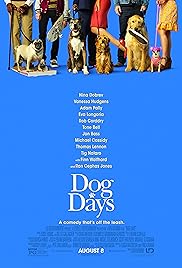
Film Review: DOG DAYS (USA 2018)

 Submit your Screenplay to the Festival TODAY

Dog Days Poster
Trailer

Dog Days follows a group of interconnected people in Los Angeles who are brought together by their lovable canine counterparts.

Director:

Ken Marino

Writers:

Elissa Matsueda (screenplay by), Erica Oyama (screenplay by) | 1 more credit »


The logo at the start of the film “Life is better with a dog” implies what director Manrino’s film sets up to prove.  It is not a very subtle message and not a very subtle film too.  DOG DAYS is a family oriented movie about humans and man’s best friend.  Unfortunately the word dog can also be used to describe the movie.  DOG DAYS is sporadically funny at best with a very low joke hit/miss ratio.

The film contains four humans stories – all silly and uninteresting.  The first is a TV host who ends up interviewing Jimmy Johnston a sports star only to end up arguing on set.  The cliché ridden script would mean that the two will fall in love, which they do, and lo and behold, what a surprise – it also turns out that they each own a cute dog.  The next story begins at a Starbucks style coffee shop where a regular customer meets an employee who falls for Mr. Hots, a dog doctor who owns a fabulous car.  The customer, as geeky as they come owns a dog shelter that, yes, any 2-year old can guess is going to have trouble financially.  She helps him out with a fundraiser but is dated by Mr Hots.  A one-year old can guess what happens next – yes, she discovers Hots to be an a-hole and realizes true love might be Mr. Geeky himself.  Then there is the musician who babysits sister’s dog while she is having twins.  The dog is a huge but cute one who changes Mr. Annoying’s life.  My Annoying is not only annoying buy terribly unfunny. The last story involves a sad man who ha substituted the love for his past wife with a dog he has lost due to Pizza boy.  The dog is found and looked after by a couple who adopts a little girl.  

Director Marino clumsily intercuts these stories with weak links.  For example, Johnson’s dog is brought to the clinic owned by Mr. Hots.  The lack of a villain in the story means that each story meanders around with no purpose except to display the cuteness of different dog breeds.

The film has no shortage of cliches.  A girl ditches her not-that-good-looking friend to date Mr. Hots only to find Mr. Hots an idiot and then dates back her not-that-good-looking friend who is actually in love with her. A lost dog found by a family who needs the dog more than the owner is eventually given the dog by the owner and so on.

The human stories are weakly linked to each other like an excuse.  The stories are predictable and unexciting.  No one really cares. 

As if cliches are not enough, director Marino aims to pull at the heart strings with no signs of stopping  A lost dog is re-united with its owner; an owner learns about life lessons from his canine friend. It is as if Marino has discovered that his humour is to working and trying for tears as a last resort.  

Containing more cliches than dog tricks, DOG DAYS makes one wonder who let this one out of the dog house?  This is just a very bad dog of a movie.

Warning!!  Make sure you leave before the closing credits.  There are extra takes of the actors cracking more unfunny jokes that will guarantee to make your skin crawl.  

Trailer: https://www.youtube.com/watch?v=zEilmeGeVXY&t=5s

 Submit your Screenplay to the Festival TODAY

Film Review: THE BOOKSHOP (Spain/UK 2017) ***

 Submit your Screenplay to the Festival TODAY

The Bookshop Poster
Trailer

England 1959. In a small East Anglian town, Florence Green decides, against polite but ruthless local opposition, to open a bookshop.

Director:

Isabel Coixet

Writers:

Isabel Coixet (screenplay), Penelope Fitzgerald (novel)


The underdog trying to keep his or her land against insurmountable odds like high authority and the government has been a solid premise for films.  Two routes may be taken – the comedy or drama.  One of the most successful Australian films THE CASTLE saw a country bumpkin fighting to keep his house (a castle is a man’s home) from being taken way to build an airport runway.  In best selling novel adapted into the film THE BOOKSHOP, a widowed woman attempts to fulfil her dreams be opening a bookshop in a small English town which the town wants to take away from her.

Though looking quite the ordinary film Isabel Coixtet’s THE BOOKSHOP , based on Penelope Fitzgerald’s acclaimed novel arrives in Toronto of a special engagement run after winning 3 prestigious Goya Awards including Best Film and Best Director. Director Coixtet is Spanish.  The film stars Patricia Clarkson as the ‘baddie’ who has previously worked with Coixtet in LEARNING TO DRIVE as well as stars Emily Mortimer and Bill Nighy.

This is the second British film this year to tout reading books in a period setting, the other being the yet to be released Mike Newell’s THE GUERNSEY LITERARY AND POTATO PEEL PIE SOCIETY.  Both films involve the rendering of personal resolve, tested in the battle for the soul of a community.

The setting is England, 1959.  Free-spirited widow Florence Green aka Mrs. Green (Emily Mortimer) risks everything to open a bookshop in a conservative East Anglian coastal town.  While bringing about a surprising cultural awakening through works by Ray Bradbury and Vladimir Nabokov (who wrote the controversial LOLITA which Mrs. Green intends to promote and sell in the bookshop), she earns the polite but ruthless opposition of a local grand dame (Patricia Clarkson) and the support and affection of a reclusive book loving widower (Bill Nighy).   As Florence’s obstacles amass and bear suspicious signs of a local power struggle, she is forced to ask: is there a place for a bookshop in a town that may not want one?   

Coixtet’s film unfolds at such a leisurely pace, it might turn out too slow for some audiences (just as people might nod off during reading a book, as one character in the film says). .  She spends a good third of the film introducing the film’s main characters.  Clarkson is only seen for a few minutes during the first half the the film and Nighy only speaks after a third of the film.  

Based on a book by a female author and directed and starring a female, the film naturally extols female independence.  Unfortunately, the film falls into the familiar trap of containing weak or dislikable male characters, the exception being the Bill Nighy character despite revealed of a timid nature.   All other male characters like the General (the grand dame’s husband), Mr. North and Mr’s Green’s solicitor are all spineless detestable beings.

THE BOOKSHOP opens Aug 24th, but being British and already released n Europe, is also readily available on disks through Amazon and other similar platforms.

Trailer: https://www.youtube.com/watch?v=3KgMW3rowXY

 Submit your Screenplay to the Festival TODAY

Interview with Actor Miranda Millar

Interview by Kierston Drier:

KD: Tell me a little about yourself? What inspired you to pursue a career in acting and performance?

MM: I don’t remember first time I was on stage because I was three years old! At four I started dance. You may have guessed, my parents are actor/writer/directors. They never pushed me, but gave me the opportunity to try it out to see if I enjoyed it. I obviously did.

KD: To date, what has been the defining role of your career. Why?

MM: This is a tough one.. I would have to go with my film Perfect for a few reasons; In this film, I play twins. It’s a unique challenge, playing two different people opposite each other. It’s a silent film, which means everything has to be communicated in the eyes, facial expressions, and body language. Also, the twins are violinists. I’ve played violin since I was a little kid, so being able to marry two of my passions in one project was especially gratifying!

KD: What are some of the most exciting projects you are working on right now?

MM: I have a couple projects in the works- one that films in Italy, and another in the states, and hopefully I can share more on those soon! I recently wrapped the first season of Six City. At the moment, I’m filming the horror series Raveage. Imagine Mr. Robot went on a Purge- lots of scary stuff ahead!

KD: Tell me more about Six city- what’s the most engaging thing about it?

MM: I’ve always really liked six-degrees-of-Kevin-Bacon type of films. I love seeing the small and not-so-small ways lives are intertwined and affect each other. Six City is exactly that, using the backdrop of Toronto to explore the intersecting nightlife, crime, and police force. My character Serena is a bisexual club go-er who may seem all fun and parties on the outside, but has a whole separate private life that her friends don’t know about yet…

KD: What are you most looking forward to with these new projects? What excites you most about Six City? About Raveage?

MM: I’m excited to delve deeper into Serena’s story, and for the audience to get to see just how far her story expands. Much like Six City, the world Courtney and Jennifer James have created is also connected to Raveage. Raveage is cool because it expands on the set up of Six City- it takes place in the same world. Serena is an even bigger lead in this next chapter, following her steep emotional journey and her ties to the worlds of politics, crime, and of course, love.

KD: Where can we find these new projects?

MM: Six City will be permiere in November on Facebook, and other media platforms after that. You can follow along for Six City here: https://www.facebook.com/sixcityseries/ and here: https://www.imdb.com/title/tt8205962/

Raveage is currently in production, but to stay up to date you can follow on Facebook here: https://www.facebook.com/raveagefilm/ and here: https://www.imdb.com/title/tt6267818/

miranda miller 2.png
Six City stills of Serena- Admit One Productions

KD: Describe your process. How do you get into the headspace of a really difficult character?

MM: It begins with text analysis. Getting everything I can from the pages provided to me. If the character has a specific job, or past, it helps to research if I’m unfamiliar with being, say, a surgeon. What are the hours like? What are the success rates of the types of surgery I do? How does that affect me, my mental state, my relationships? Even if my character is never at work on screen, the job will affect my home life. Knowing everything I can about my character makes it easier to be them in a believable way.

KD: What has been your most challenging role?

MM: My role on the hit Canadian show Murdoch Mysteries was challenging in a number of ways. It was exhausting because Amy MacFarlane (my character) experiences a lot of panic- and panic is draining on the performer. At one point in the season 7 premiere, I had my arms tied behind my back, I was gagged, and wearing a woolen dress – all under rushing water. It’s a lot going on.

KD: What has been the hardest part of being a professional actress? What is the most rewarding?

MM: The hardest part is the sometimes uncontrollable schedule. Over the span of two weeks, I was working on a movie full-time at night, and filming IRL: The Series during the day. On the weekends, I had scheduled a few other shoots. None of it could be moved. One ‘day,’ I was up for 40 hours working on three different projects. Sometimes it would be nice to be able to space things out, and give every project the time it deserves. But, you just have to plow ahead and do your best. When it rains, it pours. There are so many rewarding aspects. Like, finishing the two weeks mentioned above. And watching your finished product come to life, with everyone else’s work coming together. It’s a very bonding experience.

KD: Apart from performance, what else are you passionate about?

MM: I have a very deep love for fantasy novels. There’s nothing better than sitting down with a cup of tea and a really great novel. It’s one of my favourite forms of escapism. I love being able to bring a world in my bag, and jump into it whenever I can. I’m passionate about the environment- finding ways to keep and reuse materials I have, upcycling and recycling. I can’t wait until plastic is a thing of the past.

KD: What is next on the books for you, Miranda?

MM: After I finish filming Raveage, I’ll be heading down to LA next year for pilot season. I’m so excited for this next adventure!

KD: What advice would you give to someone just starting out in this industry, looking to be a professional performer as well?

MM: If you want to work on set, become a PA or work as an extra. It’s not just about the performance aspect, you need to know if you actually enjoy the environment you’ll be spending 12-17 hours a day in. Learn by helping. If you want to make your own projects, make connections by helping other filmmakers first. You can’t call in a favor you haven’t earned. Take classes, and don’t be afraid to suck. You will probably suck. But knowing what not to do is just as important as learning what you can be doing. And if you want it badly enough, you will find a way to make it happen.

miranda miller 1.jpg
headshot credit- Denise Grant Photography

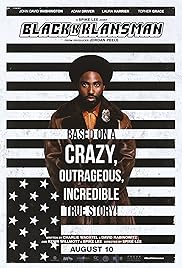
Film Review: BLACKKKLANSMEN (USA 2018) ****

 Submit your Screenplay to the Festival TODAY

BlacKkKlansman Poster
Trailer

Ron Stallworth, an African-American police officer from Colorado, successfully managed to infiltrate the local Ku Klux Klan and became the head of the local chapter.

Director:

Spike Lee


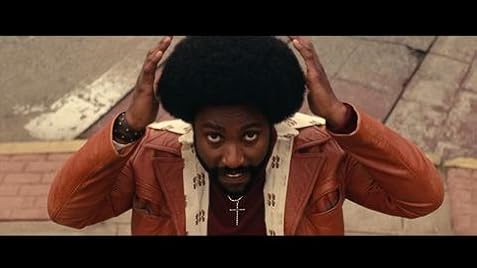
BLACKKKLANSMEN opens with a shot similar to the famous one seen in the poster of one of Spike Lee’s best films DO THE RIGHT THING.  The shot is focused on the centre of the image but the characters stand around in the perimeter.  Both that film and his new Cannes premiere hit BLACKKKLANSMEN tackle the problem of racism with savage brutality.  Though this film contains more content, Lee tones down his anger a little compared to the more energetic DO THE RIGHT THING. 

The film is based on the autobiographical book Black Klansman by Ron Stallworth. Set in 1970s Colorado, the plot follows an African-American detective Stallworrth (former footballer John David Washington and son of Denzel) who sets out to infiltrate and expose the Ku Klux Klan.

The film arrives after lots of hype after the Cannes premiere where many critics have hailed the film as one of the Top 10 films screened there.  The truth is that the film is that good though not without flaws.  It competed for the Palme d’Or and won the Grand Prix at Cannes.

Not since Francis Ford Coppola’s THE GODFATHER’s climatic scene where he intercut the talking of peace with the different crime bosses to the execution of the bosses has irony been so vividly captured on screen.  Lee intercuts the two rallies of the rise of black power to that of white power in one of the film’s key segments.  Best still is the irony on display when Jewish cop Adam Driver denounces his Jewish heritage as Lee’s camera is placed in the position to emphasize Driver’s semitic nose.

Lee is fond of filming his segments with the camera slanted with a resulting slanted frame, used by many directors to emphasize a distortion of the events occurring on screen.  Lee uses the tactic several times, particularly during the black rallies.

Though basically a period piece, Lee ties in current events to the story.  There is a shot of Trump’s speech about very bad people in demonstrations s well as newsreel footage of violent police and crowd clashes during demonstrations in the August of 2017.  Trump’s favourite line of making America great again is echoed in the film’s dialogue during of of the Ku Klax Klan leader’s speeches.   Lee obtained permission to include the image in his film of Heather Heyer who called killed by the car ploughing into the crowd during a white supremacy rally.

Lee’s film not only incites anger among African Americans but also among Jews and gays.  It is as if Lee is recruiting allies agains redneck whites in the movie.

It is always a pleasure to watch Adam Driver in a film.  Driver (PATERSON) delivers an astonishing and powerful performance without having to resort of cheap theatrics, written dialogue or bouts of put-on anger.  His mannerisms and body language tell all.  Alec Baldwin is also memorable and hilarious as a bigoted doctor speaking on white supremacy.  But all the white racists are treated as silly, stupid and ignorant country bumpkins, easy target for Stallworth and the good cops.  It would be a more challenging task to have them made a more formidable foe.

The film contains lots of film references like the opening scene with the famous GONE WITH THE WIND  street scene where wounded soldiers lay scattered to the blackpoitation films like SUPER FLY, COFFY, CLEOPATRA JONES and SHAFT.  Included for laughs is a debate on who is better, Ron O’Neal or Richard Roundtree?  The racist D.W. Griffith’s classic, BIRTH OF A NATION is also given special treatment – Spike Lee style.

BLACKKKLANSMAN is quite good but could have been more effective if Lee put more anger and opted less for comedy in the film.

Trailer: https://www.youtube.com/watch?v=pFc6I0rgmgY


 Submit your Screenplay to the Festival TODAY

Film Review: THE MISEDUCATION OF CAMERON POST (USA 2018) ****

 Submit your Screenplay to the Festival TODAY

The Miseducation of Cameron Post Poster
Trailer

In 1993, a teenage girl is forced into a gay conversion therapy center by her conservative guardians.

Director:

Desiree Akhavan

Writers:

Desiree Akhavan (screenplay), Cecilia Frugiuele (screenplay) | 1 more credit »


Young adults forming alliances and fighting formidable foes of evil in an alien environment.  It is all part of survival and retaining ones identity while saving the world.  This might be the description of the young adult films like DIVERGENT, THE HUNGER GAMES or the recent THE DARKEST MINDS but also for a very real and disturbing film entitled THE MISEDUCATION OF CAMERON POST.  The quiet Cameron Post has only her self appreciation and wits as weapons against the forces of evil, which here is in the form of misguided Christianity.

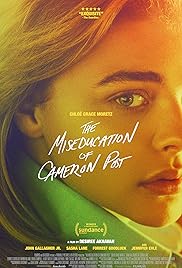
Abuse can take many forms, but not as bad as those suffered by the young orphan girl Cameron Post (Chloë Grace Moretz).  Caught during her prom night making out with another girl (the prom queen) in the back seat of a car by her date,  Cameron Post is sent to be ‘cured’ at a gay conversion therapy camp.  In one scene she is seen hiding under a table sneaking a telephone call home, crying her eyes out because she cannot take the abuse any longer.

Abuse is the worst when it is psychological.  “Isn’t teaching a person to hate herself for being gay self abuse?”  asks Cameron at one point in the film.

Co-written by Cecilia Frugiuele and directed by Desiree Akhavan, adapted from Emily Danforth’s acclaimed 2012 YA novel, “The Miseducation of Cameron Post” is the survival story of this young, spirited, orphaned, small-town Pennsylvanian, forcefully sent the equivalent of a prison camp with no privileges.  The setting is 1993, just after AID’s had taken the world by storm and just before gay rights, same-sex marriage and gay acceptance were the norm.  It is indeed sad to be gay during this period. 

The film has two standout performances by two young actresses Moretz and Sasha Lane (as Jane Fonda).  Why that character is called Jane Fonda is humorously explained in the film.  Lane is immediately recognizable from her last role in Andrea Arnold’s 2016 film AMERICAN HONEY where she earned the title role as a spirited teen.  Of course, she plays another here, but one is is of such independent spirit that she survives the brainwash and helps Cameron stay glued to her sexual orientation.  But it is Moretz from SUPERBAD who steals the show as the vulnerable Cameron who finally sees the way.  She delivers a controlled yet powerful performance, often crying intend of yelling, planning instead of physical retaliation.

Director Akhavan moves her film at a leisurely yet gripping pace.  She understands the power of the story and the gravity of Cameron’s desperation.  She lets her story unfold with all its intensity without resorting to cheap theatrics or dramatic set-pieces except for the one displaying a suicidal’s troubled outburst.  This allows the audience to think and feel for the film’s characters.

The villains at the Christian camp are Dr. Lydia Marsh (Jennifer Ehle) and her visibly oppressed, “ex-gay” brother Reverend Rick (John Gallagher Jr.).  The two of them are smiling all the time making them really creepy.  Dr. Marsh runs the camp with a Nurse Ratchet-like efficiency.

THE MISEDUCATION OF CAMERON POST, a hit when premiered at Sundance ends up a powerful told tale of the triumph of the individual spirit over evil.

Trailer: https://www.youtube.com/watch?v=VEdngvMGjg0

 Submit your Screenplay to the Festival TODAY

Full Review: THE CRESCENT (Canada 2017)

 Submit your Screenplay to the Festival TODAY

The Crescent Poster
Trailer

After an unexpected death in the family, a mother and son struggle to find spiritual healing at a beachfront summer home.

Director:

Seth A. Smith

Writer:

Darcy Spidle (screenwriter)


This horror film from Nova Scotia, Canada has an excellent though slow beginning.  Weird colourful patterns are formed and changed, which seems to flow naturally.   Those who are in engineering or science, will be quick to realize that the patterns follow the Second law of Thermodymanics which state that the entropy of a closed system will always increase towards its equilibrium.  So, is the chaos that affects the mother and young son in the film something that will naturally occur?

The film, after the opening credits and patterns turns to a funeral service where the preacher talks about suffering and pain before coming to a final rest.  The film then focuses on the single mother and young son, and advised by her mother (Danika Vandersteen) than in order to survive: “You have to keep a level head.”  

Smith plays around with sounds effectively as he uses different sizes images to frame his film.  The frame sizes change when showing an image as seen from a window or from Beth’s paintings.  Smith also uses tilted and upside down images, the latter as seen from the reflection of the sea water at low tide as Beth and Lowen (Woodrow Graves) walk along the beach.  The intermittent blaring sound is used at many points in the film.  The sound could be the sound of a ship’s horn as one blaring during a fog or the sound of a house alarm system.  Beth takes out the alarm electronics thinking it to be coming from there but the sounds persists during the night.  Sound is also used to create ambiguity as in Lowen’s baby voice.  The audience would strain to hear what the child is saying as he often mumbles along.  Danika Vandersteen also delivers a memorable performance.

The best thing about the film is the young boy Woodrow Graves’ performance as Lowen.  Lowen is hardly old enough to walk properly, less climb up and down the stair, and is seen throughout the film just mumbling his dialogue like a child.  His humming of tunes, the child-like “Row, row, row your boat,” and utterings like: “Where’s mommy?” are so real and eerie.  It must have taken Smith (Graves is his son) quite a while to film the boy’s abilities.

The actually ghosts first appear at the one hour mark into  the film.  For those who love their horror violent and gory, they might have to wait a while, but the blood parts do occur.  Most of the weird puzzles are also explained by the end of the film, though a few more are introduced.

Smith’s film might be a bit too slow paced for the typical horror film.  But THE CRESCENT more than makes up for it in terms of atmosphere and ecstatics.  Normal horror fans will also not be too happy at this too arty piece of work that looks too smug for its own good.

Trailer: https://www.youtube.com/watch?v=Bji7jatpHqA

 Submit your Screenplay to the Festival TODAY

Film Review: PUZZLE (USA 2018) ***1/2

 Submit your Screenplay to the Festival TODAY

Puzzle Poster
Trailer

Agnes, taken for granted as a suburban mother, discovers a passion for solving jigsaw puzzles which unexpectedly draws her into a new world – where her life unfolds in ways she could never have imagined.

Director:

Marc Turtletaub

Writers:

Polly Mann (screenplay by), Oren Moverman (screenplay by) | 1 more credit »


As PUZZLE opens audiences to the world of jigsaw puzzles, PUZZLE opens the world of taken-for-granted housewife, (I work at home too, she says), Agnes (the wonderful also under-utilized Scottish born Kelly Macdonald) into a world of self discovery.

It all begins at her birthday party where husband Louie (David Denman) breaks a plate that she glues the pieces back together.  She is given a 1000-piece jigsaw puzzle which she puts together again and again.  She discovers this hidden passion and leaves the house in Bridgeport, Connecticut to buy another where she learns that a mother puzzle solver wants a partner for a competition.  She travels twice a week without her family knowing to Manhattan where she meets Robert (Irrfan Khan), a wealthy recluse and together put together jigsaw puzzles in record time.  

At the same time, Agnes finds her life unfolding in ways she could never have imagined.

Director Turtletaub directs this delicate tale of a housewife’s self-discovery from a script by Oren Moverman and Polly Man based on the Argentine movie Rompecabezas by Natalia Smirnoff.  The film is dedicated to Turtletaub’s mother who we would think would also have been an under-appreciated mother.

Turtletaub’s only other directorial feature was GODS BEHAVING BADLY, a flop with negative reviews.  PUZZLE proves his worth given a second chance.  He is described to shoot with only a few takes allowing the actors to deliver their own interpretation of their roles allowing the film to be fresh.  True to what have been described, the performances are honest, fresh and occasionally powerful.  Macdonald (GOSFOD PARK), always an excellent actress, discards her British/Scots accent for an American role.  Macdonald is the one reason to see this moving story.  She is perfect even in he looks for the role.  At times, looking like a simple housewife, she can also look radiant, especially in the scene where she lying on the grass, the camera right above her when she talks to Robert on her cell phone.  Of the supporting cast, the young unknown Bubba Weiler stands outs Agnes’ elder son, Ziggy who does not get accepted to college and is stuck in a dead end job he detests working for his father in the auto shop.

The film’s best scene has the two of them Agnes and Ziggy having a heart-to-heart talk one evening.  It is a candid one whee they share unexpectedly each other’s secrets.  The shocking question Ziggy asks his mother is why she has not left his father.

The film has a neat spill on coincidences.  Agnes believes that there is a reason things happen as in the train where “Ave Maria” is sung to the words, “Tea, Maria” uttered by Robert.  Robert on the other hand believe that these are are coincidences.  The metaphor of the jigsaw puzzle as life is therefore quite obvious.  The jigsaw is a puzzle where the wrong pieces can be put right whereas life’s puzzle might not be solved in the same manner, as the film proves.

As expected, the family eventually learns what Agnes is up to.  She gains her independence and there is a neat ending as to what on she eventually decides on doing.  A housewife’s fantasy that audiences can relate to, thanks to director Turtletuab 

Trailer: https://www.youtube.com/watch?v=wl_SoMNi0rw

 Submit your Screenplay to the Festival TODAY