Film Review: HENCHMEN (USA/Canada 2018)

In a world of super-villains, evil schemes and global domination, someone has to take out the trash. Welcome to the world of Henchmen, third class. When a fresh-faced new recruit joins the … See full summary »

Director:

Adam Wood

Writers:

Bobby Henwood (additional writing), Jay D. Waxman | 1 more credit »


HENCHMEN, based on the short feature HENCHMEN III: SUITED by writer/director Adam Wood is now a full blown feature length Canadian/American co-production.  The film is produced by Vancouver’s (Burnaby) Bron Studios in association with CW Media Finance.  In the world of dog eat dog or animation studios eat animation studios industry it must be a tough try for Bron Studios competing with studios like Disney, Sony, Illumination and even Japan’s Ghibli Studios and Britain’s Aardvark Studios.

The film begins in the real world where a student on the way to school on a school bus fantasies while reading a comic book.  He hates it when the superheroes win (even though in the comic, they are ridiculous as girly twins) over awesome villains like Dr. Shark Hands.  As most lonely individuals do, they lean towards the dark side.  Lester (voiced by TV’s SILICON VALLEY and the film ENTANGLEMENT) dreams of becoming a super villain called The Orphan which he invents himself.  The orphan has no family, no friends, no one.  He waits to become of age to become an apprenticeship villain in Super Villain City where he hopes to become a fellow henchman.

.A fallen henchman named Hank (James Marsden) leads a team of Lester and two others, called the “Union of Evil”, who must prevent Baron Blackout (Alfred Molina) from dominating the world. The crew are assigned to the Vault of Villainy, where Lester accidentally steals the ultimate weapon.

The twist in the genre of bad against good is a good distraction but one soon realizes that good has to overcome evil as Lester eventually saves the world against Baron Blackout.

The film’s humour is funny but also silly at times.  “Any ‘baddie’ home?” and the constant rendering of the villain’s manic laughter on the soundtrack are examples.  The funniest segment is the one with the villain in a tub out to destroy the good guys with his molten radioactive cheese, his mouth always overflowing with guck.  Other sequences contain slapstick antics, but most come across as humourless in its execution.  Think JOHNNY ENGLISH STRIKES AGAIN.

The animation is not bad but not of the Pixar/Disney calibre, looking like something out of the old Tex Avery cartoons.  HENCHMEN is comic book fare which means the animators need not go all out for realism like animating water, fire and shadows.

HENCHMEN like the TOY STORY films are targeted at male kids.  The film clearly lacks female content.  For one, there is only one female in the cast – that of Jane Krakowski as Jane.  The story also contains no romantic element.

One cannot help but notice that Bron Studios and Wood with his crew of animators and artists have put in super effort and worked very hard for their animated feature HENCHMEN.  The project itself was started in 2015 and took 4 years before completion.  But unfortunately the results are mediocre. 

Trailer: https://www.youtube.com/watch?v=fo2Rze_W1uE

henchman post.jpg

Film Review: ALMOST ALMOST FAMOUS (USA/Canada 2018) ***

On a road trip through an alternate universe, where Elvis Presley and Roy Orbison never die, Almost Almost Famous explores the lives of three of the world’s top tribute artists, the cost of… See full summary »

Director:

ALMOST ALMOST FAMOUS is a documentary that explores the lives of three of the world’s top tribute artists, the cost of borrowed fame and the risk of getting ‘lost in the act’.  The film title is derived from a similar road trip fictitious film, Cameron Crowe’s famous autobiographical ALMOST FAMOUS about a young Rolling Stone journalist following a band on their road tour.  The journalist lost his virginity, fell in love and lived with his heroes.  Despite the similar title, ALMOST ALMOST FAMOUS is about the touring artists.

The film feels as if it is set in an alternate universe, where Elvis Presley and Roy Orbison never die.  Fifty years after trailblazers like Elvis Presley, Jerry Lee Lewis and Jackie Wilson defined music as is known today, three world-class tribute artists (or impersonators) carry on their legacy.  The film follows the artists as the mature and grow older and discover that once they reach a certain age, they are too old to impersonate their tribute artists.   The film looks at what happens to them when borrowed fame begins to lose its charm.

The first person introduced is the tour manager Marty Kramer.  Marty is an impatient man and reasonably so.  He has to ensure schedules are kept and has to babysit the often spoilt rotten performers.  He is 67 years old and has been in the business for over 50 years.  Director Lank introduces him before ditches him for a good reason. He is a wet blanket and he does not want his film dragged down with negativity.

The three stories are of Texas rockabilly musician Lance Lipinsky as Jerry Lee Lewis, Las Vegas-based R & B singer Bobby Brooks as Jackie Wilson and the “Elvis from Orlando”, Ted Torres on their “Class of ’59” cross country road tour.  From the beer joints of Texas to the Karaoke bars of Honolulu, the film explores how three incredibly talented singers wound up paying the bills as tribute artists. 

Ted Torres is happy to play the young Elvis forever but he is getting older.  The film reveals the amount of time that needs be spent on Elvis make-up.  The number of Elvis impersonators is staggering.

Bobby Brooks does Jackie Wilson.  Unknown to him after visiting Jackie’s family and getting his DNA tested, he discovers he is Jackie’s real son.  His performances are so like his father’s.

Of the three, Lance Lipinsky is the most charismatic performer, his solo performance used by Lank to bookend his film.  He is also the most problematic to the manager, Kramer who claims that Lance has no friends.  Not true as he has a dedicated girlfriend and ambition to hit it big with his own music and that his own band, The Lovers, will make it big one day.

The common element of the three stories is the desire to perform and entertain while worried that their job will not last forever.  There is no real insight to the lessons in life on display here, just the use of survival common sense.  The most exciting segments of the doc are expectedly, the lively performances.

Trailer: https://vimeo.com/275137043

Film Review: THE QUAKE (Skjelvet) (Norway 2018)

The Quake Poster
Trailer

In 1904 an earthquake of magnitude 5.4 on the Richter scale shook Oslo, with an epicenter in the “Oslo Graben” which runs under the Norwegian capital. There are now signs that indicate that we can expect a major future earthquake in Oslo.

It was not too long ago, back in 2015 when director Roar Uthaug broke Norwegian box-office record with his disaster movie THE WAVE.  THE WAVE to me was a disappointment after hearing all its hype before reviewing the film.  THE WAVE played like a poor Hollywood blockbuster disaster movie – similar to films like TOWERING INFERNO, TWISTER,  EARTHQUAKE and countless end of the world films.  It was cliche ridden, predictable and unbelievable.  It is bad enough when Hollywood remakes foreign films and even worse when foreign films imitate Hollywood successes.

THE QUAKE feels no different.  It is touted as a sequel to TH WAVE and it is understandable why.  THE QUAKE hopes to cash in on the success of the former film.  

But the film has some true past fact.  In 1904, an earthquake with a 5.4 magnitude on the Richter scale shook Oslo.  Its epicentre was in the Oslo Rift, which runs directly through the 

Norwegian capital.  There are recorded quakes from the rift on a daily basis.  No one can say for sure, but arguments indicate that Oslo, with its density and infrastructure, is significantly more vulnerable today than in 1904.

One plus of the film is that the film does a big benefit for the Norwegian tourism.  I have visited Norway twice (the most beautiful country I have ever visited) including Oslo, the capital and the fiords.  Both are presented in all its glory.  There is a segment with a barge travelling along the wages between high vertical cliffs and another with shots of ultra-modern Oslo.  The country begs another visit after viewing the film.

Th story for THE QUAKE takes place three years after geologist Kristian (Kristoffer Joner) saved many lives from the tsunami.  Although hailed as hero in the media, Kristian

is haunted by the event.  He still lives in Geiranger, a town just outside Oslo, now separated from his beloved wife (Ane Dahl Torp), daughter (Edith Haagenrud-Sande) and son (Jonas Hoff Oftebro) who relocated to Oslo.  But his life is interrupted when a fellow geologist dies in the Oslofjord Tunnel.  Upon investigating, Kristian is convinced (of course, and no one believes him of course) that his friend was on to something.  An earthquake is about to hit Oslo – and it could kill thousands, including Kristian’s family.  Off goes Chicken Little to the rescue when he is proved right.

The quake begins 40 minutes to the end of the film.  It should have started earlier as the film up to this point is unbearable to watch.  Cliche is piled upon cliche with director Andersen stealing from Hollywood films of the disaster genre from CLOSE ENCOUNTERS OF THE THIRD KIND ( an unkempt Kristen looking just like a hazed, unkempt Richard Dreyfuss) to MINORITY REPORT (the image of Tom Cruise with the actress playing his daughter looks all to familiar).  He keeps the suspense till past the film’s half way mark, again a tactic already used too often in films like Hitchcock’s THE BIRDS and Spielberg’s JAWS.

When the disaster finally happens, it is CGI all the way (that looks at least quite real).  Andersen resorts to a few violent segments (a woman being dragged from block of concrete that fallen over half her lower body) to increase the tension.  From toppling skyscrapers, to shattered glass, to tilted floors that send humans sliding into space, nothings have on display have not been done before.  With the the same actors playing the same family at the centre of the story, credibility has been pushed past its limit.  The climax centres on these few people.  Where are the rest of the city folk?

Trailer: https://www.youtube.com/watch?time_continue=8&v=T1c8KTIKD5E

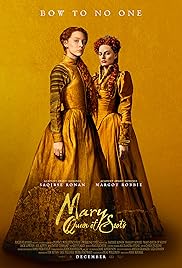
Film Review: MARY QUEEN OF SCOTS (USA/UK 2018) ***1/2

Mary Queen of Scots Poster
Trailer

Mary Stuart’s attempt to overthrow her cousin Elizabeth I, Queen of England, finds her condemned to years of imprisonment before facing execution.

Director:

Josie Rourke

Writers:

Beau Willimon (screenplay by), John Guy (based on the book “Queen of Scots: The True Life of Mary Stuart” by)

MARY QUEEN OF SCOTS is yet another historical drama made on Queen Mary this time around, updated with strong feminine content and with more openness regarding sexual orientation.  The film is directed by Josie Rourke and adapted by Beau Willimon based on John Guy’s biography My Heart Is My Own: The Life of Mary Queen of Scots.

The centre of the story is the 1569 conflict between their two countries and the two queens Mary (Saorise Ronan) and Elizabeth of England (Margot Robbie).

Both ladies Ronan and Robbie deliver outstanding Oscar worthy performances that keep the film an intense drama.  Ronan has matured from playing teen characters as in ATONEMENT,  LADY BIRD, BROOKLYN and HANNAH.  Her Irish accent still comes across in her dialogue causing a slight distraction.  Their confrontation scene is the highlight of the movie, though it was believed the two never met in person.  The excuse: “No one must know that we have met together,” as on queen says in confidence to another.

The film updates the feminist movement with Mary insisting that no male shall tell her or Elizabeth what to do.  Mary is always shown in control, especially over her often drunken husband, Lord Darnley (Jack Lowden).  The film also shows Mary not only a strong individual and queen but a determined and always correct one in her decisions.  It helps that the film is directed by a woman.

Though the film contains a few battle scenes, this is not an action picture.  In fact, it is a strong female film, but one of those rare films that can also be enjoyed by both sexes.  In one moving scene a humble male subject confesses that he would gladly lay down his life for his queen.  Mary replies that in heaven, all will be equal.  Action is substituted by high royal drama, as the too queens plan the future of their Kingdoms.  Queen Elizabeth is unable to bear children.  If Queen Mary bears a male boy, after married to an English protestant, her son will rule that will unite both Scotland and England.  But Mary is quick to point out that when they are both dead, it does not matter who rules.

The film is a handsome period piece that comes complete with stunning Scots landscape (cinematography by John Mathieson) and top royal costumes (especially the wardrobe of the two queens).  Elizabeth looks sufficiently nasty with her red hair as did Glenda Jackson when she played that part in the 70’s.

A brief history lesson at the end of the film explains a few facts that puts this story into historical perspective.  It is mentioned that Elizabeth was the daughter of King Henry VIII and Anne Boleyn (as popularized by Charles Jarrott’s film ANNE OF THE THOUSAND DAYS) who was beheaded for not bearing the King a male child.  The film also goes on to reveal that Richard, the son of Mary eventually ruled England and Scotland while Queen Elizabeth continued her rue for 14 years.

Christmas season often seems a better quality of films, and MARY QUEEN OF SCOTS, that has so far garnered positive reviews, marks a solid royal drama that I have not enjoyed since Anthony Harvey’s THE LION IN WINTER (the counterpart male royal drama).

It should be noted the film’s inaccuracies that will mislead audiences.  Historians insist that the two queens never met, were never cordial as friends and Mary never had a Scots but a French accent.

Trailer:  https://www.youtube.com/watch?v=wnqjSgMU36U

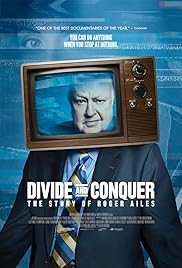
Film Review: DIVIDE AND CONQUER: THE STORY OF ROGER AILES (USA 2018) ***1/2

Divide and Conquer: The Story of Roger Ailes Poster
Trailer

A documentary that explores the rise and fall of the late Roger Ailes from his early media influence on the Nixon presidency to his controversial leadership at Fox News.

Director:

Alexis Bloom

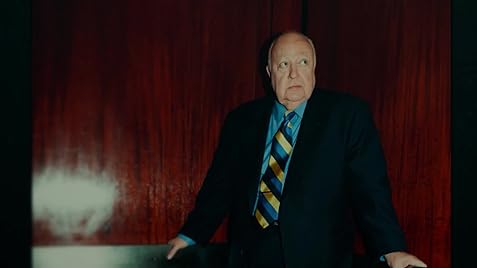
Alexis Bloom’s Divide and Conquer: The Story of Roger Ailes is a timely documentary (in the era of all the sexual abuse allegations) that charts the rise and fall of the late Republican Party booster and controversial Fox News mogul, Roger Ailes who crashed amid multiple sexual harassment allegations.

Roger Ailes is first shown in the doc as an elderly successful man.  Director Alexis Bloom quickly and very efficiently brings the audiences up to date to what they are in store for.  A big scandal.  The audiences is shown Ailes as a kid and young man with old photos and a voiceover that updates the audience that Ailes was a very handsome young man, full of wit and humour.  

As what good filmmakers do, Bloom connects the audience with the film’s subject.  Bloom creates a doc difficult to dislike by carefully crafting her subject as a bully, womanizer, sexual abuser, racist and all-around bloody bastard and then recording his deserved downfall.

Bloom first reveals the insides Ailes as a child.  Ailes had inherited an illness, haemophilia (the inability of the blood to clot) from his mother and was a walking time bomb.  Because of this fear, the audience is told, Ailes could see the fear in people.  The audience is given a lesson on the cunning of Ailes, how he stole the producer-ship of The Mike Douglas Show and how he became media advisor for Richard Nixon enabling him to win the Presidency.  The same can be said for why he did for other Senators and Presidents elected.  “Without him (Ailes) they would not be there,” is what one interviewee says of Roger Ailes.

  The film is quick to point out the success of the man.  For 50 years, Roger Ailes heavily influenced Republican politics – from shaping Richard Nixon’s image for the 1968 

election (through a series of televised events, whose camera angles were borrowed from Leni Riefenstahl’s 1935 Nazi film Triumph of the Will) to steering the conservative movement 

towards George H. W. Bush, the Tea Party, Donald Trump et al.. 

Bloom drops the bomb right at the film’s half hour mark.  Interviewee Marketing Consultant Kellie Boyle describes in detail how Ailes came onto her and destroyed her career when she refused in her words; “to lay with the big boys.”  The film’s best segments are the testimonies given by Ailes’ accusers.

Backed by Rupert Murdoch, Ailes also started Fox News and turned it into a juggernaut, with profits exceeding those of all its rivals combined.  Discarding notions of traditional journalism, he offered up flame-throwing TV.  Short skirts and low necklines mesmerized the audience – and, as long as Fox made money, there was little oversight of his fiefdom.  Under his tutelage, anger and fear became the norm, both on the ballot and on national television.  He is as one aid claimed – ‘more important than America’.

Alexis Bloom is a double Emmy nominee for the documentary Bright Lights: Starring Carrie Fisher and Debbie Reynolds.  Bloom is in the big league of doc filmmakers with Alex Gibney serving as executive producer for this film.

The doc opens at the Ted Rogers Cinema and is also available VOD on December the 7th.

Trailer: http://www.mongrelmedia.com/index.php/filmlink?id=f8a03648-11c8-e811-944c-0ad9f5e1f797#trailersection

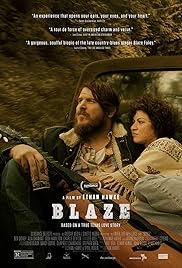
Film Review: BLAZE (USA 2018) ***1/2

Blaze Poster
Trailer

The life of musician Blaze Foley.

Director:

Ethan Hawke

Who is this American country and western singer called BLAZE?  For one, he is not that famous that many have heard of him.  Blaze Foley (played by non-actor Ben Dickey) is supposed to be the one that blazed (pardon the pun) the way for Willie Nelson.  And why would actor Ethan Hawke make it his ambition to direct his biography and co-write the script with his girl Sybil, based on her book?  That could be the very reason Hawke decided to do it – that Blaze was that ordinary a person.  To Hawke’s credit, as much as I am a non-fan of country music, BLAZE is a remarkable piece of work, one that comes across as a sincere warts and all tale of Blaze Dexter.

The film interweaves three stories into one.  The first is Blaze’s love affair with Sybil, the second of his songs as he performs around the country and at his home bar, often not that successfully and the third is the story told by his two buddies after his death.  The latter is told from an interview conducted by Hawke himself, his back to the camera and him smoking away just as all the characters in the bio do.  Hawke has created the total character of his subject showing both his ease at creativity as well as the demons haunting him, that include his drinking.  He smashes the guitar that Sybil saved her money up to get for him in one self-destructive act after being being thrown off stage for insulting the audience.  It is his love, loneliness, creativity, insecurity and self-destructiveness that make up a life wonderfully created by Hawke on screen.

Are his songs good?  Well the genre is country western, but Blaze’s songs (there is rendering of songs like “If I Could Fly”) are at least decent, though one can hardly tell from the film as Blaze plays to empty bars most of the time.

The film contains messages in terms of life lessons subtly dished out to the audience.  One can be learnt from the way Blaze died – by taking a bullet in the stomach after intervening with the son who stole his father’s security check.  When asked whether he wants to be a star, Blaze says no, that he wants to be a legend.  He tells to his girl seriously but smiling while they hitch a ride at the back of a pick up, ‘a star shines for himself; a legend is forever and for things that matter.”  This is one of the film’s very poignant and effective moments, that captures the spirit and genius of Blaze, a man so casual that his insight passes through you.

The real BLAZE can be observed in the reading aloud of a heartfelt written letter he writes to Sybil, telling her of his love for her and his true feelings about his music.

Hawke captures the drama in the man’s life – the difficulties of both his relationship with Sybil and his performances.  One of the film’s most amusing scenes is Blaze’s encounter with an offer by three record label’s representatives played by Richard Linklater, Steve Zahn and Sam Rockwell.

In the end, Hawke’s non-judgemental bio leaves the audience to make up their minds on whether Blaze Foley was a loser with no money or a cool guy.  Legend?  I don’t think so.

Trailer: https://www.youtube.com/watch?v=sXvwFdTTwhI

Film Review: THEY SHALL NOT GROW OLD (UK 2018) ***** TOP 10

They Shall Not Grow Old Poster
Trailer

A documentary about World War I with never-before-seen footage to commemorate the centennial of the end of the war.

Director:

Peter Jackson

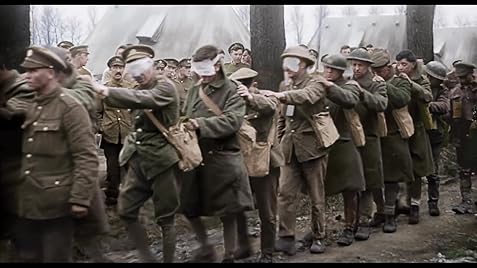
Un-reputedly the best documentary of 2018,  hands down, THEY SHALL NOT GROW OLD arrives right between Remembrance Day and Christmas, an appropriate time for good cheer to celebrate the heroism of man, less we forget.  The setting are the front lines, as the closing credits proudly declare – shot on location on the Western Front between 1914 and 1918 during the First World War WWI.

The film was created using original footage of World War I from the Imperial War Museums’ archives, most of it previously unseen, alongside audio from BBC and IWM interviews of British servicemen who fought in the conflict.  The first 30 minutes  of the film is black and white, turning then into colour,  with most of the footage colourised and transformed with modern production techniques, with the addition of sound effects and voice acting to be more evocative and feel closer to the soldiers’ actual experiences.  The film is in 3-D.

But the film is clearly not a recounting of events.  The film reveals the unforgettable riveting experiences of the common soldier as seen from the eye of the common soldier, many not old enough to be recruited to fight but were passed through the enlistment lines anyway, as the British had a duty to perform.  Jackson’s crew reviewed 600 hours of interviews from 200 veterans, and 100 hours of original film footage to make the film.  The title was inspired by the line “They shall grow not old, as we that are left grow old” from the 1914 poem “For the Fallen” by Laurence Binyon, famous for being used in the Ode of Remembrance.

The documentary captures a capsule of the great or disastrous war, depending on how one sees it, as fought in the trenches.  The last British war film set in WWI trenches was JOURNEY’S END last year, that film based on a famous British play.  I admired that film for reminding the world what fighting did to men but a fellow critic complained that, that film did not reveal anything new.  The same argument might be applied to Peter Jackson’s labour of love and duty, but the effort is a worthy cause, for human beings need to be reminded both the horrors of war and the heroism of men.

But it is not one man’s or a few men’s stories.  It is the story of all the men as the footage covers the all the infantrymen in the front lines of the Western Front.  The footage follows the young men, mostly from recruitment to training to fighting to return after the war.  After the war, these heroes had their feel of redundancy as human beings being out of work in unemployment.  Job signs would shamefully read: “Servicemen need not apply’.  Civilians had no clue what the war was all about.

These are the words that are heard on the soundtrack at the film’s beginning before the soldiers went to fight – a variety of words that emotionally describe all aspects of emotions on the war!

job that needed to be done

take it in stride

rough but did not complain

nothing really exciting 

like a boy going out to play

good and bad days

I was only a kid

like a game

going to be over in a few days

             Jackson then puts the viewer into the training and then right into the war.  Reality sets in.  The film contains vivid scenes with rats and corpses lying around.  The horrid yellow colour of mustard gas can almost be tasted.  The sight of young German soldiers, when they were captured, look no different that the British lads.  The segment of one German soldier speaking English to his English captor, saying “I used to work as a waiter at the Savoy’, moved me to tears.

The film ends with black and white credits listing all the soldiers who lent their voices to this doc.  The famous WWI song “Mademoiselle from Armentieres,” often sung by WWI-era soldiers is heard on he soundtrack to complete the viewer’s total experience.

If there is only one film you see this year THEY SHALL NOT GROW OLD should be it.  The film opens December the 17th and widely on December the 27th in Toronto!

Trailer: https://www.youtube.com/watch?v=fGaDOpKbyVA

Film Review: SUPERGRID (Canada 2018) **

SuperGrid Poster
In a future where a plague has infected much of the population, two brothers are tasked with traveling to Canada to retrieve a mysterious package.

Director:

Lowell Dean

The Grid is a highway through post-apocalyptic Central Canada from the U.S. Border to the Northwest Territories.  It is the setting of this futuristic dystopian film that lays like a MAD MAX  FURY ROAD wannabe.  The film unites the crew of the successful WOLFCOP films.

Watching SUPERGRID increases ons admiration for FURY RAOD’s director Australian George Miller.  The classic is hard to imitate.  In SUPERGRID, unlike in Mad Max where every character is tough desperate and angry, every character in SUPERGRID just stands around trying to look tough.  They carry lots of weaponry are are not afraid of using them.  They spew out mean words with cussing, often threatening each other to no end.

The film cents on two estranged brothers, Jesse (Leo Fafard) and Deke (Marshall Williams) who must travel the notorious “Grid” to collect and deliver a mysterious cargo.  Deke is the good-looking one while the scruffy Jesse has more anger to contend with.  In the middle of the movie, Jesse’s ex girlfriend shows up to help, among the situation more intense. They have failed in the past and they do not like each other.  Cliche and no surprises in plotting here!  The job is supposed to be their last detail.  Why?  No real reason is given and one knows that they will always be forced to make another one.  As in the case of the story that the brothers have to survive one last run.

SUPERGRID is quite an intense and serious film for a totally escapist actioner.  The script’s only funny parts are Deke’s one-liners and these are the most unfunny one-liners written in an action film this year.  One would imagine that at least one of the two script writers T.R. McCauley and Justin Ludwig cold have come up with something remotely funny.  Not only does the future look bleak, but one thing after another keeps going wrong for the brothers.

The film’s production sets, containing largely of trash, broken walls and sparse landscape are convincing enough.  The film aims for a MAD MAX look and the film looks it, being shot in the open sparse plains of Saskatchewan, Canada.  The special effects are all right and the action sequences passable.  But there are no fantastic panoramic shots of riders or car chases in the vast desert as in the MAD MAX films.

The film at least looks like a proud Canadian production, deserving of Saskatchewan  fundings. It uses the landscape of Saskatchewan.  The film also features the province’s indigenous people in the casting

The brothers are not told what the cargo they are picking up, not that anyone cares.  The brothers also encounter a lot of weird characters at the U.S. Canada border who demands sachets of water.  All the apocalyptic events are vaguely explained resulting in a scenario that one can hardly be sure of.

SUPERGRID would have resulted in a better film if the filmmakers put in the same effort to connecting the audience to the story and characters as they did in creating the film’s look and atmosphere.

Trailer: https://www.youtube.com/watch?v=-5XHdmQuSkk