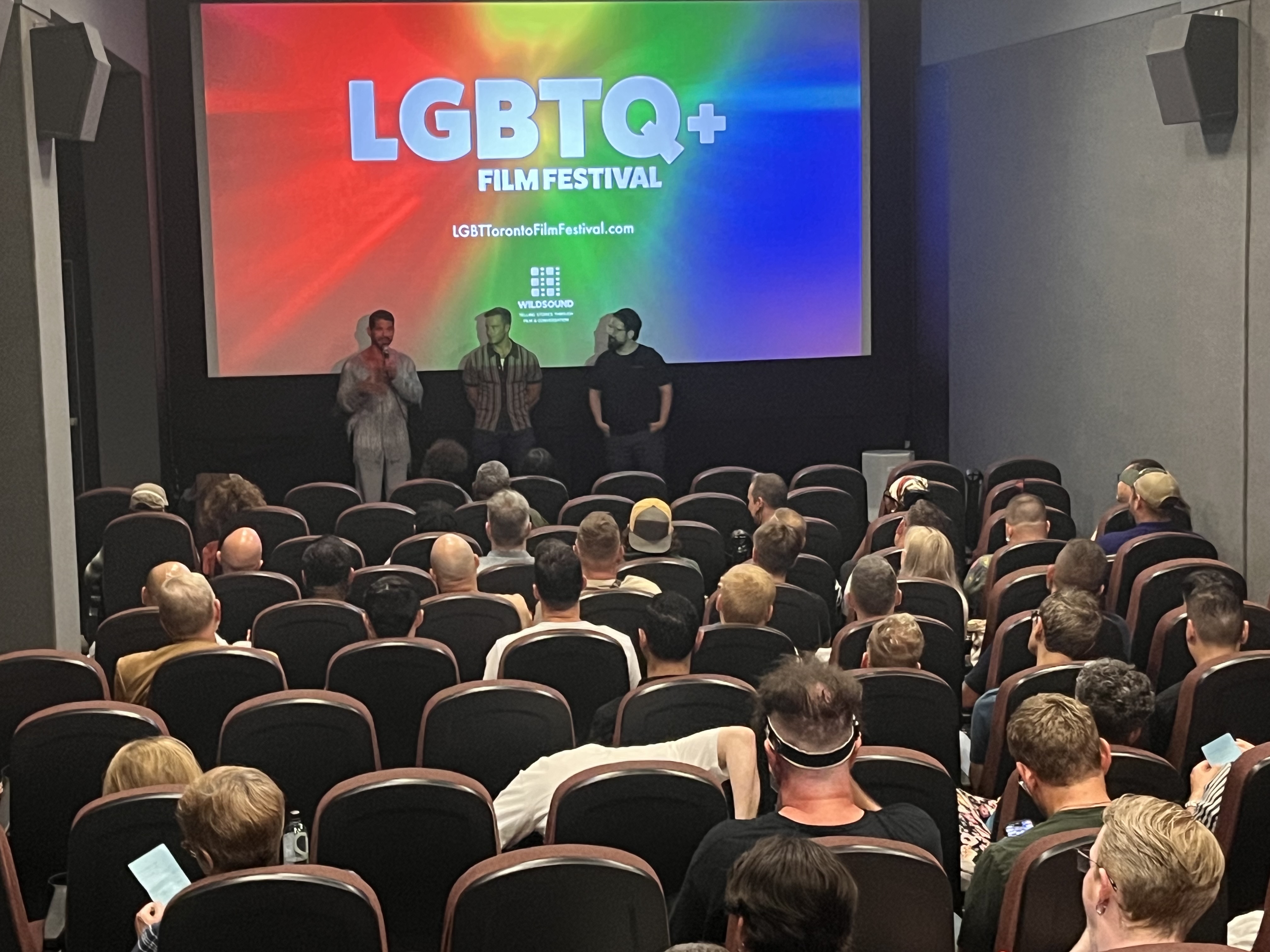
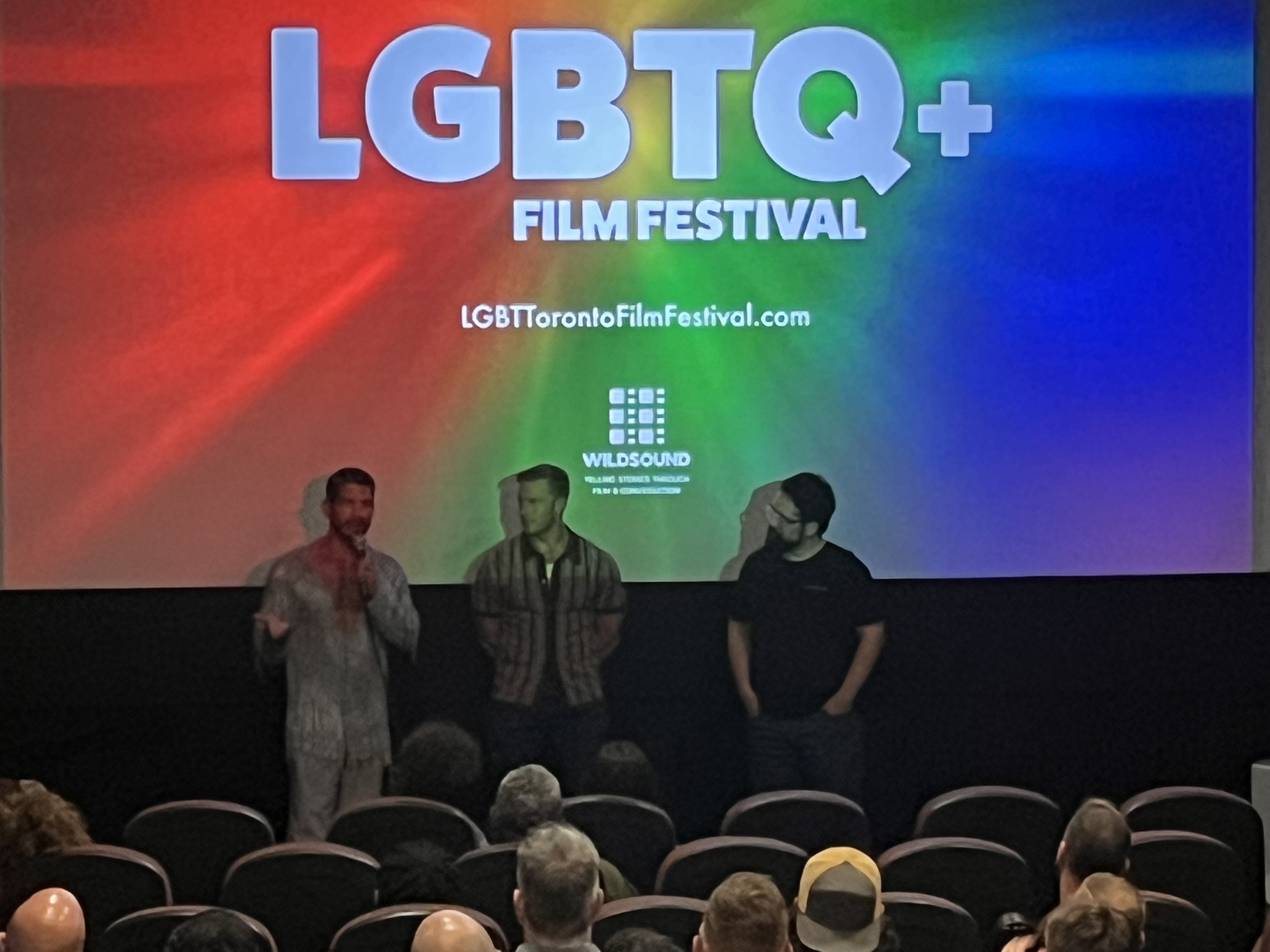
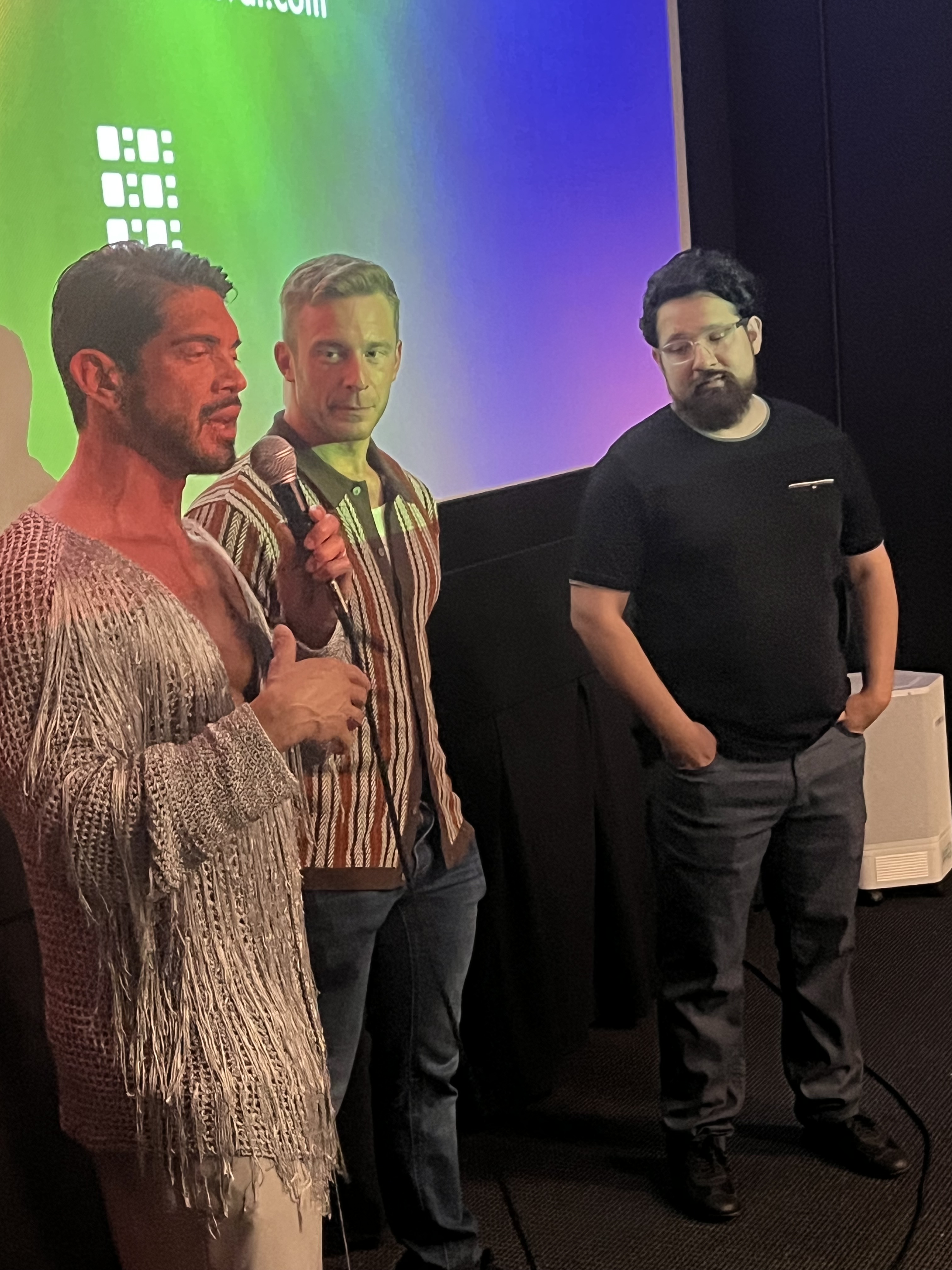
STAYCATION, 93min,. USA Directed by Russell Emanuel How is the world affected by a catastrophic event? Everyday people live through a government mandated quarantine during a global pandemic while desperate scientists race to find a cure before it’s too late.
Dear WILDsound FEEDBACK Film and Screenplay Festival,
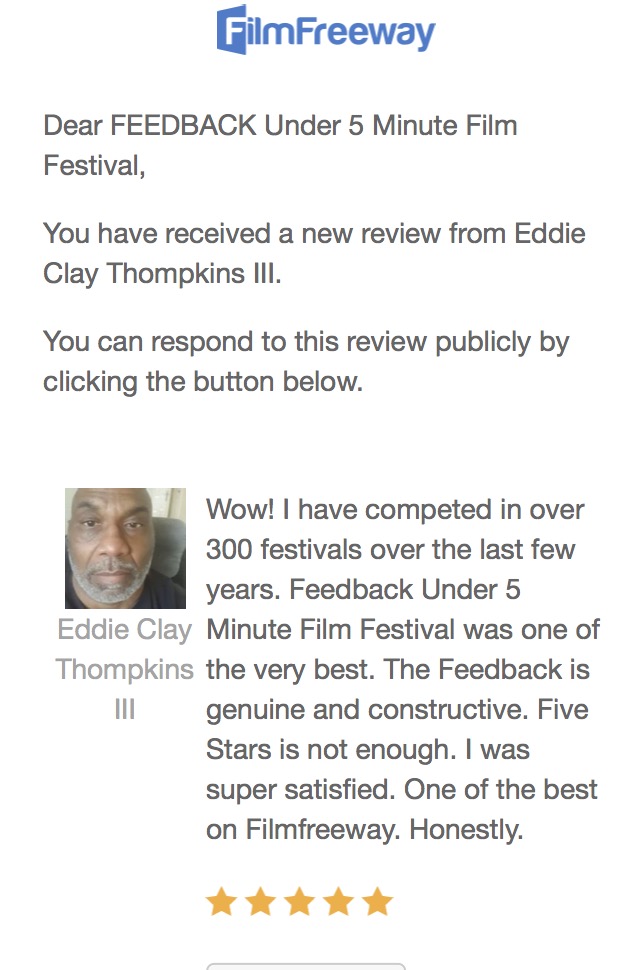
Congratulations! Your festival has ranked as one of the Top 100 Best Reviewed Festivals on FilmFreeway for the month of June!
According to reviews from real FilmFreeway users, your festival ranks in the top 1% of more than 14,000 film festivals and creative contests around the world. No doubt, this ranking is a testament to the countless hours of hard work and care that you and your staff have devoted to creating such a wonderful event.
We’re especially proud to be partnered with amazing events like yours that help independent film continue to thrive.
David Hackl was the production designer and second unit director for Saw II, Saw III and Saw IV, as well as for Repo! The Genetic Opera. He then went on to direct Saw V to critical and financial success. R
I was fortunate to sit down with David to talk about his career and what’s next:
Matthew Toffolo: You have worked in the Art Department and Directed over 25 films, is there a film or two that you’re most proud of?
David Hackl: I’m very proud of the Saw franchise and feel grateful to have had the opportunity to work on it. It a piece of cinema history now. I also have a real fondness for Outlander as it was one of the most epic projects that I’ve done. I had to research it like crazy and learn everything about viking architecture, culture, weaponry etc. We had to build everything, weaponry and huge sets that included a viking village with 22 buildings and an 80 foot Viking ship that was fully practical. The craftsmanship from the whole crew was outstanding in every department. I’ve always loved viking stories and would love to direct a viking feature now.
PHOTO: Still shot from the film OUTLANDER (2008):
MT: Tell us about your first Production Designer assignment in “Jerry and Tom”. Kind of an underrated film with a lot of camera movements and set/scene transitions. Some very inventive cinematic designs too. How did you get that assignment? Would you agree that this film really jump-started your career?
DH: “Jerry and Tom” was a fantastic first experience as a Production Designer. I had been designing and directing commercials for 10 years by then but I wanted to get into long format. I’m good friends with Saul Rubinek and we were location scouting another film when he told me about Jerry and Tom and I said “that should be your first film”. The story was written by Rick Cleveland (West Wing, Six Feet Under, Mad Men, House of Cards) and it sounded so great. The film we were on fell apart but then Saul called and said the Jerry and Tom was green lit.
We wanted to create a visual signature for the film and Saul brought up the idea of transitioning between scenes seamlessly rather then cutting. I loved what they did in Red Rock West and I took the idea and ran with it. The crazier an idea was the more Saul wanted to do it. So I wasn’t going hold back. I was thrilled to work with suck a stellar cast (Charles Durning, Ted Danson, William H. Macy, Sam Rockwell, Joe Montegna) and I think I wanted to show off a bit. It’s definitely an underrated film, though when I look at it now it seems so dated.
PHOTO: Still shot from JERRY AND TOM (1998):
MT: What is the biggest difference when Production Designing a TV series in comparison to a feature film?
DH: When you’re production designing a TV series everything tends to move a lot faster and on a shorter timeline then features. I love the pace of TV and the fact that you plough through so much work. I’m very comfortable with working fast and I’ve always been lucky to have great teams to support me. Features, on the other hand, give you the chance to develop ideas more,not because you have so much more time but because you generally start with a more solid script and singular focus. But both features and television are starting to feel similar on all aspects.
I love the more cinematic quality of television we’re seeing where the bar is getting raised constantly.
MT: How would you describe your SAW experience in one sentence?
DH: Wow that’s tough, one sentence? Working on the SAW franchise was fantastic creative challenge.
MT: What was the biggest thing you learned when you directed your first film SAW V?
DH: I learned how frigging hard it is to direct a feature. As a production designer you often have people lined up at your door to ask hundreds of questions a day. But as a director it’s more like a thousand questions. Designing is a good place to prepare yourself for directing and my directing now informs my PD work better as well.
PHOTO: Meagan Good in the film SAW V:
MT: From an outside perspective, the SAW franchise seemed to work like a corporation. Someone creates an idea, then as you grow people at the top move onwards while the key production heads move up the ladder of responsibility. Gaffer to DP. Art Director to Production Designer. Production Designer to Director (YOU). They really helped the growth of a lot of careers. Is this a true assessment?
DH: It’s true SAW gave a lot of people wonderful opportunities but I don’t know if that was a strong intention as much as a next natural progression. I think the producers felt more comfortable about keeping it in the family and it was certainly a nice gesture of gratitude. We all had such a great shorthand that it seemed to make sense to keep it in the family.
MT: Some argue that SAW V is the best of the franchise. Is there a reason why you didn’t direct SAW VI?
DH: I was originally in talks to direct Saw IV but the very day they called to make me and offer I had just found out my wife had cancer. (She’s clear and great now) But the producers suggested that I direct Saw V and VI instead. But after Saw V Kevin Greutert was keen to direct one and rightfully so. He had edited every one of the Saw films from the beginning. Few people knew the franchise better then Kevin. At the same time the producers decided to do a 3D Saw film and asked me to direct it. They asked me to stay on for the whole year and learn everything there was about 3D filmmaking and how we could best use it on a Saw film. Unfortunately 3 days before we shot SAW 3D the producers exercised my pay or play deal bumping me off the picture and exercised their 2nd picture option with Kevin Greutert forcing him off Paranormal Activity 2 when it was announced that it was going to open the same day as Saw 3D.
Welcome to directing!!
MT: What are you currently working on?
DH: I’m busy building a slate of films for my company with a few optioned novels and scripts for both TV and features. I’m writing a lot and working with writers, which I love. I’m also pushing hard to move into television directing.
MT: What film, besides the ones you worked on, have you seen the most times in your life?
DH: That’s easy. Apocalypse Now and Bladerunner. My two favourites films
MT: What is the future of the horror franchise?
DH: If you’re asking about SAW 8: Legacy it’s coming. Writers were just announced. I’m excited see what they’ll do next.
In more general terms horror franchises are all about an idea that has legs and I’m certain there’s going to be a new one any minute. I have a couple myself. (…he says with a smile!)
_____
Interviewer Matthew Toffolo is currently the CEO of the WILDsound FEEDBACK Film & Writing Festival. The festival that showcases 10-20 screenplay and story readings performed by professional actors every month. And the FEEDBACK Monthly Festival held in downtown Toronto on the last Thursday of every single month. Go to www.wildsound.ca for more information and to submit your work to the festival.
We wish to thank them for our win for the best sizzle/trailer for “SALEM AFTERMATH”. We highly recommend them!
The film festival is well organized, and I am honored to receive the Best Suspense Film. I highly recommend it!
Great festival that transmits a good feeling!! Thank you!!
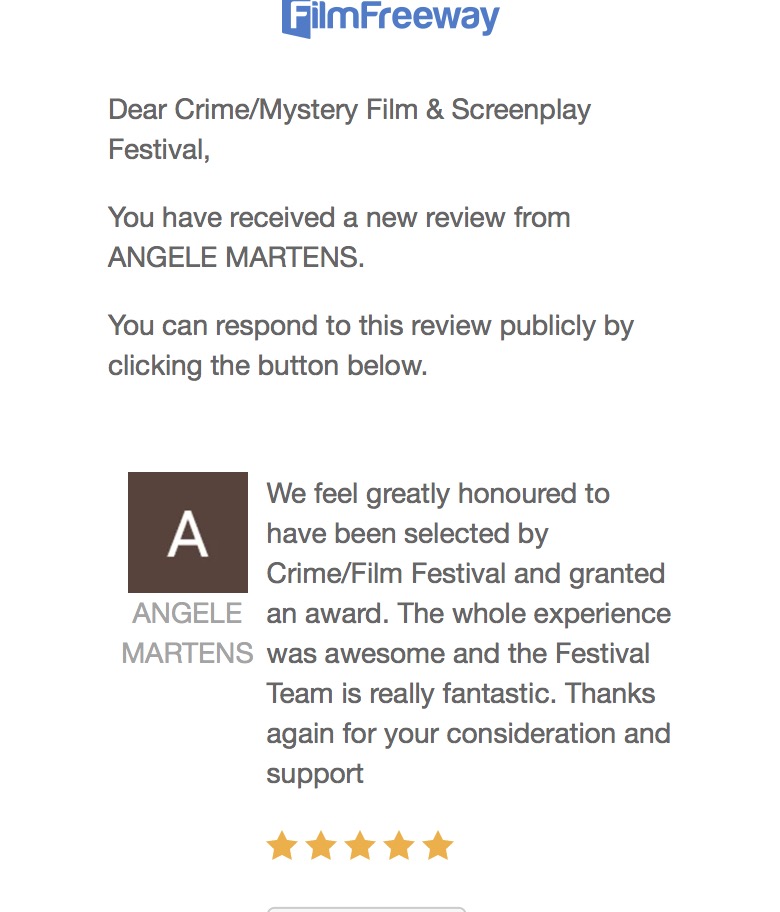
We feel greatly honoured to have been selected by Crime/Film Festival and granted an award. The whole experience was awesome and the Festival Team is really fantastic. Thanks again for your consideration and support
Very professional people at festival and understanding the nature of this kind of movies! Good style overall!
Submit your TRUE CRIME Short Story to the Festival here and we will automatically have it performed by a professional actor and turned into a promotional video for yourself.
A young adult (YA) novel is a fictional work written for readers aged 12 to 18 that usually explores the experiences and challenges of adolescence.
Get FULL FEEDBACK on either the 1st chapter or entire novel book from our committee of professional writers and writing consultants. Get your novel performed by a professional actor at the festival.
NEW OPTION: Or, just submit for an actor performance reading transcript of your novel (any 5 pages of your book). Great way to promote the sales of your book if you’re already published.
This festival has a guaranteed 4-tier set up for each accepted script. (No matter what, all screenplays submitted receive FULL FEEDBACK on their work.) 1) Full Feedback on your script 2) Actors performance video reading of your script 3) Blog interview promotion. 4) Podcast interview on the Film Festival ITunes show
Upcoming Deadlines for FREE Film Festivals to Submit to via FilmFreeway::
There’s also an option for GUARANTEED ACCEPTANCE submissions. Interviews, audience feedback video etc… Geared to help promote the filmmakers and their films!
Submit your short film that’s 5 minutes or less and get it showcased at the FEEDBACK Short Film Festivals in Los Angeles and Toronto. A monthly film festival event!
(NEW: Also accepting smartphone made films.)
ALSO submit a short screenplay that’s 5 pages or under and get it performed by professional actors at the Writing Festival. FULL FEEDBACK on all entries.
Festival occurs 10 times a year! And gives accepted films multiple options to showcase and promote your film.
1) Screening #1 where you will also obtain your audience feedback video (private screenings). 2) Screening #2 virtually on the streaming service WILDsound TV 3) Podcast interview at Film Festival Radio on ITunes 4) Blog interview promoting you and your film.
AN ADVERT FOR ONE NIGHT, 15min,. UK Directed by Graham Birch Lisa responds to a newspaper advert to meet Sarah in a hotel room for a night. They meet and have a wonderful night that sadly uncovers that one was badly abused and the other is currently suffering serious mental and physical bullying from a partner. Will this allow them to bond? What will they do?
My friend was going through an abusive relationship at the time and it was terrifying. He was psychologically destroyed. So I flipped it to the more common female perspective as it is simply not acceptable. Domestic abuse isn’t just physical. It’s wider than that and destroys people.
I also wanted to highlight the dangers of getting drunk and thinking you are in control of a situation. I want people to watch the film and maybe question if they should go home with that person. Particularly when you are young and at a night club. I always tried not to let my friends go off alone (male or female) as there are people who are simply not good.
I also wanted to create a film of exquisite beauty and use the lighting to enhance everything. You’ll notice that the colours change in the film, sometimes suddenly, sometimes from scene to scene. Showing differing emotions and settings.
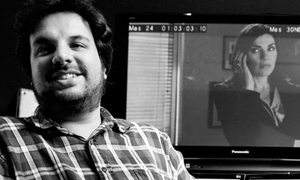
What a joy it was to chat with the extremely talented composer David Buckley. You can hear his music every Sunday on the hit TV series “The Good Wife”. He was also the composer on the upcoming film “The Nice Guys”, directed by Shane Black.
Matthew Toffolo: The action/comedy “Grimsby” is out in theaters. What can we expect to see? How was your working experience composing music on that film?
David Buckley: Well, the truth is now out! It’s a total flop. Shame really, as a lot of people spent a lot of time working on the film. Maybe the problem was that too much time was spent on it and it started to lose focus. I’ve always been a fan of Sacha’s work. I can see it’s harder for him to make movies like Borat and Ali G because everyone knows who he is now. Grimsby was a brave attempt at coming with a new character, but clearly the cinema-going world did not love him. The experience on this one was a bit unusual as it was a co-score with Sacha’s brother, Erran. He was based in London a lot of the time and I am in LA. It was also tricky as there were a lot of re-shoots for the film – new material was coming right up until the end. But we divided the work up and got on with it!
MT: Generally, how does one compose the music for a feature film? Do you receive the rough cut, and some guide music tracks for influence/inspiration? When do you generally begin working on the film?
DB: Yes. One is sent a rough cut, and this often includes temp tracks. Sometime after getting it, one hopes to sit down with the director and producer and discuss their musical needs. Sometimes the temp is spoken about as a reference point. Hopefully the conversation does not dwell too long on it, however! It varies, but on the whole I’d say I’ve had an average of about 2 months to write and record most of the scores I have composed.
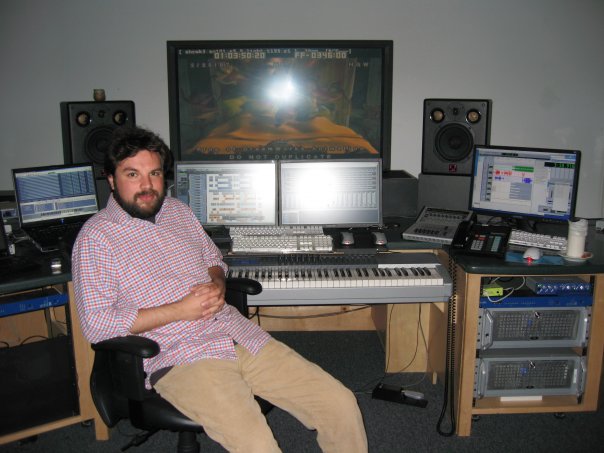
PHOTO: David Buckley in his studio:
MT: What type of working relationship do you like to have with your director?
DB: A good one! With the demands of modern film-making, it’s not always easy to physically sit in the room with a director as he/she will have many things to deal with other than music. When there is a moment, I think it’s important to try and absorb as much information one can from the director or any other film maker. Not just specific things but bigger picture issues too. Learning what they know and what they have experienced (be it on the movie, or life in general), will presumably help deliver a score that is to their liking.
MT: You created the theme music for “The Good Wife”. A song that keeps on giving! Do you remember how you got inspired to create the music for the extremely successful TV series?
DB: Well, these days, I write a different opening title each week. There is not a lot of score in the show, so we thought to keep it interesting and relevant to each episode I would crescendo into the main title from the preceding scene. These have been some of the most enjoyable cues I have worked on for the show.
MT: You’ve composed a lot of music for action films? How is this genre different in terms of themes and tones than working on a straight up drama?
DB: I find one of the problems with action scoring is making sure the music is more than just functional. It often has some very specific jobs to do – keeping up energy, maintaining tension, heightening certain moments, etc, and this can either be done in a very plain fashion, or with some interest. The problem is that paranoid/fear-mongering film makers are not always going to allow for the interesting approach and will settle for the safe.
MT: You’ve also worked on a few video games. How has been your experiences working with this format?
DB: Fun. A lot of work but an interesting to genre to try my hand in!
MT: From a technology standpoint, where do you see the future of composing in the movies?
DB: Not really sure about this. Clearly technology has helped composers be able to realize their musical ideas and editors cut their movies a million times until the director (or a test audience!) is happy with it. I suppose for music, samples will get better and better and more realistic. I would wager that no technology will ever be able to beat human performance. I certainly hope not.
MT: How did you first begin? Was composing in the movies something you’ve also aspired to do?
DB: For a long time, yes. When I was a boy, I sung on a soundtrack to The Last Temptation of Chris, and a flame was ignited. I went through a couple of decades of classical training before moving to London and starting to compose for jingles and crappy tv. I was learning as I was going though, and building up my studio and knowledge-base. I got the opportunity to come over to LA just after I turned 30, and jumped at the opportunity.
MT: Out of all the TV shows, films, and video games you’ve worked on, do you have a favorite experience? What do you think is your best work?
DB: I really enjoyed scoring The Forbidden Kingdom. It was the first score I composed. I didn’t really know what I was doing, but I was lucky enough to have a big orchestra and solists at my disposal, and quite a fun movie to be inspired by. Just about every project since has provided me with some form of musical pleasure.
MT: Do you have a composer mentor?
DB: Richard Harvey was my initial mentor. He was the person who encouraged me to come to LA, and he set up a meeting with Harry Gregson-Williams. I had actually known Harry since I was 10 – we both came from the world of cathedral music. At the time we met in LA Harry was fantastically busy and he extended an invitation for me to come out and help him for a bit. From there he helped me find my own career and let me do my own thing. We remain good friends today (I’m supposed to meet him for a drink tonight!). So I can safely say I would not be doing what I am doing today with Richard and Harry. I have also been very fortunate to work alongside some other distinguished composers including Danny Elfman, Hans Zimmer, John Ottman, and Harry’s brother, Rupert.
MT: What film, besides the ones you’ve worked on, have you seen the most in your life?
DB: The Day After Tomorrow. Not my favorite film by a long way, but whenever I see it on the tv I get sucked in. A guilty pleasure for sure!
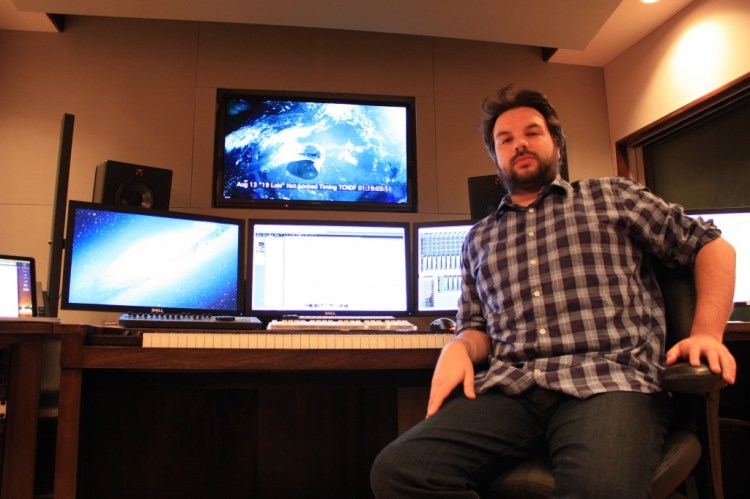
PHOTO: David Buckley working on a film:
____ Interviewer Matthew Toffolo is currently the CEO of the WILDsound FEEDBACK Film & Writing Festival. The festival that showcases 10-20 screenplay and story readings performed by professional actors every month. And the FEEDBACK DAILY Festival held online and in downtown Toronto on the last Thursday of every single month. Go to http://www.wildsound.ca for more information and to submit your work to the festival.
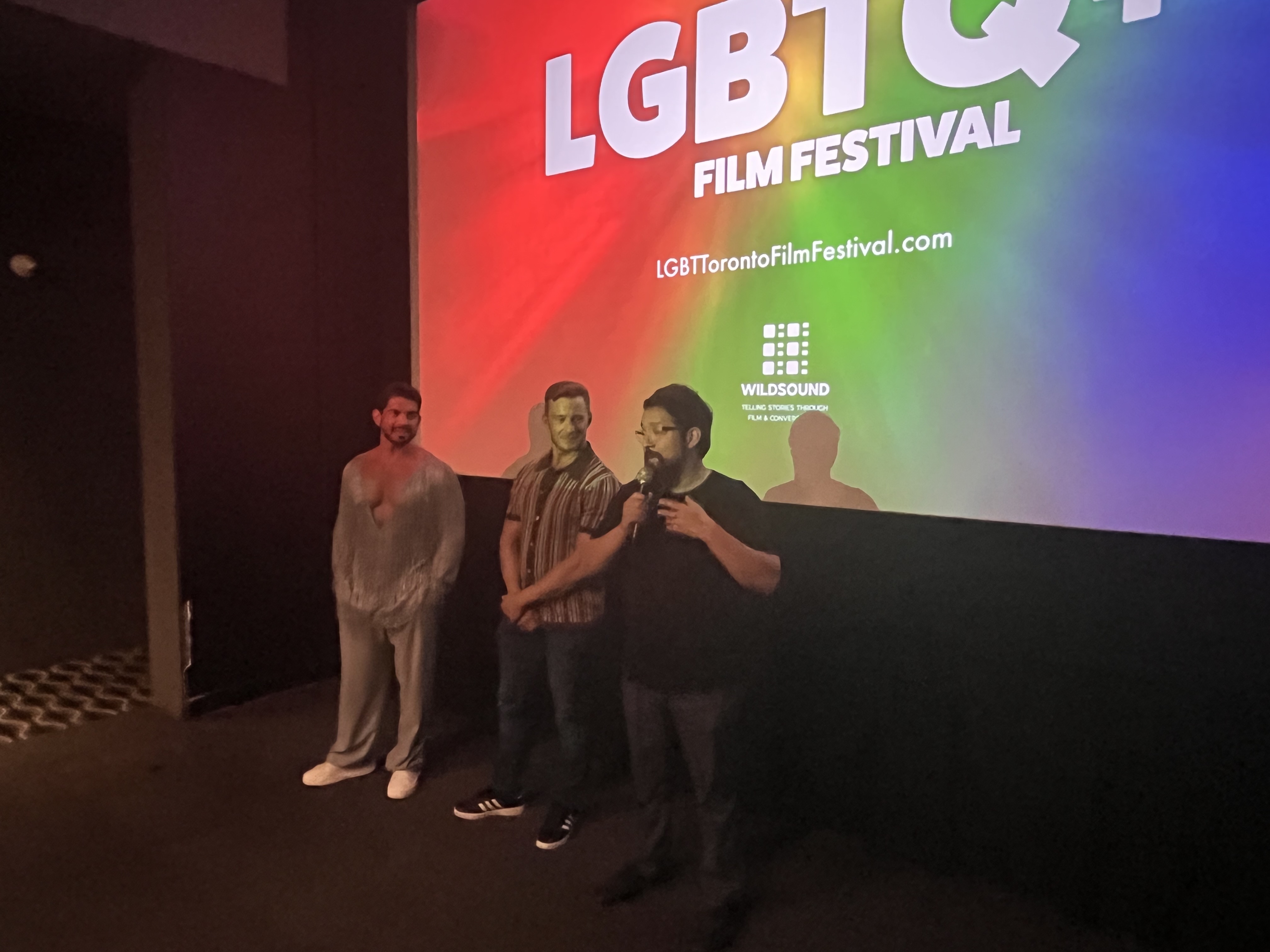
It was an honour to have GOGO premiere at the LGBTQ+ Toronto & Los Angeles Film Festival. The crowd was great, and so were the other films. Couldn’t recommend it more to other Queer filmmakers.