Interview with Filmmaker Hasmik Chakhmakhchyan (THE SILENCE OF MY SOUL)

THE SILENCE OF MY SOUL, 4min., Armenia
Directed by Hasmik Chakhmakhchyan
The Silence of My Soul is an intimate piano-vocal ballad shaped by jazz and R&B sensitivity and approached with cinematic restraint. Minimalist piano textures and a nuanced vocal performance create a quiet emotional tension — reflective, tender, and deeply human.

https://www.instagram.com/araksya_musheghyan_official/

Get to know the filmmaker:

1. What motivated you to make this film?
I was inspired by Araksya’s voice and the emotional depth of the song. *The Silence of My Soul* is a very personal story. I wanted to visualize the “silence” she sings about and transform the inner state of loneliness into a beautiful visual image that could resonate universally with audiences.

2. From the idea to the finished product, how long did it take for you to make this film?
The entire process took around three months. We spent a long time searching for the right visual language and the perfect location so that the minimalism of the frame would not feel empty, but emotionally charged.

3. How would you describe your film in two words!?
Pure aesthetics.

4. What was the biggest obstacle you faced in completing this film?
The most difficult part was maintaining balance in the editing process. In such a minimalist black-and-white visual style, every frame has to be perfect. It was important not to overload the video with effects and to leave space for Araksya’s vocals to breathe.

5. What were your initial reactions when watching the audience talking about your film in the feedback video?
It was deeply emotional. When you create something so personal in the “silence” of a studio, there is always a fear of being misunderstood. Seeing people understand your metaphors and truly feel the atmosphere was the greatest reward.

6. When did you realize that you wanted to make films?
I am an artist, and I realized my calling very early in childhood. After receiving a strong academic art education, I came to understand that there are no boundaries between artistic genres for me. Whether I work with canvas or moving images, I create visual worlds. Cinema became a natural extension of painting — my artworks simply gained movement and sound.

7. What film have you seen the most in your life?
I am a true cinephile, so it is difficult to choose just one film. My visual language has been shaped by very different masters: from the impeccable symmetry of Wes Anderson and the poetic cinematic world of Sergei Parajanov to the dynamic energy of Martin Scorsese and Quentin Tarantino. I am also deeply inspired by the psychological depth and human complexity in the works of Miloš Forman and Roman Polanski. Each of them has taught me, in different ways, how to work with image and storytelling.

8. What other elements of the festival experience can we and other festivals implement to satisfy you and help you further your filmmaking career?
More opportunities for filmmakers in terms of distribution and content promotion would be extremely valuable. It would be wonderful to have more channels that help present films to wider audiences and media platforms, strengthening the connection between art and the industry.

9. You submitted to the festival via FilmFreeway. How has your experience been working with the festival platform site?
It is a very convenient and intuitive platform. It gives independent creators from all over the world the opportunity to be heard and helps erase borders between countries and cultures.

10. What is your favorite meal?
Fresh Armenian peaches.

11. What is next for you? A new film?
Winning at this festival has given me a huge creative boost. Right now, Araksya and I are discussing the concept for our next project. It will definitely continue our visual explorations — perhaps in a different genre, but with the same sincerity and emotional honesty.
Interview with Filmmaker Ying Lei Zhang (WISHFEATHER)

WISHFEATHER, 3min., Australia
Directed by Ying Lei Zhang
A dancer wishes to soar beyond her eternal cage. But the key can only be found from deep within herself.

https://www.instagram.com/kila_ima/

Get to know the filmmaker:

1. What motivated you to make this film?

My drive to create this kind of story came from a time when I felt really trapped mentally with no way out. So that became the driving force behind Wishfeather. To create a story with a problem that can’t be solved. But of course, I wanted the story to be a hopeful message at the same time. Because after all, I’m still here and I’ve managed to experience a lot of awesome things since. It eventually hit me that while I don’t have the power to solve the issue, I can always choose how I react to it. So I started to believe that my dreams are possible and that led me to actively work towards them. Even though I sink back to dark places sometimes, I’m still able to find a lot of joy around me.

2. From the idea to the finished product, how long did it take for you to make this film?

If I don’t include the initial 6 months I spent brainstorming and meandering around with a sci-fi surreal idea I had prior, then making Wishfeather took 6 months from its solid idea to finish.

3. How would you describe your film in two words!?

Metaphorically beautiful!

4. What was the biggest obstacle you faced in completing this film?

It was definitely the ideation phase. When I embarked to create a film in the new year, I spent a long 6 months meandering around with a sci-fi surreal story. I still wanted a dance in that story which is what you see in Wishfeather at the start. But when reality hit me that I had spent half a year(!) still not feeling satisfied with my story,

I had to make the tough choice to put all that work aside and ask myself honestly, ‘If I could create anything right now, what would it be?’ And from there, Wishfeather really began to take shape. All the sci-fi stuff was removed. And to make up for lost time, I relied on a few shortcuts I know in animation, reducing the background to only sky, only having a single human character, and making sure the birds never have to tuck their wings (as that requires a bit more work to make!)

5. What were your initial reactions when watching the audience talking about your film in the feedback video?

I was smiling the whole time! It’s my first time to hear an audience outside of peers respond to my film. I loved hearing their interpretations and it gives me more motivation to pursue this direction of storytelling.

6. When did you realize that you wanted to make films?

Sometime back in high school. I got obsessed with imagining my own
characters and I would write a super long cringey story of them going
on crazy fantasy adventures! It didn’t immediately hit me that I wanted to make films. I think the way I was imagining things were already in a ‘film/animation’ format. Like a sequence of events. Because film/animation was pretty much the perfect medium to show these events, I naturally wanted to dive into it just to bring those worlds to life.

7. What film have you seen the most in your life?

I assume this means films I’ve rewatched a couple times. In film, it would be Matilda (1996) and Harry Potter and the Philosopher’s Stone (2001). In animation, it would be Princess Mononoke (1997) and Coraline (2009).

8. What other elements of the festival experience can we and other festivals implement to satisfy you and help you further your filmmaking career?

Honestly, this festival is incredibly jam-packed and it’s been wonderful to read all the options. I think for me personally, 1-1 consultation with a professional director about career would be lovely. It’d give online festival participants like myself a chance to network a bit by having that brief live chat with someone.

9. You submitted to the festival via FilmFreeway. How has your experiences been working on the festival platform site?

Smooth sailing!

10. What is your favorite meal?

Sweet stuff! I love red velvet cake.

11. What is next for you? A new film?

Yup! I’m brainstorming another shortfilm as well as writing a script
for an animated feature idea.

Interview with Filmmaker Terry Ulick (Dance from the Angel and Faerie Operettas by Terry Ulick)

Dance from the Angel and Faerie Operettas by Terry Ulick, 27min., USA
Directed by Terry Ulick
Ballet and modern dance numbers from the Operettas “An Angel’s Love” and “Shameless Faeries” by Terry Ulick from Wherever Music and Wherever Movies. All rights reserved and not for use without express written permission.

Get to know the filmmaker:

1. What motivated you to make this film?

Creating a ballet that was timeless and contemporary had me thinking of new ways of stage dance — and tell a story where all dancers sing and play instruments along with LED screen backgrounds and even an LED dance floor to create the Angelic world. I wanted to “show” how effective an operetta can be done today using LED backscreen and lighting/blocking. I decided to create an AI prototype to help others visualize such a production — then I put all the AI prototypes together for a pitch and the reaction was that it worked well as a film.

2. From the idea to the finished product, how long did it take for you two make this film?

I think about a project — all of it — for a while to have a clear vision in my head for the entire production. Because it’s already “done” in mind, writing the libretto and music then the diagramming, staging, and dance was less than a month. The AI visuals took about a week simply as I’m a experienced filmmaker and have a precise vision for any finished work.

3. How would you describe your film in two words!?

Philosophical fantasy.

4. What was the biggest obstacle you faced in completing this film?

Knowing how hard it is to get anyone to view it or look at a pitch for a stage production. It can be discouraging — even if I finance it myself.

5. What were your initial reactions when watching the audience talking about your film in the feedback video?

Wow! They “got” it. They understood it was 1) AI, 2) Real Dance 3) It used color to define the storyline, and 4) They accepted that as a pitch it’s a new way of getting a production started. All great comments.

6. When did you realize that you wanted to make films?

All my life. I began making for-real films when I was 13 (16mm and then 35mm) and it’s always been “what I do.” I never wanted to do anything other than write literature and music — then put them out as a film. I moved to digital and now AI engines are good enough to allow what looks to be realistic dancing and acting and I make it very clear when I’m using AI. All my words, lyrics, dance choreography are not AI and I only use AI as simulation or a new art form as it is evolving to allow new types of art.

7. What film have you seen the most in your life?

Room With a View.

8. What other elements of the festival experience can we and other festivals implement to satisfy you and help you further your filmmaking career?

Live screenings and audience comments/videos are the most important — and you do that!

9. You submitted to the festival via FilmFreeway. How has your experiences been working on the festival platform site?

I think FilmFreeway is fantastic and much needed.

10. What is your favorite meal?

Any my wife and I make together.

11. What is next for you? A new film?

A full start-to-finish, live-performance real-people production of “An Angel’s Love” if I can find funding or a producer for a Broadway show or traveling company. Also, and quite different, a live-action film version of my “Not Taken” best-selling novels which are action-thrillers.

Interview with Filmmaker Catriona Trina Baker (BALL LIGHTNING)

BALL LIGHTNIING, 12min., USA
Directed by Catriona Trina Baker
Ball Lightning is the true story of a refugee who fled the personal and social effects of Soviet run East Germany after the end of WWII and immigrated to the United States in the 1960s. The story is told through the eyes of the surrogate daughter that she raised after she was forced to give away her own infant daughter as the iron curtain rose. Gusta serves as an example of survival, kindness and the fortitude of human resilience. The film is dedicated to her lost daughter, Esther, a reminder that the children separated from families because of war are never forgotten by those who love them.

https://www.instagram.com/ball.lightning_film

Get to know the filmmaker:

1. What motivated you to make this film?
During Covid I was bedbound, a colleague asked me how I was keeping my spirits up. I told him that the most compassionate woman I had ever met survived COVID and much more, if she could survive all that and still have her love and compassion, I can survive this. He said, “That sounds like a film. I look forward to seeing your concept art when you’re better”. As the film took focus, the driving force became the thought that I might reach Gusta’s daughter somehow and let her know how much her mother loved her. I also realized that this was the right time to tell this story because so many children around the world are separated from their parents because of war, and they too should know that they are loved.

2. From the idea to the finished product, how long did it take for you to make this film?
five years

3. How would you describe your film in two words!?
Intergenerational love

4. What was the biggest obstacle you faced in completing this film?
I had to carve out time to create, and I lost the studio where I was making paintings because the artists’ studio building became condemned.

5. There are 5 stages of the filmmaking process: Development. Pre-Production. Production. Post-Production. Distribution.
What is your favorite stage of the filmmaking process?
I enjoy the collaboration at any stage the most. I worked with colleagues and students from Lesley University College of Art and Design. Each person brought a fresh lens and perspective to the film. This was integral in coming up with creative solutions to solve difficult shots.

6. When did you realize that you wanted to make films?
I started graduate school as a painter struggling to create narrative in the static image, then my mentor, Joshua Mosley, taught me how to animate my paintings. That opened a door to new possibilities and started my filmmaking journey.

7. What film have you seen the most times in your life?
Madagascar, a journey diary

8. In a perfect world: Who would you like to work with/collaborate with on a film?
Michele Noble, because we both believe that film can influence the world for social change and social justice.

9. You submitted to the festival via FilmFreeway. How has your experiences been working on the festival platform site?
FilmFreeway makes finding films and applying organized and easy. I has allowed me the opportunity to globally search for film festivals appropriate for my film.

10. What is your favorite meal?
Junket and oatmeal lace cookies.

11. What is next for you? A new film?
I am in the research and development stage of a few personal narrative scripts, hopefully, with funding I can get them rolling.

Interview with Filmmaker Maurice Cormier (THEY ARE KILLING US….)

THEY ARE KILLING US…, 5min., Canada
Directed by Maurice Cormier
From A Nightmare Of A Possible Not Too Distant Future….

https://www.instagram.com/maurice_cormier92

Get to know the filmmaker:

1. What motivated you to make this film?

The idea started to come through during the first two years of covid. At that point I made two other experimental films, and worked on documentaries as writer/producer and video editor. My plan before 2020 hit was to make three 15-60 second short films in the horror genre, followed by a 15-minute short surrealist horror film. When covid hit, everything froze. I had no actor, crew, or budget. My mind began racing with ideas on making another experimental/underground film, but an idea didn’t come quickly, it took a while for it to be fully formed. As things in the news were getting from bad to worse, I felt the world was burning, and my fears of the future were beginning to intensify. The idea for this film was slowly growing, going through the works of surrealist painters like Salvador Dali, and watching the films Shin Godzilla, Eraserhead, and the TV series Attack on Titan, when the idea for They Are Killing Us… was being formed. in 2024, the idea was complete, followed by a script. To me, this was free therapy. It’s the vibes of what I felt could happen, yet play with it in a surrealist non-narrative stop-motion short film lens with elements of Science Fantasy and Body/Eco Horror sub-genre. Special thanks to White Drawf Picture for letting me use their small studio to shoot my short after working for them very briefly, without them, the film would not have been made.

2. From the idea to the finished product, how long did it take for you to make this film?

4 years, it took me a bit to figure out the entire structure of the film during the development/writing phase of the film. I had school & work so I couldn’t commit to shooting and editing the film full time, so I had to shoot on weekends for 6 days, one day filming one shot before the script was finished, 4 during actual production on weekends, and a one-day pick-up shoot during post-production. When I got a two-week vacation from work last year, rather than going somewhere far, I used those two weeks to finish the film.

3. How would you describe your film in two words!?

Nightmare. Flesh.

4. What was the biggest obstacle you faced in completing this film?

Time. I had other commitments, so trying to juggle making the film on my schedule was a challenge.

5. There are 5 stages of the filmmaking process: Development. Pre-Production. Production. Post-Production. Distribution.

What is your favorite stage of the filmmaking process?

A tie between Production & Post-Production. Production because the art is finally being created. You have the chance to experiment and try new things while filming. Editing allows you to further experiment, change, and manipulate the final film to your liking. Hide all the mistakes during shooting, the one job where you are allowed the “cheat” if you will. Both Production & Post-Production share something beautiful: discovery. The discovery of what the film is really about is me experimenting and trying things off-script, or using your limitations (budget, time, resources, etc) to your advantage.

6. When did you realize that you wanted to make films?

Four years old and saw the Original Star Wars Trilogy, blew my mind as a kid, followed by years later Peter Jackson’s Lord of the Rings Trilogy. When the DVDs came out in the 2000s, I devoured the special feature docs like no tomorrow. The behind-the-scenes making of films fascinated me, but I was unsure I could make the jump of that as a career. It was when I came across filmmakers like David Lynch, Herk Harvey, Alejandro Jodorowsky, David Cronenberg, and George A. Romero who made their first features outside the studio system that I began to take filmmaking as a serious option. When I came across Robert Rodriguez’s El Mariachi, his 10-minute film school videos, and his book Rebel Without a Crew. I realize you can make a film dirt cheap in your backyard with digital cameras. Plus, with the rise of DSLR cameras and crowdfunding sites in the early 2010s, making a film without major connections/funding was now possible.

7. What film have you seen the most times in your life?

I’ve revisited so many of my favorite films over the years that I’ve lost count. I’m going to pass on that question.

8. In a perfect world: Who would you like to work with/collaborate with on a film?

There are two versions of a perfect world. The fantasy version and the realistic version.

The fantasy version of a perfect world would be me working on my first feature film with Guillermo del Toro as a producer on the project, and/or actor/filmmaker Jim Cummings as an actor/producer on a film project. Hell, if I ever made a comedy, I’m so casting John Waters &/or Nicolas Cage in a role.

A realistic version of a perfect world would be working with actor/filmmaker/psychotherapist Adam Goldhammer on a film, either as writer/producer, actor in a role, or as a consultant should the film be psychological fiction/thriller/drama, considering he’s a psychotherapist. Seriously, you should check out his short films Jesse, Easy Girl, and Linda’s Last Trip.

9. You submitted to the festival via FilmFreeway. How has your experiences been working on the festival platform site?

Easy and Accessible. Filmfreeway has further democratized film festival submissions, filmmaking, and the film community in general.

10. What is your favorite meal?

An Indian and/or Middle Eastern cuisine.

11. What is next for you? A new film?

A few different projects ranging from Photography and Film including:

Four 15-60 second short horror films (Prototypes, if you will)

A non-narrative experimental short that is a spiritual successor of two of my short films, Three Shots Each, and They Are Killing Us…

15-20 Min Untitled Surrealist Horror Film

A Six or Seven Part Docu-Series on a subject matter that is incredibly personal to me (six episodes if a network or streamer balks on the 7th episode due to the subject matter being taboo for television, hence I would turn that 7th episode into a short or feature-length documentary film)
If I ever get the chance to do it, I would make a full-length documentary on Muslim youth who have come out as LGBTQ yet are still trying to practice their faith/culture despite hostile opposition from their religion.

A gallery show of my photography that consists of surrealist, abstract, and nature photography

Interview with Choreographer/Performer Chung, EunJu  & Director Hansol Jeong (PORTRAIT OF TRACES)

PORTRAIT OF TRACES, 9min., South Korea
Directed by Hansol Jeong
is a four-chapter XR-based dance film tracing the journey from constricted breath to embodied self-return. Through performative movement that merges dance and acting, and immersive digital environments that externalize inner states, the body becomes both narrative and landscape.

Get to know the creative team:

1. What motivated you to make this film?

Chung, EunJu (Choreographer, Main Performer): This work began from a deeply personal place—myself. I wanted to express
emotions, memories, and inner states that are difficult to articulate through
words, using movement as my primary language. This time, I wanted to
challenge myself by translating these expressions into film, rather than live
performance. I proposed this collaboration to director Jeong Hansol, who has extensive experience in commercial filmmaking.

Jeong, Hansol (Director): When EunJu proposed the collaboration, I was drawn to the idea of capturing the transformation of the self. I wanted to visualize this inner change not in a realistic space, but through imagined and virtual environments.

2. From the idea to the finished product, how long did it take?

Chung, EunJu: It took about two months to develop the concept, casting, and choreography. The entire process—including building the emotional structure, developing the movement language, integrating XR elements, filming, and editing—took approximately four months.

3. How would you describe your film in two words?

Jeong, Hansol: Self / Virtuality

Chung, EunJu: Portrait / Space

4. What was the biggest obstacle you faced in completing this film?

Jeong, Hansol: Since we worked with virtual environments rather than physical spaces, we filmed in an XR studio. One of the biggest challenges was creating water elements using AI, which required a lot of trial and error.

Chung, EunJu: The key challenge was expressing emotional continuity through the body rather than relying on dance technique. I wanted to show that even simple gestures or gaze can carry meaning. Another challenge was choreographing not only the body, but also the camera and XR space as one integrated composition.

5. What is your favorite stage of the filmmaking process?

Jeong, Hansol: I find the development and conceptual stage the most engaging, especially when exploring how movement can be translated into visual language.

Chung, EunJu: I particularly enjoyed the development and pre-production stages, where I could experiment with ideas and explore different perspectives.

6. When did you realize that you wanted to make films?

Chung, EunJu: I had the opportunity to appear as an actoress in a dance-related short film by chance, and through that experience, I discovered how movement can expand in a completely different way on screen compared to live performance. I had long wanted to create a dance film, and this experience became the turning point that gave me the opportunity to finally pursue it. I am now actively developing my own work in this field.

7. What film have you seen the most times in your life?

Jeong, Hansol: I have been watching many contemporary Korean films, which have been evolving rapidly in recent years.

Chung, EunJu: Rather than a single film, I am more influenced by movement-based works. I often watch films featured on platforms like Nowness, especially those combining movement with fashion, theatre or any genre with movements.

8. Who would you like to collaborate with?

Chung, EunJu: I am interested in collaborating with artists who explore the intersection of visual art and immersive technology, and who are open to sharing ideas and
perspectives.

9. How has your experience been working with FilmFreeway?

Chung, EunJu: The platform is very well-organized and easy to use, making the submission process smooth.

10. What is your favorite meal?

Chung, EunJu: I enjoy Korean food, especially braised short ribs (Galbijjim).

11. What is next for you?

Chung, EunJu: I am currently developing a new dance film project inspired by the color blue,
exploring emotional narratives through different states. This time, I will also take on directing, focusing on how movement can convey emotional storytelling beyond technique.

Interview with Filmmaker Larry Neale (THE RULES OF LIFE)

The Rules of Life., 13min., United Arab Emirates
Directed by Larry Neale
Max still lives under his parents’ roof, drifting through life with no direction. He spends his days immersed in the digital world, avoiding the real one entirely. The dreams he once chased have faded, and now he’s stuck; unmotivated, uninspired, and unsure how he got here.

https://www.instagram.com/papillonfilms20

Get to know the filmmaker:

1. What motivated you to make this film?

I had been working on a film idea in 2025 and was trying to bring a new crew together.
And then I saw Comic-Con Middle East was coming up in April 2026 and then I thought it would force me to get going. I work best when there are deadlines.
So, my motivation was to make a fun film that would have a wide appeal and at the same time see how my new crew would perform. And they were amazing.
We are already working on the next project.

2. From the idea to the finished product, how long did it take for you to make this film?

I wrote a story in 1 night, created a script in a week, and then assembled the crew.
From idea to final edit – we did it in 4 months – including Xmas.

3. How would you describe your film in two words!?

FUN and UNPREDICTABLE

4. What was the greatest obstacle you faced in completing this film?

Time. We used an Airbnb to shot and we only have so much time to get what we need.
And with an AirBNB you dont get early access to block and plan, it all has to be done from photos and when you turn up.

5. There are 5 stages of the filmmaking process: Development. Pre-Production. Production. Post-Production. Distribution.

What is your favorite stage of the filmmaking process?

If I was forced to choose I would say development. I enjoy the creative journey of having an idea and then bringing it to life.
I wrote and directed this, so it makes me really dig into my film head to come up with ideas.

6. When did you realize that you wanted to make films?

When i was a small kid, probably like many people. But it wasn’t until much later that I found a way to do it.

7. What film have you seen the most times in your life?

Rocky 3

8. In a perfect world: Who would you like to work with/collaborate with on a film?

Christopher Nolan – his films are on another level.

9. You submitted to the festival via FilmFreeway. How has your experience been working on the festival platform site?

As a platform its excellent – its the film festivals behind it that are often very different.
Some are professional and some I wonder if they actually exist.
I have been very happy with your festival and really like the way you approach the film maker, creating opportunities to be seen and heard. Bravo.

10. What is your favorite meal?

I’d have to say Spaghetti Bolognese

11. What is next for you? A new film?

I am working on a new script which will be shot towards the end of 2026.
With my new crew and with more time in pre-production, I think we can make something great.

The UAE indie film world is alive, its young, but there is a lot of great talent, and I am sure we will see more coming from this part of the world in the future.

Interview with Filmmaker Antonia Stevenson (ANOTHER STAR)

ANOTHER STAR, 24min.,USA
Directed by Antonia Stevenson
Another Star is set in 1970s Washington, D.C., where young Black girls begin vanishing from neighborhood streets, their disappearances met with silence, suspicion, and systemic neglect. When one girl fails to return home from a simple trip to the corner store, her family’s growing panic exposes a community long accustomed to being unheard.

https://www.instagram.com/another_star_shortfilm/

Get to know the filmmaker:

1. What motivated you to make this film?
The idea actually started with my uncle. He began telling a story the way elders often do, just casually saying, “Back in my day.” He grew up in the 1970s and talked about how they would rush home before dark because of the Freeway Phantom. My mother, aunt, and uncle all grew up in Southeast Washington, D.C., and it was almost spoken about like an urban legend, someone kidnapping and murdering young Black girls, yet it never received the media coverage it deserved. Many people outside of that area of D.C. knew very little about it, and some had never heard of it at all. That lack of awareness motivated me to tell this story, increase its visibility, and help preserve it in the archives through film.

2. From the idea to the finished product, how long did it take for you to make this film?
From idea to completion, it took about five years.

3. How would you describe your film in two words?
Haunting Truth

4. What was the biggest obstacle you faced in completing this film?
We were working with a very small team but had very big dreams. We had the vision, but pulling it off required a lot of faith, patience, and problem-solving. Time was a major factor, and when locations or plans fell through, we had to pivot quickly. It was definitely a “just keep swimming” kind of process.

5. What were your initial reactions when watching the audience talk about your film in the feedback video?
It was really special. We were very intentional about preserving the integrity of the 1970s era, so hearing the audience recognize that meant a lot. We also wanted viewers to feel that these were real families, real lives, and real loss. Knowing they connected with that was meaningful.

6. When did you realize that you wanted to make films?
It happened gradually. It started with a desire to work on film sets because I loved movies. Then I realized I could create my own stories. My sister and I would write ideas, gather friends, and make YouTube videos. Over time, the dream became tangible.

7. What film have you seen the most in your life?
The Five Heartbeats

8. What other elements of the festival experience can we and other festivals implement to satisfy you and help you further your filmmaking career?
Honestly, this festival has done an excellent job. Everything has felt intentional, professional, and filmmaker-friendly. Continuing to create networking opportunities, industry panels, and spaces for filmmakers to connect would be amazing.

9. You submitted to the festival via FilmFreeway. How has your experience been working on the festival platform site?
My experience with FilmFreeway has been smooth and easy to navigate. It makes the submission process simple without too much extra lift.

10. What is your favorite meal?
A girl’s dinner.

11. What is next for you? A new film?
My sister and I are currently working with a client to bring her episodic series to life. It centers around a young girl who is a basketball player, and we’re excited about what’s next.

Interview with Filmmaker Michael Munz (3:33)

3:33, 7min., USA
Directed by Michael Munz, Michael Ferrari
In the middle of night, a man’s quiet routine is disrupted by small, unsettling signs that something is sharing his space. As fear pushes him into hiding, the boundaries between safety and threat collapse. When help finally arrives, the house becomes a trap, revealing that whatever lurks within doesn’t leave witnesses.

https://www.instagram.com/blackgateprod/

Get to know Michael Munz:

1. What motivated you to make this film?

I wanted to explore the unsettling feeling of being watched or experiencing something you can’t fully explain, especially in those quiet late-night moments.

2. From the idea to the finished product, how long did it take?

From the initial idea to final cut, it took about 2-3 months. Most of that time was spent refining the concept and editing, making sure the pacing and atmosphere felt right. We shot the film over 2 separate days, each 2 weeks apart. So it certainly was a little bit of a struggle to keep continuity throughout, especially because we only had the creature on certain days.

3. How would you describe your film in two words?

Unsettling. Minimalist.

4. What was the biggest obstacle you faced in completing this film?

The biggest challenge was creating strong tension with limited resources. I had to rely heavily on lighting, sound, and pacing rather than big visual effects, which pushed me to be more creative with how I built suspense.

5. What is your favorite stage of the filmmaking process?

100% Production. To be honest, this is the first short film I’ve ever made, so to get on set with the 10-15 members of crew that we had, and to see everyone working together was just a great feeling.

6. When did you realize that you wanted to make films?

Around 6 years ago, my grandmother bought me a GoPro as a Christmas gift. Truly I thought I was a professional director the second I laid hands on it. I would go around and make videos about everything and anything. And I think that’s sort of what really jumpstarted this whole journey as a filmmaker to where I am today. (I don’t shoot on a GoPro anymore. I recently purchased a cinema camera.)

7. What film have you seen the most times in your life?

I’m not really sure about my whole life, but in recent years I have watched the conjuring so many times I could practically recite lines from it. I really love the filmmaking style, and I really think that I have developed a lot of my identity as a filmmaker growing up watching films from the conjuring series.

8. In a perfect world: Who would you like to work with?

I’d love to collaborate with filmmakers who are known for building tension and atmosphere in unique ways, like David Fincher.

9. How has your experience been with FilmFreeway?

It’s been a really useful platform for discovering festivals and getting my work out there. It makes the submission process straightforward and accessible for independent filmmakers.

10. What is your favorite meal?

A Homemade Fried Chicken Cutlet

11. What is next for you? A new film?

I’m currently developing my next project and focusing on improving in areas like cinematography and sound design. I want to build on what I learned from 3:33 and create something even more refined and impactful.

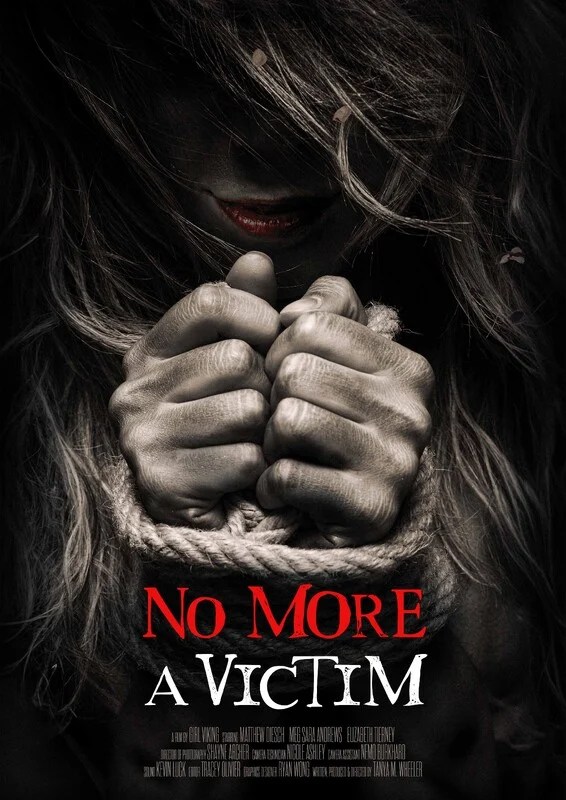
Short Film Review: NO MORE A VICTIM. Directed by Tanya M. Wheeler

When the victim of a killer in the woods explains her final day, it turns out it was a different day to that experienced by her killer.

Review by Julie C. Sheppard:

Revenge is the central theme in the chilling short, No More A Victim. An innocent boy is murdered, and his grieving parents take things into their own hands, seeking justice and revenge against an unrepentant killer. The film cleverly plays with structure by making scenes non-linear.

The final result, with the use of an effective introductory voiceover, is carried out off the top and then the screenplay goes back in time for further plot explanation. Vigilante justice is achieved convincingly by the performances of the actors playing the parents. You can truly sense their desperate anger towards the murderer, who is also well-performed by the actor playing the remorseless character, her smug attitude igniting the anger of the parents even further.

The filmic convention of revealing true identities in a grocery after an initial anonymous meeting is simply brilliant. The score of the famous piano piece Moonlight Sonata as the film comes to a close, is an apt choice as the day ends along with the life of the initial murderer, her body left forever in the darkening forest setting. And, while a violent manner to seek justice, the parents do indeed achieve their ultimate revenge.