
Interview with director Yama Rauf (NO WOMAN)

matthewtoffolo's avatarMatthew Toffolo's Summary

Yama Rauf’s film from Afghanistan “NO WOMAN” played to rave reviews at the November 2016 Under 5 Minute FEEDBACK Film Festival.

Matthew Toffolo: What motivated you to make this film?

Yama Rauf: There was a women’s day film festival in my home town Mazar-i-Sharif, where I made this film for competition and it won best film prize. I am from a country where patriarchy is dominated the society, but I strongly believe in man and woman equality and I am fighting for it.

MT: From the idea to the finished product, how long did it take for you to make this film?

YR: It took around 2 weeks from idea to finished product. The most exciting part is when you see the results every single moment in post production.

MT: How would you describe your short film in two words!?

YR: Equal unequally

MT: What was the biggest obstacle…

View original post 416 more words

Interview with director Dave Lojek (PROVERBIAL LUCK)

matthewtoffolo's avatarMatthew Toffolo's Summary

Dave Lojek’s film from Austria (via Germany) “PROVERBIAL LUCK” played to rave reviews at the November 2016 Under 5 Minute FEEDBACK Film Festival.

Matthew Toffolo: What motivated you to make this film?

Dave Lojek: Language and film can have nice effects on audiences. But less talk and more deeds are preferrable in most films. This one needs the voice-over. As a filmmaker and linguist I know that idioms are quite hard to translate. That was a good challenge for the subtitles. The “Amelie” tinge is intended.

The writer and co-director Steffi asked me to read the script, because she had seen some of my award-winning previous movies. I liked the idea but warned her that live animals are a risk factor in shorts. She told me that she had bought all the animals and also created all props, found locations. So we looked around in the film workshop Kino Cuntra…

View original post 666 more words

Interview with director Matthew Fletcher (LUNCH)

matthewtoffolo's avatarMatthew Toffolo's Summary

Matthew Fletcher’s film from Puerto Rico “LUNCH” played to rave reviews at the November 2016 Under 5 Minute FEEDBACK Film Festival.

Matthew Toffolo: What motivated you to make this film?

Matthew Fletcher: I saw a competition for films under 140 seconds “Everyday A Moment”, the Nikon European Film Festival 2016. We wanted to win the technical award for “best use of kit”, however we didn’t win. This is why you see a Nikon camera in one rotation.

MT: From the idea to the finished product, how long did it take for you to make this film?

MF: Around 3 months, (Nov 2015 -Jan 2016)

MT: How would you describe your short film in two words!?

MF: Spinning Cat.

MT: What was the biggest obstacle you faced in completing this film?

MF: Every rotation of each scene and location had to be an exact length, the exact length and circumference…

View original post 313 more words

Interview with director Otavio Pacheco (HORSE PARADE)

matthewtoffolo's avatarMatthew Toffolo's Summary

Otavio Pacheco’s film from Puerto Rico “HORSE PARADE” played to rave reviews at the November 2016 Under 5 Minute FEEDBACK Film Festival.

Matthew Toffolo: What motivated you to make this film?

Otavio Pacheco: This movie was made for a theater opening, that talks about controversial relationships. The chess inspired the characters as being war enemies and breaking the rules to be together.

MT: From the idea to the finished product, how long did it take for you to make this film?

OP: It was a quick production because it’s short. One week after getting the idea I was able to shot this, with the right chess table and the lights. It took about 5 hours of shooting, very tough because it needs a lot of concentration to make the right movements. After this I needed to put on the music and sound design, it took another week of work…

View original post 344 more words

Interview with director Patrick Cheung (TIME)

matthewtoffolo's avatarMatthew Toffolo's Summary

Patrick Cheung’s short film from Hong Kong “TIME” played to rave reviews at the November 2016 Under 5 Minute FEEDBACK Film Festival. It was the winner of “Best Music” at the festival.

Matthew Toffolo: What motivated you to make this film?

Patrick Cheung: I love timelapse especially hyperlapse and I really wanted to make one film for Hong Kong with this shooting technique.

MT: From the idea to the finished product, how long did it take for you to make this film?

PC: I spent around 1 year from the idea to the finished product to make this film.

MT: How would you describe your short film in two words!?

PC: Patience and Shock.

MT: What was the biggest obstacle you faced in completing this film?

PC: The most difficult part is day and night jumping because I needed to shoot in the exactly same spot every shot.

MT:…

View original post 232 more words

Interview with director Alfonso M. Rodriguez (THE 3RD TRY)

matthewtoffolo's avatarMatthew Toffolo's Summary

Short Film “THE 3RD TRY” played to rave reviews at the June 2017 LGBT FEEDBACK Short Film Festival.

www.facebook.com/the3rdtry

Matthew Toffolo: What motivated you to make this film?

Alfonso M. Rodriguez: Shortly before I wrote the script, I read an article about gender inequality in film and television. The article discussed the ‘Bechdel Test’, which is a small test to determine whether there is an active presence of women in a fictional piece of media. This was probably the main motivating factor that pushed me to write it. This in combination with the fact that the LGBTQI community is also underrepresented. I figured I’d combine and represent the two under one roof; into one film.

From the idea to the finished product, how long did it take for you to make this short?

– Overall, I would have to say 2 years. I used to be an NYPD police…

View original post 499 more words

Interview with director Erez Eisenstein (HOW TO BE ALONE)

matthewtoffolo's avatarMatthew Toffolo's Summary

Short Film “HOW TO BE ALONE” played to rave reviews at the June 2017 LGBT FEEDBACK Short Film Festival.

Matthew Toffolo: What motivated you to make this film?

Erez Eisenstein: “How to be Alone” was my final project as a film student in Tel Aviv University. When the time came for me to start working on my final project I decided that my script will be an adaptaion of a shorty story. The main reason I made this decision was a previous project of mine that I was very pleased with – a modern adaptaion of “Romeo and Juliet”, which acctualy was the project that got me in the film production program in the first place. And as it turned out, the actress I casted to play Juliet was also the lead in “How to be Alone”…

From the idea to the finished product, how long did it take…

View original post 278 more words

Interview with director Zsolti Szabo (SHAPING SCARS)

matthewtoffolo's avatarMatthew Toffolo's Summary

Short Film “SHAPING SCARS” played to rave reviews at the June 2017 LGBT FEEDBACK Short Film Festival.

 Matthew Toffolo: What motivated you to make this film?

Zsolti Szabo: ‘Shaping Scars’ was inspired by a personal relationship I had in the past, as well as by the experiences of the Poet Fern Angel Beattie and Composer Christopher J. Ward, their past relationships equally influenced the spoken word and music they created for this film.

From the idea to the finished product, how long did it take for you to make this short?

I first discussed the concept with the Poet Fern in Spring 2015 and the film premiered in an intimate setting of my 30th birthday party on 5th December 2016.

How would you describe your short film in two words!?

Dancing Pain

What was the biggest obstacle you faced in completing this film?

This film was my debut…

View original post 452 more words

Inside the Chaos: How to Eat Healthy on a Movie Set

movieset3.jpgby Kierston Drier

We’ve all been there.

You know what I am talking about the great divide that is your health and the workplace. It’s no different for the industry of film and television. Oh wait… yeah it is. Juggling health, cost and time is always a hassle. And let’s not forget those five to ten servings of fruits and veggies followed by that roughly 90 minutes of cardio at least once a week.

CONS:

Long working hours

You’re probably working a 12-hour day plus lunch and commuting. So lets round that up at a 15-hour day. (One hour lunch, plus approximately one hour in commuting each way.) Add an average eight hours for sleeping  (and yeah, who REALLY gets that much?!) and you have “drum roll please” one extra hour in your day! One whole hour to do everything else in your life like showering, checking emails, paying bills, answering personal calls, seeing your friends and/or family, maybe unwind with a glass of wine and somewhere in there maybe fit in some step aerobics.

High Stress- High Energy Job

Any job on set is usually specialized, and there’s normally a lot of pressure on set “get the right shot, meet a deadline, hit your mark, and do it all with a smile on your face.” Regardless, while life in production has a lot of hurry-up-and-wait, and standing around, it definitely makes up for it in the times when it is go-go-go and totally hectic.

PROS:

Almost constant access to food

Enough said. Between catered meals and craft tables, on any show above a student-level film, you will likely at least be fed.

The great debate is how to manage hunger, boredom and hectic lifestyles with the constant access to food of all kinds around you!

I’m not a nutritionist, a dietitian, or even someone who claims to be super healthy, but here’s how I break down a (fairly) guilt-free day of set-snacking. While set calls vary by show, I used a standard 12+1 hour daytime schedule.

4:40 a.m.– I’m up and out the door for a 6 a.m. call. I’ve showered the night before, check my emails on the streetcar, and grab a 1/2 a banana on my way out to jump start my metabolism, wake me up and follow my grandmothers’ advice (“never skip breakfast!”).

6 a.m.- My actual call time. Hopefully your crafty is on set and has the basics out, which hopefully includes the “hot and ready” breakfast. If you have this luxury, I advise to take advantage of it. I always vouch for a high-protein option to fill me up. Eggs and bacon are my go to if I have them, but for vegetarians and vegans look for oatmeal or a granola with non-dairy milk.

8:30-9 a.m.– Sometimes you miss breakfast, and sometimes you only get the tiniest bite before you have to run off! Regardless, three hours into call, craft services should at least have the two Big C’s: coffee and carbs. In my opinion, this is the time (if you have it) to grab something carb heavy. You have the whole day to work it off, and it will keep you from being super hungry later. I’m a morning person, so I usually skip the coffee and grab some more fruit: pineapple, cantaloupe, fresh berries with maybe a small yogurt, will keep me going. Note: Also, now would be a good time to grab a bottle (or two) of water!

11 a.m.- If I’ve missed my chance to grab food, this is when I’ll grab coffee number one. As a personal rule I don’t add sugar to any beverage; sugar wiggles its way into so much food on set, I do what I can to limit it when I have the option. I usually grab a coffee with a non-dairy option (almond, rice, or soy milk). If a sub is going out I ask myself this system of questions to decide if I take the AM sub or not: Am I hungry? Do I really want this sub? Is it better to have something smaller now (like a piece of fruit) knowing lunch is coming?

1 p.m.- Usually lunch time! I fill up my plate accordingly:

1/4 plate: Hot veggies (Steamed green veggies like green beans, broccoli, asparagus, etc.)

1/4 plate: Cold veggies (Raw veggies, salad greens, mixed salads, marinated veg salads, whatever they have)

1/4 plate: Starches (Baked yams, squash or rice. You can also do pasta or potatoes!)

1/4 plat: Protein. (There is usually a vegetarian protein option, but I often go for the leanest meat I have access to. Chicken or lamb are good options, as is fish!)

Note: Remember to grab a beverage! My recommendation: water.

3 p.m.- This is when I get coffee. And I might take this opportunity to indulge with chocolate, a cookie or maybe even a handful of potato chips. If you’re really conscious about eating healthy, can those indulgences and reach for the trail mix, some raw veggies or fiber-filled fruits that will fill you up and keep you full!

5 p.m.- I’m usually not hungry around now, but if you are, grab a handful of one of the treats mentioned above! Try hummus and crackers, raw veggies or a banana/apple/pear, or even soup if the crafty has prepared some. Also, don’t forget to stay hydrated with maybe another glass of “dare I say water.”

7 p.m.- If all goes well, by now I am wrapped and on my way home. I try to use my time to my advantage “I check my emails on the bus”, and, if I catch craft in time before they leave, I’ve filled a thermos with a sugarless herbal tea to drink on the way home.

9 p.m.- Of course as it would have it, now I’m hungry, but trying to be good, I’m likely to grab something like cheese and crackers, hummus and crackers, soup I’ve made at home or even a bowl of popcorn. When I get home I usually make a snack, hop in the shower, call a friend or family for a brief chat, then put my feet up for 20 minutes and read or noodle around the internet until sleep time, at say 10:45 p.m.
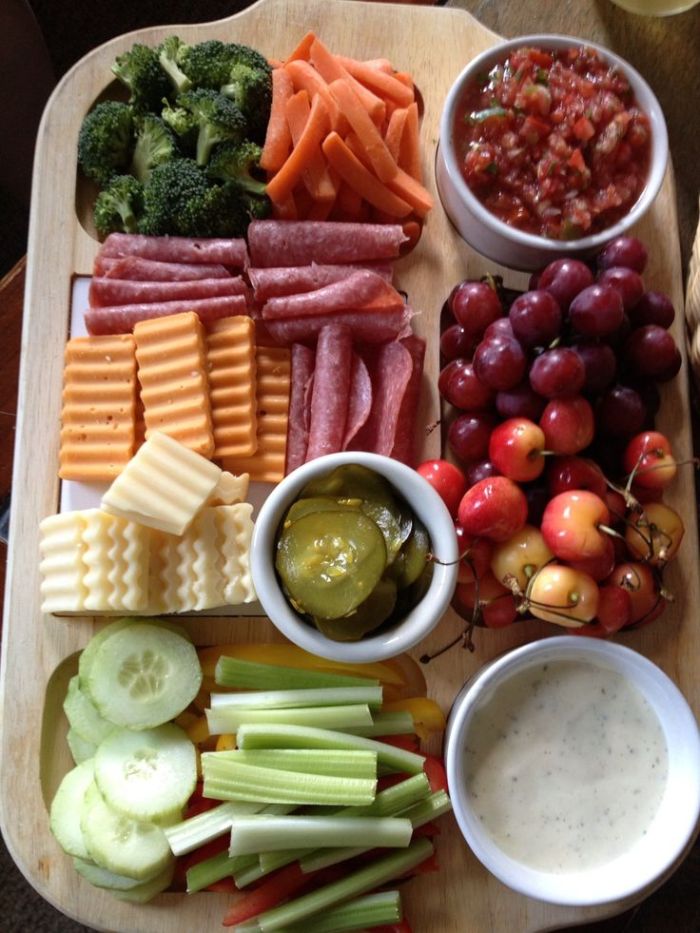
movie set1

movie set2.jpg

Inside The Chaos: When to Walk Away from a job.

When to Walk Away from a job.jpgby Kierston Drier

An adage in my family has long since been, “Some of the best jobs are the ones you don’t take.”

I can’t believe I am writing this, but for this first time since entering the world of film and television, I turned down work.

Not just turned it down, but walked away from a job that was handed to me. Walked out in the interview. And I firmly believe it was the right thing to do. I gathered enough information during the interview to understand that the show I was being offered a job in would be far more difficult than the reciprocation they were offering. I’m going to share with you some of the warning signs for what to look for and how to tell when it might be better to let a job pass you by.

KNOW HOW YOU GOT THE CALL

It’s important to start at the beginning here. There is a difference between getting an interview for a mass applied for job posting online, a call from a head hunter, and a personalized referral from a colleague or known source. Mass applied for jobs are likely to have a large pool of applicants, and head hunters can usually guarantee a certain amount of quality in their offers . Referrals are common and trusted in the film and television industry, but that doesn’t mean you shouldn’t consider the person who referred you, what your professional relationship with them is, and who they chose to send your information to.

KNOW THE COMPANY

Research the production company, the show, and, if possible, the team you’re with. Some shows are secretive and keep their information quiet, but that doesn’t mean that you can’t research the production company or tap your industry resources for reviews and references on working with the company or similar team. Listen to multiple viewpoints, and listen to everyone’s opinion. Don’t make an opinion on your own immediately, but listen to and tuck away what you hear from others and what you glean from your own personal research.

KNOW YOUR JOB

Know what job you’re going in for. Know it inside and out. Know what it takes to do your job correctly and what things you need the job to be able to provide you in order for you to perform your responsibilities. Need access to reliable transportation? Need to be promised a certain type of equipment? A specifically allocated budget? Know what you’d like to have, know what you need to have, and know what the happy medium would be between the two so that you can negotiate comfortably.

KNOW YOUR RATE

This is so so important. Know your rate! Know your personal rate, know the professional rate for that job in general, know what your worth is based on your experience and your craftsmanship. Make sure the people hiring you know what that rate is. Go in with knowing what you’d LIKE to make, what you SHOULD make and what rate is TOO LOW.

There is a strategy to working below rate and working for free. Sometimes it is done for experience, for a special credit, or for a passion project or for a friend. But remember when going in for a JOB, what is your relationship to the employer? If the job is one you have done before, and one you have experience in, then there is little reason you should accept any lower than the standard professional rate. Unless you are doing a favour for a friend or close contact, you should not be willing to negotiate that rate any lower than industry standard.

KNOW WHEN TO WALK

Walk away when:

-The company refuses to answer all your professional questions with clear, informative answers.

-The company or production makes unrealistic promises that they do not put in writing.

-The company  or production uses non-committal language while discussing details that are absolutely necessary for your job to be completed. (Ex. ” We’re pretty sure we’ll have enough money for that [insert absolutely necessary item].”)

-The production or company refuses to pay your kit fee, or supplement you for your own materials without prior discussed and written consent.

-The information you are basing your job around keeps changing.  (Ex. A craft person who constantly gets a different head count number than predicted; a location manager whose location requirements keep changing.)

-The job is physically more hours, labour or requirements than is legal.

Remember,  some jobs aren’t worth the headache!

When to Walk Away from a job2