Interview with Festival Director Jaka Polutnik (Student Cuts Film Festival)

Student Cuts film festival is aimed at young authors in the early stages of their film careers. Their independence lets them work on unconventional, creative, energetic and subtle ideas. Such films are an important insight into the local environments and everyday themes seen from a different perspective. By joining Student Cuts network the authors not only gain access to the big screen, but a network of audiences all over Europe, contacts with experts and simply gain exposure. In the end, films are made to be watched.

Website: www.studentcuts.eu

Interview with Jaka Polutnik

Matthew Toffolo: What is your Film Festival succeeding at doing for filmmakers?

Jaka Polutnik: Student Cuts film festival is giving opportunity to be seen to film makers, who are not professionals and they learn the film language through diverse sources. In the 5 years since we started our festival the growth of affiliated events and films submitted has been staggering. We went from 30 submitted films in the first year to more than 2000 for the latest edition. We expanded film screenings to 5 countries: besides Slovenia we are also present in Croatia, Finland, Spain and Portugal. The most screened films have been shown to the audiences up to 13 times at various locations. Films from the festival can also be seen on the regional public television station. We do not have illusions that we will create a new Martin Scorsese as our festival is not dedicated to similar film maker profiles. But we would like to show, there is more than just professional production. We would like to show ideas of amateur film makers that are equally good or even better. Their ideas are unlimited and less self-censored – they are honest and film makers believed in them, and it can be seen on the big screen.

MT: What would you expect to experience if you attend the festival this year (2016)?

JP: We make small steps to progress each year. This year the main driving force is a change of venue. The old city cinema where we hosted the festival over the past few years has unfortunately closed its door so we had to find a new place. Even though the new venue is not a cinema, we believe the ambience is going to be even better. We will be able to offer more of a connection between our guest experts, so our visitors will be able to have some informal time with them, not just listen to their lectures.

MT: What are the qualifications for the selected films?

JP: We have to distinguish between two categories. If we are talking about films at the official selection program, who are in the running for symbolic prizes, we impose several criteria: (1) films need to be under 15 minutes in duration, (2) film maker had to be 30 years old or less at the time the film was finished, (3) films had to be finished in the past two years relative to the date of the festival and (4) films had to be produced without any professional help. All other aspects are open for film makers (topic, techniques, technology etc.). On the other hand we have many promotional events (not all of them are under our organizational control) where we have no limitations. All films, registered to the festival, can be shown at promotional events regardless of the length and other criteria mentioned earlier. It is not against our policy to show films by professionals as well, but they have to be aware we cannot offer any financial compensation in return. Our festival is dedicated to amateur film makers and those who normally do not have the possibility to come show their work on the big screen.

MT: Do you think that some films really don’t get a fair shake from film festivals?

JP: Film festivals come in various shapes and sizes. Especially with digitalization the possibilities really are endless. Every author can find a way to distribute her film, if she wants to do it. What we see as a problem, are films done outside of film schools or by other young authors, who learned the film language on their own and really know how to use it. These films are far from perfect, but they can tell us so much. Film language is a language like any other, so I can compare our philosophy with usage of a foreign language. Pretty much everyone has to (or at least should) learn a foreign language at some point. In most cases this just happens to be English, however we could use any other as an example. Some people come close to native speaking proficiency and others have minor or major difficulties with that language. The latter will likely never succeed in a storytelling competition as they cannot compete against those who know how to use the language really well. Nevertheless, people with poorer language proficiency still might have something to tell. And even though sometimes the message is not very clear, the message can be strong and powerful. If they would be heard, it might increase their motivation to improve their language skills and start telling more stories to a bigger audience. And that is what we are trying to do with young film makers. Such niche films are not very interesting for sponsors or wider support, but we believe they are an important step for those who are learning the language of film through alternative ways. The support of our institution, University of Maribor, Faculty of Electrical Engineering and Computer Science (UM FERI) enables us to work with these films on a low budget and this is the only way we can keep the festival alive and well. Otherwise there is simply not enough financial support to run such a festival as we would like to have. On the other hand the reception by the audience is continuously improving as we have been steadily logging more than 100 people at monthly screenings. Compared to often miserable attendance for major motion pictures at the big city cinemas it clearly shows that such films have a storytelling potential. Film makers just need the opportunity.

MT: What motivates you and your team to do this festival?

JP: We have to understand the beginning of the festival to understand the motivation. Everything started as a small local event, where students of Media Communication at the UM FERI wanted to present their work. As the youngest study program we were constantly facing questions like: ”What are you guys actually doing?” or: ”What can you become when you finish the studies?”. We wanted to show, who we are. This was back in 2010. In six years the local media event transformed into a global film festival, our work is on display around Europe from Portugal to Finland and we would like to establish connections with even more partners. It is not about the festival itself, it is about film makers. And even if we achieve all that, we still want to follow the same aim as when we started: to show films of local film makers to diverse audiences. For me, and my closest coworkers, the festival represents a valuable insight into diverse production centers enabling us to forward the knowledge gained to the next generations of students. On the other hand the project is run by students, who get practical experience, references, they meet new people, maybe even contacts for future jobs. Students also want to learn whatever is new in film production and they are a bit oversaturated with Hollywood production. The team of students working on this changes more or less annually and new talents start to organize everything that takes place throughout the year (film festival itself and eight more monthly film nights hosting talks with local authors). The only constant are teaching assistants at the Institute of Media communication, who try to harness everything and focus the work of students towards the main aim of Student Cuts.

MT: How has the festival changed since its inception?

JP: As mentioned, we did not plan to organize the festival in the first place. We just wanted to show the work of our students to the public. Among other work there were some documentary films we wanted to show. Until 2012 the film projections were part of the one day event called Media day. But in 2012 we found that films simply don’t fit to the structure of the event, so we decided that we will screen films separately. The first day was reserved for film projections and the second day was structured around talks by media experts. We invited some partner institutions to join us and send films their students made and we enjoyed a cozy little festival shaped event in 2012 as part of Media day. This was still just 30 films from 5 countries. The following year Mojca Pernat from Film Factory joined the organizing team and with her experience from other festivals we tried to find a form that would fit our needs and that would be more like a festival oriented event. Mojca also used her contacts to promote our film festival and the result was almost 100 films from around 20 countries. As such a response surprised us we did not know what to expect in the future. Nevertheless, so many films gave us a chance to do something more. It panned out in a way that the film festival became the dominant part of the event, taking over the Media day and so the Student Cuts brand was born. As submissions for the 2016 festival just closed, we already know we are dealing with 2519 registered film from 114 countries and during this festival year we will organize, or be a part of, more than 30 events. Such massive growth would not be possible without dedicated students, who work hard and care about the idea behind it. There have been more than 40 students over these years who all deserve massive appreciation for their work; partners, who share a similar philosophy and they see the potential in our idea; and last but not least my coworkers, who have been around for all these years and took care of all the issues largely behind the scenes. As soon as we finish the renovation of our web page, all of them will get a proper place and honorable mention there as Student Cuts would never be so successful without them. So thanks to all who helped Student Cuts to become what it is.

MT: Where do you see the festival by 2020?

JP: As our development in the past 6 years was fast and unpredictable, this becomes a bit of a trick question. I don’t expect any further growth in the amount of submitted films and it would be great if we can remain at the level we are now. We do not predict any major changes for the festival itself at the moment. If financial resources allow, we would like to extend the festival over several days and invite more foreign film makers to the festival, not just the locals. But as long as we are dependent on local companies to support us financially, we do not plan any major changes in near future. The festival is free for film makers and the audience, as this is based on our core philosophy, and it will remain that way in the future as well. Our plans with the festival are aimed more at expanding the Student Cuts affiliate network. We would like to find new, strong partners, who would support us with regular screenings for a growing variety of local communities. It would be nice if these promotional affiliate events would increase to more than 50 per year. That would mean there is on average at least one projection of Student Cuts films per week during the festival year. That would be a nice increase in exposure for all of our film makers. But let’s wait and see what the future brings.

MT: What film have you seen the most times in your life?

JP: Huh, difficult question. I would say War Photographer by Christian Frei from 2001.

MT: In one sentence, what makes a great film?

JP: In very simplistic version I would say the film is great, if the audience accepts the message, the idea of the film, and that it gives them something to think about. Even if it is a light comedy, where you just switch your mind off, you can still get the promising idea behind it. But now these are two sentences already.

MT: How is the film scene in your city?

JP: Well, Maribor is a sleeping giant at this point. In the past we had several city cinemas, but this year the last of them closed its doors and only two multiplexes are operational. Official numbers of sold tickets in these multiplexes rise year to year, but every time I’m in the cinema, it is more or less empty and I can often enjoy the film alone or with only a handful of other moviegoers. As there is no real alternative in the city anymore, we had a giant problem searching for a new place for our festival. The last cinema closed due to many financial problems when the local government denied the support and they refused to return some overpaid rents to the cinema. At the same time Maribor was the only city in Slovenia, where the city cinema didn’t get digital technology for the main screen. Beside the infrastructure, the film offerings are quite poor and we can hardly talk about film diversity. Besides the usual Hollywood films it is hard to find any other production. One of the multiplexes is trying to bring art films in town, but the concept is still under development as this was in the domain of the recently closed cinema in the past. And last but not least, professional film production in this area is poor or almost nonexistent. Even some promising groups of film makers have to move to other parts of Slovenia or abroad in search of better opportunities to create films. That is why it is essential that we encourage our students to produce films and that we keep working on Student Cuts film festival and enrich the local film culture. But in the end you have to accept the fact it is not only up to us to do that.

studentcuts.png

Interviewer Matthew Toffolo is currently the CEO of the WILDsound FEEDBACK Film & Writing Festival. The festival that showcases 10-20 screenplay and story readings performed by professional actors every month. And the FEEDBACK Monthly Festival held in downtown Toronto on the last Thursday of every single month. Go to www.wildsound.ca for more information and to submit your work to the festival.
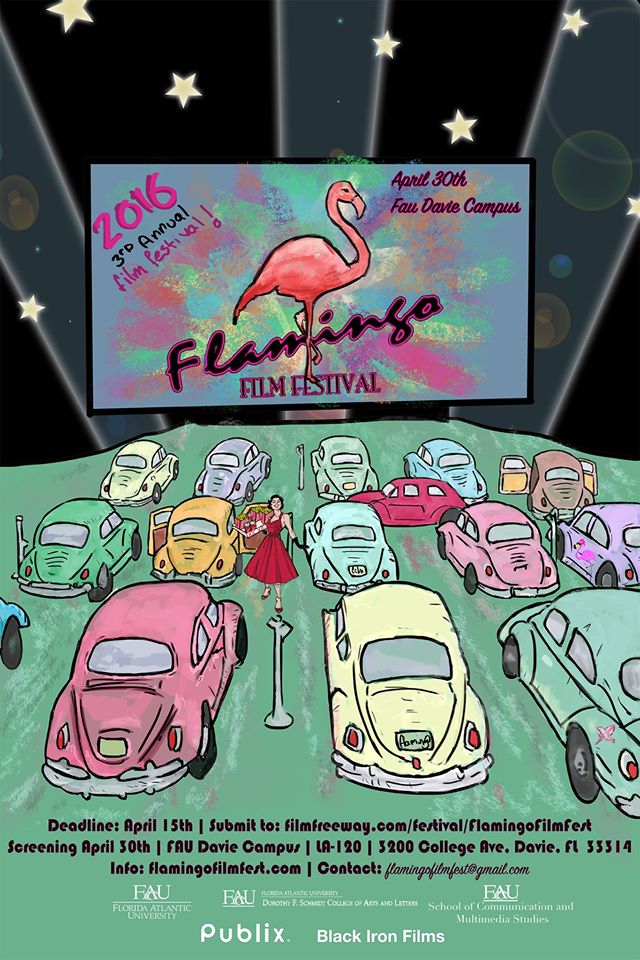
Interview with Festival Director Nathalia Lemos (Flamingo Film Festival)

The Flamingo Film Festival is dedicated to exhibiting the international short films and videos produced by student filmmakers. For the past 3 years, this event, held in South Florida, has honored outstanding narrative, documentary, experimental, and animated projects created by students while enrolled in a college, university, or other post-secondary institution.

Website: flamingofilmfest.com

Interview with Nathalia Lemos:

Matthew Toffolo: What is your Film Festival succeeding at doing for filmmakers?

Nathalia Lemos: The festival is giving student filmmakers the opportunity to have their work screened not only for their peers, but also for a diverse audience of festival goers.

MT: What would you expect to experience if you attend the festival this year (2016)?

NL: Anyone attending the festival this year can expect a diverse showcase of student films. Festival goers will have the unique opportunity to see a variety of films not only from local student filmmakers, but also student films from abroad.

MT: What are the qualifications for the selected films?

NL: Well, we are definitely looking for films that are creative and original. We want to offer our audience the opportunity to discover new voices that have fresh and interesting perspectives.

MT: Do you think that some films really don’t get a fair shake from film festivals? And if so, why?

NL: The goal of a festival is to curate a well rounded program. While yes, I am sure that there are films that don’t get a “fair shake,” here at the Flamingo Film Festival we are giving filmmakers from all over the world the opportunity to have their films reach a wider audience.

MT: What motivates you and your team to do this festival?

NL: The Flamingo Film Festival is dedicated to exhibiting the short films from student filmmakers from all over the world. Our goal is to continue to encourage student creativity and to recognize achievement in the film and video medium.

MT: How has the festival changed since its inception?

NL: The festival is now in its 3rd year. And while the mission and goals remain the same, the festival has definitely increased it’s traction with international student filmmakers.

MT: Where do you see the festival by 2020?

NL: By 2020 I definitely see the Flamingo Film Festival as one of the most important international student film festivals in the country.

MT: What film have you seen the most times in your life?

NL: Bram Stoker’s Dracula.

MT: In one sentence, what makes a great film?

NL: In my opinion, a great film is one that remains interesting and engaging no matter how many times you see it. A film that can remain relevant 20 or more years from now.

MT: How is the film scene in your city?

NL: The South Florida film scene is very diverse and vibrant. South Florida is offering filmmakers the opportunity to create fresh and interesting work. I would say that South Florida is currently a terrific haven for independent filmmakers looking for the ease and space to develop their work.

flamingo_film_festival

_____

Interviewer Matthew Toffolo is currently the CEO of the WILDsound FEEDBACK Film & Writing Festival. The festival that showcases 10-20 screenplay and story readings performed by professional actors every month. And the FEEDBACK Monthly Festival held in downtown Toronto on the last Thursday of every single month. Go to www.wildsound.ca for more information and to submit your work to the festival.

Interview with Executive Director Nina Streich (Global Peace Film Festival)

Since its inception in 2003, the GPFF has shown over 500 films from around the world. The critically acclaimed programming has included Academy Award winning, nominated and short-listed films. In his blog, former Orlando Sentinel film critic Roger Moore called the GPFF “…one of the best festivals in this part of the country” and said, “Global Peace has the best documentaries of any festival.” GPFF’s leadership believes that to further its mission, success should not simply be measured by attendance numbers but by the engagement the films inspire from the audience – at the festival and beyond.

Interview with Nina Streich

Matthew Toffolo: What is your Film Festival succeeding at doing for filmmakers?

Nina Streich: The Global Peace Film Festival (GPFF) is about actively engaging audiences to do something about the issues in the films they see. Watch Films, Get Involved, Change Things is our tagline and we seek films, mainly documentary but narratives too, that have been produced to have an impact on the issues they address. Filmmakers find enthusiastic audiences and meet leaders of organizations that are working on the issues the their films address. In the past few years, we have begun to offer other services for filmmakers beyond the festival including impact consulting and fiscal sponsorship.

MT: What would you expect to experience if you attend the festival this year (2016)?

NS: Most films are followed by discussions with filmmakers and also representatives from local organizations that work on the issue(s) raised in the films. The Q&As are often longer than those at most film festivals. Filmmakers find the audiences engaged and interested in their films as well as the issues they raise. Festival staff and volunteers work to make the GPFF a warm and welcoming experience for filmmakers and audiences alike.

MT: What are the qualifications for the selected films?

NS: We program features and shorts – documentary, narrative and animation. The majority of the program is non-fiction but we always want to include fiction work. We have always programmed films that are “mediums” – between 40 and 65 minutes. Our approach to the definition of “peace” is very broad and includes everything from conflict resolution, social inequality (class, race, gender, age, mobility, etc.), environment/environmental justice, LGBT rights, fair trade and new business models, human trafficking, sports and recreation, comedy/satire. We look for films that inspire and educate. We also include an online selection of films, mainly shorts, in addition to the main program, during the week of the festival.

MT: What motivates you and your team to do this festival?

NS: We are motivated to present a great program that addresses the many aspects of peace and produce an event that is a catalyst for community engagement.

MT: How has the festival changed since its inception?

NS: The festival has grown in both size and impact. 2016 will be our 14th festival. We recognized the changing model of film festivals and decided early on to steer the festival in a direction that served the community in a deeper way, beyond bringing a crowd to a downtown venue for a passive viewing experience. We sought to develop relationships with the filmmaking community that focused on the “why” motivating filmmakers. This involved moving to pull other partners into the festival to build a new structure that would serve as a networking hub. This includes schools, libraries and universities to add depth, variety and timeliness to their community offerings. We reached out to community groups to bring the same benefits of our programming to help educate, energize and increase their member base. Our programming has always been centered on active engagement with our audience.

MT: Where do you see the festival by 2020?

NS: As the festival has evolved, we have begun to offer services to filmmakers (whether their work has been in the festival or not) including impact consulting and fiscal sponsorship.

MT: What film have you seen the most times in your life?

NS: I’m always looking for and want to see new films so I can’t think of what I’ve seen the most times! Rather than the films that I’ve seen the most times, I think more about the films that have influenced me the most. It’s a long list…

MT: In one sentence, what makes a great film?

NS: A great story.

MT: How is the film scene in your city?

NS: I live in New York and the festival is in Central Florida. New York, of course has an incredible film scene. Central Florida doesn’t have anywhere near the size of the film scene as New York, but it is just as engaged, passionate and exciting.

****
Nina Streich has an extensive background in both the film/TV/media industries and in the political arena. She held senior management positions in other film festivals prior to creating the Global Peace Film Festival in 2003 including Festival Manager of the Newport International Film Festival and Development Director of the Nantucket Film Festival. She began her career as a film editor, cutting trailers and marketing material for over 50 major studio and independent features, including The Elephant Man, Raiders of the Lost Ark and Scandal. In politics, she has worked for many candidates, from local to presidential campaigns. She was a coordinator of the Inauguration of Mayor David N. Dinkins in New York City in 1990 and was appointed Deputy Film Commissioner for the NYC Mayor’s Office of Film, Theatre & Broadcasting. After leaving the Mayor’s Office, she was the Deputy Executive Director of the NYC Host Committee for the 1994 Grammy Host Committee. An accomplished events producer, she has organized film premiers, music festivals, conferences, parades, street fairs and press conferences. She has produced several documentaries on subjects she is passionate about.

_____

Interviewer Matthew Toffolo is currently the CEO of the WILDsound FEEDBACK Film & Writing Festival. The festival that showcases 10-20 screenplay and story readings performed by professional actors every month. And the FEEDBACK Monthly Festival held in downtown Toronto on the last Thursday of every single month. Go to www.wildsound.ca for more information and to submit your work to the festival.

Interview with Festival Director Justin Timms (Brooklyn Horror Film Festival)

The 2016 Brooklyn Horror Film Festival (BHFF) will be held the weekend of October 14, 2016. The BHFF is a must for established and up-and-coming filmmakers who have created short and feature films that instill fright, dread, panic and all around weirdness. In addition to the screenings, we will have Q&A’s with filmmakers, panels, games, food & drinks and more. The directors of the BHFF are committed to celebrating the art of horror filmmaking.

Go to the website: http://brooklynhorrorfest.com/

Interview with Justin Timms:

Matthew Toffolo: What is your Film Festival succeeding at doing for filmmakers?

Justin Timms: Well, this is actually the first year of the BHFF so I can speak to our goals as a festival and give filmmakers and idea of what they can expect. Aside from having a space for filmmakers to show their work to an audience, we’re also striving to build a creative, social and fun event that is unlike your standard regional film festival.

MT: What would you expect to experience if you attend the festival this year (2016)?

JT: Filmmakers & audience members can expect to see nothing short of the best in independent genre film. In addition to these screenings we’ll have a lot of fun events and parties. We haven’t officially announced these just yet but stay tuned!

MT: What are the qualifications for the selected films?

JT: We don’t have any specific criteria that we’re looking for. We are going to put together a cohesive program that showcases the best independent talent. We’re looking at horror films, sure, but we’re also looking at documentaries, weird comedies and really any kind of fantastic indie film.

MT: Do you think that some films really don’t get a fair shake from film festivals? And if so, why?

JT: Hard to say, but at BHFF we’re currently accepting submissions and there’s so much time and thought that goes into programming and we’re absolutely taking every submission into consideration.

MT: What motivates you and your team to do this festival?

JT: It sounds cliche but we love horror films, it just doesn’t feel like work for us. Every time something falls into place for the festival it’s exciting.

MT: How has the festival changed since its inception?

JT: This is our first time around, we’ll let you know next year.

MT: Where do you see the festival by 2020?

JT: We want this to grow into the premier east coast industry event for any genre filmmaker. We love watching movies, but come on, let’s move past sitting in the theater for 10 hours and doing q&a’s all day, we want to show films but also have a great time. Let’s check out some rad films and then get together and discuss them over a nice cocktail.

MT: What film have you seen the most times in your life?

JT: That’s a good question. I’m not the type of person who re-watches films a lot. Usually I’ll watch a film in theaters and if I really loved it I’ll buy the Blu-Ray. But honestly I think I might have seen Rocky 4-5 times, that might be the winner right there.

MT: In one sentence, what makes a great film?

JT: I can do it in a word – story.

MT: How is the film scene in your city?

JT: Brooklyn is one of the top markets for artists to share their work. We have some of the best audiences in the country, people that really appreciate the art of filmmaking.

****

Interviewer Matthew Toffolo is currently the CEO of the WILDsound FEEDBACK Film & Writing Festival. The festival that showcases 10-20 screenplay and story readings performed by professional actors every month. And the FEEDBACK Monthly Fesival held in downtown Toronto on the last Thursday of every single month. Go tohttp://www.wildsound.ca for more information and to submit your work to the festival.

Interview with Festival Director Jacques Paisner (Santa Fe Independent Film Festival)

The Santa Fe Independent Film Festival was named Moviemaker Magazine’s “50 Festivals Worth the Entry Fee in 2014 & 2015”. Santa Fe Independent Film Festival is invested in Santa Fe as a destination for film. Bringing cutting edge programming, the latest independent films and directors, Native cinema, New Mexico and Student films, and masters discussions with visiting artists and professionals in their field, all in the setting of downtown Santa Fe.

Interview with Festival Director Jacques Paisner:

Matthew Toffolo: What is your Film Festival succeeding at doing for filmmakers? 

Jacques Paisner: While exposing their pictures to a discriminating and unique audience here in Santa Fe, filmmakers also get accommodations, chances to interact with celebrity guests, and peerless artists, plus access to all films and events at the festival, and place in a highly selective program amongst the best international and independent films of the year each season.

 
Matthew: What would you expect to experience if you attend the festival this year (2016)? 

Jacques: You can expect exciting world cinema, top independent films, flawless projection in a little city with some of the best theaters in the world. You can attend epic parties, and rub elbows with people like Shirley Maclaine , And George RR Martin, and even the legendary Gena Rowlands. 
 
Matthew: What are the qualifications for the selected films? 

Jacques: We’re really looking for films that tell a unique story, a film that invites you into a world all its own, captivating films from all over the world that push the boundaries of the imagination, that are on the cutting edge of what a film is or what a narrative is or what a documentary is, films that reinvent the genre, or more importantly allow an artistic medium to come face to face with itself.
 
Matthew: Do you think that some films really don’t get a fair shake from film festivals? And if so, why?

Jacques: There are some very good films every year, and there are many not very good films every year, and the same goes for festivals. There are some really good ones that put a lot of time and attention and professional efforts into their programs, and there are some really bad ones too.

 
Matthew: What motivates you and your team to do this festival? 

Jacques: Well I guess the first motivation is that it’s our job, but beyond that I think there’s a real sense of responsibility and purpose and decency that runs throughout the organization, with this greater common goal of Santa Fe as this Mecca for independent films and filmmakers. Our office is above the Jean Cocteau theater and George RR Martin is her landlord, and we have coffee and pizza, young interns, and really spend a lot of time talking about movies,  so it’s fun work and I think there’s also a sense that what we’re doing is dynamic and important and cutting edge, and also sort of sticking it to the Man in a creative way.

 
Matthew: How has the festival changed since its inception? 

Jacques: The festival started as a fringe fest in a community center, now the biggest festival film festival for hundreds of miles in every direction, with five theaters, over 10,000 attendees anuli annually, and called “a young Sundance” by IndieWire, The festival has grown into a top art event in Santa Fe.

 
Matthew: Where do you see the festival by 2020? 

Jacques: We would like to expand the attendance to about 50,000 people, with about 30,000 of those traveling here from out of town. We want Santa Fe to be a top destination for films and filmmakers and to host more and more screenings and more special events each season.

 
Matthew: What film have you seen the most times in your life? 

Jacques:I don’t think I’ve seen it the most times but I know I have seen “My Life as a Dog” many times.

 
Matthew: In one sentence, what makes a great film? 

Jacques: Orsen Welles said “A film is never really good unless the camera is an eye in the head of a poet” however, I think a film, or any piece of art, really succeeds or fails based upon the standards that it creates for itself.

 
Matthew: How is the film scene in your city?

Jacques: We are now one of the top movie theater cities on the planet with Violet Crown, the historic Lensic Performing Arts Center, George R.R. Martin’s Jean Cocteau Cinema, the Center for Contemporary Arts programmed by “Sembene” director Jason Silverman, and The Screen at the Santa Fe University Film School chaired by Chris Eyre. 
____

Interviewer Matthew Toffolo is currently the CEO of the WILDsound FEEDBACK Film & Writing Festival. The festival that showcases 10-20 screenplay and story readings performed by professional actors every month. And the FEEDBACK Monthly Fesival held in downtown Toronto on the last Thursday of every single month. Go tohttp://www.wildsound.ca for more information and to submit your work to the festival.

Interview with Festival Director Johan Matton (Nordic International Film Festival)

Nordic International Film Festival (NIFF) is based in New York City at the renowned Scandinavia House on Park Avenue also known as the Nordic Center. NIFF celebrates Nordic and International films and they strive to showcase new and upcoming independent films as well as honour exceptional work from already established filmmakers. They screen the nominated films in the official selection at a grand theatre inside the Nordic Center for press, distribution, filmmakers and general admitted audience.

http://www.nordicfilmfest.org/

Interview with Festival Director Johan Matton:

Matthew Toffolo: What is your Film Festival succeeding at doing for filmmakers?

Johan Matton: Filmmakers that come to NIFF have the opportunity to view and gain inspiration from new Nordic and international independent films. From our 22 screenings last year, 7 of them were world premiers, 13 had their North American premier and 16 of them had a representation present for post screening Q and A’s. NIFF is more than just a screening opportunity at a great venue in New York City. We encourage filmmakers in our program to make the trip to festival for their screening as we want do everything we can to help their film go farther than the screen. Besides providing them with the opportunity to engage with audience after their screening we also arrange a live streamed interview with each of them at the festival so they can get the word out there about their film. After our first year, we connected filmmakers in our Official Selection with American distribution companies and future screening opportunities and we will continue to do the same as NIFF grows. A film festival programmer recommending a film to a distributor or sales agent, carries more weight because the acquisition team there knows that we have viewed hundreds of films that year and sent them only these few selected films for them to review.

For NIFF 2016, we will also have panels from the Swedish Film Commission this year, enlightening people on how to facilitate and shoot independent films in Scandinavia. For our winners this year, we are acquiring extraordinary prizes with a possible opportunity to be able to travel to Scandinavia.

Matthew: What would you expect to experience if you attend the festival this year (2016)?

Johan: Expect to see premiere short and feature films and outstanding Nordic and International feature films that have not yet been released. Expect a warm welcome from our NIFF team and a fantastic opportunity to connect with other filmmakers and key industry people. We are thrilled to announce the addition of our panels where industry professionals will speak about films, distribution and how to film in Scandinavia.

Matthew: What are the qualifications for the selected films?

Johan: This year we are inspired by female filmmakers and films with Nordic themes. If a film has not yet been screened or released outside the festival circuit and it holds the standard and quality and audience appeal that we are looking for then we will put it in our official selection.

Matthew: Do you think that some films really don’t get a fair shake from film festivals? And if so, why? 

Johan: Yes, NIFF focuses a lot on giving the filmmakers and their films as much recognition and press as possible. We work with the filmmakers, we do not just screen the film. This was one of the primary reasons we created NIFF, not just to create a Nordic hub in New York but also because we are filmmakers ourselves and have experienced poorly run festivals that charge a high submission fee only to screen our short film in a basement of a bar and while charging $20 entrance fee to see our film. We have also seen films get lost at large festivals. We are committed to every submission and every film is seen from beginning to end, with the majority of films seen by at least two programmers. Many film festivals don’t even review every submission, let alone watch them without fast forwarding. NIFF gives every film a chance for an honest review.

Matthew: What motivates you and your team to do this festival?

Johan: We wanted to do something new by connecting US filmmakers with Nordic Filmmakers with the hopes for them to inspire each other. We wanted to create a festival that give more to the filmmakers with our distribution connections and access to such a great venue as Scandinavia House. We then brainstormed with friends from Tribeca Film Festival and 30 under 30 and friends who worked with IFP and NYFF to create a positive and effective team. In return it is truly inspirational for us to see so much great film.

Matthew: How has the festival changed since its inception?

Johan: 2016 our 2nd year we are expanding to 3 evenings instead of 2 days. We are adding professional industry panels and seminars at the festival. We are expanding our team and crew to give a more sufficient service towards the attendees and the filmmakers.

Matthew: Where do you see the festival by 2020?

Johan: I see us being a main portal and hub for Nordic Films in the US. I see NIFF being the to go to festival for World Premiers of Nordic Feature and Short films as well as some International world premiers. I see us have the option to expand the venue to more screenings and invitations to even more established filmmakers and directors giving panel speeches. I see our Jury being the top in the industry. I see us be able to fly in filmmakers from all Nordic countries to attend.

Matthew: What film have you seen the most times in your life?

Johan: I’m an independent art house film lover and in my adult life as a screenwriter and also indie film producer have probably re-watched Blue Valentine by Derek Cianfrance more than 5 times.

Matthew: In one sentence, what makes a great film?

Johan: A film that leaves you with a feeling or adds to conversation after you walk out from the cinema. (This usually happens when a good director has focused on the mood or tone of a film, you don’t know why you feel so much but you do).

Matthew: How is the film scene in your city? 

Johan: ​We couldn’t be luckier to be based in New York City with such a thriving independent and art house film community!


—–

Johan Matton – FESTIVAL DIRECTOR / FOUNDER / PRESIDENT

Multi award winning actor, screenwriter and producer and a graduated from 3 major theatre schools; the renowned Circle in the Square Theatre School on Broadway, New York Film Academy and Calle Flygare’s Theatre School of Sweden. Johan’s productions and films has been screened at more than 40 top festivals in the world. From award winning short films to critically acclaimed indie films in Sweden, Asia and the US. John has produced two feature films and a feature documentary. Johan is the founder and president of the indie production company Changing Film and have both produced and distributed feature films and handled two very successful festival runs where his films have won Best Pictures at several festivals. Johan’s hope to utilize his great network and connections in the industry to help the filmmakers in the official selection at NIFF to be introduced to distribution companies and press all over the world.

Interviewer Matthew Toffolo is currently the CEO of the WILDsound FEEDBACK Film & Writing Festival. The festival that showcases 10-20 screenplay and story readings performed by professional actors every month. And the FEEDBACK Monthly Fesival held in downtown Toronto on the last Thursday of every single month. Go tohttp://www.wildsound.ca for more information and to submit your work to the festival.

Interview with Festival Director Simon McGuire (Limerick Film Festival)

The Limerick Film Festival is about to enter its 7th year.

https://limerickfilmfestival.net/

Interview with Festival Director Simon McGuire:

Matthew Toffolo: What is your Film Festival succeeding at doing for filmmakers?

Simon McGuire: The Limerick Film Festival has always tried to achieve recognition for film makers locally. Limerick and the mid-west has always had competition from the other regions of Ireland in the industry and we felt that by creating a platform for film makers that it may attract some of the industry to our city and region.

Matthew: What would you expect to experience if you attend the festival this year (2016)?

Simon: This year, like previous years, we try to put on a programme of guest talks that will inspire both new and professional film makers in various crafts. The process of film making is always at the heart of our festival and by bringing craftspeople, who are at the top of their game, to the festival to talk and meet and greet the audience then we have achieved our mission.

Matthew: What are the qualifications for the selected films?

Simon: This is a tough question and not one easily answered. We have a team of judges who firstly short list the films into 12 categories and then select the the winner for each from those short lists. The result is different each year in that the judges have always given each film equal consideration for the categories they have been shortlisted for. The competition has increased every year and thus the challenge to judge is becoming more and more difficult however this is the challenge all film festivals meet each year.

Matthew: Do you think that some films really don’t get a fair shake from film festivals? And if so, why?

If a festival has criteria (rules of submission) that are met then it should be considered in the pot with the other films. however there are short films that don’t meet the rules and guidelines for certain festivals and while they may not be successful for one festival because of this it doesn’t mean that the films won’t be accepted to other festivals. A piece of advise would be for the film makers to read carefully both the rules and background for each festival they want to enter. If you film does meet these then the film maker needs to move to the next festival rather than trying and then being obviously disappointed.

Matthew: What motivates you and your team to do this festival?

Simon: Each year there is a huge challenge to get the mountain of work started and completed for the Limerick Film Festival. As the festival is based in Limerick Institute of Technology, it is the staff and students who take on the roles of the team. Each year there are new students so there is always a learning curve for the team but this is the foundation of the mission for the festival. Giving opportunity to student film makers to be a part of their own festival and capitalise on meeting the professionals that attend. Getting their name out there.

Matthew: How has the festival changed since its inception?

Simon: Since its first year in 2010 the festival has grown from a one day to a three day event. There is always a challenge to get the audiences in the door and we have a staple end of festival event that does just that. Our Short Film Awards Show has been there since year one and has become recognised and our unique selling point. Its a four camera live production that is streamed live (for those who can’t make it to the venue) and honours the filmmakers, both nominated and winners, for their films that were shortlisted.

As the years has passed and we are in our seventh year, we have had the honour of hosting a series of influential guest speakers including, Brendan McCarthy, Co Author of MAD MAX Fury Road; Pat Shortt, Comedian, Writer, Producer; Lelia Doolan, Producer; Pat Comer, Director; Nathan Nuggent, Editor; Eamon Little, Director; Patrick Cassidy, Composer; Nick Ryan, Director and many more.

We have grown with our film makers over the past seven years and as their talent improves so has our small festival and we hope to continue to grow with them.

Matthew: Where do you see the festival by 2020?

Simon: In 2020 it is hoped that Limerick City will be the European City of Culture, of which they are bidding for this year. We plan to be one of the year’s events to look forward to. There are also talks in place where we may expand by working with other events and festivals in the region. Collaboration with the communities and other event organisers is key for Limerick and its culture. By working with others we can create a more fruitful and media rich culture which could be appealing for all ages and tastes.

Matthew: What film have you seen the most times in your life?

Simon: Since a child I have always loved John Sturges’ ‘The Great Escape’ (1963). I have several copies of the film in different formats on different devices. However ‘The Grand Budapest Hotel’ is becoming another favourite.

I like films that have a large cast and intertwine them to great effect for the drama. As a professional editor too I admire the challenge of telling stories like these and keeping the audience’ attention throughout.

Matthew: In one sentence, what makes a great film?

Simon: A film can be shot well, its sound touch you, the acting push the audiences emotion under the director’s artistic vision however there this cannot be achieved without the jigsaw solving talent of the editor. A great film has a great editor who’s work is seen yet goes unnoticed.

Matthew: How is the film scene in your city?

Simon: Limerick’s film scene has grown in the past 10 years and is continuing to grow. With the building of Troy Studios in the city and the increase of third level students in the region who are constantly producing short films and broadcast content there has never been a better time for film makers to set up in the region.

With support network groups such as Behind The Scenes along with film festivals such as the Limerick Film Festival. The Richard Harris International Film Festival and the Fresh Film Festival, Limerick’s film culture is one to currently be admired.
—–

Interviewer Matthew Toffolo is currently the CEO of the WILDsound FEEDBACK Film & Writing Festival. The festival that showcases 10-20 screenplay and story readings performed by professional actors every month. And the FEEDBACK Monthly Fesival held in downtown Toronto on the last Thursday of every single month. Go tohttp://www.wildsound.ca for more information and to submit your work to the festival.

Interview with Festival Director Matt Aucott (Cancer Sucks Film Festival)

The International Cancer Sucks Film Festival. A festival that showcases your films and also raises vital funds for cancer research. By submitting your film you have the chance to be screened to a panel of film industry judges. 90% of the submission fee will be donated to Cancer Research UK. The festival is open to films of any genre and from anywhere in the world. As long as your film is under 15 minutes and English is the main language (or has English subtitles) we welcome your submission.

Festival web page: http://greengirlprod.wix.com/cancersucksfilmfest

FilmFreeway listing: https://filmfreeway.com/festival/TheInternationalCancerSucksFilmFest

 Interview with Matt Aucott:

1) What is your Film Festival succeeding at doing for filmmakers?

The main purpose for the festival is to be a platform for independent film, where filmmakers from around the globe are able to reach a London audience and also raise much needed funds & awareness for cancer research.

2) What would you expect to experience if you attend the festival this year (2016)?

The ICSFF is a one day event and a showcase for short films. Attendees will get the chance to view the official selection, also a chance to network with other likeminded filmmakers and film industry experts. We want the festival to be a open platform for filmmakers to discuss and share their experiences as filmmakers. There maybe a glass of wine or two involved as well!

3) What are the qualifications for the selected films?

We have given our selection committee no fixed qualifiers for the selections process. The festival is open to films of any genre. Regardless of the filmmakers experience or budget we’re looking for innovative and captivating storytelling. We especially welcome films from female and ethnically diverse filmmakers.

4) Do you think that some films really don’t get a fair shake from film festivals? And if so, why?

I completely agree with this. With so many more filmmakers entering into festivals now days, It’s increasingly difficult to get past the selection process. I was informed by another film director that the rejection rate for festivals is now around the 90% mark. I believe because of this many great films, especially in the low to no budget end of the spectrum, are just not getting the exposure they deserve.

5) What motivates you and your team to do this festival?

I think the answer to this is in the name of our festival. Last year a very good friend of mine lost someone close to them through cancer. Another friend was also diagnosed with cancer at the end of 2015. These two events reminded me that when I was much younger I lost my Grandfather to cancer on Christmas day of all days. Even if you’re lucky enough never to be diagnosed with cancer yourself, in your life you will know a friend, work colleague or family member who will. Cancer in one form or another will touch your life. As filmmakers we are not going to find the cure for cancer ourselves, but next best thing is to use our skills to raise vital funds for cancer research. By holding this festival we hope to both celebrate independent film and raise funds for a very good cause.

6) Where do you see the festival by 2020?

This is the first year of the festival, going forward we plan to be an annul forum in London for filmmakers and continue to support cancer research.

7) What film have you seen the most times in your life?

Not any easy question to answer, many to chose from. I guess the one film that I’ve watched the most is Blade Runner. I’m very intrigued to see what Scott has planned for the sequel, It’s just a shame that Jordan Cronenweth is no longer with us to shoot the next instalment.

8) In one sentence, what makes a great film?

No matter your experience or budget. As long as your film has a captivating story that compels your audience to watch, you have a great film.

9) How is the film scene in your city?

London is a world hub for independent film. We’re experiencing a small renascence in it’s film industry at the moment with many great filmmakers entering onto the world circuit. With a large filmmaking community, London is a great place to be a filmmaker.

The ICSFF will take place on the 1st of May. The final deadline will be on the 20th of April. If you have anymore questions or you need any more info on the festival, Let me know

Interviewer Matthew Toffolo is currently the CEO of the WILDsound FEEDBACK Film & Writing Festival. The festival that showcases 10-20 screenplay and story readings performed by professional actors every month. And the FEEDBACK Monthly Fesival held in downtown Toronto on the last Thursday of every single month. Go to http://www.wildsound.ca for more information and to submit your work to the festival.

Interview with Festival Director Teresa Hollingsworth (Southern Circuit Tour of Independent Filmmakers)

Selected as one of MovieMaker Magazine’s ’50 Film Festivals worth the Entry Fee, 2015,’ the Southern Circuit Tour of Independent Filmmakers brings the best of independent film to communities across the South. Audiences have seen over 300 films and have engaged filmmakers in post-screening discussions in more than 100 Southern communities. The tour takes the audience away from their televisions, computers, tablets and phones to connect them with independent filmmakers – live, in-person! Southern Circuit transforms watching independent films from a solitary experience into a communal one.

Interview with Teresa Hollingsworth:

Matthew Toffolo:What is your Film Festival succeeding at doing for filmmakers? 

Teresa Hollingsworth:To quote one of our Southern Circuit alums, “I got to screen my film for real people,” meaning non-film festival audiences. Filmmakers have the opportunity to screen for a variety of audiences – high school and college students, inner city and rural community folks, and, yes, indie film buffs.

We actually pay filmmakers. Filmmakers receive screening honoraria!!! We pre-pay plane tickets, provide per diem for lodging and meals, and reimbursement for rental cars, gas and airline baggage fees. Yes, you have read all of this correctly! We are also building independent film audiences. Audience development is vital to independent film. Filmmakers need more people to see their amazing work.

Matthew: What would you expect to experience if you attend the festival this year (2016)? 

Teresa: Incredible Southern hospitality! You are our invited guest artist. (We firmly believe that filmmakers are artists.) We want you to enjoy your Southern Circuit Tour by seeing our beautiful landscapes, sampling our legendary cuisine and meeting our enthusiastic Screening Partners and audiences.

Our season runs 2016-2017 (the traditional academic calendar). Our filmmakers tour 7-12 days for an average of six screenings.

Matthew: What are the qualifications for the selected films? 

Teresa: Filmmakers must retain festival and educational rights (we don’t pay distribution fees). Films must be completed after January 2014 and between 40-120 minutes running time. There are some other details on the South Arts website.

Matthew: Do you think that some films really don’t get a fair shake from film festivals? And if so, why? 

Teresa: There are so many variables in programming festivals. Despite numerous festivals, a lot of little gems are missed. All filmmakers seem to want to screen at Sundance, SXSW or Tribeca, but it’s not going to happen for everyone. I’m all for dreaming ‘big,’ but don’t miss the chance to screen at a smaller festival.

Matthew: What motivates you and your team to do this festival? 

Teresa: We literally connect films/filmmakers to communities and organizations. We do the ground work in finding great films/filmmakers and pairing them with opportunities to screen in great Southern communities. We really like filmmakers. And we really like our Screening Partners. It’s rewarding to know that a film has had an impact on an audience.

Matthew: How has the festival changed since its inception? 

Teresa: Southern Circuit was born in South Carolina and screened exclusively there for years. Gradually screenings were offered in surrounding states. In 2006 the Circuit moved to South Arts (a Regional Arts Organization). We expanded the program, and currently screen in nine Southern states (Alabama, Florida, Georgia, Kentucky, Louisiana, Mississippi, North Carolina, South Carolina and Tennessee). Other changes include increased filmmaker honorarium, transitioning screeners from discs to streaming, providing marketing assistance to Screening Partners, lots of social media, etc. We try to improve the Circuit every season.

Matthew: Where do you see the festival by 2020? 

Teresa: Growing! Last season we presented 108 individual screenings. We are striving to send more filmmakers to more Southern communities for more screenings!!

Matthew: What film have you seen the most times in your life? 

Teresa: No judgement. It’s gotta be White Christmas. I think the first time I saw it I was five. I loved Rosemary Clooney and Vera Ellen’s red velvet dresses. And there was singing. And dancing. And snow. I see it a ridiculous number of times during the holidays every year. It reminds me of home.

Matthew: In one sentence, what makes a great film? 

Teresa: A great film is the perfect fusion of strong storytelling, dedicated direction and extraordinary editing. (I really need a paragraph…)

Matthew: How is the film scene in your city? 

Teresa: Our home office is in Atlanta, although Southern Circuit screenings are held throughout the South. Atlanta has three vibrant indie film theatres that screen classics, indies and retrospectives. A number of universities have film courses/programs. There are several annual film festivals in town. The Atlanta Film Society is doing amazing things! Plus, Georgia has become a hub for film and television production because of our attractive tax incentives. Good stuff down here.

____

As Senior Program Director for South Arts in Atlanta, Georgia, Teresa Hollingsworth oversees the Traditional Arts and Film Programs, and provides support for international exchange activities. Teresa directs the Southern Circuit Tour of Independent Filmmakers working closely with filmmakers and partner communities to present new documentaries, narrative, animated and experimental films throughout the South. She served as the film programmer for Caravanserai, A Place Where Cultures Meet, a national project funded by the Doris Duke Foundation for Islamic Arts that presented contemporary Muslim films and
filmmakers to midsize communities. Teresa is a seasoned film festival veteran who annually attends national and regional film festivals to identify filmmakers for Southern Circuit. She has contributed to a number of media projects, educational publications and scholarly journals, curated museum exhibits, and served as a project consultant, lecturer, festival stage manager and grant panelist.

Interviewer Matthew Toffolo is currently the CEO of the WILDsound FEEDBACK Film & Writing Festival. The festival that showcases 10-20 screenplay and story readings performed by professional actors every month. And the FEEDBACK Monthly Fesival held in downtown Toronto on the last Thursday of every single month. Go to www.wildsound.ca for more information and to submit your work to the festival.