Interview with Festival Director Danny MAlin (YES! Let’s make a Movie Film Festival)

yes_logoThis festival aims to bring together all corners of the globe to share passion of filmmakers.

Interview with Festival Director Danny MAlin 

Matthew Toffolo: What is your Film Festival succeeding at doing for filmmakers?

-We are a platform geared towards our local community getting an opportunity to share their work infront of their peers. We are also an international festival offering the chance for international works to get recognized in a market with diverse talents.

MT: What would you expect to experience if you attend the festival this year (2016)?

-The Festival this year will have tones of glamor and exposure and a chance for many to get connected and network heavily within our Montreal market.

MT: What are the qualifications for the selected films?

A wide variety of categories are allowing films to be selected, including best actors, directors, quality cinematography, humor and above all great work.

MT: Do you think that some films really don’t get a fair shake from film festivals? And if so, why?

-Some films do not stand a chance, and as a filmmaker myself, we understand it can be disappointing to not receive recognition, however, rejection is a good way for a filmmaker to take a good look at their work and ask themselves how they can step it up.

MT: What motivates you and your team to do this festival?

-Pro activity. Monkey See-Monkey Do. When people such as myself (Danny MAlin-Festival Director) lead by example of doing and creating works, others get fired up and inspired to make their own works.

MT: How has the festival changed since its inception?

-The Festival started out as a film race, and turned into an international festival. Branching worldwide and seeing what the rest of the world is doing allows artists to broaden their subject matter.

MT: Where do you see the festival by 2020?

-5 times greater than the awesome it is already.

MT: What film have you seen the most times in your life?

– Myself(Danny MAlin), I watched Beetlejuice more than 60 times when I was a child, one of my latest films SWEET AS was heavily influenced by that film.

MT: In one sentence, what makes a great film?

-Good sound quality, unique storyline and tolerable actors.

MT: How is the film scene in your city?

-We are a passionate film city with immense potential of superstar actors, waiting for a break.
yes.jpg

***
Danny MAlin, a studied actor at various institutions in Montreal, LA, and NYC, grew up playing and winning many championships in baseball and hockey. He took his leadership skills and eased his way into Directing, having created more than 200 original works since 2010.

Interviewer Matthew Toffolo is currently the CEO of the WILDsound FEEDBACK Film & Writing Festival. The festival that showcases 10-20 screenplay and story readings performed by professional actors every month. And the FEEDBACK Monthly Fesival held in downtown Toronto on the last Thursday of every single month. Go to http://www.wildsound.ca for more information and to submit your work to the festival.

Interview with Festival Director Jon Mercurio Knight (Wasteland Film Festival)

wasteland_logo.jpgThe Wasteland Film Festival is entering its fifth year and only growing bigger. The highlight short films with especially post-apocalyptic subject matter and, in addition, alternative films displaying a certain character right at home in the post nuke society. Films meeting certain criteria will be screened as part of the competition, others will simply be for exhibition.
http://wastelandweekend.com/wasteland-film-festival

Interview with Festival Director Jon Mercurio Knight

Matthew Toffolo: What is your Film Festival succeeding at doing for filmmakers?

Jon Mercurio Knight: We’re building exposure and bringing films from across the world into the hands of those who wouldn’t normally have access to many of these films. Also, many regular attendees to Wasteland Weekend, the event the Wasteland Film Festival takes place at, come from the LA area as well as from across the United States (and some from overseas). All tickets to Wasteland Weekend have already sold out, so we’re talking thousands of people.

MT: What would you expect to experience if you attend the festival this year (2016)?

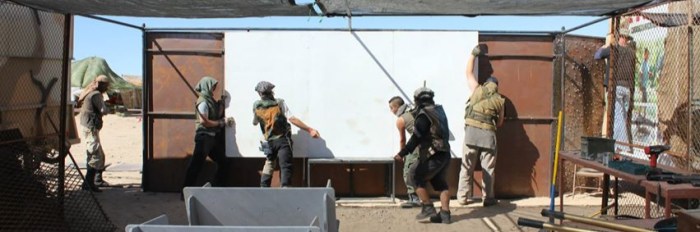
JMK: A 4 day, post apocalyptic party in the desert with mandatory costume. The main area is built like something out of Mad Max.

MT: What are the qualifications for the selected films?

JMK: To fit in any of our categories. Post Apocalyptic. Sci-fi. Horror. Atmospheric/Weird. Music Videos. Animated.

MT: Do you think that some films really don’t get a fair shake from film festivals? And if so, why?

JMK: I think Post Apocalyptic is an often overlooked genre, that our festival showcases in addition to our other categories. There are a lot of fans of post apocalyptic films, but until the new Mad Max came out, the bigger studios had little to no interest in such films. Here and there, we’d see something, but I think it was adopted far more by independent cinema than maintream cinema.

MT: What motivates you and your team to do this festival?

JMK: The love of films and showcasing really solid work that meet our standards of excellence.

MT: How has the festival changed since its inception?

JMK: Our first year started with two queen bed sheets tied to the back of a trailer. Our next year, Wasteland Weekend built us a theater space and a nice sized post apocalyptic screen. Each year has seen some kind of new progression. Last year was our first having dedicated prize support money and we upped the money we’re awarding this year.

MT: Where do you see the festival by 2020?

JMK: We will have a fully enclosed, air conditioned daytime theater (actually, we’re planning on that for next year), which will allow us to show films during the day rather than wait for the night. We’ll also have encore based shows in LA with Wasteland Weekend support and possibly Sacramento. We’ll just keep getting bigger and better!

MT: What film have you seen the most times in your life?

JMK: So many, hard to count them all. But the fundamental core films would have to be the original Star Wars trilogy.

MT: In one sentence, what makes a great film?

JMK: A film that takes you along a journey without anything to pull you out, that moves you, that thrills you, that gets you involved in its characters, that makes you invest in it until the credits roll.

MT: How is the film scene in your city?

My city is Sacramento, which is not where the film festival takes place at. LA, the nearest big city to the festival speaks for itself.

Picture: https://www.facebook.com/202104576555906/photos/a.202121123220918.31863.202104576555906/449138335185861/?type=1&theater

Our Facebook: https://www.facebook.com/Wasteland-Film-Festival-202104576555906/

Our Filmfreeway link: https://filmfreeway.com/festival/WastelandFilmFestival

About Jon Mercurio Knight: A filmmaker, writer, and graphic designer. I have always had a passion for films and have always wanted to present and showcase films to others. That’s why I started up the Wasteland Film Festival, earned the respect of the WW staff by creating a professional end result, with quality films submitted from around the world. Each year presents new challenges, technical challenges, and stresses, and each year, the festival happens thanks to my unyielding determination to create the best possible film festival.

wasteland.jpg

****

Interviewer Matthew Toffolo is currently the CEO of the WILDsound FEEDBACK Film & Writing Festival. The festival that showcases 10-20 screenplay and story readings performed by professional actors every month. And the FEEDBACK Monthly Fesival held in downtown Toronto on the last Thursday of every single month. Go to http://www.wildsound.ca for more information and to submit your work to the festival.

Interview with Festival Director Moosa Saleem (Access Code Short Film Festival)

access-code.jpgAfter amazing 8 editions, we are here again. It’s a festival where 200 movies are played, more than any of the festival in the world. Almost every film that enters the festival will be screened at the festival, no matter how many days the festival runs.

Interview with Festival Director Moosa Saleem:

Matthew Toffolo: What is your Film Festival succeeding at doing for filmmakers?

Moosa Saleem: Access Code Short Film Festival has been very supportive to student and young filmmakers across the world.

MT: What would you expect to experience if you attend the festival this year (2016)?

MS: Very high quality shorts and indies. We also selected a lot of music videos by unknown bands.

MT: What are the qualifications for the selected films?

MS: We always prefer sound over images. An indie filmmaker spends a lot on camera, costumes and other props and hardly gives sound any importance. They forget that a film is 50% sound. A bad quality sound can ruin the whole film even if the visuals are amazing, but even if the video is bad or shaky, a good quality sound can cover up for it.

MT: Do you think that some films really don’t get a fair shake from film festivals? And if so, why?

MS: I explained it in the above question. A lot of indie filmmakers neglect a good quality sound setup. It’s not that expensive, to be honest. Most films get rejected by a lot of film festivals because of bad sound. Also, it’s impossible to screen every film out of the amount of entries we get after each passing edition.

MT: What motivates you and your team to do this festival?

MS: We love films, be it narrative, documentary, animation. It saddens me to see some amazing filmmakers going unnoticed in this competitive world. We are creating a platform for filmmakers who stayed restricted to YouTube and Vimeo to showcase their talent to the world. We even try to get them a TV distribution deal

MT: How has the festival changed since its inception?

MS: We started as a film festival for animation shorts and music videos. Now, we have amazing submissions from documentaries to webisodes.

MT: Where do you see the festival by 2020?

MS: We are planning to take this festival to other parts of the country by 2020.

MT: What film have you seen the most times in your life?

MS: The Intouchables from France and 3 Idiots from India.

MT: In one sentence, what makes a great film?

MS: A good screenplay, with some good acting talent.

MT: How is the film scene in your city?

MS: I am originally from Jammu and Kashmir and it’s a conflict zone and there is no such thing as film scene here but a lot of Bollywood films are shot here every year, including some of the Hollywood movies like The Fall and Hector And The Search Of Happiness, to name among the few. Three amazing movies came out of Kashmir few years back, Valley of Saints (it won the Sundance in 2012), Haider and Harud. ;

****

Interviewer Matthew Toffolo is currently the CEO of the WILDsound FEEDBACK Film & Writing Festival. The festival that showcases 10-20 screenplay and story readings performed by professional actors every month. And the FEEDBACK Monthly Fesival held in downtown Toronto on the last Thursday of every single month. Go to http://www.wildsound.ca for more information and to submit your work to the festival.

Interview with Festival Director Michael Harrington (Wandering Reel Traveling Film Festival)

Wandering Reel is a traveling short film festival with a focus on bringing meaningful films to communities with limited or no access to compassionate, thought-provoking cinema. We strive to engage our audiences in deeper conversation about the role of cinema, and how films can relate to community, conscious living, and contribute to making the world a stronger and more unified place.

http://www.wanderingreel.org/

Interview with Festival Director Michael Harrington

Matthew Toffolo: What is your Film Festival succeeding at doing for filmmakers?

Michael Harrington: Wandering Reel exposes films to a larger theater audience as well as a more rural, small town audience. We visit communities that don’t already have a film festival and/or do not have easy access to art films, independent films, international films and especially short films. We also facilitate conversation around the films to deepen the experience of a community coming together to watch films. Hopefully, some of the stories go home with some of the audience members and they care a little bit more about what the films were trying to say.

MT: What would you expect to experience if you attend the festival this year (2016)?

MH: Great movies. Great conversation. Theaters are the perfect meeting place of people and yet people tend to gather, watch and leave without actually interacting about this shared, cultural experience. Wandering Reel engages the audience a little deeper, first by allowing them to ask questions about how and why the films were made but also encouraging conversation with each other about how the films relate to their own lives and own community.

MT: What are the qualifications for the selected films?

MH: We only ask the films relate in some small way to the greater mission of Wandering Reel, which is to demonstrate how cinema can be a powerful tool in inspiring conversation around important topics and creating meaningful change in the world. We show narrative, animated and documentary films. We show students films and professional films. We show local films and films from the other side of the world. We show films fresh off the press and films from a decade or more ago. The point is to extend the life of short films so we offer very few hurdles for filmmaker to cross once they’ve made an outstanding short.

MT: Do you think that some films really don’t get a fair shake from film festivals? And if so, why?

MH: Nowadays anyone can make a film. Our phones capture pretty good images and our laptops come with editing software. And it’s easier than ever to submit to film festivals because it’s all done digitally with a few clicks of a mouse. So, there are hundreds if not thousands of films vying for festival slots each year. The good news is there are more festivals than ever, but it’s really easy for the best, trendiest films to play 100 festivals while some smaller films only find a few niche markets. The biggest name festivals are hit with thousands of submissions for only a small amount of slots. Emerging festivals have to work much harder to garner lots of submissions and need the best of the best films in order to succeed and grow. It is my wish that more film festivals will program based on heart, ingenuity and merit, rather than politics or celebrity.

MT: What motivates you and your team to do this festival?

MH: We think it’s extremely important to support meaningful filmmaking. We think it’s important for films to be viewed in an audience with other people and to allow for a forum to talk about that experience. We think there’s a hole missing in the distribution of short films and that we can help fill it in our own small way. When an audience member shakes your hand after a screening and thanks you for bringing a film to their community, that’s motivation like no other, if only because they wouldn’t have likely seen that film that inspired them otherwise.

MT: How has the festival changed since its inception?

MH: Wandering Reel evolves each year based on the films we receive, audience reaction and the communities we visit. We are a young festival entering our second year and we are still learning how to motivate people to pause Netflix for an evening and come out for a fun and engaging event. We are working hard this year to connect deeper with each community we visit. This means visiting schools, retirement communities, prisons, hospitals and any other members of the community that may not be able to come to our festival. It also means collaborating with local artists, activists and thinkers to connect the work we curate with the great work being done in the local community.

MT: Where do you see the festival by 2020?

MH: At the moment, funds limit our reach to a couple small tours per year and just one curator. Our goal is to have curators all around the world traveling with our films simultaneously. In five years or so, we should be able to reach all regions of the United States with a few international curators as well, likely in Europe and Australia to start. We also want to grow the outreach wing of our festival so that free screenings are offered whenever possible. No one should ever be turned away because they can’t afford the ticket cost. We also want to reach more people that can’t come to community screenings: the elderly, prisoners, students, and people in our poorer urban communities to just name a few.

MT: What film have you seen the most times in your life?

MH: Probably The Princess Bride, if only because I watched it on loop as a child and to be honest quite a bit as an adult. But since we are a short film festival, I’d also like to make a nod to our grand prize winning film from last year, “Stop” by Reinaldo Marcus Green, because that’s probably the short I’ve likely seen the most, and a short everyone in the U.S. should see right now.

MT: In one sentence, what makes a great film?

MH: How about one word: passion.

MT: How is the film scene in your city?

MH: I live in Portland, Oregon a city known for its indie theaters and growing film market. We have lots of film festivals and a very attentive indie film audience. The film production scene here is beginning to really blossom. This is the perfect alternative city to Los Angeles and New York for emerging filmmakers: beautiful urban landscape, incredible access to nature, amazing food and drink and a thriving art scene.

wandering_reel_banner

****

Interviewer Matthew Toffolo is currently the CEO of the WILDsound FEEDBACK Film & Writing Festival. The festival that showcases 10-20 screenplay and story readings performed by professional actors every month. And the FEEDBACK Monthly Fesival held in downtown Toronto on the last Thursday of every single month. Go to http://www.wildsound.ca for more information and to submit your work to the festival.

Interview with Festival Director Anamika Raj (GardenCity Film Festival)

Garden_City_Logo-01.jpgI am Anamika Raj and I am a graphic designer by profession and have produced 2 feature indies. GardenCity Film Festival is one of the most appreciated in the country by several critics. It’s main focus is student and female filmmakers from around the world. We are happy to introduce the local audience to a range of most recent, cinematically daring and powerful filmmaking from around the globe. We want to be a festival that touches and teaches the audience, a festival that will drive creators to produce meaningful films, a festival that drives audiences from all walks of life and makes the week-end a deep experience that becomes a long lasting tradition.

Interview with Festival Director Anamika Raj

Matthew Toffolo: What is your Film Festival succeeding at doing for filmmakers?

Anamika Raj: The best feeling for a budding filmmaker is not to earn loads of money, but to showcase his film in front of an audience, sharing the thoughts, and if the film is appreciated by the audience that is the biggest reward for every filmmaker all around the world. Film festivals are the stage to showcase great talents of the independent filmmakers. We at GardenCity give the same oppurtunity. There are so many film festivals all around the globe, and we don’t say we are the best, but as far as we can help filmmakers, we think we are doing our part.

MT: What would you expect to experience if you attend the festival this year (2016)?

AR: A lot of amazing documentaries made by young girls and there’s a section of LGBT films.

MT: What are the qualifications for the selected films?

AR: The qualification on the film depends on how the filmakers has tried to reach out to the audience. Your effort shows on the output of the film. We prefer films that are hard-hitting and are there to make an impact and should connect to the audience.

MT: Do you think that some films really don’t get a fair shake from film festivals? And if so, why?

AR: It’s absolutely impossible to select every film witht he time duration we have and the amount of entries we get. Filmmakers need to understand that and maybe up their game. Every filmmaker is working very hard to bring out a good film, but they need to understand that if their film is not selected, maybe the other filmmakers have put a bit more effort than them in their pictures.

MT: What motivates you and your team to do this festival?

AR: Let me tell you a true story, I am a filmaker myself and people in my team are very passionate about films. So, we were doing this one project and we were working day and night on it, with just 4 hours break in a day. The project was completed and then we started sending it to film festivals. The feeling that you get when you receive a mail from the authorities saying that your film has been selected is amazing. I mean, you are actually being praised for your hard work. And that’s when my team and I decided to start something like this. If we can be a part of motivating talent, then, why not! See it’s simple, you are good at something and if you don’t get any good comments about that work, you will start working hard on your films, but if you get praised for doing that same work, next time you will try to give a better film to the audience.

MT: How has the festival changed since its inception?

AR: We got 20 films as entries in the first edition and in the last edition, we got 300+ films. So, we are getting there.

MT: Where do you see the festival by 2020?

AR: In 4 years, we surely see ourselves as a big competitor to Cannes and Berlinale. Haha! Just kidding. When we started GardenCity Film Festival, we had one point very clear, all the film festivals happening all around the corner are not competing against each other, they are just helping brilliant filmakers to showcase their work. So, in 4 years, we would see ourselves helping four times of people we are helping now to bring out their work. We keep giving heavy discounts to the filmmakers who are really short of funds, especially student filmmakers.

MT: What film have you seen the most times in your life?

AR: Rang De Basanti (from India) and every Woody Allen movie.

MT: In one sentence, what makes a great film?

AR: As I already mentioned that a great film is that which connects to the audience and which has an amazing thought process behind it. See, for independant filmakers, cost of the movie really matters. Sometimes a filmmaker can come out with mind blowing movie on a very small budget, and sometimes, movies with huge budgets are panned by critics and audiences. So, to make a great movie all that it takes is a great thought and knowledge of using the given resources rightly. Script is the king.

MT: How is the film scene in your city?

AR: In Bangalore, we have a film industry called Sandalwood. It’s growing and very good young filmmakers are coming out with their films. Sandalwood usually prefers action movies or thrillers. Some of them are Lucia, U-Turn and Cryptic Road.

Interviewer Matthew Toffolo is currently the CEO of the WILDsound FEEDBACK Film & Writing Festival. The festival that showcases 10-20 screenplay and story readings performed by professional actors every month. And the FEEDBACK Monthly Fesival held in downtown Toronto on the last Thursday of every single month. Go to http://www.wildsound.ca for more information and to submit your work to the festival.

Interview with Festival Director Craig Higgins (Norwich Film Festival)

norwich_1.jpgThe Norwich Film Festival is now preparing for it’s sixth year (2016). They have an amazing array of celebrity patrons and judges (including Bernard Hill, Tim McInnerny, Olivia Colman and Martin Walsh) who are all eager to watch your films and read your screenplays. The people of Norwich are also committed to supporting artists of all media and have been wonderful throughout our four previous years, turning up in their droves to see the best the festival has to offer.

www.norwichfilmfestival.co.uk

Interview with Festival Director Craig Higgins:

Matthew Toffolo: What is your Film Festival succeeding at doing for filmmakers?

Craig Higgins: The Norwich Film Festival is passionate about screening filmmaker’s work from not just Norwich but from all over the world. We love that we get the opportunity to help the audience see something they generally wouldn’t see, and I feel this helps to give filmmaker’s a voice and the recognition they deserve. We have also just started to screen local feature films made in Norfolk throughout the year which we screen free of charge to help raise the profile of filmmakers. There really is an incredible amount of talent out there and we are just doing our little bit to help the world see it.

MT: What would you expect to experience if you attend the festival this year (2016)?

CH: Fantastic short films made by the some of the most talented filmmakers you will ever see.

We have not yet released the programme, so here is a little bit of a spoiler. The festival will be looking to screen 50 short films, 2 feature films (both are premiers for Norwich), an industry panel of getting your film made, a talk from one of the best Editor’s in the world, BAFTA regional shorts tour, along with lots of a Q&A’s from filmmakers. We are also going to ensure that we offer lots of networking too!

MT: What are the qualifications for the selected films?

CH: We have 5 competitive prizes this year including best short, best animation, best student, best documentary and best script. The standard of submissions this year as been incredibly high, so short listing is going to be tricky! Luckily enough we have a fantastic team who have helped to judge and score your film. What is also exciting, the best of the best films are sent to industry judges who will watch them and decide who should win our competition. Some of our judges this year include Damian Jones (Producer – The Iron Lady, Lady in the Van, Dad’s Army), Nick Moore (Editor – Love Actually, Notting Hill), William Osborne (Scriptwriter – Twins, Scorpian King), Julian Jarrold (Director – Kinky Boots, A Royal Night Out), Steven Hall (DOP & Camera Operative), Jane Gull (Director – Sunny Boy, My Feral Heart) & Hugh Fraser (Actor)

MT: Do you think that some films really don’t get a fair shake from film festivals? And if so, why?

CH: That’s a good question. It’s difficult, because festival’s only have so much allocated time to screen films and usually the best of the bunch are the one’s which are screened. However, you sometimes have that middle pile of films which are good, but don’t always make it through due to another film being submitted with maybe a similar theme but can be slightly stronger in terms of its narrative. What, I would say is even if your film doesn’t get through to one festival don’t stop trying! If you believe in your work, get it out there to festivals, screen it in local bars etc….

MT: What motivates you and your team to do this festival?

CH: Easy – we love films! We also enjoy that we are the first people who get the opportunity to watch some of the most exciting, engaging and inspiring films out there and we get to screen them! How brilliant is that? We also love meeting and hearing from filmmakers and anything which can help showcase and bring people together is fabulous.

MT: How has the festival changed since its inception?

CH: Well this year as been a huge development shift in the festival, keeping in mind that everyone involved with the Norwich Film Festival are volunteers. We are now running as a small charity (but are due to apply shortly to become a Charitable Incorporated Organisation in the next few weeks), we have increased our web content for filmmakers, increased our social media fan base, built up an impressive list of judges & patrons (Brian Cox, Olivia Colman, John Collee & Tim McInnerny), offered monthly screenings and an increased networking opportunities for filmmakers. We have worked really hard this year and we are planning bigger and better things for 2017 already!

MT: Where do you see the festival by 2020?

CH: I would love to see the festival become BAFTA accredited. That is my dream! It would be great if we could also continue to build the level of submissions we receive each year and offer the audience even more than we are providing now.

MT: What film have you seen the most times in your life?

CH: Jaws….. I love this film!

MT: In one sentence, what makes a great film?

CH: Great story, originality, creativity & something that stay’s with you even when the film ends.

MT: How is the film scene in your city?

CH: Norwich is such a creative city, we have a host of incredibly talented filmmakers, a brilliant picturehouse cinema, 2 Universities which offer film related courses and a lot of love from the people of the city who welcome all creative types. Norwich as also played host as a location setting for big budget films such as Averngers: age of ultron, Tulip Fever, Stardust, James the Giant Killer and so on. I would love filmmakers to come to Norwich to continue filming as it offers so much diversity.

Don’t forget the Norwich Film Festival will holding it’s annual festival from the 10 – 13th November. It’s gonna be fun! Come along and enjoy something different.

norwich_2.jpg

Interviewer Matthew Toffolo is currently the CEO of the WILDsound FEEDBACK Film & Writing Festival. The festival that showcases 10-20 screenplay and story readings performed by professional actors every month. And the FEEDBACK Monthly Fesival held in downtown Toronto on the last Thursday of every single month. Go to http://www.wildsound.ca for more information and to submit your work to the festival.

Interview with Festival Director Elena Ringo (Vienna Independent Film Festival)

VIFF Vienna Independent Film Festival invites filmmakers from all over the world to submit their films to their international film festival which takes place in Vienna.  The goal of our festival is to find new talented filmmakers who will be able to approach the heights of cinematography created by geniuses like Antonioni, Fellini, Tarkovsky, Bergman, Visconti, Godard. Now, when the whole world has a tendency towards commercialization, they appreciate free spirit, new ideas an independent point of view and new approaches. Not the budget of the film but solely talent should be the criteria for the film’s success.

http://www.vienna-film-festival.com/

Interview with Festival Director Elena Ringo

Matthew Toffolo: What is your Film Festival succeeding at doing for filmmakers?

Elena Ringo: VIFF 2016 – Vienna Independent Film Festival took place for the first time in July and it laid the foundation for the future. There were 38 films screened at the festival, almost all of them were Austrian premieres and the films were introduced to a varied audience. The participants had a lot of opportunities for networking and have received exposure via social media and press coverage.

MT: What would you expect to experience if you attend the festival this year (2016)?

ER: Our festival took place in July 2016 and now we are preparing for the next edition.

MT: What are the qualifications for the selected films?

ER: We value artistic quality of the films, independent point of view, cinematographic innovations and appreciate auteur cinema. Many films were directed, produced, shot and written by the directors themselves and the films were often based on real stories and personal experiences which brings truth to the films and makes the films more authentic and believable.

For example, the film Imperfect Sky which received the award for Best Feature Film, was written, directed and shot by Graham Streeter and was based on true events. Another interesting film which received the Grand Prix – Let’s Dance to the Rhythm was written, directed and edited by Bardroy Barretto and tells the story of real jazz musicians from Goa.

MT: Do you think that some films really don’t get a fair shake from film festivals? And if so, why?

ER: I think that when festivals are very well-known they receive an enormous volume of submissions and very limited number of people actually select them on the first stage so many films are not noticed at all. Also, many festivals are more interested in big names rather than discovering new talents and do not want to take any risks.

MT: What motivates you and your team to do this festival?

ER: I hope that our festival will become a bigger event but will still preserve our main principles; independence, artistic quality, lack of political motivation and no discrimination against any genre or countries.

MT: Where do you see the festival by 2020?

ER: I hope that our festival will become a bigger event but will still preserve our main principles; independence, artistic quality, lack of political motivation and no discrimination against any genre or countries.

MT: What film have you seen the most times in your life?

ER: The Mirror by Andrei Tarkovsky. This is a film which you can watch many times and every time discover something new.

MT: In one sentence, what makes a great film?

ER: Artistic vision and deep ideas make a great film.

MT: How is the film scene in your city?

ER: There are many cinemas and film lovers in Vienna. There are several film schools and there is a demand for more festivals in this cultural center.

viennafilmfestival.jpg

Interviewer Matthew Toffolo is currently the CEO of the WILDsound FEEDBACK Film & Writing Festival. The festival that showcases 10-20 screenplay and story readings performed by professional actors every month. And the FEEDBACK Monthly Fesival held in downtown Toronto on the last Thursday of every single month. Go tohttp://www.wildsound.ca for more information and to submit your work to the festival.

Interview with Festival Director Joseph Hardin (HorrorQuest Film Festival)

HorrorQuest Film Festival is the worlds only 100% free Horror film festival. Held each year at Cinefest Film Theatre, located on the Georgia State University campus, HorrorQuest has no set submission fee. All HorrorQuest screenings and events are free and open to the public on a first come, first served, basis.

Named one of the “Top 10 Film Festivals Every Filmmaker Should Know About” by Movie Maker Magazine, HorrorQuest has been praised by Filmmakers such as Kevin Smith (Clerks) and Lloyd Kaufman (The Toxic Avenger) for it’s business model and ethics.

http://www.thehorrorquest.com/

Interview with Festival Director Joseph Hardin 

Matthew Toffolo: What is your Film Festival succeeding at doing for filmmakers?

Joseph Hardin: I think HorrorQuest provides an alternative to filmmakers who might not have extra money to spend on festival submission fees. While we do charge a small fee for online submissions, filmmakers can still submit for free by mail. While this makes it harder to keep the festival running, it also is what makes HorrorQuest stand out.

MT: What would you expect to experience if you attend the festival this year (2016)?

JH: First, all screenings are 100% free to the public. HorrorQuest has always tried to put the films first. We do not have Q&As, red carpets or press junkets. Instead we try to cram in as many films as possible. We try to create a good mix of content, we do not have themed blocks of content, instead we try to give you a bit of everything in each block of films.

MT: What are the qualifications for the selected films?

JH: It can vary from film to film, but mostly we look for something interesting. When you watch hundreds of films years after year, it is easy to become bored when you see another slasher or zombie film. While we enjoy a good slasher or zombie film, it can be hard to bring something new to those sub-genres. That is what we really look for, films that try something new. If a film plays with an interesting idea or subject matter, HorrorQuest will often overlook the films technical shortcomings.

MT: Do you think that some films really don’t get a fair shake from film festivals? And if so, why?

JH: I think that is absolutely true, even more so when you talk about larger festivals. If you do a simple Google search, you will find story after story about film festival corruption. Larger festivals are a business and they operate as such. They want to sell tickets and ad space, so it befits them to program differently than a festival like HorrorQuest. We can take a risk and program something experimental or extreme and not have to worry about what the sponsor is going to think about it. Not to mention bribes, HorrorQuest is a very small festival, yet well still get bribes from movie studios or indie distributors asking us to program their films. I would assume they offer more to larger festivals, on that scale, I am sure it becomes a strong temptation.

MT: What motivates you and your team to do this festival?

JH: Every one who is or has been involved with HorrorQuest, does it for free, no one gets paid. We all do it because we enjoy watching movies. We get to get together and watch films many people will never see. Everyday fells a bit like Christmas, when you check the mailbox, you never know what your are going to find. We get submissions from all over the world and it is still amazing to see what people can create. When it stops feeling like Christmas, it will be time to stop.

MT: How has the festival changed since its inception?

JH: Not much has changed. It costs more to keep the festival going. The price to rent a theater never goes down. We still average the same about of guests, some years are better than others. We now accept online submission, which was something we put off for as long as possible. While it has made somethings easier, it has created more work over all. If anything, we have more name recognition. We are still the same hole-in-the-wall festival we were when we started.

MT: Where do you see the festival by 2020?

JH: Hopefully the festival will still be going. It is getting harder and harder each year to keep the festival as free as possible and not be out of pocket. Thankfully, we get by and have a theater that works with us as much as they can. There are a lot of things HorrorQuest wants to do. Right now, we are just glad to still be here.

MT: What film have you seen the most times in your life?

JH: I have no idea, it is probably something like Back to the Future or Flight of the Navigator. One of those movies I watched as a kid. I still watch Back to the Future, Navigator, Monster Squad and The Goonies (among others) at least once a year.

MT: In one sentence, what makes a great film?

JH: If I knew that, I probably wouldn’t tell you. I don’t think anyone knows. I think you can know what works, but even then, great filmmakers still make stinkers. Just make something you would want to see, odds are there is someone out there who will agree with you.

MT: How is the film scene in your city?

JH: Atlanta is crazy, everything seems to be filming here, Ant-man, Captain America, Hunger Games. I think it was just voted the number one place to live as an indie filmmakers. There seems to be a lot of opportunities here. Georgia is a great place for film, hopefully the state won’t screw it up.

horrorquest

Interviewer Matthew Toffolo is currently the CEO of the WILDsound FEEDBACK Film & Writing Festival. The festival that showcases 10-20 screenplay and story readings performed by professional actors every month. And the FEEDBACK Monthly Fesival held in downtown Toronto on the last Thursday of every single month. Go tohttp://www.wildsound.ca for more information and to submit your work to the festival.


Interview with Festival Director Julio Rodríguez Caloggero (International Film Festival / Short Tapiales)

The International Film Festival / Short Tapiales is a film event of important social and cultural impact nonprofit, organized by JC Films OFCT, held in the village of Tapiales, a town belonging to the party of La Matanza, located in the Buenos Aires province. Tapiales Film / Short is also a competitive contest where the selected short films that later received the prize Aborigine according to the ruling of the honorable members of the jury are projected. The event is held under the premise of extolling the popular, free and outdoors, summoning an amount of 3,000 spectators per issue over three days.

INTGRM:@taficfestival TW:@festtapiales
YTB: www.youtube.com/c/TAFICFestivalInternacionaldeCinedeTapiales

Interview with Festival Director Julio Rodríguez Caloggero

Matthew Toffolo: What is your Film Festival succeeding at doing for filmmakers?

JRC: The Tapiales International Film Festival is one of the most important short-film festivals in Argentina. It is known for having the Plaza de Tapiales among its venues for projecting the competing films. This way, you are able to reach to the common people. It brings filmmakers and their movies closer to a warmer audience, different to the one you may find in other festivals —they are not the kind of audience who has the habit of attending film festivals.

MT: What would you expect to experience if you attend the festival this year (2016)?

JRC: This year, the festival will be having a lot of local production again. We will also maintain our high standards, both for the official competition and the parallel projections. This year’s edition wil introduce the Latin American Competition as well.

MT: What are the qualifications for the selected films?

JRC: There is no restriction to the theme of the films, but the runtime is limited to 20 minutes or less.

MT: Do you think that some films really don’t get a fair shake from film festivals? And if so, why?

JRC: Many horror or fantasy films (in our case, short films), for example, can’t find room outside festivals for those specific genres. We care for stories in a more general sense —from social films to sci-fi.

MT: What motivates you and your team to do this festival?

JRC: It’s a social project where we all contribute to the community with what we know. A film festival is an important thing. It shows our cultural development and makes our town a cinmatographic point of reference.

MT: How has the festival changed since its inception?

JRC: For thirteen years, the festival has been growing, expanding to other places. We’ve participated in itinerant projections, both in Argentina and abroad. More venues were added and the number of films on display has increased. We also established (together with the local government) a cinematographic workshop. Our festival is the main screen for local productions to reach the public.

MT: Where do you see the festival by 2020?

JRC: I believe it will continue with its history with and through its people —neighbours and all those who love films.

MT: What film have you seen the most times in your life?

JRC: Pulp Fiction.

MT: In one sentence, what makes a great film?

JRC: Simplicity and honesty.

MT: How is the film scene in your city?

JRC: We are working hard for it, filming and producing as well. Every year we have new productions that are also being displayed in other festivals.

international_film_festival.png

Interviewer Matthew Toffolo is currently the CEO of the WILDsound FEEDBACK Film & Writing Festival. The festival that showcases 10-20 screenplay and story readings performed by professional actors every month. And the FEEDBACK Monthly Fesival held in downtown Toronto on the last Thursday of every single month. Go tohttp://www.wildsound.ca for more information and to submit your work to the festival.

Interview with Festival Director Carl “CJ” Gilbert, Jr. (Ocktober Film Festival)

The Ocktober Film Festival (OFF) is a New York film festival that serves as a platform for artist to express themselves through film and new media. We are heavily involved with the independent filmmaking community and therefore, this festival has become a trusted resource for emerging and established filmmakers. OFF 2015 showcased some of the best visionaries in music and film. This year, we will be expanding our efforts to include more distribution opportunities for all of our selected films.

Interview with Festival Director Carl “CJ” Gilbert, Jr

 Matthew Toffolo: What is your Film Festival succeeding at doing for filmmakers?

CG: Our Film Festival is succeeding at empowering filmmakers through education and active participation. The Ocktober Film Festival was created to provide a platform for filmmakers to express themselves through film and new media.

MT: What would you expect to experience if you attend the festival this year (2016)?

CG: If you attend the Ocktober Film Festival this year, you can expect to see quality films and educational workshops which are being taught by some of the industries leading professionals.

MT: What are the qualifications for the selected films?

CG: At the Ocktober Film Festival we believe in quality work and understand the struggles of filmmakers and for this reason we have NO minimum qualifications for submission.

MT: Do you think that some films really don’t get a fair shake from film festivals? And if so, why?

CG: I do believe that great films do not always get the credit they deserve while in the film festival circuit. The film festival circuit has long been plagued with unfair practices such as favoritism. This was the main reason Emelyn Stuart created the Ocktober Film Festival, to provide a fair marketplace where quality work is recognized, not friendships!

MT: What motivates you and your team to do this festival?

CG: We are all motivated by the opportunities that we have provide to filmmakers each year to better themselves and take their craft to the next level.

MT: How has the festival changed since its inception?

CG: Since it’s inception in 2013, the Ocktober Film Festival has grown to become one of NYC’s leading film festivals. We have added in a Young Adult Category and College Level category as well as introducing an Actors contest which helps to provide a way to involve the actors.

MT: Where do you see the festival by 2020?

CG: By 2020 I envision the film festival having a larger reach and extending our services to not just filmmakers but also to everyone who takes part in a film production. We aim to empower through education and provide quality films and I’m confident that we are on target.

MT: What film have you seen the most times in your life?

CG: THE WIZ!!!!! Greatest show of all time 🙂

MT: In one sentence, what makes a great film?

CG: I believe a great film has several different components, Story Line, editing, acting color correction, sound to name just a few. If any of these are off, it can destroy my experience.

MT: How is the film scene in your city?

CG: NYC is the mecca of film. There are so many filmmakers and actors that I come across who are all trying “make it”. This is a town of wins and losses but the prize goes to those who endure.

ocktober_film_festival.jpg

Interviewer Matthew Toffolo is currently the CEO of the WILDsound FEEDBACK Film & Writing Festival. The festival that showcases 10-20 screenplay and story readings performed by professional actors every month. And the FEEDBACK Monthly Fesival held in downtown Toronto on the last Thursday of every single month. Go tohttp://www.wildsound.ca for more information and to submit your work to the festival.